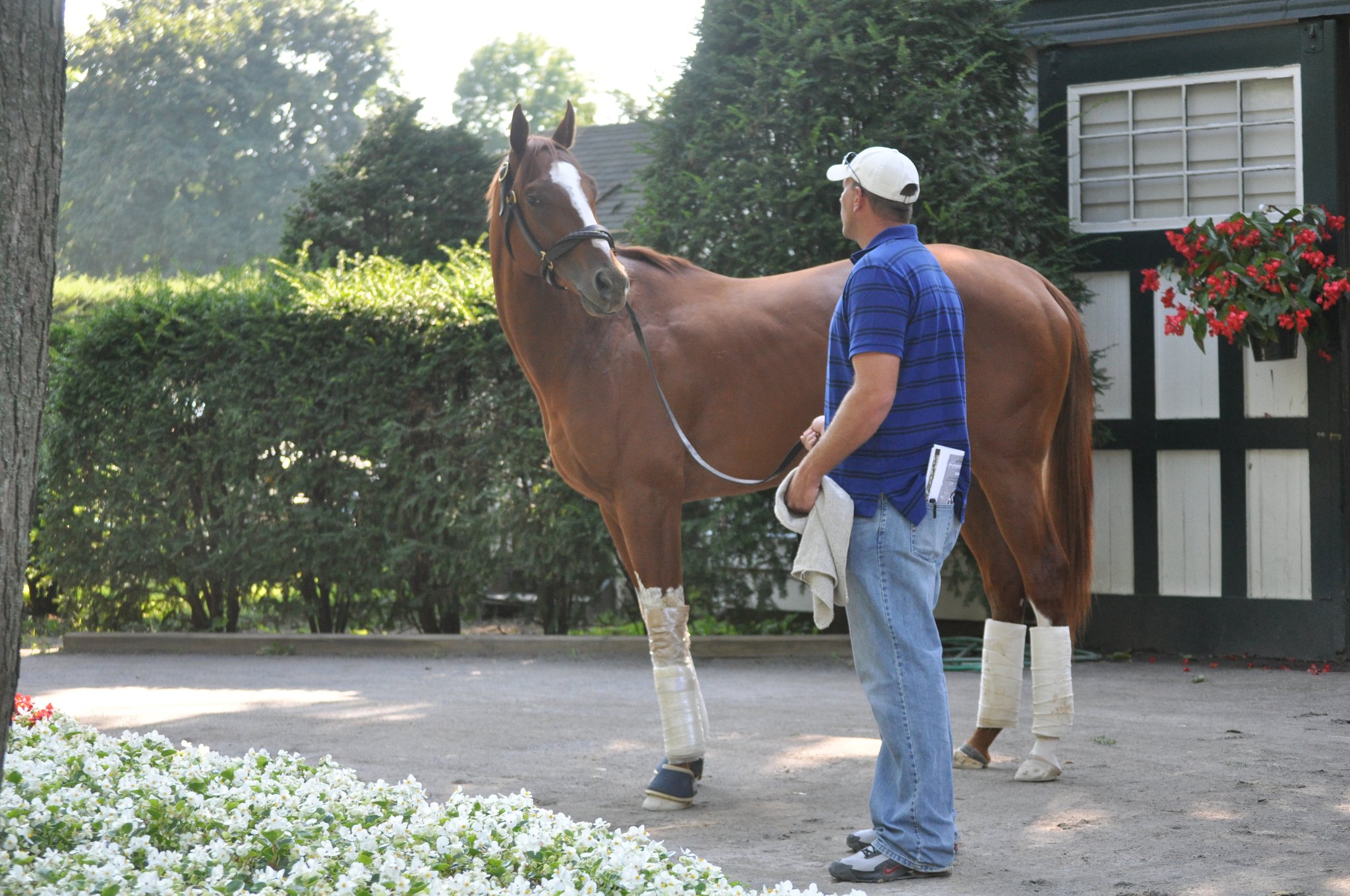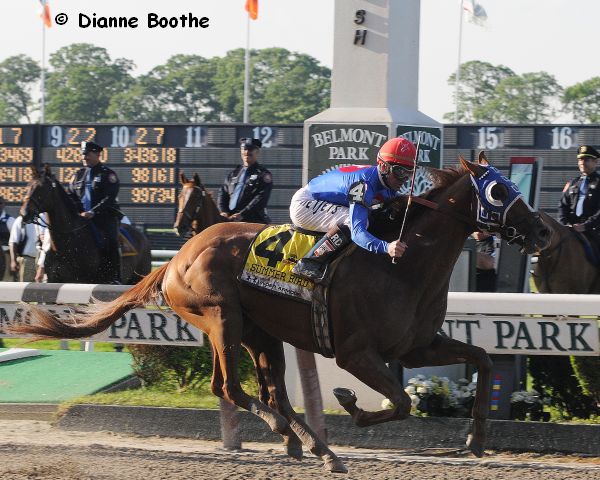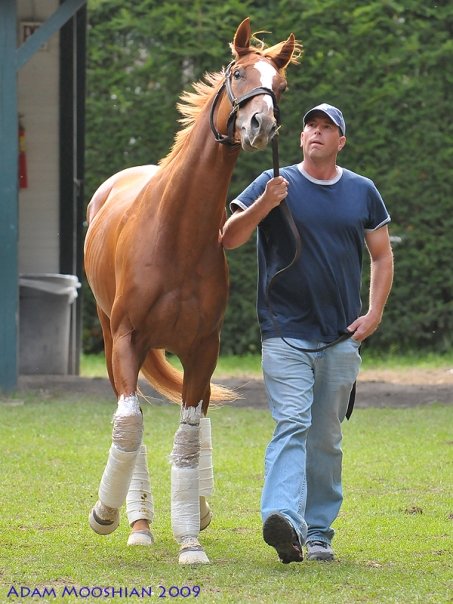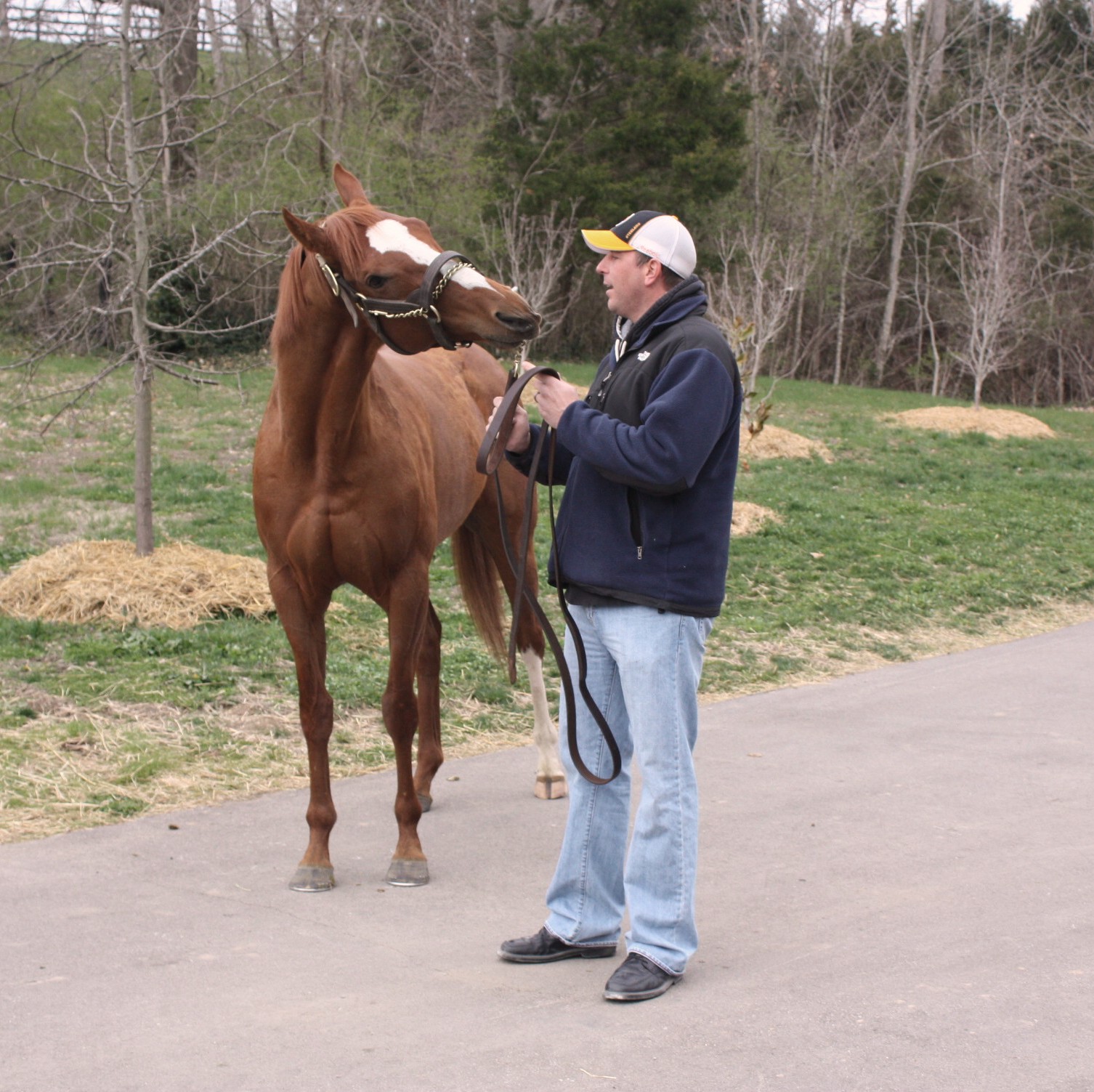
Conquering Defeat: Remembering Zenyatta in her Final Breeders’ Cup Classic.

November 1st, 2011 § 20

This Breeder’s Cup season, the racing world will turn its focus toward the victories of the equine athletes in the series of prestigious races. A stunning victory showcases the glory of a race horse and can serve as the catalyst to transform a good horse into a great one. Victory is how this sport counts its champions, and, for those who go defeated, they typically stand in the shadows of the winner’s circle as the victor carries the moment.

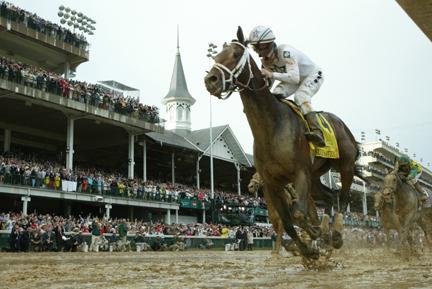
Yet, at the close of the Breeders’ Cup last year, victory was simply more than the domain of the winner in the Classic. A certain kind of “victory” was also bestowed upon Zenyatta, standing in the cold night, as a freshly defeated mare transforming her heartbreaking loss into a moment of glory. And so, as this Breeders’ Cup season begins, I marvel over the Zenyatta’s quest for victory and wonder if winning is more than standing in the winner’s circle.

Perhaps, there is a little victory that occurs in the smaller moments in racing. The victories don’t count for career records or fancy trophies, but they are possibly part of what makes a champion. And, when I think of many champion racehorses, most of them have experienced both victory and defeat on their road to immortality.

In the case of Zenyatta, it seems that the big mare earned a few unsung victories during last year’s Classic despite her official defeat in the race itself.

It seems that there is a small victory through striking awe in the crowd before the gates ever open in a race. In the minutes leading up to the last Classic, Zenyatta held court in the post-parade like no other contender. The mare looked like a true prize fighter, daring anyone to challenge her on that oval. In that moment, it was her show, and, for those who came to see it, it seemed that defeat was simply out of the question.

And then, there appears to be a glimmer of victory in how a race is run before the wire is crossed. When Zenyatta set flight under the waning autumn sky in the Classic, her dazzling charge in the dusk epitomized something otherworldly. As she rushed past in blur, the sheer speed of her closing kick set in for the first time as I stood in the crowd.

In the end, whether she made it to the wire first or not, there was a small victory present. The mare had captured the victory of sending the crowd soaring at the sight of her final charge. Spectators began to murmur, “She’s going to win it!” in the last dizzying seconds of the Classic. The voices went from whispers to shouts in synchronicity with her movement. And, in that moment, it seems the crowd was racing along with the great mare.

And finally, it seems there was a victory present in the least likely moment - The moment the mare lost the race. Zenyatta, mired with fresh markings of defeat, faced the crowd and stood proudly for an ovation. And, as the crowd rose to pay homage to the great mare, tears streamed down the faces of many people as they stood to pay her a final tribute. Whatever sentiment those tears held, the glory of that mare was simply not in dispute. She held the victory of honor in defeat.

Yes, there and then, a perfect juxtaposition of victory and defeat occurred in the Breeders’ Cup Classic. Two champions were on display - one in the winner’s circle and the other receiving a standing ovation in defeat. And, in her defeat, Zenyatta won the prize that had repeatedly eluded the mare in perfection - Horse of the Year.

Retrospectively, it appears there may be more than one winner in last year’s Classic. The true winner, Blame, who conquered the perfect mare in the Classic. And the other winner, Zenyatta, the great mare who was crowned Horse of the Year only after she conquered defeat.

  • Share/Bookmark

A Little Gratitude for “The Grey Goose” this Breeders’ Cup Season.

October 31st, 2011 § 2

At some point in life, many people have probably uttered the words, “If I had the money, I would have invented this or that, built this or that, or surely, patented this or that idea.” It may have been a good idea, perhaps a great one, but as funding can be tricky, the idea remained just that: an idea.

In some cases, we see a great idea in flight and think to ourselves, “I wish I had thought of that first.“ Sure, it could be a great idea that everyone is raving about from coast-to-coast. But, in the end, even if you had the idea first, the old fickle road block of funding might have halted that marvelous idea at its’ inception.

Unless, of course, you can find yourself a “Grey Goose.”

When it comes down to horse racing, the invention of the $26m Breeders’ Cup World Championships was probably one of the most brilliant ideas that I never had to further the sport of horse racing. And, I am happy I didn’t. Because, in the end, my idea would never have taken flight when it came time to fund the whole event.

Sadly, I don’t have a “Grey Goose” to call upon.

Yet, since 2005, a “Grey Goose” has been the official sponsor of the Breeders’ Cup event - Grey Goose Vodka. And, the presence of the “Grey Goose” is pretty hard to overlook when it comes down to this marquee event in horse racing. As the premier sponsor, Grey Goose is the title sponsor of the entire Breeder’s Cup series, as well as two of the races - The Breeders’ Cup Juvenile and The Breeder’s Cup Juvenile Fillies.

However, “The Grey Goose” doesn’t stop there.

Grey Goose, a premier vodka brand, seems to appreciate the luxurious quality of Thoroughbred horse racing. The “Grey Goose” is ever-present during the two-day Breeders’ Cup series of races. Aside from sponsoring two races, Gray Goose Vodka appears at all official Breeders’ Cup events, including the pre-race parties, the VIP winners’ circle celebration and the post-race reception. Simply put, the “Grey Goose” is everywhere except on the race track itself.

Yet, what lies behind the prominent “Grey Goose” is a wealth of good for the Thoroughbred racing industry.

Brown Forman, the parent company behind Grey Goose Vodka, is quite a large sponsor toward funding the continuity of this sport in general. Aside from the Breeders’ Cup series, Brown Forman brands are present at plenty of major racing outings. Brown Forman brands are the title sponsor for the Maker’s Mark Mile and the Woodford Reserve Turf Classic. Further, their Korbel Champagne brand is the drink of plenty of toasts at winner’s circle celebrations, including the Arlington Million.

And, in the end, Brown Forman goes beyond promotions and sponsorship in racing. They give to Thoroughbred charities as part of their participation in the industry. Since 2006, Brown Forman has sponsored the “$1,000 Mint Julep” on Kentucky Derby day through their Woodford Reserve brand. The proceeds from the $1,000 Mint Julep are donated toward racing-related charities, including past contributions to the New Jersey-based Thoroughbred Retirement Foundation and The Secretariat Foundation.

In the age where many Thoroughbred racing enthusiasts wonder about the future of the sport, I think it is important to recognize those who are investing in it now. This Breeders’ Cup season, as I marvel over some of the greatest Thoroughbreds to grace an oval this year, I’ll be thankful to an unlikely character - a “Grey Goose” that saw the value in providing sponsorship for this majestic event in horse racing.

  • Share/Bookmark

The Value of Goodness: Advocacy for Racehorse Retirement Precedes the Road to the Breeders Cup for Weemissfrankie.

October 22nd, 2011 § 10

Nearly two years ago, I was talking with the retired Farm Manager of Claiborne Farm, the late John Sosby, about what it takes to find a winning horse. He gave a broad smile and said, “Give me luck and I’ll beat you every time.”

As he stood at Claiborne Farm, the site where he had cared for many great Thoroughbreds at various stages in their lives, it seemed that having good luck was an undisputable factor that led to success with racehorses. However, as I considered the late Mr. Sosby himself, it was apparent that he didn’t rest on his laurels and wait for luck to emerge in the fields. He did something to bring its elusive character his way: He did good.

The late Mr. Sosby was good to whomever possible, wherever possible, and when it came to the horses in his care, his goodness was what he gave them. Yes, luck was a figure that followed the late Mr. Sosby. Yet, it seemed luck was romanced by his own goodness to the horses in his care.

Quite possibly, goodness is the breeding ground for luck in racing.

If a tribute to that principle exists, it may lie in the undefeated two-year-old filly, Weemissfrankie, whose ownership connections include Dawn Mellen of Bran Jam Stables, the founder of After The Finish Line (ATFL), a non-profit dedicated to funding Thoroughbred rescue, retraining and retirement for ex-racehorses who can no longer race or breed.

Mellen began volunteering at Thoroughbred rescues in the mid-1990s, where she realized that a major obstacle to helping retired Thoroughbreds was funding. In response, Mellen founded ATFL in 2007. ATFL provides monthly emergency funds and yearly grants to Thoroughbred rescues to fund retraining, rescue and rehabilitation efforts.

ATFL funding is used for various purposes, including saving horses at auctions, paying for medical expenses, providing hay and feed, paying boarding expenses and transporting a Thoroughbred to safety. Through providing the monetary means, ATFL helps assist in transitioning ex-racehorses into second careers.

As a result of funding from ATFL, ex-racehorses have been retrained for dressage, trail riding or as hunter/ jumpers. If the horse can no longer be ridden, they are retrained to provide equine therapy or serve as companion animals. Through creating a funding organization for these efforts, Mellen has managed to show that every Thoroughbred has a value, even if it cannot race or breed.

In the past few years, doing good has been the sole reward for Mellen’s efforts to assist ex-racehorses in their retirement. ATFL board members receive no salary. All funding directly benefits ex-racehorses in need of monetary assistance.

Then, along comes Weemissfrankie - a filly that has quite a gift for “goodness” on the race track. In three starts, the talented filly has captured two Grade I wins, the Del Mar Debutante and the Oak Leaf Stakes at Santa Anita, for her ownership team. Currently, Weemissfrankie is heading to the Breeder’s Cup to compete in the $2 million Grey Goose Breeders’ Cup Juvenile Fillies (Grade I) on November 4th at Churchill Downs.

It appears that goodness may truly be the breeding ground for luck in racing.

Win or lose, it should be a good race. With a little luck, Weemissfrankie will prevail, not just in this race, but in the race to raise awareness for the ex-racehorses who are in need of assistance at the close their career. And, with a little goodness, retired racehorses will receive more of the public support that they deserve at the end of their racing days.

For Mellen, it seems that her kindness toward ex-racehorses has brought her the luck that the late Mr. Sosby spoke about - The unbeaten kind. Yet, when I look at where luck appears, it often follows the good people who value a Thoroughbred at every point in their career. And, as far as being good to a horse in need, nothing can beat that endeavor at the finish line.

After The Finish Line is a 501(c)(3) non-profit organization in which donations are tax-deductible to the fullest extent of the law. Visit the ATFL website at www.afterthefinishline.org or call 858.945.1371 to learn more or make a donation. You can also visit ATFL on Facebook by clicking this link.

  • Share/Bookmark

Racetrack Closures Serve as a Monumental Loss to the Sport.

September 22nd, 2011 § 10

Bernard Fontenelle once said, “It takes time to ruin a world, but time is all it takes.”

Perhaps, the time of ruin arrives when a single generation forgets why certain places are important. Or possibly, the importance of the events that occurred on that ground fail to excite a culture with changing values. It may take time to ruin a world, but if time is all it takes, the way we spend our time has an ever-increasing value toward determining what the future beholds.

In the case of racetrack closures, I wish I had spent time at those lost tracks prior to the final “Call to the Post.” And, in our tracks that continue to exist today, I do. Because, if it takes time to ruin a world, there is time to prevent the fall of it in the first place.

The question lies in how we can contribute to racing while we spend our time enjoying the sport. I imagine the last day at Bay Meadows race track in California, where, prior to its closure, it was the longest continually-operating track in the state. It was on this ground that Seabiscuit fought to become the two-time winner of the Bay Meadows Handicap, John Henry finished second in the same race years later, and Triple Crown Winner Citation graced the now-demolished oval near the end of his illustrious career.

In 2008, Bay Meadows was shut down after being purchased by a real estate development company. Prior the final race, “The Last Dance Stakes,” the track bugler played “Auld Lang Syne.” The crowd gave a standing ovation to the final string of horses to race that day, while the athletes broke from their post-parade to face the audience. While facing the crowd, the jockeys gave a salute to the witnesses who showed up to watch the last race ever to be run on that track. And, moments after that final salute, Bay Meadows closed for good.

When I view the six and seven figure prices paid for a single horse in a sales ring, I wonder why no one had ever thought to set up a foundation to provide funding to help save the tracks that require emergency funding, to promote the sport in general and to help fund Thoroughbred retraining and retirement.

As an owner, I would happily pay a surcharge on a sale price to ensure that the tracks can keep racing horses in the future. Further, I would pay a nominal fee when registering a foal to help provide the necessary funding to prevent such closures. And finally, I would happily give a percentage of my winning purse share toward a foundation that funds the promotion of Thoroughbred racing and retirement. Because, in the final equation, it does not serve myself, nor the industry, any good to have a racehorse without a racetrack to race upon. In the same time that leads to the closure of a track, there is time to prevent the collapse of it if funding is provided and used to promote the future of racing.

If such a foundation had existed to save Bay Meadows, the site of Seabiscuit’s two-time victory in the then-longest running race in California may not be slated to become a shopping area today. It would be a racetrack where wonder existed as to when the next Citation, Seabiscuit, or John Henry may set foot that ground.

And, if such a foundation had existed in Illinois, Washington Park would have been rebuilt in Homewood after it was destroyed by a fire in 1977. I would have enjoyed racing a horse in the same place where Triple Crown Winners Whirlaway and Citation competed on that ground. I would have felt humbled to stand where Native Dancer left that track victorious before later retiring with a record of 21 wins in 22 lifetime starts. I wish I could have watched my horses race on the same oval where Nashua and Swaps held a $100,000 match race and Jockey Eddie Arcaro became the two-time winner of the American Derby. Yet, Washington Park was sold for commercial and residential development in 1992. And, with that sale, the living monument to those moments disappeared in a dismal demolition.

If I were born a few decades earlier, I would have gone to the Wood Memorial when it was held at the former Jamaica Racetrack prior to its’ demolition in 1960. Jamaica Racetrack was where Omaha won the Wood on his road to becoming a Triple Crown Winner. Native Dancer made his debut at Jamaica. Even Seabiscuit raced there. And, before Bold Ruler retired to stud and gave the racing world Secretariat, he ended his career of 23 wins in 33 starts with his last race at the Jamaica Racetrack. Yet, I’ll never visit that park because the Rochdale Village Housing Development occupies the site now. The greatness that took flight on that soil has long been forgotten in exchange for one more residential area.

And finally, I wish I was at the former Sportsmans Park in Illinois in 2002 to watch War Emblem capture a victory in the Illinois Derby and stamp his ticket to Churchill Downs to race in the Kentucky Derby. But, it appears that Fontenelle’s proposition, “It takes time to ruin a world, but time is all it takes,” proved true for Sportsman’s far too soon. By the time War Emblem set foot in the gates to win the Kentucky Derby at odds of 20-1, Sportsman’s had already closed for good. Whatever may have been celebrated from War Emblem’s road to the roses the following year was ultimately replaced with plans to develop a shopping center on that site.

Now, Hollywood Park is facing closure with the same swan song from developers that, in time, it will become a commercial and residential development. And sadly, it seems that time may be all it takes to demolish it.

Yet, in the time it takes to close a track, there is time to try to save it. Every day spent at a track is a day that supports the continuity of its existence. I make a point to go to the track to see the races. And, because I go to the races, I stood in the crowd and saw my favorite racing moment at Hollywood Park. It was the day that Zenyatta broke the modern Thoroughbred record when she won her seventeenth consecutive start.

During the race, the crowd cheered in unison for one single mare from start to finish as if she were racing alone. And, when she claimed her seventeenth consecutive victory, Zenyatta stood on that site, a perfect Thoroughbred, and took in an ovation from a crowd that was absolutely in awe of her presence. It was not simply a horse race. It was a historical moment. And, the site of that historical event is the same site, which, if developers get their way, will be demolished and turned into a retail and residential area.

I fail to see a need for another commercial or residential development on grounds where our champions tested their limits and showed us what we had deemed impossible. Rather, there is a need to protect the monuments to those moments, and ultimately, provide a site for future racehorses to showcase their talent.

Thankfully, “It takes time to ruin a world.” Because in the time it takes, the industry can rethink how to help save our remaining tracks and fund the future of this sport. And, as participants and fans, we can use our time to think about how we spend our time enjoying this sport, contributing to this sport and protecting it.

We can take time to attend the races to show our support. We can help fund the preservation of this sport. And, in the end, we can honor the achievements of our heroes and heroines through saving the very places where they laid their hearts down and fought for a victory.

Photo Credit: Photo of Bay Meadows taken by Dylan Tweeney.

  • Share/Bookmark

Revisiting the Old Adage: “Don’t Fall in Love with Racehorses.”

August 20th, 2011 § 17

At some point, any racing enthusiast has probably heard the old adage, “Don’t go falling in love with racehorses.” In a sport where anything can happen, anything does when it comes down to its’ athletes. Victory. Defeat. Health. Illness. Friendship. Excitement. Frustration. Hope.

Just name it. They are the quickest creatures on four legs to own your sanity.

I am certain that “Don’t go falling in love with racehorses” is sound advice for those who want to keep a clear mind at the wagering window and winner’s circle. But, as I’ve found, it is simply impossible not to stand in awe and give your heart to a racehorse.

Perhaps, the old adage needs to be dusted up with a caveat, “If you fall in love with a racehorse, hope for victory, plan for heartbreak, pray for mending and put that horse first no matter where they land on the toteboard.” And possibly, find a church, therapist or wealth of superstitions to help you bear the weight of your 1,000 pound leap of faith.

One day, I found myself at Arlington Park staring at the John Henry statue. I was praying to John Henry that our horse didn’t get claimed. Yet, in the end, he was claimed.

A month later, I was praying to John Henry that we would win the two-way shake to get the same claiming horse back in the barn. And, in the end, he came home.

In the following weeks, I was praying to John Henry that my claiming horse would never have to race for a claiming tag again. And, in the end, my prayer was sadly answered in a very literal way.

My big gray horse injured himself a few days later and was retired from racing.

It led me to imagine that when Truman Capote said, “More tears are cried over answered prayers than unanswered ones,” he was at the race track that day. And, when I imagine Capote at the race track, he’d just had his heart broken by a magnificent horse as he stood in full-blown rapture of that athlete.

After my horse was injured, I asked someone, “When is it that you can safely love a racehorse?” And they replied, “When they are retired.” I suppose we could add that exception onto the old racing adage for the faint of heart.

Yet, I would rather lay my heart down and get ready for “anything” that follows. Because, what followed those prayers was the horse that I prayed to John Henry about on those desperate days. He won’t be racing for a claiming price. And, as for our marvelous plans for racing elsewhere, we amended them just as easily as we made them.

My big gray friend is on the road to recovery. With a lot of luck, he’ll race again in the future. Yet, with the little luck we treasure, he’ll reappear on the race track as a stable pony.

I can already see my gray guy, looking out on a brisk morning, surveying the horses as they carousel past him. When the workouts are over, the two of us can meet back at the barn, in quiet agreement, that it a pleasure to fall in love with a race horse.

It is a pleasure worth anything.

  • Share/Bookmark

“She Could Outrun Anything.” The Unbeaten Queen of the Bush Track Circuit.

July 12th, 2011 § 13

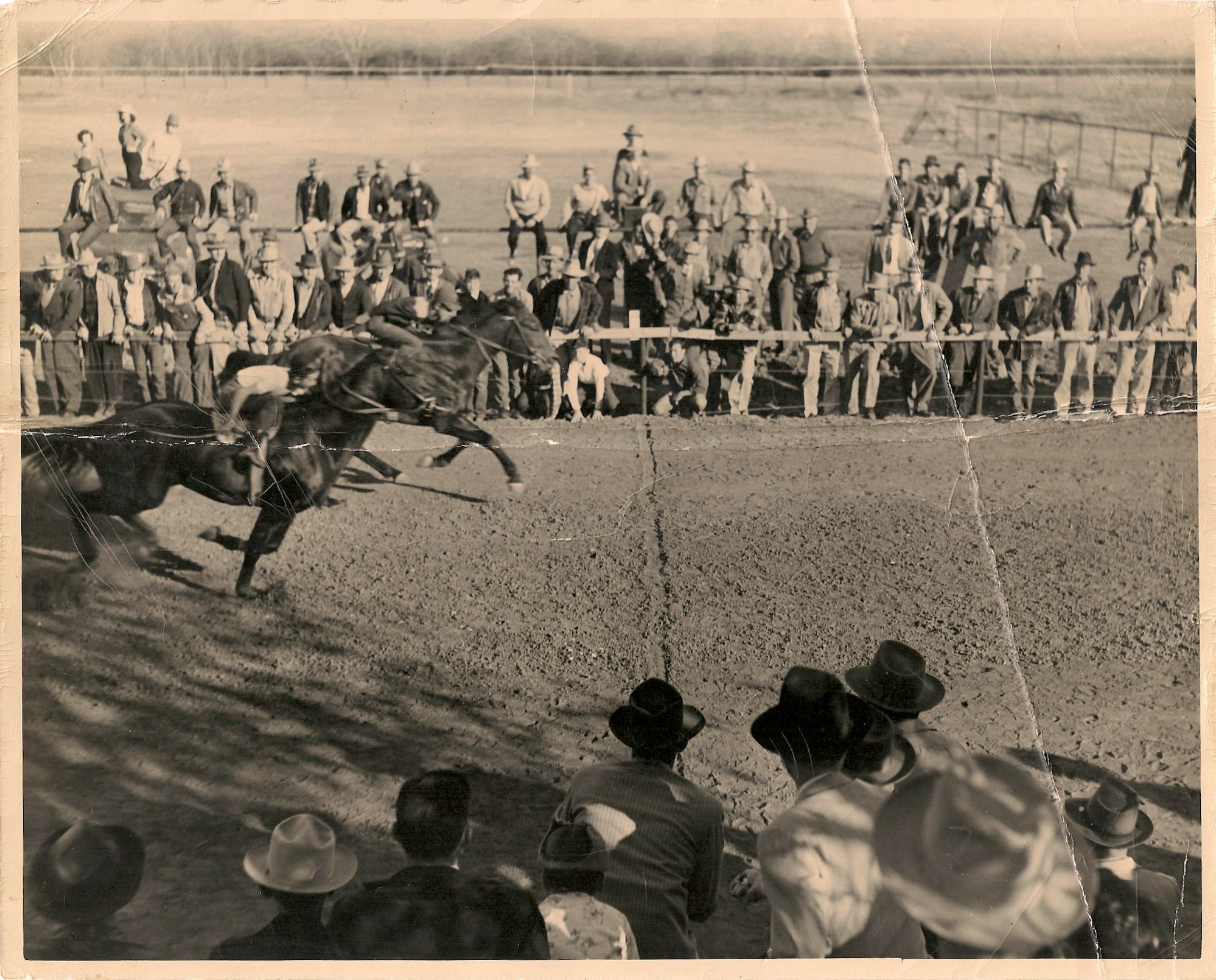
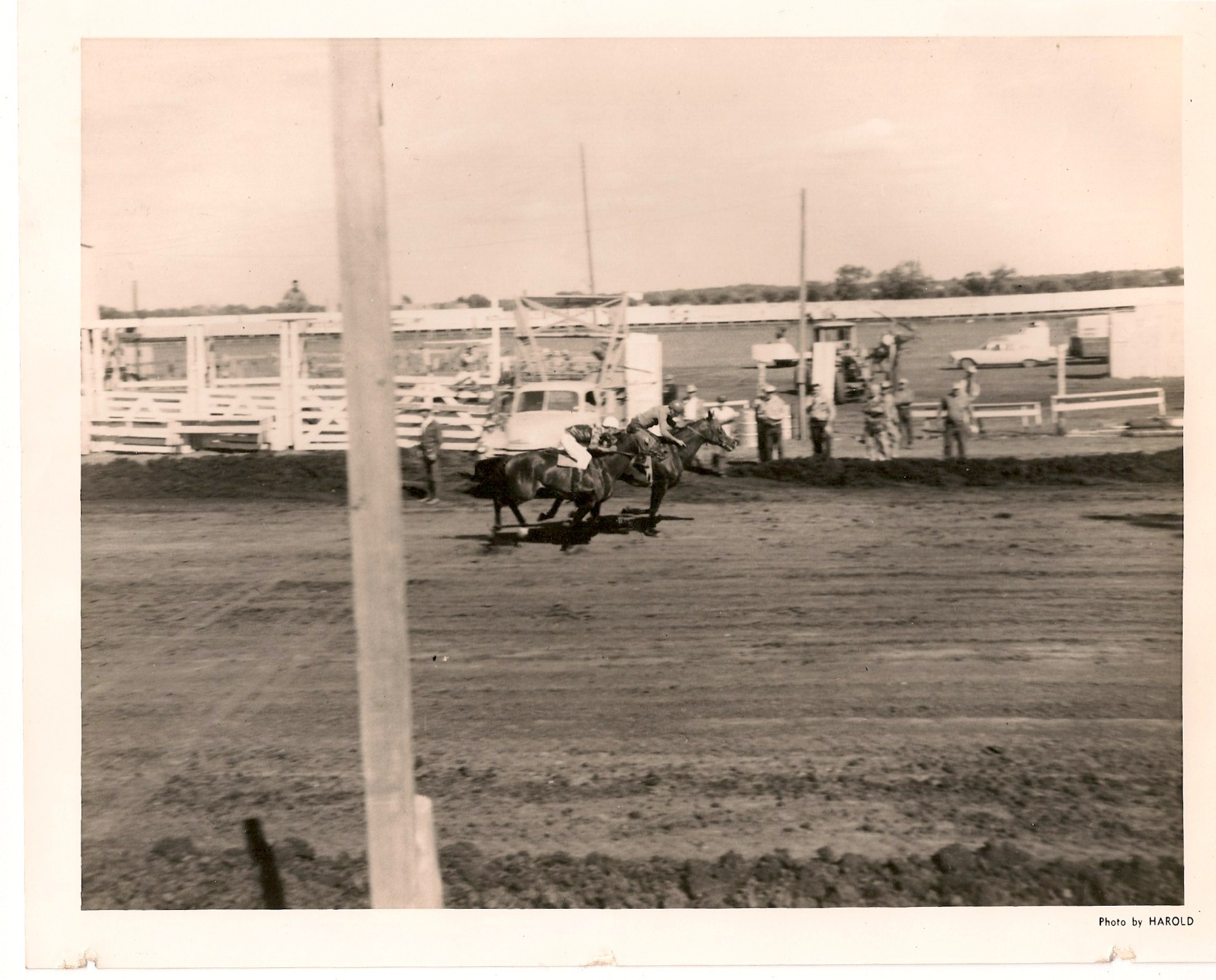
“The old-timers in Louisiana all remember Miss Pine,” said Glynn “Tee Red” Bernis, the former boy-rider of the legendary Chestnut mare who retired with an undefeated record in 32 career starts from the bush track circuit.

Now 62-years-old, Bernis remembers the powerful race mare with a reverence only matched by her legendary talent. “There was no other horse like Miss Pine. She could outrun anything.” He continued, “She was the best Quarter Horse that ever raced.”

Yet, you won’t find Miss Pine in a record book for racing. The Texas-bred mare was never registered nor did she race on any regulated track during her career.

As a result, the glorious legend of Miss Pine is largely invisible today. Like many of her contemporaries, the achievements of the bush track horses aren’t neatly catalogued to preserve their legacy. Rather, their history is maintained through an unofficial, and most often, oral record of their accomplishments.

“The younger generation doesn’t remember those horses,” Bernis explained as he reminisced about Miss Pine.

Yet, for the few that remember Miss Pine, she is a legend. “For a quarter horse, she was one of the best racehorses ever. You just don’t run 32 times and win 32 races on any kind of race track. She won from Maine to Spain, so to speak. Muddy tracks. Fast Tracks. It didn’t make any difference. And, it didn’t make any difference who they brought for her to race. She never got beat,” said Bernis.

As a six-year-old, Bernis began riding Miss Pine for her late owner and trainer, Pierre LeBlanc. He explained, “I rode her about four or five times. My brother, Kerwin, rode her the rest of the time.”

Bernis then recounted an incident in Texas in which both brothers rode Miss Pine to victory on the same day. “In the first match race, Miss Pine ran with open lanes. She had never run with open lanes and my brother, Kerwin, was riding her. She won by two or three lengths, but she was swerving all over the race track.”

After Miss Pine’s victory, Bernis recalled, “The people said they wanted a rematch. So, Pierre LeBlanc said, ‘We’ll rematch her in three hours, but we want a rope down the lane so that she can run straight.’”

Three hours later, Miss Pine was set for a rematch. However, this time, Bernis was called upon to ride the champion mare. “Instead of putting my brother, Kerwin, on Miss Pine, they said, ‘Tee Red, get on Miss Pine,’ since I was about twenty pounds lighter than him.”

Bernis explained, “She took about three jumps out of the gate and pulled down the rope on the race track. She still won though. It was like the other horse wasn’t even in the race.”

He marveled, “She was a sweetheart. All she knew how to do was run. She didn’t like any horse to come by her. She would never let anything outrun her.”

And, as the career of Miss Pine came to life in Bernis’ tales of the race mare, his statement, “She could outrun anything,” began to set in. He meant anything. Colts, fillies, maidens and champions. Simply put, any comers were doomed when the mare appeared alongside them at the starting gate.

According to Bernis, a loose horse couldn’t even outrun Miss Pine. In one race, the mare was matched against a contender that carried a rattling rock-filled can on its’ back. Despite the weight in favor of her opponent, the race went forward.

“There’s a Cajun saying, ‘You ride what you want, I’ll ride who I want,’” Bernis explained. “They don’t say anything about a live jockey.” And, in the end, the loose horse didn’t blemish the mare’s perfect record. “Miss Pine still beat him with my brother, Kerwin, riding.”

Yet, for Miss Pine, capturing a victory seemed to be a bittersweet occasion at times. Bernis recounted a tale in which Miss Pine was shipped to run a match race in Mississippi. “She was racing a horse named ‘Shoefly Baby,’ who was another champion Quarter Horse at the time. They matched for a lot of money. Pierre LeBlanc and some of the other guys had bet a lot of money on Miss Pine. They would bet five or ten thousand on a match race.”

However, Miss Pine wouldn’t get to bask in the glory of another victory if she beat Shoefly Baby. “Before she ran, Pierre LeBlanc told us, ‘After the race, pull Miss Pine up, leave the racetrack, put her in the trailer and head back to Louisiana. There is going to be a war after this race since they’ll be mad we took their money.’”

Bernis then reflected, “I’m pretty sure they knew she was undefeated, but they thought they could outrun her.” When she crossed the wire first, Miss Pine was loaded onto the trailer to Louisiana, without any praise or garland. “We never left her side during that trip,” said Bernis.

Yet, at times, Miss Pine brought home a much easier victory. Bernis recalled, “On one occasion, we leased Miss Pine to some people in Texas. There was a horse called ‘Be Sure Now.’ He was the leading Quarter Horse runner. They had organized a $50,000 race for ‘Be Sure Now,’ with a $20,000 forfeit penalty.” He explained, “If he ran, they could win $50,000. If he didn’t run, they had to pay a $20,000 forfeit.”

The lessors of Miss Pine saw an easy $20,000 profit before the match was ever held. “The people who leased Miss Pine brought her to the race to match against ‘Be Sure Now.’ Once the other side found out that they were racing against Miss Pine, they paid the $20,000 to forfeit.” Bernis reflected, “That’s how fast she was.”

“She was open to the world. If anybody thought they had a horse that could outrun her, they could bring ‘em,” said Bernis.

However, few came to try to conquer the mare. “Sometimes, Miss Pine would only run about five times a year. It was hard to get anyone to agree to match race her.”

And, in the end, Miss Pine retired with a Hollywood ending. The Western actor, Dale Robinson, reportedly purchased the mare for breeding. She never raced again after the sale. As a broodmare, Bernis remarked, “Robinson raced a couple of horses out of Miss Pine. None of them were really good racehorses.”

It seems Bernis’ belief proved true at the close of her career.

There was no other horse like Miss Pine on the bush track circuit.

“She could outrun anything.”

Photo Credits: Oscar and Patty Wells. Bush Track Photos. Used with Permission from the Wells Family.

  • Share/Bookmark

The Priceless “Pryce.” Racing for Autism Awareness Proves to be a Winning Endeavor.

July 1st, 2011 § 8

There is something about a two-year-old racehorse that draws optimism from seasoned owners in a sport with dizzying odds of finding success at the highest tiers of the racing world.

Yet, the very nature of odds is that they judge what is probable rather than what is possible in the world.

Pryce Robertson, the namesake to a two-year-old colt named “Pryce’s Posse,” has proven what is possible through working toward raising autism awareness after being diagnosed with autism at an early age.

And now, Pryce has a winning two-year-old colt to bolster his cause.

His father, Rich Robertson, Managing Partner of Tri-Star Racing LLC, explained that Pryce was initially diagnosed with autism when he was 3 1/2 years old. “We were told that he would never speak a word and that we would probably have to institutionalize him by the time he turned thirteen. It was pretty dismal.”

However, Robertson and his wife, Vickie, didn’t accept the odds against their autistic son succeeding as an individual in the world. Instead, they focused on the possibilities for Pryce’s future.

Robertson explained, “We just don’t quit. My wife and I don’t have the word ‘quit’ in our vocabulary. When we received the initial diagnosis, I told the doctor, ‘I accept your diagnosis, but I will not accept your prognosis.’”

In the years that followed, the Robertsons focused on autism education and awareness. Vickie Robertson put together an educational program in their home for Pryce. There were volunteers around the clock as Pryce was schooled eight-hours a day, seven days a week. The family also created “The Pryce Robertson Autism Awareness Foundation” in an effort to help fund autism awareness and education.

The Robertsons also began participating in the racing industry in 1995. Robertson explained, “Pryce is a special individual and he has always loved the horses. They were a big part of him coming out into the world, being in a crowd and watching the horses. I owe a lot to the horse business and being in the horse industry.” As part of his gratitude, a portion of the winnings from every Tri-Star horse are donated to the Pryce Robertson Autism Awareness Foundation.

This past April, the Robertson family’s involvement in racing resulted in a beautiful twist of fate to help promote autism awareness.

Robertson saw a Posse colt enter the sales ring in Texas. The colt failed to meet the reserve price at the sale. Robertson, along with his partner and friend, Alan Dean, believed that the colt was worth a second look and went to the consignor to view the colt. He ultimately purchased the two-year-old colt privately after the sale.

Robertson explained, “Pryce’s Posse is a nice, well-balanced horse. Through our private sale, we paid $12,500 for the horse. But, it’s not the size of the dog in the fight, it’s the size of the fight in the dog. He’s not a huge horse, but he has a lot of qualities that I look for in a racehorse. He’s very competitive and has the will to win. He wants to do things the right way.”

The Robertsons decided to name their colt “Pryce’s Posse,” after their son. Robertson chose the name when the horse demonstrated talent in training. “We initially thought of three or four names. Then, we realized that this may be a very special horse. So, I said, ‘Well, if he is going to be that special, and I have a special son with autism that put us in the horse business, I think he should be named after Pryce.”

On Father’s Day, Pryce’s Posse made his maiden debut at Arlington Park as Rich and Vickie Robertson stood at the rail and watched. In a stunning turn for home, the colt won by four lengths in his first outing.

Robertson later recalled, “When Pryce’s Posse won on Father’s Day, it meant more to me than any race that I’ve ever won. I’ve won a lot of races. I’ve won stakes races. I won with a horse at Churchill on Oaks Day. But, this particular horse winning a race on Father’s Day, knowing that Pryce was at home watching it on television, meant more to me than any race I’d ever won.”

After Pryce’s Posse won his maiden debut, the phone started ringing with lucrative offers to purchase the colt, far in excess of the original sale price paid by Robertson. Robertson consulted with his partners, as well as his wife, Vickie, and son, Pryce.

Robertson explained, “Pryce said, ‘Dad, it’s a lot of money. But, I think we should keep him.”

And, as for his wife, Vickie, Robertson already had his answer. “My wife never wanted to sell the horse. And, she’s been in the horse business long enough to know that things can happen. But, she knows the difference between the horses that you should sell and keep.”

And, Robertson agreed with the decision to pass on the offers to purchase the horse. “I think one of the reasons that I love horses so much is that you can get a young horse and you’re told, ‘Well, they probably won’t do this. The breeding says they can’t do that.’ And, you’re told, ‘You’ll probably have to pay a quarter of a million dollars to get a horse that can run.’ Well, I’ve had some great horses and that’s not true.”

Yet, Robertson’s optimism regarding his two-year-old colt has a strong precedent. The colt’s namesake, Pryce, is now twenty-years-old and is currently attending his second year of college. The family is currently building a website for the “Pryce Robertson Autism Awareness Foundation.” The Foundation continues to raise money to promote autism awareness, including funding workshops for teachers to understand autism and creating a college scholarship fund for an autistic child.

When the website is completed, the Robertson’s have decided that the administrator should be a person who was never supposed to speak a word in life - Pryce Roberston.

It appears the odds of success are tricky in both life and racing.

Sure, the odds can tell you what is probable.

But, in the end, the possibilities don’t always follow the odds.

They beat them.

  • Share/Bookmark

“More Horse Power, Please.” Lessons from NASCAR to Drive More Fans into Horseracing.

June 23rd, 2011 § 13

Super Saver Kentucky DerbyWith NASCAR ranking as the number one spectator sport in North America, there is undoubtedly widespread interest in racing.

A race, in and of itself, is exciting.

There is something awe-inspiring about watching a single soul triumph over any comers to the challenge, whether in a track meet, stock car showdown or witnessing a Thoroughbred racehorse blaze past their opponents in a simple refusal to lose a race.

Racing, in any form, highlights the excitement of individual achievement above and beyond many other sports.

The very nature of racing is that a single victor bested a field of several contenders that arrived with all of their eyes on the same prize. And, in the end, it is the lone champion that captivates an audience long after a race is run.

NASCAR’s marketing gurus figured out the value of the individual athlete many decades ago. And, they showcased their athletes in response. Within fifteen minutes of wandering onto the NASCAR site, I left with the ability to name a few leading drivers, point to a couple legends in the history of the sport and access plenty of videos if I chose to learn more about the sport.

And, unlike many major horse racing sites, it was free to learn how to actively participate as a potential fan of NASCAR. I didn’t have to open an account or pay to watch races. Their champions, past and present, were easy to spot. I just clicked, “Drivers,” and there were plenty of drivers to read about and learn why they are exciting figures in the sport.

In contrast, horse racing doesn’t have a free industry-supported site that gives away non-stakes race videos or past performance records of the athletes that are currently racing. We also don’t showcase our champions throughout the history of the sport to potential fans at their first access point to the sport.

It made me wonder about techniques for marketing horse racing so that newcomers may find an interest in our sport, and ultimately, visit the track for a race.

Wouldn’t it be great if the National Thoroughbred Racing Association (NTRA) had an introductory video compilation of some of the greatest moments in racing when a visitor arrived at their home page? A newcomer could see the glory of Secretariat racing in the Belmont, Zenyatta winning the Breeder’s Cup Classic, Seattle Slew being crowned the only undefeated Triple Crown Winner, along with plenty of other magnificent racing moments during their first glance at our sport.

What if the NTRA posted all of the live track feeds and race replays in one location for free on their site? A newcomer wouldn’t have to dog hunt from track-to-track to find a race or set up a wagering account to learn more about horse racing.

Wouldn’t it be nice if there was a timeline of the historical moments in racing, with free video footage, for newcomers to browse when they visited the NTRA site for the first time?

What if the NTRA published a list on their home page of every Eclipse-award winning horse and provided a biography of each Champion for a newcomer to learn about the Kings and Queens of our sport?

Finally, wouldn’t it be nice to see horse racing being promoted via television advertisements and on billboards near major tracks? NASCAR doesn’t wait for mainstream media to get interested in their sport. Instead, NASCAR jumps right in to mainstream culture with ad campaigns geared toward building and keeping a fan base.

NASCAR has advertising campaigns to target their core base, reminiscing about the most captivating moments in the sport, as well as showcasing their popular drivers in the sport at the present. The commercials are emotional, fast-paced and highlight the excitement of attending the races. As a non-enthusiast of NASCAR, I actually wondered while watching a few NASCAR ads, “Why haven’t I ever been to one of these races?” It would be nice to instill that wonder in potential enthusiasts of horse racing with similarly inspiring commercials and advertising campaigns.

So, you may be wondering, why is NASCAR giving away so much information for free that fans pay for in horse racing? And, as the most popular spectator sport in North America, why is NASCAR advertising at all?

Simple. NASCAR recognizes that the athletes and the fans are what drive their sport. They showcase what draws fans to the races and continue to market to strengthen their fan base.

And ultimately, the focus of NASCAR’s website wasn’t to make money from information that was critical to learn about the sport and get involved as a fan. The NASCAR site seemed to provide fans with as much free information as possible about the sport as part of a larger goal – to drive fans to purchase a ticket to a race.

After looking at the NASCAR marketing strategies, it made me wonder what an industry-based horse racing site would look like to a curious NASCAR fan that didn’t follow our sport.

Would the NASCAR fan leave with any knowledge of some of the greatest moments in horse racing?

Could the NASCAR fan name a few of our champion racehorses throughout history?

Would the NASCAR fan feel like there was a community to welcome them into the sport if they wanted to attend a race and didn’t know another horse racing enthusiast?

Sadly, I believe the answer is “No” to those questions.

Yet, one vital question remains: “How can we get our core fans, along with newcomers, to come to the racetracks on a regular basis?” NASCAR’s marketing model provides some valuable ideas.

The horse racing industry should provide free access to educational tools about the sport, including past performances and race replays, to educate newcomers and showcase our athletes.

Horse racing also needs to highlight the greatest moments in the history of the sport, provide free video footage of important races throughout the ages and advertise the current excitement surrounding the sport on mainstream television.

At the heart, NASCAR’s success demonstrates that the athletes and the fans drive a spectator sport.

Put them in the spotlight first.

In the end, let the stands fill with the wonder of what may lie ahead.

  • Share/Bookmark

For the Love of a Longshot: Ruler On Ice is Good for the Sport.

June 13th, 2011 § 9

There was no coronation of a king at the Belmont this season, but a ruler emerged for fans to follow - Ruler on Ice.

In my view, the gelding is good for the sport.

Yet, Ruler on Ice didn’t always look good from my vantage point.

When he emerged from the tunnel for the post-parade in the Belmont, the gelding appeared rattled from the crowd as he made his way onto the track for the last jewel of the Triple Crown. I thought he was going to fall down in front of a national television audience. He certainly didn’t look like he had a shot in the Belmont.

At odds of 24-1, I felt downright bad for the guy as he set foot on the track. It appeared few had placed a vote of confidence in his ability to win at the wagering windows. The sad sight of him made me place a bet in his favor just to show support. As I viewed it, I didn’t want to see the poor guy go out there all alone.

If I had researched a thing about Ruler on Ice before making my bet, I would have known there was nothing particularly sad about his entrance into the Belmont.

At his stable, Ruler on Ice had always been the underdog, and, the gelding seemed perfectly fine with it. The top selection for the Triple Crown trail at the start of the year was Sweet Ducky. After Sweet Ducky was sold, Pants on Fire emerged as the hopeful in the barn for the Triple Crown outings. And, as the first two legs of the series came and went, Ruler on Ice didn’t seem to be targeting a single jewel.

It appears Ruler on Ice was busy sorting out his “likes” and “dislikes” as a racehorse.

As I read through the post-race transcripts for the Belmont, Ruler on Ice emerged as quite a salty character. He was gelded in an effort to calm his disposition. Yet, gelding him didn’t seem to change the bulk of his quirky behavior. Ruler on Ice decided that he didn’t like his trainer’s main barn. Instead, the gelding preferred his plain stall in the trainer’s “B” Barn at Monmouth Park. Further, Ruler on Ice didn’t like being shipped. In an effort to simply make it the Belmont, the gelding was given his own van and an attendant to pet him during the sixty mile trip to Belmont Park.

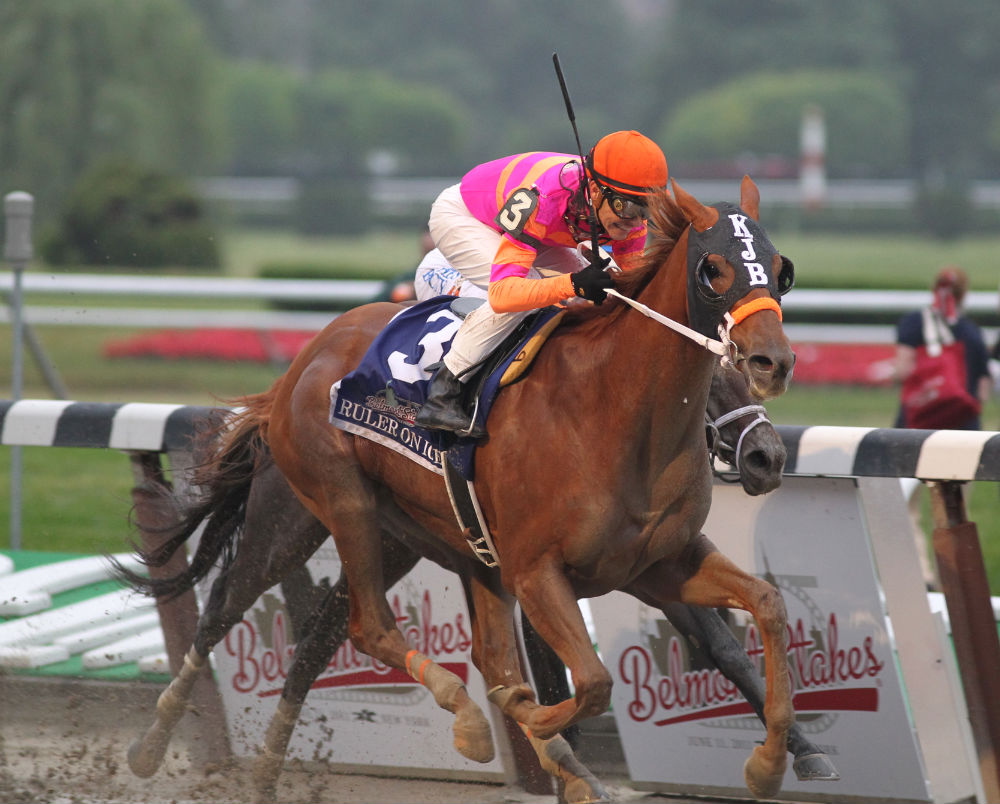
Yet, in the end, Ruler on Ice went to the wire all alone, awarding his connections with their first victory in a Triple Crown race. The “poor guy” that prompted my “sympathy bet” had just captured a commanding victory in the Belmont.

And, in his fickle-fashion, the gelding didn’t want to wear a blanket of carnations or pose for days of photos with the media. Instead, the Belmont-winner simply wanted to head back to his plain stall in his “B” barn with a single gem – a Triple Crown victory.

At the end of the day, the gelding did just that.

Yet, in my view, the victory of Ruler on Ice provided a perfect close to the Triple Crown season. As the television cameras and non-industry publications showcased the sport, the athlete and his connections rose to the occasion.

It was good for horse racing.

His owners, George and Lori Hall, seemed genuinely humbled and awestruck by their Belmont-winning racehorse. It was their first Triple Crown victory.

The trainer, Kelly Breen, appeared in an elegant hat and told the tale of how he wasn’t born into a racing family. Breen graciously thanked the winning owners for the opportunity to train their horses during the moment of glory. It was his first Triple Crown victory.

And finally, Jose Valdivia, the winning rider, stood in a beautiful juxtaposition to Breen, describing what it feels like to win the Belmont having come from a racing family. He relayed that his first congratulatory call came from his Uncle, a trainer in Peru. The rider beamed, saying he felt like he was “on cloud nine right now.” It was his first Triple Crown victory.

And, Ruler on Ice took his first step toward providing the longevity that many racing fans crave from the equine athletes in the sport. At the end of the Belmont, the salty gelding took the trip back to his plain stall at Monmouth Park and gave fans something to bet on future race cards – a Belmont-winner. It was a victory for the sport.

Yes, there was no coronation of a king at the Belmont this season, but there certainly remains a ruler.

Ruler on Ice.

I think the gelding, and his gracious connections, are good for the sport.

Thank you to horsephotos.com for the photo of Ruler on Ice in the Belmont. To visit the horsephotos.com website, please click here.

  • Share/Bookmark

“I Was a Fan of Him.” Revisiting Summer Bird’s Victory in the Belmont.

May 24th, 2011 § 23

Every now and then, a remarkable racehorse can elude you when it is in your direct line of sight.

And, in our home, there are few places to fix your eyes without finding a photo of some racehorse that was a remarkable horse for varying reasons, ranging from claimers to Triple Crown Winners.

It makes it hard to see the forest through the trees at times, especially when a big red oak like Secretariat has a photo of his Belmont stretch run posted squarely in the middle of the room.

When I think of the Belmont, my mind immediately drifts toward Secretariat and his 31-length victory. The photo of that moment has been hanging in the same spot for years, and, I never dream of moving it. In my view, it is a perfect snapshot of the level of otherworldly talent that deserves the honor of the Triple Crown.

Yet, this year, as two jewels of the Crown divided in the Kentucky Derby and Preakness, I was left to ponder the importance of the achievement of winning the Belmont when there is no Triple Crown in contention. And, as I stared at my pictures of beloved Triple Crown winners, another remarkable horse emerged to answer my question of the importance of the Belmont when there is no Triple Crown at stake this season.

A picture of Summer Bird and my husband emerged from the tapestry of photos hanging around the house. In the photo, they are walking together in the grass like two old pals on a Sunday outing. My husband has a look of admiration on his face as he is watching Summer Bird toss his head in the air without a care in the world.

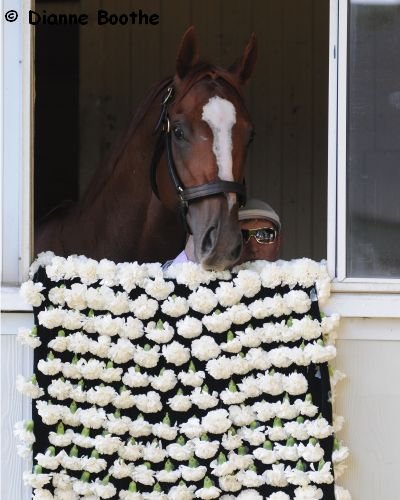
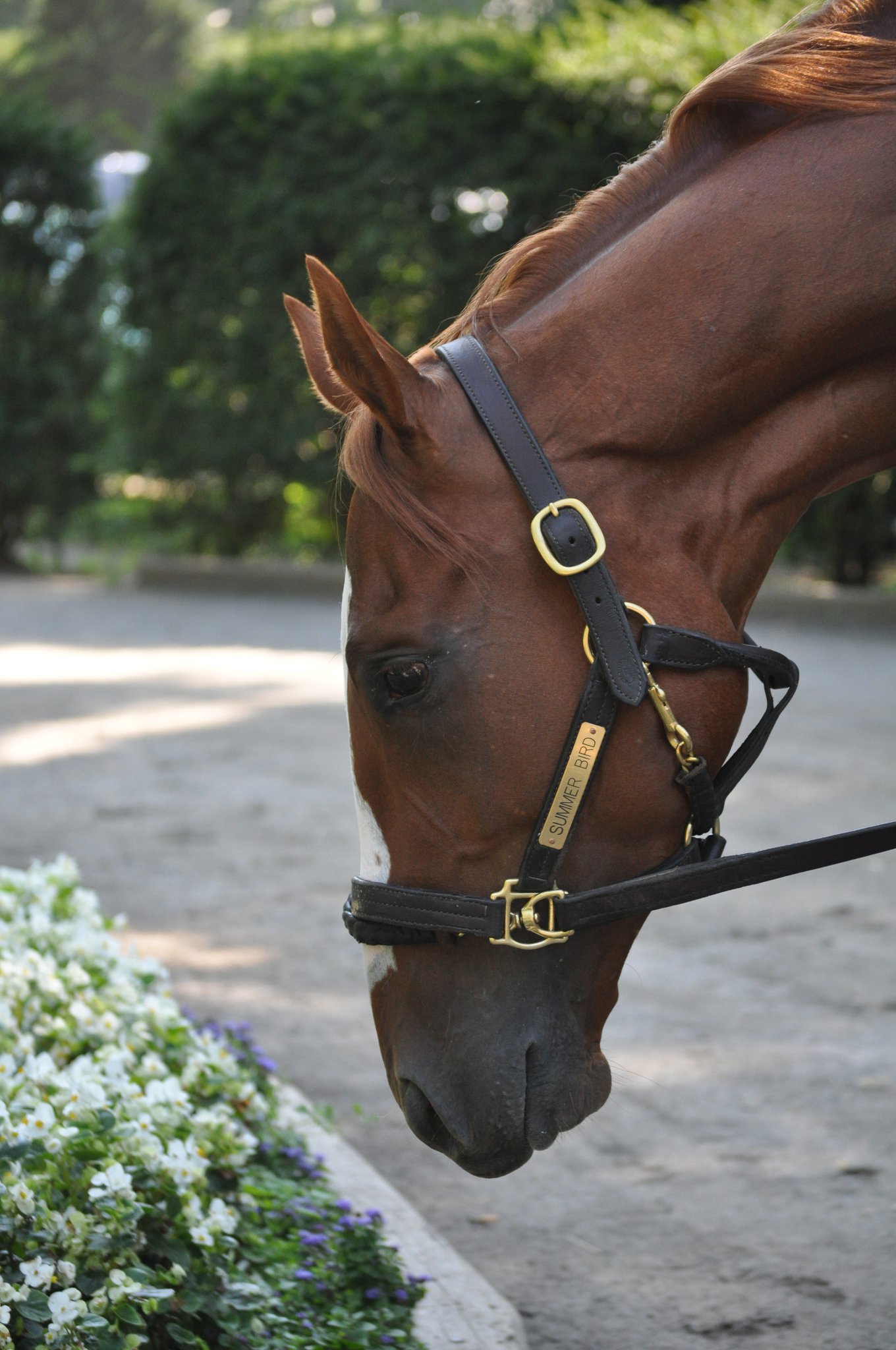
While I looked around the room at the array of racehorse photos, Summer Bird continued to peek out in various situations. In one photo, the big Chestnut is stopping to smell the flowers at Saratoga before the Travers Stakes. In another snapshot, Summer Bird is staring down my husband while he grins back at the horse, beaming with joy. And, in a final picture, Summer Bird is sniffing his new blanket of white carnations after he just won the Belmont in 2009.

As it turns out, Summer Bird’s items are such a fixture in our house that I barely even notice him anymore. He has his trophies positioned in the dining room, saddle towels in various frames and his halter hangs quietly on the kitchen wall from his start in the Kentucky Derby. On any ordinary day, I just live with his things. His presence is barely noticeable on a conscious level.

Yet, on this particular day, Summer Bird took center stage in my mind as the Belmont approaches and there is no Triple Crown in contention. I looked at my husband, Trainer Tim Ice, studying the Daily Racing Form across the room in perfect tranquility.

Unbeknownst to him, he was about to get bombarded with questions from his wife about the personal importance of Summer Bird capturing a lone jewel in the Triple Crown.

I turned to him and asked, “What do you think is the importance of the Belmont without a Triple Crown in play?” He looked up and replied without much thought, “It’s the oldest race in the Triple Crown series and the first time that a three-year-old horse is asked to run a mile and a half.”

In his mind, the matter was closed.

Yet, it wasn’t closed at all in my mind. I shot back, “What about when you went to the Belmont with Summer Bird. How did you feel when you realized he had won the race?” He looked up at me and considered his answer more carefully this time around.

He gave a humble smile and answered, “When Summer Bird got clear in the stretch, I stood watching and said to myself, ‘Oh my God. He’s going to win the Belmont.’”

His description of the moment seemed to prove the magnitude of the race in its own right and the glory that falls upon any horse that claims the final jewel.

Then, I looked over at the Belmont trophy that sits in our home. Suddenly, it stood out as I considered the moment Summer Bird earned that trophy as he shot out from the pack to claim his victory in the Belmont Stakes.

I also considered the other Belmont-winning horses, whether they won the Triple Crown or solely the final jewel in the Belmont, and was awestruck by the idea that all of the winners stood next to same trophy.

A Triple Crown trophy itself, in any race of the series, holds something sacred. They are holding the same trophy that all Triple Crown winning teams stood next to at some point in racing history.

It occurred to me that holding a single jewel of the Triple Crown makes a horse a king, even if it is just for a day, whether they hold all three gems or a lone jewel. And, for those who have stood in the winner’s circle in any Triple Crown race, it appears that the moment lasts long beyond the winning garland.

It lasts a lifetime.

I considered the original picture on the wall, the two of them walking side-by-side, without a care in the world. And, I had to ask, “What was it about Summer Bird that made you so happy?”

Tim replied without any hesitation, “Just being with him made me happy. You see, I wasn’t just his trainer. I was a fan of him.”

And, in retrospect, it seems that Summer Bird was just as happy to be walking side-by-side with his friend and admitted fan, whether they were en route to a race or simply enjoying an ordinary day.

In a recent trip to Kentucky, we visited Summer Bird at Paul’s Mill Farm. And, that morning, the portrait of the friendship between the two standing side-by-side was brought to life before my eyes.

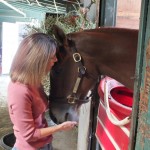
There is no doubt that Summer Bird recognized his old friend when his former trainer entered his sight. It was as if they maintained a repertoire with each other that outlasted the stallion’s racing career. Summer Bird was downright giddy and appeared to bask in moment the two of them took a walk together outside of the barn. It was as if the photo in our home had come alive for a brief moment in time.

As we left the stable that morning, the Champion made a long noise as he watched his old friend walk away. I asked Tim, “Do you think he recognizes you?” And, in an easy reply, he answered, “I think he recognizes me. We spent a lot of time together.”

I replied, “Did you hear him make that noise at you?”

Tim laughed, “Yes. He was hollering at me.”

I joked, “What did he holler at you?”

Tim smiled and said, “He hollered that he would love to race again.”

And, as we walked away, it appeared that the two of them would never forget the day they captured a jewel in the Belmont.

PHOTO CREDITS:

Summer Bird with Carnations. Photographer: Dianne Boothe. (Website: http://www.nyraracingphoto.com)

Summer Bird at Saratoga with Flowers. Photographer: Cathleen Duffy. (Website: http://www.thehorsewhisper.com)

Summer Bird Winning Belmont. Photographer: Dianne Boothe. (Website: http://www.nyraracingphoto.com)

Summer Bird and Tim Ice Staring at Each Other in Stable Area. Photographer: Cathleen Duffy. (Website: http://www.thehorsewhisper.com)

Summer Bird and Tim Walking With Each Other. Photographer: Adam Mooshian. (Website: http://www.adammoosh.com)

  • Share/Bookmark