
In the 2001 Kentucky Derby, Monarchos blazed toward the wire to win with a time of 1:59 4/5 – just two tenths off the record time of Secretariat. In less than a second, Monarchos had become the fastest living Kentucky Derby winner.
The man behind Monarchos, breeder Jim Squires, stood in the crowd in disbelief. Having retired from his profession as a journalist, Squires had just witnessed a steel gray colt blur the ordinary lines between fact and fiction.
Squires was now cast as a subject in one of the most fantastical stories in horse racing.
Born in Tennessee as the son of a textile-mill worker, Squires was fascinated by horses as a child. He would draw horses when he was in first grade rather than concentrating on arithmetic and save his money to ride “Tony,” a carnival pony, for a nickel.
As we stood watching a two-year-old colt breeze across a track, Squires quipped about how “Tony” would bite him on his legs when he rode him. He laughed as he remembered his mother making him wear pants in the summer since his legs had bite marks from riding “Tony” during carnival season.
As an adult, Squires worked as a journalist. When he moved to Illinois to become editor of the Chicago Tribune newspaper, he brought two cutting horses with him from Florida.
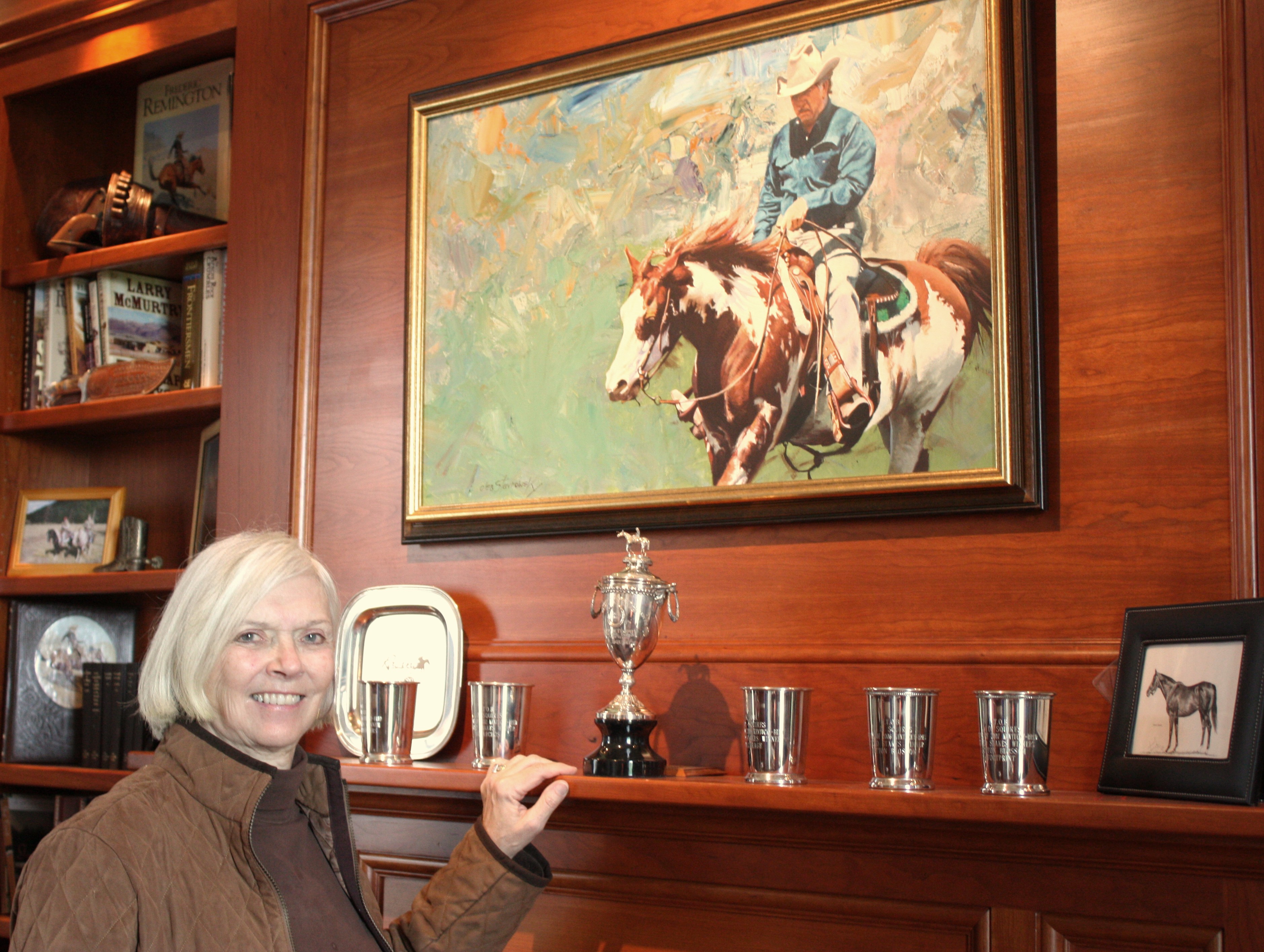 While searching for a home for his horses, he met his wife, Mary Anne, a Chicago native and Northwestern graduate. She had been working as a real estate agent and was selling farms in the Barrington Hills area. Squires married Mary Anne six months after their meeting and they lived on the farm he had purchased.
In 1988, the couple moved to Kentucky and formed their current farm, “Two Bucks.” They bred Paint horses, cutting horses, and Quarter horses. Jim Squires began to write books in his retirement.
After serving on the Kentucky Racing Commission, Squires developed a growing interest in thoroughbreds, which led him to purchase a few mares. As his mare population increased, Squires found Regal Band, Monarchos’ dam, at a Keeneland sale in 1995. When she failed to meet her reserve price, Squires later purchased Regal Band for $14,000.
Squires eventually made the life-changing decision to breed Regal Band with Maria’s Mon. In his book, Horse of a Different Color, Squires explains how both horses “had fallen a good ways from the thoroughbred aristocracy” at that point. He recounts, “…Only the offspring would determine the worth of the parents and the wisdom of their union.”
In a few golden fractions, Monarchos validated Squires’ belief in the value of these two horses. Their union had proven genius.
During my recent visit with the Squires, I not only learned about Monarchos, but also, the amazing character of these two people. Their kindness and generosity is as astonishing as Monarchos’ near record-breaking victory. I would like to extend the warmest thanks for the following interview.
JW: When did you gain your appreciation for horses in life?
JS: Two of my earliest memories are of being hoisted upon the back of a red pony named Peaches by a grandparent (I couldn’t have been more than three or four years old at the time), and not long after that standing at a fence flirting with a group of Palomino ponies at eye level on the other side.
I suspect these are what ignited a horse gene passed down from Cherokee Indian ancestors on my mother’s side. I remember drawing horses on my tablet in the first grade when I should have been learning arithmetic and dreaming about them at night.
JW: Prior to starting your farm, “Two Bucks Thoroughbreds,” you were Editor-in-Chief of the Chicago Tribune newspaper. What led to your decision to move to Kentucky and begin breeding thoroughbreds?
JS: When I became editor of the Tribune, I already owned some riding horses, so I purchased a small farm in outlying Barrington Hills, an equine community where and Mary Anne and I soon became active in the breeding and showing of American Paint Horses.
Ten years later when I left the Tribune, we owned two stallions and 20 mares and Kentucky seemed like the ideal place to move them. We had no intention of raising Thoroughbreds but it is difficult for a horse person to live in the Bluegrass without falling in love with them.
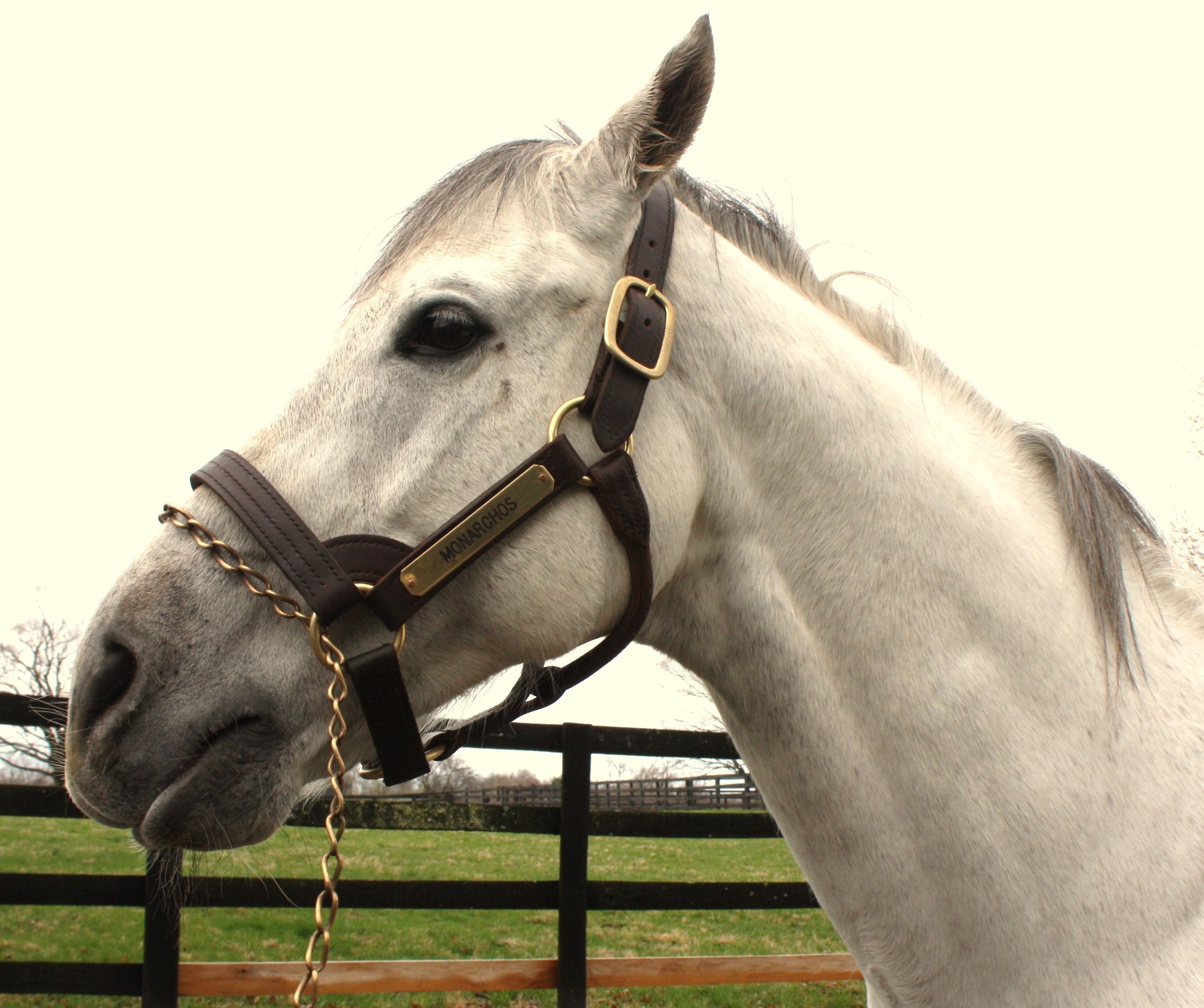 JW: Monarchos was a product of sire, Maria’s Mon and broodmare, Regal Band. What did you see in these two particular horses that led you to determine they would be a good breeding match?
JS: My quarter and paint horse experience of the previous 15 years had given me a basic understanding of equine conformation and breeding patterns, particularly a belief in the importance of female families as the conduit of good genes.
Regal Band was from one of the best families in the Jockey Club book that already produced a great mare Andover Way and a great stallion Dynaformer. Equally important was the fact that physically she resembled the dam of Doc Bar, an immensely influential sire of performance quarter horses.
I had watched Maria’s Mon win a 2-year-old race in New York and believed him to be the toughest, soundest and best-looking of all the freshman sires in my price range—and he fit my breeding theory in that he had descended from two good broodmare sires—Caro and Wavering Monarch.
JW: You were in the stable when Monarchos was born and watched his early development. Did he stand out from the other foals?
JS: By the time Monarchos was born, I had probably foaled 150 babies. Of those none came into the world brighter eyed and more ready to go. He was small, black as coal with a very big, bright eye, a lovely sloping shoulder and his mother’s star. Within a very few minutes—15 or 20 at the most—when startled by a cat in the rafters he got to his feet with ease and never once fell backwards.
Within a few hours, he was a whirling dervish doing circles around his mother and later as a weanling running, running, running long after his mates were winded, which is exactly what happened at Churchill Downs.
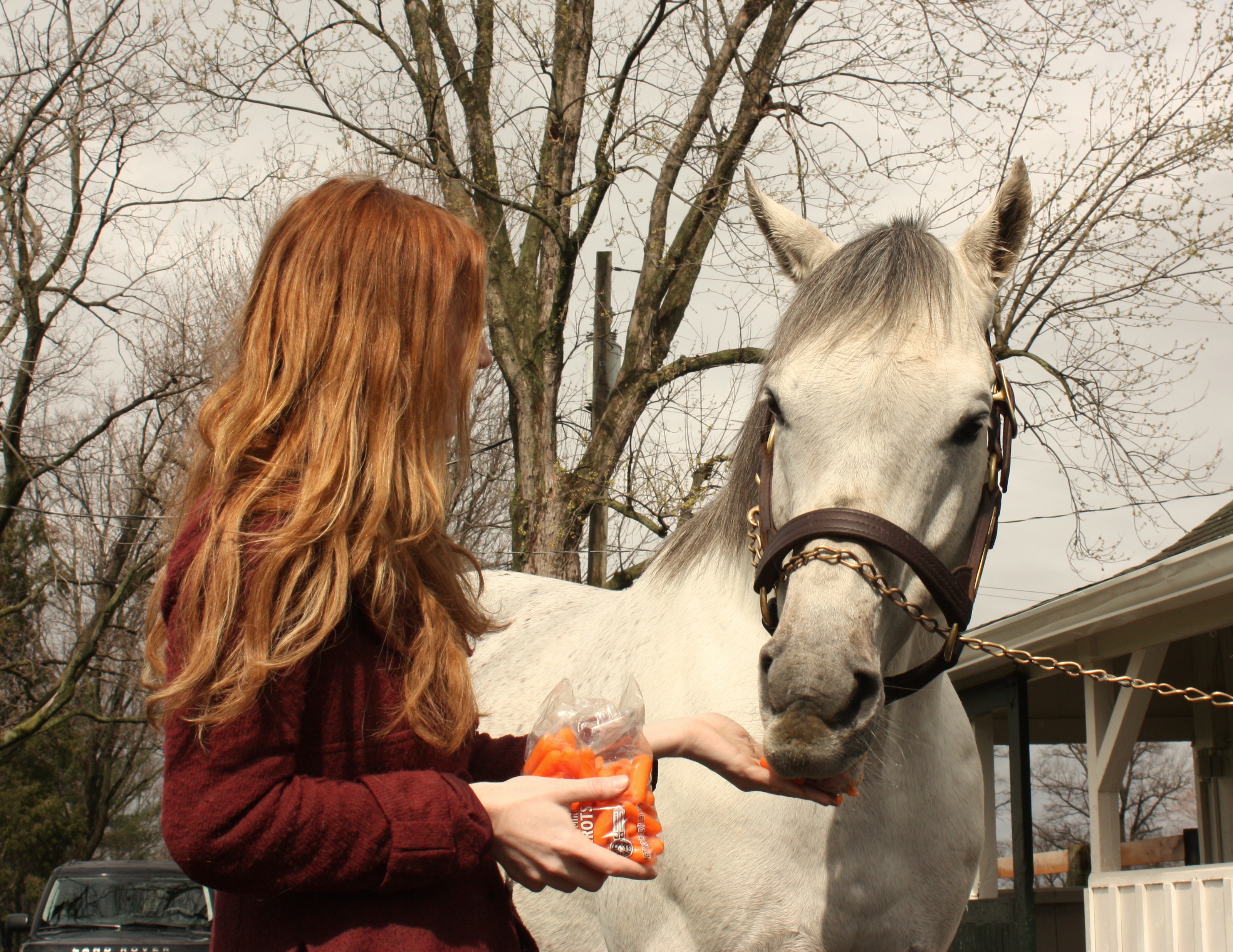 JW: When I met Monarchos during our visit, I found him to be a very gentle and kind horse. What factors do you believe contribute to good temperament in a horse – breeding, training, or both?
JS: Both I suspect. I never saw any mean temperament in any of Regal Band’s foals. But I give more weight to the latter. How a horse comes to relate to humans and other horses is probably behavior learned directly from the mother and the people who handle them. I believe the success of Two Bucks horses at the racetrack has a great deal to do with how we raised them on the farm.
JW: Can you describe how you felt when Monarchos won the 2001 Kentucky Derby?
JS: It took me an entire book - Horse of a Different Color - to describe it. And even then I failed to do it justice. I was up on the roof of Churchill Downs with the press photographers, most of whom I did not know. And they did know me.
Disbelief might have been the first emotion, realization of the extraordinary luck in involved the second. I did, however, lose my hearing for five or ten minutes afterward. I could see clearly, but heard nothing until I found Mary Anne in the crowd on the floor below. From that point on, it was a blur for a couple of days.
JW: Monarchos has the second fastest winning time in the Kentucky Derby. Do you think that Monarchos had the capacity to beat Secretariat’s track record in the 2001 Kentucky Derby?
JS: Jorge Chavez wrapped up Monarchos after he passed Congaree so easily and later said he could have gone a fraction or two faster had he known he was close to the record.
JW: Would you have enjoyed it if Monarchos had set the new track record for the Kentucky Derby?
JS: All of us connected with Monarchos were pleased to hear what Chavez said. Monarchos was indeed a very fast horse and had already proven that in the Florida Derby. But the Churchill Downs track surface was faster that day than normal.
A couple of records had been broken earlier in the day and the pacesetter in the Derby—Songandaprayer—had taken the field faster than it had ever gone before, setting records for the first few fractions. So a new Derby record would have always been suspect and an asterisk in the minds of many.
Secretariat is such an icon his record should last forever.
JW: You have been called a “Breeding Genius.” What do you think are the key elements that are present in a well-bred racehorse?
JS: The Breeding Genius moniker is a joke stemming from the point of view from which Horse of a Different Color was written. A friend of mine, the novelist Jane Smiley, once told me that after you reach the age of 50, a writer best writes with his tongue in his cheek. I did that in that Horse, writing from the third person as if the Breeding Genius (myself), and the Dominant Female (my wife Mary Anne) were characters in a piece of fiction.
Any success I have had as a breeder of horses - quarters, paints and thoroughbreds - can be contributed to an enormous amount of luck, great Kentucky ground, a well-constructed feeding program; faith in the power of female genes; and a wonderful way of dealing with horses that I learned from the experiences and teachings of two old cowboys—Tom and Bill Dorrance. What I learned from them and their followers cannot be overestimated as a factor.
JW: Do you believe that you could breed a future Kentucky Derby winner?
JS: The odds are not good. But once you do it, you never stopped trying until you run out of money or energy. I am growing shorter on both.
JW: What have been some of your most memorable moments in your years of breeding thoroughbreds?
JS: Nothing can compare with winning the Derby as a positive emotional experience.
Unfortunately, not all memorable experiences are positive. Both Regal Band and For Dixie, another great broodmare who produced several great horses including one that sold for $2.3 million long after we no longer owned her, both died at my feet.
So did my favorite riding horse and my favorite quarter horse champion mare.
But as long I keep raising horses, the memorable moments both positive and negative will keep on coming. That is the beauty of spending time with these magnificent creatures.
Jim Squires authored “Horse of a Different Color,” which is an exciting and informative book about his breeding farm and his experience with Monarchos. To view this book on Amazon.com, click here.
To comment on this post, click here.
The Saturday Post has recently started a Facebook Page. To join our group, click here.

