May 19th, 2010 §
I have a word in my arsenal that can start conversations about horse racing with people who have never bet a nickel on the nose of a horse.
It’s a great word.
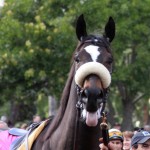
“Zenyatta.”
For those of you who struggle to define the allure of horse racing to non-enthusiasts, Zenyatta is a fun character to parade around in discussions at cocktail parties.
Why? Zenyatta appeals to pop culture and makes horse racing relatable to non-enthusiasts.
In a perfect world, I would live in a place where all my friends followed horse racing.
My social calendar would be full of trackside parties in which guests wore their handicapping picks as an icebreaker on their nametag.
However, I am young and live in Chicago.
And, until Zenyatta, any mention of horse racing to people in my age group led to blank stares and a quick change in topic.
Then, Zenyatta showed up and did something brand new for the modern era of racing.
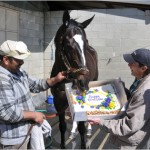 Instead of trying to lure non-enthusiasts to the race track, Zenyatta stomped out into mainstream culture and joined the party.
I have to admit - she’s a sharp girl at marketing.
Zenyatta joined Facebook and made some new friends.
This was no small adventure.
According to Facebook, the average user has 130 friends.
In contrast, Zenyatta has amassed roughly 15,500 friends on her fan page.
As for her friends, Zenyatta started hanging out with people in the younger crowd. The highest age demographic on Facebook currently falls between ages 18 through 44.
Regarding her connections, they embraced Zenyatta’s new friends and lifestyle.
Her trainer, John Shirreffs, started a YouTube channel so that her fans could watch Zenyatta’s activities from their home computer.
On YouTube, Zenyatta’s friends can experience a workout between Zenyatta and her stable mate, Green Cat.
Since the video was posted by Shirreffs, over 83,000 fans have taken a virtual ride on the back of Zenyatta.
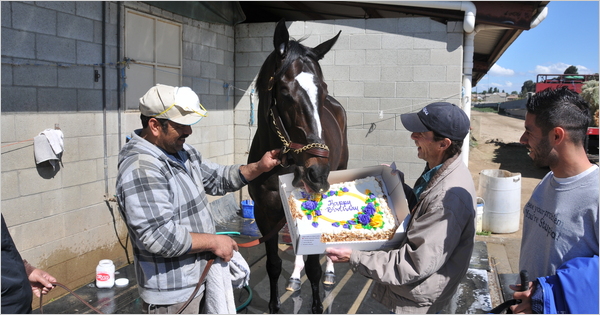
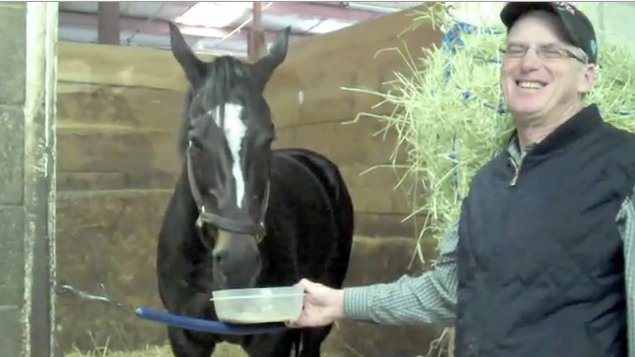
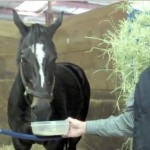 In another YouTube video, Shirreffs gives Zenyatta a Guinness beer while she is relaxing after a workout.
The clip of Zenyatta drinking a Guinness, initially posted by Shirreffs, generated nearly 4,700 views.
Apparently, many of Zenyatta’s friends enjoy meeting up with her for a drink.
However, Zenyatta is perhaps best-known for her dancing – which is catalogued in many videos across YouTube.
In the pre-race television broadcast of the 2009 Breeder’s Cup, an entire segment was devoted to Zenyatta’s dance moves. The network coverage of her dancing has since been viewed on YouTube by nearly 50,000 fans.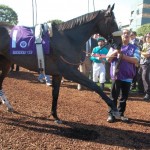
However, dancing appears to come easily to Zenyatta with the musical background provided by her ownership – Jerry Moss, co-founder of A & M Records.
Her name itself speaks volumes in this regard.
Zenyatta is named after the album, “Zenyatta Mondatta,” in recognition of Moss signing the band The Police to A & M Records.
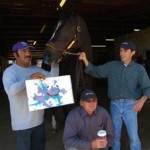 But, Zenyatta doesn’t stop on the dance floor.
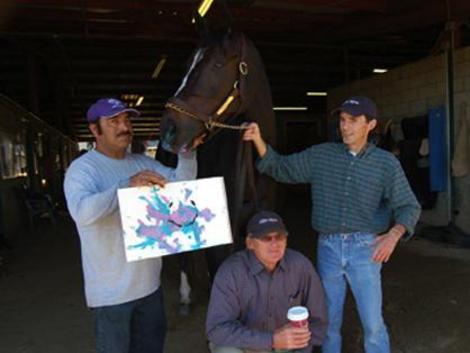
She has learned to paint pictures for auction to help fund Thoroughbred rescue efforts.
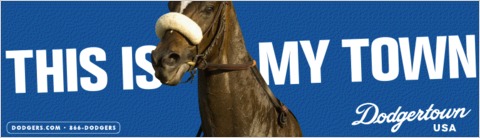
And, Zenyatta recently started marketing for the Los Angeles Dodgers baseball team.
Near her home base of Hollywood Park, a billboard stands at the corner of 106th and Hawthorne Avenue.
The billboard features Zenyatta’s familiar mug shot, with the caption, “This Is My Town,” as a marketi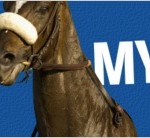 ng promotion for the Los Angeles Dodgers.
Take a minute and think about the victory embodied in that billboard.
A race horse is doing the marketing for baseball - one of the most popular sports in the United States.
Yet, Zenyatta’s crossover endeavors have not detracted from her racing talent.
As Zenyatta approaches the Vanity Handicap, she sets out to become the only race horse to remain undefeated in seventeen unrestricted top-level races in North America.
If she wins, she’ll make racing history for the third time in her career – having already captured two Breeder’s Cup records.
However, win or lose, Zenyatta has set a model for the industry to attract newcomers to the sport.
It’s simple: Zenyatta didn’t ask non-enthusiasts of racing to come to the track for a visit.
Instead, she waltzed in the world of pop culture and drew public attention to her sport.
Zenyatta embraced the Facebook trend, danced across the television screen, painted pictures for charity and offered a virtual “racehorse ride” on YouTube.
When she finished marketing her profession, she went back to her stable, drank a Guinness Beer and waited for her next start in the Apple Blossom.
And, in the end, people came to visit Zenyatta at the race track.
The hotels in Hot Springs, Arkansas were booked solid.
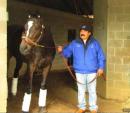 Fans stood outside the airport as she exited the plane.
They showed up in droves.
Official attendance for the 2010 Apple Blossom was recorded at 44,973 people – more than double the 21,782 guests that attended the race in 2009.
And, among the fan fare, Zenyatta continues her racing campaign.
As she prepares for her next start at Hollywood Park, people are again heading to the track to see if one single horse can maintain her undefeated record.
It’s all because of one word.
It’s a great word.
“Zenyatta.”
May 15th, 2010 §
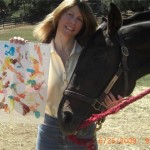
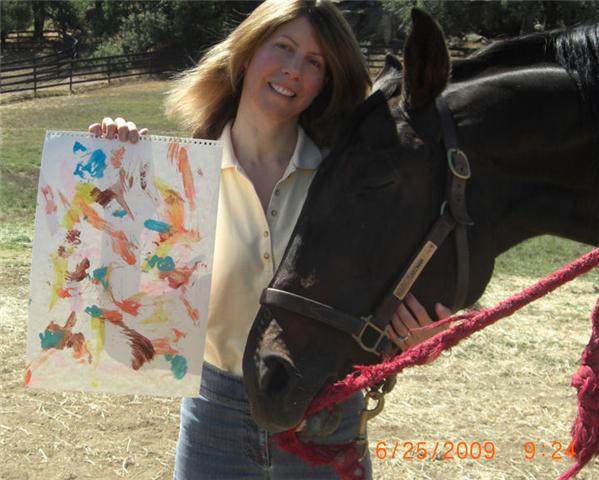
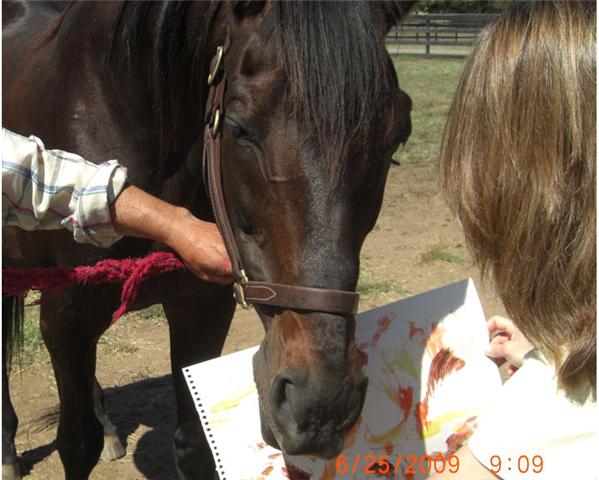
With the help of a former racehorse, Dawn Mellen helps paint a beautiful portrait of how to advance Thoroughbred rescue efforts.
The painter in this picture is named Turkoman – a Thoroughbred that won over two million dollars during his career.
In his retirement, Mellen assisted him to create a painting for an auction to fund the rescue efforts at Our Mims Retirement Haven in Kentucky.
Mellen’s creative funding endeavor with Turkoman is among the many examples of how she has helped Thoroughbred rescue efforts.
Mellen began working with Thoroughbred rescues in the mid-1990s. Through her work, she realized that a major obstacle for rescue organizations was funding.
In 2007, Mellen founded the non-profit organization, After the Finish Line (ATFL), to fund the rescue, rehabilitation, and retirement of Thoroughbred horses that can no longer race or breed.
ATFL provides yearly grants to Thoroughbred rescues to fund the expense of rescue efforts. The organization also has established an emergency fund to assist horses as needed throughout the year.
The board members of ATFL receive no salary - all donations directly benefit Thoroughbred rescue.
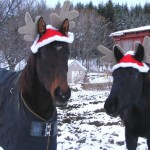 Funds provided to ATFL are used for various purposes, including saving horses at auctions, paying for medical expenses, providing hay and feed, paying boarding expenses, or transporting a Thoroughbred to safety.
Through funding basic needs of the horses, Mellen helps to assist in achieving the broader goal of transitioning ex-racehorses into second careers.
As a result of grants from ATFL, Thoroughbreds are retrained for hunting, jumping, dressage or trail riding.
If a horse cannot ride, the horses are retrained for equine therapy or as companion animals.
Mellen’s work proves that a racehorse doesn’t lose its worth at the end of their last race.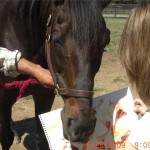
After the finish line, a Thoroughbred racehorse holds the potential to make a brand new start.
In a recent interview, Mellen discussed her organization and provided stories about Thoroughbreds who were rescued through the support of ATFL.
JW: Is your organization opposed to the sport of horse racing?
DM: ATFL is not opposed to horse racing. We are here to say that there are alternatives for these talented Thoroughbreds when their racing or breeding careers are over. They deserve the opportunity to transition into a second career.
JW: How does ATFL acquire funding for rescue efforts?
DM: ATFL received donations from individuals, corporations and foundations. Our support comes from the racing industry participants (owners, trainers, breeders, fans, etc.), people who own off the track Thoroughbreds and those who care about the welfare of these animals.
JW: How many rescues receive funding from ATFL?
DM: In 2009, 47 rescue organizations received funding from ATFL. We anticipate helping 50 - 60 rescue organizations in 2010.
JW: How are Thoroughbreds acquired by rescue organizations?
DM: Several ways. Many Thoroughbreds are purchased at auctions. Others are purchased or donated by owners, trainers, animal control or from people who can no longer take care of their horses.
JW: Can you cite a few examples of horses that your organization provided funding to facilitate their rescue, retraining, or retirement?
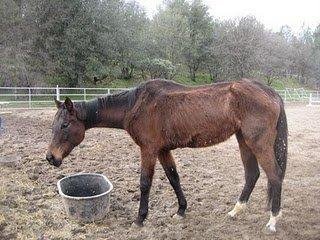
DM: Safe Haven Horse Rescue in CA rescued Excessorized, a descendant of Secretariat. However, her racing ability fell short of Secretariat’s talent. Excessorized raced nine times at Golden Gate Fields and earned $2,700.
Seven months after she left the racetrack, Animal Control found her emaciated and neglected. ATFL paid for vet, farrier and dental expenses - plus special feed that helped her gain 300 pounds.
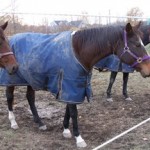 In Michigan, After the Finish Line donated funds to purchase winter blankets for thirteen Thoroughbred ex-racehorses.
Temperatures fell below zero and snow drifts rose to the Thoroughbreds bellies. With many long, cold winter months of snow and freezing temperatures these thirteen horses will appreciate their new blankets.
In another case, ATFL’s monthly emergency funds were awarded for Eyes Left who raced as a two-year-old at Sunland Park and Ruidosa Downs in New Mexico.
To save him from auction he was purchased privately and brought to Texas. He became a Western riding horse.
Eventually, Eyes Left and his owners developed health issues and he was sent to Triple MeMac rescue. Triple MeMac will receive $1,000 for exam, dental, farrier, x-ray, vaccination and rehab expenses so Eyes Left can transition into a second career.
After The Finish Line is a 501(c)(3) non-profit organization in which all donations are fully tax-deductible. Visit the ATFL website at www.afterthefinishline.org or call 858.945.1371 to learn more or make a donation. You can also visit ATFL on Facebook by clicking this link.
May 8th, 2010 §
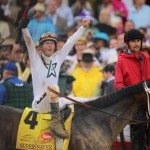
Jim Tyrrell www.horsephotos.com
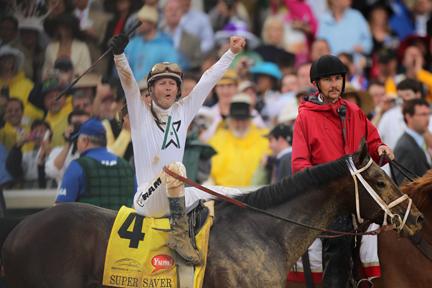
On Saturday, a mud-soaked colt trampled past the finish line at Churchill Downs into a Kentucky Derby victory.
In that golden second, Super Saver delivered the first Kentucky Derby victory to his ownership - WinStar Farm.
Todd Pletcher received the first Kentucky Derby victory in his training career.
Calvin Borel became the first jockey to win the Kentucky Derby three times in a four-year period.
As Borel headed to the winner’s circle, he shot out a bold statement that set fire to the wonder of racing enthuasists.
“We’re going to win the Triple Crown this year.”
In the magic dust of the moment, Borel spoke the words with such cool confidence that it seemed as if he had already made a reservation in the Belmont winner’s circle.
As the Preakness approaches, Borel’s prediction peaks the curiosity and arouses the hopes of many racing enthusiasts.

Doug Cauthen CEO of WinStar Farm
Racing fans have been dreaming of the next Triple Crown winner since Steve Cauthen rode into the history books with Affirmed in 1978.
Three decades later, Steve Cauthen’s younger brother holds the potential as President and CEO of WinStar Farm to deliver the twelfth Triple Crown winner in history with Super Saver.
Recently, I spoke with Doug Cauthen about Super Saver’s Kentucky Derby victory and the quest for the Triple Crown.
JW: Super Saver was the first horse owned and bred by WinStar Farm to win the Kentucky Derby. How does it feel to win your first Derby?
DC: It is truly hard to describe.
There was overwhelming joy, pride and thankfulness that Super Saver was able to do it.
To see so many people – from the owners, managers, grooms, maintenance crew, basically everybody – to get so much happiness and pride out of it is a real positive and satisfying thing.
I felt like we all should thank God for the victory.
JW: Your older brother, Hall of Fame Jockey Steve Cauthen, rode Affirmed to win the last Triple Crown in 1978. Do you think Super Saver could win the Triple Crown for your farm?
DC: I hope he can – I like Calvin’s prediction.
It was his Steve’s 50th Birthday on Derby day, so I felt like we had a little bit of good ‘mojo’ going there - that maybe something could happen. When the clouds parted and the sun came out right before the race, I had a calm and peaceful feeling.
I’m not quite as aggressive as Calvin with my predictions, but I’m on his side.
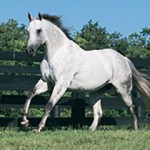
JW: Super Saver is by Maria’s Mon – sire of the fastest living Kentucky Derby Winner, Monarchos. Was this a factor in your breeding decision?
DC: We were very fortunate. We got Super Saver as part of a deal.
We bought Super Saver’s mother, Supercharger, when she was carrying Super Saver at the 2006 Keeneland November Sale. We were very blessed to have Super Saver as part of the purchasing package.
Supercharger’s got a beautiful pedigree – it’s one of the best pedigrees in the Stud Book. Supercharger is a full sister to a mare that we already had, called “She’s a Winner,” who is the dam of Bluegrass Cat. He is a multiple Grade I winner that we own and was second in the Kentucky Derby.
I hope that Super Saver can continue forward. He’s a beautiful horse – a balanced horse – with a great pedigree.
His pedigree is from one of the royal pedigrees in the Stud Book. With all the horses that are popping out of it that are so good - currently and in the last thirty years – it’s just been a magnificent family.
Being by Maria’s Mon, he’s going to offer a lot of outcross for breeders as well. It is a real positive for the breed.
JW: What do you see at the strengths in Super Saver as a racehorse?
DC: He’s got tactical speed and is very agile.
He can make his own race. He can be on the lead or sit back behind.
He’s got a tremendous amount of determination – he’s a very gutsy horse.
You can see that in his earlier races this year and during his races last year as a two-year-old.
It’s a combination that’s not only good for a racehorse, but for future stallions, so we are really excited about that.
JW: What is the general temperament of Super Saver?
DC: When he was on the farm being raised, he was a popular horse with everybody. He always had a forward attitude and a positive temperament.
JW: How did your farm make the determination to have Super Saver trained by Todd Pletcher and chose Calvin Borel as a rider?
DC: I think Elliott Walden (Racing Manager at WinStar Farm) deserves a lot of credit on that choice.
Todd is one of our primary trainers and gets a lot of horses that we think have potential. The fact that he trained Super Saver’s cousin, Bluegrass Cat, may have factored into it a little also. But, it clearly was a good choice!
We thought Super Saver was one of our early potential runners. Elliott said that we should give him to Todd. That’s what we did.
With Calvin, he was the best available rider when he came to the Kentucky Jockey Club race. Elliott sought him out – or encouraged Todd to seek him out – and the rest is history.
Super Saver won the Jockey Club last year as a two-year-old real impressively. He broke the stakes record, which was over a hundred-year-old record.
Calvin just gets along with Super Saver well. It is great to have him on board.
JW: Did Calvin Borel hold any special allure to your farm as a jockey in light of his recent Kentucky Derby victories?
DC: There is no doubt that he is an exceptional rider anywhere.
At Churchill Downs, he has that extra “Calvin Factor,” as I like to call it.
He really has a high level of confidence and horses run for him. He deserves credit at any race track.
He’s certainly got some good current form and it would be crazy not to take advantage of that if you can get him on your horse.
JW: How do you feel about owning the horse that delivered Todd Pletcher his first Kentucky Derby victory?
DC: For the farm, I think it was a really big feeling of satisfaction and pride in Todd. He was one of the first guys that we gave horses to when we divided the horses up between trainers.
He’s one of the best trainers in the country and will go down as one of the best trainers in history.
It seems like the press was focusing on his [Kentucky Derby] record unduly. It was great to see him win it and even greater to see his humility in taking the win.
He is a class act.
It is always fun to see people like that succeed.
JW: How did your farm celebrate your first Kentucky Derby victory?
DC: We’ve had quite a few celebrations.
We try to do something before the Derby because you obviously can’t expect to win – and we don’t. We just go there with the best horses we can and do the best we can.
On Thursday, we had a farm picnic for all of the staff. We had games, piñatas and plenty of food.
On Friday, we had another pre-Derby gathering with all the managers with the owners. It was a very nice event.
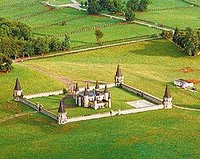
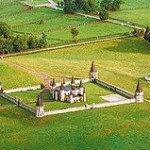
After the victory, some neighbors at Castle Post kindly invited us to celebrate with a hundred of our favorite friends. They hosted a wonderful gathering. It was really kind of Mr. Post.
It was also a great pleasure to see the inside of the Castle. We use it as a landmark to tell people how to get to WinStar quite often. It was great to see it and it was quite a nice spot.
JW: Where is the Rose Garland?
DC: It is currently getting preserved.
Hopefully, it will reside in the office sometime soon.
The Saturday Post would like to thank Doug Cauthen for his interview. We also appreciate the image of Super Saver provided by www.horsephotos.com. To view the photos from the Kentucky Derby at horsephotos.com, please click here.
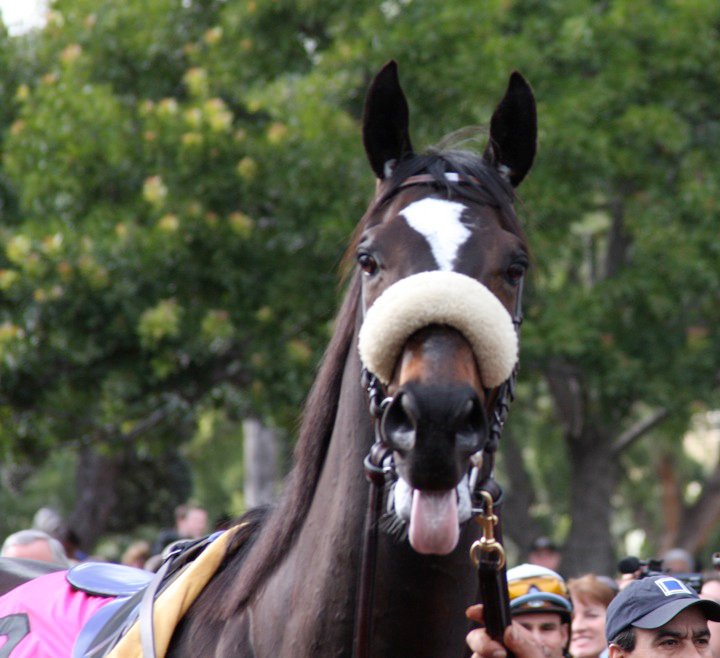
 Instead of trying to lure non-enthusiasts to the race track, Zenyatta stomped out into mainstream culture and joined the party.
 In another YouTube video, Shirreffs gives Zenyatta a Guinness beer while she is relaxing after a workout.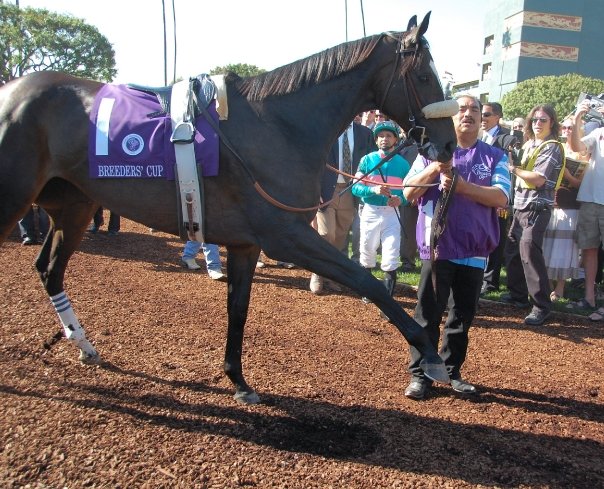
 ng promotion for the Los Angeles Dodgers.