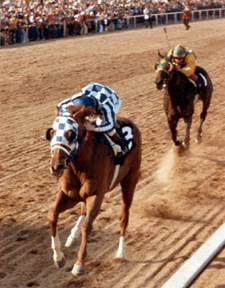
 Last weekend, I traveled to Hollywood Park to watch Zenyatta make her bid to win her seventeenth undefeated career start.
At the track, someone asked me, “So, what brings you to California?”
The answer was easy. “Zenyatta.”
The person seemed surprised that I had traveled to Hollywood for a single horse.
However, in my opinion, Zenyatta isn’t just a good horse.
She is a living legend.
I wanted to be there to watch her stride into the history books in her record-breaking seventeenth career victory.
It appears that I wasn’t the only one who felt this way.
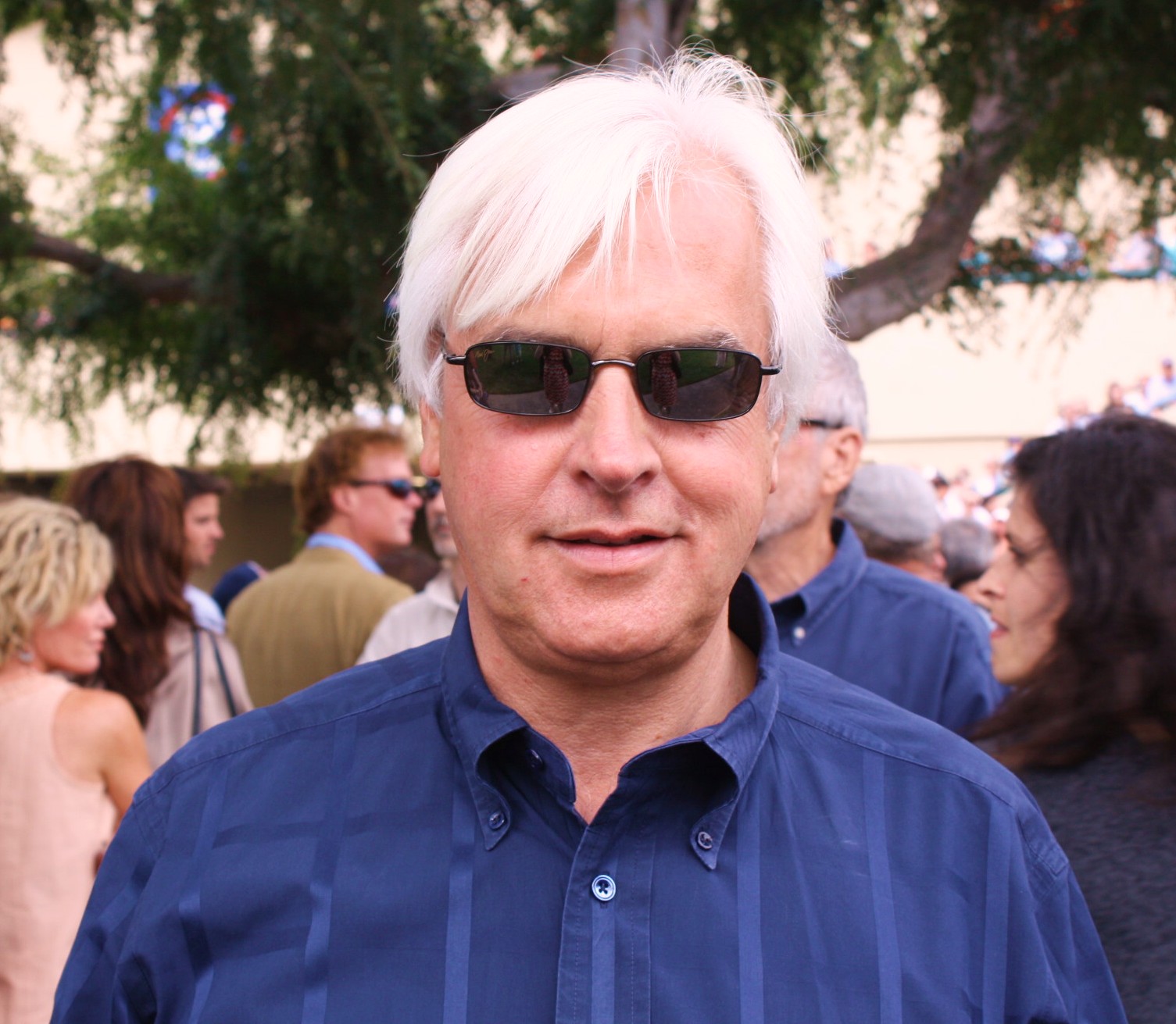 Prior to the race, Hall of Fame Trainer Bob Baffert stood in the paddock and surveyed Zenyatta before settling into his seat to watch her in the Vanity Handicap.
Later, when I thumbed through my racing program, I realized that Baffert didn’t have a single horse entered in a race at Hollywood Park that day.
Apparently, Baffert also wanted to watch Zenyatta challenge the undefeated records of Cigar and Citation.
And, as usual, Zenyatta didn’t disappoint.
In front of a crowd that appeared to be screaming for one single horse, she delivered her seventeenth consecutive victory in a heart-stopping moment at the finish line.
The entire park shook with excitement in the dizzying minutes that followed.
Zenyatta had made history again.
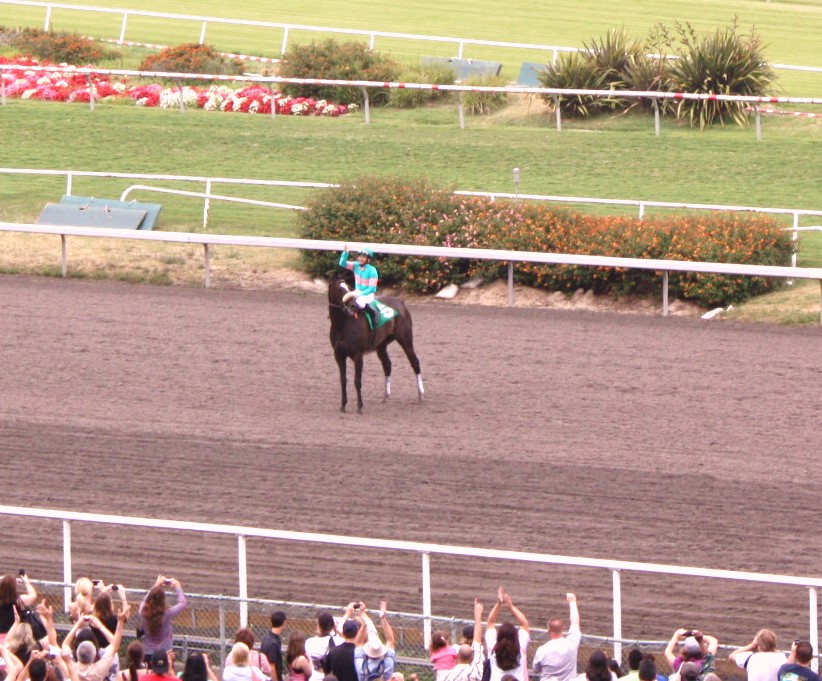 Prior to entering the winner’s circle, Zenyatta stood alone in front of the crowd and took in a long standing ovation.
It was as if she knew that she had just delivered pure magic.
And, in retrospect, I believe Zenyatta did know.
I learned a lot of lessons from my visit with Zenyatta that demonstrated the beauty surrounding a true legend.
First, Zenyatta delivers quite a greeting to her guests at the stable.
When we walked into her barn, my friend asked, “Where’s Zenyatta?” as she surveyed the stalls of horses.
Zenyatta answered the question with authority.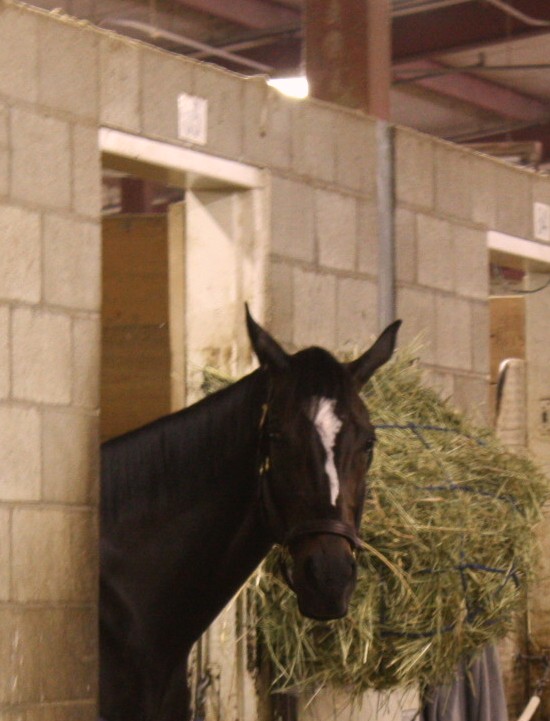
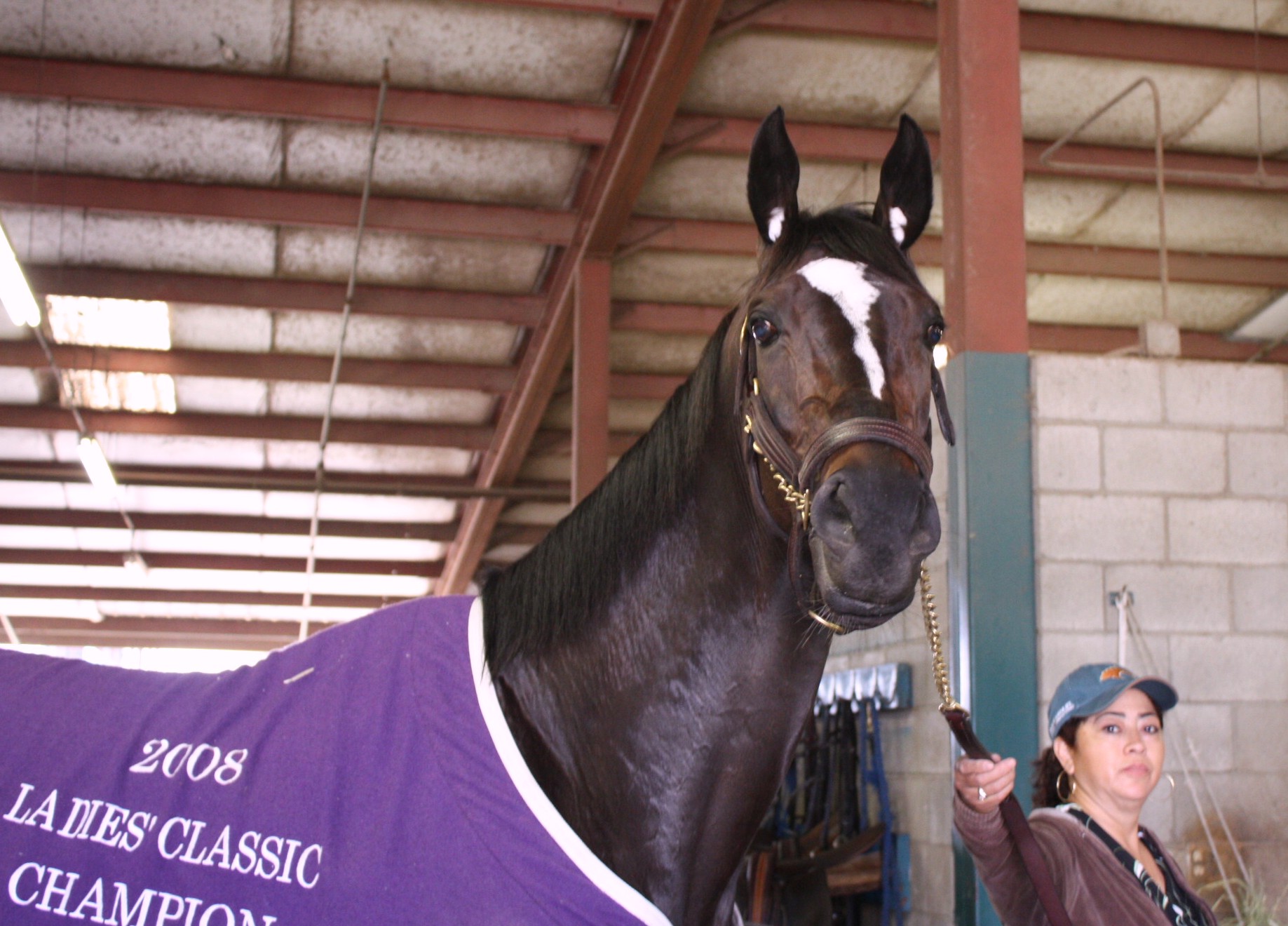
The giant mare rattled in her stall and stuck her head out. She stared right at us and never shifted her gaze as we stood watching her in awe.
It was stunning.
When her trainer John Shirreffs appeared, he matched Zenyatta’s hospitality to her guests.
After briefly greeting us, he slipped into his office.
At that moment, I envisioned that he was calling security to kick us out.
I could not have been more wrong.
Within a few seconds, Shirreffs re-emerged with a smile and a card with Zenyatta’s photo on it.
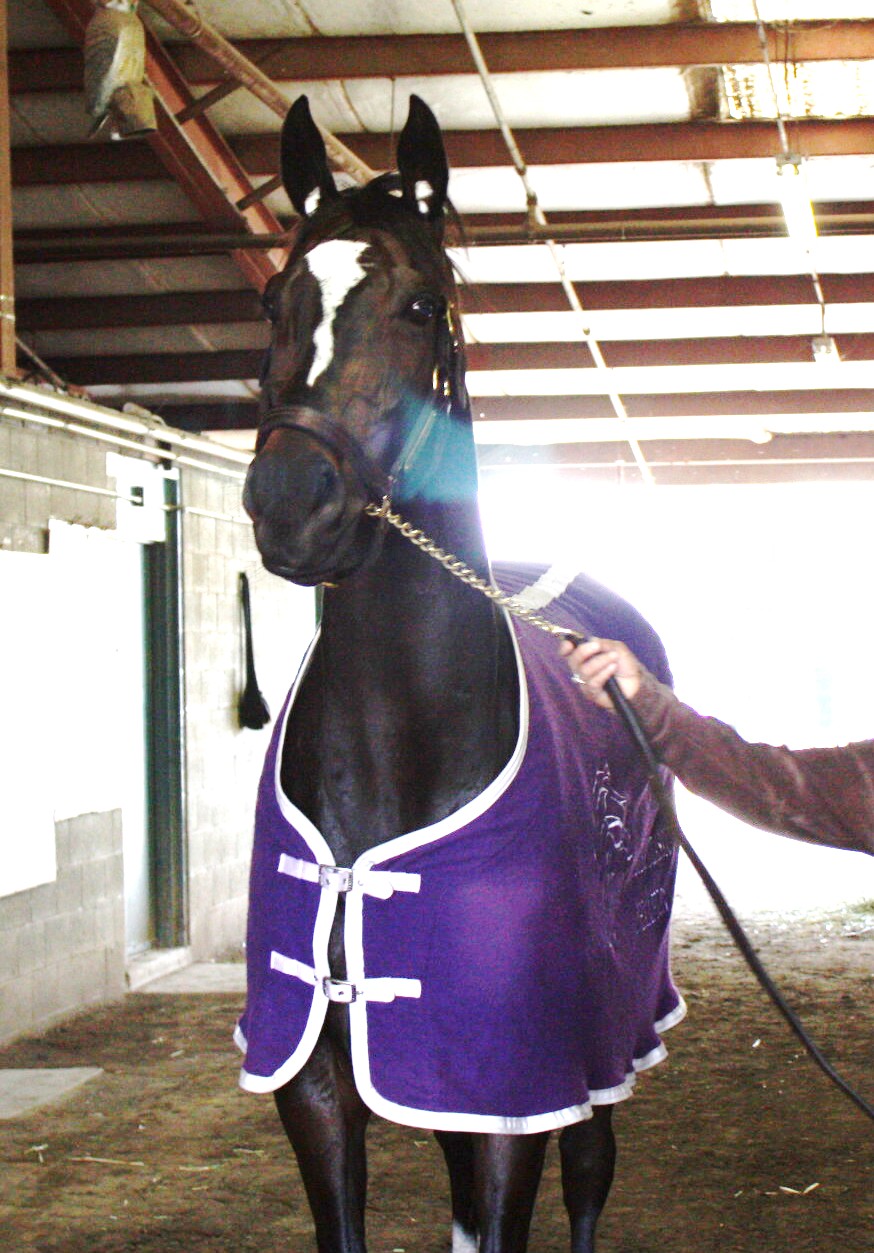 He handed me the photo as a souvenir as Zenyatta began to parade around the barn in preparation for her morning workout.
When I began to take pictures, she demonstrated her mastery of the camera eye.
As she drew close to the lens, Zenyatta paused and rose her head to demonstrate her full height.
She posed.
The next day, Zenyatta had a much larger audience to please as she prepared to challenge history in the Vanity Handicap.
As I stood in the paddock, I looked out at the large crowd of fans that lined the rails to catch a glimpse of her in the flesh.
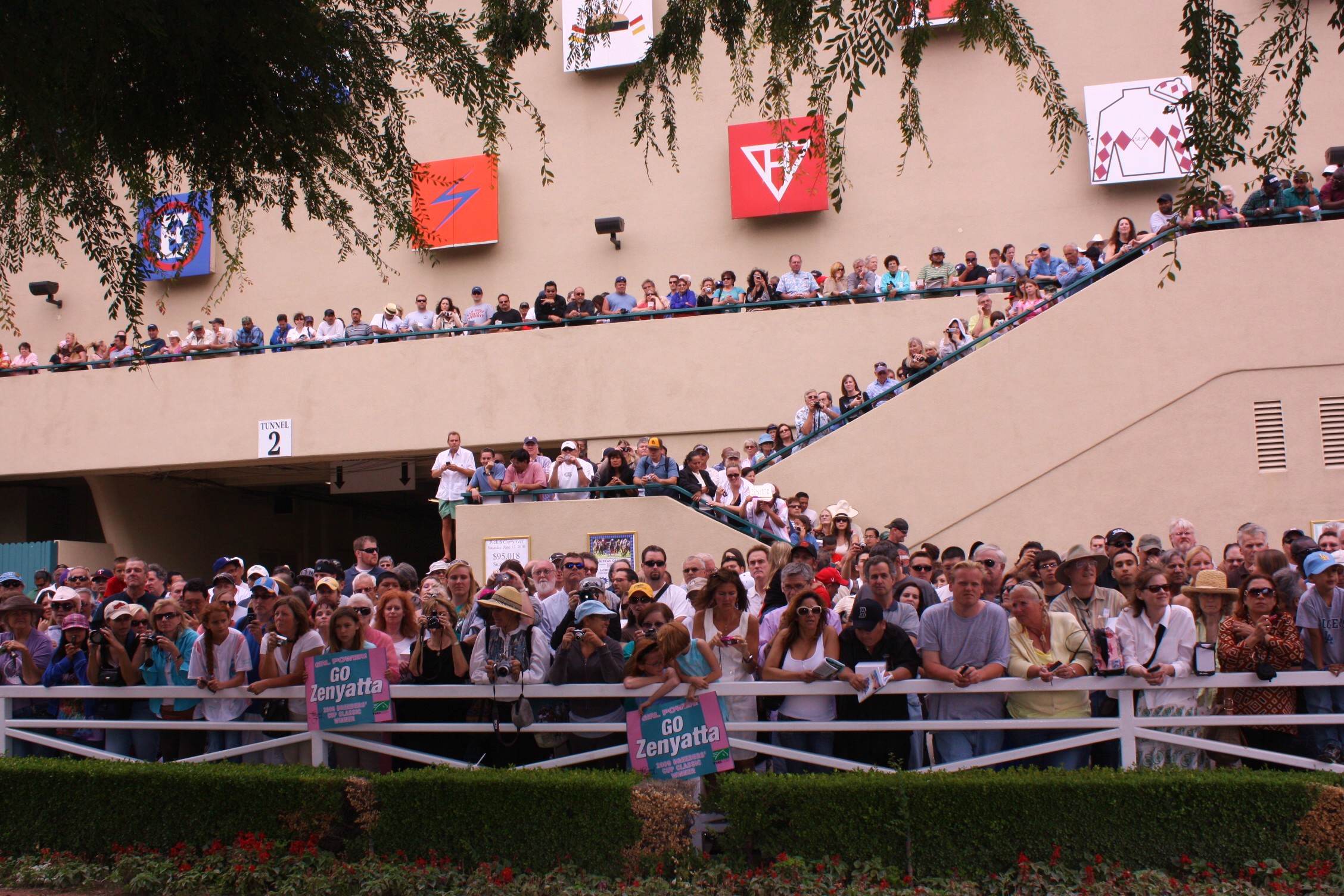 The audience was speckled with Zenyatta fan gear – ranging from hand-painted signs to Zenyatta jerseys.
I drew the second lesson from Zenyatta in that moment.
At the pinnacle of success, character is shown through being gracious and charitable to everyone.
The jerseys that bore Zenyatta’s name were being sold to benefit Thoroughbred retirement and rescue.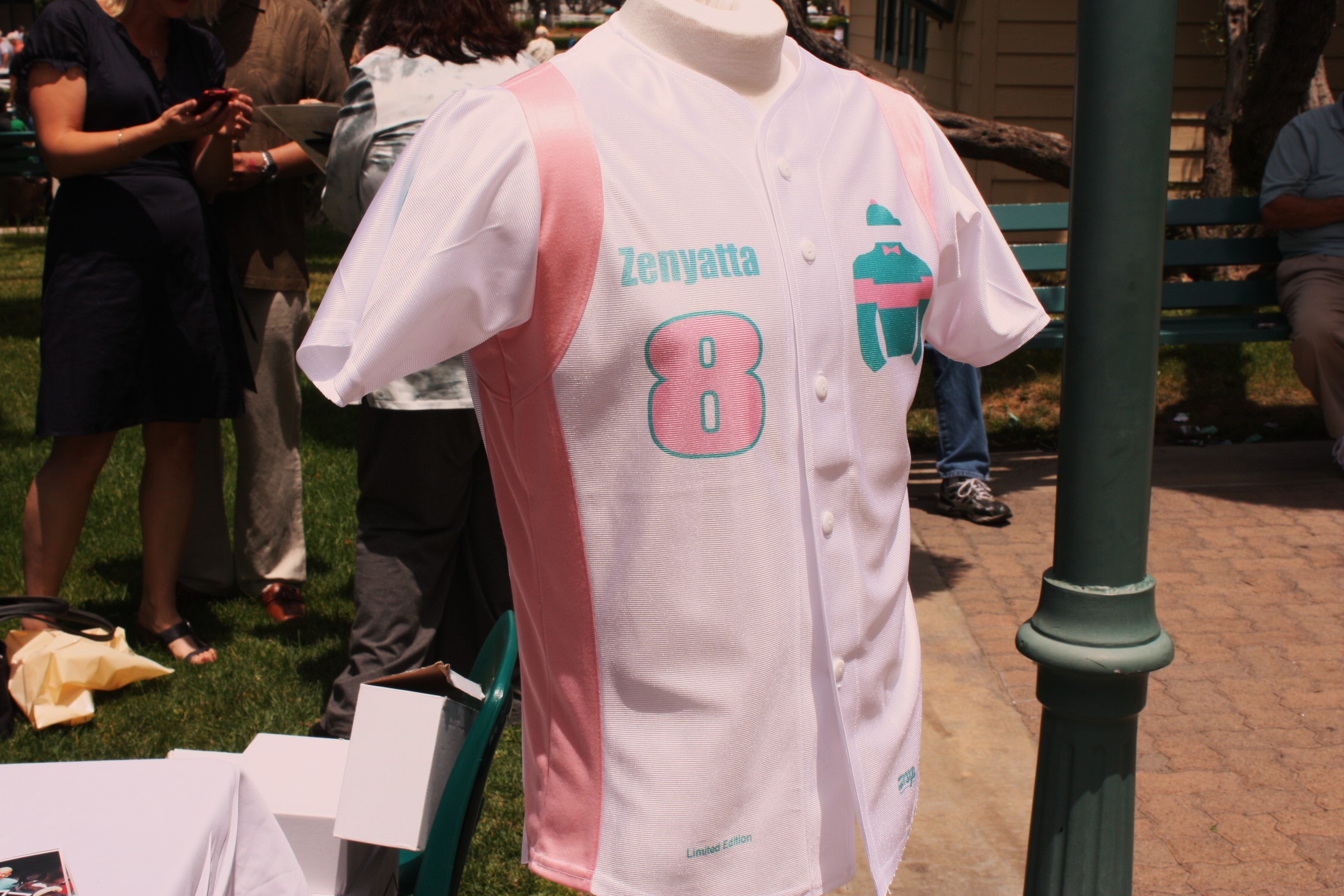
Throughout Hollywood Park, fans weaved through the crowd adorned with the jerseys that represented Zenyatta’s charitable hoofprint.
And, as Zenyatta’s connections began to emerge in the paddock, they greeted the fans with the same excitement as Zenyatta demonstrated the previous morning.
Owners Jerry and Ann Moss entered the gates and waved at the onlookers with a giant smile.
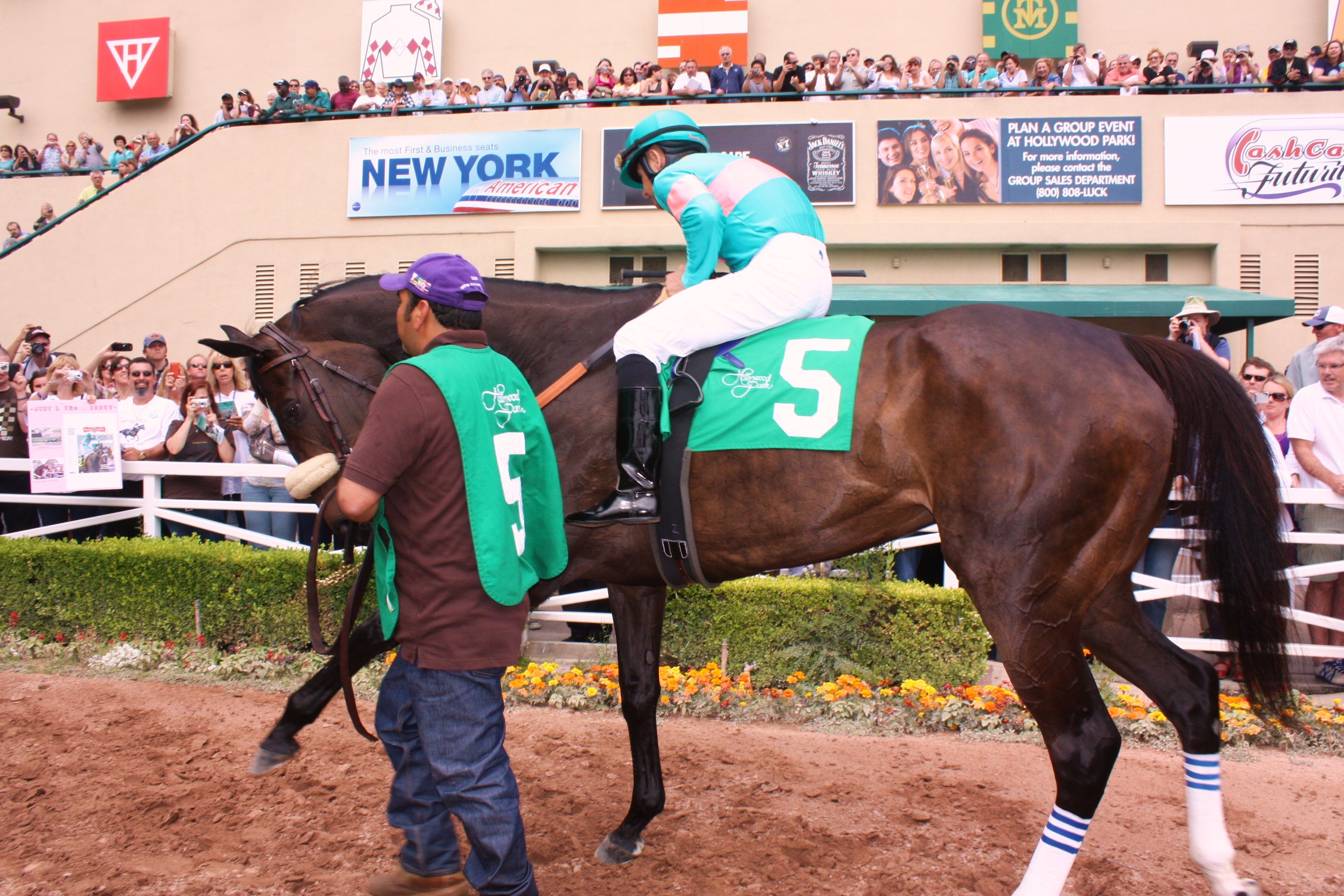 And, when the Zenyatta set foot in the paddock, she delivered her dazzling dance steps without a care in the world.
Yet, despite the whirlwind of fan fare, Zenyatta was in the unshakeable gaze of one individual – Trainer John Shirreffs.
Zenyatta never left his sight as she danced and bowed for fans.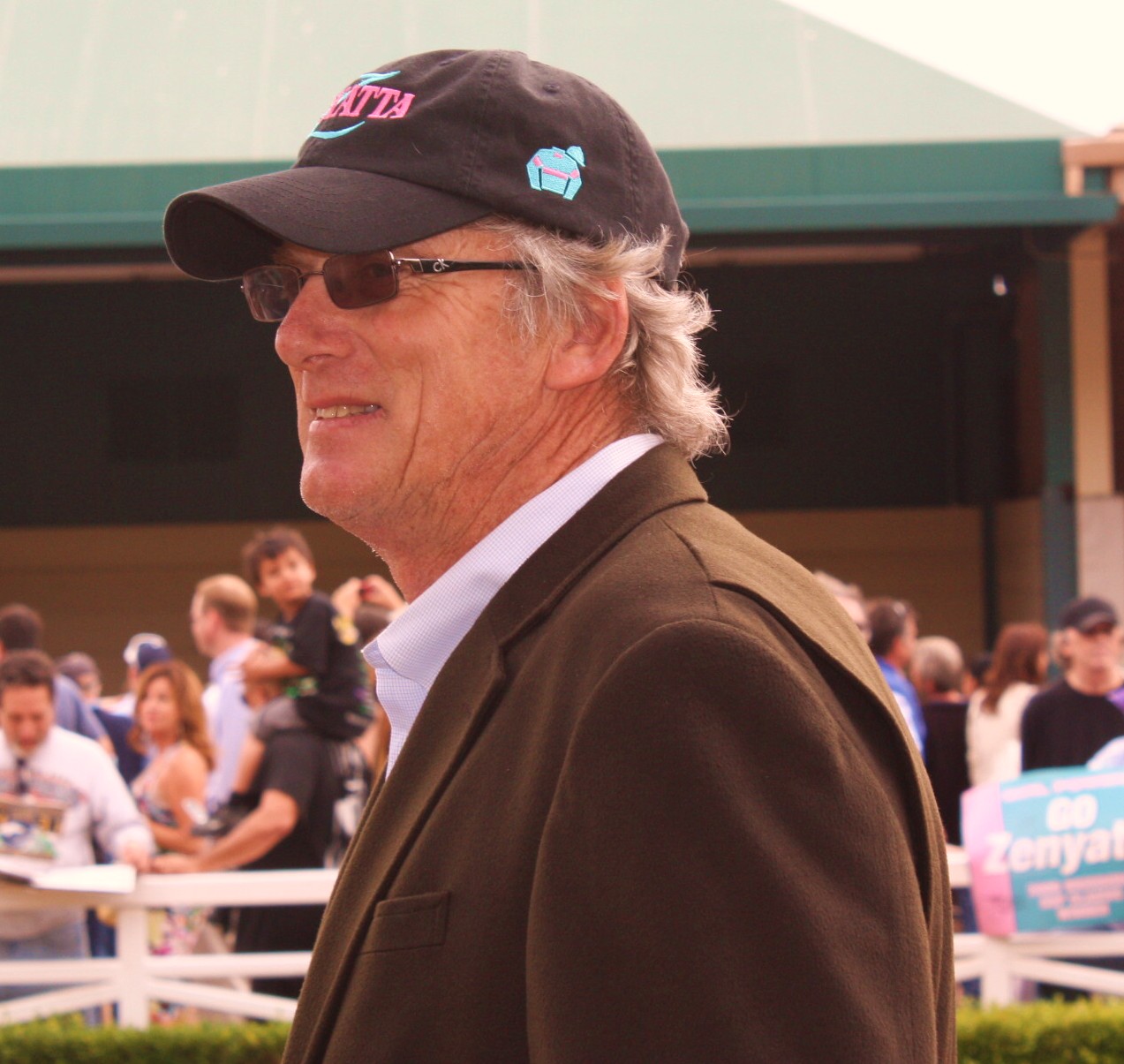
And, as I watched Shirreffs, it occurred to me that one principle stood solid in her success beyond racing or records: Put the welfare of the horse first.
In a single moment, I learned that Zenyatta isn’t only first at the finish line.
The well-being of Zenyatta comes first before she ever sets foot on a track.
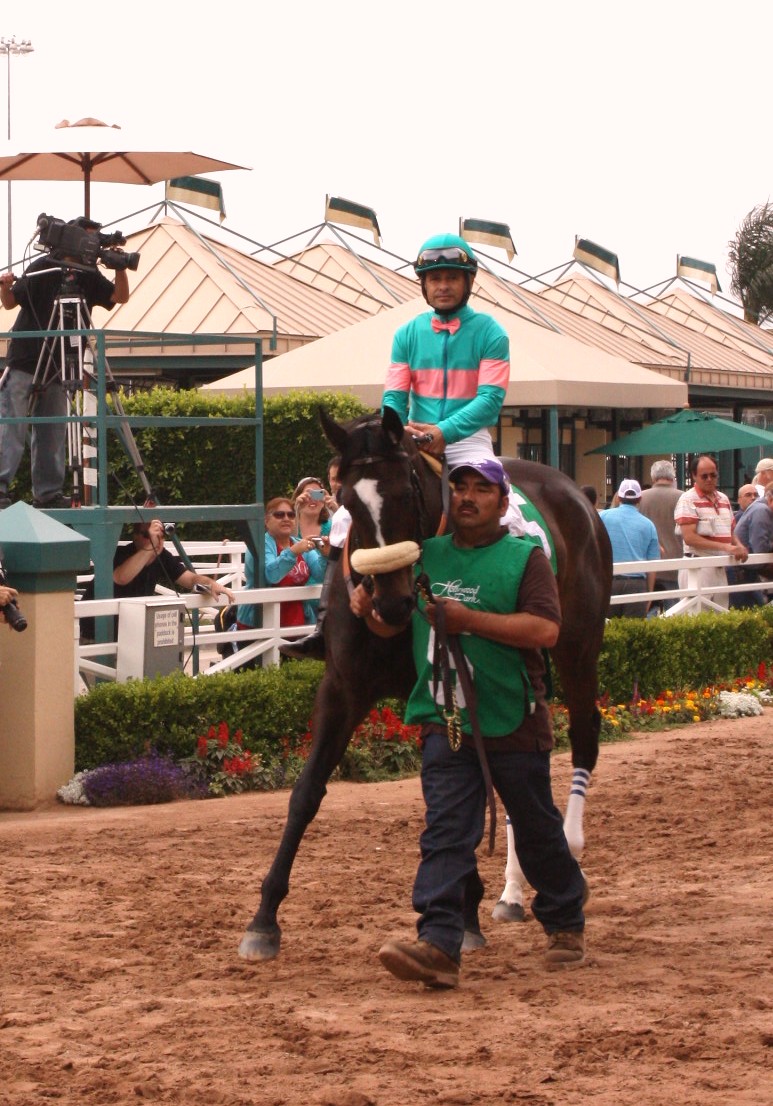 Yet, in a few minutes, the idea of finishing first in the Vanity Handicap took center stage in the public sphere as Zenyatta pranced toward the track in response to the call to post.
As she entered the gates toward history, Zenyatta delivered a lesson that resonates strongly amidst the ongoing comparisons of her record to other champion race horses.
She didn’t look at her rivals.
Her gaze was marked firmly on the track laid before her own eyes.
Zenyatta didn’t compare herself to Rachel Alexandra.
She didn’t compare herself to the legacies set forth by horses like Ruffian or Secretariat.
Zenyatta failed to see the good that comes from comparing her accomplishments to other champions.
And, as far as I can tell, Zenyatta doesn’t spend her days undermining the achievements of fellow racehorses.
She just keeps racing.
And, she just keeps winning.
And - she doesn’t sling mud in the process.
In my opinion, Zenyatta’s winning philosophy provides a valuable lesson beyond comparison.