May 24th, 2011 §
 Every now and then, a remarkable racehorse can elude you when it is in your direct line of sight.
And, in our home, there are few places to fix your eyes without finding a photo of some racehorse that was a remarkable horse for varying reasons, ranging from claimers to Triple Crown Winners.
It makes it hard to see the forest through the trees at times, especially when a big red oak like Secretariat has a photo of his Belmont stretch run posted squarely in the middle of the room.
When I think of the Belmont, my mind immediately drifts toward Secretariat and his 31-length victory. The photo of that moment has been hanging in the same spot for years, and, I never dream of moving it. In my view, it is a perfect snapshot of the level of otherworldly talent that deserves the honor of the Triple Crown.
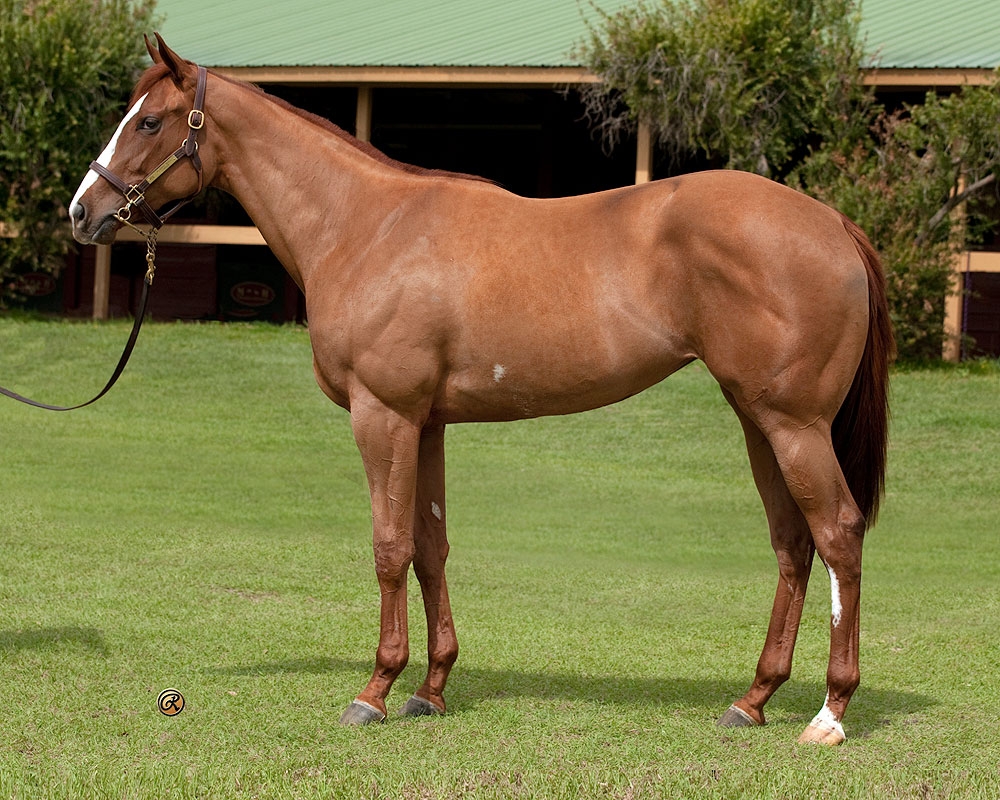
 Yet, this year, as two jewels of the Crown divided in the Kentucky Derby and Preakness, I was left to ponder the importance of the achievement of winning the Belmont when there is no Triple Crown in contention. And, as I stared at my pictures of beloved Triple Crown winners, another remarkable horse emerged to answer my question of the importance of the Belmont when there is no Triple Crown at stake this season.
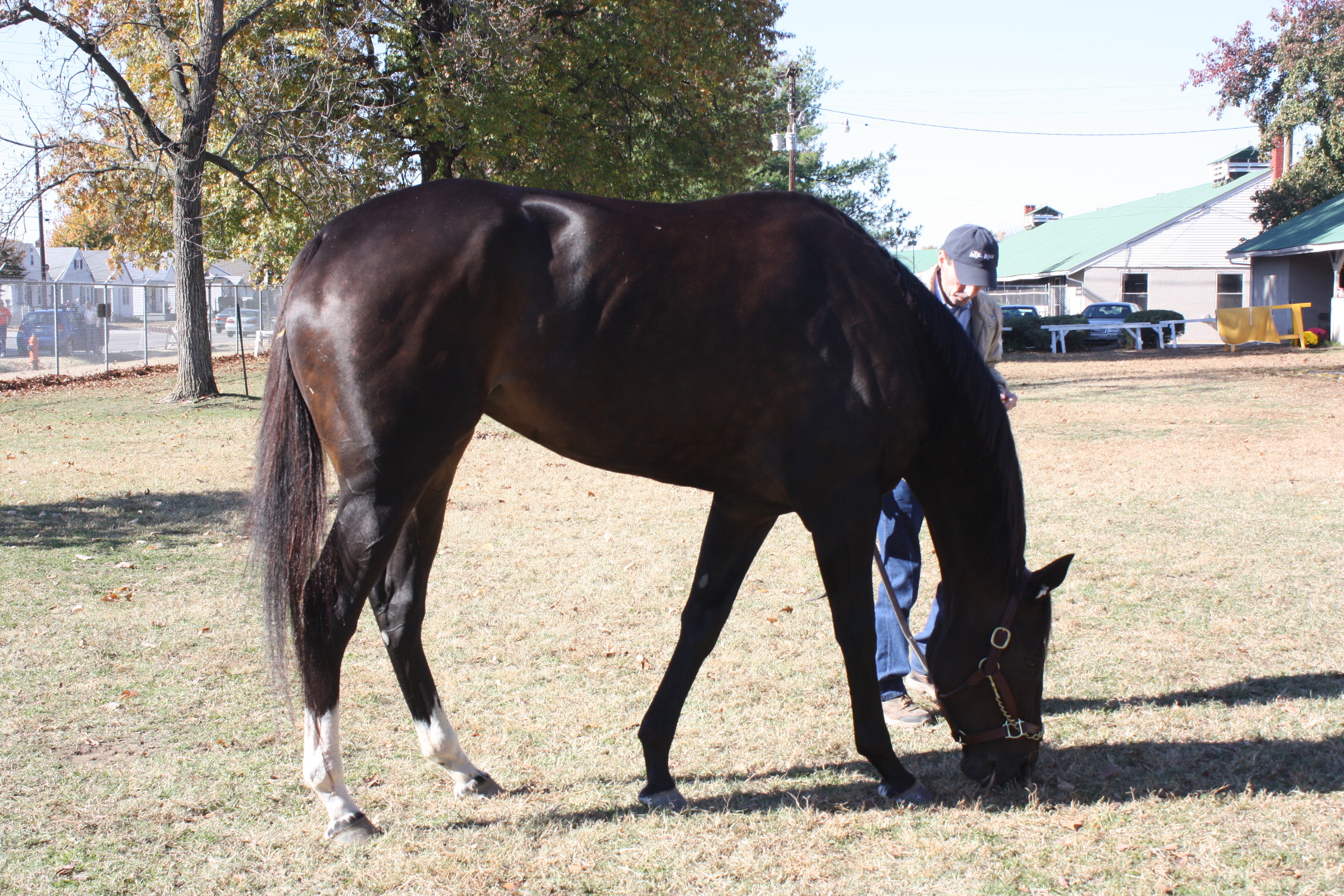
A picture of Summer Bird and my husband emerged from the tapestry of photos hanging around the house. In the photo, they are walking together in the grass like two old pals on a Sunday outing. My husband has a look of admiration on his face as he is watching Summer Bird toss his head in the air without a care in the world.
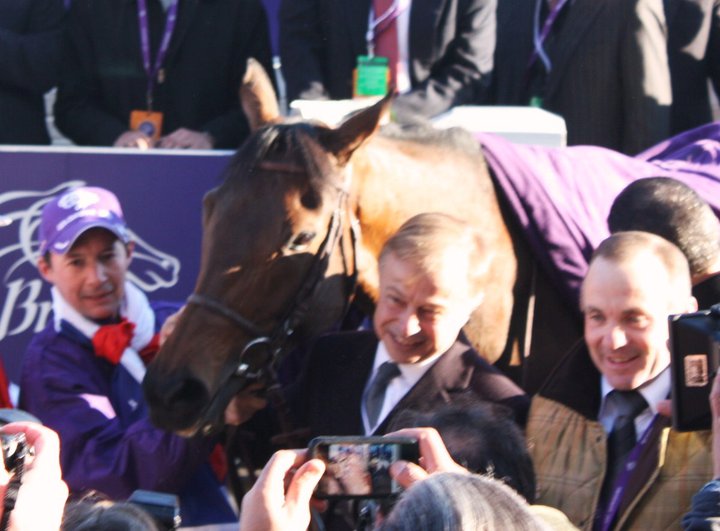
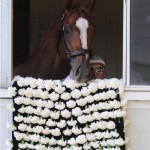
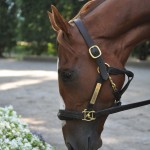
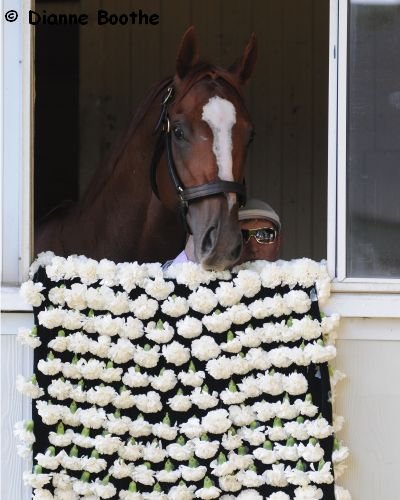
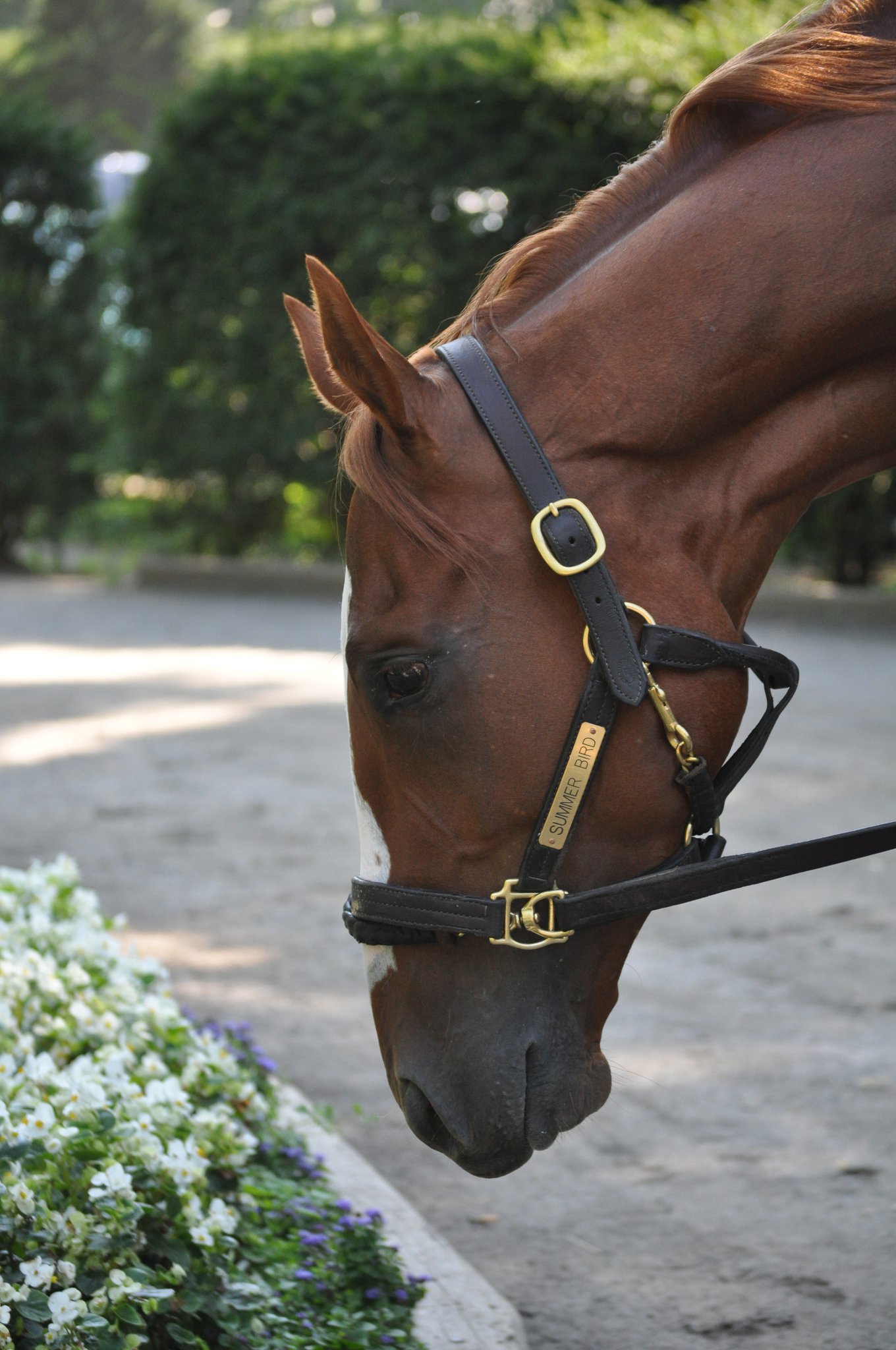
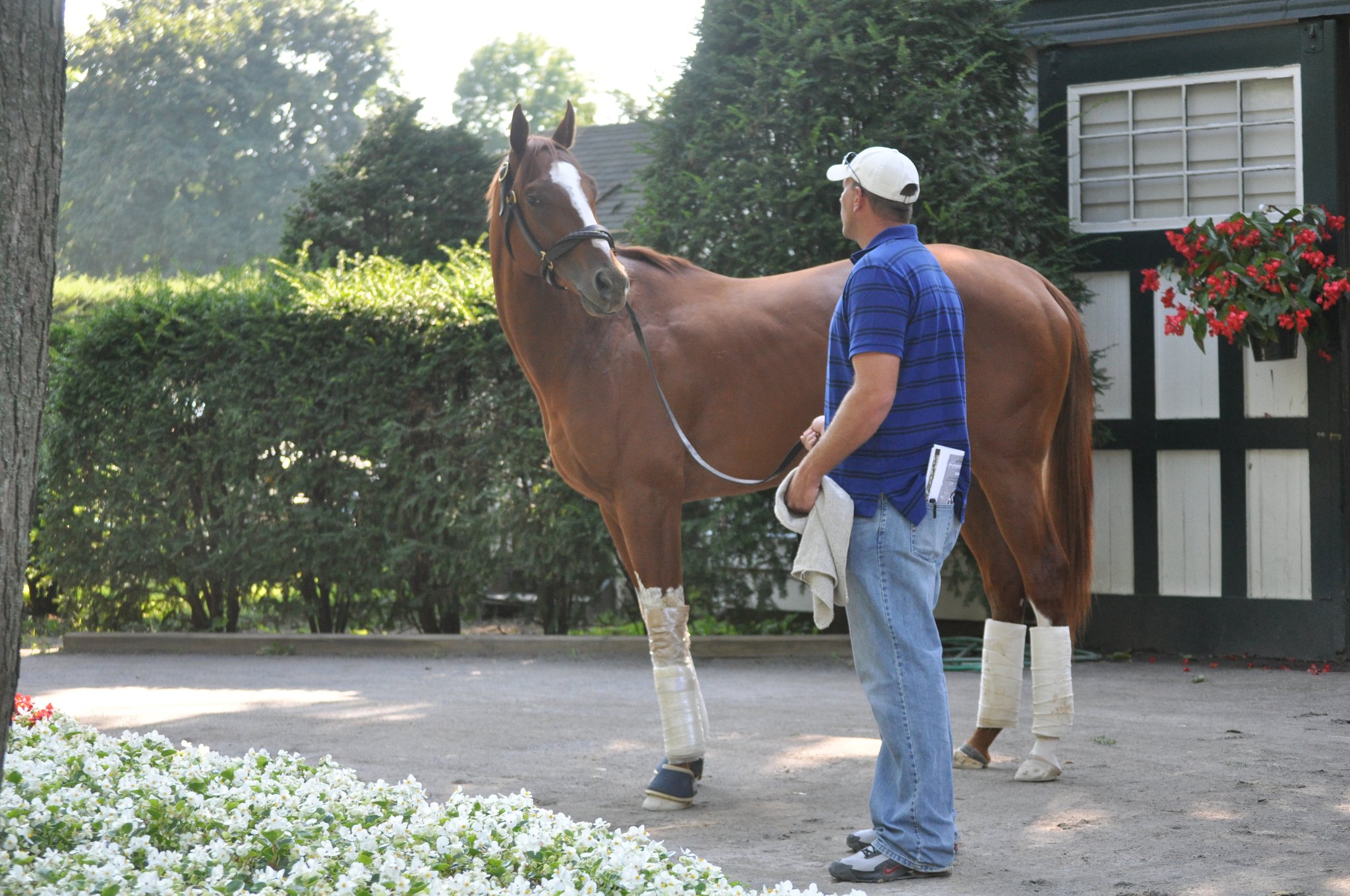
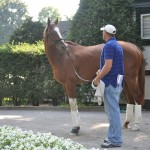 While I looked around the room at the array of racehorse photos, Summer Bird continued to peek out in various situations. In one photo, the big Chestnut is stopping to smell the flowers at Saratoga before the Travers Stakes. In another snapshot, Summer Bird is staring down my husband while he grins back at the horse, beaming with joy. And, in a final picture, Summer Bird is sniffing his new blanket of white carnations after he just won the Belmont in 2009.
As it turns out, Summer Bird’s items are such a fixture in our house that I barely even notice him anymore. He has his trophies positioned in the dining room, saddle towels in various frames and his halter hangs quietly on the kitchen wall from his start in the Kentucky Derby. On any ordinary day, I just live with his things. His presence is barely noticeable on a conscious level.
Yet, on this particular day, Summer Bird took center stage in my mind as the Belmont approaches and there is no Triple Crown in contention. I looked at my husband, Trainer Tim Ice, studying the Daily Racing Form across the room in perfect tranquility.
Unbeknownst to him, he was about to get bombarded with questions from his wife about the personal importance of Summer Bird capturing a lone jewel in the Triple Crown.
I turned to him and asked, “What do you think is the importance of the Belmont without a Triple Crown in play?” He looked up and replied without much thought, “It’s the oldest race in the Triple Crown series and the first time that a three-year-old horse is asked to run a mile and a half.”
In his mind, the matter was closed.
Yet, it wasn’t closed at all in my mind. I shot back, “What about when you went to the Belmont with Summer Bird. How did you feel when you realized he had won the race?” He looked up at me and considered his answer more carefully this time around.
He gave a humble smile and answered, “When Summer Bird got clear in the stretch, I stood watching and said to myself, ‘Oh my God. He’s going to win the Belmont.’”
His description of the moment seemed to prove the magnitude of the race in its own right and the glory that falls upon any horse that claims the final jewel.
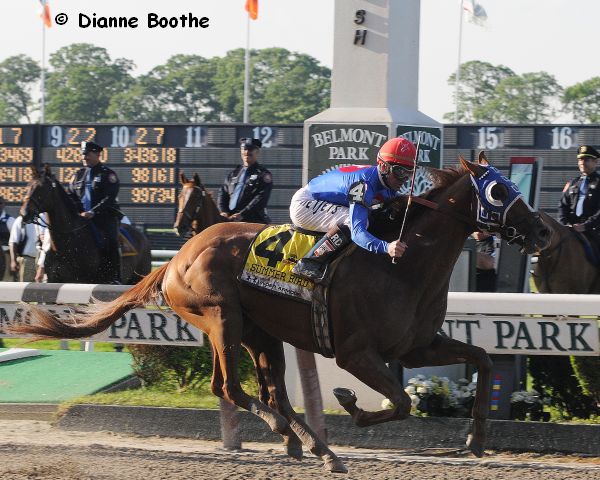
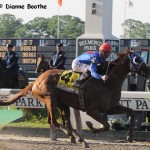 Then, I looked over at the Belmont trophy that sits in our home. Suddenly, it stood out as I considered the moment Summer Bird earned that trophy as he shot out from the pack to claim his victory in the Belmont Stakes.
I also considered the other Belmont-winning horses, whether they won the Triple Crown or solely the final jewel in the Belmont, and was awestruck by the idea that all of the winners stood next to same trophy.
A Triple Crown trophy itself, in any race of the series, holds something sacred. They are holding the same trophy that all Triple Crown winning teams stood next to at some point in racing history.
It occurred to me that holding a single jewel of the Triple Crown makes a horse a king, even if it is just for a day, whether they hold all three gems or a lone jewel. And, for those who have stood in the winner’s circle in any Triple Crown race, it appears that the moment lasts long beyond the winning garland.
It lasts a lifetime.
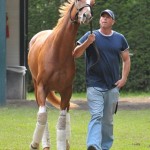 I considered the original picture on the wall, the two of them walking side-by-side, without a care in the world. And, I had to ask, “What was it about Summer Bird that made you so happy?”
Tim replied without any hesitation, “Just being with him made me happy. You see, I wasn’t just his trainer. I was a fan of him.”
And, in retrospect, it seems that Summer Bird was just as happy to be walking side-by-side with his friend and admitted fan, whether they were en route to a race or simply enjoying an ordinary day.
In a recent trip to Kentucky, we visited Summer Bird at Paul’s Mill Farm. And, that morning, the portrait of the friendship between the two standing side-by-side was brought to life before my eyes.
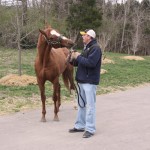 There is no doubt that Summer Bird recognized his old friend when his former trainer entered his sight. It was as if they maintained a repertoire with each other that outlasted the stallion’s racing career. Summer Bird was downright giddy and appeared to bask in moment the two of them took a walk together outside of the barn. It was as if the photo in our home had come alive for a brief moment in time.
As we left the stable that morning, the Champion made a long noise as he watched his old friend walk away. I asked Tim, “Do you think he recognizes you?” And, in an easy reply, he answered, “I think he recognizes me. We spent a lot of time together.”
I replied, “Did you hear him make that noise at you?”
Tim laughed, “Yes. He was hollering at me.”
I joked, “What did he holler at you?”
Tim smiled and said, “He hollered that he would love to race again.”
And, as we walked away, it appeared that the two of them would never forget the day they captured a jewel in the Belmont.
PHOTO CREDITS:
Summer Bird with Carnations. Photographer: Dianne Boothe. (Website: http://www.nyraracingphoto.com)
Summer Bird at Saratoga with Flowers. Photographer: Cathleen Duffy. (Website: http://www.thehorsewhisper.com)
Summer Bird Winning Belmont. Photographer: Dianne Boothe. (Website: http://www.nyraracingphoto.com)
Summer Bird and Tim Ice Staring at Each Other in Stable Area. Photographer: Cathleen Duffy. (Website: http://www.thehorsewhisper.com)
Summer Bird and Tim Walking With Each Other. Photographer: Adam Mooshian. (Website: http://www.adammoosh.com)
May 14th, 2011 §
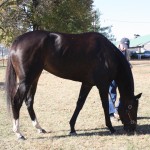 They call her the “Black Flash.”
An imposing mare holding an undefeated record of 13-0 that has been grinding out victory after victory at top-level outings against every male challenger that sets foot in her domain.
They call her “The Horse that Stops a Nation.”
At least, The Australian newspaper coined that descriptor of the four-year-old racemare as the international racing community held their breath to see if she could maintain her undefeated record in her recent outing in the Group 1 BTC Cup at Brisbane’s Doomben racecourse.
And, the “Black Flash” did it with ease. As daylight stood between herself and her rivals as she approached the wire, Black Caviar clinched her thirteenth victory in a style that embodied all of the markings of being a wonder horse.
Today, Black Caviar has many racing enthusiasts in the international community wondering whether she may be one of the greatest racehorses of all time. And perhaps, she already has claimed her place in that rare territory among a few that have been struck by her majestic talent.
Yet, prior to the rise of Black Caviar on the international stage, there was the wonder of whether Zenyatta was one of the best racehorses of all time.
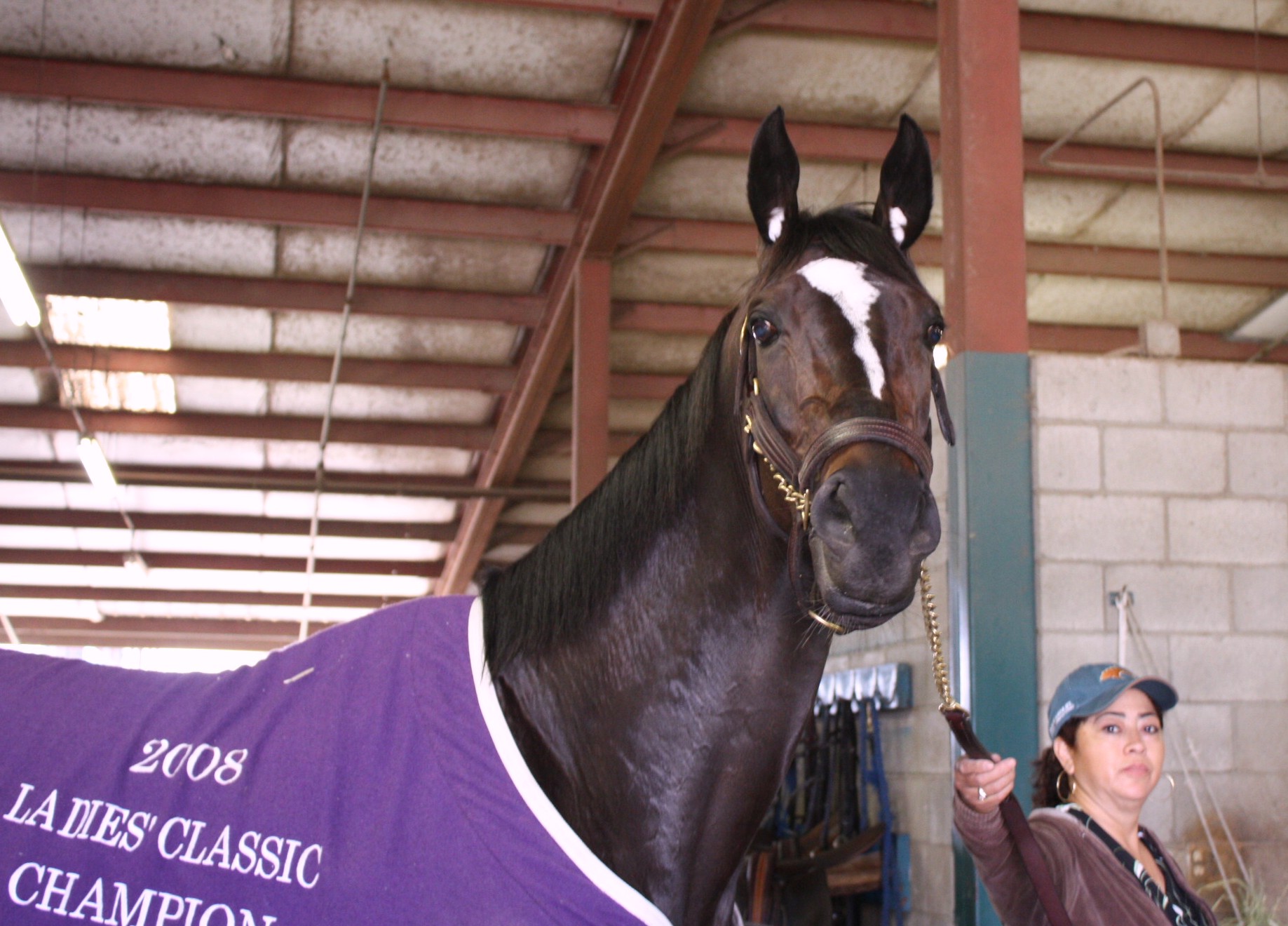
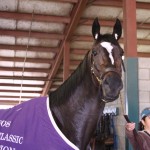 In a 60 Minutes segment, the crew visited her stable, where her rider Mike Smith stated, “I think she could arguably go down as one of the greatest, if not the greatest, racehorse of all time.” And in the eyes of many, Zenyatta does hold a firm place in the canon of the greatest Thoroughbreds to ever grace a race track with her presence.
Similar to Black Caviar, Zenyatta had many spectators holding their breath as she claimed victory after victory. And, in her final outing, Zenyatta concluded her consecutive nineteen-race winning streak with a heartbreaking defeat that demonstrated that immortality doesn’t necessarily mean invincibility.
Yet, with true class, Zenyatta stood before the crowd at Churchill Downs after her lone defeat and received an honor that is arguably greater than a victory could award – a standing ovation from the 72,000 spectators in the crowd as they paid homage to her racing career during its saddest moment.
And, despite her sole defeat, Zenyatta remains one of the greatest racehorses of all time in my view.
However, there is also a majestic quality to the racemares that have been defeated and strike back without missing a step in their race for immortality. Goldikova, the European record holder for the most Group 1/Grade I victories, doesn’t boast an undefeated record. However, defeat doesn’t detract from her immortal quality.
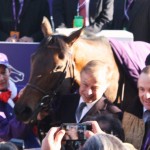 Since becoming the only racehorse to win three consecutive Breeder’s Cup outings, Goldikova is pointing toward a dramatic finish to an exceptional career – a fourth consecutive victory in the Breeder’s Cup this fall. And, like Black Caviar and Zenyatta, Goldikova is credited by many racing enthusiasts as being one of the greatest racehorses of all time.
In the past few years, the tracks have been graced with three racemares that arguably will be held in the canon of immortal Thoroughbreds. And, the qualities that make these racemares “immortal” are being drafted before our eyes through the endeavors of racemares like Black Caviar, Zenyatta and Goldikova.
Roughly four years ago, when Rags to Riches became the first filly to win the Belmont in over a hundred years, I thought I had just watched a historical moment in racing.
I was wrong.
It wasn’t a historical moment.
It was an important moment in racing. It was long-awaited moment in which a single filly took on the boys in the Belmont and beat them in their home court, a feat that had not been accomplished since 1905.
And, since that moment, the modern quest to hold a place among the canon of greats seems to be a “mare’s world” in racing.
May 3rd, 2011 §
 When I was a twenty-year-old college student, I paid a visit home to my mother one weekend.
It wasn’t your typical visit home from college.
The reason I had come home that weekend was because my mother had just undergone one of her many chemotherapy treatments in her fight to survive breast cancer.
When I arrived at her hospital bed, she had lost the fiery red hair that made her easy to spot whenever I looked for her as a kid. She was bald and pale as a ghost now.
She had also lost the joyful presence that she carries into any room. She was tired now. You could see the pain that she was suffering in her eyes and it was absolutely heartbreaking.
In my mind, she was dying of breast cancer. I remember being a young student walking up to the nurse station and saying to them, “Do Something.” Just do anything. But sadly, as many other families know, there is only so much that medicine can do in these moments.
Yet, thirteen years later, my wish for someone to “Do Something” has been answered in a beautiful turnaround of events.
As for my mother, she is among the lucky women that have been fortunate to survive breast cancer. I am happy to report that her joyful presence has returned and she has regrown her red hair that makes her easy to find in any crowd. And, my favorite place to find her today is in survivor walks to help find a cure for breast cancer.
However, she isn’t the only redhead who is doing something in the future for breast cancer.
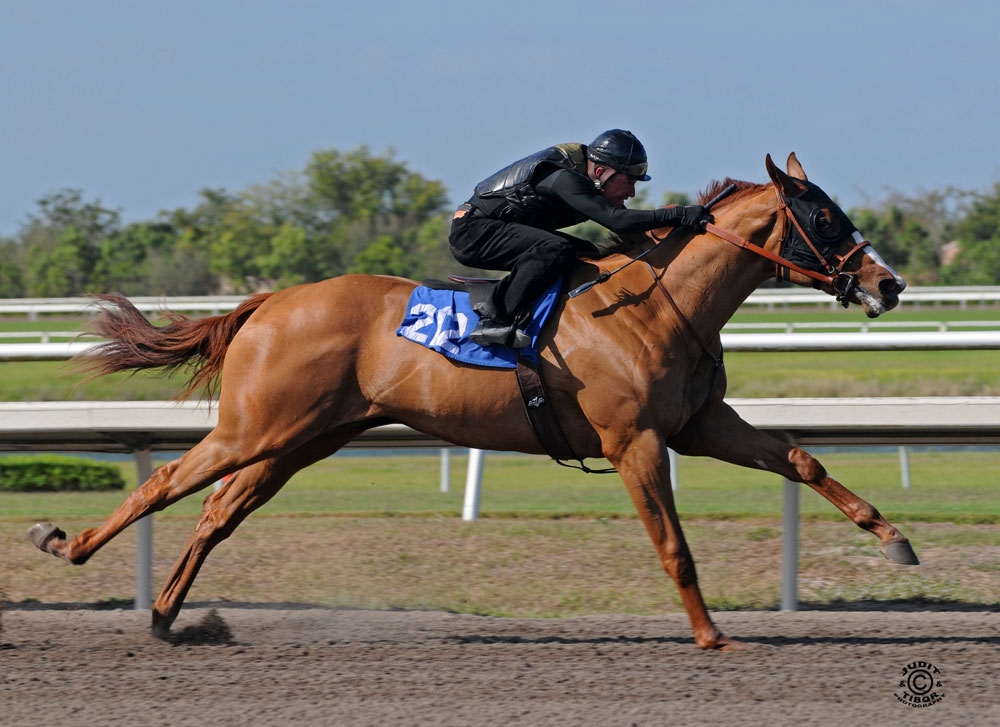
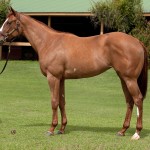 Thirteen years after my mother became a “survivor,” a redheaded filly showed up. And, this filly is also hoping to “Do Something” that contributes to a cure for breast cancer in her own domain – the race track.
West Point Thoroughbreds currently plans to race a two-year-old chestnut filly that will be donating a share of her winnings to support finding a cure for breast cancer. When the filly begins racing, 2.5 percent of any of her winnings will be donated to a breast cancer charity. West Point will also provide a 2.5 percent matching donation whenever the filly wins a race.
So, you may wonder, what inspired West Point Thoroughbreds to race a filly for breast cancer? Simple.
It hit home at the company.
As Shannon Castagnola of West Point Thoroughbreds explained, “We are a small company. There are eleven full-time employees, but seven are women.” She continued, “Breast cancer awareness is something we must all confront at some point or another. It could be your mother, aunt, your sister, or your wife.”
Castagnola noted, “My mother was diagnosed 5 ½ years ago, in October of 2005.” After seeing the “Think Pink” Breast Cancer initiative on Oaks Day, Castagnola recognized that breast cancer awareness was a cause that racing could benefit. She explained, “I remember clearly looking out at the Oaks crowd last year, seeing an absolute sea of pink, and thinking ‘They get it, they want to embrace this cause.’”
And, in the end, West Point Thoroughbreds has embraced breast cancer awareness with the one beautiful filly. When I asked Castagnola about the filly’s demeanor, she said “She’s a big, strong filly and she has a great mind.”
In my view, there couldn’t be a more perfect way for a racehorse to start out a campaign to raise awareness for breast cancer.
The filly is currently nameless - just like many of the women in the statistics that we see about breast cancer. But, when she hits the home stretch in her first race, many racegoers will hopefully know her name and her reason for racing. She will be adorned with pink silks, according to Castagnola.
So, in the end, just like my mother in the survivor parade, there is one more redhead that I can spot in a crowd that answered my call to “Do Something.”
And, with her pink silks and strong build, I hope to spot the redheaded filly in the same place where a find my mother today.
I hope to see her in the winner’s circle.
To learn more about the breast cancer filly through West Point Thoroughbreds, please visit http://www.westpointtb.com or contact Shannon Castagnola at shannon@westpointtb.com.
 Every now and then, a remarkable racehorse can elude you when it is in your direct line of sight.
  Yet, this year, as two jewels of the Crown divided in the Kentucky Derby and Preakness, I was left to ponder the importance of the achievement of winning the Belmont when there is no Triple Crown in contention. And, as I stared at my pictures of beloved Triple Crown winners, another remarkable horse emerged to answer my question of the importance of the Belmont when there is no Triple Crown at stake this season.
 While I looked around the room at the array of racehorse photos, Summer Bird continued to peek out in various situations. In one photo, the big Chestnut is stopping to smell the flowers at Saratoga before the Travers Stakes. In another snapshot, Summer Bird is staring down my husband while he grins back at the horse, beaming with joy. And, in a final picture, Summer Bird is sniffing his new blanket of white carnations after he just won the Belmont in 2009.
 Then, I looked over at the Belmont trophy that sits in our home. Suddenly, it stood out as I considered the moment Summer Bird earned that trophy as he shot out from the pack to claim his victory in the Belmont Stakes.
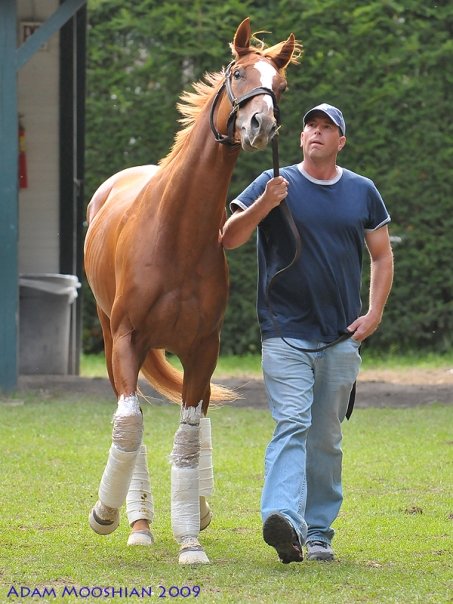 I considered the original picture on the wall, the two of them walking side-by-side, without a care in the world. And, I had to ask, “What was it about Summer Bird that made you so happy?”
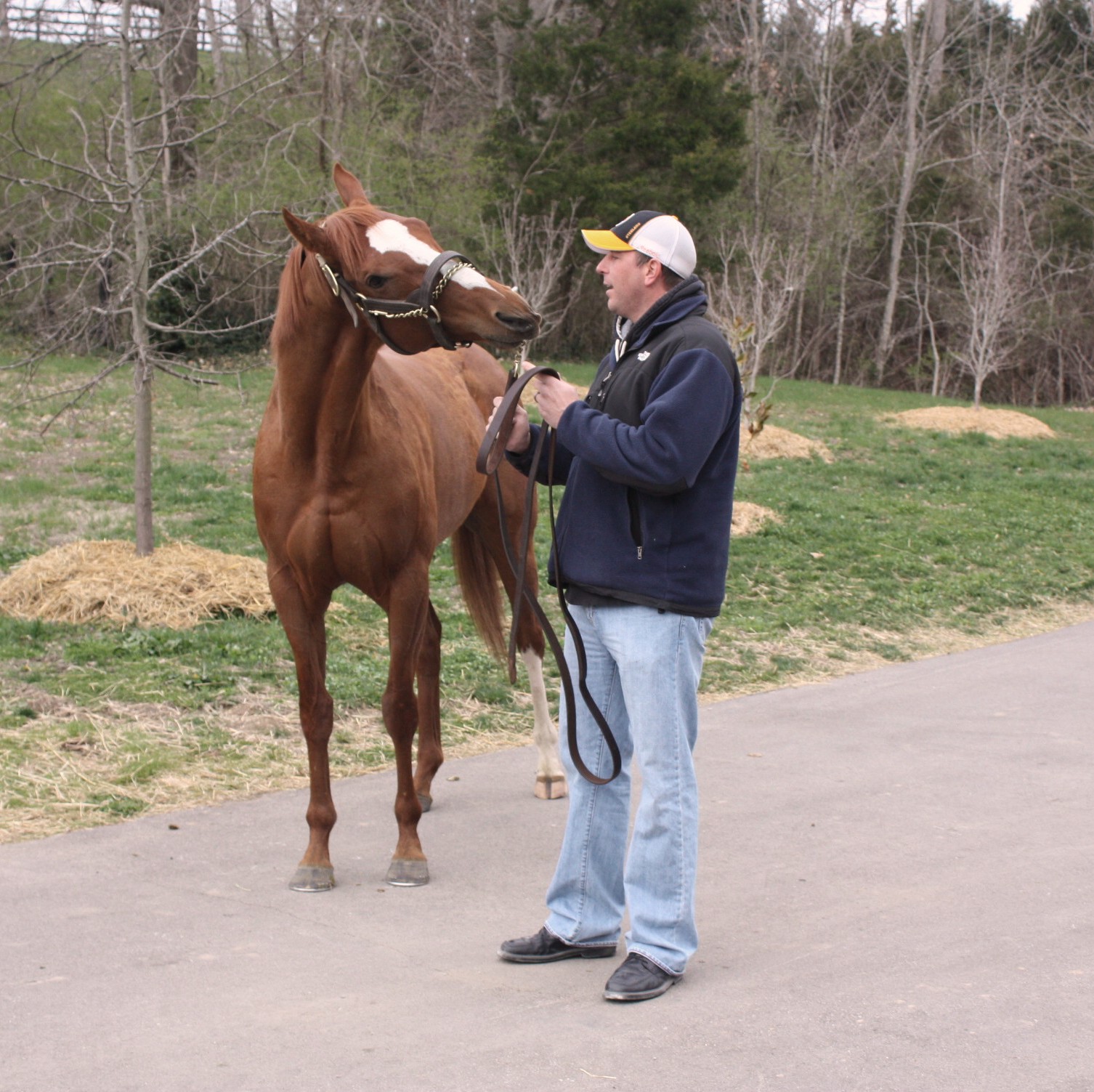 There is no doubt that Summer Bird recognized his old friend when his former trainer entered his sight. It was as if they maintained a repertoire with each other that outlasted the stallion’s racing career. Summer Bird was downright giddy and appeared to bask in moment the two of them took a walk together outside of the barn. It was as if the photo in our home had come alive for a brief moment in time.