 “The old-timers in Louisiana all remember Miss Pine,” said Glynn “Tee Red” Bernis, the former boy-rider of the legendary Chestnut mare who retired with an undefeated record in 32 career starts from the bush track circuit.
Now 62-years-old, Bernis remembers the powerful race mare with a reverence only matched by her legendary talent. “There was no other horse like Miss Pine. She could outrun anything.” He continued, “She was the best Quarter Horse that ever raced.”
Yet, you won’t find Miss Pine in a record book for racing. The Texas-bred mare was never registered nor did she race on any regulated track during her career.
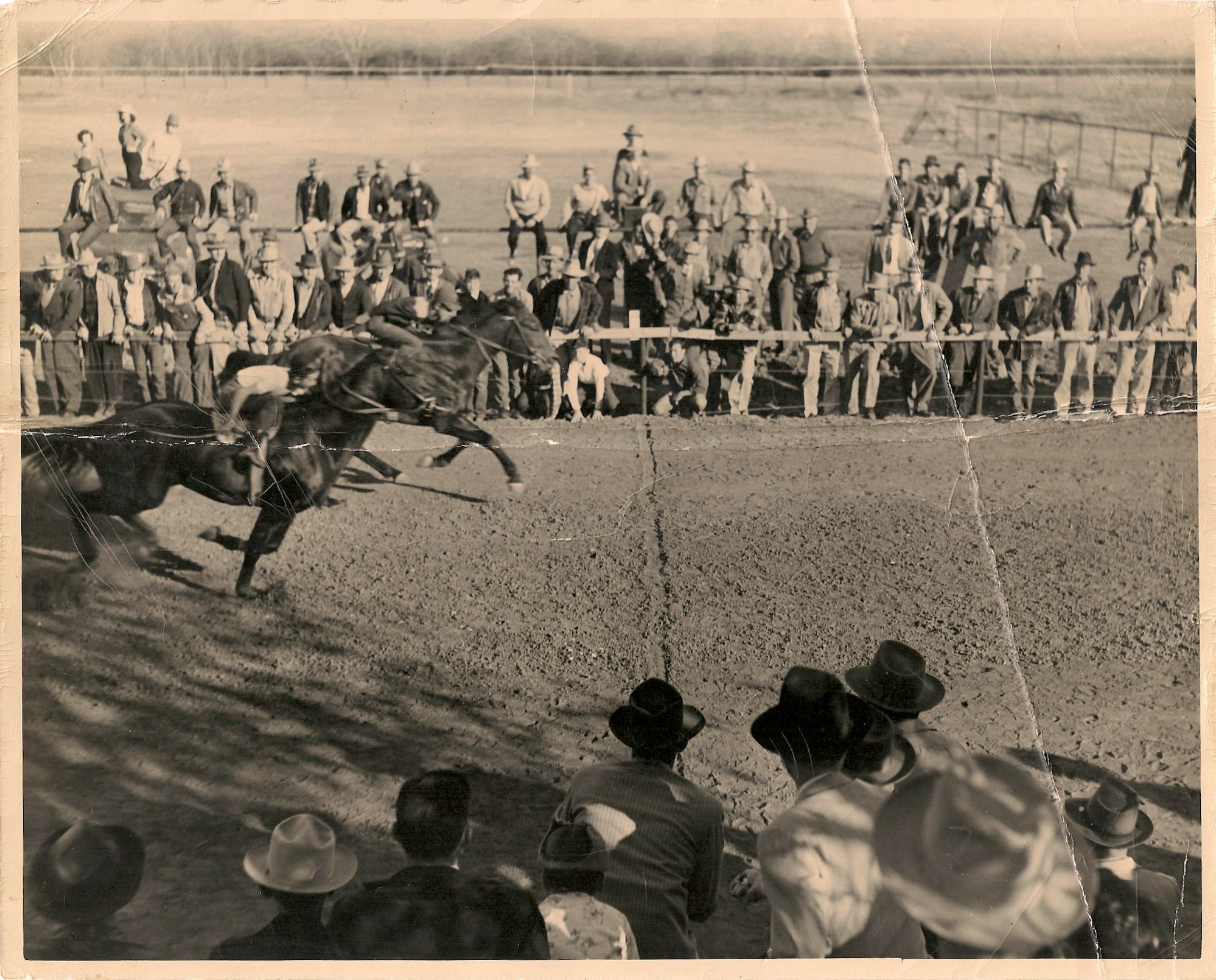
As a result, the glorious legend of Miss Pine is largely invisible today. Like many of her contemporaries, the achievements of the bush track horses aren’t neatly catalogued to preserve their legacy. Rather, their history is maintained through an unofficial, and most often, oral record of their accomplishments.
“The younger generation doesn’t remember those horses,” Bernis explained as he reminisced about Miss Pine.
Yet, for the few that remember Miss Pine, she is a legend. “For a quarter horse, she was one of the best racehorses ever. You just don’t run 32 times and win 32 races on any kind of race track. She won from Maine to Spain, so to speak. Muddy tracks. Fast Tracks. It didn’t make any difference. And, it didn’t make any difference who they brought for her to race. She never got beat,” said Bernis.
As a six-year-old, Bernis began riding Miss Pine for her late owner and trainer, Pierre LeBlanc. He explained, “I rode her about four or five times. My brother, Kerwin, rode her the rest of the time.”
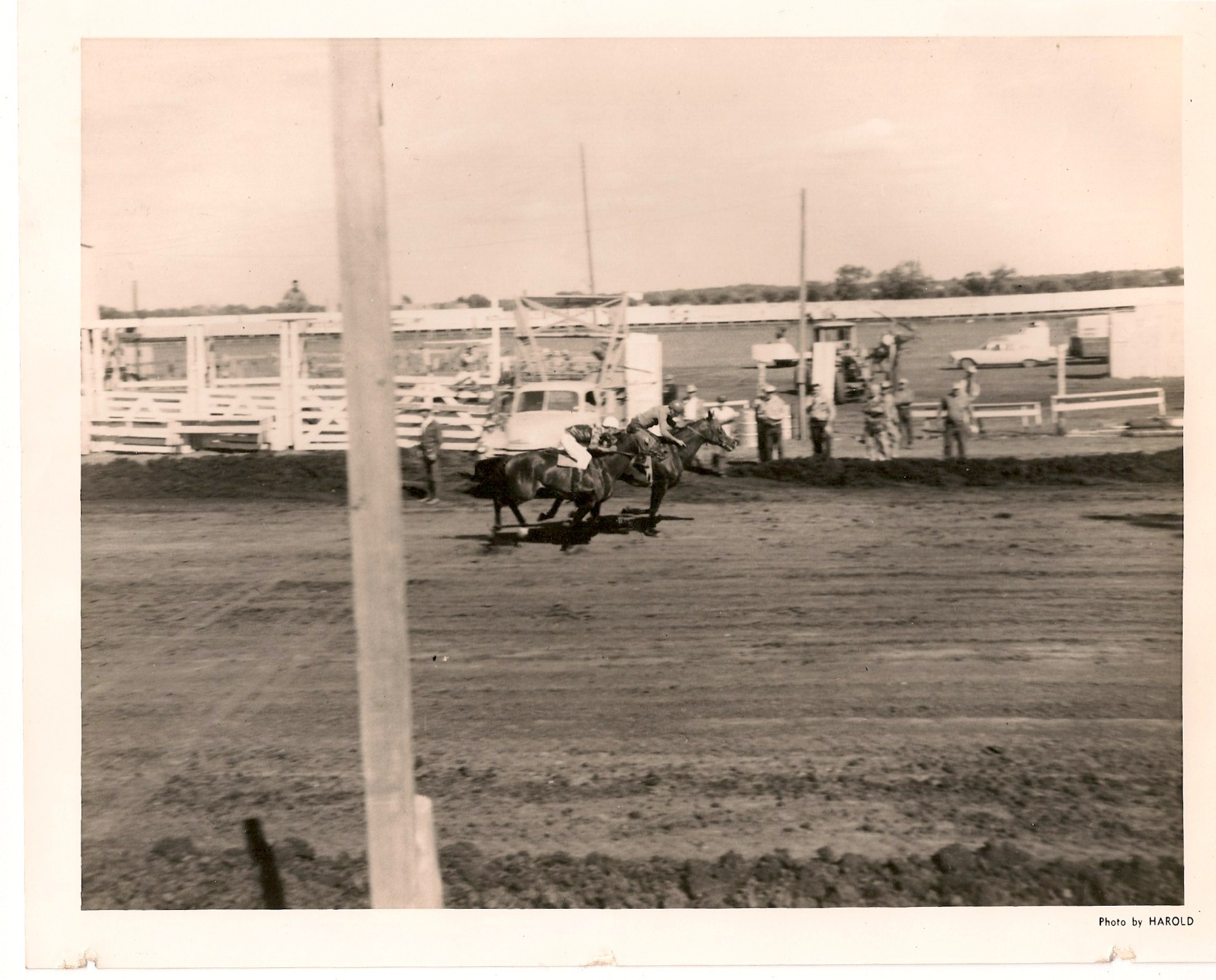 Bernis then recounted an incident in Texas in which both brothers rode Miss Pine to victory on the same day. “In the first match race, Miss Pine ran with open lanes. She had never run with open lanes and my brother, Kerwin, was riding her. She won by two or three lengths, but she was swerving all over the race track.”
After Miss Pine’s victory, Bernis recalled, “The people said they wanted a rematch. So, Pierre LeBlanc said, ‘We’ll rematch her in three hours, but we want a rope down the lane so that she can run straight.’”
Three hours later, Miss Pine was set for a rematch. However, this time, Bernis was called upon to ride the champion mare. “Instead of putting my brother, Kerwin, on Miss Pine, they said, ‘Tee Red, get on Miss Pine,’ since I was about twenty pounds lighter than him.”
Bernis explained, “She took about three jumps out of the gate and pulled down the rope on the race track. She still won though. It was like the other horse wasn’t even in the race.”
He marveled, “She was a sweetheart. All she knew how to do was run. She didn’t like any horse to come by her. She would never let anything outrun her.”
And, as the career of Miss Pine came to life in Bernis’ tales of the race mare, his statement, “She could outrun anything,” began to set in. He meant anything. Colts, fillies, maidens and champions. Simply put, any comers were doomed when the mare appeared alongside them at the starting gate.
According to Bernis, a loose horse couldn’t even outrun Miss Pine. In one race, the mare was matched against a contender that carried a rattling rock-filled can on its’ back. Despite the weight in favor of her opponent, the race went forward.
“There’s a Cajun saying, ‘You ride what you want, I’ll ride who I want,’” Bernis explained. “They don’t say anything about a live jockey.” And, in the end, the loose horse didn’t blemish the mare’s perfect record. “Miss Pine still beat him with my brother, Kerwin, riding.”
Yet, for Miss Pine, capturing a victory seemed to be a bittersweet occasion at times. Bernis recounted a tale in which Miss Pine was shipped to run a match race in Mississippi. “She was racing a horse named ‘Shoefly Baby,’ who was another champion Quarter Horse at the time. They matched for a lot of money. Pierre LeBlanc and some of the other guys had bet a lot of money on Miss Pine. They would bet five or ten thousand on a match race.”
However, Miss Pine wouldn’t get to bask in the glory of another victory if she beat Shoefly Baby. “Before she ran, Pierre LeBlanc told us, ‘After the race, pull Miss Pine up, leave the racetrack, put her in the trailer and head back to Louisiana. There is going to be a war after this race since they’ll be mad we took their money.’”
Bernis then reflected, “I’m pretty sure they knew she was undefeated, but they thought they could outrun her.” When she crossed the wire first, Miss Pine was loaded onto the trailer to Louisiana, without any praise or garland. “We never left her side during that trip,” said Bernis.
Yet, at times, Miss Pine brought home a much easier victory. Bernis recalled, “On one occasion, we leased Miss Pine to some people in Texas. There was a horse called ‘Be Sure Now.’ He was the leading Quarter Horse runner. They had organized a $50,000 race for ‘Be Sure Now,’ with a $20,000 forfeit penalty.” He explained, “If he ran, they could win $50,000. If he didn’t run, they had to pay a $20,000 forfeit.”
The lessors of Miss Pine saw an easy $20,000 profit before the match was ever held. “The people who leased Miss Pine brought her to the race to match against ‘Be Sure Now.’ Once the other side found out that they were racing against Miss Pine, they paid the $20,000 to forfeit.” Bernis reflected, “That’s how fast she was.”
“She was open to the world. If anybody thought they had a horse that could outrun her, they could bring ‘em,” said Bernis.
However, few came to try to conquer the mare. “Sometimes, Miss Pine would only run about five times a year. It was hard to get anyone to agree to match race her.”
And, in the end, Miss Pine retired with a Hollywood ending. The Western actor, Dale Robinson, reportedly purchased the mare for breeding. She never raced again after the sale. As a broodmare, Bernis remarked, “Robinson raced a couple of horses out of Miss Pine. None of them were really good racehorses.”
It seems Bernis’ belief proved true at the close of her career.
There was no other horse like Miss Pine on the bush track circuit.
“She could outrun anything.”
Photo Credits: Oscar and Patty Wells. Bush Track Photos. Used with Permission from the Wells Family.