October 11th, 2010 §
 In less than a year, Blind Luck transformed her career from being an unraced $10,000 filly at auction to become the 2010 Kentucky Oaks winner.
On June 21, 2009, Blind Luck made her racing debut in a $40,000 maiden claiming race at Calder Race Course. After she blazed to a 13¼ length victory, Trainer Jerry Hollendorfer privately purchased Blind Luck. She soon began racing in graded outings.
In her next eight starts, Blind Luck captured five wins – three of which were Grade 1 victories.
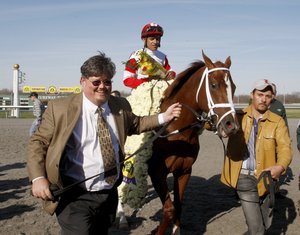
In April of 2010, Blind Luck was shipped from California to Kentucky to challenge a field of rivals in the Kentucky Oaks. In her riveting last-to-first fashion, Blind Luck bulleted in the final stretch to clinch a victory by a nose in one of the most highly-regarded filly races in the United States.
 Since the Oaks, Blind Luck has won two of her last four starts and finished second in the remaining outings.
Throughout her career, Blind Luck has raced throughout the United States, hit the board in every outing, and has proven her ability on both synthetic and dirt surfaces.
As she points toward her next start in the Breeder’s Cup Ladies Classic at Churchill Downs, Daniel Ward answered our questions about Blind Luck. Ward is an Assistant Trainer for Hollendorfer and heads the Southern California Division.
JW: Blind Luck has amassed five Grade I victories, including the Kentucky Oaks in 2010. How did you feel about Blind Luck’s potential when she first joined the Hollendorfer stable?
DW: She was a good-looking filly - very tall with long legs. When we were just working her, we could tell that she was a nice filly. But, until the first time that she ran, we didn’t know.
The first time she raced for us she had a lot of trouble, but she circled the field and won pretty easily. So, we were very excited about that.
Then, we took a big step up from that starter allowance race and she ran the Grade 1 Debutante. When she ran second, we knew we had a good filly.
JW: Blind Luck has been shipped all around the country and has run on both dirt and synthetic surfaces. In your opinion, does she prefer any particular surface or track?
DW: She has won at eight different tracks. She has three Grade I victories on synthetic and two on dirt. So, I really don’t think she has a preference since she has run well on every track. I believe if she gets a chance someday, she would run well on grass - just because of her running style.
JW: Blind Luck appears to enjoy running from behind-to-first in the final seconds during her races. Do you think she knows where the wire is in any given field?
DW: I think she races the same way she acts and trains in the morning. She runs like that in the morning.
In a morning workout, it is a really big advantage when you have a horse like her because you don’t have to worry about her being too strong galloping or working too fast. She can go very slow if you want, and then, she just picks it up on her own or on the turn. We try to teach a lot of horses how to do that and she’s always been able to do that.
She doesn’t have any off-days in workouts.
It just seems like she knows what she’s doing.
JW: Do you get nervous in the final seconds of her races because of her style of running?
DW: Yes. Nobody can really say that they don’t, but it’s very exciting.
A lot of the time when I’m watching her race, I really think that when she moves around the turn and she’s running at a target, she’s going to get there. But sometimes, when she gets there, she waits on the other horse. So, that makes it closer than it should be in the end.
JW: How did you feel when Blind Luck won the Kentucky Oaks?
DW: It is very hard to start a year and pick a goal for any horse. It was satisfying just to get to the race.
When she won the race that we were pointing for all year, it was a very big accomplishment.
JW: You have regular contact with Blind Luck. What is her personality like at the stable?
DW: She is very smart. She likes to go out early. She gets very anxious when she sees other horses go out to the track. She likes to be the first one out.
She usually works at 8 o’clock. She is so smart that if she doesn’t go out early, she relaxes with the thought that she’s not going to work out that day.
I can do anything I want with her, without them tying her up or putting a halter on her, because I have a bag of carrots with me when I check all the horses in the morning. She knows me. But, when she sees my foreman coming around to give her vitamins, she won’t let anyone catch her. Especially the vet. She is just that smart.
She also like peppermints and sugar cubes. She is a little spoiled. Spoiled, but friendly.
She is a very nice horse to be around and doesn’t give anybody any trouble.
She doesn’t like to stand still, but if you catch her, she’s very relaxed.
JW: Does Blind Luck have any unique or fun personality traits?
DW: She really makes a mess out of her stall because she likes to make big mountains of straw. I look in there sometimes and say, ‘What are you doing?’ But, if she wants to do that, it’s fine. It’s a mess, but overall, it’s nothing really.
She also loves to travel. If she hears the van, she’ll prick her ears up and get excited. And, when you walk her up to the van, she’ll drag you into the van. You better be ready.
JW: What makes Blind Luck so special to you?
DW: It’s her competitiveness. I’ve heard stories that when she was growing up at the farm, she was always the one that pushed all the other horses away to get to the feed.
She is very competitive when she gallops. When she sees other horses, she wants to go after them. And, when she’s working, she’ll see a horse way out front and try to catch the horse.
It’s something you just can’t teach them, they just have it.
She has a lot of desire to win.
JW: What led to the decision to point Blind Luck to the Breeder’s Cup Ladies Classic?
DW: She already has had a good race at Churchill Downs, so the Ladies Classic was an easy race to point toward. She’s already won at that track and at that distance. It has been the goal all year, especially since she proved that she liked Churchill Downs.
JW: Do you intend to run Blind Luck as a Four-Year-Old?
DW: Yes. She will get a break. But, there are a lot of races for older females all over the country and she has already won on most of those tracks. We could try the Apple Blossom since she has won at Oaklawn. We could also run in the Delaware Handicap since she’s already won the Oaks at Delaware Park. And, we could also run her at Churchill since she has already won there. She doesn’t mind shipping for races.
» Read the rest of this entry «
September 14th, 2010 §
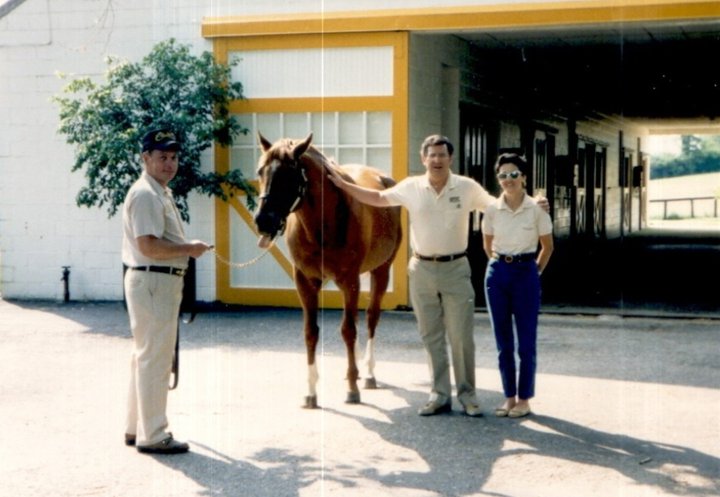
In 1969, an ordinary coin was tossed into the air that held three sides – winning, losing, and everything beyond the two polar outcomes.
The outcome of the coin toss was a testament to the principle that an extraordinary life doesn’t lend itself to pre-existing realities or expectations.
It is a life that surveys common notions and ideas, and ultimately, carves out a new definition for the world.
Secretariat did just that.
Before Secretariat ever set a hoof on this earth, he twirled a simple coin flip into a monumental loss to the seemingly straightforward winner.
Ogden Phipps had technically won the coin-toss that governed the existing Phipps-Chenery breeding arrangement when Secretariat was among the three foals to be picked between the parties. However, the win only allowed Phipps to receive first choice between two foals born in 1969. In losing the coin flip, Penny Chenery automatically received the second foal born in 1969, as well as the only Bold Ruler foal that would be born in 1970 – Secretariat.
Through a two-sided coin, Secretariat had already redefined “winning” before he even entered the world.
Yes, Secretariat did just that.
On January 20, 1972, Secretariat left his home and set out on an extraordinary journey in his life. He arrived at Hialeah Park in Florida and began training to be a race horse. It was no small endeavor.
You see, before Secretariat became a “Superhorse,” he was just a red horse that garnered little respect. His groom, Eddie Sweat, stated “I didn’t think much of him when we first got him. I thought he was just a big clown. He was real clumsy and a bit on the wild side, you know.”
And, his trainer, Lucien Lauren, didn’t mince words when reporting to Chenery on Secretariat’s progress at the track. Lauren’s updates to Chenery were reportedly filled with remarks like, “I have to teach him how to run. He’s big, awkward, and doesn’t know what to do with himself.”
Yes, Secretariat seemed just like that.
Awkward.
As a two-year-old, Secretariat experienced the feeling of defeat. Lauren would report to Chenery, “He hasn’t shown me much.” And, in his first maiden race, Secretariat didn’t.
He lost.
Yes, Secretariat started out just like that.
He was defeated in his first race.
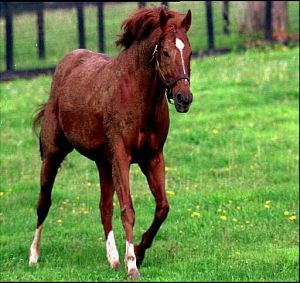 And then, Secretariat felt the feeling of victory.
In July of 1972, Secretariat won his first maiden race while finishing six-lengths in front of the rest of the field. Writer William Nack, reported, “Secretariat had raced the fastest six furlongs of his life,” at the time of his maiden victory.
Nack went on to comment, “Secretariat raced as if he had a future.”
Yes, Secretariat did it just like that.
He saw the future laid before his eyes.
In his third race, Secretariat had his first brush with fame.
While he was being saddled for an allowance race, a circle of people had collected at the paddock to view him. Among the crowd, was veteran turf writer, Charles Hatton.
When Hatton first laid eyes on Secretariat, he would later report, “You carry an ideal around in your head, and boy, I thought, ‘This is it.’ I never saw perfection before. I absolutely could not fault him in any way. And neither could the rest of them and that was the amazing thing about it. They body and the head and the eye and the general attitude. It was just incredible. I couldn’t believe my eyes, frankly.”
Yes, Secretariat was just like that.
A vision of perfection.
And, by the end of his two-year-old season, Secretariat was infamous.
Between July and November of 1972, Secretariat had officially won 7 of his 9 races and became the first two-year-old in history to be named “Horse of the Year.” His breeding rights were syndicated for a world-record total of 6,080,000 before he even began his three-year-old career.
Yes, Secretariat did all of that.
He broke records before he ever began his bid for the Triple Crown.
And then, Secretariat set out to become unstoppable in his three-year-old career.
When he entered the post parade for his first race as a three-year-old in the Bay Shore Stakes, Trainer Syd Walters reportedly told Lauren, “Good luck… You get one of those in a lifetime.”
And, when he won his three-year-old debut by 4 ½ lengths, Roger Lauren was said to exclaim from his box seats, “He’s too much horse! They can’t stop him! They can’t even stop him with a wall of horses!”
Yes, Secretariat was all of that.
He appeared to be unstoppable.
And then, Secretariat experienced doubt.
As Secretariat headed toward the Derby, the rumor mill swirled about Secretariat’s soundness after losing the Wood Memorial. Jimmy Snyder, an odds maker, reportedly told an Associated Press reporter that he had heard Lucien Lauren was icing one of Secretariat’s knees. Lauren was incensed when he heard the remark.
In response, Lauren offered to fly Snyder to Kentucky, allow Snyder to pick his own veterinarian, and personally view an examination of Secretariat’s knees to prove the soundness of the horse.
When Snyder didn’t accept the offer, Lauren reportedly went on to publicly bet Snyder a thousand dollars that Secretariat was sound. Snyder refused the bet.
Yes, Secretariat saw all that.
He bet on his own ability.
And, Secretariat experienced friendship.
During his racing years, Secretariat would reportedly wait for Eddie Sweat, his groom, every morning in his stall.
When Sweat approached, Ron Turcotte reported, “He’d grab the tip of Secretariat’s tongue to wish him ‘Good Morning.’ Before you knew it, every time Eddie passed his stall, the horse stuck out his tongue.”
You see, Sweat had a philosophy about being a friend to a racehorse that Secretariat seemed to admire in his groom. He reportedly told writer William Nack, “Only way horses win is to sit there and spend time with ’em. Love ’em. Talk to ’em. Get to know ’em. Now, that’s what you gotta do. You love ’em and they’ll love you too. People may call me crazy, but that’s the way it is.”
Secretariat didn’t find it crazy.
People noticed the beautiful bond that Sweat had formed with Secretariat. Ted McClain, Barn Foreman for Lucien Lauren, provided a testament on their relationship to writer Lawrence Scanlan, in saying “Eddie and that horse were like brothers. Eddie lived with him; traveled with him. They were joined at the hip.”
Yes, Secretariat treasured all of that.
He appreciated the value of a good friend.
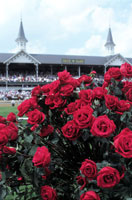 And then, Secretariat won the Kentucky Derby.
He had awoken at 4 o’clock in the morning and spent most of the day hanging around the back of his stall. According to Sweat, this was a good sign. He reportedly didn’t want to be bothered on race days.
When the gates opened, Secretariat delivered a beautiful response to his critics. He ran every quarter mile faster than the preceding quarter. And, in the home stretch, he passed his final rival – Sham – to claim a 2 ½ length victory.
Secretariat set a new winning track record of 1:59 2/5 for the Kentucky Derby.
Yes, Secretariat did just that.
He holds the Kentucky Derby track record to this day.
And then, Secretariat set his gaze on the second jewel of the Triple Crown – The Preakness.
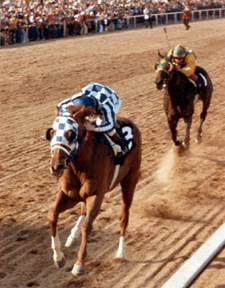
Once he broke from the gate, Secretariat did something astounding. As he headed into the first turn, Secretariat was dead last. Within seconds, Secretariat passed the entire field by the end of the first turn and drove through the rest of the race like a big red Bentley. Secretariat ultimately captured a 2 ½ length victory in the Preakness.
Ron Turcotte never used his whip during the race. Turcotte would later comment, “The pace was slow and he wanted to run… He was determined to run. I figured, if this is the way he wants to do it, I’ll let him have his way.”
Those who watched the race were in awe of Secretariat’s performance in the Preakness. Baltimore Handicapper, Clem Florio, reportedly shook his head in amazement and said, “Horses just don’t do what he did here today… They just don’t do that and win.”
Yes, Secretariat could do all that.
He could make a person marvel over his ability to accomplish a seemingly impossible feat.
And then, Secretariat performed pure magic in the Belmont.
Prior to the race, Secretariat had a fun secret that he wasn’t sharing. He was going to change the very definition of “Winning the Belmont.”
Penny Chenery noticed his mood. Prior to the race, she reportedly stated that Secretariat had come back from a workout wanting to play, “as if he thinks racing is a game we thought up for his amusement.”
And, Lauren also saw that Secretariat had something up his sleeve. The night before the Belmont, the trainer reportedly stated, “I think he’ll win by more than he’s ever won in his life.”
As Ron Turcotte talked with Lauren before the race, Lawrence Scanlan wrote that the trainer reportedly told the jockey, “Neither send the horse nor hold him back. Just let him roll. Use ton proper jugement. Use your own judgment and let your horse use his.”
And Secretariat had made a judgment call.
When he broke from the gates, Secretariat set out to deliver what is arguably one of the finest performances in horse racing. Secretariat and Sham stood alone from the first turn through the middle of the second turn in an apparent match race. When Sham faded, Secretariat stood all alone in an otherworldly moment.
Turcotte hadn’t used a whip and the rest of the field was nowhere to be found.
The jockey would later explain the moment in saying, “I heard Sham’s hooves disappear behind me… And then, there was nothing. All I could hear was Secretariat’s breathing and his hooves hitting the ground. It was very quiet.”
Turcotte hand-rode Secretariat to a 31-length victory. The horse had not only broken the Belmont track record, but also, he set the world dirt track record for running a mile and a half in 2:24 flat.
He was coronated the first Triple Crown Winner in 25 years.
And, Secretariat did it just like that.
He raced in the Belmont in a way no one had imagined to be possible.
Later that year, Secretariat retired from racing.
After a farewell ceremony at Aqueduct, Secretariat was flown to Lexington, Kentucky to begin his stud career at Claiborne Farm.
As Secretariat’s plane headed for the Bluegrass Airport, the airport tower reportedly called to the pilot, Dan Neff, “There’s more people out here to meet Secretariat than there was to greet the governor.” The pilot allegedly responded, “Well, he’s won more races than the governor.”
Secretariat was led down the ramp and a police escort followed his van to Claiborne Farm. He was placed in the stall of Bold Ruler, his father, to begin his own legacy as a sire.
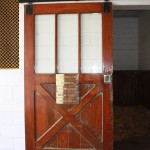 Eddie Sweat, his longtime groom, reportedly stared at Secretariat in his new stall and mourned the end of his racing career in saying, “Well, it’s all over now. They’ll never forget you, big fella. Never.”
And, Secretariat would later show that he didn’t forget Sweat’s friendship that existed throughout his racing days.
A year later, Sweat returned to Claiborne to pick up a foal for Lucien Lauren. Sweat told a reporter that he was in awe that Secretariat remembered him. “Secretariat, he came over and pulled on my shirt, just like he always did.”
Secretariat missed his racing friend.
And, Secretariat showed all that.
He walked right up to him and greeted him as if they were at a reunion.
And through the years, Secretariat would entertain many guests who came to visit him at Claiborne Farm.
In 1974, an Ohio-based reporter wrote that Secretariat played “pickup sticks” during their visit. Secretariat would hold a stick in his mouth and wait for the reporter to take it from him and give it back.
Secretariat also loved the camera eye. Retired Farm Manager John Sosby explained, “With a camera, he’d pose. He was showman, but he was kind. You could walk right up and get your picture taken with him.”
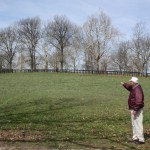 John Asher later told of how Secretariat posed for him when he went with a groom to see the horse in his paddock. “He was at the top of the hill. The groom I was with didn’t speak loudly. He just said, ‘Hey, Red.’” In a flash, Asher recalled Secretariat charging toward them, “BOOM! Here he comes. Flying down the hill. Absolutely flying down the hill. He gets to the fence at the end of the paddock where we were standing… Stops. And poses.”
Vickie Byrd told the story of how she visited Secretariat during a business trip. She reflected, “The big star in the barn was Secretariat. We were allowed to pet him and pose for pictures. It was like getting our picture taken with a movie star.” And, Secretariat left quite an impression on film. Byrd stated, “The funniest thing was after we got our pictures developed, we looked at one and saw that Secretariat had his tongue sticking out… Like a little kid!”
Secretariat also entertained children who came to visit the farm. Michele Valenta recalls that she visited Secretariat as a five-year-old girl, “I got to pet his nose and we turned around and walked away, looking at the other horses in the barn.” Valenta continued, “Shortly after, we heard clip-clop-clip-clop-clip-clop. We turned around to see Secretariat in all his red glory.” Valenta stated, “He was obviously perturbed when he was escorted back to this stall. Ears back, very annoyed.” She reflected, “He stole my heart then. He was so full of personality and I could see it, even at a young age.”
When Robin Porcelain visited Secretariat with her husband, Warren, he proved himself a showman. She stated, “Secretariat obviously knew how special he was and majestically pranced and strutted for us.”
Dorothy Henderson, wife of Secretariat’s final groom at Claiborne, Bobby Henderson, remembers him for his kind nature. “I’ve never seen a horse like him. He was just like a big pet. He had a big heart, it was almost as big as two hearts, and you could almost see that.”
And finally, John Sosby reminisces about Secretariat’s sharp intellect during his time at Claiborne Farm. Sosby joked, “He never learned to play checkers because we didn’t know how to teach him.”
Through racing and retirement, Secretariat proved himself to be everything.
And, his legacy remains intact.
Years after Secretariat left racing, Charles Hatton marveled at his perfection, “He’s the greatest horse that anyone has ever seen. Don’t let anyone kid you. He could do anything, and he could do it better than any horse I ever saw. No question about it in my mind.”
And it seems, Secretariat knew that.
Through his entire life, he demonstrated the beauty of being everything.
He was called awkward before he was deemed perfect.
He was defeated before he knew victory.
He was a celebrity and an icon.
He was a Triple Crown Winner.
He was a friend.
He was a father.
He was Secretariat.
And, Secretariat was everything.
» Read the rest of this entry «
August 9th, 2010 §
Luck is an interesting thing.
You find it when you least expect it.
And, in some moments, luck finds you.
In the case of Blind Luck, it arrives when you’re not looking.
In April of 2007, a mare named Lucky One gave birth to a foal in Kentucky at Fairlawn Farm.
The foal’s father, Pollard’s Vision, was blind in one eye and had been named for sharing the same trait with Red Pollard, Seabiscuit’s Jockey.
After multiple graded-stakes victories during his career, Pollard’s Vision was eventually retired after his final race at Saratoga in August of 2005.
It was the same track where he had begun his career with a 12½ length maiden victory.
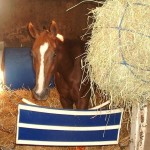 A few years after Pollard’s Vision ran his last race at Saratoga, the daughter of the half-blind horse and the one “lucky” mare was entering the sales ring.
She was initially sold as a yearling for $11,000 at the 2008 Fasig-Tipton Kentucky July sale.
Roughly a year later, the two-year-old filly was back in the ring at auction.
In April of 2009, she was entered in the Ocala Breeder’s April sale. After failing to garner serious attention from bidders, the filly was bought back for $10,000.
Roughly two months later, the filly set foot on the track for a $40,000 maiden claiming race at Calder Race Course.
It was the first time her name appeared in a program.
“Blind Luck.”
As she entered the gates, the $10,000 filly faced odds of 5 to 1 from the betting public.
But, luck doesn’t mind odds.
The sheer nature of luck is beating them.
As Blind Luck claimed a 13¼ length maiden victory, she began to mirror Pollard’s Vision in finding the Lucky One.
Blind Luck cleared her maiden race in the same runaway fashion as her father had done in his 12½ length maiden race at Saratoga.
Yet, few saw Blind Luck when she appeared in the gates – she didn’t get claimed in her debut.
The nature of luck can elude the eyes.
Yet, luck didn’t elude Pollard’s Vision.
And, after the race, Blind Luck didn’t escape the vision of Trainer Jerry Hollendorfer.
After she broke her maiden by 13¼ lengths, Hollendorfer privately purchased Blind Luck.
He saw a stakes-bound horse.
And, Blind Luck agreed.
In her next eight starts, Blind Luck captured five victories – four of which were in Grade 1 races.
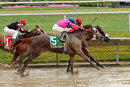 In April of 2010, Blind Luck was shipped from California to Kentucky to challenge a field of rivals in the Kentucky Oaks.
As the gates opened, Blind Luck hung at the back of the pack as the rest of the contenders bulleted around the oval.
It appeared her luck had run out.
Then, Blind Luck took hold in the race.
As the field turned for the wire, Blind Luck picked off her rivals in a heart-stopping victory.
She won by a nose.
As Blind Luck was draped in a Garland of Lilies, she proved Pollard’s Vision correct.
Blind Luck had just claimed her fourth Grade 1 victory.
And, it appears her luck isn’t running out.
In her last race, Blind Luck nipped her rivals at the wire in the Delaware Oaks to claim her eighth victory in twelve career starts.
As Blind Luck heads toward Saratoga for the Alabama Stakes, she will race around the same circle where Pollard’s Vision started and finished his career.
And, as she stamps out her own hoof print on the Saratoga track, she is a perfect vision of luck.
Blind Luck.
August 3rd, 2010 §
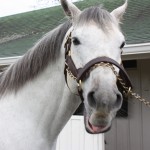
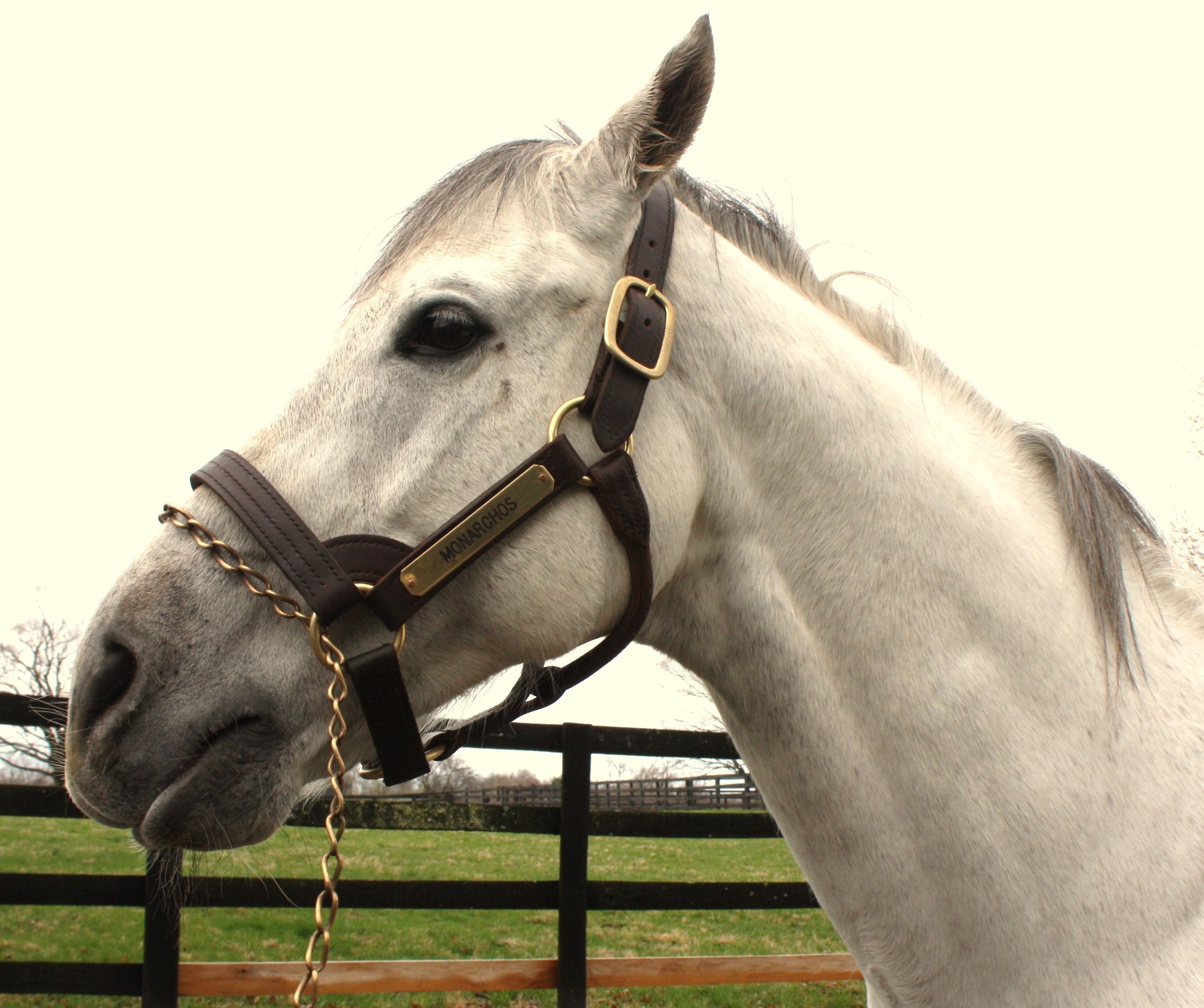
Earlier this year, I visited Kentucky to meet Monarchos.
I wanted to see the fastest living Kentucky Derby winner in the flesh.
It was just as simple as that.
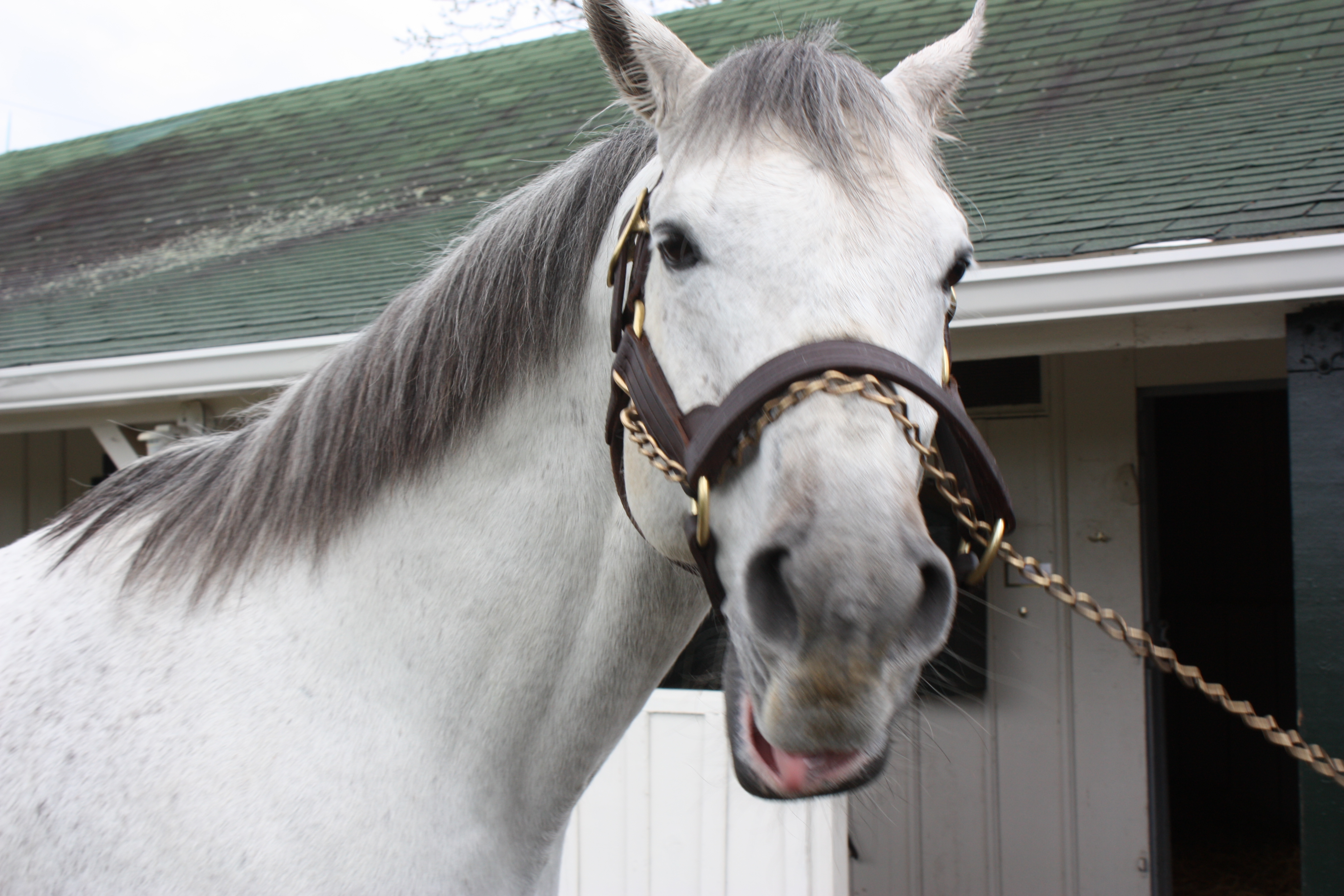
As the big gray champion emerged from his stable, Monarchos was well-mannered and kind. He allowed himself to be pet, stood patiently for photographs, and gently devoured my bag of carrots with delight.
I was thrilled about my visit with Monarchos.
He is a celebrity in my world.
And, it is always nice to find out that your celebrities are truly kind at heart.
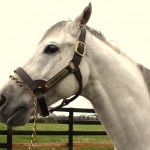
When I returned home from Kentucky, I realized that Monarchos is just a gray horse to many of my friends outside the racing universe.
It was just as simple as that.
 “How was the Kentucky Derby?” I was asked by one friend.
I had to find a nice way to tell my friend that the Kentucky Derby hadn’t occurred yet.
When I mentioned that I visited Monarchos, another friend asked, “Is that your horse?”
I didn’t own a horse at that point. And, if I owned Monarchos, I certainly would have mentioned my Kentucky Derby winning horse in earlier conversations.
This was my first experience of trying to explain horse racing to non-enthusiasts.
Nothing was simple about it.
Shortly after these conversations, I invested in a horse. He’s a two-year-old in training and hasn’t been entered in any races.
However, my small investment created a giant misunderstanding among my non-racing enthusiast friends.
Zenyatta stood at the center of the confusion between the two worlds.
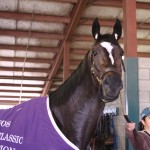 I talked about Zenyatta’s undefeated record at cocktail parties and my friends would ask how she is doing.
I kept saying, “She’s still undefeated!”
It was just as simple as that.
I thought we had arrived at a common ground.
Then, I went to Hollywood Park to watch her claim her seventeenth career victory in the Vanity Handicap.
When I made a photo album of the trip, a friend asked “How did your horse do in her race?”
I replied, “I wish I owned Zenyatta.”
In my mind, it was just as simple as that.
However, when I had to explain in greater depth that I don’t own Zenyatta, the confusion on my friend’s face spoke volumes.
It was as if to say, “Why don’t you?”
I went on to explain that Zenyatta has made roughly $6 million in her career and has remained undefeated in seventeen consecutive races. She’s not for sale.
Then, I realized her earnings or record meant nothing to my friend.
In personal defeat, I explained to my friend that Jerry Moss, the co-founder of A & M records, owns Zenyatta.
When I mentioned that she was named after The Police album, “Zenyatta Mondatta,” I received immediate recognition.
“Oh, ‘Zenyatta Mondatta.’ That makes sense!”
It was just as simple as that.
But, was it? I’ve listened to that album many times and I’ve never heard Sting belt out any lyrics about Zenyatta’s racing career.
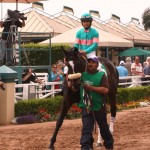 In retrospect, the words “The Police” and “Zenyatta Mondatta” were the only parts of our conversation that resonated with my friend.
Since that moment, I’ve wondered how to discuss horse racing with the non-racing world.
There seems to be nothing simple about it.
As far as I can tell, non-racing enthuasists have gathered these gems from my conversations:
“There are some gray and brown horses that run fast. One dances pretty well. The Kentucky Derby is an important day. And, ‘Zenyatta Mondatta’ is a great album.”
It is just as simple as that.
So, after growing tired of giving explanations, I decided to just quietly enjoy going to the races.
And then, the two worlds unexpectedly met for a brief second in time.
As I was heading to the track on an ordinary day, a friend asked me, “Is there an important race today?”
I joked, “Yep. Secretariat is in a match race with Seattle Slew today.”
When she laughed, I realized my friend knew I had just told her a fairy tale.
However, I also realized she knew some Triple Crown winners.
I began to dream about the next Triple Crown season.
And wish… it was just simple as that.
July 17th, 2010 §
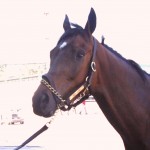
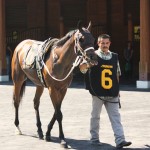
In Trainer Larry Rivelli’s barn at Arlington Park, there is a small bay racehorse named Helicopter.
Helicopter isn’t a household name for most horse racing enthusiasts.
Helicopter has never competed in a graded race and he doesn’t hold any breeding value for the sport. He is a gelding.
As a two-year-old, Helicopter raced fourteen times and stamped out a performance record for that year that held descriptors ranging from “failed to menace” to “no factor.”
When he began his three-year-old debut, Helicopter didn’t hold any promise as a Kentucky Derby hopeful. It wasn’t even a distant dream.
Helicopter was running in low-purse claiming races and losing in every outing.
It seemed Helicopter just wasn’t meant to be a racehorse.
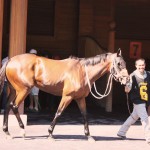 Then, in March of 2009, Helicopter set foot on the track at Hawthorne Park in an attempt to win a highly-elusive race – his maiden victory.
In his 19th career start, Helicopter delivered a surprising 2 ½ -length victory as he bulleted past his rivals in the field.
He had finally won his first race after eighteen failed outings.
When Helicopter delivered a second career victory, he was privately purchased by Trainer Larry Rivelli in May of 2009.
Rivelli explained, “Helicopter was part of a two-horse package. I think the pair cost roughly $7,500.”
In his first start with Rivelli as the trainer, he won by 8 ½ lengths in a claiming race at Arlington Park and earned $6,000 – nearly covering his purchase price during his third career victory.
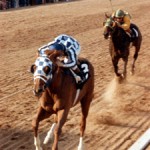
After winning his next race by two lengths, Helicopter had begun to demonstrate his potential on the track. He had won three consecutive races in the claiming circuit under Jockey Brandon Meier.
 Then, roughly two months after joining Rivelli’s stable, Helicopter was claimed during a race in July of 2009.
Rivelli immediately sought to retrieve Helicopter from his new owner.
Rivelli explained, “I liked the horse. After the race, we privately purchased him back for double of what the guy had paid to claim him.”
Helicopter never ran a single race for the new ownership prior to being recovered by Rivelli.
And, Rivelli never entered Helicopter in a claiming race again.
On September 6, 2009, Helicopter set foot on the track for his next race and clinched another victory.
Then, Helicopter went on to break two track records. He set the record for 10 furlongs in 2:02.95 during a starter race at Keeneland in October of 2009.
In his next outing, Helicopter set another record during an allowance race in Canada, running 10 furlongs in 2:03.47.
Rivelli explained, “Helicopter is a small horse, kind of average and plain-looking. His asset is that he is a distance horse and he never wastes any energy before a race.”
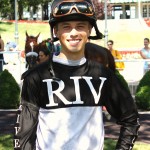 And, he has a good pilot. Rivelli remarked, “His jockey, Brandon Meier, is a perfect match.”
Since Rivelli began training the horse, Helicopter has only made one start without Meier as his rider.
And, Helicopter made it clear how he felt about racing without Meier aboard.
He lost.
Since that race, Meier has remained Helicopter’s regular jockey.
And, they have amassed quite a nice winning record together.
With Rivelli as his trainer, Helicopter has won twelve races with Meier aboard in sixteen starts.
Helicopter has won on varying surfaces – dirt, synthetic and wet dirt.
Recently, Helicopter attempted his first turf race at Arlington Park.
Prior to the race, I saw a bunch of young children standing at the rail waiting to watch Helicopter’s turf debut.
I was curious if they knew anything about horse racing.
I asked one of the girls, “Who do you think is going to win the race?”
She didn’t even pause as she shot back her answer.
 “Helicopter.”
In one word, a kindergartner had matched my handicapping pick.
Helicopter was the clear favorite, riding a six-race winning streak.
Sadly, he didn’t win his turf debut.
However, Helicopter has won some fans with his overall winning record.
Fans from all age ranges.
Fans who come to the track.
And, fans that came to the track on a weekday.
Helicopter’s fans don’t care if he is running for roses, large purses or against graded-stakes winners.
They just like to see Helicopter win a race.
And still, Helicopter isn’t a household name for most horse racing enthusiasts.
Yet, it may do some good to start talking about Helicopter in the racing world.
He helps bring fans to the track for an average race on an ordinary day.
And, the local community comes out when Helicopter is racing.
It is an exceptional victory for the sport.
June 1st, 2010 §
In her famous poem, One Art, Elizabeth Bishop begins by pondering “The Art of Losing” with the idea that some things are fated to be lost.
In the moment of loss, Bishop starts the poem with the notion that losing should not be viewed as a heartbreaking event.
In fact, she goes on to write that it should be practiced.
In my view, it is hard to point to many horses that practiced “The Art of Losing” with the same grace of Sham.
And, decades after Sham raced, there is a certain lingering sadness over Sham’s fate of being born at the wrong time – the year Secretariat was making his bid for the Triple Crown.
As Secretariat shattered records in his Triple Crown season, Sham stood in the shadows waging a beautiful racing performance.
He was a great horse in his own right.
And, in a sport where winning is nearly everything, Sham demonstrated that there is an “art” to losing.
As Sham entered the 1973 Kentucky Derby, the colt banged his head on the side of the starting gate, knocking out two of his teeth.
As he bled throughout the race, Sham never stopped chasing after Secretariat with his determination to win.
At the wire, Secretariat beat Sham by 2 ½ lengths – capturing the record time of 1:59 2/5 in the Kentucky Derby.
However, Sham also broke the Kentucky Derby record during his loss – finishing at a time of 1:59 4/5.
As Secretariat was draped in roses, Sham was guided toward his barn to cauterize the wounds to his two teeth.
Although Sham received no records or roses for his efforts, he stood a victor in ”The Art of Losing.”
Two weeks later, Sham set foot on the track in the Preakness.
As Secretariat began his graceful stride from last to first, Sham banged the rail on the clubhouse turn.
However, despite being rattled, Sham kept his eyes on his rival.
He raced onward to chase Secretariat to the finish line.
In the end, Secretariat beat Sham by 2 ½ lengths in the Preakness – the champion arguably breaking the record time for the race in his victory.
However, Sham didn’t stop in the face of an impossible rival.
As a master of “The Art of Losing,” Sham went back to his barn and prepared to challenge Secretariat in the longest race in North America.
And, when the day of the Belmont arrived, Sham demonstrated a powerful lesson in “The Art of Losing.”
When he entered the gates, Sham was soaking wet and nervous.
But, he didn’t back down.
Instead, Sham broke from the gates and challenged Secretariat to a virtual match race in the backstretch.
In the golden seconds that followed, Sham gave everything he had to challenge fate and beat his rival.
But, having been practiced at “The Art of Losing,” Sham found that fate isn’t subject to argument.
As Secretariat blasted forward to win by 31 lengths, Sham tired and fell back to finish dead last.
While Secretariat received a Triple Crown coronation, Sham was led back to the barn in defeat.
However, Sham proved himself a champion though his losses.
He poured his entire heart into trying to win.
And, quite possibly, Sham may have won the Triple Crown in a different field.
But, he was racing a giant that could not be matched.
After the Belmont, Sham never raced again. He retired to Spendthift Farm in July of 1973 and eventually moved to Walmac International.
On April 3, 1993, the nightwatchman discovered that Sham had passed away from an apparent heart attack in the early morning.
Upon examination, it was discovered that Sham had a heart that weighed eighteen pounds – roughly double the size of the average Thoroughbred.
There was only one known Thoroughbred heart larger than his on record in North America.
The heart of his lifelong rival – Secretariat.
In three single races, two amazing horses met their fate in 1973.
Thorough his victories, Secretariat set new records for the racing world to marvel over for countless decades.
And, through defeat, Sham delivered some of the most poetic moments in racing by practicing “The Art of Losing.”
May 19th, 2010 §
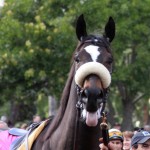
I have a word in my arsenal that can start conversations about horse racing with people who have never bet a nickel on the nose of a horse.
It’s a great word.
“Zenyatta.”
For those of you who struggle to define the allure of horse racing to non-enthusiasts, Zenyatta is a fun character to parade around in discussions at cocktail parties.
Why? Zenyatta appeals to pop culture and makes horse racing relatable to non-enthusiasts.
In a perfect world, I would live in a place where all my friends followed horse racing.
My social calendar would be full of trackside parties in which guests wore their handicapping picks as an icebreaker on their nametag.
However, I am young and live in Chicago.
And, until Zenyatta, any mention of horse racing to people in my age group led to blank stares and a quick change in topic.
Then, Zenyatta showed up and did something brand new for the modern era of racing.
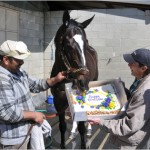 Instead of trying to lure non-enthusiasts to the race track, Zenyatta stomped out into mainstream culture and joined the party.
I have to admit - she’s a sharp girl at marketing.
Zenyatta joined Facebook and made some new friends.
This was no small adventure.
According to Facebook, the average user has 130 friends.
In contrast, Zenyatta has amassed roughly 15,500 friends on her fan page.
As for her friends, Zenyatta started hanging out with people in the younger crowd. The highest age demographic on Facebook currently falls between ages 18 through 44.
Regarding her connections, they embraced Zenyatta’s new friends and lifestyle.
Her trainer, John Shirreffs, started a YouTube channel so that her fans could watch Zenyatta’s activities from their home computer.
On YouTube, Zenyatta’s friends can experience a workout between Zenyatta and her stable mate, Green Cat.
Since the video was posted by Shirreffs, over 83,000 fans have taken a virtual ride on the back of Zenyatta.
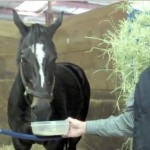 In another YouTube video, Shirreffs gives Zenyatta a Guinness beer while she is relaxing after a workout.
The clip of Zenyatta drinking a Guinness, initially posted by Shirreffs, generated nearly 4,700 views.
Apparently, many of Zenyatta’s friends enjoy meeting up with her for a drink.
However, Zenyatta is perhaps best-known for her dancing – which is catalogued in many videos across YouTube.
In the pre-race television broadcast of the 2009 Breeder’s Cup, an entire segment was devoted to Zenyatta’s dance moves. The network coverage of her dancing has since been viewed on YouTube by nearly 50,000 fans.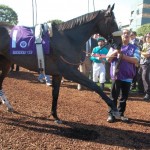
However, dancing appears to come easily to Zenyatta with the musical background provided by her ownership – Jerry Moss, co-founder of A & M Records.
Her name itself speaks volumes in this regard.
Zenyatta is named after the album, “Zenyatta Mondatta,” in recognition of Moss signing the band The Police to A & M Records.
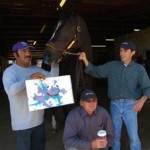 But, Zenyatta doesn’t stop on the dance floor.
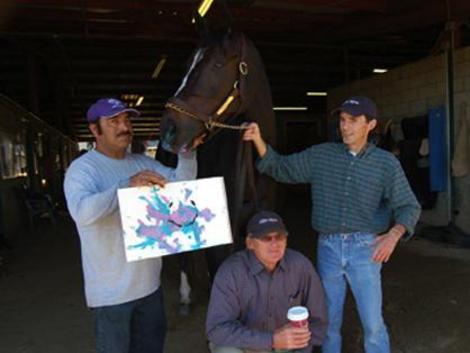
She has learned to paint pictures for auction to help fund Thoroughbred rescue efforts.
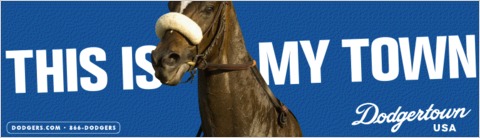
And, Zenyatta recently started marketing for the Los Angeles Dodgers baseball team.
Near her home base of Hollywood Park, a billboard stands at the corner of 106th and Hawthorne Avenue.
The billboard features Zenyatta’s familiar mug shot, with the caption, “This Is My Town,” as a marketi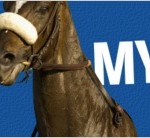 ng promotion for the Los Angeles Dodgers.
Take a minute and think about the victory embodied in that billboard.
A race horse is doing the marketing for baseball - one of the most popular sports in the United States.
Yet, Zenyatta’s crossover endeavors have not detracted from her racing talent.
As Zenyatta approaches the Vanity Handicap, she sets out to become the only race horse to remain undefeated in seventeen unrestricted top-level races in North America.
If she wins, she’ll make racing history for the third time in her career – having already captured two Breeder’s Cup records.
However, win or lose, Zenyatta has set a model for the industry to attract newcomers to the sport.
It’s simple: Zenyatta didn’t ask non-enthusiasts of racing to come to the track for a visit.
Instead, she waltzed in the world of pop culture and drew public attention to her sport.
Zenyatta embraced the Facebook trend, danced across the television screen, painted pictures for charity and offered a virtual “racehorse ride” on YouTube.
When she finished marketing her profession, she went back to her stable, drank a Guinness Beer and waited for her next start in the Apple Blossom.
And, in the end, people came to visit Zenyatta at the race track.
The hotels in Hot Springs, Arkansas were booked solid.
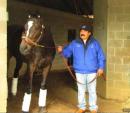 Fans stood outside the airport as she exited the plane.
They showed up in droves.
Official attendance for the 2010 Apple Blossom was recorded at 44,973 people – more than double the 21,782 guests that attended the race in 2009.
And, among the fan fare, Zenyatta continues her racing campaign.
As she prepares for her next start at Hollywood Park, people are again heading to the track to see if one single horse can maintain her undefeated record.
It’s all because of one word.
It’s a great word.
“Zenyatta.”
April 26th, 2010 §
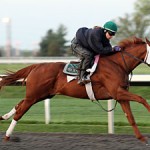
Throughout history, no female trainer has ever won the Kentucky Derby.
Only a handful of female trainers have ever tried their luck in the race.
Shannon Ritter is setting out to challenge those odds in her first start as a trainer in the upcoming Kentucky Derby.
Prior to becoming a trainer, Ritter worked as an exercise rider and jockey. Five years ago, she began training horses on her own after learning from Elliott Walden, racing manager at WinStar Farm.
In February, Ritter raced Endorsement in a maiden race at Oaklawn Park. The race was on the undercard of the Grade III $250,000 Southwest Stakes – which Conveyance won.
In an impressive 2 ½ length victory, Endorsement broke his maiden on his third career start.
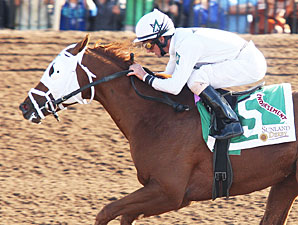
After his maiden win, Ritter entered Endorsement in the $800,000 Grade III Sunland Derby. In that race, Conveyance was the favorite at odds of 3-5.
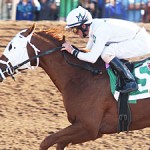 In an authoritative three-length victory, Endorsement won the Sunland Derby.
The win secured Endorsement a spot in the upcoming Kentucky Derby.
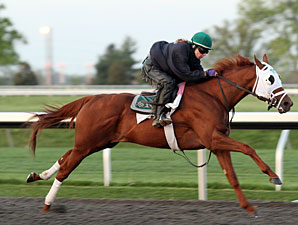
As Ritter prepares the horse for the race, she remains actively involved in his training. On April 17, Endorsement worked five furlongs at Keeneland in 1:01.60.
During the workout, Ritter rode the horse herself.
When asked who would work him leading into the Kentucky Derby, Ritter explained, “I haven’t decided yet who will work him, but it will probably be me.”
Clearly, Ritter isn’t afraid of hard work and tough odds.
She takes them with stride.
In a recent interview, Ritter talked about her career in the racing industry and her first start as a trainer in the Kentucky Derby with Endorsement.
JW: What first inspired you to work with horses in life?
SR: I think I was just born with it in my blood. I grew up in Minnesota, where there weren’t any race horses. I had just seen them on TV.
I always loved horses as a little girl. It was just something inside me.
When I graduated high school, I decided to leave Minnesota and pursue my dream of being with race horses.
JW: How does it feel for you to go to the Kentucky Derby for your first time in your training career?
SR: It’s every trainers dream. It’s such a prestigious race in the racing industry. Every trainer has the dream of having a horse in the Derby, as well as winning it.
It’s been real exciting. We’re looking forward to Saturday and all the excitement of Derby day.
JW: If you were to win the Kentucky Derby, you would be the first female trainer in history to win the race. How do you feel about having the opportunity to make history?
SR: I feel really good. It would be amazing to make that kind of history as a female in the racing world. Not only for me - but for all females.
JW: You have worked as an exercise rider and jockey. What inspired you to become a trainer?
SR: After I quit riding, I became an assistant trainer for Elliot Wallace. I’m the type of person who is always challenging myself to move forward and try different things.
As an assistant trainer, you’re basically a trainer without having the complete responsibility and making all of your own decisions. So, I just wanted to go ahead and try it and see how it went.
JW: You just rode Endorsement in a workout on April 17. Do gain any special understanding of your horse by being the rider during workouts?
SR: No doubt about it. I have experience riding from being a jockey.
Sometimes as a rider, you can feel things that you might not see in the eye while watching a horse.
For me, the breeze is important, but the gallop out is just as important. The way a horse gallops out can give you an indication of how well he is doing.
[As the rider,] I have the opportunity to make that decision – to let the horse ease up on his own or let him gallop out if they are doing extremely well. If they don’t need to gallop out, I can make that choice as well.
JW: What strengths do you see in Endorsement?
SR: One of his strengths is that he’s a pretty cool customer. He handles everything well and he doesn’t let things upset him too much.
He knows how to rest when he needs to rest. He eats well. He’s been traveling well. It didn’t seem to upset him traveling when we went to Sunland Park.
I think that’s going to be his biggest asset. I think he’ll handle all the hoopla well on Derby day.
JW: Does Endorsement have any favorite items or things?
SR: He likes both peppermints and apples. He likes anything – he’s a pretty good eater.
He’s been devouring peppermints lately.
JW: What is the general temperament of Endorsement?
SR: He’s pretty professional and nice to be around.
He likes to have friends. He’ll nicker a little bit at some of the other horses. It’s not bad – he just wants to be friends.
JW: What makes the Kentucky Derby a special race for you?
SR: For me, my dream was to ride in the Kentucky Derby since I was a rider. I loved to ride. I still love to ride.
After not being able to do that, this has been pretty special to train a horse for the Derby. To train a horse for Winstar Farm and go to the Kentucky Derby for them just makes it really special.
April 23rd, 2010 §
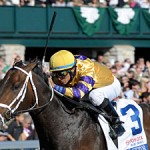
In two weeks, Trainer Mike Maker is going to the Kentucky Derby for the first time in his career with two contenders - Stately Victor and Dean’s Kitten.
As the horses approach the starting gate, Maker has demonstrated the ability to upset the odds and draw hidden talent from a horse.
Although Maker is a new face at the Kentucky Derby, he has maintained his own racing stable since 2003 and spent his life around race horses.
Growing up in Michigan, Maker’s father was a trainer and the family raced horses at Hazel Park and Detroit Race Course.
At age thirteen, he purchased his first horse with money he had saved from delivering newspapers and hot walking horses at the track. When the horse won its’ first start, Maker found his fate in life.
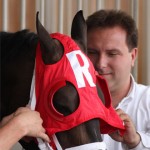 From his first horse at age thirteen, Maker has maintained his dream of winning the Kentucky Derby. With two contenders in the gate, he might beat the hardest odds in history.
However, if his history indicates anything, it shows that Maker isn’t afraid to put his faith in a long shot.
They have rewarded him plenty.
Stately Victor: The Longest Odds in the Bluegrass.
When Stately Victor set foot on the track at Keeneland to run the Bluegrass Stakes, many bettors had written him off as being outclassed after glancing at his past performance record.
In seven career starts, his sole win came in his maiden victory. The racing program descriptors for his remaining races fell along the lines of “tired” and “no threat.”
He certainly didn’t garner much fan fare at the gate.
His co-owners, Jack and Tom Conway, barely held a poker face for Stately Victor. When Jack learned that his father, Tom, had entered the horse in the race, he reportedly responded, “Really?”
His racing record didn’t exactly harvest enthusiasm.
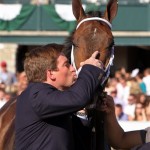 To the surprise of many, Stately Victor had his own agenda that day.
As he blazed down the stretch in an authoritative 4 ¼ length victory, the horse became the biggest long shot to win the Bluegrass in its’ 86-year history.
In the same moment, Stately Victor claimed his spot in the Kentucky Derby.
After the Bluegrass, Maker responded to the upset with a testament to his faith in Stately Victor. “After a while, when a horse underachieves, you kinda forget about him. But I never quit believing in this horse.”
Dean’s Kitten: The Other Side of the Gate.
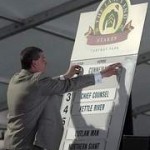 On March 27, Dean’s Kitten stepped onto the track at Turfway Park with odds of 6-1 in the Lane’s End Stakes. As he paraded toward the gates, the betting public focused much of its’ attention on Connemara, the 8-5 favorite, and Northern Giant, the second choice in the race.
Like Stately Victor, Dean’s Kitten didn’t arouse strong enthusiasm as he marched past the stands.
The owners, Ken and Sarah Ramsey, were across the world for the Dubai World Cup when Dean’s Kitten entered the gates. In Dubai, the Ramseys were watching their horse, Furthest Land, compete in the 14-horse field.
The horse ultimately finished dead last.
In their place, the Ramseys sent their son and daughter-in-law, Jeff and Patricia Ramsey, to watch Dean’s Kitten ride in the Lane End Stakes.
Prior to the Lane’s End Stakes, Dean’s Kitten had made ten career starts and produced only two wins – including his maiden victory.
Similar to Stately Victor, Dean’s Kitten’s racing record was checkered with such descriptors as “no menace” and “no factor.”
When the gates sprung open in the Lane’s End, Dean’s Kitten covered the 1 1/8 mile distance in 1:50:59. With Northern Giant and Connemara trailing respectively in second and third place, Dean’s Kitten won the race in an impressive 2 ½ length victory.
As Dean’s Kitten headed toward the winner’s circle, Ken and Sarah Ramsey had just learned that their home-bred horse had secured a position in the Kentucky Derby.
This was no small moment.
Despite winning more races than any other owners at Churchill Downs, Ken Ramsey has never had a horse win the Kentucky Derby. Ramsey has been said to joke that he wants to “get into that other winner’s circle,” referring to the sacred ground at Churchill Downs that is reserved solely for the Derby winner.
Standing in the winner’s circle at Turfway Park with Dean’s Kitten, Jeff and Sarah Ramsey received a cell phone call from Ken Ramsey in Dubai.
When Sarah picked up, she responded, “We’re busy taking a photo!”
As the trophy was presented, two couples – in two different continents - smiled with excitement.
In a post-race interview, Maker explained, “We pointed to this race in it paid off for us.”
It sure did.
With two horses starting in the Kentucky Derby, Maker’s faith in the talent of his horses has paid him much success.
In a recent interview, Maker answered my questions about the two Kentucky Derby contenders as they head toward the starting gates.
JW: How does it feel to go the Kentucky Derby for the first time in your training career?
MM: I feel very blessed to make it to the Kentucky Derby. It’s also a feeling of accomplishment because each horse earned their way. It has been a lifelong dream to win the Kentucky Derby.
JW: You currently have two horses expected to start in the Kentucky Derby. Did you ever imagine you would have two starters in your first trip to the Kentucky Derby?
MM: I have imagined having more starters, actually. As a child, I kinda dreamt of having the whole field.
JW: In regard to Dean’s Kitten, what do you see as the strengths in this horse?
MM: Dean’s Kitten’s greatest strength will be his ability to handle a 1 ¼ mile race. He has no distance limitations.
JW: How would you describe the general temperament of Dean’s Kitten?
MM: Dean’s Kitten is a very laid back horse. He’d make a lazy work horse.
JW: In regard to Stately Victor, what do you see as the strengths in this horse?
MM: Stately Victor is just like a pretty girl - when he goes by, you can’t help but look. He always trains impressively and has a great big stride.
JW: How would you describe the general temperament of Stately Victor?
MM: He can be a bit of a show off when he’s playing - jumping on his hind legs. But, when it comes down to race time, he is a complete gentleman.
JW: From a young age, you dreamed of winning the Kentucky Derby. What makes the Kentucky Derby so special for you?
MM: The Derby is a special race for me because of all the history.
No matter where I go, if someone asks what I do, they ask if I have won the Kentucky Derby or ran in it. It’s their way of relating to what I do.
It is also special because I grew up watching it and was a horseracing fan as a child.
April 13th, 2010 §
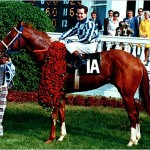
“Secretariat” is a name often spoken as a sacred word.
After spending years marveling over Secretariat’s spectacular racing achievements, I became curious about his lifestyle once he retired from racing.
Upon making several calls to find someone with first-hand experience with the legendary horse, everyone pointed to one man: John Sosby.
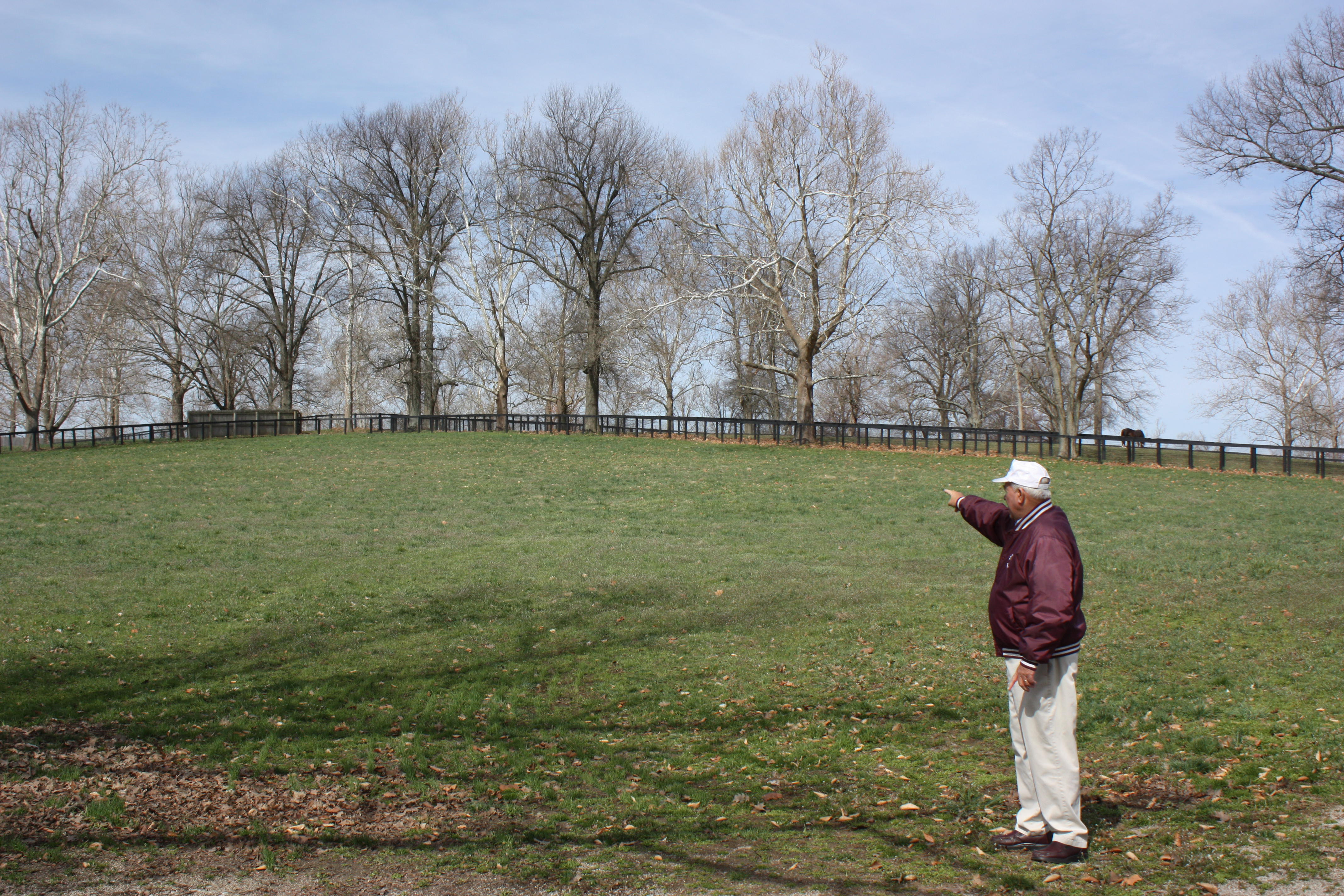
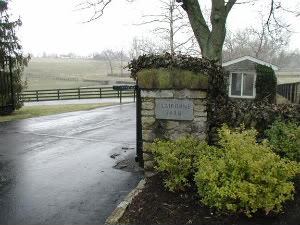
A few weeks later, I entered the gates of Claiborne Farm to meet John Sosby. Sosby was General Manager of Claiborne Farm from 1975 until he retired in 2006. 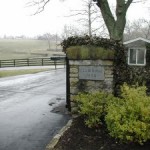
As we walked along the paths of Claiborne Farm, Sosby, whose father was a groom for broodmares and foals, explained that he lived at Claiborne since he was a three-year-old child.
Through observing his father’s work, Sosby learned to be gentle with horses, while exercising patience and control.
The lessons from his childhood eventually led to his own career at Claiborne Farm. In 1964, Sosby became supervisor of the yearlings at the farm.
In regard to Secretariat’s initial arrival at Claiborne, Sosby remarked, “I was still in charge of breaking yearlings, which I thought was the best job here.”
However, Sosby soon earned a promotion to General Manager in 1975. In the years to follow, his daily life became interwoven with the legendary presence of Secretariat.
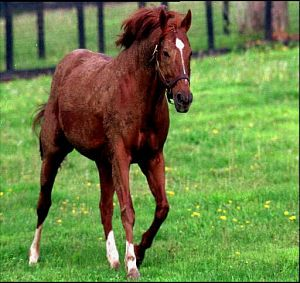 The Grand Entrance: Big Red Arrives at Claiborne Farm.
As with his career, Secretariat’s arrival to Claiborne Farm was no small event.
When he retired from racing, Secretariat made a farewell appearance for roughly 30,000 fans at Aqueduct race track. At the time, the date had been set for him to be shipped to Kentucky, but it remained a secret to the public. Sosby explained:
After the parade for the general public, a plane flew him and Riva Ridge to Bluegrass Field, across from Keeneland. Two vans were waiting, along with an escort from the Paris and Lexington Police.
It was one of those situations where you knew he was coming to Claiborne, but the general public didn’t know exactly what time, so that we could keep the crowd down.
[At Claiborne,] we had security. When they backed down into the loading chute here, we were waiting. Seth [Hancock] did not want a bunch of fan fare. He just put the guard at the gate. If you weren’t on the list of whomever Seth had invited in, you weren’t coming in.
Sosby then recalled the moment that Secretariat first set foot on the grounds of Claiborne Farm.
When they unloaded him, they turned him around. As they led him out, I can remember him looking at the barn and his new surroundings.
He was a beautiful animal. He walked with pride. He had something about him. And, somehow or another, he knew it.
Sosby reflected, “He was The Man.”
Perhaps, they both knew it.
 The Camera Eye: Secretariat’s Presence at Claiborne Farm.
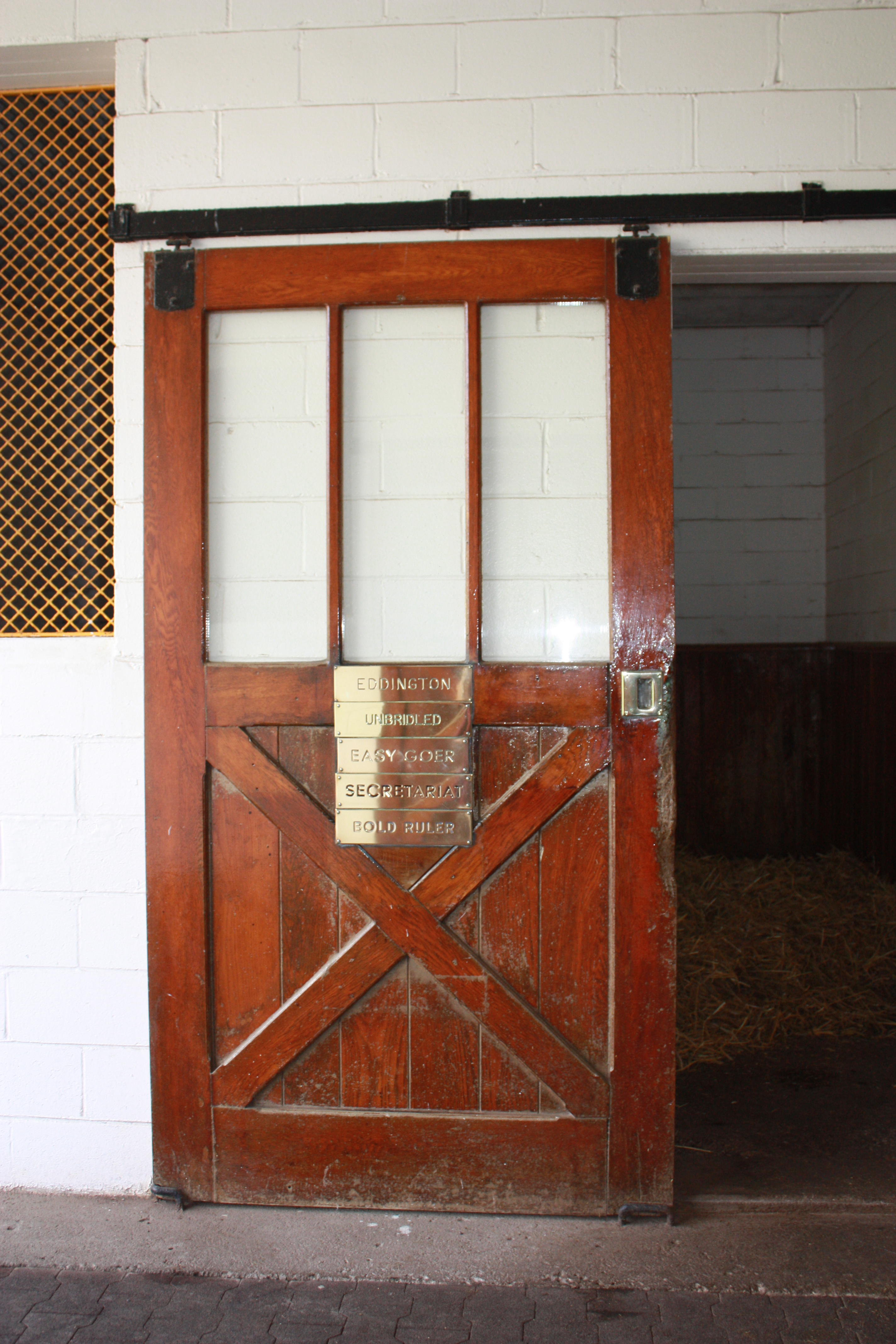
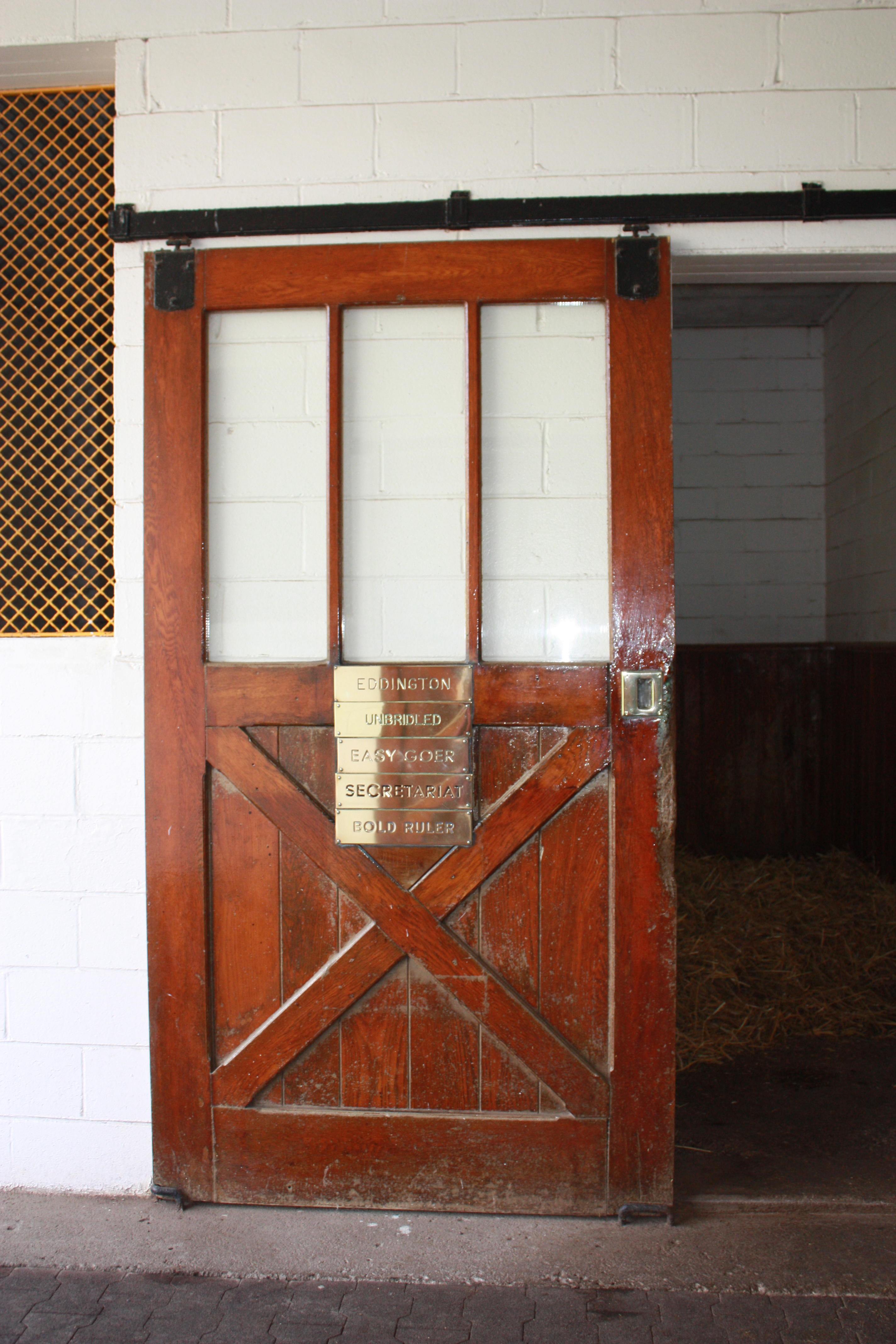
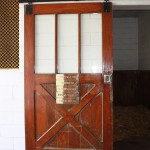
As we walked down the trail to the stables at Claiborne Farm, Sosby directed me to Secretariat’s former stall. As he stood beside Secretariat’s golden name plate, Sosby talked about the fans that visited Claiborne to meet the legendary horse.
Between 8,500 and 10,000 people a year came to Bourbon County to visit Secretariat.
Some of them would go in the stall and lay in the hay. They would say, ‘If it’s good enough for Secretariat, it’s good enough for me.’
Every now and then, fans would bring Secretariat an apple or peppermint candy during their visit. His groom was in charge of giving those gifts to Secretariat.
In an interesting note, Sosby recalled that the horse particularly enjoyed two items – cameras and shiny objects.
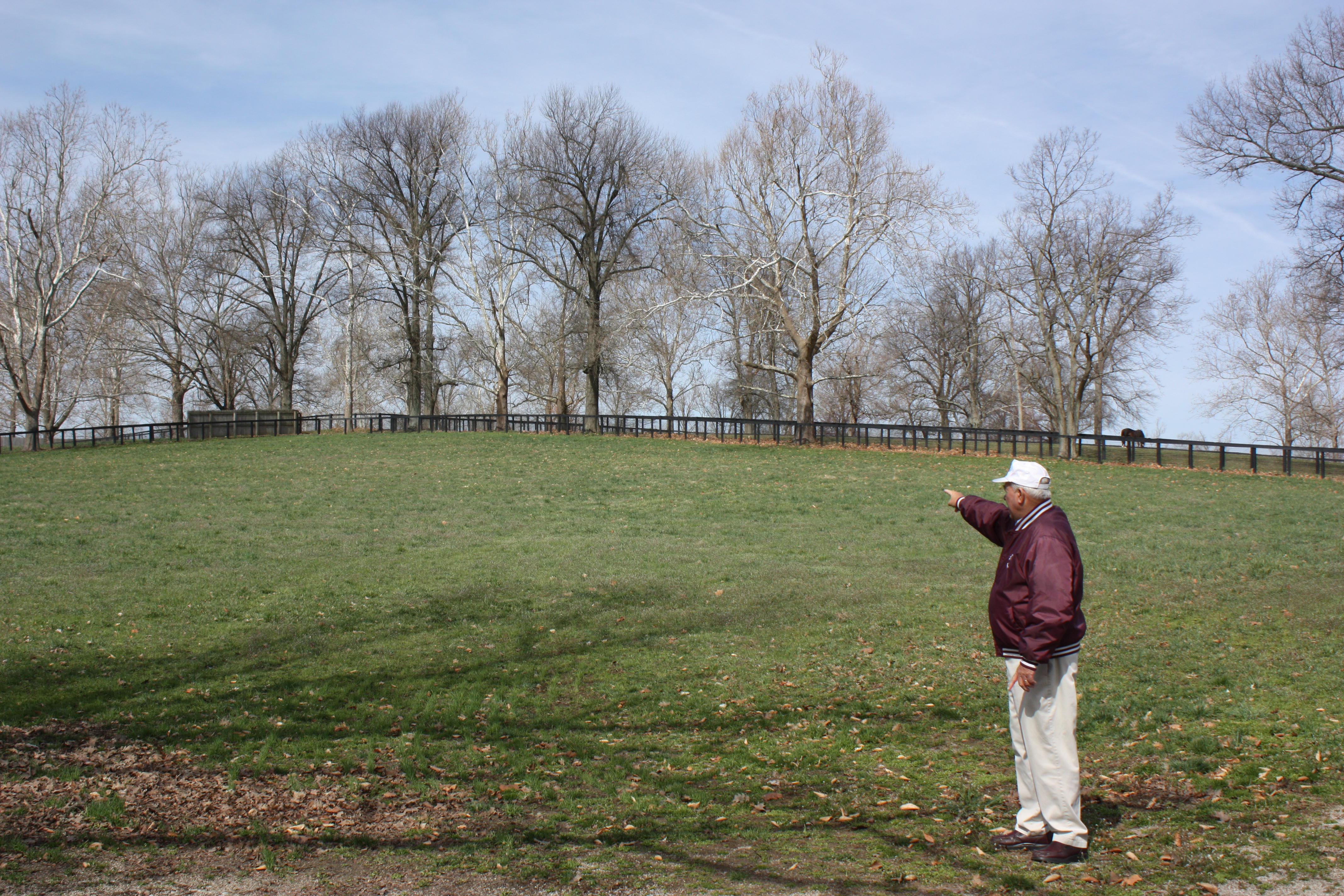
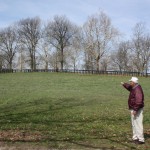 As we arrived at Secretariat’s paddock, Sosby recounted Secretariat’s “Trademark Greeting” to his visitors. Pointing to the top of the hill, he explained that when a person walked up to Secretariat’s paddock, the horse would run up to the gate and stop.
Sosby then elaborated, “With a camera, he’d pose. He was a showman, but he was kind. You could walk right up and get your picture taken with him.”
I began to wonder about Sosby’s earlier comment about how Secretariat enjoyed “shiny things.” Was it a simple flash on a camera or did it go beyond that?
It was then that Sosby recounted the tale of “Secretariat and The Golden Earring.” He explained:
One day, I had gone to lunch in town. I got a call from the farm saying ‘You need to come out here. Secretariat just bit a woman.’
I was a mile and a half away from the farm. My first thought was a million-dollar lawsuit.
Well, I get there and they called a doctor out to try to stop the bleeding on her earlobe.
She had taken a picture and turned away. He reached to get her earring and just pulled it through her ear.
Sosby laughed when I asked if the woman was upset.
No. She was happy. She’d been bit by Secretariat!
As he smiled, he clarified, “He was not mean. It wasn’t his character. The earring was there - and it was shiny. He just reached and grabbed it.”
 The King of Roses: Secretariat’s Legacy.
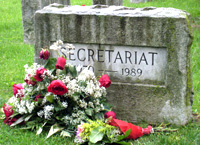
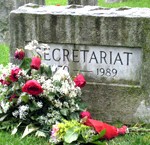
In 1989, Secretariat lost his battle with lamanitis and was buried at Claiborne Farm. As Sosby stood next to Secretariat’s grave, he briefly discussed the private service that was held.
He was put in the ground late in the afternoon. It was Claiborne family [present]. Nobody in the gate.
We didn’t want a circus or festival atmostphere.
We had just laid a good one to rest.
Sosby recounted that after Secretariat’s burial, “Over a hundred flower arrangements were on his grave by the next morning.”
In over two decades since his death, Secretariat still leaves his mark at Claiborne Farm. Sosby explained, “On his birthday, there will be twelve red roses on his grave [from an] unknown source. It’s been [going on for] twenty-one years.”
In his closing remarks, Sosby marveled, “I don’t know who his critics would be. He was perfect.”
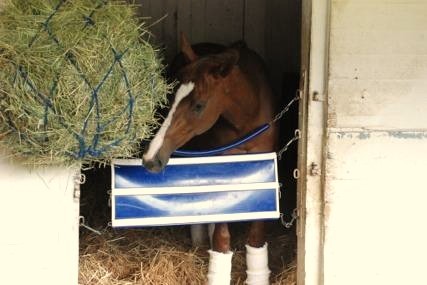 In less than a year, Blind Luck transformed her career from being an unraced $10,000 filly at auction to become the 2010 Kentucky Oaks winner.
 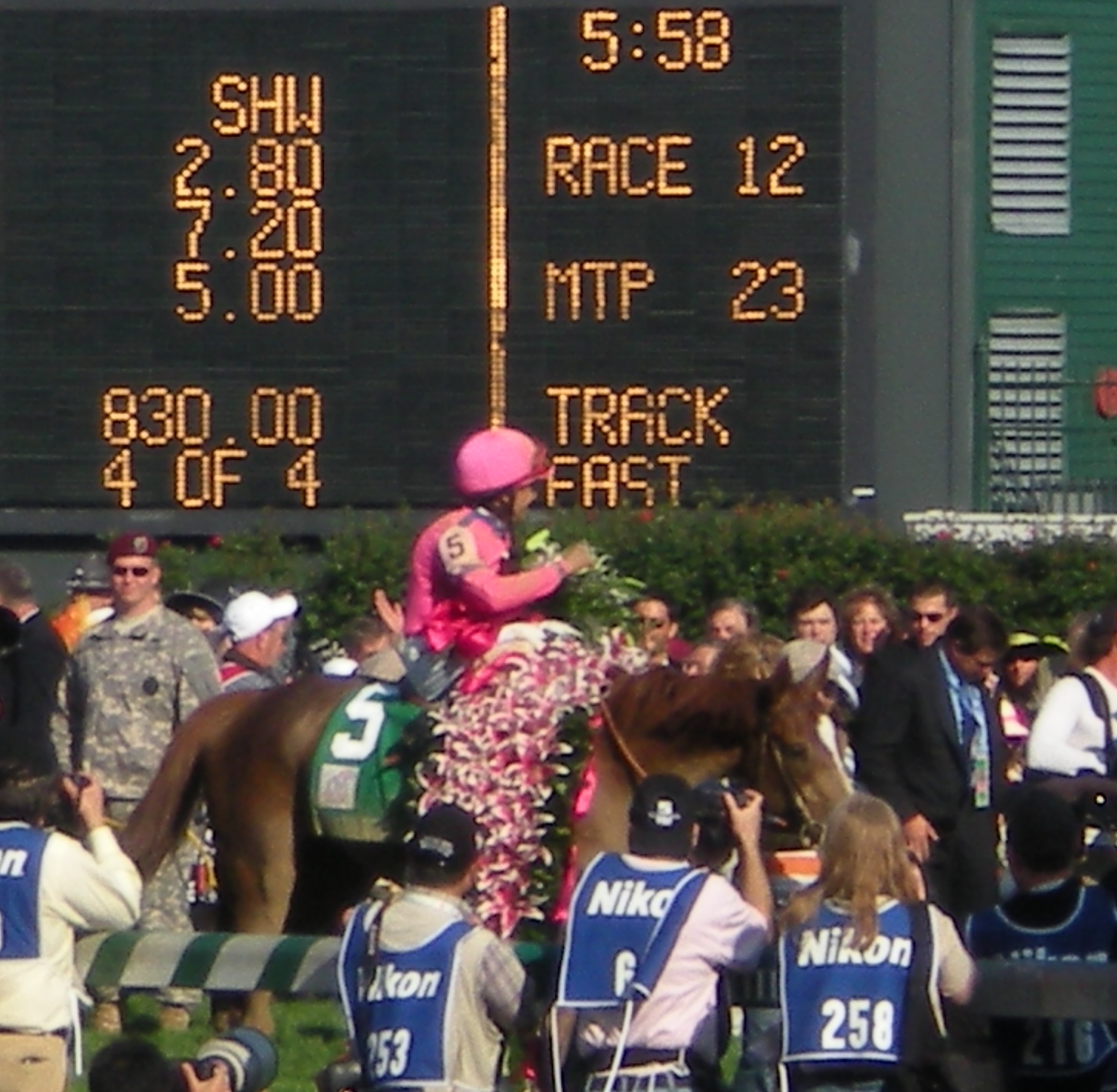 Since the Oaks, Blind Luck has won two of her last four starts and finished second in the remaining outings.