March 10th, 2010 §
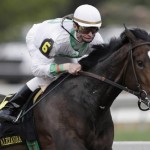
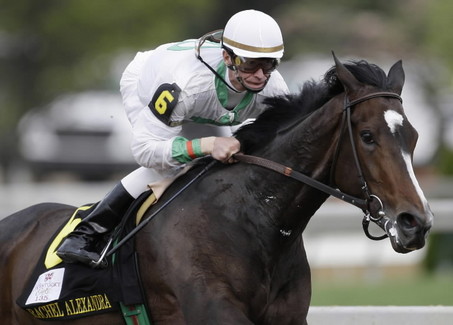
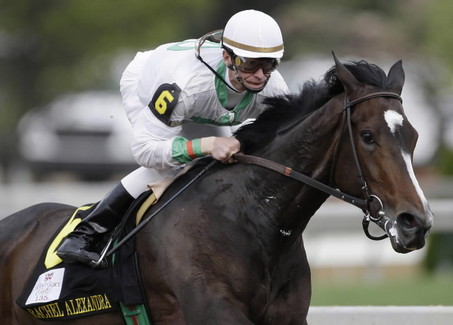
With the $5 Million Apple Blossom showdown between Rachel Alexandra and Zenyatta scheduled for April 9, Jess Jackson, co-owner of Rachel Alexandra, has begun an interesting media poker game in the past few days.
In a recent New York Times Article, Jackson appeared to be gearing up for an excuse to back his horse out of the Apple Blossom. Jackson stated that he gauged her fitness at “about 85 percent” of where she should be now. He then elaborated, “We are targeting the Apple Blossom. We are stretching to get there. But if we’re not in top shape, we’re not going.”
It seemed like a pretty basic statement. The industry and fans would not want to jeopardize the health of Rachel Alexandra for any race. In all honesty, I wondered why he even emphasized it at all since it was fairly obvious.
Then, I read a recent post by NTRA Blogger Bob Ehalt and began to rethink the New York Times interview. In his blog, Ehalt saw what I missed – two possible bluffs by Jackson in the ongoing “poker race” between these camps. Ehalt wrote:
If you also read the words of Rachel Alexandra’s co-owner Jess Jackson in the New York Times last week, you have to wonder if the Apple Blossom might wind up a walkover.
Jackson certainly did not sound like someone who is eagerly awaiting the race. He continually stressed in the article that he would not run his filly unless she is 100 percent fit, which is hardly the year’s biggest scoop.
Yes, Jess, we know. Guys who own claimers do not run their horses when they have problems, so it’s a given that a horse as beloved and valuable Rachel Alexandra will not be risked. So why remind of us that. Why not follow the lead of Zenyatta’s owners Jerry and Ann Moss and just say you’re on course for the Apple Blossom and you hope to make it. If you can’t, let us know. Otherwise we’ll see you in Hot Springs on April 9. Don’t keep reminding us of what we know already. It’s sort like pointing out that we all have to pay taxes and die.
One of the possible explanations for comments like that from Jackson is that he is looking for an excuse.
In my mind, Ehalt called the first bluff. No one wants to risk an injury to this beautiful horse. If Rachel is not physically sound at the time of the Apple Blossom, she can decline to race at that point.
Then, I began to wonder. If Rachel is admittedly only at “85 percent” of where she should be now, why is Jackson racing her this weekend in the $200,000 New Orleans Ladies Stakes? It seems like a great risk to take a highly-prized horse to a relatively minor career race when she is only performing at “85 percent.”
It may be that Rachel Alexandra isn’t fit for a Grade 1 race at this point in the season and Zenyatta is still performing as a Grade 1 horse. It may be as simple as that. Or maybe not.
Where Ehalt’s article calls the heart of the bluff is Jackson’s newest comments about a three-race series between Rachel Alexandra and Zenyatta. In the New York Times, Jackson plainly states, “If they beat us in one race, they might just disappear and retire her undeafeated… If they commit to the best of the three, it would be great for the sport and a better way to judge both of these great horses.”
Ehalt sees Jackson tip his hand in the Poker game. “How do we rationalize Jackson’s newest comments about a three-race series? Everyone would love to see these magnificent horses race three times. Yet Jackson says his desire for a three-race series is just in case Zenyatta wins the Apple Blossom and her connections retire her. He wants another crack at her.”
And, Ehalt calls the bluff. “Why bring that up as a concern? It certainly wasn’t the type of comment one expects from an owner who believes his horse is as good as Ruffian.”
He’s right. Why is this a concern? This is a test of who wins when pegged against the other champion. It is not a “two-horse triple crown” series.
Neither horse should race if they aren’t sound. The welfare of these two amazing horses preempts any other concern or interest. This is not a subject of debate.
If both horses are sound on April 9, there should be one single race. Rachel Alexandra won a single title – Horse of the Year. Zenyatta waged a serious challenge to Rachel Alexandra’s nomination for the title in one single win – The Breeder’s Cup Classic. Neither horse had three tries to match the crowning accomplishment of their rival.
If Rachel Alexandra loses the race, and Zenyatta retires, both horses remain champions. It’s time to stop playing poker with race cards. It’s time for the match.
March 8th, 2010 §
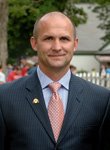
In the past two decades, West Point Thoroughbreds has cemented its’ status as the premiere racing partnership for individuals who dream of owning a racehorse. The partnership currently manages nearly 400 equine portfolios and a stable of over 80 horses. Throughout the years, West Point horses have competed in many major racing outings, including the Kentucky Derby, allowing partners to experience ownership at the highest levels of the sport.
Terry Finley, President and Founder of West Point Thoroughbreds, graciously agreed to answer our questions about his inspiration to found a racing partnership, his memorable experiences throughout his tenure, and discussed West Point Derby hopefuls for this season.
SP: What was your inspiration to form West Point Thoroughbreds?
TF: I grew up not too far from the track. My father was a teacher, and we’d go to the races. When I became a teenager I ended up working on the backstretch mucking stalls. I saw how hard everyone worked. After I got out of the military I was selling insurance. My passion simply wasn’t there. My heart was with the horses. My wife and I decided we were going to go “all in.” We risk everything and started the company. In 1991, we scraped $5,000 together to claim a horse named Sunbelt. He won two weeks later for $6,500. That was the beginning. We put some small ads out there and more people began to buy in. Now, nearly twenty years later hear we are.
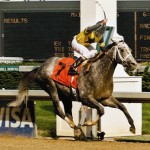 SP: In 2006, Flashy Bull became the first West Point horse to start in the Kentucky Derby. Can you describe the feeling of having a horse in the Derby?
TF: It’s what we all dream of. I remember walking over from the barn with my family and the investors and the women had to take off their fancy shoes. There they are walking barefoot on the track. I think that kind of symbolizes everything. It was our first time, but nothing was going to stop us. I don’t think it’s an exaggeration to say that it’s a life changing day. Anyone that had a dry eye walking up from the paddock when they played “My Old Kentucky Home” doesn’t have a pulse. That feeling is what we get into the sport for. That feeling is the reason I started West Point Thoroughbreds. To bring that experience to others that couldn’t on their own.
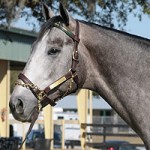 SP: Of the many exceptional horses in your stable, Quiet All American has begun to stand out as a strong Derby hopeful. In lieu of his recent win in the Ocala Breeder’s Sales Championship, describe the strengths that you see in this colt after watching his performance against the other contenders in the race.
TF: Quiet All American is all heart. Nine times out of ten a horse will lose a race when they get passed in the stretch, but this colt just kept fighting. When the leader weakened he found another gear. He showed the same determination in his maiden win. He also looks like a colt that wants to go a distance of ground. He does not have an explosive turn of foot, but he just keeps going and going. He’ll give you the same fractions late as he does early.
SP: Do you intend to keep Quiet All American on the Derby trail? If so, what prep race do you intend to point him towards in the coming months?
TF: Yes. We believe that he has earned the chance to test himself against some of the better three-year-olds. We don’t know how good he is yet, but he’s getting better each race and deserves a chance. We’re pointing him for the $500,000 Lane’s End on March 27th at Turfway Park.
SP: You also have two other Derby hopefuls in your stable – Middle of the Nite and Boulder Creek. What do you believe are the strengths of each horse and where do you anticipate their next races to be held?
TF: Middle of the Nite threw a bit of a clunker in on us in the Sam Davis. He’s immensely talented, but I think he’s still learning how to be a racehorse. We’ll probably look for an allowance race for him this month and see where we go from there. It’s a long year, so we want to do the best for the horse.
Boulder Creek is set to run in the $150,000 Sham Stakes(G3) this weekend at Santa Anita. He’s an exciting colt that really is finally figuring it out. He still has not run a complete race. He didn’t even change leads properly in his last race and still won. When he puts it all together he might be special. We hope it’s in his next race. He looks like he’ll run all day.
 SP: The dream of owning a racehorse draws many individuals to invest in a racing partnership with your company. What are the specific benefits of being a West Point partner and how much personal involvement is each partner given with their racehorse?
TF: We are very successful, but we can’t guarantee our partners wins each time their horse runs. Wouldn’t that be nice? What we do guarantee is an unparalleled experience. Our goal is to run in the biggest races in the world. What horse racing enthusiast would not love to be in the paddock on Derby day or at the Breeders’ Cup? We want to give you that experience. It might be a cliché, but if you’ve dreamt of owning a horse we want to make that dream a reality. It’s an amazing social experience that really can change people’s lives even if their horse isn’t the “big horse”.
We encourage all our partners to visit the barn, meet the trainers, and watch their horses train. This is their opportunity to be inside the paddock and not the person looking at everyone else. Hopefully at the end of the day we’re all smiling for the camera in the winner’s circle. Ask anyone who’s been there with us how that feels. I still feel the rush 20 years after my first time.
SP: West Point works with many well-respected trainers and jockeys. How have you been able to secure this level of talent?
TF: I think it’s mutual respect. We let them do their job. We’re not going to meddle. They are on the front lines day in and day out. We don’t micro manage, and the trainers know that they have our full support. Things are not going to go perfectly in this sport. We are not going to pull our horses if one thing goes wrong. Trainers cannot operate out of fear. These are excellent horsemen that want to do the best job possible, but as importantly they are real proponents of the sport. They work well within our partnership model and understand how we do business. It’s about finding that balance that makes us able to attract such top conditioners.
 SP: One of the noteworthy traits of your company is the ongoing enthusiasm to further public interest in the sport of horse racing. Recently, you started a program called “F.A.T.E.” Can you describe the mission of this program and how you hope to accomplish your goal?
TF: F.A.T.E. stands for “Find A Thoroughbred Enthusiast.” The idea is simple. If you work in or are involved with the thoroughbred industry, the sport’s future is in your hands. This cannot be a West Point Thoroughbreds initiative. We put a name to the movement, but it needs to be everyone’s mission. The goal is to expose two people to our sport before the Kentucky Derby each year when casual sports fans are focused on it. Take them to the races, send them a video. Pique their interest.
As a company, we use technology extensively. You do not have to go to the track to expose someone. Bring racing to them. We just went over 100,000 views on our YouTube channel. Bring the visuals to people’s living rooms. Let them experience the majesty of the sport on their computer screen. Be proactive. Use technology. Use social media. Put yourself out there. This is a bottom up movement. If you’re not part of the solution then unfortunately you’re part of the problem.
SP: How does your company determine which horse should be purchased?
TF: We do our homework. Our buying team is on the ground well before a sale. We don’t just watch the horses the day they breeze. We see them beforehand. We know exactly what’s going on with each horse and that helps us stay out of the traps. We know the players. We know who will give us the straight scoop. We’ve been around a long time. That’s to our advantage. We bring a vet, Dr. Bill Baker, to the sale to vet all the horses we are looking at. He’s not working for a seller or the sales company. He’s there for us, and we know that his expertise will really help us find both the standouts and the diamonds in the rough waiting to polished. We put all that into the equation along with their breeze, conformation and way they carry themselves. Add in some good old fashioned intuition during the heat of the moment and you get the horses that will eventually carry the black and gold silks.
SP: Do you favor any specific bloodlines when determining whether to purchase a horse?
TF: We tend to buy a lot of young sires. You can get excellent value before a sire gets white hot, but at the end of the day we focus on buying the best athletes. When you look for certain pedigrees or other intangibles you can fall into a trap. It’s not that paper that runs in the afternoon. It’s the horse, so that’s where put our focus. I think the results of doing things this way speak for themselves.
SP: What has been your most memorable moment as President and Founder of West Point Thoroughbreds?
TF: It’s hard to pick just one. I prefer to think of the notes I get from partners telling me of what horse ownership has meant to them. Something as simple as one of our clients thanking us for having their child meet a jockey brings a smile to my face.
Of course, if you are looking for events, certainly the Derby sticks out because I could share it with my family, but I tell people that this sport creates a new memory each and every day. That’s what gets me up each morning. I’d like to think my most memorable moment when I look back someday will be a collection of all the faces I saw throughout the years. That will be what makes me smile.
Finley has been involved in the thoroughbred industry for over 25 years and currently serves on numerous boards, including the Breeder’s Cup Board of Directors, NTRA Horse PAC Board of Directors, and the NYTHA Board of Directors. In 1998, The Thoroughbred Times named Finley one of “The Top Ten to Watch in the Thoroughbred Industry.” For more information about West Point Thoroughbreds, visit the West Point Thoroughbred Website.
February 28th, 2010 §
 Recently, I read a book entitled, “Letters to Seabiscuit,” that published various letters written to the horse and his owner, C.S Howard, throughout the racing career of this legendary athlete. Howard’s wife, Marcella, had lovingly saved the collection in a treasure chest for several decades.
While reading the various letters, one thing became clear: The admiration that people expressed for this horse went well beyond his racing accomplishments. Among the collection, Seabiscuit received congratulations, birthday wishes, suggestions on the name for a foal, drawings, poems, pleas to retire him, requests to continue to race him, and even a valentine.
One writer, Mrs. Magie, sparked my curiosity about this phenomenon, by stating, “I am not a horsewoman or a racetrack follower. I do, however, love Seabiscuit.” I began to think about what peaked her interest in this horse.
Later in the book, a woman named Helen Thompson, added some clarity to Mrs. Magie’s sentiment. Thompson wrote to Howard, “You own the greatest racehorse in the world today – at least you think you own him – actually he is the property of all of us who love thoroughbreds – and recognize that a horse has something else besides the ability to earn a few dollars for the gaming public.”
Ms. Thompson’s statement hit upon something profound. Seabiscuit was a public horse. He was a living representation of American ideals, dreams, and principles. No single person could own these concepts.
After reading these letters, I started to wonder about the rare horses that have been able to stir public adoration outside of the winner’s circle. Not every champion racehorse is as beloved by the public as was Seabiscuit. I began to consider what wins a racehorse the “Crown of Love” in the public field.
Seabiscuit.
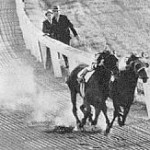 In the case of Seabiscuit, his career embodied the dreams and ideals of many Americans. As the Great Depression and World War II weighed upon the nation, Seabiscuit was running in rock bottom claiming races when he was purchased by the wealthy C.S. Howard. After Howard invested in Seabiscuit, the horse went on to beat the Triple Crown winner, War Admiral, in a nationally broadcast match race that captivated an audience of roughly one in three Americans. Seabiscuit later suffered an injury that threatened to end his career. He defied retirement and recovered to win the Santa Anita Handicap – a victory that had previously eluded him.
The accomplishments of Seabiscuit amounted to more than a moment in the winner’s circle. This horse mirrored the dreams of the general public during the depression. As stated by Director Gary Ross, Seabiscuit illustrated the “American idea that hidden inside you is huge potential that is untapped and undiscovered… If only people had the understanding to explore it, or to nurture it a little bit, what could possibly emerge?” To Ross, Seabiscuit demonstrated the potential for outstanding achievement if given a second chance.
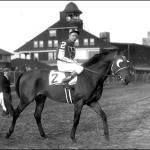 In a time of war and financial desperation, Seabiscuit illustrated the ideal of struggling against the odds. In his career, Seabiscuit fought the stigma of being a lesser horse by virtue of racing on the west coast in a time when the east coast horses dominated the sport. In his famous match race, Seabiscuit, the clear underdog, demolished the stigma of being a low-grade horse by defeating his east coast rival, War Admiral. When he returned from injury to clinch a victory in the Santa Anita Handicap, he only reinforced the theme of prevailing against the odds. With the nation embroiled in struggle, Seabiscuit’s victories touched upon their own hopes and dreams. He represented the ideal that an underdog can succeed through hard work, determination, and endurance. In his struggle to victory, Seabiscuit became a principle owned by a nation.
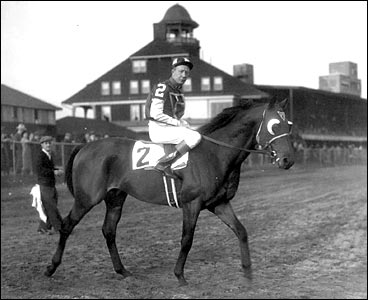
Man O’ War.
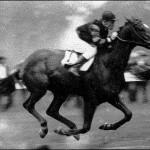 Man O’ War illustrated throughout his career that public favor is also won through awakening human imagination and rewriting record books. Likened to a “living flame,” Man O’ War embodied the raw perfection that captivates the human heart and spirit.
In his sixteen month career between June 1919 and October 1920, Man O’ War won twenty of his twenty-one races. He was the favorite in all of his races, with odds of 1-100 in three of his starts. He won one race, the Lawrence Realization, by 100 lengths. Man O’ War set three world records, two American records, and three track records. He retired as the greatest money-winning Thoroughbred in history.
During his career, the public was in rapture by Man O’ War. Police had to protect the horse at tracks from souvenir hunters who tried to grab hairs from his mane and tail. His notoriety also attracted death threats. His Owner, Samuel Riddle had to hire a private detective to watch the horse’s trainer.
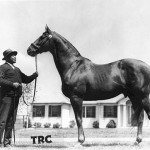 At the time of his retirement, Riddle was reportedly offered $500,000 for Man O’ War by Texas oil millionaire, William Waggoner. Riddle rejected the offer. Waggoner made a second offer to purchase for $1 million, in which Riddle again rejected. When Waggoner provided his third offer in the form of a blank check, Riddle countered, “You go to France, and bring back the sepulchre of Napoleon from Les Invalides. Then you go to England and buy the jewels from the crown. Then to India and buy the Taj Mahal. Then I’ll put a price on Man O’ War.”
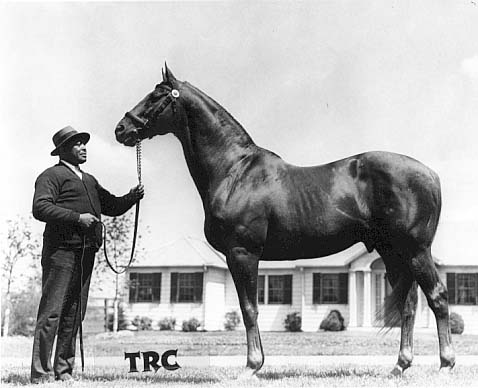
After his retirement, Will Harbut, the groomsman for Man O’ War, managed the farm tours for visitors who traveled for a glimpse of the legend. It is estimated that the number of visitors ranged between 1.5 to three million. Harbut, having become a famous figure for being the groomsman to Man O’ War, would display the horse to the crowd and explain, “He broke all the records and he broke down all the horses, so there wasn’t nothing left for him to do but retire.”
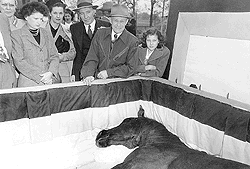 When Man O’ War died at age 30, he was the first horse to be embalmed and he lay in state for two days in a specially-made casket lined with his racing colors. It is estimated that nearly 2000 people attended his funeral and the burial service was broadcast nationally with nine speakers providing eulogies.
Man O’ War remains a portrait of beauty, strength, power, and perfection. In the 1920 Travers, the starter described the awe that drew people toward the legend. “He was so beautiful that it almost made you cry, and so full of fire that he made you thank your God you could come close to him.”
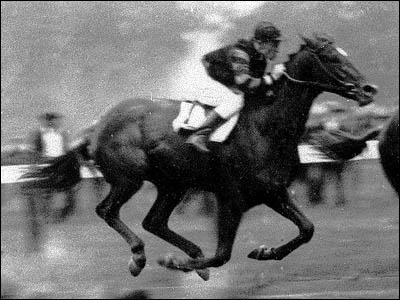
Secretariat.
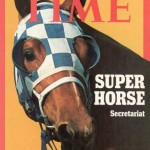 Secretariat exploded into the public eye through producing mind-bending victories that shattered all records in Triple Crown racing. Secretariat’s record left the public speechless and captivated by his magic.
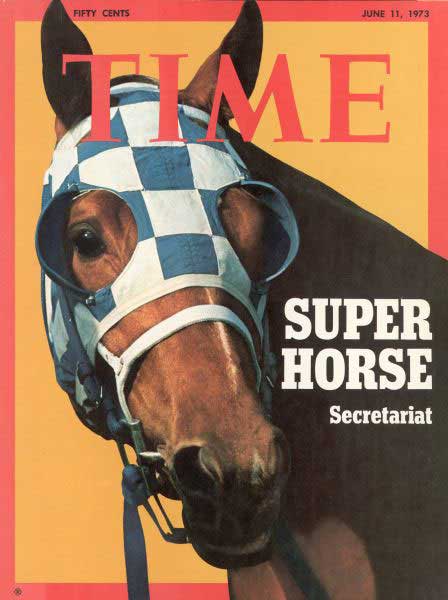
When he arrived at the Belmont Stakes for the third leg of the triple crown, Secretariat led the news headlines in North America and had captured the covers of Newsweek, Time and Sports Illustrated. The sport has never enjoyed the same media attention since Secretariat’s 1973 Triple Crown season.
“Secretariat generates a crackling tension and excitement wherever he goes… When he accelerates… he produces a breathtaking explosion that leaves novices and hardened horsemen alike convinced that, for one of those moments that seldom occur in any sport, they have witnessed genuine greatness,” explained Pete Axthelm from Newsweek.
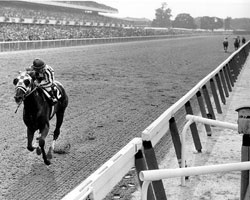
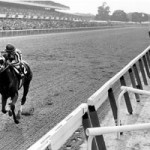 After his 31-length victory in the Belmont Stakes, his greatness has never been matched. In two minutes and twenty-four seconds, Secretariat set the world’s dirt track record for 1 1/2 miles, which many argue may never be broken. As Charles Hatton wrote in The Daily Racing Form, “His only point of reference is himself.”
In his sixteen-month career, Secretariat won sixteen of his twenty-one races. He was the odds-on favorite seventeen times. He won back-to-back “Horse of the Year” awards. He still holds the record time in the Kentucky Derby – 1:59:25. The Daily Racing Form clocked him as setting the record in the Preakness at 1:53 2/5. Because the track clock was malfunctioning, the official time was recorded as 1:54 2/5 and Canonero II remained the holder of the official record with his time of 1:54 2/5 the 1971 Preakness.
Secretariat was retired to stud at Claiborne Farms. His popularity continued long after his racing career ended. He received many letters and birthday cards each year from his fans and thousands of vistors came to Claiborne Farms to see Secretariat during his lifetime.
In the fall of 1989, he was afflicted with laminitis and was euthanized on October 4. He was buried at Claiborne Farm, receiving, in death the ultimate honor for a horse. By tradition, the only parts of a Thoroughbred buried at a gravesite are their head (to symbolize intelligence), heart (to symbolize strength), and legs (to symbolize power). As homage to the greatness of this legend, Secretariat was buried whole.
The legacy of Secretariat endures over two decades after his death. Penny Chenery, Owner of Secretariat, explained “It’s hard to believe after all these years, but hardly a day goes by that I don’t get mail about Secretariat.”
The Last Decade - Barbaro.
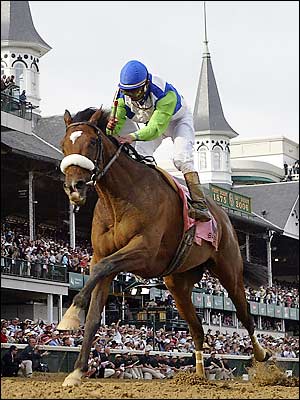
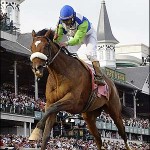 In recent years, Barbaro arguably captivated public interest and adoration more than any other horse – both for his performances on the track and after the races. After entering the Kentucky Derby with an undefeated record, he romped to the finish line to win by six lengths. I was among the 40,000 fans in attendance and could barely catch my breath as he drove alone toward the finish line. It was my first Derby.
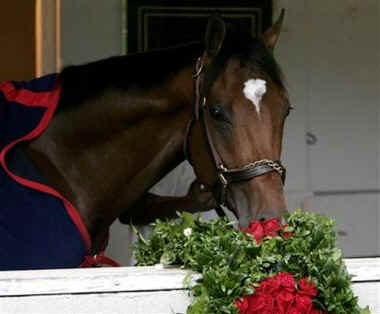
When Barbaro broke down in the Preakness, I sent him a dozen roses in remembrance of his victory at the Kentucky Derby. I certainly was not alone. As the nation hung on for months in hopes that Barbaro would recover from the life-threatening injury, cards, flowers, carrots, and other gifts flooded the New Bolton Center. Signs were hung outside the gates of the facility. National news coverage covered the story on a regular basis. It is somewhat bittersweet that the most attention the sport had gained in years was a product of one of its’ saddest moments – the ultimate loss of this great horse.
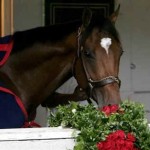 When it was announced at the subsequent Derby that Barbaro would be buried at Churchill Downs, I watched as schoolchildren, who had sent letters and drawings to Barbaro, lined up to deliver Gretchen Jackson individual roses in the winner’s circle during a tribute ceremony. As she held a full bouquet of roses in the end, I was overwhelmed by the dignity and grace of Mrs. Jackson.
The Jacksons, along with Barbaro, had fought the odds and lost. In their journey, the Jacksons demonstrated honor, dignity, and concern for the well-being of the horse above all financial motives. Barbaro illustrated courage and determination throughout his fight for survival. He had the qualities that not only won on the track, but captured the hearts of the public.
Of the horses that have generated widespread national reverence, they all possessed common traits – strength, ability, power, and excitement. They mirror the human spirit in its’ purest form, and, in turn, these athletes become larger than the sport. They become a reflection of our greatest dreams and ideals.
Please feel free to email me directly with questions or comments at blog@thesaturdaypost.org.
NOTE: There are many other horses and facts that were not mentioned due to space restraints - I would have had to write a book. I hope to add more to this post in the future.
February 20th, 2010 §
With schedule of five graded Derby prep races, numerous hopefuls face a test of talent today to compete for a spot in the starting gate on the first Saturday of May. Many of the horses have difficult questions to answer relating to their ability to handle a higher grade, a change in distance, and tougher adversaries in the field.
In this moment of ambiguity, one thing is certain. The landscape of the Derby trail will be altered by tonight. As we approach the starting gates, the answers lie within the cards of five races.
Fasig-Tipton Fountain of Youth Stakes (Grade II). The $250,000 Fountain of Youth Stakes has drawn a field of ten contenders – including the early favorites Jackson Bend and Buddy’s Saint. With the top three finishers earning an automatic nomination for a highly-coveted spot in the Florida Derby, a major breeding ground for Kentucky Derby winners, this race card tops the Saturday line-up.
Among the contenders, Jackson Bend and Buddy’s Saint are likely to finish at the top of the stretch. In seven starts, Jackson Bend has proven himself a legitimate Derby hopeful by capturing five victories and harboring earnings of $477,820. Although Jackson Bend was beaten by Winslow Homer in the Holy Bull Stakes, he delivered an honorable second place finish – beaten only by three-quarters of a length and closing a strong second by running 3 1/4 lengths in front of the rest of the field.
However, Buddy’s Saint also stands as a top-notch contender and has demonstrated the force to strike a win in his three-year-old debut. Of his three starts in 2009, Buddy’s Saint captured two wins in Grade 2 races. In his most recent race, the $200,000 Remsen Stakes, he tracked the leader throughout the race to clinch a 4 ¾-length victory in the final stretch. Prior to the Remsen, Buddy’s Saint dominated the $150,000 Grade 2 Nashua Stakes, winning by twelve lengths at the wire.
Eskendereya, with morning line odds of 5-1, remains a noteworthy rival for Jackson Bend and Buddy’s Saint. This hopeful, trained by Todd Pletcher, has delivered two wins in four career starts. Although Eskendereya closed his 2009 season with a disappointing ninth place finish in the Breeder’s Cup Juvenile (Gr. I), he recently clinched a first-place finish in an ungraded race this past January amidst a relatively large field. The Fountain of Youth is the first Grade 2 career start for Eskendereya. With a Grade 3 win in his 2009 season, it remains to be determined whether he can handle Grade 2 contenders after coming up short at the Grade 1 level in his two-year-old season.
The remaining seven horses in the field are Aikenite, Pulsion, Pleasant Prince, Prince Will I Am, Positive Split, Lost Aptitude, and Ice Box. Although many favor Aikenite, with morning line odds of 6-1, his sole first-place finish was his maiden race and he has consecutively dropped in order of finish in his subsequent races. Ice Box and Lost Aptitude seem to be better long shot picks.
Risen Star Stakes. (Grade II) The contenders in the $300,000 Risen Star Stakes vary dramatically in depth and proven ability in their journey toward the Derby. Although the overall field appears somewhat green in experience, four horses stand out among the twelve hopefuls.
The morning line favorite, Ron the Greek, has won three of his last four starts. Possibly, his most impressive win came in the Lecomte Stakes in January, where he passed nine other horses in the last five furlongs to capture a win.
Drosselmeyer, the second-favorite in odds, has demonstrated tremendous potential in recent months. Having won his last two races on dirt by several furlongs, it will be difficult for the rest of the field to catch him if he makes a similar romp in the stretch.
In November, Drosselmeyer broke his maiden at Churchill Downs by driving clear in the final furlongs and securing a flashy win that clearly bested his contenders. After his maiden victory, he returned to Gulfstream in January and drove down the stretch in a nine-furlong win during an entry-level allowance race.
Stay Put and Discreetly Mine are both impressive horses at this early stage in their career. Stay Put, has won his last two races, rallying from the back of the pack to secure a win in his three-year-old debut. Discreetly Mine has demonstrated his ability to handle a field of difficult contenders – having already placed in a Grade 1 race. It will be interesting to see how the talent of these two horses plays out in this race since this is a largely untested field.
Hutcheson Stakes. (Grade II) The final Grade 2 Derby prep today is the $150,000 Hutcheson Stakes at Gulfstream Park. Of the eight-horse card, Wildcat Frankie, D’Funnybone, and A Little Warm are the morning line favorites in the field.
Wildcat Frankie, with odds of 4-1, has won two of his last three races. He finished second to fellow contender, A Little Warm, in the Spectacular Bid Stakes during his three-year-old debut last month. A Little Warm, with odds of 3-1, took five races to break his maiden, but has won his last two races – namely, his maiden win and The Spectacular Bid Stakes.
D’Funnybone is the 2-1 odds-favorite in the Hutcheson – winning three of his last five starts. He is possibly the most tested horse in the field. He has already faced a Grade 1 start in his two-year-old career, The Breeder’s Cup Juvenile – in which he finished thirteenth in the race. The drop to a Grade 2 race may work to his advantage.
Southwest Stakes. (Grade III) The Grade 3 Southwest Stakes is the first graded prep on Oaklawn’s road to the $1 million Arkansas Derby (Gr. I). After being postponed due to track conditions at Oaklawn Park last Monday, the Grade 3 Southwest Stakes will be run today. Of the ten-horse card, three horses stand out among the contenders.
The 7-2 odds-favorite, Conveyance, has remained undefeated in his three starts and is emerging as a well-respected Derby hopeful. Conveyance recently made his three-year-old debut in the Grade 3 San Rafael Stakes– clinching a 1 3/4-length victory over his rivals.
The second-favorite in odds, Dryfly, has an impressive early record of three wins in four races. Arguably, his most notable race was his recent win in the Smarty Jones Stakes during his three-year-old debut. Among a large field of contenders, Dryfly, ridden by Calvin Borel, managed to clinch a 2 1/4-length victory in a stylish performance.
Finally, Dublin, with odds of 5-1, has more to prove against his two main rivals in the Southwest Stakes. At present, his crowning achievement was a Grade 1 win in September of 2009. Since that victory, Dublin has not placed in his past two races. Dublin recently underwent minor throat surgery. In today’s return to the track, he is making his first start at two turns.
El Camino Real Derby. (Grade III) The Grade 3, $150,000 El Camino Real Derby, Northern California’s main stepping-stone into the Kentucky Derby, is shaping up to be a match race between Ranger Heartley and Connemara.
Ranger Heartley, with odds of 5-2, has won four of his last six races. In his most recent win, Ranger Heartley beat rival, Connemara, in the California Derby on January 16, 2010. However, Connemara finished a close second to Ranger Heartley in that race – losing by three-quarter-length margin. This past November, Connemara won an allowance race at Santa Anita, with Ranger Heartley placing third in that outing. With the early talent demonstrated by both horses, the El Camino Real Derby may go down to the wire in a match race between these two contenders.
February 16th, 2010 §
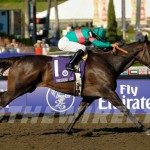 When Zenyatta clinched her groundbreaking win in the Breeder’s Cup Classic, she was the only subject on my mind. At the moment she crossed the finish line, I was skipping a wedding to watch her performance. After the race ended, I packed up my enthusiasm and set out to the reception with visions of her electrifying victory swirling in my head.
I simply couldn’t wait to talk about it with anyone who would listen.
Let’s just say, there was not a soul at that Chicago cocktail party that knew an ounce about horses. “Zenyatta” was a word that registered somewhere along the lines of failed sci-fi movie or an exotic foreign country that had just been discovered.
It certainly did not help that many people had not heard of the Breeder’s Cup. In retrospect, my social audience must have thought I was referring to a device used at fertility clinics – “Did you see the ‘Breeder’s Cup’ today?” …“Finally, a female took on the boys and made history.” I just want to cover my face in embarrassment over what ideas they perceived I was presenting to them at this elegant affair.
When I returned home, I searched all over the Internet for news about the race. I had to believe that someone shared the same enthusiasm about this historical moment. While reading the news stories on Bloodhorse, the NTRA website, and The Daily Racing Form, I discovered a brand new world – Horse Racing Blogs.
I don’t think blogging can replace traditional media outlets, nor can the medium ever match the experience of unexpectedly meeting another horse racing enthusiast in a social setting. However, blogs are a beautiful thing. The blogging community gives many different perspectives and provides stories that may have not been covered by regular news outlets. It also gives enthusiasts a place to share their enthusiasm, and hopefully, create more enthusiasm for this magnificent sport. Blogging about horse racing goes beyond a virtual “horse diary” – It draws the community together and creates a common cultural meeting place.
After tracking blogs all over the internet, here are some wonderful sites that I found. If you are a blogger or reader, feel free to add blogs that I missed in the comments section.
And keep writing – I don’t just blog. I read your blogs and enjoy hearing the varying perspectives. I enjoy knowing someone else appreciates the beauty and energy of this magnificent sport. I enjoy the idea that a virtual community is growing around the track and we are writing in a worldwide field.
The Media: NTRA, Bloodhorse, Daily Racing Form and Thoroughbred Times Blogs.
National Thoroughbred Racing Association Blogs.
Straight Up with Alex Waldrop.
Bob Ehalt Blog.
Karen Johnson Blog.
Claire Novak Blog.
Eric Wing Blog.
Dean Arnold Blog.
Bloodhorse Blog Stable.
Adam’s Turf.
Final Turn.
The Five-Cross Files.
Hammer Time.
Hangin’ with Haskin.
Maiden Watch.
Tracking Barbaro’s Brothers.
Triple Crown Talk.
TrueNicks.
What’s Going On Here.
Daily Racing Form Blogs.
The Inside Post.
Steven Crist Blog.
Jay Hovdey Blog.
Dan Illman Blog.
Randy Moss Blog.
Thoroughbred Times Blogs.
The Big Event.
From the Ring to the Racetrack.
No Holds Bard.
The Field: Horse Racing Blogs and Alliances Across the Web.
Thoroughbred Bloggers Alliance.
The Horse.Com Blogs.
Thoroughbred Chat.
Jennie Ries Courier-Journal Blog.
The Aspiring Horseplayer.
Inside Horseracing with Art Wilson.
New York Racing Insider Blog.
West Points.
Zipse at the Track.
Superfecta.
Focused Filly.
She’s On Her Toes.
Rail Runner.
The Horse Racing Network.
February 14th, 2010 §
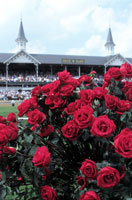
Although the final Kentucky Derby starters won’t enter the gates at Churchill Downs for over two months, several horses have begun to emerge in the prep races as early hopefuls for the first Saturday in May.
I’ll admit it. It is premature to cement any horse in Derby contention as anything other than a hopeful at this stage. The field for the Derby will transform itself many times in the upcoming months with unexpected turns and challenges as it does every season. However, at this early stage, here is a rundown of the major prospects.
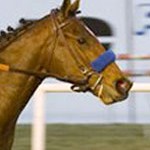
Lookin at Lucky
Lookin at Lucky. It would be impossible to start any discussion of Derby hopefuls without mentioning the generally-regarded favorite, Lookin at Lucky. Hall of Fame Trainer Bob Baffert has maintained the quiet supremacy afforded to this horse without even having run Lookin at Lucky in one start this season. Further, he has stated that Lookin at Lucky will only run in two prep races in hopes of clinching a slot in the gate at the Kentucky Derby.
So, what is so spectacular about the mysterious Looking at Lucky? In his six starts, four of which were Grade 1 races, Lookin at Lucky has only succumbed to a single defeat – The Breeder’s Cup Juvenile.
During the Breeder’s Cup Juvenile, Lookin at Lucky lost by a head after struggling with a bad trip throughout the race. At the start of the race, Lookin at Lucky was wide early, got stuck in midpack while facing a slow pace, rallied wide, and was ultimately outfinished from the inside by Vale of York. When interviewed after the Juvenile, Baffert stood firm. “We know we have a legit horse, we just didn’t get paid.”
Since the Juvenile defeat, he captured a win in the Breeder’s Cup Cash Call Futurity in December of 2009. Under jockey Garrett Gomez, Lookin at Lucky won by three-quarters of a length, after making several different moves throughout the race, to kick clear at the wire to secure a win. “Hell of a day, huh?” Baffert remarked in a post-race interview. “He’s getting better and better.”
Select videos of Lookin at Lucky’s past performances are available here for the Cash Call Futurity (1st), Breeder’s Cup Juvenile (2nd) , Norfolk Stakes (1st), and Del Mar Futurity (1st).
Buddy’s Saint. Buddy’s Saint is another strong candidate at this early stage in Derby prep races. Of his three starts in 2009, Buddy’s Saint captured two wins in Grade 2 races. In his most recent race, the $200,000 Remsen Stakes, Buddy’s Saint tracked the leader throughout the race to clinch a 4 ¾-length victory in the final stretch.
Prior to the Remsen, Buddy’s Saint dominated the $150,000 Grade 2 Nashua Stakes, winning by twelve lengths at the wire. He is expected to run in the Fountain of Youth Stakes on February 20, 2010 – competing against two other major hopefuls - Jackson Bend and Eskendereya.
Super Saver. It would be impossible to ignore this horse with the powerhouse team that catapulted Super Saver into his flashy first-place finish at the Grade 2 Kentucky Jockey Club Stakes. Super Saver, owned by WinStar Farm and trained by Todd Pletcher, made an amazing romp toward a victory under rider Calvin Borel in the Jockey Club Stakes. In the upcoming prep races, it will be interesting to see if this horse has the ability to give a repeat performance and capture a Grade 1 win.
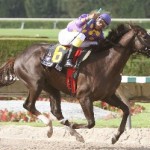
Jackson Bend
Jackson Bend. In seven starts, Jackson Bend has proven himself a legitimate Derby hopeful by capturing five victories and harboring earnings of $477,820. He was beaten by Winslow Homer in the Holy Bull Stakes, but still delivered an honorable second place finish. Prior to the Holy Bull, he was unbeaten in five consecutive starts and remains a strong hopeful – especially considering the depth of his experience in comparison to his other rivals at this stage. He is expected to race in the Fountain of Youth Stakes on February 20, 2010 in his next endeavor to remain on the Derby trail.
Rule. Rule has emerged as a serious contender among Derby hopefuls – having closed out his two-year-old campaign with three consecutive victories and, more recently, capturing a win in the Grade 3 $225,000 Sam. F. Davis Stakes.
In the Sam F. Davis Stakes, Rule drove toward the finish and won by three-lengths over a field of well-respected rivals. It remains to be seen if he can match his Sam F. Davis performance in a Grade 1 race. After the Sam F. Davis, trainer Todd Pletcher did not point toward the next prep race for Rule – but mentioned the Florida Derby, Blue Grass, or Wood Memorial among the options being considered.
Dryfly. With a record of three wins in four races, Dryfly is gaining respect as a Derby hopeful after his impressive win at the Smarty Jones Stakes in his three-year-old debut. Among a large field of contenders, Dryfly, ridden by Calvin Borel, managed to clinch a 2 1/4-length victory in a stylish performance. As with many other early hopefuls, it remains to be seen how he will handle a Grade 1 race. However, judging by his current record, he remains a strong early contender.
Eskendereya. This hopeful, trained by Todd Pletcher, has delivered two wins in four career starts. Although Eskendereya closed his 2009 season with a disappointing ninth place finish in the Breeder’s Cup Juvenile, this hopeful has re-emerged as an interesting contender in the 2010 season.
This past January, Eskendereya clinched a first-place finish during an ungraded race in a relatively large field. After the win, Pletcher showed confidence in his horse, stating that “The Fountain of Youth is a possibility, although I don’t know if he needs to wait that long to come back… The one thing I am sure of is that getting a mile and one-eighth will be no problem.” It remains to be determined whether this horse is capable of matching Pletcher’s confidence with ability to conquer a Grade 1 race.
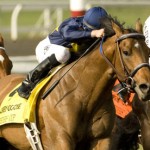
Noble's Promise
Noble’s Promise. Noble’s Promise has established himself as a legitimate Derby hopeful through showing the capacity to deliver a respectable performance in repeated Grade 1 races. Of his six starts, Noble’s Promise has clinched three wins – including a victory in the Grade 1 Dixiana Breeder’s Futurity. With the demonstrated capacity to consistently win or place while taking on serious rivals in the Juvenile Breeder’s Cup (third) and the Cash Call Futurity (second), Noble’s Promise is one of the few hopefuls who has proven his capacity to manage the difficulty of a Grade 1 race
Conveyance. In his three starts, this Bob Baffert-trained horse has remained undefeated and is emerging as a respectable Derby hopeful. Conveyance recently made his three-year-old debut in the Grade 3 San Rafael Stakes – clinching a 1 3/4-length victory over his rivals. Conveyance is expected to race again in the Southwest Stakes on February 15.
February 1st, 2010 §
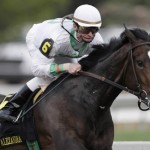
After a contentious debate over the 2009 “Horse of the Year” Eclipse Award, Rachel Alexandra prevailed over Zenyatta when the winner was finally announced on January 19, 2010. Prior to the announcement, the owners of both champion fillies had committed to race their horses in the 2010 season. With the final ballots cast, the industry has moved from the “Horse of the Year” debate toward speculation regarding a match race between these two female rivals in 2010.
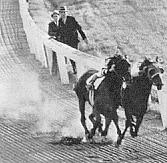
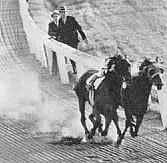
Since 1975, there have not been any major thoroughbred match races involving champions in America after Ruffian sustained a terminal injury while competing against Kentucky Derby winner, Foolish Pleasure. In that race, the undefeated filly Ruffian met Foolish Pleasure at Belmont Park in New York. A national television audience watched as Ruffian broke down shortly after the start and had to be euthanized the following day.
Before the sad ending to match racing with Ruffian’s injury, there were several other major match races throughout the century. In 1955, Kentucky Derby winner, Swaps, met Nashua, the Preakness and Belmont Stakes winner of that year. Nashua won the race, but speculation did not cease after the match. Swaps had been nursing a sore foot in days prior to the race. Eddie Arcaro, rider of Nashua, admitted many years later that he doubted Nashua could ever have beaten a healthy Swaps.
In 1947, Triple-Crown winner and 1946 Horse of the Year, Assault, held a $100,000 match race against Calumet Farm’s horse, Armed. Armed beat Assault by eight lengths and went on to win the 1947 title of Horse of the Year.
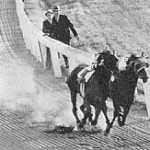 One of the arguably most talked-about match races of the century occurred in 1938, between the rags-to-riches underdog, Seabiscuit, and the Triple-Crown winner and reigning horse of the year, War Admiral. Seabiscuit tracked War Admiral across the country and quickly became the “People’s Horse” during the depression era. After he defeated War Admiral in the 1939 showdown, Seabiscuit went on to win Horse of the Year.
However, match racing existed before the popular match race between Seabiscuit and War Admiral. In 1923, the Kentucky Derby winner, Zev, took on the English Derby winner, Papyrus. The race was dubbed the first “international” race and exorbitant prices were charged for tickets. Zeb won the match race against Papyrus, but doubts lingered about the victory due to track conditions and a mistake in shoeing Papyrus prior to the race.
Finally, in 1920, Horse of the Century, Man O’ War, met Sir Barton, the first horse to win what would later be dubbed the “Triple Crown,” in a match race in Canada. Man O’ War won the race by seven lengths, but the importance of the race was questioned because it was widely-regarded that Sir Barton was not at his peak performance.
With a new century, the industry is faced with the prospect of a major match race between two champion fillies – Rachel Alexandra and Zenyatta. From a brief look at the history of match racing, the unasked question is “What purpose would a match race serve?”
The most obvious answer is financial gain to the industry and owners, as well as reinvigorating public interest in the sport of horseracing. But, aside from these interests, does a match race serve either filly in cementing their championship status over the other filly?
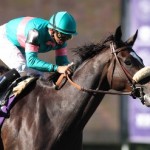 From the historical view, Zenyatta appears to have more to gain while Rachel Alexandra more to lose if the two are pegged against each other in a match race. In the races in which a reigning Horse of the Year accepted and lost a match race, the prevailing horse went on to win “Horse of the Year” in the following season. Therefore, Zenyatta’s most important targeted race for 2010 should be a match against Rachel Alexandra if she wants to attempt to clinch the much sought-after title of “Horse of the Year.”
In the same vein, if Rachel Alexandra were to lose a match to Zenyatta, Rachel Alexandra’s “Horse of the Year” victory over Zenyatta may be called into question all over again. Rachel would be forced into a rivalry with Zenyatta that could last over several races in an attempt to gain the lead over her rival in the court of public opinion.
Further, the historical record shows that match races rarely seem to settle the score between two rival champion horses. In the case between Ruffian and Foolish Pleasure, there was no true winner since Ruffian was injured during the race. Between Swaps and Nashua, Nashua’s own jockey, Arcaro, felt that Swaps would have won if he had been in better health. The race between Zev and Papyrus only clouded the debate since Papyrus encountered track difficulties and there was a mistake in shoeing the horse. Finally, Man O’ War’s victory over Sir Barton was also questioned since Sir Barton was not at his peak-performance level at the time of the match.
If a match race were to be held between Rachel Alexandra and Zenyatta, it would seemingly do little to settle the debate regarding who is the greater horse between the two champions. However, it would make for an electrifying spectacle to watch these two fillies face off on the track.
Rather than aiming to have a match race settle the ongoing debate of who is the greater horse between Zenyatta and Rachel, a match race, if held, should serve only to showcase the two great fillies of our decade. Their championship status has already been proven in different races, on different tracks.
January 21st, 2010 §
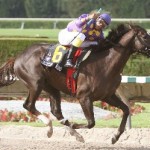 On Saturday, a field of nine Derby hopefuls will square off in the one-mile Holy Bull Stakes (gr. III) at Gulfstream Park in Southern Florida. With varying degrees of experience throughout the lineup, the likely favorite in the race will be Jackson Bend, a Florida-bred horse trained by Nick Zito.
Jackson Bend has won his last five consecutive stakes races and is the top money-earner in the field, with winnings totaling $477,820. In his last race, he clinched a 2 ¾ length win over his current rival, Thank U Philippe, at the In Reality Stakes in October 2009. Jackson Bend has been working steadily at Palm Meadows, with his most recent five-furlong workout on January 16th timing above a perfect 12-clip at :59.30. The only question is whether the depth of his prior competition will equal the field set before him in the Holy Bull Stakes this Saturday.
Among his main rivals in the Holy Bull, are Aikenite, a Florida-bred horse trained by Todd Pletcher, and Homeboykris, the winner of the Champagne Stakes (gr. I) on October 10, 2009. Aikenite, a multiple graded-stakes-placed horse, has not raced in nearly three months after his fifth-place finish in the Breeder’s Cup Juvenile in November 2009. However, Aikenite remains a significant rival, building his record on Grade One races in his two-year-old season.
Homeboykris, a Maryland-bred racehorse, won two of his four starts in 2009. His most impressive race was undoubtedly the Champagne Stakes (gr. I), where he captured a win and beat Super Saver, who finished fourth in the race. Homeboykris is trained by Juan Rodriguez with Edgar Prado as his current jockey. In his most recent workout, he ran six-furlongs in 1:14:69.
The other horses in the race include Winslow Homer, Piscitelli, Litigation Risk, Thank U Philippe, William’s Kitten and Wild Lime. Piscitelli and William’s Kitten make interesting picks for a long shot. Both horses raced in the Breeder’s Cup Juvenile (Gr. I), with Piscitelli finishing fourth – one length from the winner – and William’s Kitten finishing eighth. The drop in grade may improve their chances at placing in this race. The least talked-about horse, Wild Lime, has demonstrated some early potential – winning two of his three lifetime races.
Wild Lime made an impressive debut at Delaware Park in July of 2009, winning his maiden by 3 ½ lengths. More recent, he earned a top speed rating in an Allowance race at Meadowlands in December of 2009. It remains to be answered whether he can stand out among a stronger grade of contenders in the Holy Bull Stakes.
Here are my bets for the Holy Bull:
$2 Win – Jackson Bend
$2 Exacta Box – Jackson Bend and Aikenite
$1 Trifecta Box – Jackson Bend, Aikenite, and Homeboykris
$1 Superfecta Box – Jackson Bend, Aikenite, Homeboykris, and Wild Lime.
January 16th, 2010 §
With the Kentucky Derby nearly four months away, the major trainers are beginning to take stock of the talent in their stables and nominate their hopefuls for the upcoming prep races leading up to the Kentucky Derby. As with any year, there will inevitably be many twists and turns of fate before the ultimate winner hits the wire at Churchill Downs on the first Saturday in May.
My early favorite this year is “Lookin at Lucky,” a horse trained by the legendary Bob Baffert. In his six starts, four of which were Grade 1 races, Lookin at Lucky has only succumbed to a single defeat – The Breeder’s Cup Juvenile.
During the Breeder’s Cup Juvenile, Lookin at Lucky lost by a head after struggling with a bad trip throughout the race. At the start of the race, Lookin at Lucky was wide early, got stuck in midpack while facing a slow pace, rallied wide, and was ultimately outfinished from the inside by Vale of York. When interviewed after the Juvenile, Baffert stood firm. “We know we have a legit horse, we just didn’t get paid.”
Since the Juvenile defeat, he captured a win in the Breeder’s Cup Cash Call Futurity in December of 2009. Under jockey Garrett Gomez, Lookin at Lucky won by three-quarters of a length, after making several different moves throughout the race, to kick clear at the wire to secure a win. “Hell of a day, huh?” Baffert remarked in a post-race interview. “He’s getting better and better.”
After the Futurity, Baffert said that Lookin at Lucky would get an extended break. He anticipates that the horse will run two prep races before the Kentucky Derby. The targeted races have not been announced, but with the early promise demonstrated by this colt, the betting public should be looking at a “Lucky.”
January 16th, 2010 §
On Monday, the winner of the prestigious “Horse of the Year” Eclipse Award will be announced and two breathtaking fillies remain in a dead heat for title. Throughout most of the 2009 racing season, Rachel Alexandra dominated the sport with flashy wins against other fillies, taking down the boys in three separate races, and, ultimately, being the first filly in 85 years to capture the Preakness Trophy. Of her eight starts as a three-year-old in 2009, she remained undefeated and ended her racing year as the first filly to win the Woodward Stakes.
By September of 2009, I believed Rachel Alexandra was the clear choice for “Horse of the Year” having watched her trample the field in the Kentucky Oaks, take down the Derby Winner in the Preakness, and close her season with her historical win in the Woodward Stakes. If anyone had challenged that notion, I wouldn’t have hesitated to hold a good old-fashioned yelling match to defend Rachel’s right to the title. In my mind, it was inconceivable that any horse could out-perform this “Super Filly.”
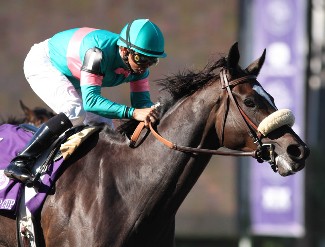
And then, the unconceivable arrived. On November 7, 2009, an undefeated five-year old female named Zenyatta walked onto the track at Santa Anita and dared every boy standing at the gate to defeat her in the richest race in America.
It was such a bold move that I skipped a wedding to watch her try.
As the gates opened, Zenyatta trailed the field. Throughout middle of the race, I watched with heartbreak as she hung in last place. It looked as if expectations had exceeded her ability. When it appeared near hopeless, Zenyatta made the bid for her place in history. She began to pick off her opponents near the last turn and went wide on the home stretch to deliver a seemingly late charge for the finish. In the final seconds, Zenyatta drove seamlessly past her contenders at the wire to win the Breeder’s Cup Classic. In this historical moment, my allegiance for “Horse of the Year” shifted from Rachel Alexandra to the first filly to ever take the most expensive race in America – Zenyatta.
Admittedly, Zenyatta’s contention for “Horse of the Year” would not be such a threat to Rachel Alexandra without her historical win in the Breeder’s Cup Classic. However, I am not in the business of rewriting history. In fact, Zenyatta’s bid for “Horse of the Year” is perfectly in sync with the historical background and ultimate spirit of the Eclipse Awards.
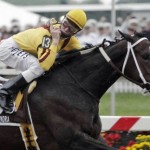 When the Eclipse Awards were founded in 1971, they were named in honor of a British racehorse and sire from the 1800s, named “Eclipse.” As a racehorse, Eclipse did not begin his career until he was a five-year-old and remained undefeated throughout the eighteen races in his career. In recognition of his legacy, Eclipse became the namesake to what are arguably considered the most prestigious achievement awards within the American horse racing industry.
By the very nature of the Eclipse Awards, the award categories provide a separation for age and overall achievement. Aside from “Horse of the Year,” which encompasses all ages and genders, the Eclipse Awards also maintain separate categories for the best “Three-Year-Old Filly” and “Three-Year-Old Male.” The scenario between Rachel Alexandra and Zenyatta appears to have been given some forethought prior to this moment.
Eclipse himself could not have won the best “Three-Year-Old Male” Award, just as Zenyatta can no longer compete for the best “Three-Year-Old Filly” award due to the age restriction. The Awards appear to follow the design that a “Three-Year-Old Filly” may become “Horse of the Year,” but that the rapture of the Triple Crown racing season cannot discount the outstanding performances of all racehorses during a given year.
Admittedly, Rachel Alexandra had an electrifying year as a three-year old horse – irrespective of her gender. If she had shown up to Santa Anita on November 7th to win the Breeder’s Cup Classic, there would be very little debate that she had earned the “Horse of the Year” Award. But, as Zenyatta trampled down the full field of skilled male horses to earn the distinction of the first filly to win the Breeder’s Cup Classic, Rachel Alexandra quietly stepped aside and placed her bets on her three-year-old season. When Zenyatta was first at the wire, Rachel lost her bet.
Zenyatta’s win in the Breeder’s Cup Classic holds more historical significance than any of Rachel Alexandra’s wins within this season. Zenyatta won the most expensive race in the United States. She is the first filly to ever accomplish this feat. The Breeder’s Cup Classic is one of the most contentious races in America – the field is full of great horses from varying backgrounds who are proven winners.
In contrast, Rachel Alexandra’s first Grade One win was in the Kentucky Oaks – among other fillies. Her next race, among males in the Preakness, is an impressive win – but not a “Game Changer.” Prior to Rachel, four fillies had already won the Preakness Stakes – the most recent win being in 1924. Further, the Preakness is the shortest distance of all three Triple Crown races, the Belmont being the longest race in the United States at a distance of 1 ½ miles. When Oaks-Winner Rags to Riches beat Curlin in the 2007 Belmont Stakes, Curlin was still awarded the distinction of “Horse of the Year” despite the fact that a Filly had not won the Belmont in over a hundred years when she crossed the finish line.
Zenyatta also holds distinction for building her undefeated record on a higher grade of races than Rachel Alexandra. In her career, Zenyatta has consistently run in only Grade 1 and Grade 2 races – remaining undefeated. In contrast, Rachel Alexander gradually worked from Grade 3 races into Grade 1 races, finishing second in both of her Grade 3 races. When viewing the overall career record of both horses, Zenyatta is the only undefeated horse who never delved below a Grade 2 race.
Finally, Zenyatta’s wins earned more money in 2009 than Rachel Alexandra. In 2009, Zenyatta was the second-highest ranking horse, boasting $3,330,000 in earnings. In comparison, Rachel Alexandra ranked fifth in 2009, bringing in a total of $2,746,914.
With the entry of more fillies in the prestigious male-dominated horse races, the industry is now squarely-faced with “The Filly Eclipse” for the Horse of the Year. Fillies are running alongside their male-counterparts and winning. When Rachel Alexandra ended her racing season in September, many believed that she had earned “Horse of the Year” over her potential male rivals for the Award. On November 7th, 2009, Zenyatta placed herself in undisputed contention with Rachel Alexandra as she moved past the finish line at the Breeder’s Cup Classic. Those watching the Breeder’s Cup Classic witnessed the first “Filly Eclipse” in history for the Horse of the Year Award.
After the Breeder’s Cup Classic, there have been arguments to hold a match race between Rachel Alexandra and Zenyatta. This would not add or subtract anything from this competition. Zenyatta and Rachel Alexandra are two distinct horses at different places in their career with their own unique character. They race in two separate fields - Rachel performs better on dirt and Zenyatta excels on synthetic track. If they ever settled where to run this race, the next question would be why the race should be run. This is a competition for the “Horse of the Year”- not “Best Filly of the Year.” It just happens to be that the two final contenders are fillies.
In the case of Rachel Alexandra, I truly believe that she has gone above and beyond to win the distinction of being the best three-year-old filly for 2009. She took on the boys, outran them, and bested the field with her astounding margins of victory in filly races.
Then, in a rare moment in November, “The Filly Eclipse” occurred and Zenyatta obscured all opposition.
When Zenyatta crossed the wire in the Breeder’s Cup Classic, she took my vote for Horse of the Year through pioneering a win in the most expensive race in America amidst a field a hard-tested males from various ages and backgrounds. It was an electrifying performance that not only earned her a place in the history books, but also, the well-earned distinction as “Horse of the Year.” I had seen my first ”filly eclipse.” It was breathtaking.