September 22nd, 2010 §

Long before Zenyatta was born, there was Eclipse.
Eclipse was a race horse from Great Britain that retired with an undefeated record in eighteen career starts during the 18th Century.
Eclipse never felt the feeling of defeat.
He made the winner’s circle his stomping ground.
And today, Eclipse is one of the most coveted names in racing. He is the namesake to the annual Eclipse Award trophies that recognize the outstanding achievements of horses and individuals in the racing industry.
When we crown a champion “Horse of the Year,” we’re talking about Eclipse.
And, when we start talking about Eclipse, we should point to the horse embodies his level of achievement.
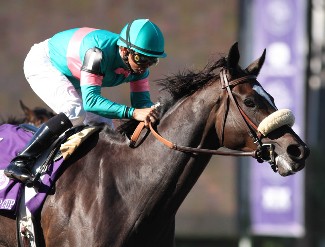
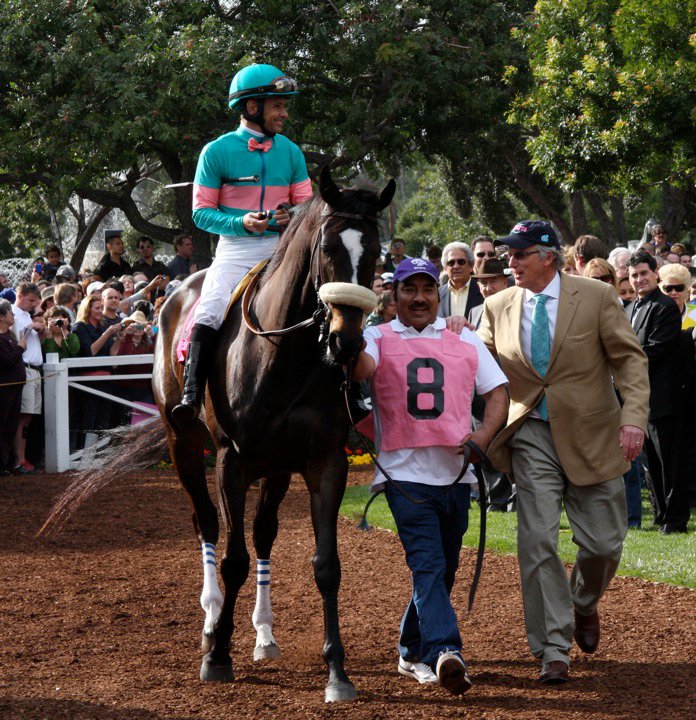
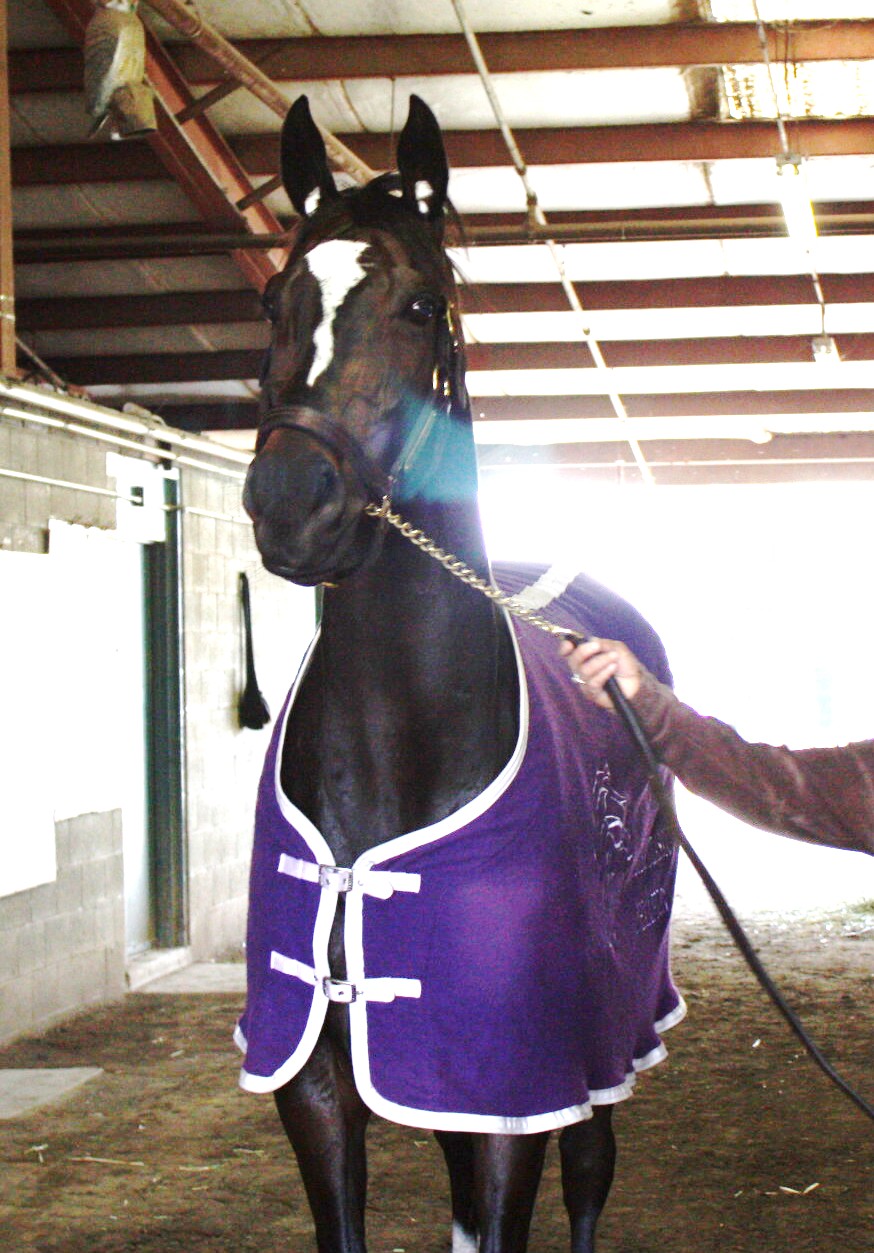
I’m pointing at Zenyatta.
Zenyatta has never felt the feeling of defeat.
She’s made the winner’s circle her stomping ground.
And today, Zenyatta is one of the most coveted names in modern racing. She has racked up a list of achievements that would have given Eclipse himself a grueling run for his money if he had met her in his lifetime.
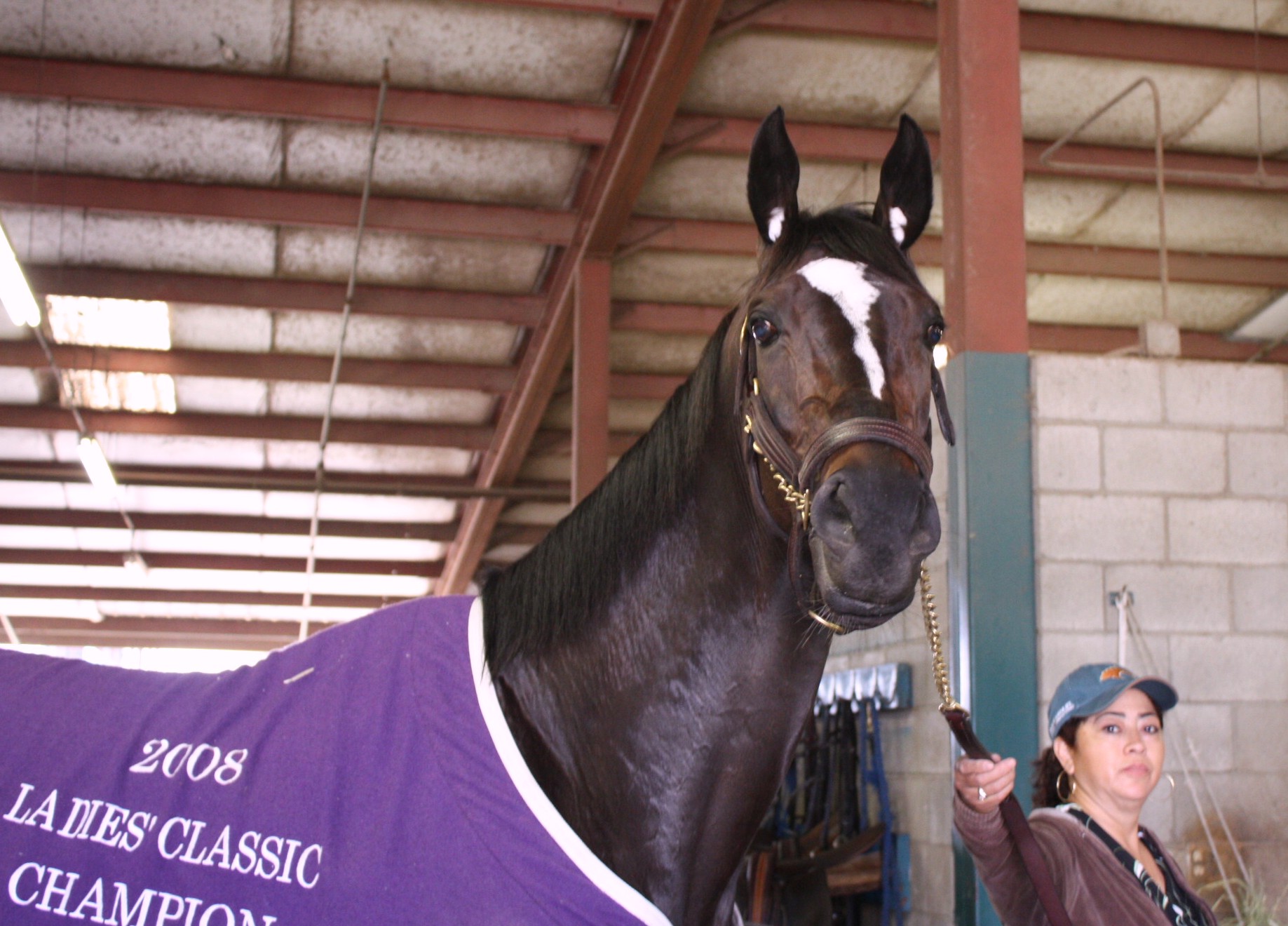
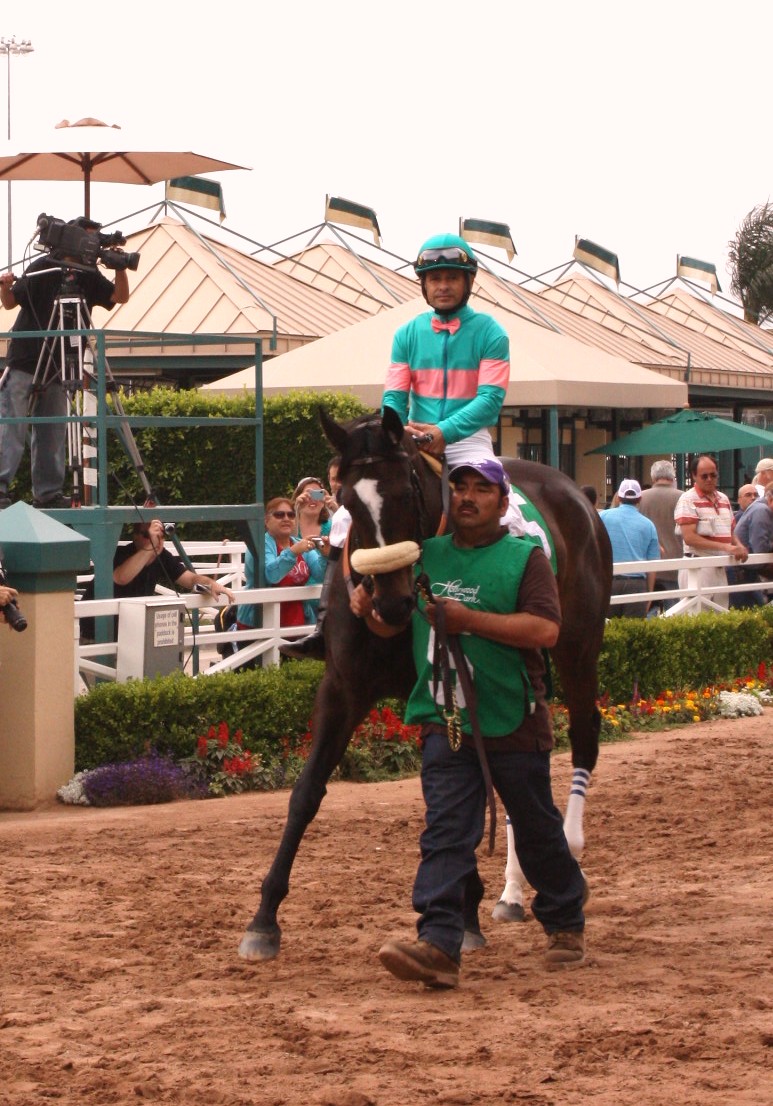
Zenyatta has a perfect record of winning eighteen consecutive starts.
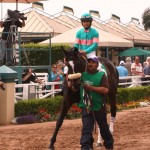 Yes, Eighteen. The only horse in U.S. history that has ever retired with a perfect record greater than eighteen was Pepper’s Pride, the holder of nineteen consecutive victories during her racing career. And, there is no doubt in my mind that Pepper’s Pride truly accomplished something spectacular.
However, Zenyatta and Pepper’s Pride raced in different circles. Pepper’s Pride built her winning record through racing solely in New Mexico in many state-restricted races. She never entered a graded race in her career.
And yes, there is a value for earning good grades on a report card.
I’m pointing at Zenyatta, again.
She is a virtual valedictorian in graded outings.
Zenyatta holds the world record for the most consecutive Grade I wins and has built her undefeated record through winning sixteen graded races, twelve of which were Grade I races.
Yes, twelve Grade I victories. Only six horses in U.S. history have ever captured more Grade I victories than Zenyatta. The record for the most Grade I victories in U.S. history stands with John Henry, who captured sixteen Grade I wins during his career.
But, John Henry isn’t up for “Horse of the Year.”
He already won it in his lifetime.
Twice.
Yet, John Henry provides a fine example of the mathematics of being “Horse of the Year.” Aside from holding the record for winning the most Grade I races, John Henry was the highest money-earning thoroughbred of his time when he retired with career earnings of $6,597,947.
So, yes. There is the business of making money.
I’m pointing at Zenyatta, again.
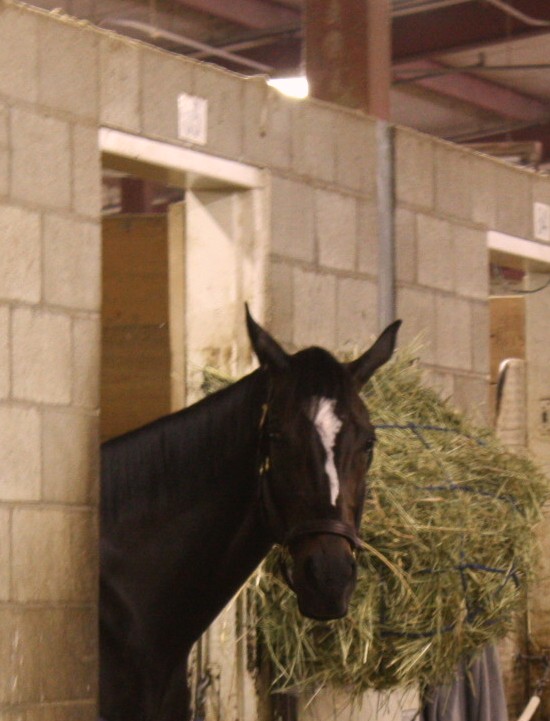
 Currently, Zenyatta has earned $6,254,580 during her career. She stands as the all-time female earnings leader in North America. And, she’s earned it in some impressive outings.
In 2009, a single female horse stomped into the gates of the Breeder’s Cup Classic and challenged all the boys to beat her to the wire. It was a bold move.
That female made history.
I’m pointing at Zenyatta, again.
When Zenyatta became the first female to win the 2009 Breeder’s Cup Classic, she didn’t break a standing record. And, she didn’t set a record that was vulnerable to being broken in the future. She stamped out an untouchable spot in racing history.
So, yes. Zenyatta is a living legend.
And, she keeps blazing along.
Through her journey, Zenyatta is redefining what it means to be a race horse in the modern age. She’s dancing for crowds and drinking Guinness. Zenyatta is posting her activities on Facebook and sharing videos on You Tube.
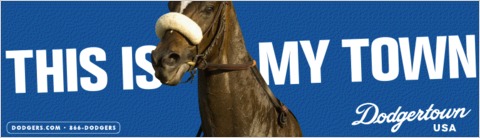
 She is hovering on the L.A. Dodgers billboard like Godzilla, announcing that Los Angeles is her town.
How many race horses lay claim to owning a town?
I’m pointing at Zenyatta, again.
Yet, many people are pointing at Zenyatta these days. Children show up at the race track with pink and teal painted faces.
And, they’re pointing at Zenyatta.
Non-industry media is starting to notice Zenyatta. The Huffington Post and W Magazine are telling the non-racing world that there is something spectacular going on at the race track.
They are pointing at Zenyatta.
Even Oprah is praising Zenyatta these days.
When Oprah set out to find twenty elite women who embodied various character traits for O Magazine’s 2010 Power List, the maven found one woman who stood along in demonstrating the “Power of Heart.”
Oprah pointed at Zenyatta.
 Yes, Oprah. A woman who has been televising heartwarming stories for twenty-five years went ahead and picked Zenyatta as the woman who showed “heart” above all rivals in the human field.
And still, Zenyatta races toward her last two outings in a mirror image of Eclipse’s undefeated record.
If she wins, she’ll eclipse it.
And, if she loses, she’ll match it.
Regardless, she has already raced into Eclipse’s territory.
And, when we start talking about Eclipse, we’re talking about “Horse of the Year.”
A horse that has never felt the feeling of defeat.
A horse that makes the winner’s circle their stomping ground.
I’m pointing at Zenyatta.
» Read the rest of this entry «
February 1st, 2010 §

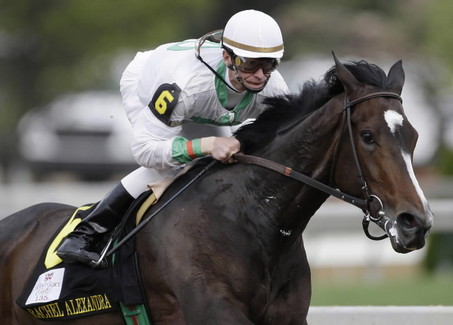
After a contentious debate over the 2009 “Horse of the Year” Eclipse Award, Rachel Alexandra prevailed over Zenyatta when the winner was finally announced on January 19, 2010. Prior to the announcement, the owners of both champion fillies had committed to race their horses in the 2010 season. With the final ballots cast, the industry has moved from the “Horse of the Year” debate toward speculation regarding a match race between these two female rivals in 2010.
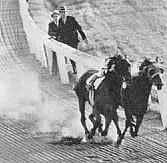
Since 1975, there have not been any major thoroughbred match races involving champions in America after Ruffian sustained a terminal injury while competing against Kentucky Derby winner, Foolish Pleasure. In that race, the undefeated filly Ruffian met Foolish Pleasure at Belmont Park in New York. A national television audience watched as Ruffian broke down shortly after the start and had to be euthanized the following day.
Before the sad ending to match racing with Ruffian’s injury, there were several other major match races throughout the century. In 1955, Kentucky Derby winner, Swaps, met Nashua, the Preakness and Belmont Stakes winner of that year. Nashua won the race, but speculation did not cease after the match. Swaps had been nursing a sore foot in days prior to the race. Eddie Arcaro, rider of Nashua, admitted many years later that he doubted Nashua could ever have beaten a healthy Swaps.
In 1947, Triple-Crown winner and 1946 Horse of the Year, Assault, held a $100,000 match race against Calumet Farm’s horse, Armed. Armed beat Assault by eight lengths and went on to win the 1947 title of Horse of the Year.
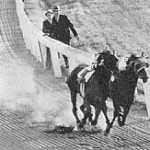 One of the arguably most talked-about match races of the century occurred in 1938, between the rags-to-riches underdog, Seabiscuit, and the Triple-Crown winner and reigning horse of the year, War Admiral. Seabiscuit tracked War Admiral across the country and quickly became the “People’s Horse” during the depression era. After he defeated War Admiral in the 1939 showdown, Seabiscuit went on to win Horse of the Year.
However, match racing existed before the popular match race between Seabiscuit and War Admiral. In 1923, the Kentucky Derby winner, Zev, took on the English Derby winner, Papyrus. The race was dubbed the first “international” race and exorbitant prices were charged for tickets. Zeb won the match race against Papyrus, but doubts lingered about the victory due to track conditions and a mistake in shoeing Papyrus prior to the race.
Finally, in 1920, Horse of the Century, Man O’ War, met Sir Barton, the first horse to win what would later be dubbed the “Triple Crown,” in a match race in Canada. Man O’ War won the race by seven lengths, but the importance of the race was questioned because it was widely-regarded that Sir Barton was not at his peak performance.
With a new century, the industry is faced with the prospect of a major match race between two champion fillies – Rachel Alexandra and Zenyatta. From a brief look at the history of match racing, the unasked question is “What purpose would a match race serve?”
The most obvious answer is financial gain to the industry and owners, as well as reinvigorating public interest in the sport of horseracing. But, aside from these interests, does a match race serve either filly in cementing their championship status over the other filly?
 From the historical view, Zenyatta appears to have more to gain while Rachel Alexandra more to lose if the two are pegged against each other in a match race. In the races in which a reigning Horse of the Year accepted and lost a match race, the prevailing horse went on to win “Horse of the Year” in the following season. Therefore, Zenyatta’s most important targeted race for 2010 should be a match against Rachel Alexandra if she wants to attempt to clinch the much sought-after title of “Horse of the Year.”
In the same vein, if Rachel Alexandra were to lose a match to Zenyatta, Rachel Alexandra’s “Horse of the Year” victory over Zenyatta may be called into question all over again. Rachel would be forced into a rivalry with Zenyatta that could last over several races in an attempt to gain the lead over her rival in the court of public opinion.
Further, the historical record shows that match races rarely seem to settle the score between two rival champion horses. In the case between Ruffian and Foolish Pleasure, there was no true winner since Ruffian was injured during the race. Between Swaps and Nashua, Nashua’s own jockey, Arcaro, felt that Swaps would have won if he had been in better health. The race between Zev and Papyrus only clouded the debate since Papyrus encountered track difficulties and there was a mistake in shoeing the horse. Finally, Man O’ War’s victory over Sir Barton was also questioned since Sir Barton was not at his peak-performance level at the time of the match.
If a match race were to be held between Rachel Alexandra and Zenyatta, it would seemingly do little to settle the debate regarding who is the greater horse between the two champions. However, it would make for an electrifying spectacle to watch these two fillies face off on the track.
Rather than aiming to have a match race settle the ongoing debate of who is the greater horse between Zenyatta and Rachel, a match race, if held, should serve only to showcase the two great fillies of our decade. Their championship status has already been proven in different races, on different tracks.
January 16th, 2010 §
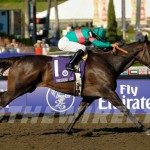
On Monday, the winner of the prestigious “Horse of the Year” Eclipse Award will be announced and two breathtaking fillies remain in a dead heat for title. Throughout most of the 2009 racing season, Rachel Alexandra dominated the sport with flashy wins against other fillies, taking down the boys in three separate races, and, ultimately, being the first filly in 85 years to capture the Preakness Trophy. Of her eight starts as a three-year-old in 2009, she remained undefeated and ended her racing year as the first filly to win the Woodward Stakes.
By September of 2009, I believed Rachel Alexandra was the clear choice for “Horse of the Year” having watched her trample the field in the Kentucky Oaks, take down the Derby Winner in the Preakness, and close her season with her historical win in the Woodward Stakes. If anyone had challenged that notion, I wouldn’t have hesitated to hold a good old-fashioned yelling match to defend Rachel’s right to the title. In my mind, it was inconceivable that any horse could out-perform this “Super Filly.”
And then, the unconceivable arrived. On November 7, 2009, an undefeated five-year old female named Zenyatta walked onto the track at Santa Anita and dared every boy standing at the gate to defeat her in the richest race in America.
It was such a bold move that I skipped a wedding to watch her try.
As the gates opened, Zenyatta trailed the field. Throughout middle of the race, I watched with heartbreak as she hung in last place. It looked as if expectations had exceeded her ability. When it appeared near hopeless, Zenyatta made the bid for her place in history. She began to pick off her opponents near the last turn and went wide on the home stretch to deliver a seemingly late charge for the finish. In the final seconds, Zenyatta drove seamlessly past her contenders at the wire to win the Breeder’s Cup Classic. In this historical moment, my allegiance for “Horse of the Year” shifted from Rachel Alexandra to the first filly to ever take the most expensive race in America – Zenyatta.
Admittedly, Zenyatta’s contention for “Horse of the Year” would not be such a threat to Rachel Alexandra without her historical win in the Breeder’s Cup Classic. However, I am not in the business of rewriting history. In fact, Zenyatta’s bid for “Horse of the Year” is perfectly in sync with the historical background and ultimate spirit of the Eclipse Awards.
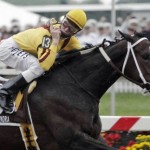 When the Eclipse Awards were founded in 1971, they were named in honor of a British racehorse and sire from the 1800s, named “Eclipse.” As a racehorse, Eclipse did not begin his career until he was a five-year-old and remained undefeated throughout the eighteen races in his career. In recognition of his legacy, Eclipse became the namesake to what are arguably considered the most prestigious achievement awards within the American horse racing industry.
By the very nature of the Eclipse Awards, the award categories provide a separation for age and overall achievement. Aside from “Horse of the Year,” which encompasses all ages and genders, the Eclipse Awards also maintain separate categories for the best “Three-Year-Old Filly” and “Three-Year-Old Male.” The scenario between Rachel Alexandra and Zenyatta appears to have been given some forethought prior to this moment.
Eclipse himself could not have won the best “Three-Year-Old Male” Award, just as Zenyatta can no longer compete for the best “Three-Year-Old Filly” award due to the age restriction. The Awards appear to follow the design that a “Three-Year-Old Filly” may become “Horse of the Year,” but that the rapture of the Triple Crown racing season cannot discount the outstanding performances of all racehorses during a given year.
Admittedly, Rachel Alexandra had an electrifying year as a three-year old horse – irrespective of her gender. If she had shown up to Santa Anita on November 7th to win the Breeder’s Cup Classic, there would be very little debate that she had earned the “Horse of the Year” Award. But, as Zenyatta trampled down the full field of skilled male horses to earn the distinction of the first filly to win the Breeder’s Cup Classic, Rachel Alexandra quietly stepped aside and placed her bets on her three-year-old season. When Zenyatta was first at the wire, Rachel lost her bet.
Zenyatta’s win in the Breeder’s Cup Classic holds more historical significance than any of Rachel Alexandra’s wins within this season. Zenyatta won the most expensive race in the United States. She is the first filly to ever accomplish this feat. The Breeder’s Cup Classic is one of the most contentious races in America – the field is full of great horses from varying backgrounds who are proven winners.
In contrast, Rachel Alexandra’s first Grade One win was in the Kentucky Oaks – among other fillies. Her next race, among males in the Preakness, is an impressive win – but not a “Game Changer.” Prior to Rachel, four fillies had already won the Preakness Stakes – the most recent win being in 1924. Further, the Preakness is the shortest distance of all three Triple Crown races, the Belmont being the longest race in the United States at a distance of 1 ½ miles. When Oaks-Winner Rags to Riches beat Curlin in the 2007 Belmont Stakes, Curlin was still awarded the distinction of “Horse of the Year” despite the fact that a Filly had not won the Belmont in over a hundred years when she crossed the finish line.
Zenyatta also holds distinction for building her undefeated record on a higher grade of races than Rachel Alexandra. In her career, Zenyatta has consistently run in only Grade 1 and Grade 2 races – remaining undefeated. In contrast, Rachel Alexander gradually worked from Grade 3 races into Grade 1 races, finishing second in both of her Grade 3 races. When viewing the overall career record of both horses, Zenyatta is the only undefeated horse who never delved below a Grade 2 race.
Finally, Zenyatta’s wins earned more money in 2009 than Rachel Alexandra. In 2009, Zenyatta was the second-highest ranking horse, boasting $3,330,000 in earnings. In comparison, Rachel Alexandra ranked fifth in 2009, bringing in a total of $2,746,914.
With the entry of more fillies in the prestigious male-dominated horse races, the industry is now squarely-faced with “The Filly Eclipse” for the Horse of the Year. Fillies are running alongside their male-counterparts and winning. When Rachel Alexandra ended her racing season in September, many believed that she had earned “Horse of the Year” over her potential male rivals for the Award. On November 7th, 2009, Zenyatta placed herself in undisputed contention with Rachel Alexandra as she moved past the finish line at the Breeder’s Cup Classic. Those watching the Breeder’s Cup Classic witnessed the first “Filly Eclipse” in history for the Horse of the Year Award.
After the Breeder’s Cup Classic, there have been arguments to hold a match race between Rachel Alexandra and Zenyatta. This would not add or subtract anything from this competition. Zenyatta and Rachel Alexandra are two distinct horses at different places in their career with their own unique character. They race in two separate fields - Rachel performs better on dirt and Zenyatta excels on synthetic track. If they ever settled where to run this race, the next question would be why the race should be run. This is a competition for the “Horse of the Year”- not “Best Filly of the Year.” It just happens to be that the two final contenders are fillies.
In the case of Rachel Alexandra, I truly believe that she has gone above and beyond to win the distinction of being the best three-year-old filly for 2009. She took on the boys, outran them, and bested the field with her astounding margins of victory in filly races.
Then, in a rare moment in November, “The Filly Eclipse” occurred and Zenyatta obscured all opposition.
When Zenyatta crossed the wire in the Breeder’s Cup Classic, she took my vote for Horse of the Year through pioneering a win in the most expensive race in America amidst a field a hard-tested males from various ages and backgrounds. It was an electrifying performance that not only earned her a place in the history books, but also, the well-earned distinction as “Horse of the Year.” I had seen my first ”filly eclipse.” It was breathtaking.
 Yes, Eighteen. The only horse in U.S. history that has ever retired with a perfect record greater than eighteen was Pepper’s Pride, the holder of nineteen consecutive victories during her racing career. And, there is no doubt in my mind that Pepper’s Pride truly accomplished something spectacular.
  Currently, Zenyatta has earned $6,254,580 during her career. She stands as the all-time female earnings leader in North America. And, she’s earned it in some impressive outings.
 She is hovering on the L.A. Dodgers billboard like Godzilla, announcing that Los Angeles is her town.
  Yes, Oprah. A woman who has been televising heartwarming stories for twenty-five years went ahead and picked Zenyatta as the woman who showed “heart” above all rivals in the human field.