April 3rd, 2010 §
On a sunny Friday afternoon, I arrived at the gates of Churchill Downs to interview John Asher about the history of the Kentucky Derby. Asher, Vice President of Racing Communications at Churchill Downs, has been working in the thoroughbred industry for over two decades – serving on boards, acting as a publicist, and providing award-winning media coverage of the sport. He joined Churchill Downs in 1997.
In his coverage of horse racing, he has achieved celebrity status in his own right. On Kentucky Derby day, it would be near-impossible to watch any major televised report about the race without seeing John Asher appear on the screen. Amidst the crowd of racing enthusiasts, he is the man to follow on Kentucky Derby day.
When first I met Asher at Churchill Downs, it came as no surprise that it would be in a grand fashion. To me, the Kentucky Derby is all about excitement, tradition, pageantry, and witnessing history in motion. Churchill Downs is the cathedral for this one-of-a-kind event. After my entry to through magic gates, everything that followed was spun like a fairy tale adventure.
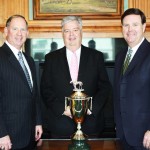 Asher appeared for the interview in the Director’s Room at Churchill Downs. This sacred ground is the site upon which the Kentucky Derby winners celebrate their win with a champagne toast following their victory.
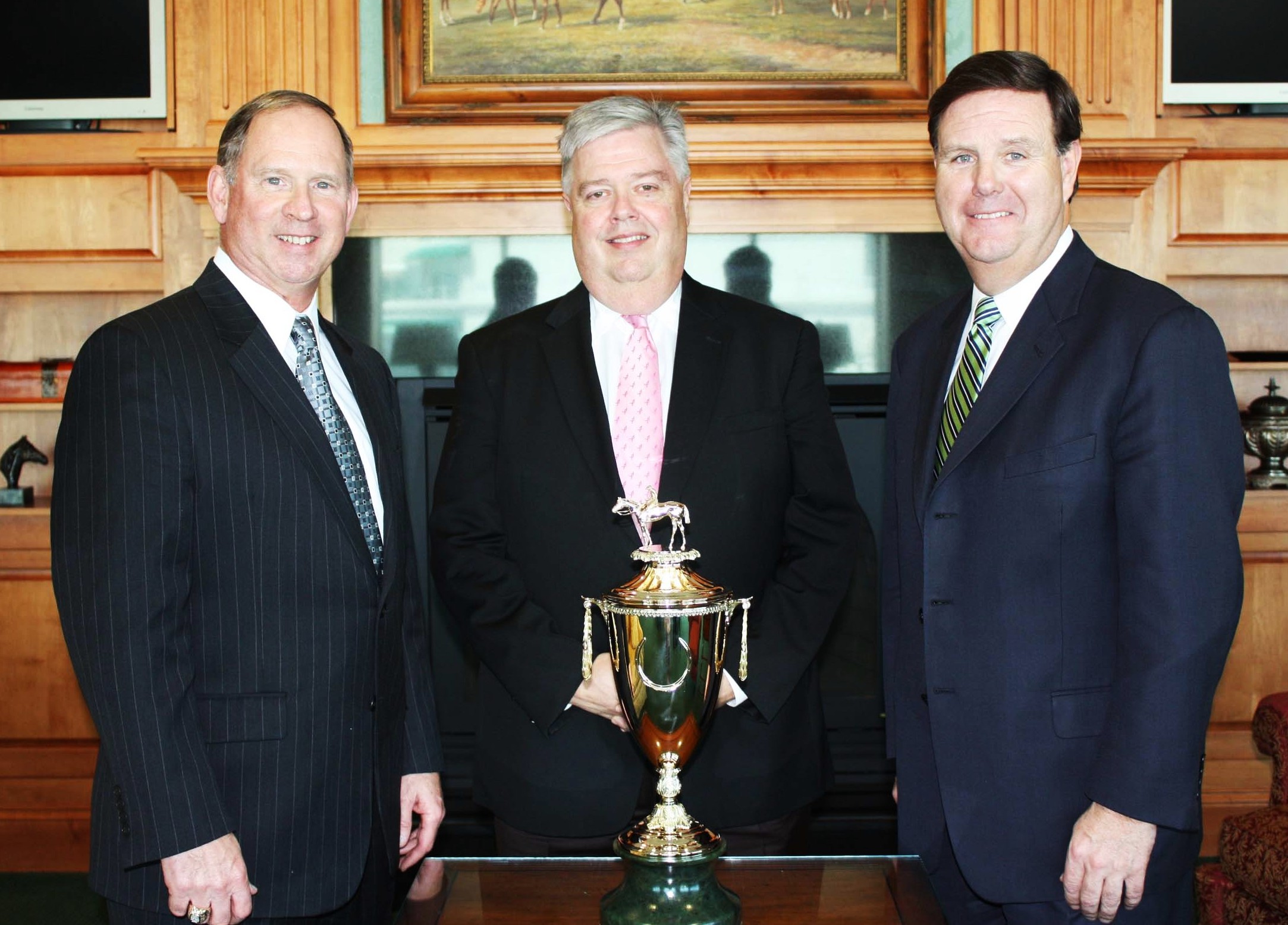
In the center of the room, the press was gathered around a small table to view one of the most largely-coveted items in horse racing - the winner’s trophies for the 2010 Kentucky Derby.
The Winner’s Trophies for the Kentucky Derby.
Carefully handling each trophy with white gloves, the CEO of New England Sterling, Marc Forbes, informed me that the first person to personally touch each trophy would be the respective winner on Kentucky Derby day.
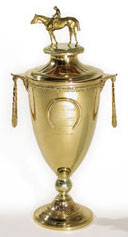
Forbes explained that the largest trophy, awarded to the owner of the winning horse, is comprised of sixty ounces of 14-karat gold and has remained largely unchanged from its’ original design, dating back to 1924. In the three major milestone races – the 75th, 100th, and 125th anniversaries the Derby, the trophy was modified to include diamonds, emeralds, and rubies.
Among the historical variations on the trophy, the major alteration came in 1999 – when the horse shoe in the center of the trophy was reversed to point upward. Forbes explained, “Racing lore has it, that [when] a horse shoe is facing downward, the luck runs out of the horse shoe. So, in 1999, the horse shoe was changed and facing upward.”
Forbes stated that fifty employees are involved in the 1,600-hour process of handcrafting the owner’s trophy- comprised of 25 different components. The company also creates three smaller sterling silver replicas of the gold trophy, which are awarded to the trainer, breeder, and jockey of the winning horse.
As I marveled at the beautiful trophies that we set before me, I envisioned the past Derby winners who have stood in this room, clutching their trophies, in a champagne toast to beating the mind-bending odds to win the Kentucky Derby.
The historical wonders of Churchill Downs would soon be illuminated through my interview with Asher. After the trophies were carefully placed back in their cases, Asher led me outside to begin the journey through the history of the Kentucky Derby at Churchill Downs.
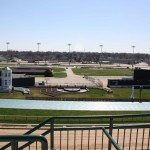 The Kentucky Derby is America’s Oldest, Continuously Held, Sporting Event.
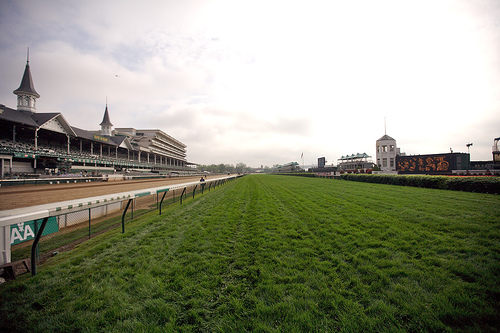
From our Eagle-eye view of the legendary Churchill Downs dirt track, Asher explained, “The track dates back to 1875, when the first Derby was held. We have run the Derby every year, without interruption, since 1875. This year, May 1st, will be 136 consecutive years.”
Asher then elaborated, “We are America’s oldest, continuously held, sports event. We have survived two world wars, The Great Depression, [and] the flood of 1937, which had us underwater.”
In a few sentences, I learned my first lesson. The Kentucky Derby is a testament to perseverance. Not only for the lucky handful who arrive in the winner’s circle – but to those who ensure that the race is run in the first place. And, as Asher would soon explain, Matt Winn embodied the spirit of perseverance.
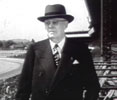 Matt Winn: The Architect of the Revival.
Although the Kentucky Derby had been running for 27 years, the track had never turned a profit at the time Matt Winn began managing Churchill Downs in 1902. When Winn arrived at Churchill Downs, he had a powerful vision for the track. Asher explained:
He really led the revitalization of the track. He had three goals… he wanted the Derby to be a major league sports event – a prominent sports event. …He wanted the race to be much more than a horse race – he wanted the fashion aspect, … the celebrity, all that. He wanted it to be just a huge celebration. Not just of the sport, not just of racing. And, also, he wanted Churchill Downs to be an important part of life in the community year-round, not just when we were racing.
Winn’s vision paid off the following year when Churchill Downs turned its’ first profit in 1903. However, Winn didn’t slow his efforts to revive the track in the wake of his initial success. In furtherance of his vision, Winn would eventually host state fairs on the grounds, locomotive collisions in the infield, bring pari-mutuel machines to the racetrack, and begin radio broadcasts of the Derby.
Asher explained that the community outreach initiatives of Churchill Downs even extended to the Catholic Church. “From the mid-1940s to the mid-1970s, there was a Roman Catholic archdiocese that held a religious celebration here every year – the feast of Corpus Christi. Thousands of people would come out. There was a procession on the track… it was a huge religious celebration.”
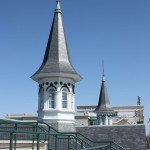 Through hosting community events, the track went beyond horse racing for many guests. In reference to “The Feast of Corpus Christi” celebration, Asher noted, “When you think of the people who came out here, the thousands that came out here, a big chunk of those people would never come to Churchill Downs for a horse race, or to bet a nickel on the nose of a horse. They came out here because Churchill Downs was special to them. Those Twin Spires were special, because of the experience they had here. That’s part of the emotional investment people have in this place.”
In the eyes of Asher, Winn’s vision has become a reality at Churchill Downs today. “Most of the times in a year, you can come up and find something going on. This year, we have Derby and Oaks, which will draw 250,000 people here.” Churchill Downs also hosts weddings, music festivals, and various other events – ranging from the previously hosting a Rolling Stones concert to the upcoming Breeder’s Cup Championship races in 2010.
The Artist’s Muse: Artwork at Churchill Downs.
In a painted collage at Churchill Downs, stands a quote by Irvin S. Cobb, Kentucky native and writer.
“Until you go to the Kentucky Derby with your own eyes, behold the Derby, you ain’t never been nowhere and you ain’t never seen nothing.”
As you walk through the halls of Churchill Downs, the work of many artists is on display in their effort to add their own definition, tribute, or voice to the Derby. Considering the collected pieces of art throughout Churchill Downs, one thing is clear – the Derby has been the muse for several artists.
During our interview, Asher showed me a piece of work by artist, Craig Colquhoun, that defies description in ordinary language. In an endeavor to follow his dream of creating something great, Colquhoun constructed a glass replica of Churchill Downs. As we studied the thousands of pieces, Asher explained:
When we were getting finished with the renovation, we got a call from an artist named ‘Craig Colquhoun.’ He says, ‘I’ve got this glass sculpture of Churchill Downs, would you be interested in looking at it?’ We said, ‘Sure.’
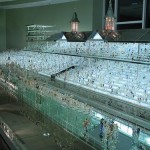 Pointing to the masterpiece standing before us, Asher remarked, “This was it. It is thirty feet long, ten feet wide, ten feet high, and 4,000 individual pieces he made – which represents every part of the Derby experience. [There are] fans in the infield, TV cameras and media, hats, the marching band, roses, ushers, and the horses.”
It was breathtaking.
While viewing the piece, Asher told the tale of the “Leading Horse,” in which the glass horse on the lead mysteriously changes position in the race. “[It’s] one of two things. Right now, it’s in the normal spot. We either have a spirit at work or an employee with a sense of humor. Every now and then, you will come up here and the horse on the lead will be about halfway up. I’ve never heard it explained or seen it explained. I just know the horse moves sometimes.”
While Colquhoun’s piece tries to capture the “spirit” of the Derby experience, there are also two murals in the clubhouse, painted by Pierre “Peb” Bellocq, that depict the winning jockeys and trainers in the Kentucky Derby.
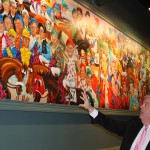 In Bellocq’s mural of the winning Jockeys, the artist has painted every jockey to ever win the Kentucky Derby. Asher explained that the mural is a timeline. The end of the mural used to depict a woman looking forward with a horse in the background that wore “figure eight” silks to symbolize infinity. Later on, the silks on the horse were modified to reflect the silks of Smarty Jones.
In recent years, Calvin Borel’s victories have led to the modification of the jockey’s mural. In 2007, Calvin Borel was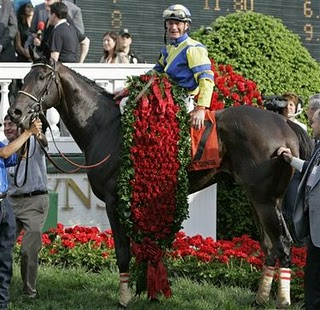 painted into the mural for his winning ride on Street Sense. After Calvin Borel won his second Derby on “Mine that Bird,” the mural was again modified to show Borel holding up two fingers – signifying his two wins in the Kentucky Derby.
After viewing numerous works of art inspired by the Kentucky Derby, it was clear that the race has the power to serve as an artistic muse. When I asked Asher about his opinion on why the Kentucky Derby has the power to inspire artists. He responded:
It’s a dream. I think it’s amazing. The whole thing about the race is a dream. Our purse is two million dollars. …It think we’d have thirty horses fighting to get into the race if we just gave them roses…
It’s the reason we get up in the business every day. If you breed a horse, own a horse, [or] you train a horse. If you’re thinking, ‘Is this horse the one?’ … I think it’s the dream aspect of it.
Building upon the concept of “the dream,” Asher shared his own story about how the Kentucky Derby led to his interest in horse racing. “[It’s] why I’m here. I watched the Derby with my family. We grew up in Kentucky, but we weren’t horse people. I was on a farm. It was my grandmother’s farm and it had nothing to do with horse racing. We were horse racing fans one day a year. We gathered around the TV and one day it just bit me. It’s amazing that I’m here, coming where I came from.”
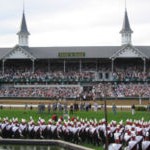 The Kentucky Derby: The Allure of the Greatest Two Minutes in Racing.
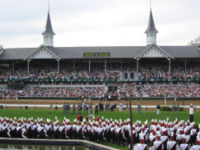
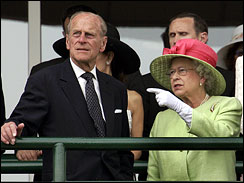
On the first Saturday in May, eyes from all across the world spin around the oval track at Churchill Downs to watch the Kentucky Derby. Guests have included royalty, presidents, and celebrities. In recent years, Queen Elizabeth attended the race.
During our interview, Asher elaborated on why the race itself has such an alluring aspect. “You get one chance. It’s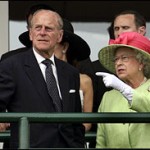 three-year-olds only. One Saturday. Two minutes in the afternoon. … In this year’s crops of three-year-olds, we have a maximum of twenty horses in the gate. And this year’s foal crop is about 37,000 – just in the United States. So, your odds are 37,000 to 1 to start. And that doesn’t include European-breds. …And even if you get here, … there are so many ways to lose a race.”
Despite the odds, the dream of ‘getting to the Kentucky Derby’ continues to captivate many individuals – whether owners, trainers, jockeys, breeders, or fans. Aside from the race, many people arrive at Churchill Downs for the pageantry and celebration surrounding the Kentucky Derby.
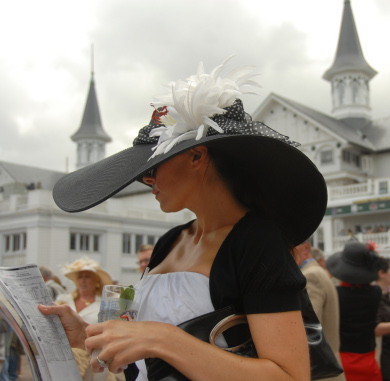
The glamour and tradition intertwined with race is nearly an event in and of itself. With women wearing wide-brimmed hats, celebrities weaving throughout the crowd, and the beloved traditions interwoven with the Kentucky Derby, individuals from all walks of life attend the race.
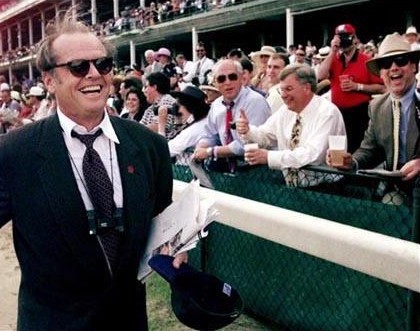
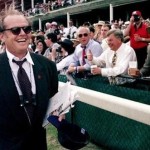 In light of the fan fare surrounding the Derby, I asked Asher which celebrity has drawn the most attention in his experience. He responded, “Jack Nicholson. He’s the biggest celebrity I’ve ever seen at the Derby. He stopped the show everywhere he went. Presidents… Queens… Nobody compared to Jack.”
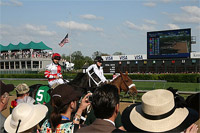
Aside from the celebration in the stands, the horses on the track rule the day. In response to my question about his most memorable moments at the Kentucky Derby, Asher explained, “My absolute favorite moment is when they walk around the first turn to be saddled before the Derby. They are all coming over and everybody is accompanying the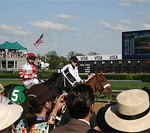 horse. The grooms are there. In a lot of cases, the owners and trainers are there.”
It is a heart-stopping moment. Fans who have labored over choosing their horses finally get to view them in the flesh. As for the connections to each horse, they are moving through the rapture of a dream.
Amidst the electric atmosphere surrounding the race, many individuals point to the moment that the crowd sings, “My Old Kentucky Home,” as an experience that defies description. As the marching band plays the music, it is hard to find a dry eye in Churchill Downs.
During our talk, I asked Asher, “What is it about ‘My Old Kentucky Home’ that makes grown men cry?” He responded, “It is everything about the Derby. It is the dream of everybody in the business. The Derby has got a romance. It just does. You look at the horses that win it, the people who had spent their whole lives in the business… Whatever it is, it touches people in a myriad of ways.”
However, for the hardened bettors, Asher gave a tip. “If you’re not a sentimentalist, it’s the best time to bet because there is nobody at the windows. They’re all outside crying. …Every window is wide-open.”
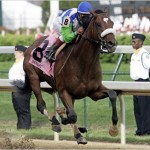 Barbaro: His Memorial at Churchill Downs.
The story of Barbaro struck a chord with many individuals throughout the world. After his death, the decision was made to commission a statue of Barbaro and make Churchill Downs his final resting place.
The inscription under the statue quotes Olympic Gold Medal winner Eric Liddell: “I believe God made me for a purpose, but he also made me fast. And when I run, I feel his pleasure.”
Asher noted that the statue was constructed with a purpose. “The Jacksons wanted all four feet off the ground. That’s the perfect photo of a 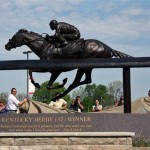 thoroughbred. They are in flight.”
During our interview, I asked Asher about the decision to lay Barbaro to rest at Churchill Downs. He explained, “The Jacksons made the decision [on] where they wanted him to be. They looked at a farm up in Pennsylvania, they looked at Maryland, and they looked at our place. They ultimately decided that this was the greatest moment of his career and they wanted him to be here. We obviously welcomed him.”
In response to my follow-up question regarding his continued fans, Asher explained, “The letters that came following Barbaro were countless. They came from everywhere. We still get them now.”
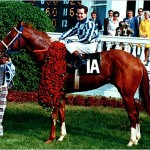 Secretariat: The Kentucky Derby Track Record.
Throughout Churchill Downs, several photos of Secretariat line the walls throughout the track.
In 1973, Secretariat not only won the Triple Crown, but broke the official track record at the Kentucky Derby and the Belmont.
Regarding the Preakness, the official track clock was broken when he won and the time did not reflect a new track record. However, the Daily Racing Form publicly disagreed with the official time at Pimlico. According to their watch, Secretariat broke the official track record in the Preakness.
If the Daily Racing Form time was correct, Secretariat is the record holder in all three Triple Crown races.
During our interview, I asked Asher about his personal opinion as to whether Secretariat holds the record for all Triple Crown races. He responded, “Yes. For me, it’s no question.”
Asher elaborated, “The official time, I think everybody agrees, was wrong. Everybody who had a hand-held watch got it faster.”
In an interesting follow-up, Asher noted that the Preakness was his favorite performance during Secretariat’s Triple Crown bid.
My favorite race of Secretariat’s Triple Crown is probably the least known. He did something I’ve never seen a horse do in that race. He was dead last going into the first turn and then took off. It looked like jets were firing.
He goes into the first turn dead last [and] he came out of the first turn in front. So, he just passed everyone on the first turn – not the second turn. You just don’t see that happen.
As for Secretariat, Asher is not alone in his reverence for this champion. With the many articles and books written about this Secretariat, it is hard to find any new words to encapsulate his talent. In Asher’s description:
Secretariat is the most amazing thoroughbred ever created as far as I’m concerned. He’s the perfect physical specimen. I don’t know who to compare him to. He’s like Schwarzenegger in his prime. In terms of physical, it’s just a perfect build. He had a heart… bigger than anybody else. That’s the big guy. That’s the one that defines our sport.
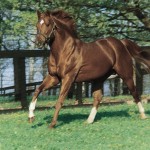 Asher then recapped his visit to meet Secretariat while he stood at Claiborne Farms. When he arrived at the farm, Secretariat was in his hillside paddock. Asher stated:
I was walking through with one of the farm hands. We had heard all these things throughout the years about what a ham he was and how he posed for pictures.
He was at the top of the hill. The groom I was with didn’t speak loudly. He just said, ‘Hey, Red.’
Boom! Here he comes. Flying down the hill. Absolutely flying down the hill. [He] gets to the fence at the end of the paddock where we were standing. He gets there. Stops. And poses.
In his final comments about Secretariat, Asher highlighted that the champion still gets roses and flowers at Claiborne Farm on the anniversary of his birth and death.
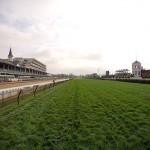 The Last Word: Asher on the Art of Handicapping
Among his many talents, Asher is widely-known for his handicapping picks relating to the Kentucky Derby. He explained that he changes his choices every Sunday during the prep race season for the Derby.
Handicapping a horse race is no easy feat.
In response to my question as to whether he ever wishes that he could change his picks on Derby day, Asher responded with a recap of the upset delivered by Mine that Bird in the 2009 Kentucky Derby:
Yes. I wanted to change it last year. … I was sitting there watching the race with my daughter on Derby day. I’m looking up. …I said, ‘Aww, Eight is the winner.’ And, I go, ‘Who is Eight?’ And I looked at my program and realized it’s Mine that Bird with Calvin at 50 to 1. And for the next quarter mile, I couldn’t believe it. As soon as he crossed the finish line, I looked at my daughter and said, ‘You know, I’m not sure, but I think I picked him dead last.’ When I looked, sure enough. Dead last.
However, Asher has a good sense of humor. He appears perfectly at ease with being proven wrong in a race. “It’s very complex. It’s one of those businesses where, if you don’t learn something every day, you’re not paying attention.”
March 17th, 2010 §
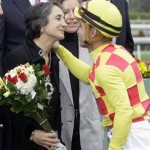
Roughly three decades ago, Alexis Barba walked onto the track at Golden Gate Fields. Having spent a lifetime around saddle and show horses, she experienced a defining moment. “I knew immediately that I could never lose interest in a racehorse.”
In the years that followed, Barba walked, galloped, and groomed thoroughbred racehorses. She worked as an assistant to the late trainer, Eddie Gregson, who won the 1982 Kentucky Derby with the horse, Gato Del Sol. When Gregson died in 2000, Barba began training on her own.
Barba currently has a six-horse barn at Hollywood Park. However, this is no small operation. Of the six horses in the barn, two of the horses are currently on the trail to the Kentucky Derby.
Make Music for Me was the first horse to qualify in Barba’s barn for the Derby. In his two-year-old career, Make Music for Me placed in three of four graded stakes races – ranking him twelfth in earnings at $215,000.
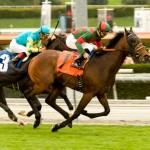 Despite the excitement of having Making Music for Me on the Derby trail, Barba remained dedicated to her remaining horses. Alphie’s Bet, the stablemate of Make Music for Me, was entering his three-year old season. At the time he made his 2010 debut, Alphie’s Bet had one second-place finish as a two-year-old to the highly-regarded Derby hopeful, Caracortado.
After Alphie’s Bet finished second in December, Rider Alex Solis reportedly told Barba, “I think he can run all day… He’s big, strong, and he’ll run any distance.”
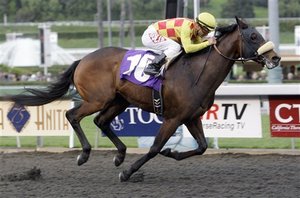
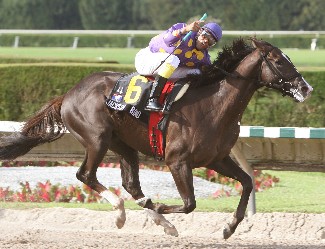
In his 2010 debut as a three-year-old, Alphie’s Bet demonstrated his capacity to win. On January 15, he broke his maiden at Santa Anita in an electrifying performance. After running last throughout the majority of the race, he went wide on the final turn and rallied in the stretch to capture breathtaking victory.
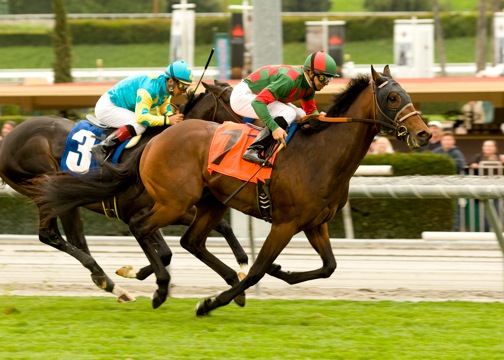
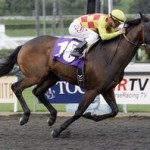 On March 6, Barba raced both horses at Santa Anita. In the sixth race, Make Music for Me clinched his first career victory in the Pasadena Stakes. Roughly forty minutes later, Alphie’s Bet won the Sham Stakes in a 2-1/4 length victory.
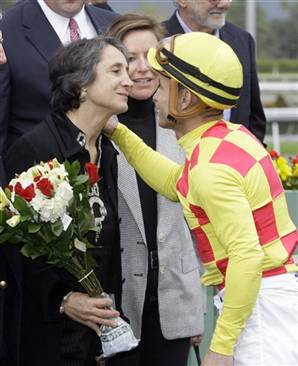
By winning the Sham Stakes, Alphie’s Bet had just captured enough graded earnings to qualify for the Kentucky Derby. As she held a bouquet of red-and-white flowers in the winner’s circle, Barba remarked, “Isn’t it amazing?”
It certainly is.
Recently, Barba graciously agreed to provide an interview about her experiences as a trainer and her Kentucky Derby prospects. I remain grateful for her kindness in taking the time to answer my questions.
JW: What initially attracted you to the sport of horse racing?
AB: I acquired a Thoroughbred Stallion that I was going to make into a show horse. I was so curious about his pedigree, I began exploring Thoroughbred lines.
As fate will have it, I acquired a Thoroughbred yearling filly shortly after that. I wanted to try to race her, but I didn’t have the means, so I thought I could work at the track. I went to Golden Gate Fields in Albany, CA, which was close to my childhood home, in the Oakland Hills.
Being anxious and curious, I now had a stallion and a filly. So guess what I did? Yes, I bred them.
The product of that mating was a filly named Lepta (Greek for Money). Since her mom didn’t make it to the track, I was going to be sure the daughter did. To make a long story short, Lepta won her first start at Caliente Race Track in Mexico. Her mother, French Dish, I believe went on to have 16 or 17 foals, three of which were winners at Santa Anita and one a stakes horse named Ondarty.
JW: How did you learn how to train racehorses?
AB: As you can see by my breeding program, I had a lot of practice with my own horses. I also had a lot of help along the way with some of the trainers, such as Tommy Doyle and Eddie Gregson, as well as anyone else who would give me information.
JW: What are some valuable lessons that you have learned about training racehorses during your career?
AB: Be patient, it all goes at a snail’s pace.
JW: What does your average weekly schedule look like as a trainer?
AB: Mostly just going to the track every morning. Then, to keep some kind of normalcy, I try to meet with friends at least once a week to gossip and tell horse stories.
JW: Has it been a dream of yours to race a horse in the Kentucky Derby?
AB: I wouldn’t say a dream, because most of the time you are just trying to get a productive horse. Of course, everyone wants stake horses, so when you are buying, you are always looking for good quality that meets that criteria.
JW: In the history of the Kentucky Derby, a female trainer has never won the race. How do you feel about your potential to make history?
AB: I’m not thinking about that. Let’s just run in the race first.
JW: What do you think are the strengths and unique qualities of Make Music for Me?
AB: He is a smallish horse with a huge stride and good appetite.
JW: What is the next race for Make Music for Me?
AB: The Toyota Blue Grass Stakes.
JW: Was it a surprise to you when Alphie’s Bet qualified for the Kentucky Derby after winning the Sham Stakes?
AB: No. I always told the owners that we had a really nice horse on our hands.
JW: What do you think are the strengths and unique qualities of Alphie’s Bet?
AB: He has a great turn of foot. To look at him, you wouldn’t think that he would have that.
JW: What is the next race for Alphie’s Bet?
AB: The Santa Anita Derby.
JW: Rider Alex Solis has been quoted as saying in the press that Alphie’s Bet reminds him of Candi’s Gold, the grandfather of Alphie’s Bet. Having worked with Candi’s Gold under your former boss, Eddie Gregson, do you see any similarities between the two horses?
AB: Yes. He looks like him and he has some of the same ‘Lookey-Loo’ quirks.
JW: What do you love about the sport of horse racing?
AB: Everything. Lots of characters around the track - Human and Equine. But at times it can be grueling. Actually, a lot of the time. You would have to live it to understand it.
When they are in the gate, anything can happen!
To comment on this article, click here. The Saturday Post also has a new Facebook page for comments. You can subscribe to the page by clicking here.
February 20th, 2010 §
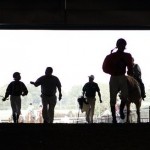
With schedule of five graded Derby prep races, numerous hopefuls face a test of talent today to compete for a spot in the starting gate on the first Saturday of May. Many of the horses have difficult questions to answer relating to their ability to handle a higher grade, a change in distance, and tougher adversaries in the field.
In this moment of ambiguity, one thing is certain. The landscape of the Derby trail will be altered by tonight. As we approach the starting gates, the answers lie within the cards of five races.
Fasig-Tipton Fountain of Youth Stakes (Grade II). The $250,000 Fountain of Youth Stakes has drawn a field of ten contenders – including the early favorites Jackson Bend and Buddy’s Saint. With the top three finishers earning an automatic nomination for a highly-coveted spot in the Florida Derby, a major breeding ground for Kentucky Derby winners, this race card tops the Saturday line-up.
Among the contenders, Jackson Bend and Buddy’s Saint are likely to finish at the top of the stretch. In seven starts, Jackson Bend has proven himself a legitimate Derby hopeful by capturing five victories and harboring earnings of $477,820. Although Jackson Bend was beaten by Winslow Homer in the Holy Bull Stakes, he delivered an honorable second place finish – beaten only by three-quarters of a length and closing a strong second by running 3 1/4 lengths in front of the rest of the field.
However, Buddy’s Saint also stands as a top-notch contender and has demonstrated the force to strike a win in his three-year-old debut. Of his three starts in 2009, Buddy’s Saint captured two wins in Grade 2 races. In his most recent race, the $200,000 Remsen Stakes, he tracked the leader throughout the race to clinch a 4 ¾-length victory in the final stretch. Prior to the Remsen, Buddy’s Saint dominated the $150,000 Grade 2 Nashua Stakes, winning by twelve lengths at the wire.
Eskendereya, with morning line odds of 5-1, remains a noteworthy rival for Jackson Bend and Buddy’s Saint. This hopeful, trained by Todd Pletcher, has delivered two wins in four career starts. Although Eskendereya closed his 2009 season with a disappointing ninth place finish in the Breeder’s Cup Juvenile (Gr. I), he recently clinched a first-place finish in an ungraded race this past January amidst a relatively large field. The Fountain of Youth is the first Grade 2 career start for Eskendereya. With a Grade 3 win in his 2009 season, it remains to be determined whether he can handle Grade 2 contenders after coming up short at the Grade 1 level in his two-year-old season.
The remaining seven horses in the field are Aikenite, Pulsion, Pleasant Prince, Prince Will I Am, Positive Split, Lost Aptitude, and Ice Box. Although many favor Aikenite, with morning line odds of 6-1, his sole first-place finish was his maiden race and he has consecutively dropped in order of finish in his subsequent races. Ice Box and Lost Aptitude seem to be better long shot picks.
Risen Star Stakes. (Grade II) The contenders in the $300,000 Risen Star Stakes vary dramatically in depth and proven ability in their journey toward the Derby. Although the overall field appears somewhat green in experience, four horses stand out among the twelve hopefuls.
The morning line favorite, Ron the Greek, has won three of his last four starts. Possibly, his most impressive win came in the Lecomte Stakes in January, where he passed nine other horses in the last five furlongs to capture a win.
Drosselmeyer, the second-favorite in odds, has demonstrated tremendous potential in recent months. Having won his last two races on dirt by several furlongs, it will be difficult for the rest of the field to catch him if he makes a similar romp in the stretch.
In November, Drosselmeyer broke his maiden at Churchill Downs by driving clear in the final furlongs and securing a flashy win that clearly bested his contenders. After his maiden victory, he returned to Gulfstream in January and drove down the stretch in a nine-furlong win during an entry-level allowance race.
Stay Put and Discreetly Mine are both impressive horses at this early stage in their career. Stay Put, has won his last two races, rallying from the back of the pack to secure a win in his three-year-old debut. Discreetly Mine has demonstrated his ability to handle a field of difficult contenders – having already placed in a Grade 1 race. It will be interesting to see how the talent of these two horses plays out in this race since this is a largely untested field.
Hutcheson Stakes. (Grade II) The final Grade 2 Derby prep today is the $150,000 Hutcheson Stakes at Gulfstream Park. Of the eight-horse card, Wildcat Frankie, D’Funnybone, and A Little Warm are the morning line favorites in the field.
Wildcat Frankie, with odds of 4-1, has won two of his last three races. He finished second to fellow contender, A Little Warm, in the Spectacular Bid Stakes during his three-year-old debut last month. A Little Warm, with odds of 3-1, took five races to break his maiden, but has won his last two races – namely, his maiden win and The Spectacular Bid Stakes.
D’Funnybone is the 2-1 odds-favorite in the Hutcheson – winning three of his last five starts. He is possibly the most tested horse in the field. He has already faced a Grade 1 start in his two-year-old career, The Breeder’s Cup Juvenile – in which he finished thirteenth in the race. The drop to a Grade 2 race may work to his advantage.
Southwest Stakes. (Grade III) The Grade 3 Southwest Stakes is the first graded prep on Oaklawn’s road to the $1 million Arkansas Derby (Gr. I). After being postponed due to track conditions at Oaklawn Park last Monday, the Grade 3 Southwest Stakes will be run today. Of the ten-horse card, three horses stand out among the contenders.
The 7-2 odds-favorite, Conveyance, has remained undefeated in his three starts and is emerging as a well-respected Derby hopeful. Conveyance recently made his three-year-old debut in the Grade 3 San Rafael Stakes– clinching a 1 3/4-length victory over his rivals.
The second-favorite in odds, Dryfly, has an impressive early record of three wins in four races. Arguably, his most notable race was his recent win in the Smarty Jones Stakes during his three-year-old debut. Among a large field of contenders, Dryfly, ridden by Calvin Borel, managed to clinch a 2 1/4-length victory in a stylish performance.
Finally, Dublin, with odds of 5-1, has more to prove against his two main rivals in the Southwest Stakes. At present, his crowning achievement was a Grade 1 win in September of 2009. Since that victory, Dublin has not placed in his past two races. Dublin recently underwent minor throat surgery. In today’s return to the track, he is making his first start at two turns.
El Camino Real Derby. (Grade III) The Grade 3, $150,000 El Camino Real Derby, Northern California’s main stepping-stone into the Kentucky Derby, is shaping up to be a match race between Ranger Heartley and Connemara.
Ranger Heartley, with odds of 5-2, has won four of his last six races. In his most recent win, Ranger Heartley beat rival, Connemara, in the California Derby on January 16, 2010. However, Connemara finished a close second to Ranger Heartley in that race – losing by three-quarter-length margin. This past November, Connemara won an allowance race at Santa Anita, with Ranger Heartley placing third in that outing. With the early talent demonstrated by both horses, the El Camino Real Derby may go down to the wire in a match race between these two contenders.
February 14th, 2010 §
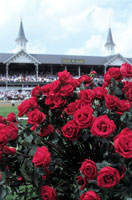 Since the first run of the Kentucky Derby in 1875, the race has evolved throughout the years into one of the grandest society events – steeped with many unique traditions and customs. The Derby is the showcase for lavishly feminine hats, sugar-soaked Mint Juleps, countless displays of red roses, decadent local cuisine, and extravagant parties on the Eve of the Derby. This resource provides a basic overview of the popular traditions and cultural novelties that surround what is termed, “The Greatest Two Minutes in Sports.”
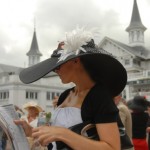 Femininity is in Fashion: Derby Hats and Elegant Dresses. From its’ inception, the Derby was envisioned to be a luxurious event in American Thoroughbred Racing. Beginning in the late nineteenth and early twentieth century, affluent women arrived at the race wearing fashionable hats, gloves, and stylish dresses. Throughout the years, the tradition of Derby hats and feminine couture has endured, and perhaps, grown more colorful and expensive with each new season. Today, women wear many styles of glamorous hats, along with a wide variety of dresses and suits. The feminine pageantry surrounding the race has become nearly as iconic as the horses on the field.
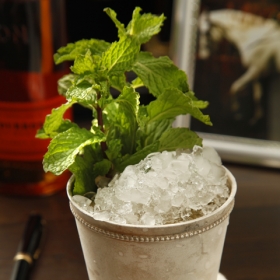
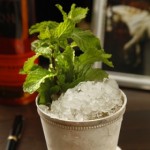 One Sweet Day: The Mint Julep. The Bourbon-charged “Mint Julep” is the official drink of the Kentucky Derby and is composed of sugar syrup, fresh mint, crushed ice, and Kentucky bourbon. On race day, vendors weave through the crowds with fresh “Mint Juleps,” served in the commemorative annual Kentucky Derby glass. The famed “Woodford Reserve $1,000 Mint Julep” is also available through auction prior to Derby day, with the proceeds benefitting charity.
Although the mixing ingredients have varied in the past few years, the lavish drink remains served in a 24-karat Gold Cup and is made with Woodford Reserve Kentucky Bourbon. In 2006, the “Woodford Reserve $1,000 Mint Julep” benefitted retired horses and jockeys through donating the proceeds to the Thoroughbred Charities of America, That year, the Mint was imported from Morocco, the ice was obtained from the Arctic Circle, and the sugar was acquired from the South Pacific. Upon announcement, our blog will feature the 2010 ingredients and auction link for the “Woodford Reserve $1,000 Mint Julep.”
The Traditional Song: “My Old Kentucky Home.” As the Derby contenders are paraded before the crowd prior to the race, “My Old Kentucky Home” is played by the University of Louisville Marching Band. There are no words to describe this mesmerizing moment. For new Derby attendees, the words to the song are inscribed in the racing program. Many Kentuckians know the tune by heart and it is considered a moment of pride when the song is being sung throughout the crowd.
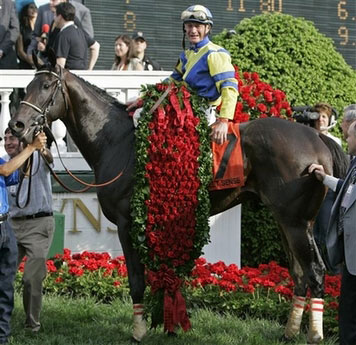
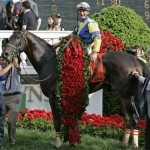 The Emperor’s New Clothes: A Garland of Roses. The Garland of Roses that cloak the winning Derby horse hold an interesting history. Roses first appeared on the radar when they were presented to all the ladies attending a glamorous Louisville Derby party, held by a New York socialite and attended by the President of Churchill Downs, Colonel Lewis Clark. The roses were such a phenomenon that Clark adopted the rose as the race’s official flower. The rose garland first appeared at the Derby in the 1896 when the winner received a floral arrangement of pink and white roses. In 1904, the red rose was chosen as the official flower of the Kentucky Derby.
Each year, a garland of more than 400 red roses is sewn into a green satin backing with the seal of the Commonwealth on one side and the twin spires and number of the running on the other end of the garland. Each garland is also adorned with a “Crown” of roses, ribbon and green fern. The “Crown,” is a single rose pointing upward in the center of the garland, to symbolize the struggle and heart necessary to reach the winners’ circle.
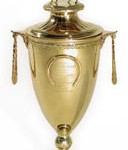 The Gold Standard: The Kentucky Derby Trophy. The Kentucky Derby Gold Cup is awarded each year to the winning horse’s owner. The trophy is made from a combination of 20 and 14-karat gold and weighs more than 100 ounces. A sterling version of the trophy is awarded to the winning trainer, jockey, and breeder. The Gold Cup trophy takes over three months to produce and is one of the few solid gold trophies awarded in any American sporting event.
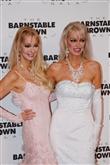
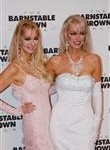 The Society Pages: The Derby Eve Galas. All throughout the nation, Derby parties are hosted on an annual basis. However, in Louisville, there are a few lavish society parties that honor the Eve of the Derby with unparalleled pageantry and style. The most sought-after tickets in Louisville on Derby Eve are to the Barnstable Brown Gala and the Mint Jubilee.
The Barnstable Brown Sisters (the former “Doublemint Twins”) have been hosting the most exclusive party for two decades in celebration of the Derby on the night before the race. Celebrities and guests are given access by invitation only to the event comprised of 1,200 attendees.
Founded in 1996, The Mint Jubilee Gala is another Derby Eve party that carries prestige among partygoers. Tickets to this 1,000 person event cost approximately $500.00 per individual in 2009. The event is attended by political figures, celebrities, and ticketed guests.
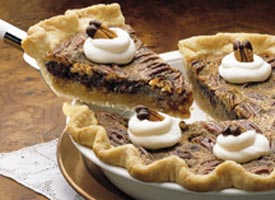
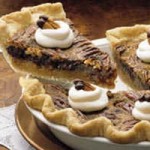 Derby Pie: Decades of Decadence. On Derby Day, Churchill Downs will sell more than 25,000 slices of Derby Pie to track attendees. At off-track parties, many Derby events order the pie from Louisville and have it shipped to their home for dessert. The Derby Pie, a trademarked name, is made by Kern’s Kitchen with custard, chocolate chips, and walnuts – all baked into a 9-inch crust. The recipe is highly coveted – only three people know the actual recipe. All employees of Kern’s Kitchen are required to sign an agreement not to divulge any of the Derby Pie secrets. The Derby Pie can be ordered by visiting the company website at http://www.derbypie.com.
February 14th, 2010 §
Although the final Kentucky Derby starters won’t enter the gates at Churchill Downs for over two months, several horses have begun to emerge in the prep races as early hopefuls for the first Saturday in May.
I’ll admit it. It is premature to cement any horse in Derby contention as anything other than a hopeful at this stage. The field for the Derby will transform itself many times in the upcoming months with unexpected turns and challenges as it does every season. However, at this early stage, here is a rundown of the major prospects.
Lookin at Lucky
Lookin at Lucky. It would be impossible to start any discussion of Derby hopefuls without mentioning the generally-regarded favorite, Lookin at Lucky. Hall of Fame Trainer Bob Baffert has maintained the quiet supremacy afforded to this horse without even having run Lookin at Lucky in one start this season. Further, he has stated that Lookin at Lucky will only run in two prep races in hopes of clinching a slot in the gate at the Kentucky Derby.
So, what is so spectacular about the mysterious Looking at Lucky? In his six starts, four of which were Grade 1 races, Lookin at Lucky has only succumbed to a single defeat – The Breeder’s Cup Juvenile.
During the Breeder’s Cup Juvenile, Lookin at Lucky lost by a head after struggling with a bad trip throughout the race. At the start of the race, Lookin at Lucky was wide early, got stuck in midpack while facing a slow pace, rallied wide, and was ultimately outfinished from the inside by Vale of York. When interviewed after the Juvenile, Baffert stood firm. “We know we have a legit horse, we just didn’t get paid.”
Since the Juvenile defeat, he captured a win in the Breeder’s Cup Cash Call Futurity in December of 2009. Under jockey Garrett Gomez, Lookin at Lucky won by three-quarters of a length, after making several different moves throughout the race, to kick clear at the wire to secure a win. “Hell of a day, huh?” Baffert remarked in a post-race interview. “He’s getting better and better.”
Select videos of Lookin at Lucky’s past performances are available here for the Cash Call Futurity (1st), Breeder’s Cup Juvenile (2nd) , Norfolk Stakes (1st), and Del Mar Futurity (1st).
Buddy’s Saint. Buddy’s Saint is another strong candidate at this early stage in Derby prep races. Of his three starts in 2009, Buddy’s Saint captured two wins in Grade 2 races. In his most recent race, the $200,000 Remsen Stakes, Buddy’s Saint tracked the leader throughout the race to clinch a 4 ¾-length victory in the final stretch.
Prior to the Remsen, Buddy’s Saint dominated the $150,000 Grade 2 Nashua Stakes, winning by twelve lengths at the wire. He is expected to run in the Fountain of Youth Stakes on February 20, 2010 – competing against two other major hopefuls - Jackson Bend and Eskendereya.
Super Saver. It would be impossible to ignore this horse with the powerhouse team that catapulted Super Saver into his flashy first-place finish at the Grade 2 Kentucky Jockey Club Stakes. Super Saver, owned by WinStar Farm and trained by Todd Pletcher, made an amazing romp toward a victory under rider Calvin Borel in the Jockey Club Stakes. In the upcoming prep races, it will be interesting to see if this horse has the ability to give a repeat performance and capture a Grade 1 win.
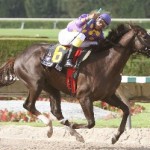
Jackson Bend
Jackson Bend. In seven starts, Jackson Bend has proven himself a legitimate Derby hopeful by capturing five victories and harboring earnings of $477,820. He was beaten by Winslow Homer in the Holy Bull Stakes, but still delivered an honorable second place finish. Prior to the Holy Bull, he was unbeaten in five consecutive starts and remains a strong hopeful – especially considering the depth of his experience in comparison to his other rivals at this stage. He is expected to race in the Fountain of Youth Stakes on February 20, 2010 in his next endeavor to remain on the Derby trail.
Rule. Rule has emerged as a serious contender among Derby hopefuls – having closed out his two-year-old campaign with three consecutive victories and, more recently, capturing a win in the Grade 3 $225,000 Sam. F. Davis Stakes.
In the Sam F. Davis Stakes, Rule drove toward the finish and won by three-lengths over a field of well-respected rivals. It remains to be seen if he can match his Sam F. Davis performance in a Grade 1 race. After the Sam F. Davis, trainer Todd Pletcher did not point toward the next prep race for Rule – but mentioned the Florida Derby, Blue Grass, or Wood Memorial among the options being considered.
Dryfly. With a record of three wins in four races, Dryfly is gaining respect as a Derby hopeful after his impressive win at the Smarty Jones Stakes in his three-year-old debut. Among a large field of contenders, Dryfly, ridden by Calvin Borel, managed to clinch a 2 1/4-length victory in a stylish performance. As with many other early hopefuls, it remains to be seen how he will handle a Grade 1 race. However, judging by his current record, he remains a strong early contender.
Eskendereya. This hopeful, trained by Todd Pletcher, has delivered two wins in four career starts. Although Eskendereya closed his 2009 season with a disappointing ninth place finish in the Breeder’s Cup Juvenile, this hopeful has re-emerged as an interesting contender in the 2010 season.
This past January, Eskendereya clinched a first-place finish during an ungraded race in a relatively large field. After the win, Pletcher showed confidence in his horse, stating that “The Fountain of Youth is a possibility, although I don’t know if he needs to wait that long to come back… The one thing I am sure of is that getting a mile and one-eighth will be no problem.” It remains to be determined whether this horse is capable of matching Pletcher’s confidence with ability to conquer a Grade 1 race.
Noble's Promise
Noble’s Promise. Noble’s Promise has established himself as a legitimate Derby hopeful through showing the capacity to deliver a respectable performance in repeated Grade 1 races. Of his six starts, Noble’s Promise has clinched three wins – including a victory in the Grade 1 Dixiana Breeder’s Futurity. With the demonstrated capacity to consistently win or place while taking on serious rivals in the Juvenile Breeder’s Cup (third) and the Cash Call Futurity (second), Noble’s Promise is one of the few hopefuls who has proven his capacity to manage the difficulty of a Grade 1 race
Conveyance. In his three starts, this Bob Baffert-trained horse has remained undefeated and is emerging as a respectable Derby hopeful. Conveyance recently made his three-year-old debut in the Grade 3 San Rafael Stakes – clinching a 1 3/4-length victory over his rivals. Conveyance is expected to race again in the Southwest Stakes on February 15.
January 21st, 2010 §
 On Saturday, a field of nine Derby hopefuls will square off in the one-mile Holy Bull Stakes (gr. III) at Gulfstream Park in Southern Florida. With varying degrees of experience throughout the lineup, the likely favorite in the race will be Jackson Bend, a Florida-bred horse trained by Nick Zito.
Jackson Bend has won his last five consecutive stakes races and is the top money-earner in the field, with winnings totaling $477,820. In his last race, he clinched a 2 ¾ length win over his current rival, Thank U Philippe, at the In Reality Stakes in October 2009. Jackson Bend has been working steadily at Palm Meadows, with his most recent five-furlong workout on January 16th timing above a perfect 12-clip at :59.30. The only question is whether the depth of his prior competition will equal the field set before him in the Holy Bull Stakes this Saturday.
Among his main rivals in the Holy Bull, are Aikenite, a Florida-bred horse trained by Todd Pletcher, and Homeboykris, the winner of the Champagne Stakes (gr. I) on October 10, 2009. Aikenite, a multiple graded-stakes-placed horse, has not raced in nearly three months after his fifth-place finish in the Breeder’s Cup Juvenile in November 2009. However, Aikenite remains a significant rival, building his record on Grade One races in his two-year-old season.
Homeboykris, a Maryland-bred racehorse, won two of his four starts in 2009. His most impressive race was undoubtedly the Champagne Stakes (gr. I), where he captured a win and beat Super Saver, who finished fourth in the race. Homeboykris is trained by Juan Rodriguez with Edgar Prado as his current jockey. In his most recent workout, he ran six-furlongs in 1:14:69.
The other horses in the race include Winslow Homer, Piscitelli, Litigation Risk, Thank U Philippe, William’s Kitten and Wild Lime. Piscitelli and William’s Kitten make interesting picks for a long shot. Both horses raced in the Breeder’s Cup Juvenile (Gr. I), with Piscitelli finishing fourth – one length from the winner – and William’s Kitten finishing eighth. The drop in grade may improve their chances at placing in this race. The least talked-about horse, Wild Lime, has demonstrated some early potential – winning two of his three lifetime races.
Wild Lime made an impressive debut at Delaware Park in July of 2009, winning his maiden by 3 ½ lengths. More recent, he earned a top speed rating in an Allowance race at Meadowlands in December of 2009. It remains to be answered whether he can stand out among a stronger grade of contenders in the Holy Bull Stakes.
Here are my bets for the Holy Bull:
$2 Win – Jackson Bend
$2 Exacta Box – Jackson Bend and Aikenite
$1 Trifecta Box – Jackson Bend, Aikenite, and Homeboykris
$1 Superfecta Box – Jackson Bend, Aikenite, Homeboykris, and Wild Lime.
January 16th, 2010 §
With the Kentucky Derby nearly four months away, the major trainers are beginning to take stock of the talent in their stables and nominate their hopefuls for the upcoming prep races leading up to the Kentucky Derby. As with any year, there will inevitably be many twists and turns of fate before the ultimate winner hits the wire at Churchill Downs on the first Saturday in May.
My early favorite this year is “Lookin at Lucky,” a horse trained by the legendary Bob Baffert. In his six starts, four of which were Grade 1 races, Lookin at Lucky has only succumbed to a single defeat – The Breeder’s Cup Juvenile.
During the Breeder’s Cup Juvenile, Lookin at Lucky lost by a head after struggling with a bad trip throughout the race. At the start of the race, Lookin at Lucky was wide early, got stuck in midpack while facing a slow pace, rallied wide, and was ultimately outfinished from the inside by Vale of York. When interviewed after the Juvenile, Baffert stood firm. “We know we have a legit horse, we just didn’t get paid.”
Since the Juvenile defeat, he captured a win in the Breeder’s Cup Cash Call Futurity in December of 2009. Under jockey Garrett Gomez, Lookin at Lucky won by three-quarters of a length, after making several different moves throughout the race, to kick clear at the wire to secure a win. “Hell of a day, huh?” Baffert remarked in a post-race interview. “He’s getting better and better.”
After the Futurity, Baffert said that Lookin at Lucky would get an extended break. He anticipates that the horse will run two prep races before the Kentucky Derby. The targeted races have not been announced, but with the early promise demonstrated by this colt, the betting public should be looking at a “Lucky.”
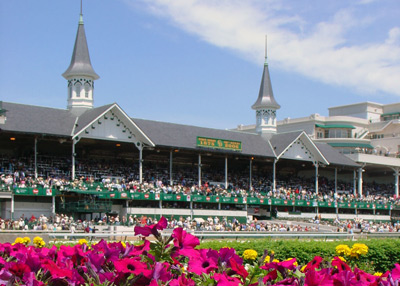
 Asher appeared for the interview in the Director’s Room at Churchill Downs. This sacred ground is the site upon which the Kentucky Derby winners celebrate their win with a champagne toast following their victory.
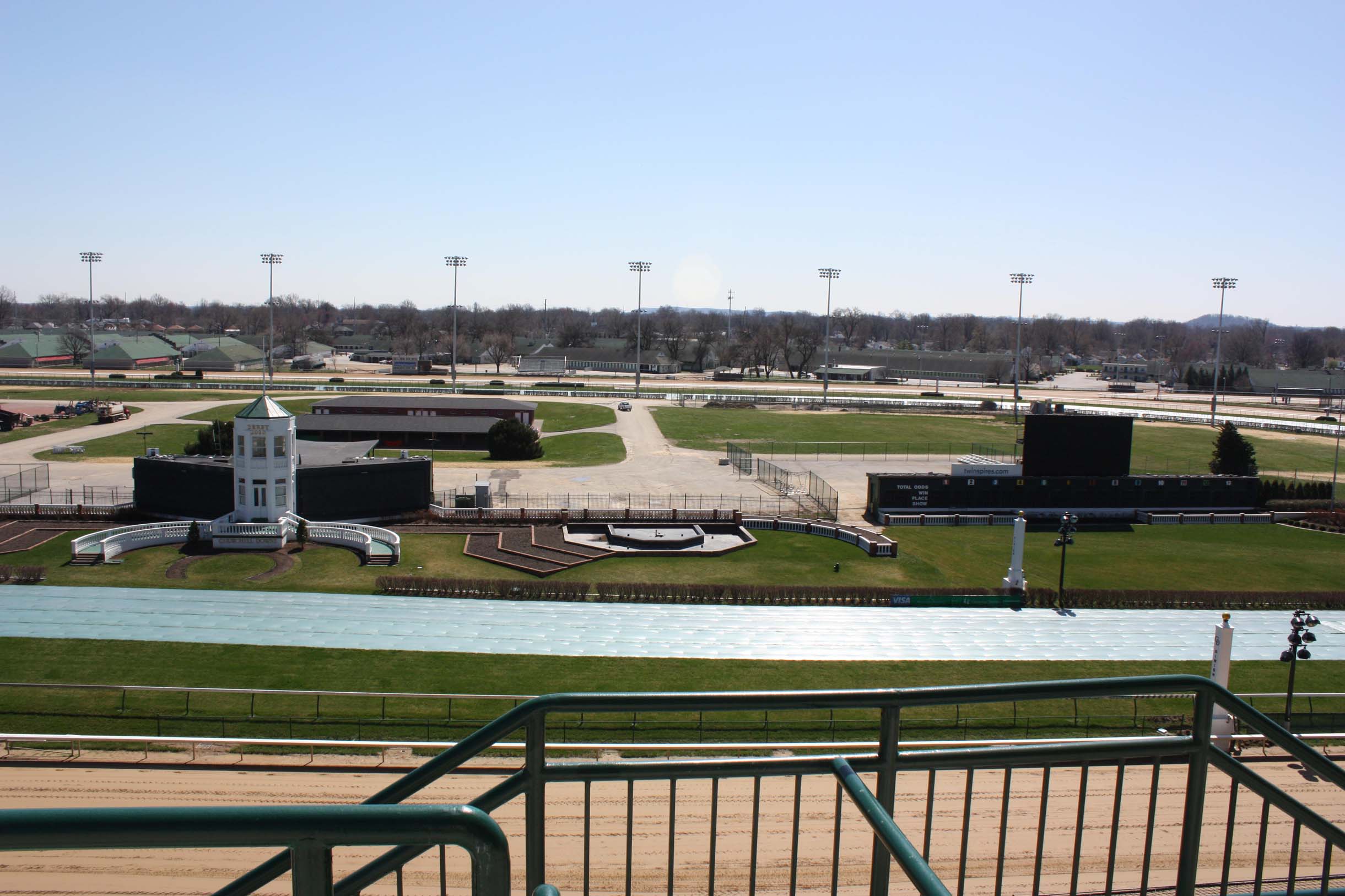 The Kentucky Derby is America’s Oldest, Continuously Held, Sporting Event.
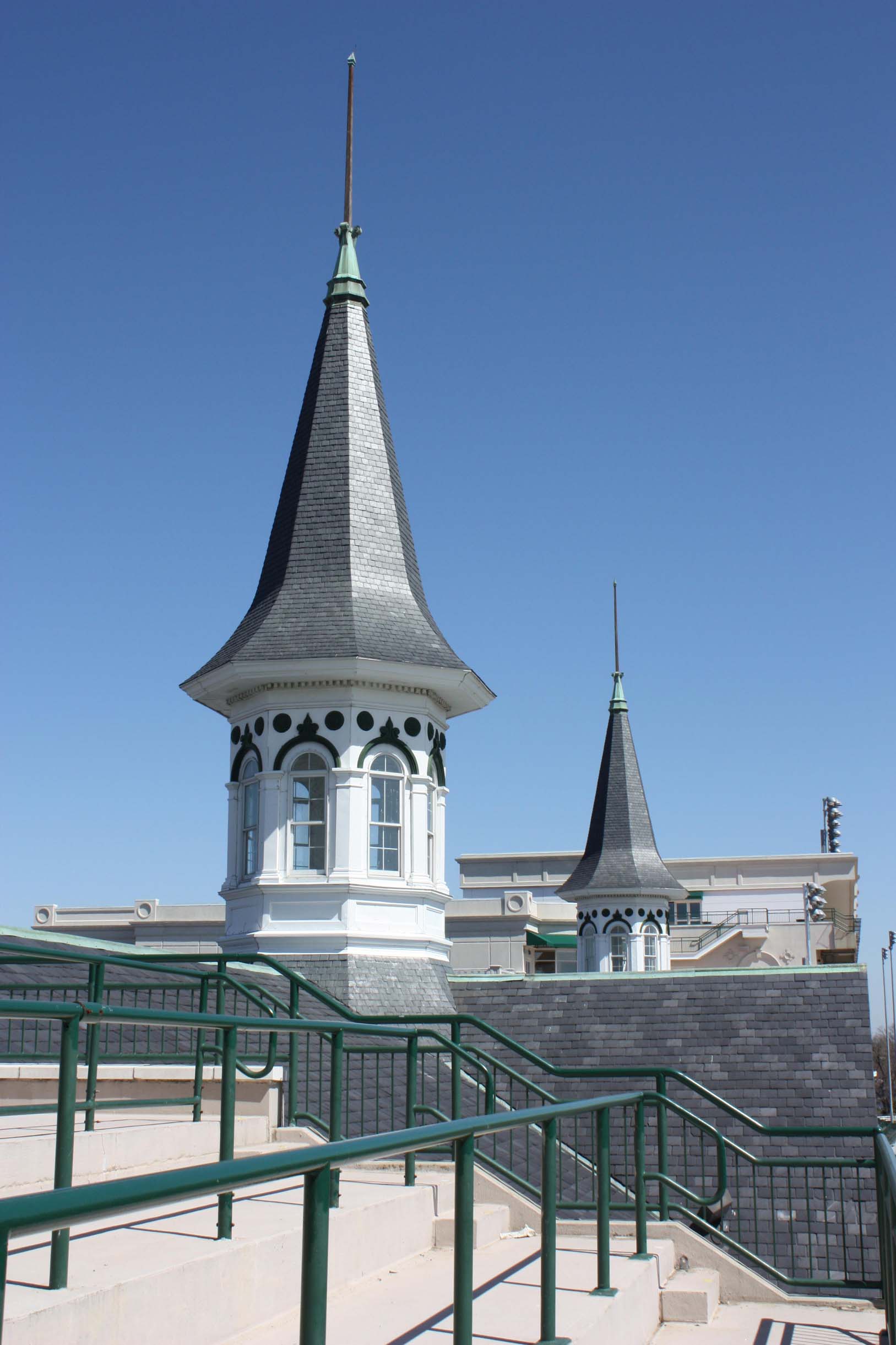 Through hosting community events, the track went beyond horse racing for many guests. In reference to “The Feast of Corpus Christi” celebration, Asher noted, “When you think of the people who came out here, the thousands that came out here, a big chunk of those people would never come to Churchill Downs for a horse race, or to bet a nickel on the nose of a horse. They came out here because Churchill Downs was special to them. Those Twin Spires were special, because of the experience they had here. That’s part of the emotional investment people have in this place.”
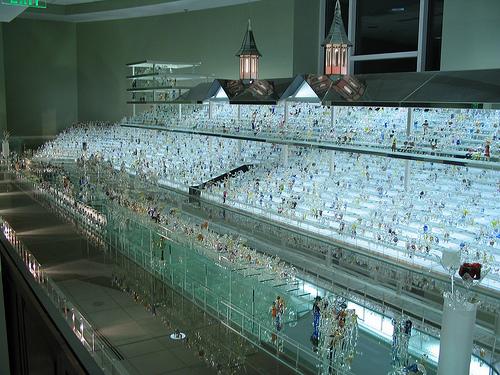 Pointing to the masterpiece standing before us, Asher remarked, “This was it. It is thirty feet long, ten feet wide, ten feet high, and 4,000 individual pieces he made – which represents every part of the Derby experience. [There are] fans in the infield, TV cameras and media, hats, the marching band, roses, ushers, and the horses.”
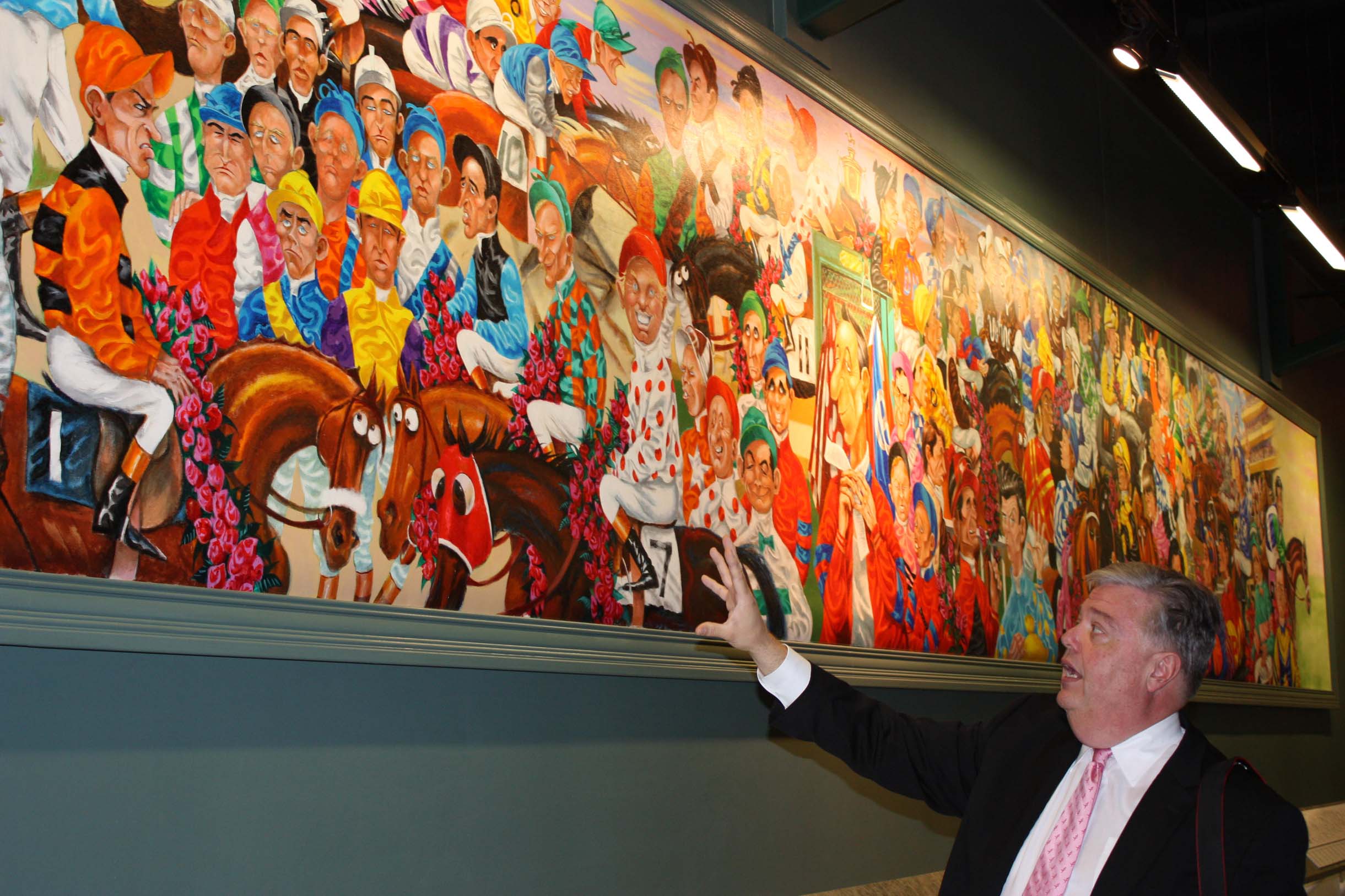 In Bellocq’s mural of the winning Jockeys, the artist has painted every jockey to ever win the Kentucky Derby. Asher explained that the mural is a timeline. The end of the mural used to depict a woman looking forward with a horse in the background that wore “figure eight” silks to symbolize infinity. Later on, the silks on the horse were modified to reflect the silks of Smarty Jones.
 The Kentucky Derby: The Allure of the Greatest Two Minutes in Racing.
  three-year-olds only. One Saturday. Two minutes in the afternoon. … In this year’s crops of three-year-olds, we have a maximum of twenty horses in the gate. And this year’s foal crop is about 37,000 – just in the United States. So, your odds are 37,000 to 1 to start. And that doesn’t include European-breds. …And even if you get here, … there are so many ways to lose a race.”
 In light of the fan fare surrounding the Derby, I asked Asher which celebrity has drawn the most attention in his experience. He responded, “Jack Nicholson. He’s the biggest celebrity I’ve ever seen at the Derby. He stopped the show everywhere he went. Presidents… Queens… Nobody compared to Jack.”
 horse. The grooms are there. In a lot of cases, the owners and trainers are there.”
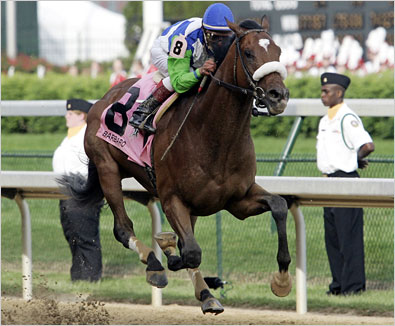 Barbaro: His Memorial at Churchill Downs.
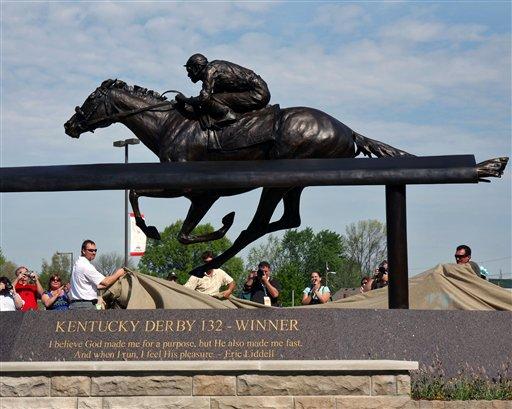 thoroughbred. They are in flight.”
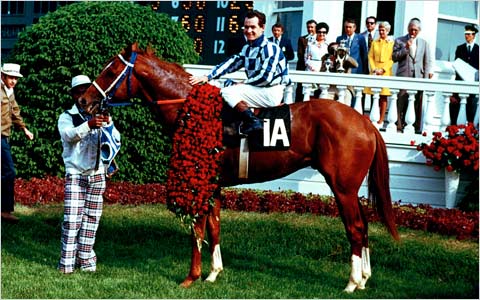 Secretariat: The Kentucky Derby Track Record.
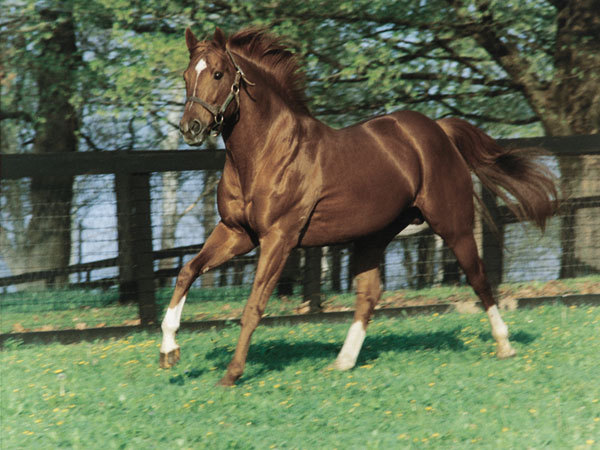 Asher then recapped his visit to meet Secretariat while he stood at Claiborne Farms. When he arrived at the farm, Secretariat was in his hillside paddock. Asher stated:
 The Last Word: Asher on the Art of Handicapping