August 31st, 2010 §
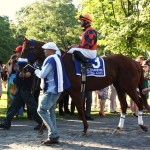
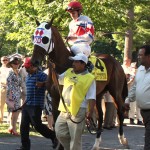
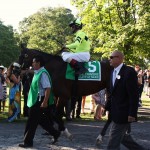
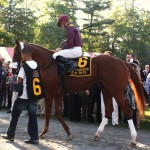
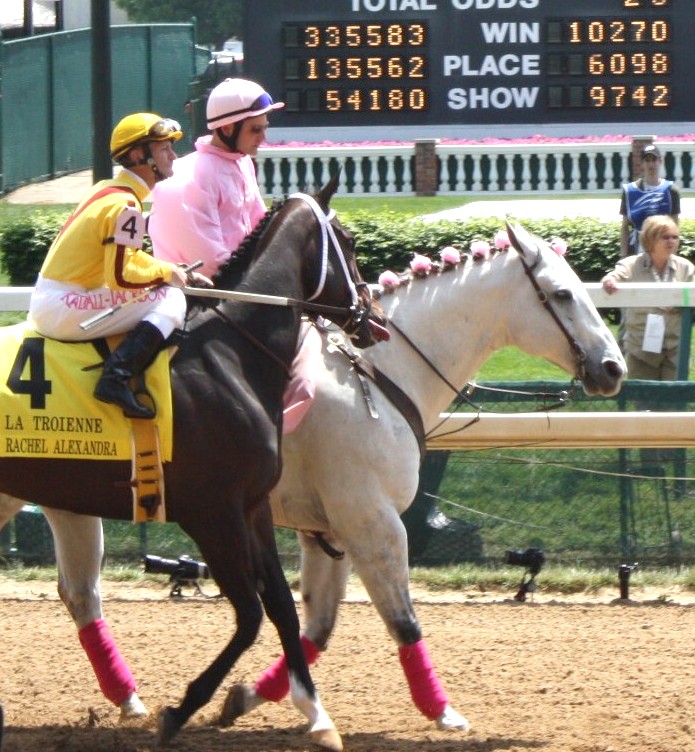
Last weekend, Rachel Alexandra held a match race.
It’s wasn’t an official match race.
Other contenders were in the field.
And, the match race wasn’t against Zenyatta.
But, it was against a horse that was riding a record of six consecutive victories – Life at Ten.
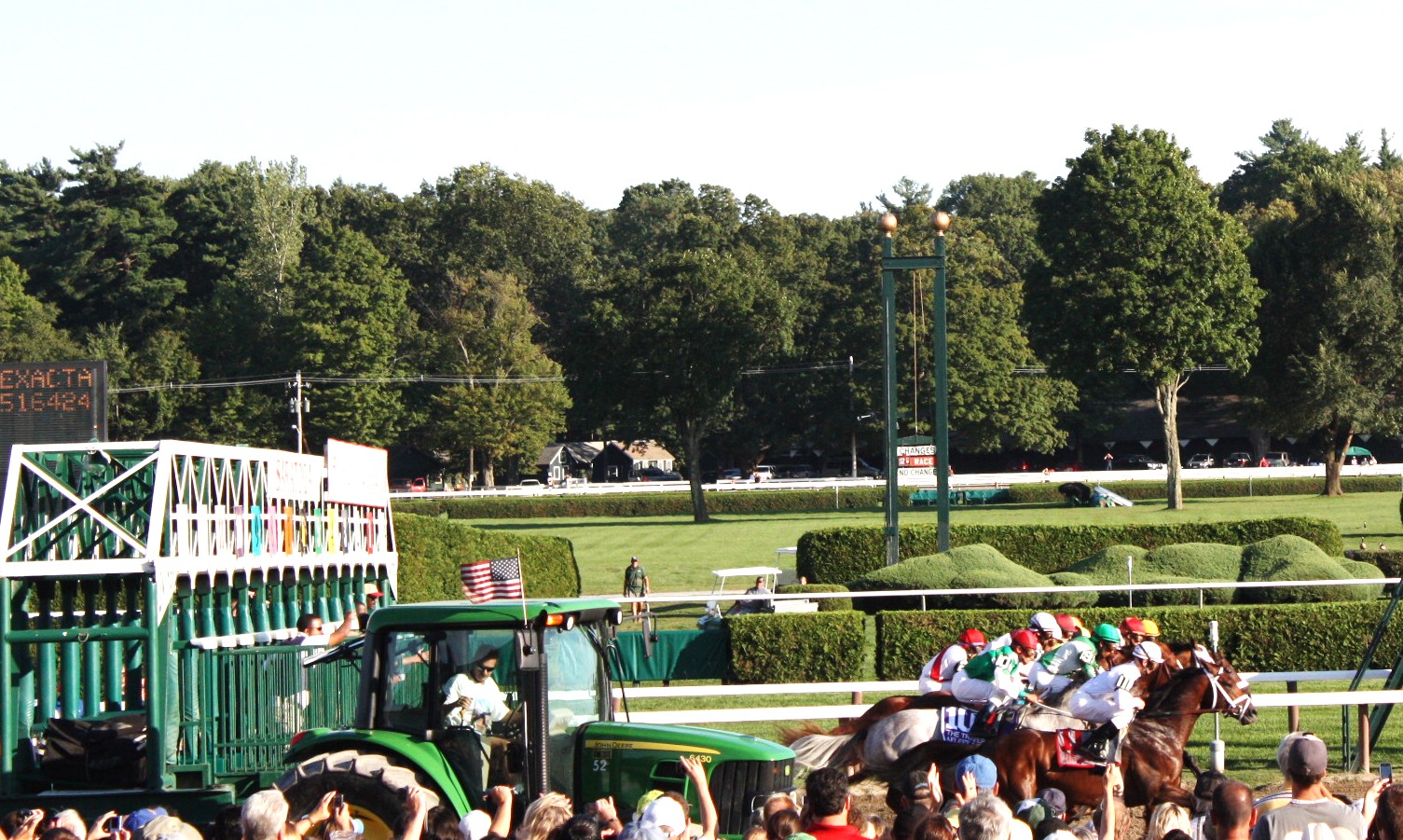
Officially, Persistently won the Personal Ensign at Saratoga. It was a great victory for a horse with final odds of 19-1 as she entered the gates against a top-notch field.
And, Persistently deserves respect for beating the reigning Horse of the Year while clinching her first Grade I career victory.
Yet, in my mind, there was a race inside the race.
It was a match race between Rachel Alexandra and Life at Ten.
It was a race between the reigning Horse of the Year and a rival who had been undefeated in her last six consecutive starts.
Sound familiar? It was similar to the match race that the racing community has pondered since Zenyatta crossed the finish line in the Breeder’s Cup Classic.
Life at Ten slammed her six-race undefeated record on the line to square-off with reigning Horse of the Year, Rachel Alexandra.
And, neither of them won the official race.
But, there was a race inside the race.
The rest of the contenders fought against the field.
Yet, Rachel and Life at Ten fought against each other in a match.
And, in the first two-turns, racing saw something stunning. The two great horses called a match, dug-in, blew past their rivals and shot out on their own.
Stride-for-stride, they fought like warriors against each other in a forgotten field of fellow contenders.
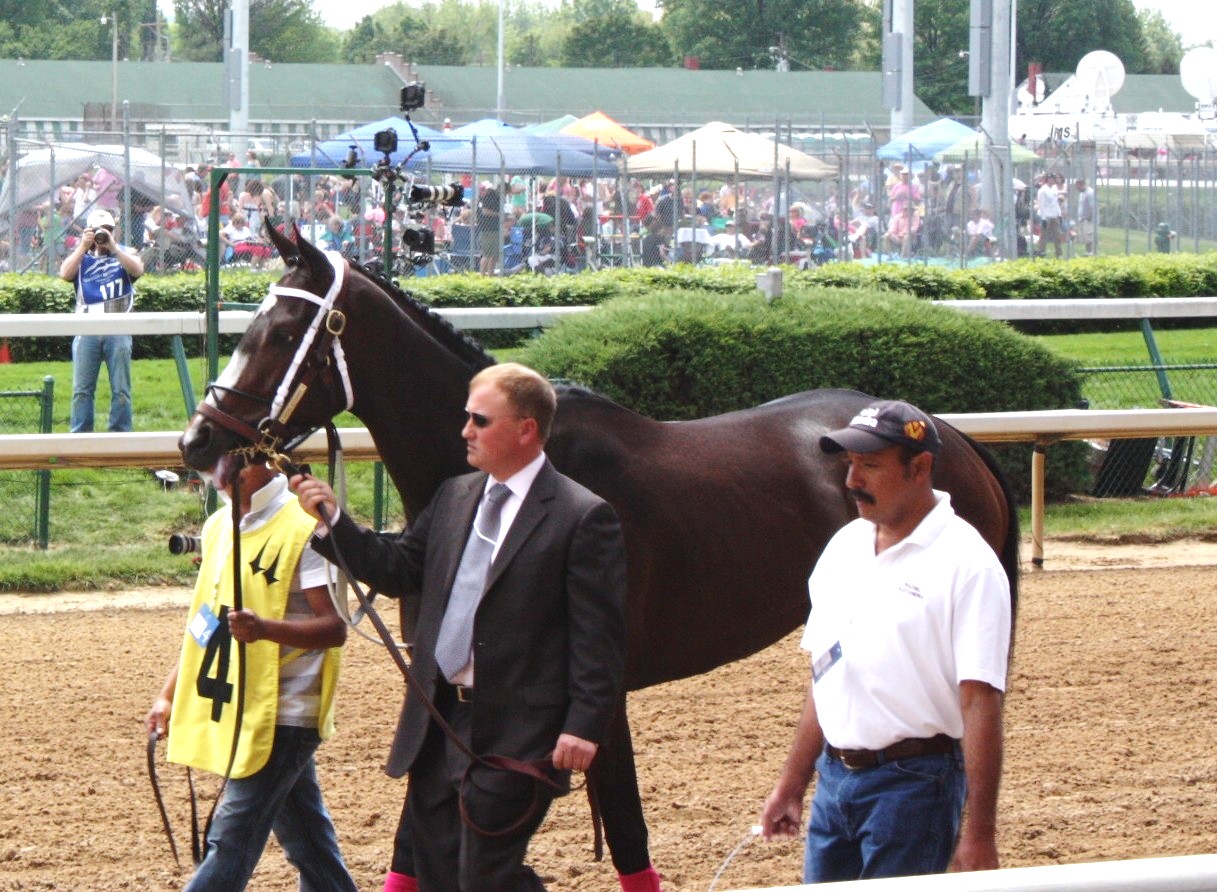
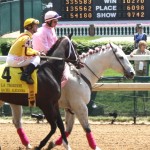 It was if Rachel said, “Fine. If a match race is what you want, I’m delivering it. Right here. Right now. On my terms.”
It was gutsy. It was beautiful. It was stunning.
It displayed the pure glory of Rachel Alexandra that led to her coronation as Horse of the Year in 2009.
Yet, in reality, she lost the Personal Ensign.
And, since the race, the focus shifted toward the defeat of Rachel by Persistently.
But, there was a race inside the race.
It was a match race between two great horses.
It was the moment that Rachel stomped out, picked her own opponent and started a match race on her own terms and timing.
And, Rachel claimed a personal victory when she finished in front of Life at Ten.
She may have not run the match race that racing wanted to witness.
Nor did she pick the opponent that many saw fit.
And, she didn’t win the Personal Ensign.
But, there was a race inside that race.
It was a match race.
And, Rachel Alexandra won the match.
To see footage of the Personal Ensign, click here.
August 30th, 2010 §
August 26th, 2010 §
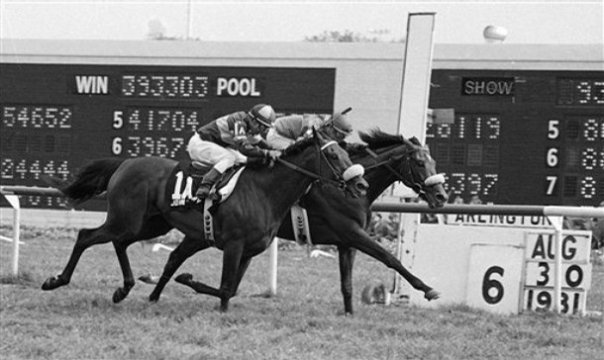
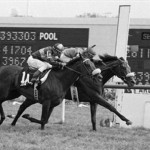 In 1981, John Henry became the inaugural winner of the Arlington Million, the world’s first million-dollar purse, after overtaking The Bart in a photo finish.
The inaugural race is commemorated at Arlington Park with the statute, “Against All Odds,” showing John Henry’s seemingly impossible victory.
John Henry simply refused to let himself get beat when the odds were stacked against him.
And, the odds were stacked against him.
John Henry began as a horse that was supposed to get beaten in races.
He was dismissed as small and mean.
He didn’t have a great pedigree.
His ownership changed hands for pennies on the dollar in his early years.
No one wanted the poor guy.
And, no one expected him to be a good race horse.
Except, John Henry himself.
One day, John Henry decided that he was done being beaten in races.
He packed up his no-name pedigree and low expectations.
He went to the track set out to prove he could win.
And, John Henry prospered in the end.
John Henry won millions in his career and set milestones that defied the odds.
Sixteen years after John Henry claimed his second Arlington Million victory in 1984, Gio Ponti set out to match John Henry’s two-time winning record in the Arlington Millions last Saturday.
Gio Ponti entered the race as the favorite.
He had already won the Arlington Million in 2009.
It seemed a foregone conclusion that Gio Ponti had the race licked from the start.
Yet, Gio Ponti was racing on John Henry’s record-holding ground.
And, John Henry had already proved that anything can happen on that ground.
In the backdrop of Gio Ponti’s bid to match John Henry’s two-time winning record, two horses quietly arrived in the stables at Arlington Park.
The horses had never raced in the United States.
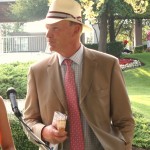 The trainer of both horses, John Gosden, had sought to win the Arlington Million for 28 years.
Gosden had run his first horse in the race in 1982.
In the years that followed, he raced a total of seven horses in the Arlington Million and victory had eluded him at every outing.
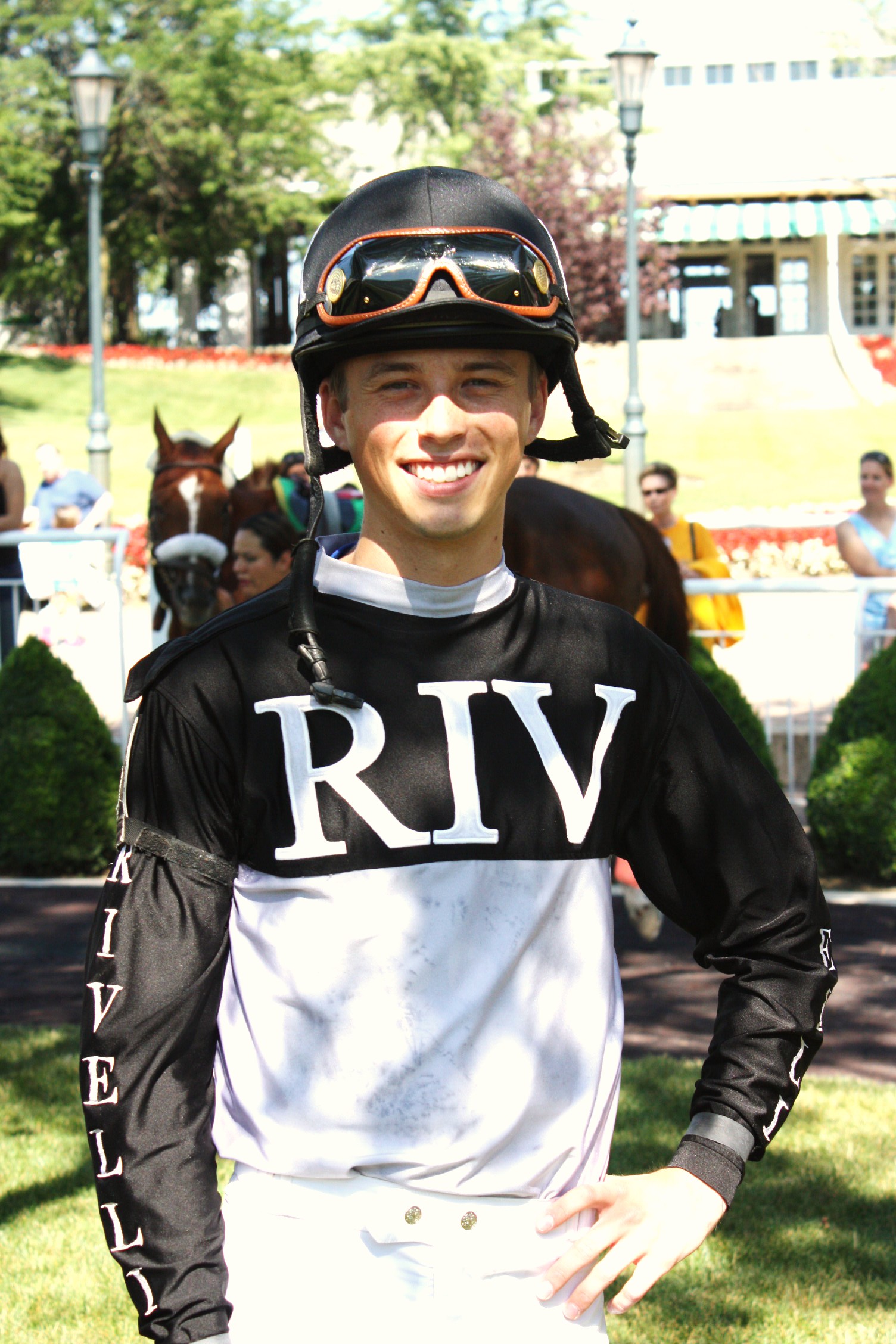
In January, Gosden signed a 22-year-old Jockey to his overseas stable – William Buick.
Despite being an up-and-coming jockey in England, Buick had never won a race in the United States.
And, it was Buick’s first time racing in the Arlington Million.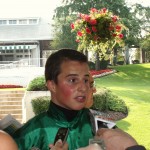
Buick was set to ride Debussy, who entered the gates with final odds of 11-1.
Debussy was competing in the Arlington Million alongside his stable mate, Tazeez.
Tazeez had all the pizzazz of a serious contender.
His betting odds were roughly half of those pegged against Debussy.
In his four starts in 2010, Tazeez hit the board on all occasions.
In contrast, Debussy had only won one race in five starts as a four-year-old.
He never hit the board in the surrounding races.
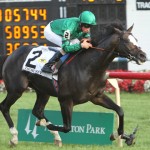 At Gosden’s training stable, Debussy and Tazeez raced each other in workouts.
Tazeez regularly beat Debussy.
It seemed Debussy was almost brought along for the ride, rather than with the idea that he could actually win the Arlington Million.
Yet, like John Henry, Debussy had other plans that day.
He was willing to fight against all odds.
When the gates opened, Tazeez reared while leaving the gate and lost a few lengths at the start.
He eventually caught the pace alongside long shot, Quite a Handful.
And, by the time Tazeez hit the final stretch, he had easily recovered from his rocky start to run 2½ lengths in front of the rest of the field.
It appeared Tazeez had it licked.
Then, Gio Ponti strode past Tazeez like a Rolls Royce and took the lead.
It seemed as if it truly was a foregone conclusion that John Henry’s two-time winning record in the Million was going to be matched by Gio Ponti.
Yet, John Henry doesn’t stand among the ranks of those who are supposed to be good.
He stands with those who have the desire to succeed where failure is seemingly a foregone conclusion.
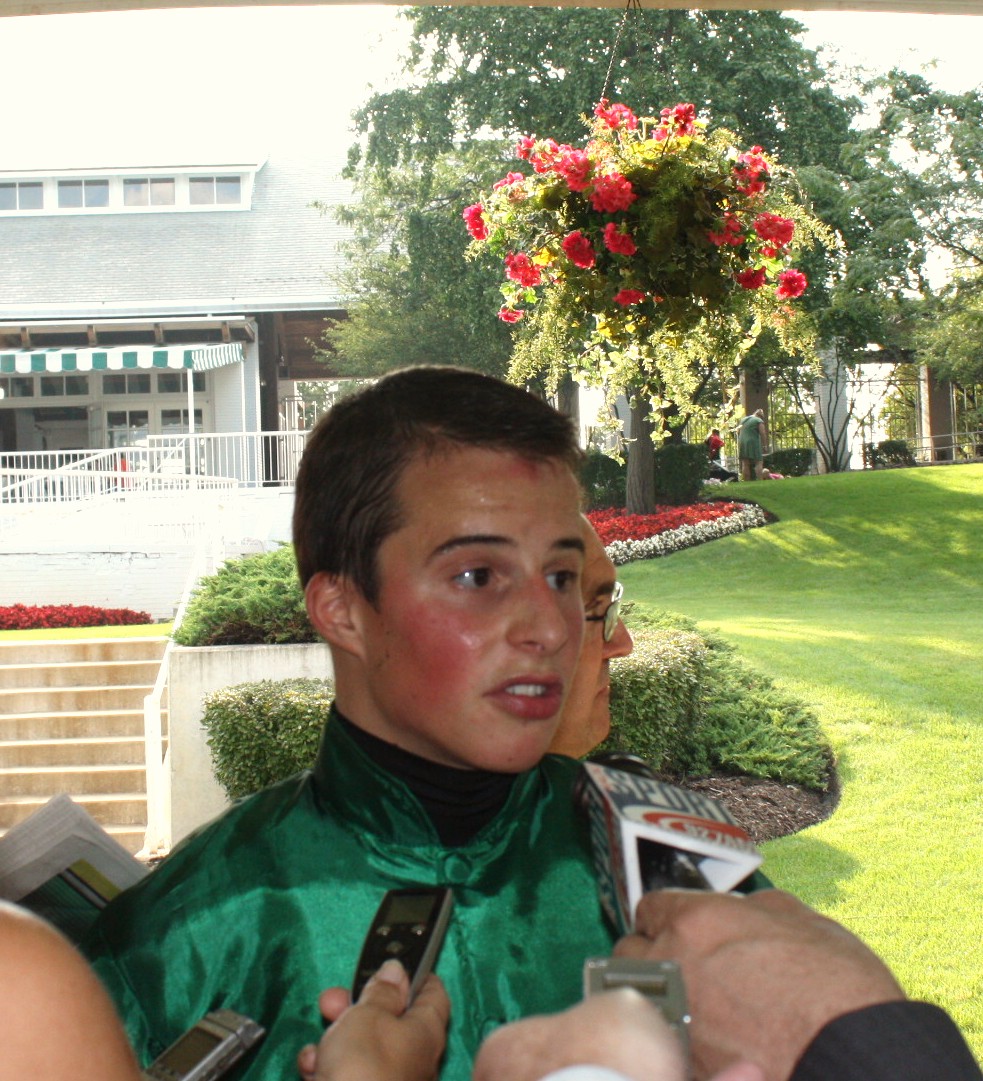
While Gio Ponti was soaking in the spotlight, he started “idling a little bit, maybe looking at the stands or something,” said his jockey, Ramon Dominguez.
Meanwhile, Debussy struggled in the back of the pack.
He was blocked behind horses.
But, Debussy didn’t see failure as a foregone conclusion.
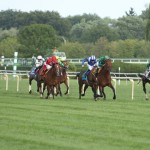 Buick explained, “I kept riding the rail, riding the rail. On the last bend, I had no room, but so much horse. Then, a hole opened. I kind of shut my eyes and then I saw he was through.”
Just like John Henry, Debussy made a decision that day.
He was done getting beaten on the track.
Debussy packed up his defeated record, bad trip and poor odds.
He set out to win the Arlington Million.
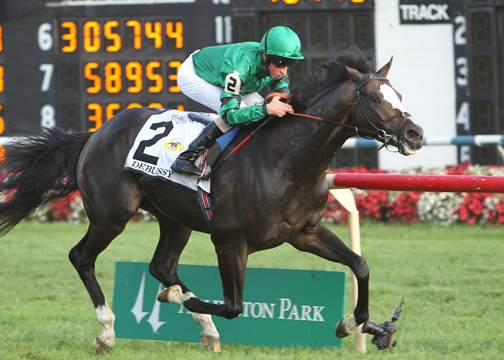
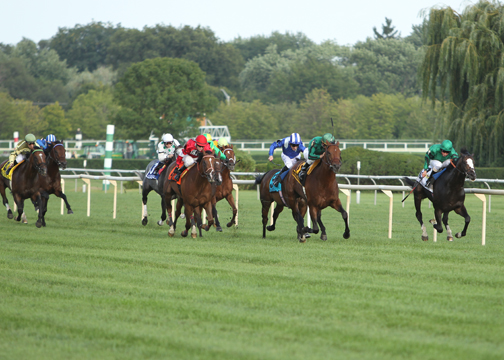
Debussy hugged the rail and drove past his rivals that blocked his path.
And, in his victory, Debussy showed a stunning display of determination to stomp out the odds against him.
It was his first Grade I victory.
It was his first time racing in the United States.
It was William Buick’s first win in North America.
And, it was the culmination of Gosden’s twenty-eight year dream of winning the race.
Debussy delivered it against all odds.
And, he did it without setting out to match John Henry.
Instead, Debussy’s victory paid a tribute to John Henry.
It was a tribute to John Henry’s hard-fought principle that anything can happen in a race where the drive to succeed outweighs the odds against the horse.
Debussy took that lesson to heart.
While racing on the ground where John Henry delivered one of the greatest testaments to the principle, Debussy decided he was done with defeat.
He won against the odds.
He won against his stable mate.
He won against the favorite.
He won one for John Henry.
Thank you to Horsephotos.com for the use of the photos of Debussy in the Arlington Millions. To comment on this article, click here.
August 8th, 2010 §
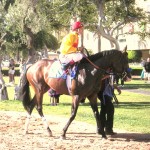
Today, turf champion Tuscan Evening unexpectedly passed away following a workout at Del Mar.
The Irish-bred mare leaves behind a legacy that includes winning 12 of her 16 starts in the United States.
In the fall of 2008, Owner William De Burgh privately purchased Tuscan Evening as three-year-old maiden and shipped her to the United States.
De Burgh sent Tuscan Evening to Jerry Hollendorfer’s stable to train for her 2009 campaign as a four-year-old.
As the time she joined the stable, Tuscan Evening had never won a race.
Her record did not stop Hollendorfer’s stable from believing in her talent.
On January 22, 2009, Tuscan Evening made her first U.S. start in a maiden race at Santa Anita Race Track. She clinched a five-length victory.
After her maiden victory, she followed her maiden with a 3 ¾ length victory in an allowance race at Santa Anita.
Throughout her 2009 season, Tuscan Evening scored six victories, including her maiden, in ten starts. Of her six victories, two came in graded races.
In 2010, Tuscan Evening remained undefeated as a five-year-old after running in six graded races, including the Grade 1 Gamely Stakes. In three of her last four starts, she led the race wire-to-wire.
The Hollendorfer team put their unflinching faith and love into Tuscan Evening.
They patiently took a winless horse and slowly developed her into a turf champion.
They gave their full heart in doing so.
And, in a sad ending, Tuscan Evening gave her heart in return.
Love is a fragile thing.
But, it goes undefeated.
August 3rd, 2010 §
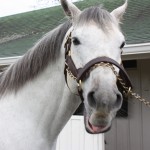
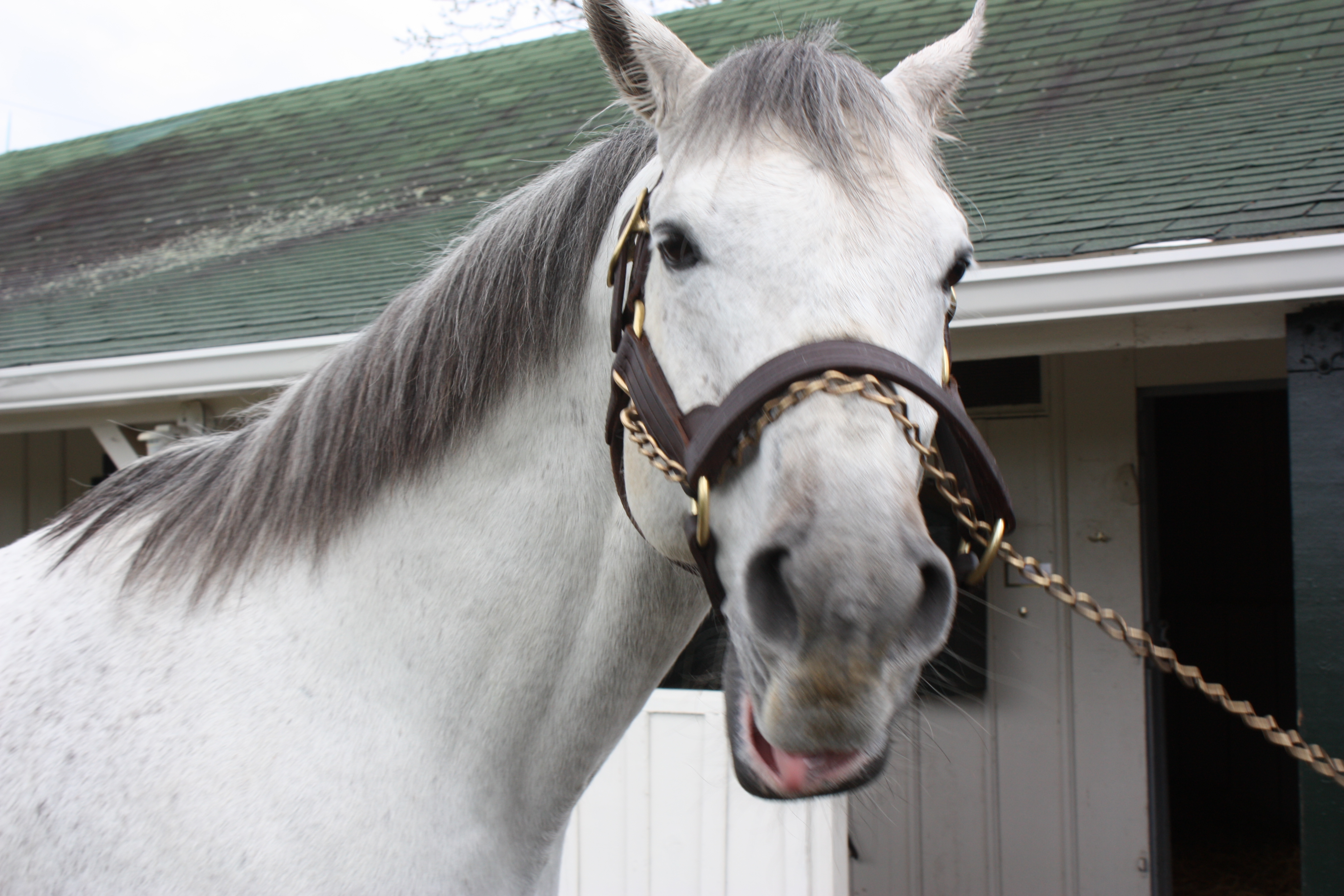
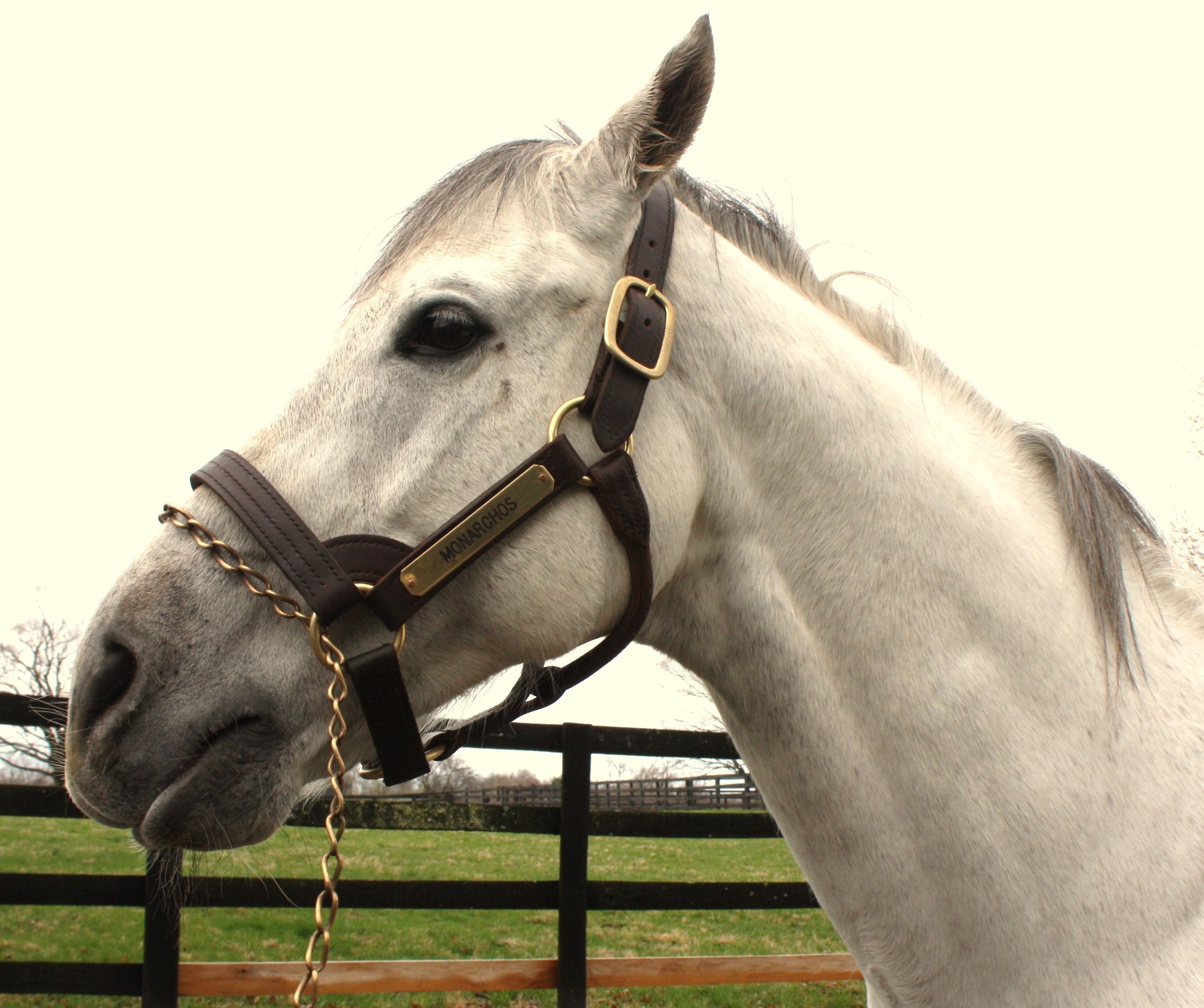
Earlier this year, I visited Kentucky to meet Monarchos.
I wanted to see the fastest living Kentucky Derby winner in the flesh.
It was just as simple as that.
As the big gray champion emerged from his stable, Monarchos was well-mannered and kind. He allowed himself to be pet, stood patiently for photographs, and gently devoured my bag of carrots with delight.
I was thrilled about my visit with Monarchos.
He is a celebrity in my world.
And, it is always nice to find out that your celebrities are truly kind at heart.
When I returned home from Kentucky, I realized that Monarchos is just a gray horse to many of my friends outside the racing universe.
It was just as simple as that.
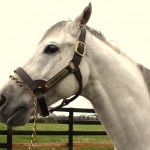 “How was the Kentucky Derby?” I was asked by one friend.
I had to find a nice way to tell my friend that the Kentucky Derby hadn’t occurred yet.
When I mentioned that I visited Monarchos, another friend asked, “Is that your horse?”
I didn’t own a horse at that point. And, if I owned Monarchos, I certainly would have mentioned my Kentucky Derby winning horse in earlier conversations.
This was my first experience of trying to explain horse racing to non-enthusiasts.
Nothing was simple about it.
Shortly after these conversations, I invested in a horse. He’s a two-year-old in training and hasn’t been entered in any races.
However, my small investment created a giant misunderstanding among my non-racing enthusiast friends.
Zenyatta stood at the center of the confusion between the two worlds.
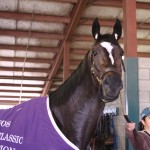 I talked about Zenyatta’s undefeated record at cocktail parties and my friends would ask how she is doing.
I kept saying, “She’s still undefeated!”
It was just as simple as that.
I thought we had arrived at a common ground.
Then, I went to Hollywood Park to watch her claim her seventeenth career victory in the Vanity Handicap.
When I made a photo album of the trip, a friend asked “How did your horse do in her race?”
I replied, “I wish I owned Zenyatta.”
In my mind, it was just as simple as that.
However, when I had to explain in greater depth that I don’t own Zenyatta, the confusion on my friend’s face spoke volumes.
It was as if to say, “Why don’t you?”
I went on to explain that Zenyatta has made roughly $6 million in her career and has remained undefeated in seventeen consecutive races. She’s not for sale.
Then, I realized her earnings or record meant nothing to my friend.
In personal defeat, I explained to my friend that Jerry Moss, the co-founder of A & M records, owns Zenyatta.
When I mentioned that she was named after The Police album, “Zenyatta Mondatta,” I received immediate recognition.
“Oh, ‘Zenyatta Mondatta.’ That makes sense!”
It was just as simple as that.
But, was it? I’ve listened to that album many times and I’ve never heard Sting belt out any lyrics about Zenyatta’s racing career.
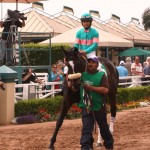 In retrospect, the words “The Police” and “Zenyatta Mondatta” were the only parts of our conversation that resonated with my friend.
Since that moment, I’ve wondered how to discuss horse racing with the non-racing world.
There seems to be nothing simple about it.
As far as I can tell, non-racing enthuasists have gathered these gems from my conversations:
“There are some gray and brown horses that run fast. One dances pretty well. The Kentucky Derby is an important day. And, ‘Zenyatta Mondatta’ is a great album.”
It is just as simple as that.
So, after growing tired of giving explanations, I decided to just quietly enjoy going to the races.
And then, the two worlds unexpectedly met for a brief second in time.
As I was heading to the track on an ordinary day, a friend asked me, “Is there an important race today?”
I joked, “Yep. Secretariat is in a match race with Seattle Slew today.”
When she laughed, I realized my friend knew I had just told her a fairy tale.
However, I also realized she knew some Triple Crown winners.
I began to dream about the next Triple Crown season.
And wish… it was just simple as that.
July 17th, 2010 §
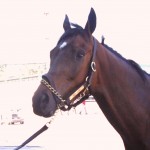
In Trainer Larry Rivelli’s barn at Arlington Park, there is a small bay racehorse named Helicopter.
Helicopter isn’t a household name for most horse racing enthusiasts.
Helicopter has never competed in a graded race and he doesn’t hold any breeding value for the sport. He is a gelding.
As a two-year-old, Helicopter raced fourteen times and stamped out a performance record for that year that held descriptors ranging from “failed to menace” to “no factor.”
When he began his three-year-old debut, Helicopter didn’t hold any promise as a Kentucky Derby hopeful. It wasn’t even a distant dream.
Helicopter was running in low-purse claiming races and losing in every outing.
It seemed Helicopter just wasn’t meant to be a racehorse.
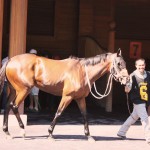 Then, in March of 2009, Helicopter set foot on the track at Hawthorne Park in an attempt to win a highly-elusive race – his maiden victory.
In his 19th career start, Helicopter delivered a surprising 2 ½ -length victory as he bulleted past his rivals in the field.
He had finally won his first race after eighteen failed outings.
When Helicopter delivered a second career victory, he was privately purchased by Trainer Larry Rivelli in May of 2009.
Rivelli explained, “Helicopter was part of a two-horse package. I think the pair cost roughly $7,500.”
In his first start with Rivelli as the trainer, he won by 8 ½ lengths in a claiming race at Arlington Park and earned $6,000 – nearly covering his purchase price during his third career victory.
After winning his next race by two lengths, Helicopter had begun to demonstrate his potential on the track. He had won three consecutive races in the claiming circuit under Jockey Brandon Meier.
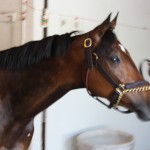 Then, roughly two months after joining Rivelli’s stable, Helicopter was claimed during a race in July of 2009.
Rivelli immediately sought to retrieve Helicopter from his new owner.
Rivelli explained, “I liked the horse. After the race, we privately purchased him back for double of what the guy had paid to claim him.”
Helicopter never ran a single race for the new ownership prior to being recovered by Rivelli.
And, Rivelli never entered Helicopter in a claiming race again.
On September 6, 2009, Helicopter set foot on the track for his next race and clinched another victory.
Then, Helicopter went on to break two track records. He set the record for 10 furlongs in 2:02.95 during a starter race at Keeneland in October of 2009.
In his next outing, Helicopter set another record during an allowance race in Canada, running 10 furlongs in 2:03.47.
Rivelli explained, “Helicopter is a small horse, kind of average and plain-looking. His asset is that he is a distance horse and he never wastes any energy before a race.”
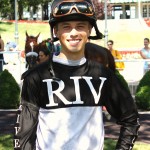 And, he has a good pilot. Rivelli remarked, “His jockey, Brandon Meier, is a perfect match.”
Since Rivelli began training the horse, Helicopter has only made one start without Meier as his rider.
And, Helicopter made it clear how he felt about racing without Meier aboard.
He lost.
Since that race, Meier has remained Helicopter’s regular jockey.
And, they have amassed quite a nice winning record together.
With Rivelli as his trainer, Helicopter has won twelve races with Meier aboard in sixteen starts.
Helicopter has won on varying surfaces – dirt, synthetic and wet dirt.
Recently, Helicopter attempted his first turf race at Arlington Park.
Prior to the race, I saw a bunch of young children standing at the rail waiting to watch Helicopter’s turf debut.
I was curious if they knew anything about horse racing.
I asked one of the girls, “Who do you think is going to win the race?”
She didn’t even pause as she shot back her answer.
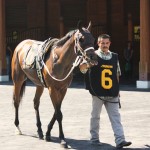 “Helicopter.”
In one word, a kindergartner had matched my handicapping pick.
Helicopter was the clear favorite, riding a six-race winning streak.
Sadly, he didn’t win his turf debut.
However, Helicopter has won some fans with his overall winning record.
Fans from all age ranges.
Fans who come to the track.
And, fans that came to the track on a weekday.
Helicopter’s fans don’t care if he is running for roses, large purses or against graded-stakes winners.
They just like to see Helicopter win a race.
And still, Helicopter isn’t a household name for most horse racing enthusiasts.
Yet, it may do some good to start talking about Helicopter in the racing world.
He helps bring fans to the track for an average race on an ordinary day.
And, the local community comes out when Helicopter is racing.
It is an exceptional victory for the sport.
June 17th, 2010 §
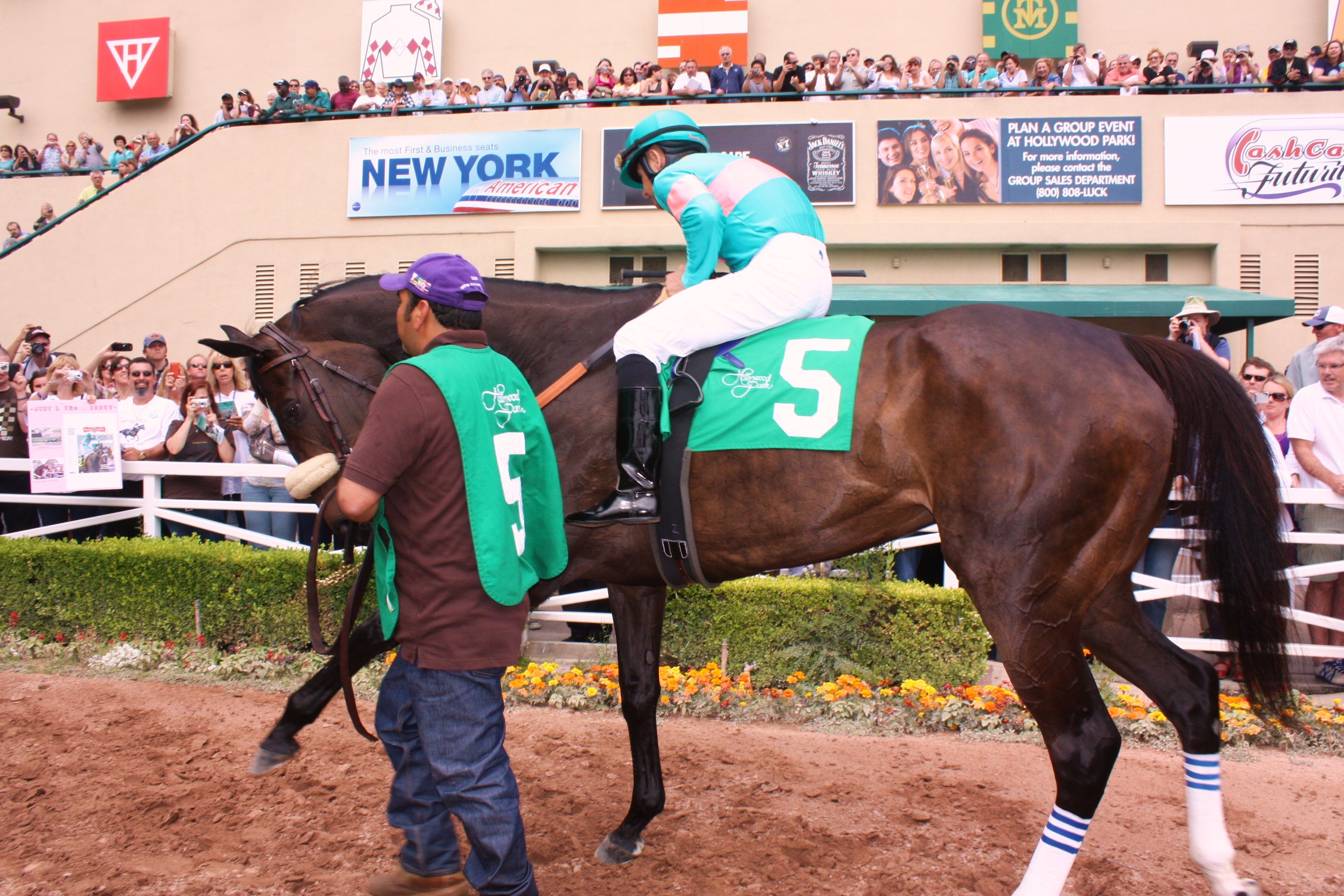
Last weekend, I traveled to Hollywood Park to watch Zenyatta make her bid to win her seventeenth undefeated career start.
At the track, someone asked me, “So, what brings you to California?”
The answer was easy. “Zenyatta.”
The person seemed surprised that I had traveled to Hollywood for a single horse.
However, in my opinion, Zenyatta isn’t just a good horse.
She is a living legend.
I wanted to be there to watch her stride into the history books in her record-breaking seventeenth career victory.
It appears that I wasn’t the only one who felt this way.
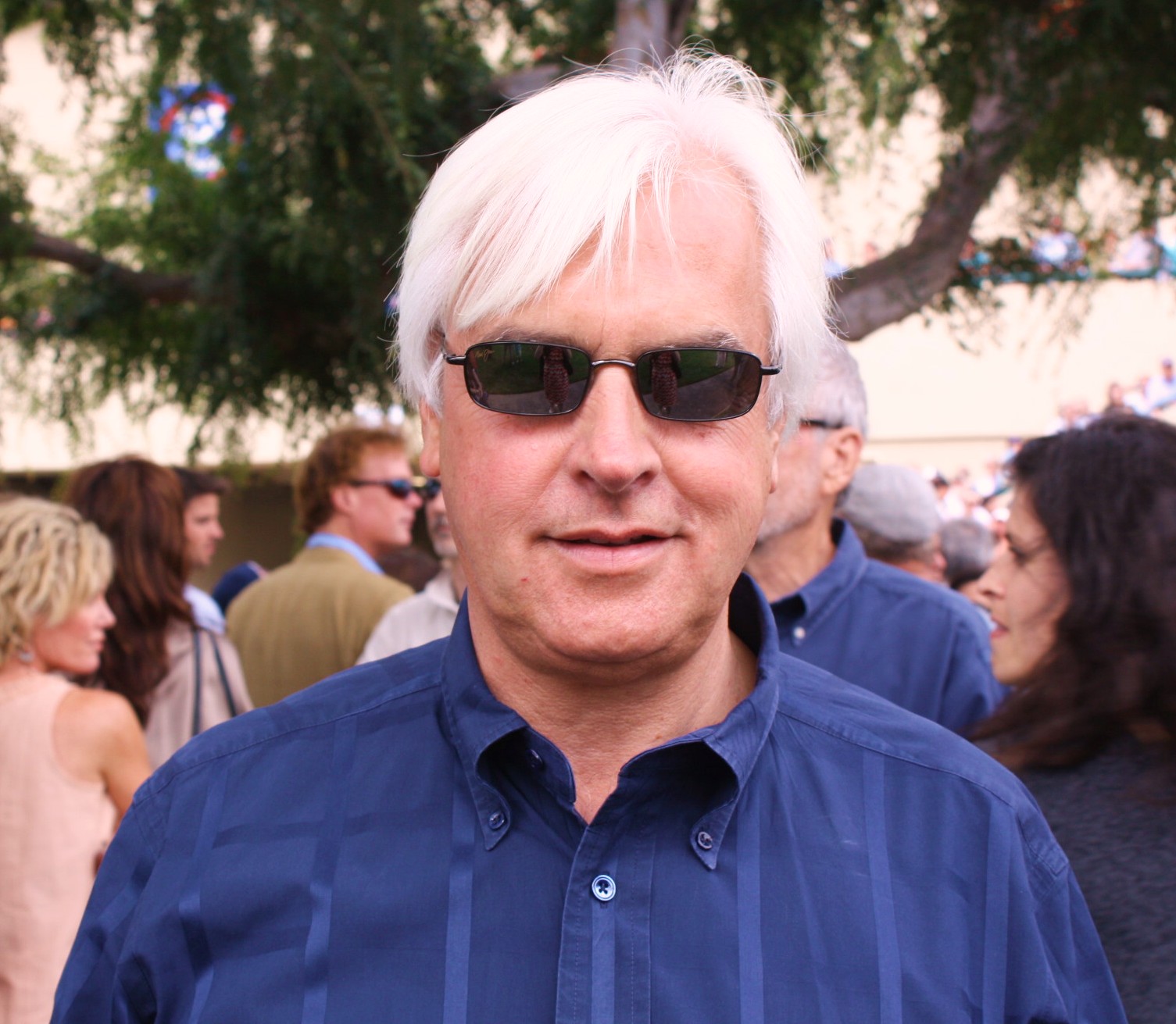
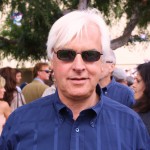 Prior to the race, Hall of Fame Trainer Bob Baffert stood in the paddock and surveyed Zenyatta before settling into his seat to watch her in the Vanity Handicap.
Later, when I thumbed through my racing program, I realized that Baffert didn’t have a single horse entered in a race at Hollywood Park that day.
Apparently, Baffert also wanted to watch Zenyatta challenge the undefeated records of Cigar and Citation.
And, as usual, Zenyatta didn’t disappoint.
In front of a crowd that appeared to be screaming for one single horse, she delivered her seventeenth consecutive victory in a heart-stopping moment at the finish line.
The entire park shook with excitement in the dizzying minutes that followed.
Zenyatta had made history again.
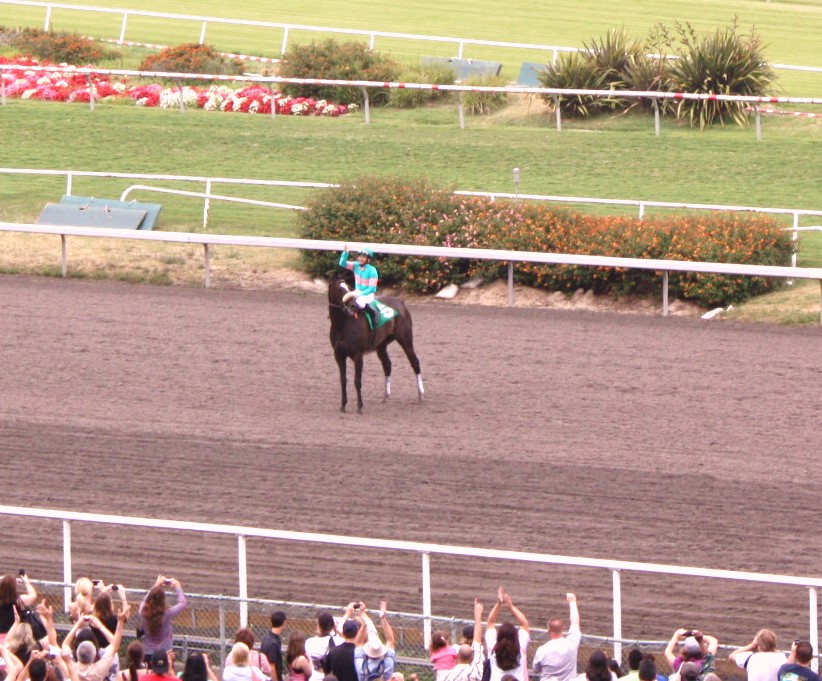
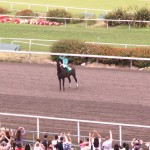 Prior to entering the winner’s circle, Zenyatta stood alone in front of the crowd and took in a long standing ovation.
It was as if she knew that she had just delivered pure magic.
And, in retrospect, I believe Zenyatta did know.
I learned a lot of lessons from my visit with Zenyatta that demonstrated the beauty surrounding a true legend.
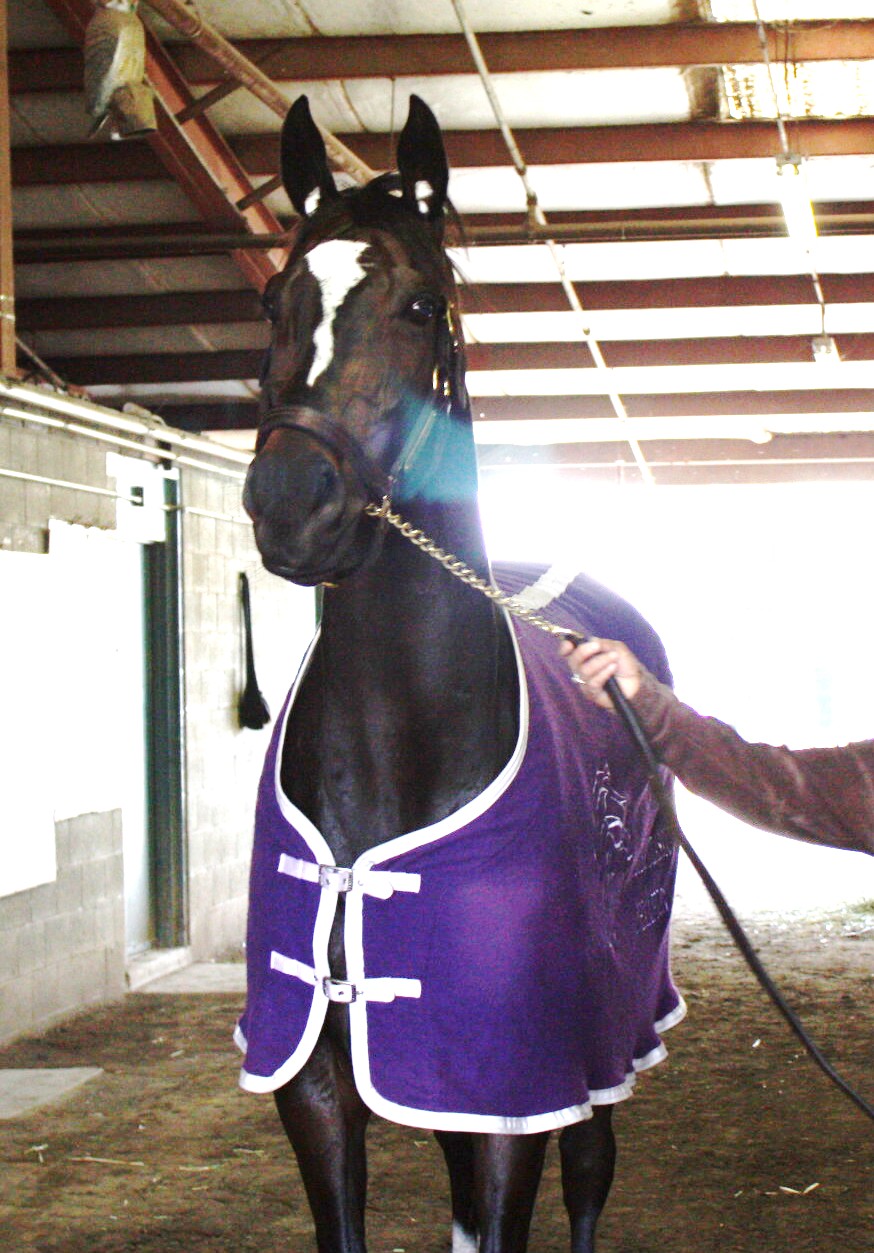
First, Zenyatta delivers quite a greeting to her guests at the stable.
When we walked into her barn, my friend asked, “Where’s Zenyatta?” as she surveyed the stalls of horses.
Zenyatta answered the question with authority.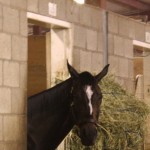
The giant mare rattled in her stall and stuck her head out. She stared right at us and never shifted her gaze as we stood watching her in awe.
It was stunning.
When her trainer John Shirreffs appeared, he matched Zenyatta’s hospitality to her guests.
After briefly greeting us, he slipped into his office.
At that moment, I envisioned that he was calling security to kick us out.
I could not have been more wrong.
Within a few seconds, Shirreffs re-emerged with a smile and a card with Zenyatta’s photo on it.
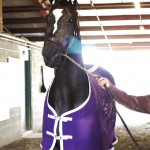 He handed me the photo as a souvenir as Zenyatta began to parade around the barn in preparation for her morning workout.
When I began to take pictures, she demonstrated her mastery of the camera eye.
As she drew close to the lens, Zenyatta paused and rose her head to demonstrate her full height.
She posed.
The next day, Zenyatta had a much larger audience to please as she prepared to challenge history in the Vanity Handicap.
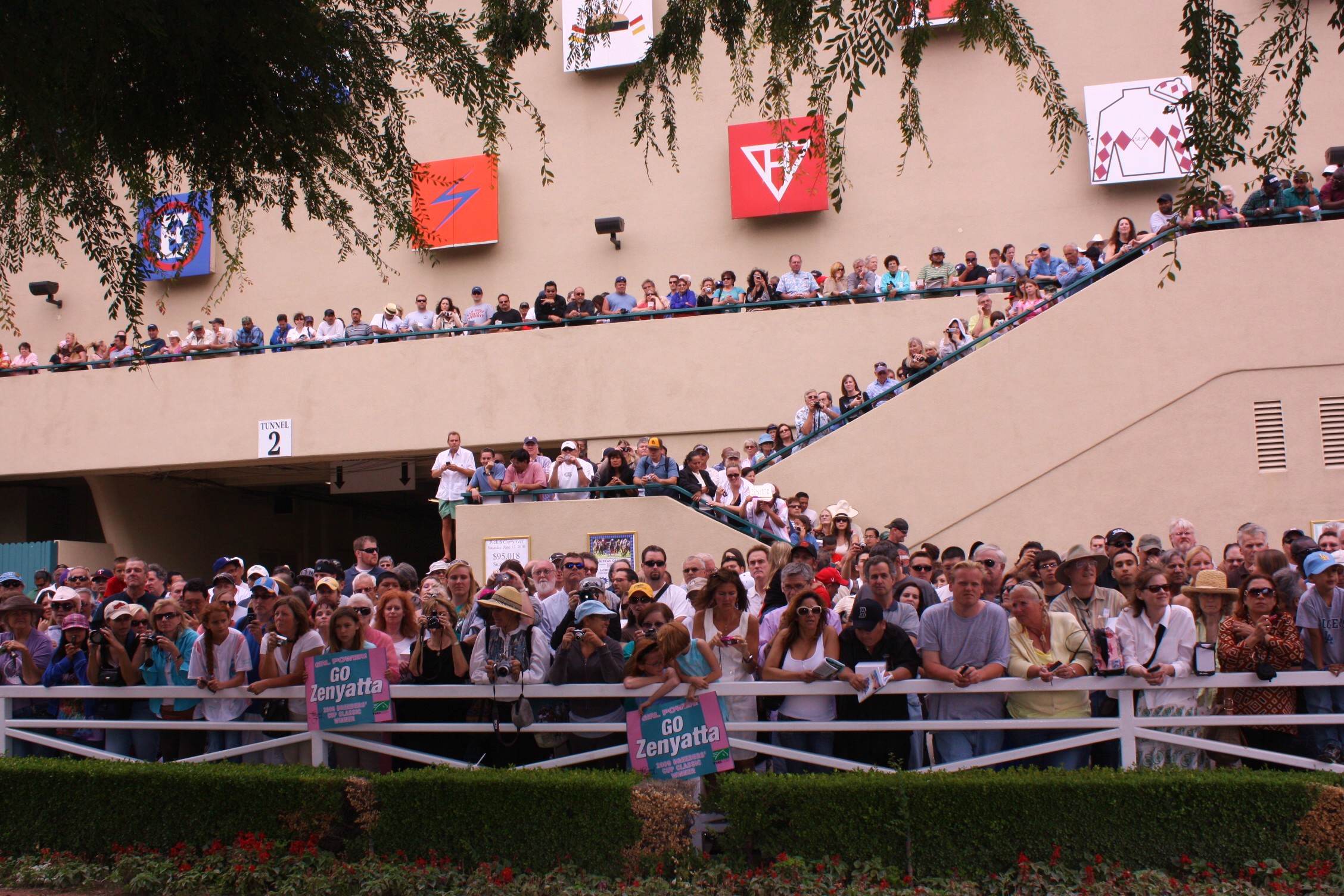
As I stood in the paddock, I looked out at the large crowd of fans that lined the rails to catch a glimpse of her in the flesh.
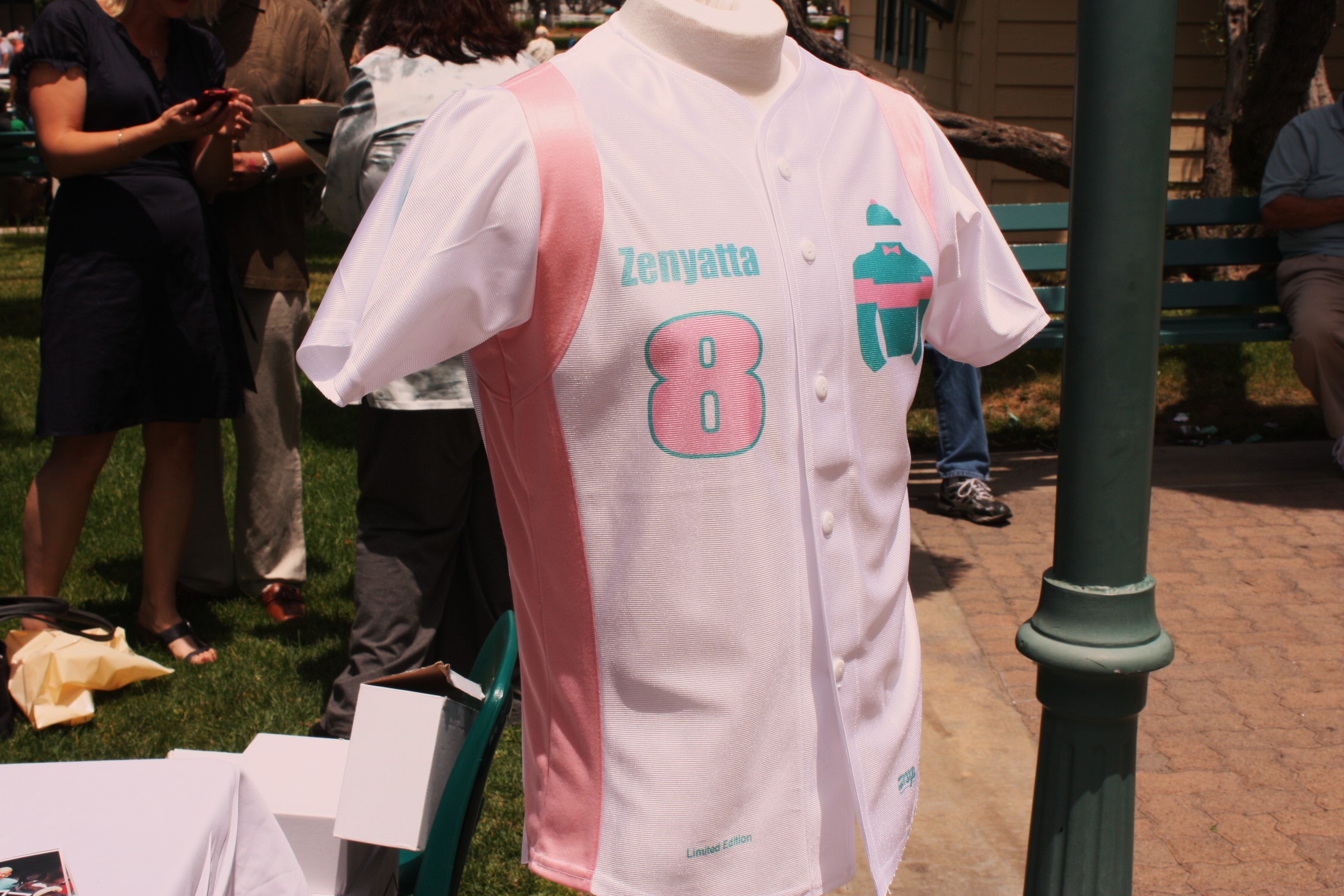
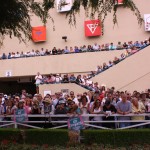 The audience was speckled with Zenyatta fan gear – ranging from hand-painted signs to Zenyatta jerseys.
I drew the second lesson from Zenyatta in that moment.
At the pinnacle of success, character is shown through being gracious and charitable to everyone.
The jerseys that bore Zenyatta’s name were being sold to benefit Thoroughbred retirement and rescue.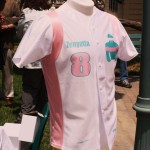
Throughout Hollywood Park, fans weaved through the crowd adorned with the jerseys that represented Zenyatta’s charitable hoofprint.
And, as Zenyatta’s connections began to emerge in the paddock, they greeted the fans with the same excitement as Zenyatta demonstrated the previous morning.
Owners Jerry and Ann Moss entered the gates and waved at the onlookers with a giant smile.
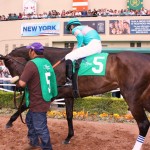 And, when the Zenyatta set foot in the paddock, she delivered her dazzling dance steps without a care in the world.
Yet, despite the whirlwind of fan fare, Zenyatta was in the unshakeable gaze of one individual – Trainer John Shirreffs.
Zenyatta never left his sight as she danced and bowed for fans.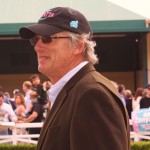
And, as I watched Shirreffs, it occurred to me that one principle stood solid in her success beyond racing or records: Put the welfare of the horse first.
In a single moment, I learned that Zenyatta isn’t only first at the finish line.
The well-being of Zenyatta comes first before she ever sets foot on a track.
Yet, in a few minutes, the idea of finishing first in the Vanity Handicap took center stage in the public sphere as Zenyatta pranced toward the track in response to the call to post.
As she entered the gates toward history, Zenyatta delivered a lesson that resonates strongly amidst the ongoing comparisons of her record to other champion race horses.
She didn’t look at her rivals.
Her gaze was marked firmly on the track laid before her own eyes.
Zenyatta didn’t compare herself to Rachel Alexandra.
She didn’t compare herself to the legacies set forth by horses like Ruffian or Secretariat.
Zenyatta failed to see the good that comes from comparing her accomplishments to other champions.
And, as far as I can tell, Zenyatta doesn’t spend her days undermining the achievements of fellow racehorses.
She just keeps racing.
And, she just keeps winning.
And - she doesn’t sling mud in the process.
In my opinion, Zenyatta’s winning philosophy provides a valuable lesson beyond comparison.
June 1st, 2010 §
In her famous poem, One Art, Elizabeth Bishop begins by pondering “The Art of Losing” with the idea that some things are fated to be lost.
In the moment of loss, Bishop starts the poem with the notion that losing should not be viewed as a heartbreaking event.
In fact, she goes on to write that it should be practiced.
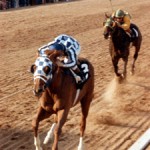
In my view, it is hard to point to many horses that practiced “The Art of Losing” with the same grace of Sham.
And, decades after Sham raced, there is a certain lingering sadness over Sham’s fate of being born at the wrong time – the year Secretariat was making his bid for the Triple Crown.
As Secretariat shattered records in his Triple Crown season, Sham stood in the shadows waging a beautiful racing performance.
He was a great horse in his own right.
And, in a sport where winning is nearly everything, Sham demonstrated that there is an “art” to losing.
As Sham entered the 1973 Kentucky Derby, the colt banged his head on the side of the starting gate, knocking out two of his teeth.
As he bled throughout the race, Sham never stopped chasing after Secretariat with his determination to win.
At the wire, Secretariat beat Sham by 2 ½ lengths – capturing the record time of 1:59 2/5 in the Kentucky Derby.
However, Sham also broke the Kentucky Derby record during his loss – finishing at a time of 1:59 4/5.
As Secretariat was draped in roses, Sham was guided toward his barn to cauterize the wounds to his two teeth.
Although Sham received no records or roses for his efforts, he stood a victor in ”The Art of Losing.”
Two weeks later, Sham set foot on the track in the Preakness.
As Secretariat began his graceful stride from last to first, Sham banged the rail on the clubhouse turn.
However, despite being rattled, Sham kept his eyes on his rival.
He raced onward to chase Secretariat to the finish line.
In the end, Secretariat beat Sham by 2 ½ lengths in the Preakness – the champion arguably breaking the record time for the race in his victory.
However, Sham didn’t stop in the face of an impossible rival.
As a master of “The Art of Losing,” Sham went back to his barn and prepared to challenge Secretariat in the longest race in North America.
And, when the day of the Belmont arrived, Sham demonstrated a powerful lesson in “The Art of Losing.”
When he entered the gates, Sham was soaking wet and nervous.
But, he didn’t back down.
Instead, Sham broke from the gates and challenged Secretariat to a virtual match race in the backstretch.
In the golden seconds that followed, Sham gave everything he had to challenge fate and beat his rival.
But, having been practiced at “The Art of Losing,” Sham found that fate isn’t subject to argument.
As Secretariat blasted forward to win by 31 lengths, Sham tired and fell back to finish dead last.
While Secretariat received a Triple Crown coronation, Sham was led back to the barn in defeat.
However, Sham proved himself a champion though his losses.
He poured his entire heart into trying to win.
And, quite possibly, Sham may have won the Triple Crown in a different field.
But, he was racing a giant that could not be matched.
After the Belmont, Sham never raced again. He retired to Spendthift Farm in July of 1973 and eventually moved to Walmac International.
On April 3, 1993, the nightwatchman discovered that Sham had passed away from an apparent heart attack in the early morning.
Upon examination, it was discovered that Sham had a heart that weighed eighteen pounds – roughly double the size of the average Thoroughbred.
There was only one known Thoroughbred heart larger than his on record in North America.
The heart of his lifelong rival – Secretariat.
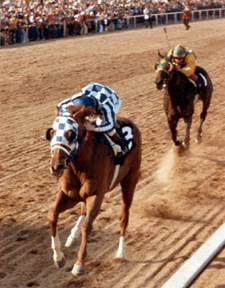
In three single races, two amazing horses met their fate in 1973.
Thorough his victories, Secretariat set new records for the racing world to marvel over for countless decades.
And, through defeat, Sham delivered some of the most poetic moments in racing by practicing “The Art of Losing.”
May 15th, 2010 §
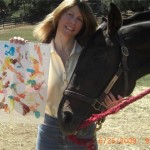
With the help of a former racehorse, Dawn Mellen helps paint a beautiful portrait of how to advance Thoroughbred rescue efforts.
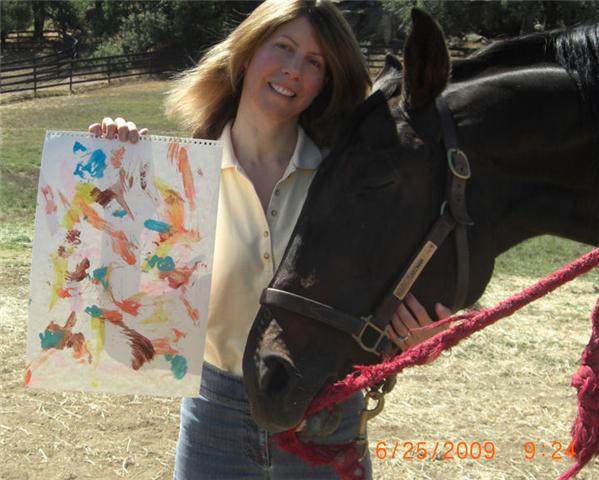
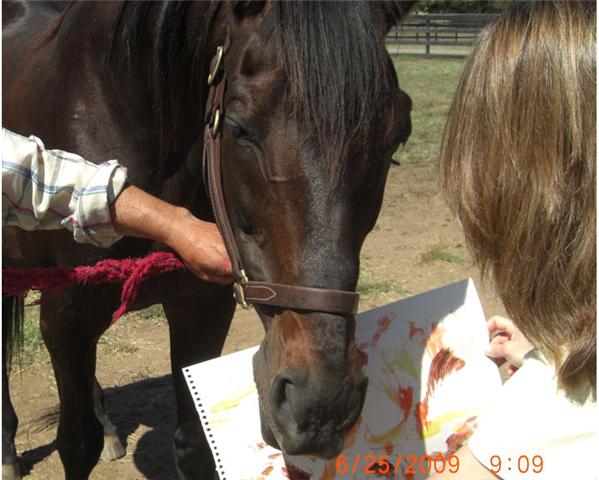
The painter in this picture is named Turkoman – a Thoroughbred that won over two million dollars during his career.
In his retirement, Mellen assisted him to create a painting for an auction to fund the rescue efforts at Our Mims Retirement Haven in Kentucky.
Mellen’s creative funding endeavor with Turkoman is among the many examples of how she has helped Thoroughbred rescue efforts.
Mellen began working with Thoroughbred rescues in the mid-1990s. Through her work, she realized that a major obstacle for rescue organizations was funding.
In 2007, Mellen founded the non-profit organization, After the Finish Line (ATFL), to fund the rescue, rehabilitation, and retirement of Thoroughbred horses that can no longer race or breed.
ATFL provides yearly grants to Thoroughbred rescues to fund the expense of rescue efforts. The organization also has established an emergency fund to assist horses as needed throughout the year.
The board members of ATFL receive no salary - all donations directly benefit Thoroughbred rescue.
 Funds provided to ATFL are used for various purposes, including saving horses at auctions, paying for medical expenses, providing hay and feed, paying boarding expenses, or transporting a Thoroughbred to safety.
Through funding basic needs of the horses, Mellen helps to assist in achieving the broader goal of transitioning ex-racehorses into second careers.
As a result of grants from ATFL, Thoroughbreds are retrained for hunting, jumping, dressage or trail riding.
If a horse cannot ride, the horses are retrained for equine therapy or as companion animals.
Mellen’s work proves that a racehorse doesn’t lose its worth at the end of their last race.
After the finish line, a Thoroughbred racehorse holds the potential to make a brand new start.
In a recent interview, Mellen discussed her organization and provided stories about Thoroughbreds who were rescued through the support of ATFL.
JW: Is your organization opposed to the sport of horse racing?
DM: ATFL is not opposed to horse racing. We are here to say that there are alternatives for these talented Thoroughbreds when their racing or breeding careers are over. They deserve the opportunity to transition into a second career.
JW: How does ATFL acquire funding for rescue efforts?
DM: ATFL received donations from individuals, corporations and foundations. Our support comes from the racing industry participants (owners, trainers, breeders, fans, etc.), people who own off the track Thoroughbreds and those who care about the welfare of these animals.
JW: How many rescues receive funding from ATFL?
DM: In 2009, 47 rescue organizations received funding from ATFL. We anticipate helping 50 - 60 rescue organizations in 2010.
JW: How are Thoroughbreds acquired by rescue organizations?
DM: Several ways. Many Thoroughbreds are purchased at auctions. Others are purchased or donated by owners, trainers, animal control or from people who can no longer take care of their horses.
JW: Can you cite a few examples of horses that your organization provided funding to facilitate their rescue, retraining, or retirement?
DM: Safe Haven Horse Rescue in CA rescued Excessorized, a descendant of Secretariat. However, her racing ability fell short of Secretariat’s talent. Excessorized raced nine times at Golden Gate Fields and earned $2,700.
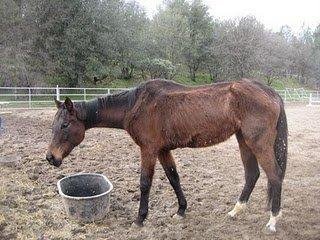
Seven months after she left the racetrack, Animal Control found her emaciated and neglected. ATFL paid for vet, farrier and dental expenses - plus special feed that helped her gain 300 pounds.
 In Michigan, After the Finish Line donated funds to purchase winter blankets for thirteen Thoroughbred ex-racehorses.
Temperatures fell below zero and snow drifts rose to the Thoroughbreds bellies. With many long, cold winter months of snow and freezing temperatures these thirteen horses will appreciate their new blankets.
In another case, ATFL’s monthly emergency funds were awarded for Eyes Left who raced as a two-year-old at Sunland Park and Ruidosa Downs in New Mexico.
To save him from auction he was purchased privately and brought to Texas. He became a Western riding horse.
Eventually, Eyes Left and his owners developed health issues and he was sent to Triple MeMac rescue. Triple MeMac will receive $1,000 for exam, dental, farrier, x-ray, vaccination and rehab expenses so Eyes Left can transition into a second career.
After The Finish Line is a 501(c)(3) non-profit organization in which all donations are fully tax-deductible. Visit the ATFL website at www.afterthefinishline.org or call 858.945.1371 to learn more or make a donation. You can also visit ATFL on Facebook by clicking this link.
April 26th, 2010 §
Throughout history, no female trainer has ever won the Kentucky Derby.
Only a handful of female trainers have ever tried their luck in the race.
Shannon Ritter is setting out to challenge those odds in her first start as a trainer in the upcoming Kentucky Derby.
Prior to becoming a trainer, Ritter worked as an exercise rider and jockey. Five years ago, she began training horses on her own after learning from Elliott Walden, racing manager at WinStar Farm.
In February, Ritter raced Endorsement in a maiden race at Oaklawn Park. The race was on the undercard of the Grade III $250,000 Southwest Stakes – which Conveyance won.
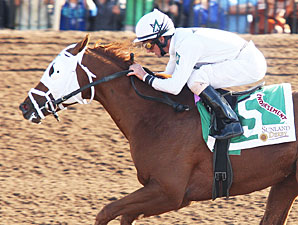
In an impressive 2 ½ length victory, Endorsement broke his maiden on his third career start.
After his maiden win, Ritter entered Endorsement in the $800,000 Grade III Sunland Derby. In that race, Conveyance was the favorite at odds of 3-5.
 In an authoritative three-length victory, Endorsement won the Sunland Derby.
The win secured Endorsement a spot in the upcoming Kentucky Derby.
As Ritter prepares the horse for the race, she remains actively involved in his training. On April 17, Endorsement worked five furlongs at Keeneland in 1:01.60.
During the workout, Ritter rode the horse herself.
When asked who would work him leading into the Kentucky Derby, Ritter explained, “I haven’t decided yet who will work him, but it will probably be me.”
Clearly, Ritter isn’t afraid of hard work and tough odds.
She takes them with stride.
In a recent interview, Ritter talked about her career in the racing industry and her first start as a trainer in the Kentucky Derby with Endorsement.
JW: What first inspired you to work with horses in life?
SR: I think I was just born with it in my blood. I grew up in Minnesota, where there weren’t any race horses. I had just seen them on TV.
I always loved horses as a little girl. It was just something inside me.
When I graduated high school, I decided to leave Minnesota and pursue my dream of being with race horses.
JW: How does it feel for you to go to the Kentucky Derby for your first time in your training career?
SR: It’s every trainers dream. It’s such a prestigious race in the racing industry. Every trainer has the dream of having a horse in the Derby, as well as winning it.
It’s been real exciting. We’re looking forward to Saturday and all the excitement of Derby day.
JW: If you were to win the Kentucky Derby, you would be the first female trainer in history to win the race. How do you feel about having the opportunity to make history?
SR: I feel really good. It would be amazing to make that kind of history as a female in the racing world. Not only for me - but for all females.
JW: You have worked as an exercise rider and jockey. What inspired you to become a trainer?
SR: After I quit riding, I became an assistant trainer for Elliot Wallace. I’m the type of person who is always challenging myself to move forward and try different things.
As an assistant trainer, you’re basically a trainer without having the complete responsibility and making all of your own decisions. So, I just wanted to go ahead and try it and see how it went.
JW: You just rode Endorsement in a workout on April 17. Do gain any special understanding of your horse by being the rider during workouts?
SR: No doubt about it. I have experience riding from being a jockey.
Sometimes as a rider, you can feel things that you might not see in the eye while watching a horse.
For me, the breeze is important, but the gallop out is just as important. The way a horse gallops out can give you an indication of how well he is doing.
[As the rider,] I have the opportunity to make that decision – to let the horse ease up on his own or let him gallop out if they are doing extremely well. If they don’t need to gallop out, I can make that choice as well.
JW: What strengths do you see in Endorsement?
SR: One of his strengths is that he’s a pretty cool customer. He handles everything well and he doesn’t let things upset him too much.
He knows how to rest when he needs to rest. He eats well. He’s been traveling well. It didn’t seem to upset him traveling when we went to Sunland Park.
I think that’s going to be his biggest asset. I think he’ll handle all the hoopla well on Derby day.
JW: Does Endorsement have any favorite items or things?
SR: He likes both peppermints and apples. He likes anything – he’s a pretty good eater.
He’s been devouring peppermints lately.
JW: What is the general temperament of Endorsement?
SR: He’s pretty professional and nice to be around.
He likes to have friends. He’ll nicker a little bit at some of the other horses. It’s not bad – he just wants to be friends.
JW: What makes the Kentucky Derby a special race for you?
SR: For me, my dream was to ride in the Kentucky Derby since I was a rider. I loved to ride. I still love to ride.
After not being able to do that, this has been pretty special to train a horse for the Derby. To train a horse for Winstar Farm and go to the Kentucky Derby for them just makes it really special.
 It was if Rachel said, “Fine. If a match race is what you want, I’m delivering it. Right here. Right now. On my terms.”