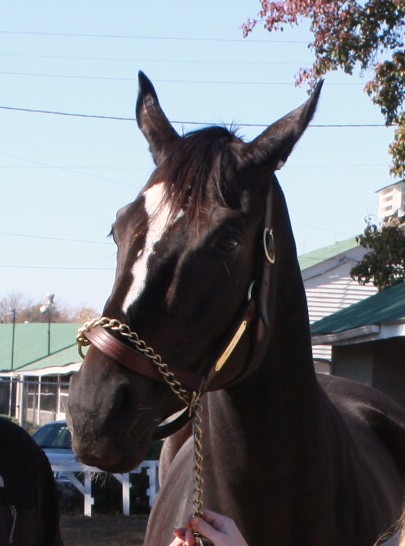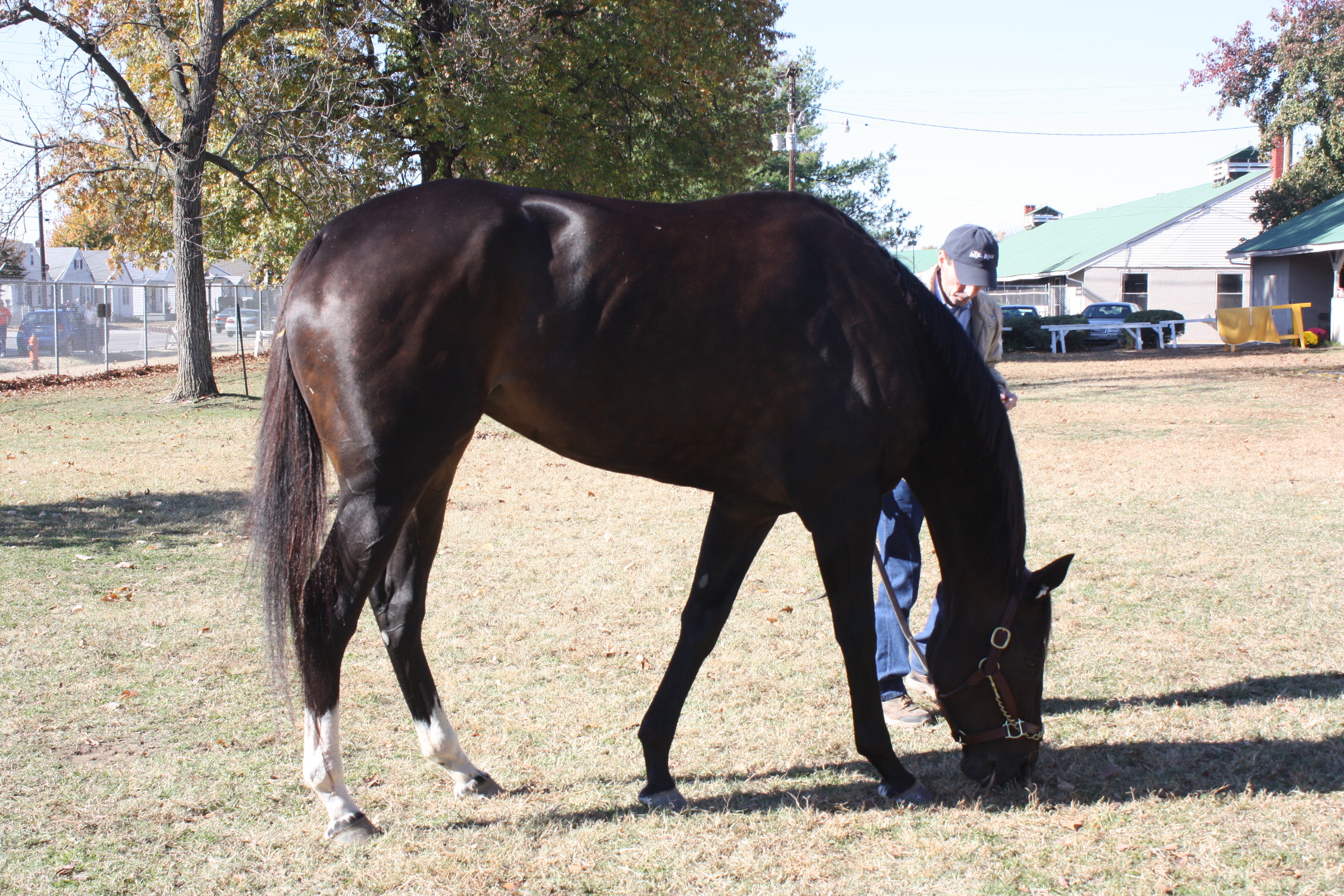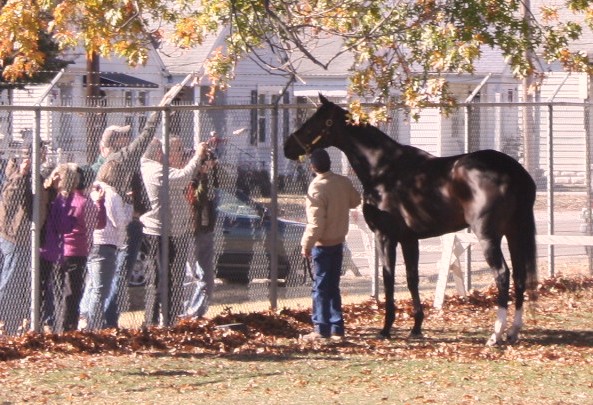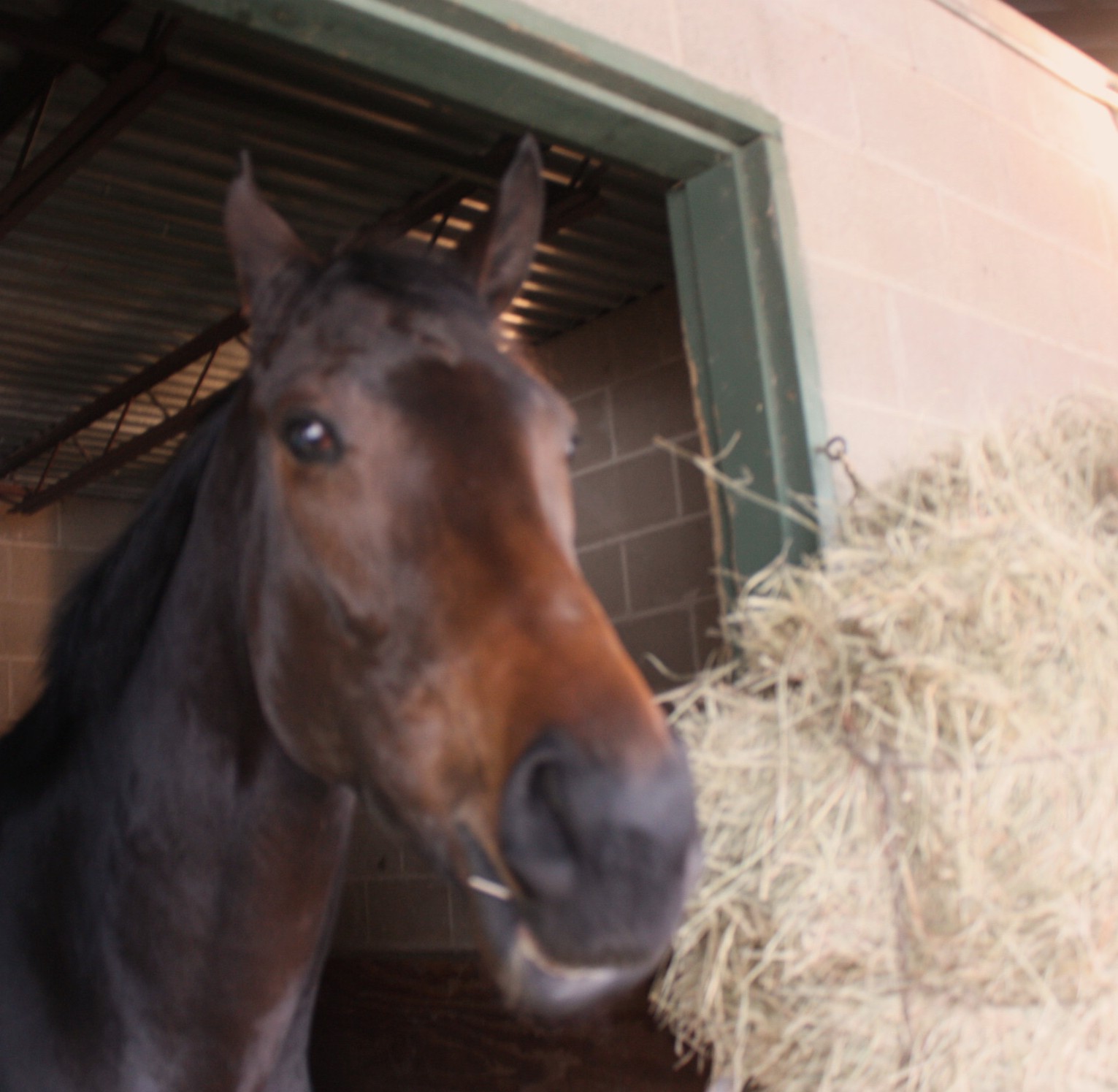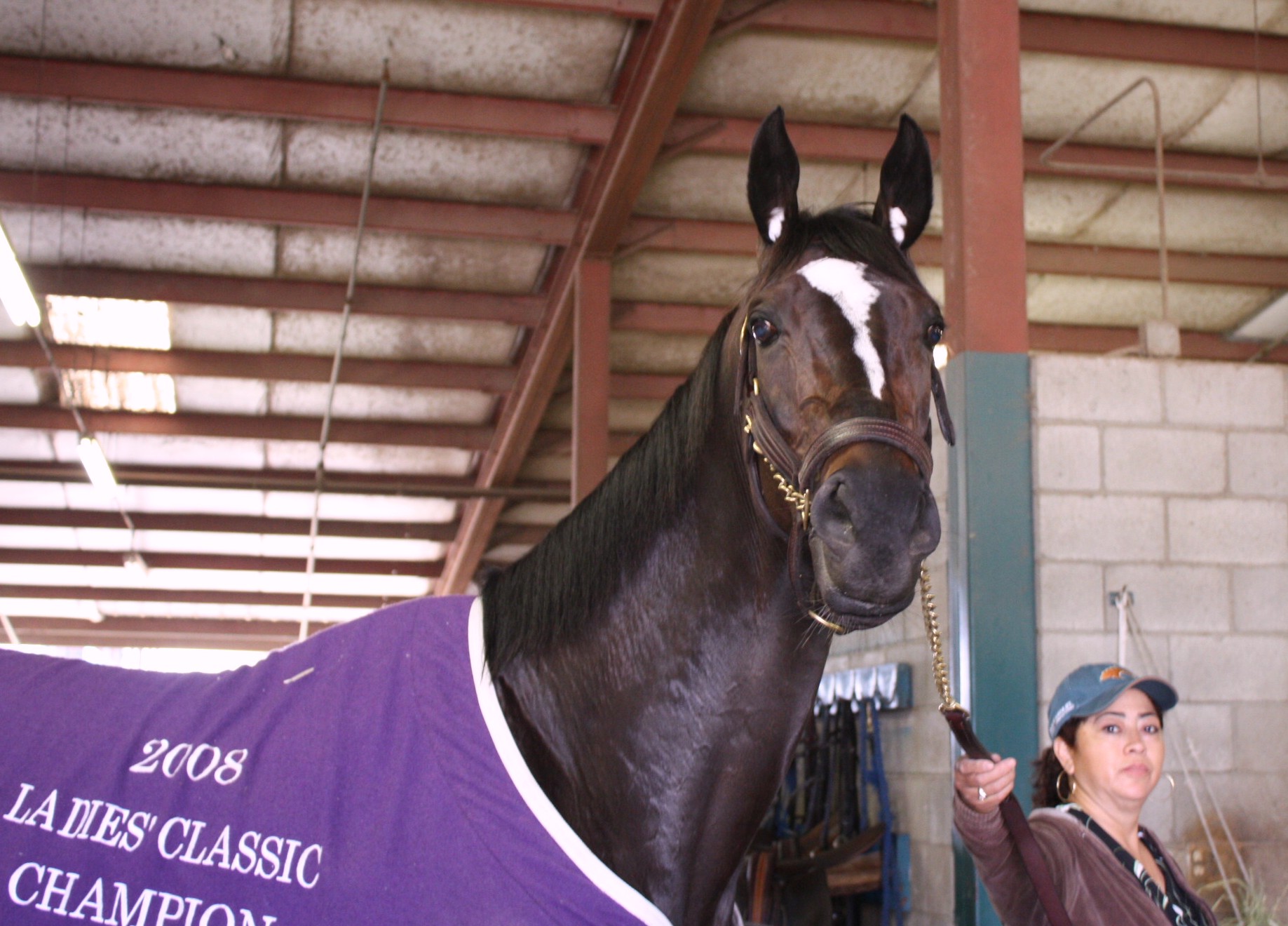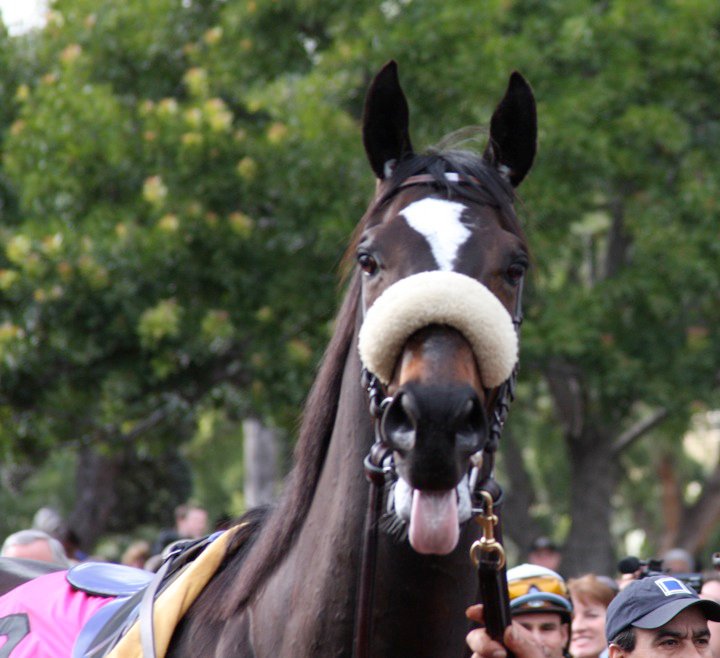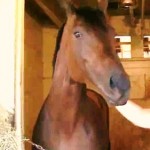
Trainer John T. Ward, Jr. Talks About Dancinginherdreams.

February 14th, 2011 § 15

In 1979, Trainer John T. Ward, Jr. and Owner John Oxley teamed up in the racing world and set out on a journey that would ultimately deliver a Kentucky Oaks victory in 1995 with Gal in a Ruckus and the second-fastest Kentucky Derby winner in history with Monarchos in 2001.

It seemed they had already realized the dreams that many trainers and owners chase throughout their lifetime.

Yet, the beauty of racing is that a horse can simply show up and defy whatever was previously imagined to be possible in a lifetime. And, it is part of the glory of the sport that one can spend a lifetime living inside the wonder of what dreams may lay ahead.

For the Ward/Oxley team, a new dream appears to be taking flight with the arrival of Dancinginherdreams, a three-year-old filly that juxtaposes grace and grit in a fashion that is simply otherworldly in description.

In her three career starts, Dancinginherdreams has claimed two dazzling come-from-behind victories and placed after delivering a breathtaking finishing charge in the Forward Gal Stakes. As she points to her next outing, Ward graciously agreed to answer my questions about Dancinginherdreams as she continues to move forward on the trail toward the Kentucky Oaks.

WIRTH: You have trained some very special horses in your career, including Beautiful Pleasure, Kentucky Oaks Winner Gal In A Ruckus, and Kentucky Derby Winner Monarchos. Do you believe that Dancinginherdreams is a special filly?

WARD: Yes. I believe that Dancinginherdreams is a special filly. My wife trained Beautiful Pleasure and she was a superior athlete. This young filly could fill those shoes.

As far as Gal In a Ruckus and Monarchos, Dancinginherdreams is better than Gal In A Ruckus. Hopefully, Dancinginherdreams has the endurance and the closing style of Monarchos. His style is more indicative of my training.

WIRTH: Was Dancinginherdreams trained to deliver a “Come-From-Behind” finish in her races or is that her own personal style?

WARD: I am trying to develop that trait in Dancinginherdreams.

When she ran in the Forward Gal and came in second, she was sharp enough to go immediately to the lead and had the speed to do it. But, I don’t want to teach her to leave the gate in a sprint fashion because she is capable of endurance and has the physical structure to go two-turns in a race.

I had to sacrifice the early part of the race in the Forward Gal the other day because I didn’t want to ruin her chances of being a horse that comes from behind.

WIRTH: In the Forward Gal, were you impressed with the late charge from Dancinginherdreams?

WARD: Yes. It was gratifying. I don’t mind getting beat if I see the horse displaying other dimensions in a race.

Dancinginherdreams showed other dimensions in the Forward Gal. She got down on her belly and showed as much grit as she could get. She raced up to the filly that won and got her past the wire. In her mind, she chased her down.

When she is in a race, Julien Leparoux, her rider, says she just melts in his hands and looks for the holes to go through. When she finally did get clear in the Forward Gal, Dancinginherdreams showed that she has an amazing closing kick.

WIRTH: In her three career starts, which race did you personally find the most impressive?

WARD: I thought that the Forward Gal was her most impressive race so far. She ran against a very good group of fillies and she was still able to close against experienced racehorses that had multiple wins.

Her stakes win at Churchill last fall was a good stakes win for a two-year-old, but the Forward Gal showed that she could somewhat dominate in a group of experienced horses when put to the task.

I am looking forward to seeing her race a mile in the Davona Dale at Gulfstream on February 26. The Davona Dale should be right up her alley.

WIRTH: How would you describe the personality of Dancinginherdreams?

WARD: When she is racing, Dancinginherdreams has the mind of a five-year-old or six-year-old racemare. She is very tactical in her races and will do anything you want her to do. Older horses look for holes in races and sometimes they can even see them before the rider. She already has that instinct.

Dancinginherdreams also doesn’t mind going into tight places in her training in the morning. I think she showed that in her second win.

Finally, she just has a different dimension because she can explode in the last quarter in a race. It is a factor that will make her a very dangerous filly in the Kentucky Oaks.

WIRTH: What are some of her favorite items or unique traits?

WARD: Dancinginherdreams is a young, tall, spoiled girl. When we come into work in the morning, she gets anxious. So, she immediately gets to come out and walk for 25-30 minutes the first thing in the morning. Once she comes back in, she gets ready to train. When she trains, she has a favorite pony that accompanies her to the racetrack.

She also has a shed foreman, an elderly gentleman, and she just loves him. Whenever she thinks anything is wrong, she just jumps over next to him. He’s her human.

She does have an explosive temperament, but she manages it very well. I call her a ‘professional woman’ when she is racing and a ‘teenage girl’ when she is around the barn. She will constantly have you on your toes to keep her happy. She loves eating peppermints and carrots.

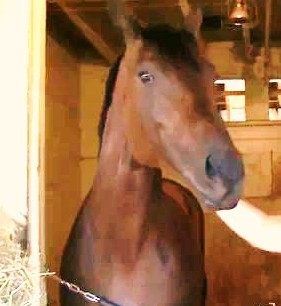
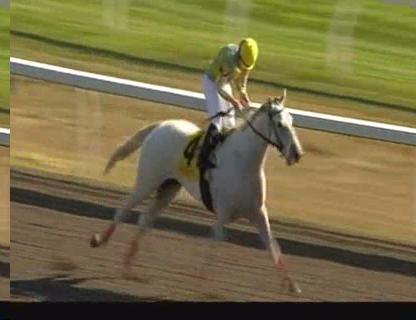
Her nickname is ‘Pinky’ because she is so white. When you give her a bath, her skin is pink. Her skin is pink and freckled underneath her coat.

WIRTH: What would it mean to you if Dancinginherdreams raced in the Kentucky Oaks?

WARD: Being a person from Kentucky, to me, it is the most elevated race for a filly. I think it is a great accomplishment. My wife and I would just be thrilled to have two Kentucky Oaks winners.

A win in the Oaks would emphasize our style of training. A slow, patient, classical style of training pays off in the end with horses. It might get you beat sometimes. But in the end, our whole theory is, ‘Raise them like champions. Race them like champions. And, make them disappoint you.’

WIRTH: What is your favorite moment with Dancinginherdreams at this point in her career?

WARD: I think the greatest experience that I have had with her was in the past few days.

Lately, she wants to get aggressive when she is training in the morning and she wants to take charge. It’s the bubbly teenage girl inside of her that says, ‘Well, I’m going to go out there and do it however I want to. You can’t tell me what to do.’

In the past few days, she has been working on a long, ¾ of a mile training path outside of the regular track. She has been going back there without the pony for a couple of days.

You can see the confidence exude out of her and she is in the zone where training is the most important thing to her now in the morning. You could fall down right in front of her and she’d just walk right over you and continue her training. She is not wild. She is just being very controlled.

I believe she is at the point where she is done being a teenage girl and starting to be a young lady. And, she’s becoming a very athletic young lady.

Want to stay posted on Dancinginherdreams? You can follow her on Facebook through clicking here.

» Read the rest of this entry «

  • Share/Bookmark

Tips for Bernardini on Courting Zenyatta.

February 5th, 2011 § 14

In the past few weeks, a celebrity couple emerged with the announcement that Zenyatta, reigning Horse of the Year, would be bred with Bernardini, the freshman sire that produced the most graded stakes winners with his first crop of runners in 2010.

With the announcement of the mating, a frenzy of potential “baby names” swirled throughout the media and social networking sites. The Thoroughbred Times held a contest to “Name the Zenyatta-Bernardini Foal.”

I read through a flurry the names proposed by readers in the comment section for the naming contest. Zendini. Bernyatta. Berzen. Attadini. There was even a spin-off from the popular song on the “Zenyatta Mondatta” album, “Don’t Stand so Close to Me.”

The proposed name: “Don’t stand so close to Z.”

Personally, I find it absolutely delightful to ponder ideas for naming Zenyatta’s first foal. Yet, in the spirit of romance, I believe that Zenyatta deserves a little courtship before she dives into motherhood. After all, she is quite possibly the best mare of all time.

As such, I would like to propose a few tips for Bernardini on courting the great mare and future mother of his foal.

Speechless? Being Quiet Isn’t Always a Bad Thing. In a dream world, Bernardini, you might have been able to grab Zenyatta’s attention through saying something like, “I really enjoyed seeing you win nineteen races in a row,” or “I wonder what it would have been like if we met at the track first.”

But, you seem to be the silent type.

It’s not a bad thing to be a quiet guy, Bernardini. Zenyatta seems to enjoy a little silence with her famous cotton ball-stuffed ears. Instead of trying to win her heart with your personality, take the time to learn about her favorite things.

How do you figure out what pleases a Grade I girl? Not to worry, Bernardini. Zenyatta keeps a diary that says a lot about what she loves and what people have done to show their love for the great mare.

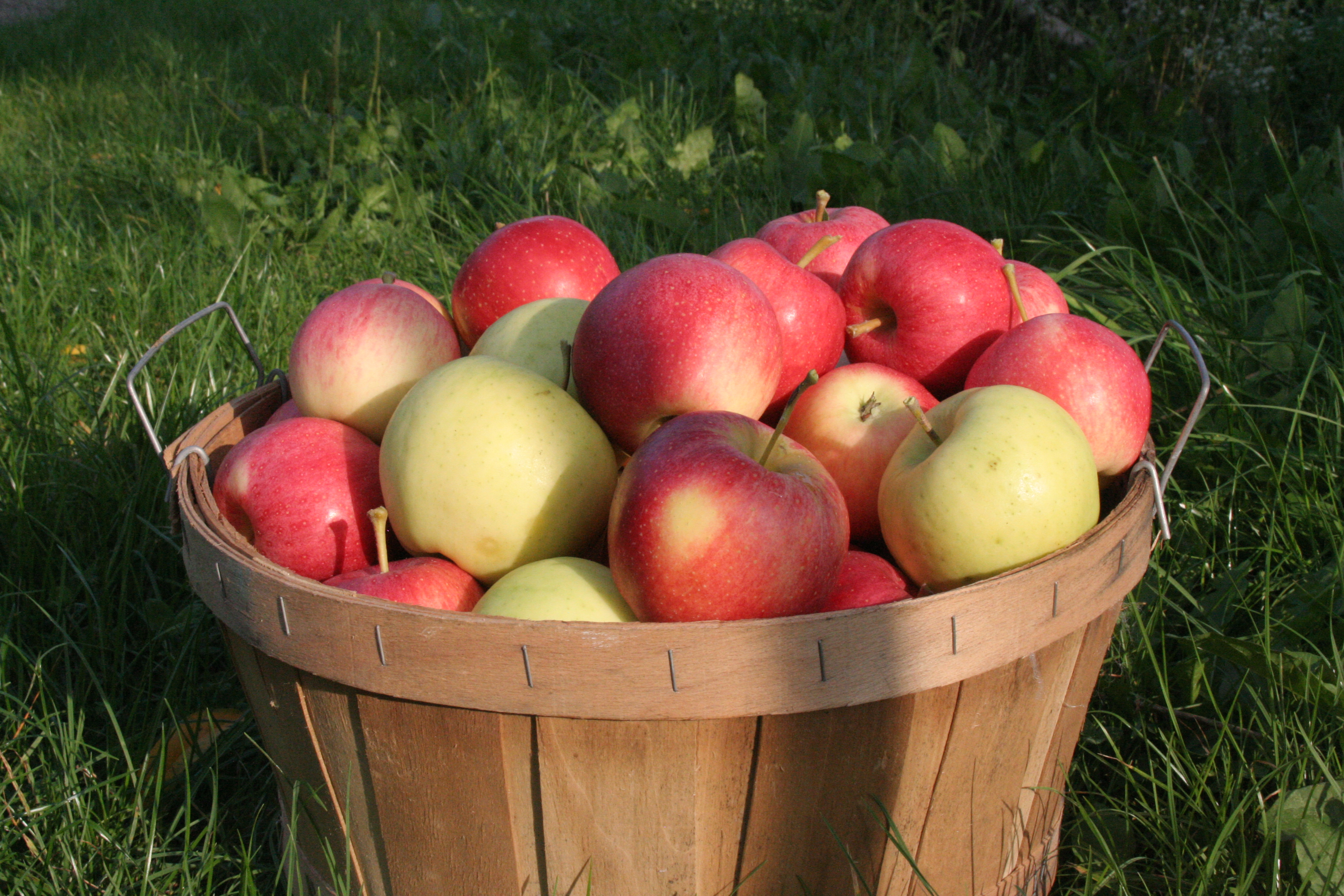
It might do some good to rifle though her diary and find the perfect way to show your affection for the beautiful mare. It may be as simple as handing her a Guinness or helping her paint a picture for Thoroughbred charity. A basket of apples or a few carrots also seem to capture her fancy.

Yet, ultimately, Zenyatta seems to simply enjoy kindness and attention above all else. And thankfully, it doesn’t take a word to convey those sentiments. It just takes a little extra thought and effort. Make the effort, Bernardini. She’s worth every minute of it.

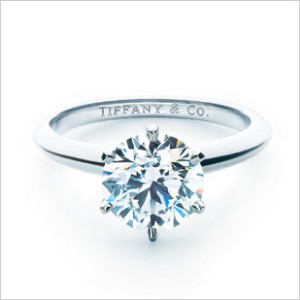
Rings and Things? Money Doesn’t Win Hearts. Are you having trouble finding a hoof-sized diamond ring to show how much you care? Don’t worry about it, Bernardini.

In a fairy tale world, it sure would have been a pleasure to see you get down on bended knee and ask for Zenyatta’s approval in mating. You could have surprised her in the middle of one of her standing ovations in front of an adoring crowd. I can’t even imagine how many fans would have viewed your proposal on YouTube.

Yet, Zenyatta doesn’t seem to mind being non-traditional, Bernardini. Forget about rings and fancy things. This great mare has enough career earnings to buy her own bling for any occasion.

Rather than material things, love wins a good woman’s heart. If you’re trying to court this Grade I girl, spend some time just adoring her unique personality. Watch her dance around the paddock. Take a few minutes to consider the accomplishments in her racing career. She may have beat a few of your guy friends in the past. Not bad for bragging rights, is it?

And, in the end, gaze at the big girl and wonder, “Will I ever see another one like her again?” You probably won’t. Enjoy her company while she is in your presence. Her fans certainly did.

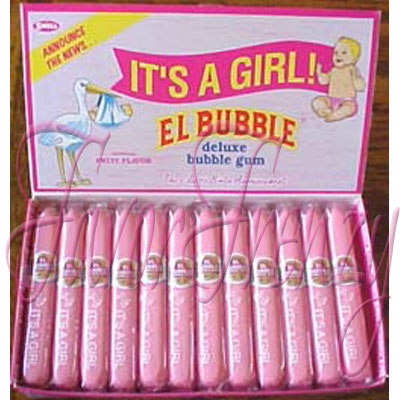
Passing out Cigars? It May Take a Few Tons of Them to Celebrate your Future Foal. I don’t mean to add any pressure here, Bernardini. Yet, if you plan on passing out cigars to celebrate the delivery of your baby, you may need a couple extra boxes for her fans. I’d recommend a few hundred thousand extra boxes at a minimum.

What is a guy to do when faced with such a dilemma? Forget about the cigars and just send out a picture of the baby. I imagine that simple photo will be shared on social media sites faster than Zenyatta’s closing charge in the home stretch. You see, many folks are just as excited as you about the arrival of your future foal with Zenyatta.

Yet, after the foal is born, please remember that anything is possible for their future career. A lot of chatter may focus on whether the foal can follow in the footsteps, or “dance steps,” of their parents. Nevermind these debates or hopes in the racing community.

Yes, it is fun to marvel at the possibilities for your future foal with Zenyatta. And, don’t get me wrong, Bernardini. I would be thrilled if you two had a foal that was equally competitive in dance contests and Grade I outings.

However, in the end, it would be a prize just to have a healthy foal.

And, it is a victory just to be the guy that wins a Grade I girl.

Whatever lies beyond those moments, the story will be told when your foal takes their first step onto a racetrack.

  • Share/Bookmark

“I’ll Take It From Here.” Mike Repole Talks About Uncle Mo.

January 28th, 2011 § 28

A few decades ago, a thirteen-year-old boy in a working-class neighborhood in New York would take the bus to the racetrack with twenty dollars and the Daily Racing Form as a guide.

He was simply a fan of racing.

As a fan, the horses would cascade past him in the post-parade, deliver a fleeting glimpse of themselves in the home stretch and pause for quick photo in the winner’s circle. At the time, the experience was enough for Mike Repole to get on the bus with a few bets and a dream of owning a fast racehorse someday.

He was simply a fan of racing.

In the following decades, Repole would become known for being the co-founder of Glaceau, the company that introduced Vitaminwater, as well as the Chairman of the Board for Pirate’s Booty snacks and the health-conscious Energy Kitchen fast food restaurant chain. Yet, in six years of owning racehorses, Repole wouldn’t be known in the racing world for a graded stakes victory. He was winless in all of his graded starts as an owner.

However, Repole remained an owner and fan of racing.

As he maintained his stable, Repole continued to search for the “fast racehorse” that he had envisioned in his youth. And finally, a two-year-old bay colt showed up and silenced any doubt that Repole had found “the one.”

In his debut, Uncle Mo delivered a 14 ½ length maiden victory for Repole at Saratoga. Shortly thereafter, the colt proved to be blessed with speed as he won the Champagne Stakes in an authoritative 4 ¾ length victory that gave Repole his first graded win as an owner. In his last outing, Uncle Mo showcased his talent during a captivating victory in the Breeders’ Cup Juvenile.

All eyes turned to Uncle Mo. It appeared that a new dream was beginning in the racing world.

It is a dream for all fans of racing.

With an undefeated record and astonishing speed figures, Uncle Mo is currently poised as the horse that can deliver the dream of winning the Triple Crown. He is beyond the “fast racehorse” that Repole wished for as a boy. Uncle Mo is the kind of horse that racing enthusiasts have wished for since 1978.

And, Repole wants to share Uncle Mo with every fan of racing.
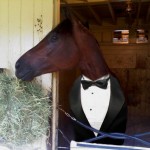
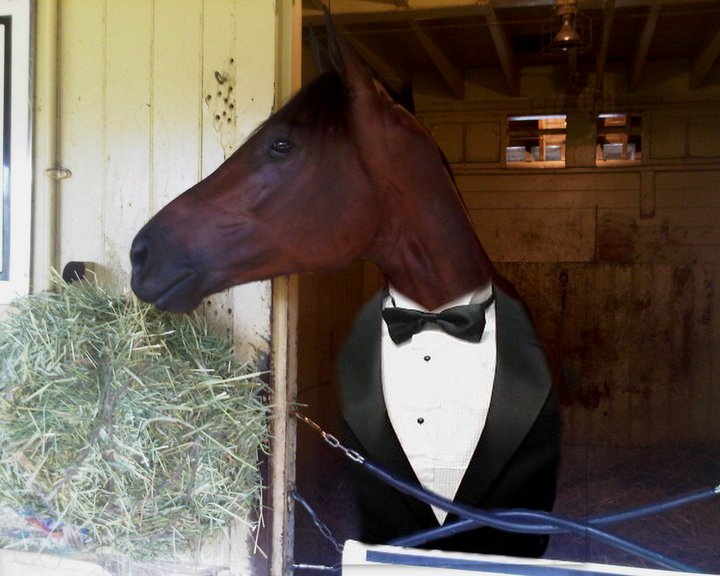
Uncle Mo has a page on Facebook and Twitter. Fans could see a photo of Uncle Mo posing in a tuxedo for the Eclipse Award ceremony, where he ultimately received the Best Two-Year-Old Male Award in a fan-focused acceptance speech from Repole.

Uncle Mo also posts videos and photos about his activities, including a picture of Repole feeding the horse his favorite treat, Pirate’s Booty “Smart Puffs.” Recently, Uncle Mo posted a video of him galloping at Palm Meadows to show his progress in training. In the past few days, hundreds of people have viewed the clip.

Finally, fans are encouraged to talk to Uncle Mo through his Facebook wall. Uncle Mo is hoping to receive a few valentines from his admirers on February 14 and is looking forward to hosting a virtual “birthday celebration” on his foaling date of March 10 via Facebook. If you want to join the festivities, you can follow Uncle Mo through clicking here.

And, after decades in the sport, Repole doesn’t lose sight of simply being a thirteen-year-old fan of racing. As fate would have it, Uncle Mo started out on Facebook through a thirteen-year-old girl named Rebecca Case who created a page for the horse.

She is simply a fan of racing.

When Repole learned that Rebecca Case had made a page for Uncle Mo, he asked his connections to contact the thirteen-year-old racing fan with a small request: He wanted to help the girl with her Uncle Mo page and keep her updated on the horse.

Today, Case and Uncle Mo’s connections work together to make the horse accessible to fans. And as a team, they prove that some dreams never grow old.

Uncle Mo is the dream of a thirteen-year-old racing fan, both today and decades ago.

And, Uncle Mo could deliver a dream to many racing enthusiasts who marvel over whether he can win the Triple Crown.

Yet, whatever Uncle Mo accomplishes in his career, one thing is certain. Uncle Mo isn’t just a “fast racehorse” or a “Triple Crown prospect” in the eyes of Repole. He is part of an experience that should be shared with anyone, young or old, that is simply a fan of racing.

As Uncle Mo points toward his three-year-old debut, Mr. Repole has graciously agreed to answer my questions about the horse. The interview appears below.

JW: Prior to his first victory, did you believe that Uncle Mo had the potential to be a special horse?

MR: I was always excited about Uncle Mo. He was always the best on the farm in Florida where I break 25 of my yearlings. We knew he was the best on the farm, but you’re never sure when your horse is still at the farm.

Then, we went to Todd Pletcher’s barn around May. Todd trains the best two-year-olds in the country and usually has three or four horses in the Derby. When Todd Pletcher tells you that he’s training eighty horses and Uncle Mo is the best horse, you get excited.

But, being the best in the morning, doesn’t always translate to being the best in the afternoon. ‘Show Time’ is a lot different than practice.

Until Uncle Mo raced in his maiden at Saratoga, I didn’t know what to expect. Then, I was awed by his performance, as were many people. And, after that, I started to think and dream. He’s lived up to every expectation since his first race.

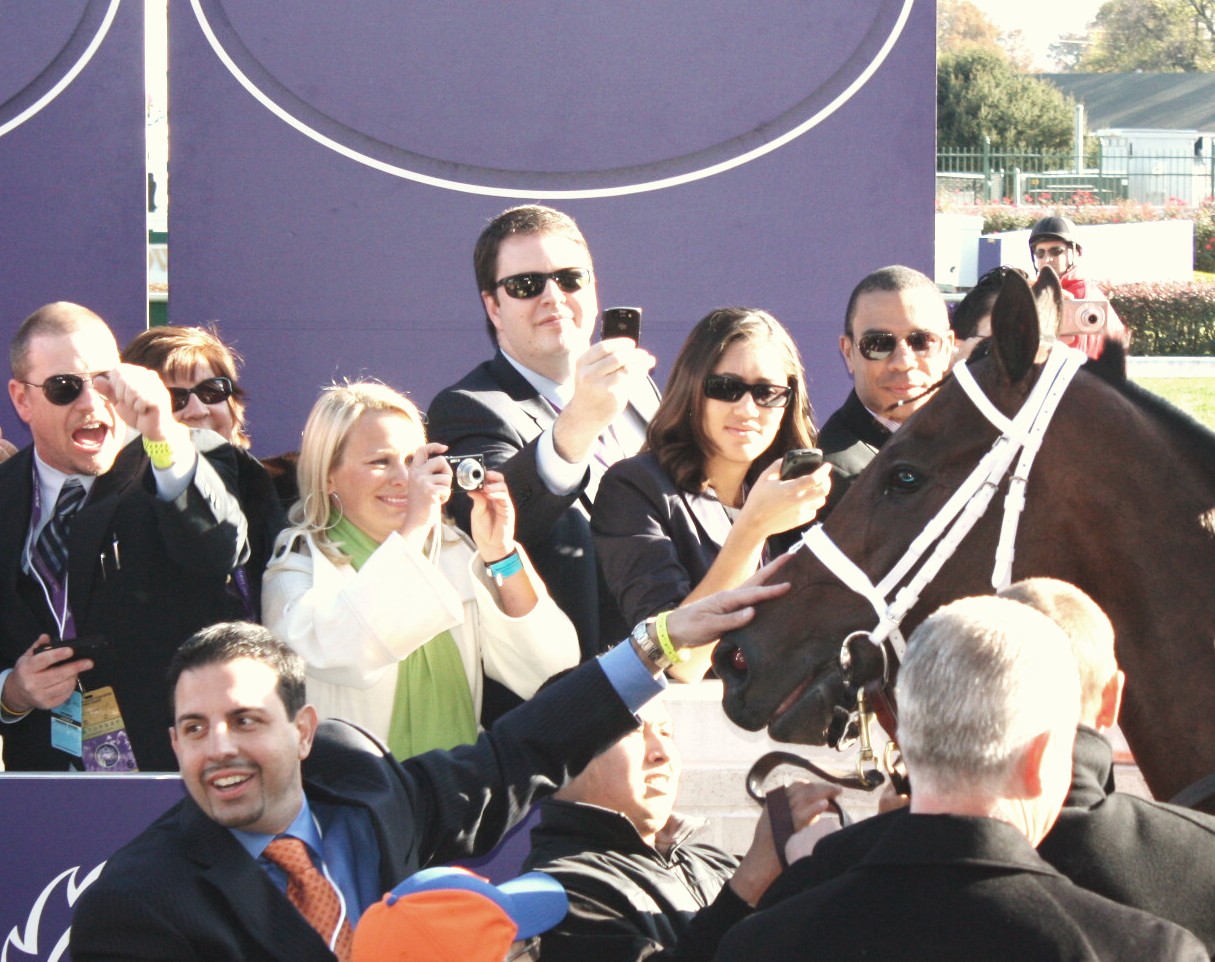
JW: At the Breeders’ Cup, you personally led Uncle Mo into the winner’s circle after he won the Juvenile race. How did you feel as you approached the winner’s circle with him?

MR: I just felt like a thirteen-year-old kid at the track, cashing a two-dollar bet. It was just such a great and genuinely happy moment. It was something that you dream about and you think about. And then, you shoot your dreams and goals as high as they can go.

It was an amazing accomplishment to watch a horse race in the Breeders’ Cup that you can call your own. It is an accomplishment for any owner.

But then, to actually win, it was a great racing moment. Just in that moment right there, I felt like a thirteen-year-old at the track for the first time and getting spoiled.

I am a racing fan before I am a racing owner. I just happen to be a racing fan that owns horses. There was no bigger ‘racing high’ at that moment. It was one of the greatest days of my life.

JW: Do you think Uncle Mo has the potential to win the Triple Crown?

MR: I would say, ‘Think Big, Dream Bigger.’

Whether Uncle Mo has the potential or not, we’ll know the answer on June 11 at the Belmont, or we may even find out at the Kentucky Derby.

But, I can’t tell you that I’m not dreaming of winning the Kentucky Derby or that I’m not dreaming of winning the Triple Crown. I’ve been dreaming of this for almost thirty years. The only difference now is that I have a horse that has the potential to actually do it.

As for his potential, I have no doubt. But, a lot has to happen in the meantime. It takes a lot of luck. A lot of great horses have not won the Kentucky Derby or the Triple Crown. A lot of great horses have won one or two of those races, but didn’t win the Triple Crown.

Yet, I think for racing and racing fans, whether it is Uncle Mo or some other horse, it would be great for the sport and great for racing fans.

JW: Could you describe some of Uncle Mo’s personality traits and favorite items?

MR: Every time I go to the barn, I give Uncle Mo an extra carrot or two. He gets a few extra peppermints. He gets Pirate’s Booty Cheddar Puffs. Todd doesn’t give him the Cheddar Puffs, but he knows I bring them to Uncle Mo.

Uncle Mo doesn’t act like a young three-year-old. When he is laying down or he is at the back of the stall, I will call him by saying, “Hey Mo.” He will come right over and put his head on my shoulder.

He is like a monster on the racetrack, but he has a totally different personality in the stall. He is just happy-go-lucky and has a great personality. You don’t need a treat for him to come over to you. He is just a great horse.

Uncle Mo is also a very smart horse. Todd has always told me that not only is Uncle Mo one of the most talented horses he’s ever had, but he has the brains to go with it. He just does everything right. He is the model student. He doesn’t have any bad habits.

And finally, he does everything right the first time, no matter what he has been asked. Even Todd is amazed. It’s scary to be honest with you.

JW: You have made a strong effort to give Uncle Mo’s fans access to him. What makes this principle so important to you?

MR: It goes back to me being a racing fan for thirty years. The only access that I had as a fan was looking at the workouts and those types of details about each horse.

Now with social media, Uncle Mo has a Facebook page with a following of almost 2,000 fans. It is growing every day and every week. The way I see it, people want to know more about this horse. His site visits are going up on a regular basis. He has a Twitter account and he tweets things that are coming up and things that he has planned.

When Mo speaks, he might get fifty comments behind it. And, even when he doesn’t speak, people are constantly commenting on his wall. I see it. They say things like, ‘I wish you the best of luck,’ ‘Happy Birthday, Mo,’ or ‘You look great, Mo.’

The sport has to put something out there for the fans. It just can’t be about fractions, workouts, entries and the ultimate race day. It has to be more than that. Before the Superbowl, there is going to be a lot of hype and players talking about what they are doing. I think that racing fans need to be more involved as well and know what the horses are doing.

To me, even if I didn’t own Uncle Mo, I would want to know things like when he planned to workout, which race he was being pointed toward and what he was doing. For example, we put up a video of Uncle Mo the other day just galloping. It was only nine seconds long, but it received tremendous amounts of views. It is just something that many other people aren’t doing, but I wish they would do it, because I am a racing fan first. I am just fortunate enough to own horses.

I think it is important to involve the racing fans a lot more than they are being involved. Racing has so many passionate fans. I’ve always said, ‘If I get a special horse, I want to accommodate the fans.’ The most important thing that the industry needs to do is be accessible and accommodating to the fans. It’s very simple. We just need to take care of the horses and the fans.

JW: When you began going to racetrack, did you ever imagine you would own a horse like Uncle Mo?

MR: I’m sure it was because I was naïve, but I did. I wish I could tell you that I am shocked that this is happening. But, I had dreams about having a horse like Uncle Mo.

After Uncle Mo won the Breeder’s Cup Juvenile, someone asked me if I was thinking about the Kentucky Derby. I said, ‘I’ve been thinking about it for the last thirty years. Why would tomorrow be any different?’

JW: It was reported that you donated $50,000 of Uncle Mo’s winnings from the Breeders’ Cup Juvenile to five different organizations that care for rescued racehorses. What led to this decision?

MR: Before being an owner, I never understood where horses went after they stopped racing. I didn’t know if the owner had a farm and if they just lived on a farm afterward.

When I became involved in racehorse ownership, I realized that owners have a responsibility when a horse is done racing. There is a responsibility to make sure that your horse finds the best possible home in the future.

Under the radar, I have been donating for years. I have been donating to many horse rescues and always making sure that my horses found a home. I have people that send me letters about horses that I used to own and were claimed from me when they were racing. They want me to try to help them get their horse at the end of their racing career and I have helped people get back their horse. To me, it is a great thing.

I also have received letters from previous owners of horses that I owned as they approached the end of their racing career. When the horse was done racing, they wanted the horse to come back to them. Some of those people raised that horse on their farm and they wanted them to come home at the end of their career.

So, once a horse gets to a certain level where they would just be running for small claiming races, I just stop running the horses and give them back to the person who asked for their horse to come home. And, they are appreciative. They often send me a letter and it confirms to me that I’ve done the right thing.

I think I had an opportunity with Uncle Mo when I made a donation to those rescues after winning a big race. I wanted to say, ‘This is what I am doing and maybe others should follow suit.’ A person owns a horse from the time they begin racing until the moment the horse is given a good home. Every horse that I am connected with gets a home.

My donation was not only part of supporting horse rescue, but also, a way to thank the people who devote themselves to taking care of retired racehorses. I have the utmost respect for them.

JW: What is your favorite story from your experiences with Uncle Mo?

MR: I actually have two stories about Uncle Mo.

The first story was on the race track. To me, it was bigger to win the Champagne Stakes than the Breeders’ Cup Juvenile. I was the New York Racing Association’s leading owner in 2009, and, at that point, also in 2010, when Uncle Mo was pointing toward the Champagne Stakes. But, there was one thing I had never done before – I had never won a graded stakes race.

As we entered the Champagne, I felt a lot of pressure. Uncle Mo was going from a maiden to a Grade I race. During the race, I kept thinking that he couldn’t keep going that fast and keep it up for a mile in his second start.

When he pulled away by almost five lengths and nearly broke the track record, it was just an amazing moment to see one horse come along and take away the pressure of wanting to win a graded race. And, my whole family was there for that moment. My wife, my parents, my brothers, my grandmother… everyone.

The Breeders’ Cup was a great victory. But, that Champagne win, it was such a special moment in my life. When I raced horses in graded stakes in the past, I used to always watch the other owners go down to the winner’s circle after winning a graded stakes as they were surrounded by reporters and I would wonder, ‘Is that ever going to be me?’ When Uncle Mo gave me my first graded stakes win, it was a very rewarding moment.

The second thing I enjoy about Uncle Mo is visiting with him. There is a lot of stress owning a horse like him. I am nervous for the horse.

After the Breeders’ Cup, I spent an hour and half with him. He has a calming effect. Uncle Mo has this attitude and confidence that says, ‘Why are you nervous? I’m not nervous.’ Whenever I get nervous, I just go and visit him. He just has a way of saying, ‘Don’t be nervous. I’ll take it from here.’
  • Share/Bookmark

The Emotional Journey of Zenyatta to Win the “Horse of the Year” Award.

January 20th, 2011 § 19

On Monday, Zenyatta’s battle to earn “Horse of the Year” ended when she was finally crowned with the honor during the final moments of the Eclipse Awards.

The math was pretty simple on the face of the ballot. Zenyatta had five Grade I victories while Blame won three Grade I races. Blame won the Breeders’ Cup Classic and defeated more Grade I winners in 2010.

At times, Zenyatta was cast as the “emotional” or “popular” favorite in the pre-vote debates for the Award, in part, due to her passionate fan base and discussion of her overall career record. Yes, Zenyatta won 19 of 20 races in her career, with a 5-1 Grade I record in 2010. But, as the argument was made by many, “Horse of the Year” is not a lifetime achievement award or a “popularity” vote.

At the end of the voting, 238 eligible voters cast a ballot for “Horse of the Year.” Zenyatta won the Award with 128 votes while Blame received 102 ballots in his favor. Goldikova garnered five supporters, two individuals did not vote and one abstained.

Those are the basic numbers that amounted to Zenyatta being awarded “Horse of the Year” in a purely mathematical world.

However, as many commentators pointed our prior to the final decision, Zenyatta is also an “emotional” horse.” And, in being an “emotional horse,” she doesn’t live in a purely mathematical world of racing forms and figures.

She lives in both worlds. And, although I believe Zenyatta earned “Horse of Year” on her racing record alone, the intangible qualities that make Zenyatta an “emotional horse” hold a rare and sacred value beyond her racing record.

The “emotional” nature of Zenyatta is her glory just as much as her achievements in racing itself. And, in my view, there is nothing wrong with being “emotional” about horse racing, its’ athletes, and particularly, Zenyatta.

It is wonderful to be emotional about racing.

Through being an “emotional horse,” Zenyatta racked up some numbers that go beyond 128 votes for “Horse of the Year.” Zenyatta’s “math,” just as the mare herself, is focused on a few different equations.

She is the “Horse of a Lifetime” for many fans that witnessed her career. And, at the end of our lifetimes, Zenyatta will still reign immortal in the sport.

Infinity is an “emotional number” for Zenyatta.

Zenyatta also calculated the value of people when doing her math. She welcomed droves of fans that visited her barn throughout her career. Her guests were from all walks of life, including children, celebrities and general fans.

It appears that every fan, whether it is one person or thousands at a race, are “emotional numbers” for Zenyatta.

For those who could not show up at the track, Zenyatta started a Facebook page and website with a “diary” of her activities. She put a video on You Tube that allowed fans to take a “virtual ride” on her back. And, in the process, 60,000 people have followed her activities on Facebook, while 186,000 fans have taken a “virtual ride” on Zenyatta.

It seems like 100,000+ is also an “emotional number” for Zenyatta.

In her final race, Zenyatta saw many individuals at the racetrack. A crowd of 72,000 people stood on their feet to see if Zenyatta could win the Breeders’ Cup this year. And, even in the wake of her loss, the crowd remained standing to give the great mare an ovation in her lone defeat.

I imagine that 72,000 is an “emotional number” for Zenyatta.

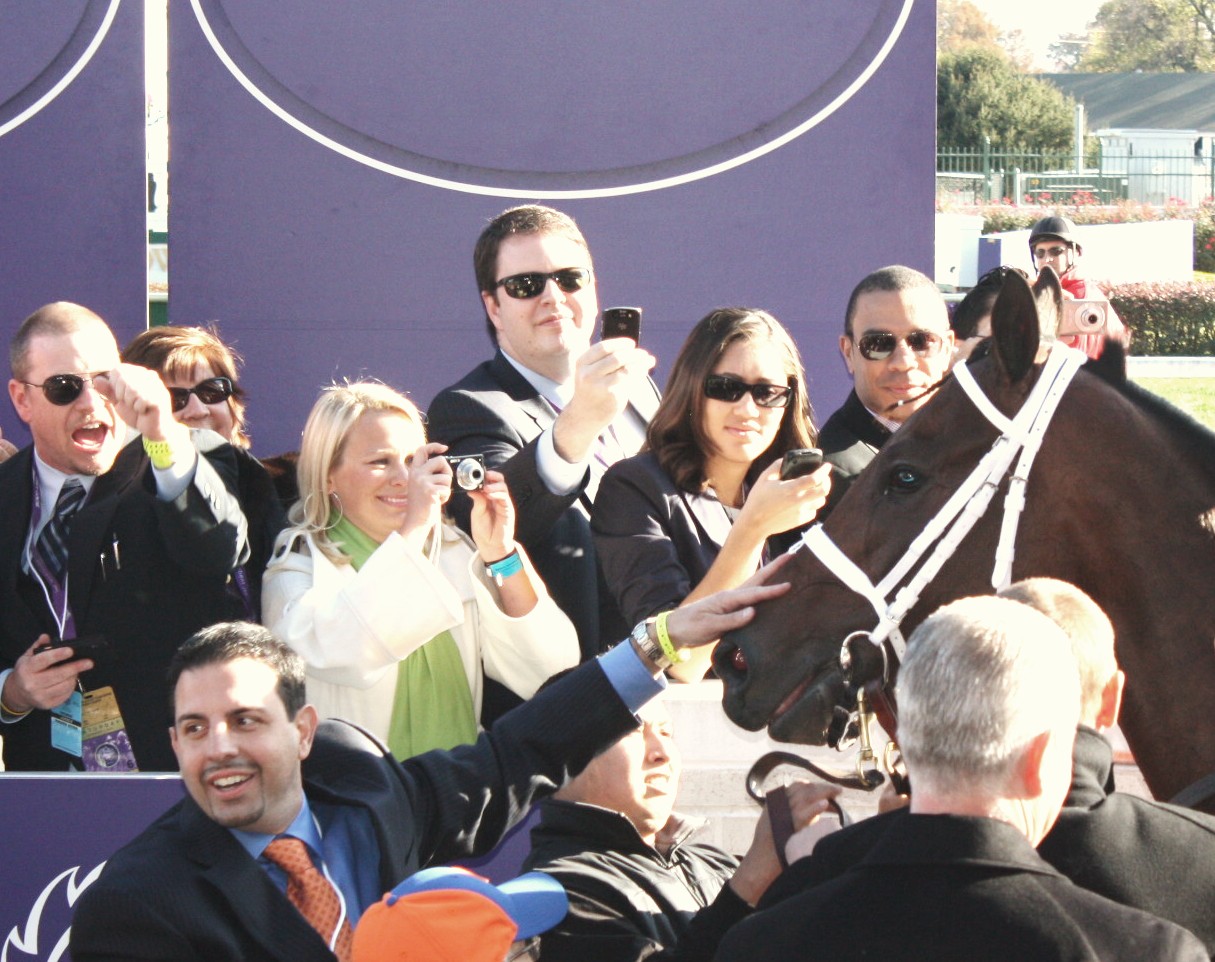
When she was retired, Zenyatta had a number of friends that came out to see her even when she wasn’t racing. As she was paraded during her farewell at Hollywood Park, 11,216 fans shouted her name and took photos of the mare. And, when her plane landed the next day at Keeneland, over a thousand fans stood in the cold night to see her in the flesh.

It appears that 11,000+ is also an “emotional number” for Zenyatta.

But, in the end, 238 eligible voters decided whether Zenyatta’s 2010 campaign merited the “Horse of the Year” award. And, 128 voters deemed that she was “The Horse of the Year” in 2010.

I imagine that 128 is an “emotional number” for Zenyatta after her three-year campaign to win the Award.

Yet, there was another vote that shows the glory of being an “emotional horse.” In a Petition sent to the National Thoroughbred Racing Association, 5,807 individuals cast their signature to show their support for Zenyatta to be crowned “Horse of the Year.”

It seems like 5,807 is also very “emotional number” for Zenyatta.

It is the reward for winning the hearts of thousands of people and a show of appreciation for her achievements in racing. The fan vote was not only built on her racing record, but also in the emotional connection that Zenyatta has fostered with her fans.

So, yes. There was plenty of emotion involved in crowning Zenyatta the “Horse of the Year.”

Yet, there is nothing wrong with connecting fans to this sport on an emotional level.

Zenyatta, along with her connections, gave the industry a beautiful blueprint for the future. She involved fans in her endeavors. And, through involving fans, it seemed as if every Zenyatta fan won when she claimed a victory.

On Monday night, Zenyatta claimed her final victory.

And, for many who supported her campaign, they claimed a quiet victory as well.

It was emotional victory for Zenyatta and her fan base.

It was the perfect model for a “Horse of the Year.”

  • Share/Bookmark

Horse of the Year? Win or Lose, Zenyatta Remains a Champion.

January 17th, 2011 § 1

“It is not the critic who counts: not the man who points out how the strong man stumbles or where the doer of deeds could have done better. The credit belongs to the man who is actually in the arena, whose face is marred by dust and sweat and blood, who strives valiantly, who errs and comes up short again and again, because there is no effort without error or shortcoming, but who knows the great enthusiasms, the great devotions, who spends himself for a worthy cause; who, at the best, knows, in the end, the triumph of high achievement, and who, at the worst, if he fails, at least he fails while daring greatly, so that his place shall never be with those cold and timid souls who knew neither victory nor defeat.”

- Theodore Roosevelt

The Saturday Post congratulates Zenyatta on her exceptional achievements throughout her career.

  • Share/Bookmark

The Extraordinary Endeavor of Being an Ordinary Racehorse.

January 4th, 2011 § 25

On January 1st, an Arkansas-bred filly named Gretl turned three-years-old in her barn at Oaklawn Park.

She didn’t receive any birthday cakes, fancy cards and fans didn’t line up for a photo outside her stall. January 1st was simply an ordinary day in her life.

Gretl didn’t seem to mind one bit. She is in the business of being ordinary.

Yet, I would soon learn that the business of being ordinary is quite an extraordinary endeavor.

As I walked through the shed row with her Trainer Tim Ice, I asked questions about all of the horses. I was wondering if any could be potential Triple Crown contenders or win major stakes outings.

It seemed to me that the value of a racehorse in a Thoroughbred stable was based on their ability to rise to the highest peak in the industry.

I was wrong.

There is something extraordinary about being ordinary.

Gretl poked her head out.

For an “ordinary” horse, she delivered quite a playful greeting. She stamped her hooves, swooped to kiss at my coat, and when it was impossible to ignore her, she raised her teeth in a silly smile as if she had won something.

And, in that moment, Gretl had me convinced that she had won an extraordinary race that I failed to watch.

But, I would soon learn that she was simply in the business of being ordinary. Gretl hadn’t won a stakes race. She wasn’t pointing toward graded outings. Instead, she is just focusing on ordinary goals in her career.

Right now, Gretl’s goal is to simply win her first race.

I thought, “There must be some spectacular goal after her maiden victory?” In my mind, it seemed to be the point of racing.

I was wrong.

Gretl isn’t focusing on being the next great horse. She appears to think it is extraordinary to be ordinary.

She may be right. Apparently, the business of being ordinary isn’t a small endeavor. Ice explained, “They aren’t all going to be great horses, but they all have their value and worth.”

Gretl is among the quiet majority of racehorses that give their best and fall short of pinning their star in the constellation of immortal greats.

But, there is something great about horses like Gretl. Ice pointed out, “Every horse has their spot where they can win. Any time you win a race, it’s exciting. From the claiming horses to the top level.”

With a single winless horse, my definition of “greatness” evolved into something new. Yes, “greatness” is demonstrated in the champion racehorses and those who excel well beyond our wildest imagination in racing.

Yet, “greatness” is also a quiet endeavor that ordinary racehorses display in their everyday life. Without fan fare or pageantry, Gretl steps onto the track, runs to her fullest capability and fights for a victory to call her own.

Her victories won’t bring garlands of flowers or adoring fans to her stall. In the end, she will simply go back to her stable and bask in an extraordinary moment in her ordinary career.

But, the business of being ordinary is extraordinary. It is the journey of every racehorse to try to tap into their full potential and see where it takes them in the racing world.

It may take them to claiming races or it may lead them to the highest level of racing.

But, wherever it leads, the beauty is in the attempt. It is getting into the ring without any fan fare or glory. And, even a quiet win, however small, is a glorious victory.

Gretl taught me to be a fan of the ordinary racehorse. Racing isn’t just the realm of the ones that garner the spotlight, but also, the horses that spend their career in the shadows of great horses and fight for small moments of victory.

Greatness is present when any horse sets foot on a track and puts in their full effort.

Greatness lives in every victory, no matter how small or big.

Greatness exists whenever a racehorse achieves something extraordinary in their ordinary life.

  • Share/Bookmark

Seeing Stars: The New Year in Racing Through the Camera Lens.

January 1st, 2011 § 5

I believe one of the many beautiful things in racing is that nearly anything can happen in this sport.

Is January to early to start dreaming of the possibilities for the 2011 racing season?

Not in my view.

As the 2011 season gets under way, a new crop of three-year-old horses are taking flight while proven champions continue to build their legacy.

Can Uncle Mo win the Triple Crown? He certainly makes Triple Crown dreams swirl around in my head.

Will Awesome Feather extend her six-race undefeated streak in the New Year? I certainly dream of seeing another filly claim victory after victory.

Can Goldikova deliver a fourth consecutive Breeders’ Cup victory as she continues to race against her own legend? I hope to witness it.

In my mind, one of the most thrilling aspects of a new year in racing is that imagination precedes any answers to those questions.

It is part of the beauty of the sport.

This is a sport of imagination. And, it is a sport where the athletes can go beyond our wildest dreams. They deliver their own dreams to our doorstep, and, in the process, force us to consider new definitions of “greatness” in the sport.

I’m celebrating the New Year in racing.

Anything can happen.

And, it’s starting now.

Click here to see our first highlight video for the 2011 season.

  • Share/Bookmark

The Results: 2010 Kings and Queens of Racing.

December 30th, 2010 § 12

In November, The Saturday Post started an annual fan poll to allow racing enthusiasts to cast their picks for their favorite champions in various categories during the 2010 racing season. The votes are in. Take a look at our fan favorites!

Horse of the Year – Zenyatta.

By an overwhelming 97 percent of fan votes, Zenyatta commanded a solid victory for “Horse of the Year” in our racing poll.

During her career, the great mare commanded rock star power through claiming victory after victory in nineteen consecutive outings. She is the highest female earning racehorse of all time in North America. She won the most consecutive Grade I victories in the sport. She pulled three “three-peats” in the Clement Hirsch, Lady’s Secret and Vanity. Finally, Zenyatta made history through becoming the first female to ever beat the boys in the Breeders’ Cup Classic in 2009.

Beyond the record books, Zenyatta brought many intangibles to the sport. She delighted fans with her dizzying ‘dance routines’ in the paddock, video footage of her guzzling a Guinness in her stable and invited everyone to take a “virtual ride” on her back through a helmet camera she used during a workout.

She also brought the sport into the national limelight. Zenyatta was featured as one of the most powerful women of 2010 in Oprah’s magazine, as well as a figure in the “Society” section of W fashion magazine. She claimed ownership of Los Angeles in her billboard entitled, “This Is My Town,” as part of a marketing campaign for the L.A. Dodgers Baseball Team. Finally, Zenyatta’s segment on 60 Minutes served as the first time the show had ever filmed a piece on a racehorse.

Simply put, Zenyatta delivered a show that was unimaginable before she began her racing career. She made people wonder. She made people cry. She made people marvel at her beauty. And, in the process, she added excitement to the sport for both long-time enthusiasts and newcomers.

Best Older Male Horse – Blame. With 65 percent of votes in his favor, Blame won the fan poll for Best Older Male Horse. During his career, Blame won nine races in thirteen career starts and retired with career earnings of $4,368,214. In 2010, he won three Grade I victories, including the Breeders’ Cup Classic.

Best Older Female Horse – Zenyatta. Aside from “Horse of the Year,” 86 percent of fans also voted for Zenyatta as the “Best Older Female Horse.” Goldikova served as the second choice in the fan poll for this category.

Best Three-Year-Old Male Horse – Lookin’ at Lucky. Preakness-winner Lookin’ at Lucky won best “Three-Year-Old Male Horse,” capturing 74 percent of the votes in our racing poll.

Best Three-Year-Old Filly – Blind Luck. With five Grade I wins, Blind Luck won “Best Three-Year-Old Filly” with 85 percent of fans voting in her favor.

Best Two-Year-Old Male Horse – Uncle Mo. With an undefeated record in three starts as a two-year-old, including his victory in the Breeders’ Cup Juvenile, Uncle Mo has won “Best Two-Year-Old Male Horse” in our fan poll with 80 percent of the votes.

Best Two-Year-Old Female Horse – Awesome Feather. With a six-race undefeated record, Awesome Feather has won the fan vote for “Best Two-Year-Old Female Horse,” with 78 percent of votes in her favor.

  • Share/Bookmark

The Next Chapter: The Spirit of Zenyatta Doesn’t Stop Racing into the Future.

December 12th, 2010 § 16

After tearful goodbyes and long last gazes, racing has bid its’ final farewell to one great mare. Zenyatta touched the very soul of her fans in a way that few believe they have seen in their lifetime.

And, for those who love Zenyatta, they may wish that she could have raced forever if such a dream were possible in reality. I certainly wish it was.

So, should we just close our racing programs now and stand outside her stall?

Not in my view.

You see, this isn’t the first saddening goodbye ever spoken or written about in the world. And, when I think of one of the most beautiful farewells in literature, The Grapes of Wrath comes to mind in the moment where Tom Joad has to leave his mother. In the famous passage, he conquers the finality of a farewell.

It is the moment where he marvels at the idea that human beings may not simply hold one solitary soul, but rather, they are all part of a larger soul that includes everyone. He realizes that if this is true, there really is no finality in a farewell. She would see him again. Although it may not be in the flesh, his “ghost” would appear in nearly every human act that embodied a part of his spirit.

I view racing in the same way.

The soul of racing isn’t defined in one single horse, although it may seem like it when you are in the presence of a great one. In my mind, every horse is part of the soul of this sport. The ones that get beaten in a race are as necessary as the ones that deliver the dream. There is no victory without a defeat.

And, if every racehorse embodies the soul of the sport, you’ll see a flash of Zenyatta in plenty of races in the future. There is no finality in her farewell.

You can see a flash of Zenyatta in Awesome Feather, an undefeated two-year-old filly with six career starts, including a win in the Breeders’ Cup Juvenile Fillies.

And, the spirit of Zenyatta appears when you see Turbulent Descent being hand-ridden toward her third victory at Hollywood Park in her perfect two-year-old season.

You can see a glimpse of Zenyatta when two-year-old Cathy’s Crunches wins three consecutive stakes races in a row, including an outing against male horses.

And, you can see Zenyatta in Uncle Mo, who is stirring attention across the racing world as we wonder exactly what dreams he may behold.

Finally, you’ll see Zenyatta in stories throughout the ages. It would be nearly impossible to talk about the Belmont at length without reminiscing about Secretariat’s otherworldly performance. I don’t think you could talk about finding a fairy tale at auction without mentioning Seattle Slew. And similarly, you’ll see the spirit of Zenyatta when the next filly steps into the gates at the Breeders’ Cup Classic.

There is no finality in her farewell so long as fans look to the future of racing. She is part of the soul of this sport. And, a “Flash of Zenyatta” could appear in any race.

In my view, the greatest honor to give Zenyatta is to watch for those fleeting moments. Because, in the heart of those moments, you’re seeing part of her spirit as well.

I can’t wait to see her again, even if it is in the flash of a moment.

And, I’m looking toward the future to find that moment.

Note: As a new year approaches in racing, The Saturday Post will begin a regular segment. The site will feature compilation videos of standout horses that are making their journey on the trail toward the 2011 Kentucky Derby.

I would personally like to invite the friends and readers of The Saturday Post to email me directly with any of your picks for Triple Crown hopefuls that you feel should be featured in the coming months. You can email me at jenniferjwirth@yahoo.com.

I would also like to extend my gratitude to everyone who has read this site, shared a link, provided an interview or posted a comment throughout the year. In a single year of writing this blog, I have met some of the kindest people in the world and had some of the most memorable experiences of my life.

Thank you to everyone. I look forward to hearing from you in 2011! - Jennifer Wirth

» Read the rest of this entry «

  • Share/Bookmark

The Legacy of Zenyatta.

December 5th, 2010 § 11

Click Photo for Video

Today, Zenyatta will take her final bow before her adoring fans at Hollywood Park. In celebration of her astounding racing career, I am posting a video with quotes about this fairy-tale mare from trainers, writers and other media sources.

In my mind, Zenyatta has become virtually indescribable in words alone.

She is more than a champion race horse. She is more than a media maven. She more than a dancing diva. And, if she wins “Horse of the Year,” she is even more than that award.

Zenyatta is like falling in love. You can’t describe it to someone who has never felt it. Yet, for those who love Zenyatta, we endlessly try to sum her up through describing her personality, one-of-a-kind dance routines and exceptional racing record.

However, in the end, just like love, it really is the sum of everything that she is, along with her indescribable intangible qualities, that can’t be grasped unless you simply know it with you own eyes and heart.

For those who fell in love with this great mare, she isn’t vanishing in a simple farewell. Zenyatta is a flame that will remain in the hearts and memories of her fans for eternity and beyond.

And, she will remain a story. It may not be told in daily media articles, but instead, in homes across the world.

Somewhere in the future, there may be a moment where you tell her story to someone brand-new to racing. And, when they ask, “Did you get see her with your own eyes?” You’ll be able to say, “Yes, I did. I saw the greatest mare that ever set foot on a track in my lifetime.”

  • Share/Bookmark