The Grandest Social Engagement: Kentucky Derby Traditions and Culture.

February 14th, 2010 § 0

Since the first run of the Kentucky Derby in 1875, the race has evolved throughout the years into one of the grandest society events – steeped with many unique traditions and customs. The Derby is the showcase for lavishly feminine hats, sugar-soaked Mint Juleps, countless displays of red roses, decadent local cuisine, and extravagant parties on the Eve of the Derby. This resource provides a basic overview of the popular traditions and cultural novelties that surround what is termed, “The Greatest Two Minutes in Sports.”
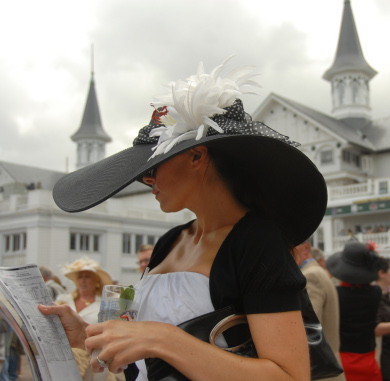
Femininity is in Fashion: Derby Hats and Elegant Dresses. From its’ inception, the Derby was envisioned to be a luxurious event in American Thoroughbred Racing. Beginning in the late nineteenth and early twentieth century, affluent women arrived at the race wearing fashionable hats, gloves, and stylish dresses. Throughout the years, the tradition of Derby hats and feminine couture has endured, and perhaps, grown more colorful and expensive with each new season. Today, women wear many styles of glamorous hats, along with a wide variety of dresses and suits. The feminine pageantry surrounding the race has become nearly as iconic as the horses on the field.
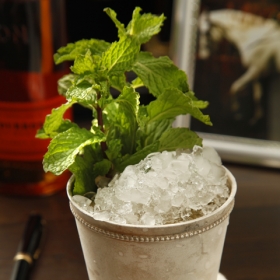
One Sweet Day: The Mint Julep. The Bourbon-charged “Mint Julep” is the official drink of the Kentucky Derby and is composed of sugar syrup, fresh mint, crushed ice, and Kentucky bourbon. On race day, vendors weave through the crowds with fresh “Mint Juleps,” served in the commemorative annual Kentucky Derby glass. The famed “Woodford Reserve $1,000 Mint Julep” is also available through auction prior to Derby day, with the proceeds benefitting charity.

Although the mixing ingredients have varied in the past few years, the lavish drink remains served in a 24-karat Gold Cup and is made with Woodford Reserve Kentucky Bourbon. In 2006, the “Woodford Reserve $1,000 Mint Julep” benefitted retired horses and jockeys through donating the proceeds to the Thoroughbred Charities of America, That year, the Mint was imported from Morocco, the ice was obtained from the Arctic Circle, and the sugar was acquired from the South Pacific. Upon announcement, our blog will feature the 2010 ingredients and auction link for the “Woodford Reserve $1,000 Mint Julep.”

The Traditional Song: “My Old Kentucky Home.” As the Derby contenders are paraded before the crowd prior to the race, “My Old Kentucky Home” is played by the University of Louisville Marching Band. There are no words to describe this mesmerizing moment. For new Derby attendees, the words to the song are inscribed in the racing program. Many Kentuckians know the tune by heart and it is considered a moment of pride when the song is being sung throughout the crowd.
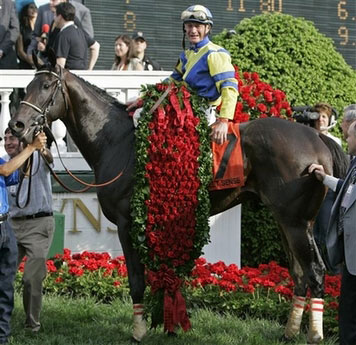
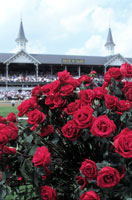
The Emperor’s New Clothes: A Garland of Roses. The Garland of Roses that cloak the winning Derby horse hold an interesting history. Roses first appeared on the radar when they were presented to all the ladies attending a glamorous Louisville Derby party, held by a New York socialite and attended by the President of Churchill Downs, Colonel Lewis Clark. The roses were such a phenomenon that Clark adopted the rose as the race’s official flower. The rose garland first appeared at the Derby in the 1896 when the winner received a floral arrangement of pink and white roses. In 1904, the red rose was chosen as the official flower of the Kentucky Derby.

Each year, a garland of more than 400 red roses is sewn into a green satin backing with the seal of the Commonwealth on one side and the twin spires and number of the running on the other end of the garland. Each garland is also adorned with a “Crown” of roses, ribbon and green fern. The “Crown,” is a single rose pointing upward in the center of the garland, to symbolize the struggle and heart necessary to reach the winners’ circle.
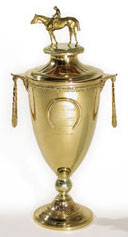
The Gold Standard: The Kentucky Derby Trophy. The Kentucky Derby Gold Cup is awarded each year to the winning horse’s owner. The trophy is made from a combination of 20 and 14-karat gold and weighs more than 100 ounces. A sterling version of the trophy is awarded to the winning trainer, jockey, and breeder. The Gold Cup trophy takes over three months to produce and is one of the few solid gold trophies awarded in any American sporting event.
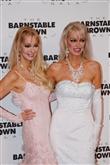
The Society Pages: The Derby Eve Galas. All throughout the nation, Derby parties are hosted on an annual basis. However, in Louisville, there are a few lavish society parties that honor the Eve of the Derby with unparalleled pageantry and style. The most sought-after tickets in Louisville on Derby Eve are to the Barnstable Brown Gala and the Mint Jubilee.

The Barnstable Brown Sisters (the former “Doublemint Twins”) have been hosting the most exclusive party for two decades in celebration of the Derby on the night before the race. Celebrities and guests are given access by invitation only to the event comprised of 1,200 attendees.

Founded in 1996, The Mint Jubilee Gala is another Derby Eve party that carries prestige among partygoers. Tickets to this 1,000 person event cost approximately $500.00 per individual in 2009. The event is attended by political figures, celebrities, and ticketed guests.
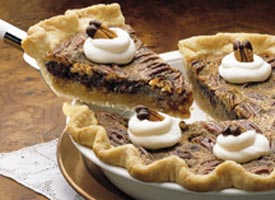
Derby Pie: Decades of Decadence. On Derby Day, Churchill Downs will sell more than 25,000 slices of Derby Pie to track attendees. At off-track parties, many Derby events order the pie from Louisville and have it shipped to their home for dessert. The Derby Pie, a trademarked name, is made by Kern’s Kitchen with custard, chocolate chips, and walnuts – all baked into a 9-inch crust. The recipe is highly coveted – only three people know the actual recipe. All employees of Kern’s Kitchen are required to sign an agreement not to divulge any of the Derby Pie secrets. The Derby Pie can be ordered by visiting the company website at http://www.derbypie.com.

  • Share/Bookmark

The Road to the Roses: Early Kentucky Derby Hopefuls

February 14th, 2010 § 0

Although the final Kentucky Derby starters won’t enter the gates at Churchill Downs for over two months, several horses have begun to emerge in the prep races as early hopefuls for the first Saturday in May.

I’ll admit it. It is premature to cement any horse in Derby contention as anything other than a hopeful at this stage. The field for the Derby will transform itself many times in the upcoming months with unexpected turns and challenges as it does every season. However, at this early stage, here is a rundown of the major prospects.

Lookin at Lucky

Lookin at Lucky. It would be impossible to start any discussion of Derby hopefuls without mentioning the generally-regarded favorite, Lookin at Lucky. Hall of Fame Trainer Bob Baffert has maintained the quiet supremacy afforded to this horse without even having run Lookin at Lucky in one start this season. Further, he has stated that Lookin at Lucky will only run in two prep races in hopes of clinching a slot in the gate at the Kentucky Derby.

So, what is so spectacular about the mysterious Looking at Lucky? In his six starts, four of which were Grade 1 races, Lookin at Lucky has only succumbed to a single defeat – The Breeder’s Cup Juvenile.

During the Breeder’s Cup Juvenile, Lookin at Lucky lost by a head after struggling with a bad trip throughout the race. At the start of the race, Lookin at Lucky was wide early, got stuck in midpack while facing a slow pace, rallied wide, and was ultimately outfinished from the inside by Vale of York. When interviewed after the Juvenile, Baffert stood firm. “We know we have a legit horse, we just didn’t get paid.”

Since the Juvenile defeat, he captured a win in the Breeder’s Cup Cash Call Futurity in December of 2009. Under jockey Garrett Gomez, Lookin at Lucky won by three-quarters of a length, after making several different moves throughout the race, to kick clear at the wire to secure a win. “Hell of a day, huh?” Baffert remarked in a post-race interview. “He’s getting better and better.”

Select videos of Lookin at Lucky’s past performances are available here for the Cash Call Futurity (1st), Breeder’s Cup Juvenile (2nd) , Norfolk Stakes (1st), and Del Mar Futurity (1st).

Buddy’s Saint. Buddy’s Saint is another strong candidate at this early stage in Derby prep races. Of his three starts in 2009, Buddy’s Saint captured two wins in Grade 2 races. In his most recent race, the $200,000 Remsen Stakes, Buddy’s Saint tracked the leader throughout the race to clinch a 4 ¾-length victory in the final stretch.

Prior to the Remsen, Buddy’s Saint dominated the $150,000 Grade 2 Nashua Stakes, winning by twelve lengths at the wire. He is expected to run in the Fountain of Youth Stakes on February 20, 2010 – competing against two other major hopefuls - Jackson Bend and Eskendereya.

Super Saver. It would be impossible to ignore this horse with the powerhouse team that catapulted Super Saver into his flashy first-place finish at the Grade 2 Kentucky Jockey Club Stakes. Super Saver, owned by WinStar Farm and trained by Todd Pletcher, made an amazing romp toward a victory under rider Calvin Borel in the Jockey Club Stakes. In the upcoming prep races, it will be interesting to see if this horse has the ability to give a repeat performance and capture a Grade 1 win.

Jackson Bend

Jackson Bend. In seven starts, Jackson Bend has proven himself a legitimate Derby hopeful by capturing five victories and harboring earnings of $477,820. He was beaten by Winslow Homer in the Holy Bull Stakes, but still delivered an honorable second place finish. Prior to the Holy Bull, he was unbeaten in five consecutive starts and remains a strong hopeful – especially considering the depth of his experience in comparison to his other rivals at this stage. He is expected to race in the Fountain of Youth Stakes on February 20, 2010 in his next endeavor to remain on the Derby trail.

Rule. Rule has emerged as a serious contender among Derby hopefuls – having closed out his two-year-old campaign with three consecutive victories and, more recently, capturing a win in the Grade 3 $225,000 Sam. F. Davis Stakes.

In the Sam F. Davis Stakes, Rule drove toward the finish and won by three-lengths over a field of well-respected rivals. It remains to be seen if he can match his Sam F. Davis performance in a Grade 1 race. After the Sam F. Davis, trainer Todd Pletcher did not point toward the next prep race for Rule – but mentioned the Florida Derby, Blue Grass, or Wood Memorial among the options being considered.

Dryfly. With a record of three wins in four races, Dryfly is gaining respect as a Derby hopeful after his impressive win at the Smarty Jones Stakes in his three-year-old debut. Among a large field of contenders, Dryfly, ridden by Calvin Borel, managed to clinch a 2 1/4-length victory in a stylish performance. As with many other early hopefuls, it remains to be seen how he will handle a Grade 1 race. However, judging by his current record, he remains a strong early contender.

Eskendereya. This hopeful, trained by Todd Pletcher, has delivered two wins in four career starts. Although Eskendereya closed his 2009 season with a disappointing ninth place finish in the Breeder’s Cup Juvenile, this hopeful has re-emerged as an interesting contender in the 2010 season.

This past January, Eskendereya clinched a first-place finish during an ungraded race in a relatively large field. After the win, Pletcher showed confidence in his horse, stating that “The Fountain of Youth is a possibility, although I don’t know if he needs to wait that long to come back… The one thing I am sure of is that getting a mile and one-eighth will be no problem.” It remains to be determined whether this horse is capable of matching Pletcher’s confidence with ability to conquer a Grade 1 race.

Noble's Promise

Noble’s Promise. Noble’s Promise has established himself as a legitimate Derby hopeful through showing the capacity to deliver a respectable performance in repeated Grade 1 races. Of his six starts, Noble’s Promise has clinched three wins – including a victory in the Grade 1 Dixiana Breeder’s Futurity. With the demonstrated capacity to consistently win or place while taking on serious rivals in the Juvenile Breeder’s Cup (third) and the Cash Call Futurity (second), Noble’s Promise is one of the few hopefuls who has proven his capacity to manage the difficulty of a Grade 1 race

Conveyance. In his three starts, this Bob Baffert-trained horse has remained undefeated and is emerging as a respectable Derby hopeful. Conveyance recently made his three-year-old debut in the Grade 3 San Rafael Stakes – clinching a 1 3/4-length victory over his rivals. Conveyance is expected to race again in the Southwest Stakes on February 15.

  • Share/Bookmark

Society on a Budget: Mint Juleps, Armchair Betting, and Virtual Thoroughbred Ownership for Less than a Hundred Bucks at the Gate.

February 5th, 2010 § 0

Horse Racing has long been called the “Sport of Kings,” with the players paying a fortune to have a share of the alluring social pageantry, luxury lifestyle and electrifying experience of racehorse ownership. This is a sport where money competes for prestige on the track and in society. Millions can be spent on a single horse, a thousand dollars for a single drink, and hundreds on the lavish traditions that accompany the culture.

Let’s face it. We can’t all be millionaires and royalty. But this sport is made of more than money. Some of the greatest racehorses were bought at rock bottom prices and built a legacy through relentless spirit and an inexplicable drive toward perfection. Likewise, enthusiasts of the sport are drawn from all socioeconomic backgrounds and celebrate with the same fervor and passion as the affluent players in the field.

At the finish line, this sport reaches far beyond kings. It is infused with business people, celebrities, country dwellers, media, families, socialites, cowboys, middle-class investors, and college kids camped throughout the infields. With a hundred dollar budget, nearly anyone can experience many of the luxurious traditions of the sport in the age of the internet and industry promotions. Try it – you might enjoy the view from the beyond the velvet wire.

Enjoy a Mint Julep and Donate to a Racing Charity. (Estimated Cost: $30) With the Kentucky Derby prep race season in motion, I can’t think of a more decadent way to watch the races on a Saturday afternoon than to sip on a Mint Julep, the official drink of the Kentucky Derby.

On Derby day, Brown-Forman, the company that owns the Woodford Reserve Bourbon and Early Times Whisky Brands, dominates the Derby festivities by serving nearly 120,000 Mint Juleps to Churchill Downs attendees over the two-day period covering the Kentucky Oaks and Derby.

For philanthropists and affluent guests, the company has created “The Woodford Reserve $1,000 Mint Julep,” with proceeds benefitting selected horseracing charities. Aside from the inclusion of Woodford Reserve Bourbon, the other carefully-selected ingredients are determined on an annual basis by the company, and the drink is purchased via advance auction on the Woodford Reserve Website. The winners are served this extravagant drink at the Derby upon presenting proof of purchase. In 2006, the luxurious Mint Julep was served in a limited-edition 24 carat gold-plated julep cup, accompanied by sterling silver sipping straws, and infused with mint from Morocco, ice from the Arctic Circle, and sugar from the South Pacific.

So… How can you show your philanthropic spirit while enjoying a hand-crafted Mint Julep? Easy. First, you’ll need the “Official Kentucky Derby Mint Julep Recipe” and the ingredients.

The Early Times Mint Julep Recipe

1 cup of sugar

1 cup of water

Sprigs of Fresh Mint

Crushed Ice

Early Times Kentucky Whisky

Instructions: Make a simple syrup by boiling sugar and water together for five minutes. Cool and place in a covered container with six to eight sprigs of fresh mint. Refrigerate overnight. Make one julep at a time by placing a few sprigs of mint at the bottom of a glass. Fill the glass with crushed ice, adding one tablespoon and two ounces of Early Times Whisky. Stir rapidly with a spoon to frost the outside of the cup. Garnish with a sprig of fresh mint.

To maintain your “social” budget, the estimated cost of a 1.75 ml bottle of Early Times Whiskey is roughly fifteen dollars. The remaining five dollars can be used to purchase sugar and mint. While the simple syrup is cooling overnight, you can pick the racing charity of your choice and donate the remaining ten dollars in your budget. A few selected charities appear below.

Thoroughbred Charities of America (TCA). Thoroughbred Charities of America’s sole mission is to raise money for distribution to more than 200 charitable organizations in Thoroughbred rescue, retirement, retraining, research, education, and therapeutic riding programs.

Riding with Barbaro. The Riding with Barbaro Memorial Fund provides funding for equine health and safety research.

The Race for Education (RFE). The Race For Education (RFE) enables financially-qualifying young people of equine industry families, as well as those who want to pursue an equine-related or agricultural career, to obtain a college degree by providing tuition support, financial literacy training to help students minimize their debt load, mentoring services to provide students with emotional support, and permanent jobs upon graduation.

Research the Featured Prep Races and Open an Online Betting Account. (Estimated Cost: $70) If you are new to horse racing, most dedicated handicappers read the biographies of the horses, research bloodlines, watch video footage of past performances, follow handicapping blogs, and read recent articles surrounding the races prior to betting. There are many excellent free internet resources to obtain knowledge about horses and races prior to betting. In order to get started, you can visit the following resources:

National Thoroughbred Racing Association. http://www.ntra.com/

The Bloodhorse Magazine. http://www.bloodhorse.com

The Daily Racing Form. http://www.drf.com

After picking your race and horses, you can avoid off-track betting sites by opting to bet online, subject to the legality in your State. A great online resource to wager is TVG. In order to set up a TVG account, you will need to deposit a fifty dollar minimum and can bet from your home computer. To set up an account with TVG, visit their website at http://www.tvg.com. As an initial deposit, I recommend depositing at least seventy dollars to cover your potential wagers for your first chosen race to bet online.

Make a Bet. (Estimated Cost: $18) Once you’ve set up your online wagering, place some bets for your Derby prep race. I recommend a budget of $18.00 for your first race ($12 for a trifecta box, $4 for an exacta box, and $2 to wager on your pick for the winning horse).

Invite Friends to your Home, Serve Some Mint Juleps, and Watch the Race. Now that your simple syrup is chilled, why not invite over a few friends and watch the race together? Serve the mint juleps and enjoy watching your horse compete against other Derby hopefuls.

Experience Virtual Ownership of a Thoroughbred. (Estimated Cost: Free!) Although the ideal dream is to truly own a thoroughbred racehorse, Woodford Reserve presents the next best thing through its’ free membership in “The Woodford Reserve Thoroughbred Society.” Members have no actual equity or earnings stake in the horses, but the society provides a wonderful blog on the activities of the horses in its’ stable, as well as bios that include detailed facts – including fun stories like the favorite luxury food of one of the stable horses, “Angel’s Share” is peppermints. The Society also details the biographies of the trainers and upcoming activities. Overall, if you can’t afford to open your wallet to purchase a horse, this society gives you a great experience of feeling like a player in the field. To join the Woodford Reserve Thoroughbred Society, visit the Woodford Reserve Website.

Even with a hundred bucks, you can enjoy the luxury lifestyle of the “Sport of Kings.” I hope you are sitting among friends, drinking a mint julep, enjoying the races, and reading about the adventures of your horses in the Woodford Reserve Stables. Welcome to the elite society.

  • Share/Bookmark

The Return of the Match Race? Rachel Alexandra and Zenyatta Move the Debate from the Ballots to the Track.

February 1st, 2010 § 0

After a contentious debate over the 2009 “Horse of the Year” Eclipse Award, Rachel Alexandra prevailed over Zenyatta when the winner was finally announced on January 19, 2010. Prior to the announcement, the owners of both champion fillies had committed to race their horses in the 2010 season. With the final ballots cast, the industry has moved from the “Horse of the Year” debate toward speculation regarding a match race between these two female rivals in 2010.

Since 1975, there have not been any major thoroughbred match races involving champions in America after Ruffian sustained a terminal injury while competing against Kentucky Derby winner, Foolish Pleasure. In that race, the undefeated filly Ruffian met Foolish Pleasure at Belmont Park in New York. A national television audience watched as Ruffian broke down shortly after the start and had to be euthanized the following day.

Before the sad ending to match racing with Ruffian’s injury, there were several other major match races throughout the century. In 1955, Kentucky Derby winner, Swaps, met Nashua, the Preakness and Belmont Stakes winner of that year. Nashua won the race, but speculation did not cease after the match. Swaps had been nursing a sore foot in days prior to the race. Eddie Arcaro, rider of Nashua, admitted many years later that he doubted Nashua could ever have beaten a healthy Swaps.

In 1947, Triple-Crown winner and 1946 Horse of the Year, Assault, held a $100,000 match race against Calumet Farm’s horse, Armed. Armed beat Assault by eight lengths and went on to win the 1947 title of Horse of the Year.

One of the arguably most talked-about match races of the century occurred in 1938, between the rags-to-riches underdog, Seabiscuit, and the Triple-Crown winner and reigning horse of the year, War Admiral. Seabiscuit tracked War Admiral across the country and quickly became the “People’s Horse” during the depression era. After he defeated War Admiral in the 1939 showdown, Seabiscuit went on to win Horse of the Year.

However, match racing existed before the popular match race between Seabiscuit and War Admiral. In 1923, the Kentucky Derby winner, Zev, took on the English Derby winner, Papyrus. The race was dubbed the first “international” race and exorbitant prices were charged for tickets. Zeb won the match race against Papyrus, but doubts lingered about the victory due to track conditions and a mistake in shoeing Papyrus prior to the race.

Finally, in 1920, Horse of the Century, Man O’ War, met Sir Barton, the first horse to win what would later be dubbed the “Triple Crown,” in a match race in Canada. Man O’ War won the race by seven lengths, but the importance of the race was questioned because it was widely-regarded that Sir Barton was not at his peak performance.

With a new century, the industry is faced with the prospect of a major match race between two champion fillies – Rachel Alexandra and Zenyatta. From a brief look at the history of match racing, the unasked question is “What purpose would a match race serve?”

The most obvious answer is financial gain to the industry and owners, as well as reinvigorating public interest in the sport of horseracing. But, aside from these interests, does a match race serve either filly in cementing their championship status over the other filly?

From the historical view, Zenyatta appears to have more to gain while Rachel Alexandra more to lose if the two are pegged against each other in a match race. In the races in which a reigning Horse of the Year accepted and lost a match race, the prevailing horse went on to win “Horse of the Year” in the following season. Therefore, Zenyatta’s most important targeted race for 2010 should be a match against Rachel Alexandra if she wants to attempt to clinch the much sought-after title of “Horse of the Year.”

In the same vein, if Rachel Alexandra were to lose a match to Zenyatta, Rachel Alexandra’s “Horse of the Year” victory over Zenyatta may be called into question all over again. Rachel would be forced into a rivalry with Zenyatta that could last over several races in an attempt to gain the lead over her rival in the court of public opinion.

Further, the historical record shows that match races rarely seem to settle the score between two rival champion horses. In the case between Ruffian and Foolish Pleasure, there was no true winner since Ruffian was injured during the race. Between Swaps and Nashua, Nashua’s own jockey, Arcaro, felt that Swaps would have won if he had been in better health. The race between Zev and Papyrus only clouded the debate since Papyrus encountered track difficulties and there was a mistake in shoeing the horse. Finally, Man O’ War’s victory over Sir Barton was also questioned since Sir Barton was not at his peak-performance level at the time of the match.

If a match race were to be held between Rachel Alexandra and Zenyatta, it would seemingly do little to settle the debate regarding who is the greater horse between the two champions. However, it would make for an electrifying spectacle to watch these two fillies face off on the track.

Rather than aiming to have a match race settle the ongoing debate of who is the greater horse between Zenyatta and Rachel, a match race, if held, should serve only to showcase the two great fillies of our decade. Their championship status has already been proven in different races, on different tracks.

  • Share/Bookmark

Holy Bull Stakes: Jackson Bend Launches his Three-Year-Old Campaign for the Derby.

January 21st, 2010 § 0

On Saturday, a field of nine Derby hopefuls will square off in the one-mile Holy Bull Stakes (gr. III) at Gulfstream Park in Southern Florida. With varying degrees of experience throughout the lineup, the likely favorite in the race will be Jackson Bend, a Florida-bred horse trained by Nick Zito.

Jackson Bend has won his last five consecutive stakes races and is the top money-earner in the field, with winnings totaling $477,820. In his last race, he clinched a 2 ¾ length win over his current rival, Thank U Philippe, at the In Reality Stakes in October 2009. Jackson Bend has been working steadily at Palm Meadows, with his most recent five-furlong workout on January 16th timing above a perfect 12-clip at :59.30. The only question is whether the depth of his prior competition will equal the field set before him in the Holy Bull Stakes this Saturday.

Among his main rivals in the Holy Bull, are Aikenite, a Florida-bred horse trained by Todd Pletcher, and Homeboykris, the winner of the Champagne Stakes (gr. I) on October 10, 2009. Aikenite, a multiple graded-stakes-placed horse, has not raced in nearly three months after his fifth-place finish in the Breeder’s Cup Juvenile in November 2009. However, Aikenite remains a significant rival, building his record on Grade One races in his two-year-old season.

Homeboykris, a Maryland-bred racehorse, won two of his four starts in 2009. His most impressive race was undoubtedly the Champagne Stakes (gr. I), where he captured a win and beat Super Saver, who finished fourth in the race. Homeboykris is trained by Juan Rodriguez with Edgar Prado as his current jockey. In his most recent workout, he ran six-furlongs in 1:14:69.

The other horses in the race include Winslow Homer, Piscitelli, Litigation Risk, Thank U Philippe, William’s Kitten and Wild Lime. Piscitelli and William’s Kitten make interesting picks for a long shot. Both horses raced in the Breeder’s Cup Juvenile (Gr. I), with Piscitelli finishing fourth – one length from the winner – and William’s Kitten finishing eighth. The drop in grade may improve their chances at placing in this race. The least talked-about horse, Wild Lime, has demonstrated some early potential – winning two of his three lifetime races.

Wild Lime made an impressive debut at Delaware Park in July of 2009, winning his maiden by 3 ½ lengths. More recent, he earned a top speed rating in an Allowance race at Meadowlands in December of 2009. It remains to be answered whether he can stand out among a stronger grade of contenders in the Holy Bull Stakes.

Here are my bets for the Holy Bull:

$2 Win – Jackson Bend

$2 Exacta Box – Jackson Bend and Aikenite

$1 Trifecta Box – Jackson Bend, Aikenite, and Homeboykris

$1 Superfecta Box – Jackson Bend, Aikenite, Homeboykris, and Wild Lime.

  • Share/Bookmark

Road to the Roses: Lookin at Lucky.

January 16th, 2010 § 0

Lookin at Lucky

With the Kentucky Derby nearly four months away, the major trainers are beginning to take stock of the talent in their stables and nominate their hopefuls for the upcoming prep races leading up to the Kentucky Derby. As with any year, there will inevitably be many twists and turns of fate before the ultimate winner hits the wire at Churchill Downs on the first Saturday in May.

My early favorite this year is “Lookin at Lucky,” a horse trained by the legendary Bob Baffert. In his six starts, four of which were Grade 1 races, Lookin at Lucky has only succumbed to a single defeat – The Breeder’s Cup Juvenile.

During the Breeder’s Cup Juvenile, Lookin at Lucky lost by a head after struggling with a bad trip throughout the race. At the start of the race, Lookin at Lucky was wide early, got stuck in midpack while facing a slow pace, rallied wide, and was ultimately outfinished from the inside by Vale of York. When interviewed after the Juvenile, Baffert stood firm. “We know we have a legit horse, we just didn’t get paid.”

Since the Juvenile defeat, he captured a win in the Breeder’s Cup Cash Call Futurity in December of 2009. Under jockey Garrett Gomez, Lookin at Lucky won by three-quarters of a length, after making several different moves throughout the race, to kick clear at the wire to secure a win. “Hell of a day, huh?” Baffert remarked in a post-race interview. “He’s getting better and better.”

After the Futurity, Baffert said that Lookin at Lucky would get an extended break. He anticipates that the horse will run two prep races before the Kentucky Derby. The targeted races have not been announced, but with the early promise demonstrated by this colt, the betting public should be looking at a “Lucky.”

  • Share/Bookmark

“The Filly Eclipse:” Zenyatta vs. Rachel Alexandra.

January 16th, 2010 § 0

ZENYATTA2_op_800x551

On Monday, the winner of the prestigious “Horse of the Year” Eclipse Award will be announced and two breathtaking fillies remain in a dead heat for title. Throughout most of the 2009 racing season, Rachel Alexandra dominated the sport with flashy wins against other fillies, taking down the boys in three separate races, and, ultimately, being the first filly in 85 years to capture the Preakness Trophy. Of her eight starts as a three-year-old in 2009, she remained undefeated and ended her racing year as the first filly to win the Woodward Stakes.

By September of 2009, I believed Rachel Alexandra was the clear choice for “Horse of the Year” having watched her trample the field in the Kentucky Oaks, take down the Derby Winner in the Preakness, and close her season with her historical win in the Woodward Stakes. If anyone had challenged that notion, I wouldn’t have hesitated to hold a good old-fashioned yelling match to defend Rachel’s right to the title. In my mind, it was inconceivable that any horse could out-perform this “Super Filly.”

And then, the unconceivable arrived. On November 7, 2009, an undefeated five-year old female named Zenyatta walked onto the track at Santa Anita and dared every boy standing at the gate to defeat her in the richest race in America.

It was such a bold move that I skipped a wedding to watch her try.

As the gates opened, Zenyatta trailed the field. Throughout middle of the race, I watched with heartbreak as she hung in last place. It looked as if expectations had exceeded her ability. When it appeared near hopeless, Zenyatta made the bid for her place in history. She began to pick off her opponents near the last turn and went wide on the home stretch to deliver a seemingly late charge for the finish. In the final seconds, Zenyatta drove seamlessly past her contenders at the wire to win the Breeder’s Cup Classic. In this historical moment, my allegiance for “Horse of the Year” shifted from Rachel Alexandra to the first filly to ever take the most expensive race in America – Zenyatta.

Admittedly, Zenyatta’s contention for “Horse of the Year” would not be such a threat to Rachel Alexandra without her historical win in the Breeder’s Cup Classic. However, I am not in the business of rewriting history. In fact, Zenyatta’s bid for “Horse of the Year” is perfectly in sync with the historical background and ultimate spirit of the Eclipse Awards.

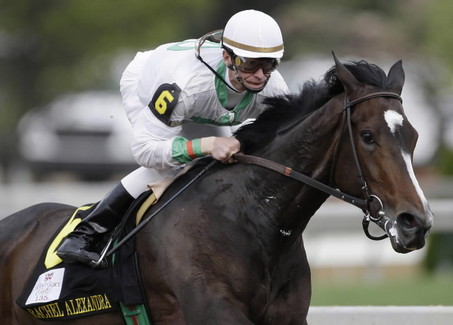
rachel_alexandra3When the Eclipse Awards were founded in 1971, they were named in honor of a British racehorse and sire from the 1800s, named “Eclipse.” As a racehorse, Eclipse did not begin his career until he was a five-year-old and remained undefeated throughout the eighteen races in his career. In recognition of his legacy, Eclipse became the namesake to what are arguably considered the most prestigious achievement awards within the American horse racing industry.

By the very nature of the Eclipse Awards, the award categories provide a separation for age and overall achievement. Aside from “Horse of the Year,” which encompasses all ages and genders, the Eclipse Awards also maintain separate categories for the best “Three-Year-Old Filly” and “Three-Year-Old Male.” The scenario between Rachel Alexandra and Zenyatta appears to have been given some forethought prior to this moment.

Eclipse himself could not have won the best “Three-Year-Old Male” Award, just as Zenyatta can no longer compete for the best “Three-Year-Old Filly” award due to the age restriction. The Awards appear to follow the design that a “Three-Year-Old Filly” may become “Horse of the Year,” but that the rapture of the Triple Crown racing season cannot discount the outstanding performances of all racehorses during a given year.

Admittedly, Rachel Alexandra had an electrifying year as a three-year old horse – irrespective of her gender. If she had shown up to Santa Anita on November 7th to win the Breeder’s Cup Classic, there would be very little debate that she had earned the “Horse of the Year” Award. But, as Zenyatta trampled down the full field of skilled male horses to earn the distinction of the first filly to win the Breeder’s Cup Classic, Rachel Alexandra quietly stepped aside and placed her bets on her three-year-old season. When Zenyatta was first at the wire, Rachel lost her bet.

Zenyatta’s win in the Breeder’s Cup Classic holds more historical significance than any of Rachel Alexandra’s wins within this season. Zenyatta won the most expensive race in the United States. She is the first filly to ever accomplish this feat. The Breeder’s Cup Classic is one of the most contentious races in America – the field is full of great horses from varying backgrounds who are proven winners.

In contrast, Rachel Alexandra’s first Grade One win was in the Kentucky Oaks – among other fillies. Her next race, among males in the Preakness, is an impressive win – but not a “Game Changer.” Prior to Rachel, four fillies had already won the Preakness Stakes – the most recent win being in 1924. Further, the Preakness is the shortest distance of all three Triple Crown races, the Belmont being the longest race in the United States at a distance of 1 ½ miles. When Oaks-Winner Rags to Riches beat Curlin in the 2007 Belmont Stakes, Curlin was still awarded the distinction of “Horse of the Year” despite the fact that a Filly had not won the Belmont in over a hundred years when she crossed the finish line.

Zenyatta also holds distinction for building her undefeated record on a higher grade of races than Rachel Alexandra. In her career, Zenyatta has consistently run in only Grade 1 and Grade 2 races – remaining undefeated. In contrast, Rachel Alexander gradually worked from Grade 3 races into Grade 1 races, finishing second in both of her Grade 3 races. When viewing the overall career record of both horses, Zenyatta is the only undefeated horse who never delved below a Grade 2 race.

Finally, Zenyatta’s wins earned more money in 2009 than Rachel Alexandra. In 2009, Zenyatta was the second-highest ranking horse, boasting $3,330,000 in earnings. In comparison, Rachel Alexandra ranked fifth in 2009, bringing in a total of $2,746,914.

With the entry of more fillies in the prestigious male-dominated horse races, the industry is now squarely-faced with “The Filly Eclipse” for the Horse of the Year. Fillies are running alongside their male-counterparts and winning. When Rachel Alexandra ended her racing season in September, many believed that she had earned “Horse of the Year” over her potential male rivals for the Award. On November 7th, 2009, Zenyatta placed herself in undisputed contention with Rachel Alexandra as she moved past the finish line at the Breeder’s Cup Classic. Those watching the Breeder’s Cup Classic witnessed the first “Filly Eclipse” in history for the Horse of the Year Award.

After the Breeder’s Cup Classic, there have been arguments to hold a match race between Rachel Alexandra and Zenyatta. This would not add or subtract anything from this competition. Zenyatta and Rachel Alexandra are two distinct horses at different places in their career with their own unique character. They race in two separate fields - Rachel performs better on dirt and Zenyatta excels on synthetic track. If they ever settled where to run this race, the next question would be why the race should be run. This is a competition for the “Horse of the Year”- not “Best Filly of the Year.” It just happens to be that the two final contenders are fillies.

In the case of Rachel Alexandra, I truly believe that she has gone above and beyond to win the distinction of being the best three-year-old filly for 2009. She took on the boys, outran them, and bested the field with her astounding margins of victory in filly races.

Then, in a rare moment in November, “The Filly Eclipse” occurred and Zenyatta obscured all opposition.

When Zenyatta crossed the wire in the Breeder’s Cup Classic, she took my vote for Horse of the Year through pioneering a win in the most expensive race in America amidst a field a hard-tested males from various ages and backgrounds. It was an electrifying performance that not only earned her a place in the history books, but also, the well-earned distinction as “Horse of the Year.” I had seen my first ”filly eclipse.” It was breathtaking.

  • Share/Bookmark

The Most Expensive Question in the World.

January 14th, 2010 § 0

JenniferWirthOn January 1st, 2010, the next group of Derby hopefuls all turned the three as the nation celebrated the new year. As the days begin to roll by, many trainers and owners will begin to set their gaze on one of the most prized accomplishments in sports - the winning of the Triple Crown in horseracing.

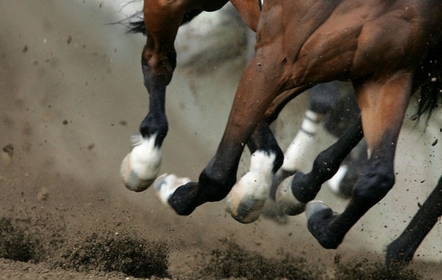
Although the first leg of the Triple Crown doesn’t arrive until May 1, 2010, when all eyes turn to Churchill Downs for the 136th Running of the Kentucky Derby, the prep races to qualify for the highly-coveted positions in the Derby are shifting into gear. As with every year, I begin to watch the Saturday prep races, with a hope that this year will bring the next Triple Crown Winner.

This year is no different - with the exception of this Blog. You might ask - Why are you starting a Blog about horseracing? The answer is simple. I love the sport. I love the players. I love to talk about horseracing. It makes me scream with excitement, cry with heartbreak, and leaves me endlessly studying the details of races to try to master the mysteries of the sport.

During this month, I will begin considering the new horses positioning themselves for the Kentucky Derby, making travel plans to go to Churchill Downs for the first Saturday in May, and reminiscing about my past “loves” who thrilled me (or left me heartbroken) at the wire. I study the video footage of all the prep races, read the handicapper’s picks, look for the standout performances, until finally, I fall in love with a new horse for the year. And, once I fall in love with a horse, I am unshakeable in my devotion.

After seeing Barbaro win the Derby, I actually bought a farm with the dream of owning a racehorse. When he died, my racehorse dreams hit reality. A friend called my office the day of his death to tell me the sad news. The first sentence out of his mouth was, “What is the worst thing you can imagine in this world right now?” My immediate response was “If Barbaro died.” Unfortunately, I had picked the right horse that day. I sent a dozen roses to his hospital and had my first major lesson in horseracing - These great atheletes are not infallable.

After Barbaro, I maintained my enthusiasm for horseracing despite the peaks and valleys that are inherent to great love. Prior to the historic Belmont when Rags to Riches beat Curlin, I had a hair-trigger temper for anyone who told me a filly couldn’t win the Belmont. When she stomped across the wire, it felt like I won that race with her. She taught me the next lesson - Fillies are a force to be reckoned with and should never be discounted on the basis of gender alone.

When Big Brown showed up on the scene, it was love at first sight. By then, I had sold my farm, having learned that you can’t “grow” racehorses without lots of money. I sat in my Chicago apartment and watched his races for the pure joy of witnessing such raw talent. At the Derby, I watched him thunder to the finish line first from the twentieth post. When he won the Preakness, I booked my first trip to New York City in life. I was convinced that I was going there to witness the coronation of the next Triple Crown Winner. When he finished dead last, my heart was broken and I learned the most important lesson to date - Any horse can win or lose a race. Even Big Brown.

This past year, I saw the fillies take center stage and slam the door on the gender divide in horseracing. Rachel Alexandra’s stunning wins made me stand in awe of her ability. I thought she was the easy pick for “Horse of the Year.” And then came Zenyatta - who closed the Breeder’s Cup with a historical victory that changed the landscape of horseracing for fillies forever. As I write this story, the 2009 “Horse of the Year” will be picked in less than a week. My mind spins in circles between the two of them and wishes that they both could hold the title.

However, in horseracing, there is only one winner. And, the answer only arrives when the race is won. It could be a filly. Or a longshot. It could be the favorite of the betting public. The horse could be a former claiming horse or have cost a fortune. One thing is certain - There are extensive amounts of money and lifelong dreams on the line. Everyone from the owners to the betting public pays to watch the performance. So, who will be the next Triple Crown Winner? It is among the most expensive questions in the world.

Do you have a comment, question, or idea? You can contact Jennifer at blog@thesaturdaypost.org.

  • Share/Bookmark