October 22nd, 2011 §
 Nearly two years ago, I was talking with the retired Farm Manager of Claiborne Farm, the late John Sosby, about what it takes to find a winning horse. He gave a broad smile and said, “Give me luck and I’ll beat you every time.”
As he stood at Claiborne Farm, the site where he had cared for many great Thoroughbreds at various stages in their lives, it seemed that having good luck was an undisputable factor that led to success with racehorses. However, as I considered the late Mr. Sosby himself, it was apparent that he didn’t rest on his laurels and wait for luck to emerge in the fields. He did something to bring its elusive character his way: He did good.
The late Mr. Sosby was good to whomever possible, wherever possible, and when it came to the horses in his care, his goodness was what he gave them. Yes, luck was a figure that followed the late Mr. Sosby. Yet, it seemed luck was romanced by his own goodness to the horses in his care.
Quite possibly, goodness is the breeding ground for luck in racing.
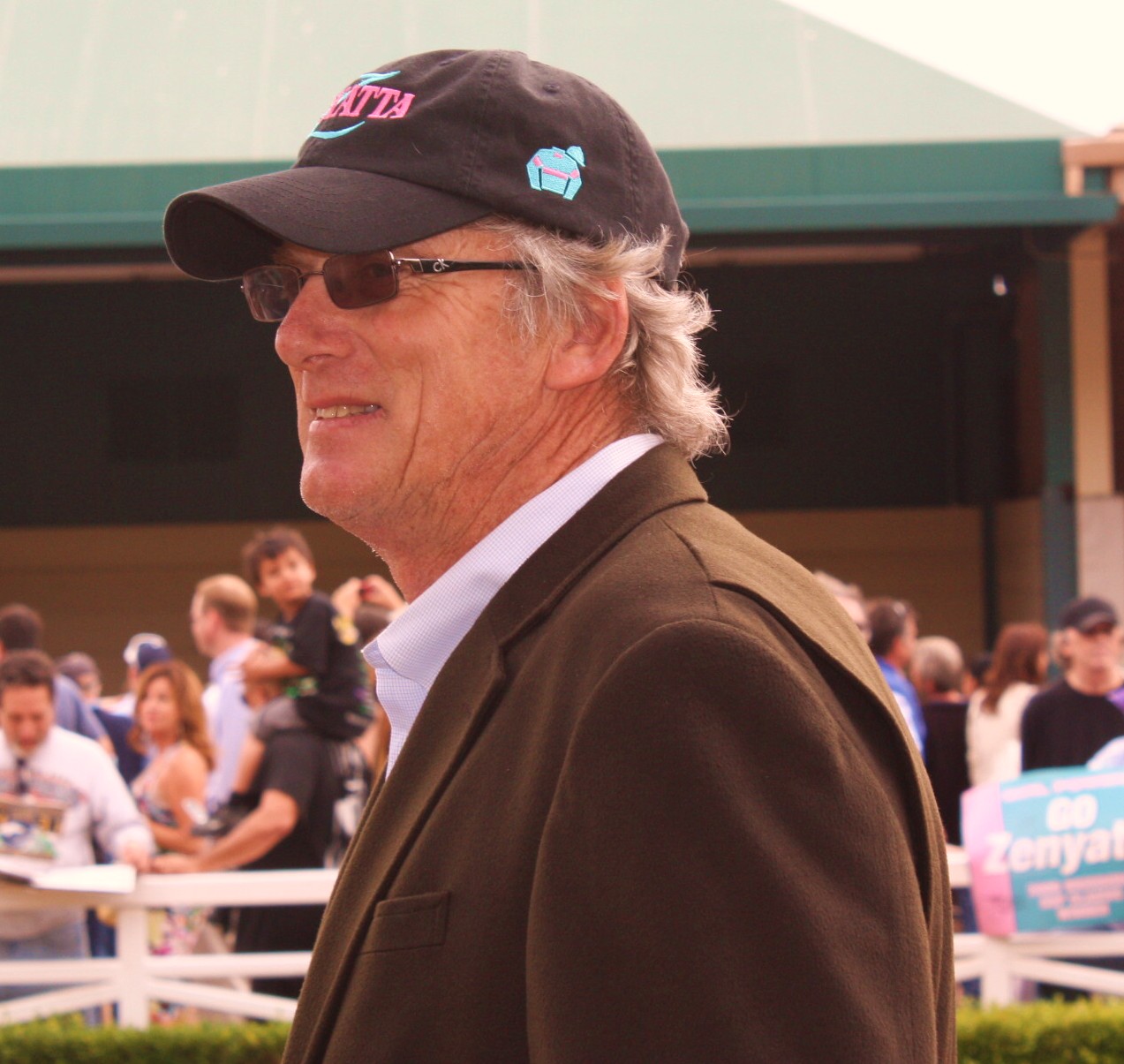
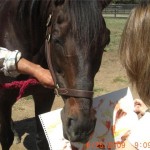 If a tribute to that principle exists, it may lie in the undefeated two-year-old filly, Weemissfrankie, whose ownership connections include Dawn Mellen of Bran Jam Stables, the founder of After The Finish Line (ATFL), a non-profit dedicated to funding Thoroughbred rescue, retraining and retirement for ex-racehorses who can no longer race or breed.
Mellen began volunteering at Thoroughbred rescues in the mid-1990s, where she realized that a major obstacle to helping retired Thoroughbreds was funding. In response, Mellen founded ATFL in 2007. ATFL provides monthly emergency funds and yearly grants to Thoroughbred rescues to fund retraining, rescue and rehabilitation efforts.
ATFL funding is used for various purposes, including saving horses at auctions, paying for medical expenses, providing hay and feed, paying boarding expenses and transporting a Thoroughbred to safety. Through providing the monetary means, ATFL helps assist in transitioning ex-racehorses into second careers.
As a result of funding from ATFL, ex-racehorses have been retrained for dressage, trail riding or as hunter/ jumpers. If the horse can no longer be ridden, they are retrained to provide equine therapy or serve as companion animals. Through creating a funding organization for these efforts, Mellen has managed to show that every Thoroughbred has a value, even if it cannot race or breed.
In the past few years, doing good has been the sole reward for Mellen’s efforts to assist ex-racehorses in their retirement. ATFL board members receive no salary. All funding directly benefits ex-racehorses in need of monetary assistance.
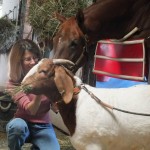 Then, along comes Weemissfrankie - a filly that has quite a gift for “goodness” on the race track. In three starts, the talented filly has captured two Grade I wins, the Del Mar Debutante and the Oak Leaf Stakes at Santa Anita, for her ownership team. Currently, Weemissfrankie is heading to the Breeder’s Cup to compete in the $2 million Grey Goose Breeders’ Cup Juvenile Fillies (Grade I) on November 4th at Churchill Downs.
It appears that goodness may truly be the breeding ground for luck in racing.
Win or lose, it should be a good race. With a little luck, Weemissfrankie will prevail, not just in this race, but in the race to raise awareness for the ex-racehorses who are in need of assistance at the close their career. And, with a little goodness, retired racehorses will receive more of the public support that they deserve at the end of their racing days.
For Mellen, it seems that her kindness toward ex-racehorses has brought her the luck that the late Mr. Sosby spoke about - The unbeaten kind. Yet, when I look at where luck appears, it often follows the good people who value a Thoroughbred at every point in their career. And, as far as being good to a horse in need, nothing can beat that endeavor at the finish line.
After The Finish Line is a 501(c)(3) non-profit organization in which donations are tax-deductible to the fullest extent of the law. Visit the ATFL website at www.afterthefinishline.org or call 858.945.1371 to learn more or make a donation. You can also visit ATFL on Facebook by clicking this link.
June 17th, 2010 §
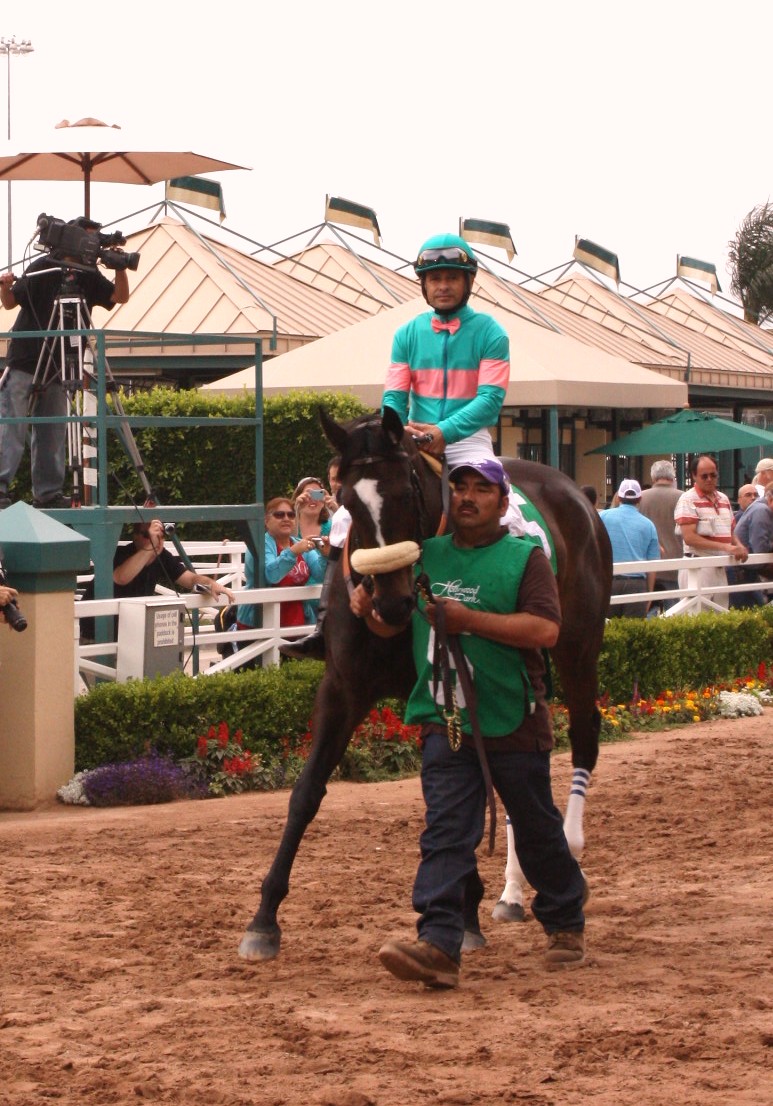
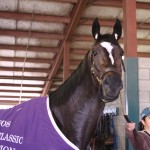 Last weekend, I traveled to Hollywood Park to watch Zenyatta make her bid to win her seventeenth undefeated career start.
At the track, someone asked me, “So, what brings you to California?”
The answer was easy. “Zenyatta.”
The person seemed surprised that I had traveled to Hollywood for a single horse.
However, in my opinion, Zenyatta isn’t just a good horse.
She is a living legend.
I wanted to be there to watch her stride into the history books in her record-breaking seventeenth career victory.
It appears that I wasn’t the only one who felt this way.
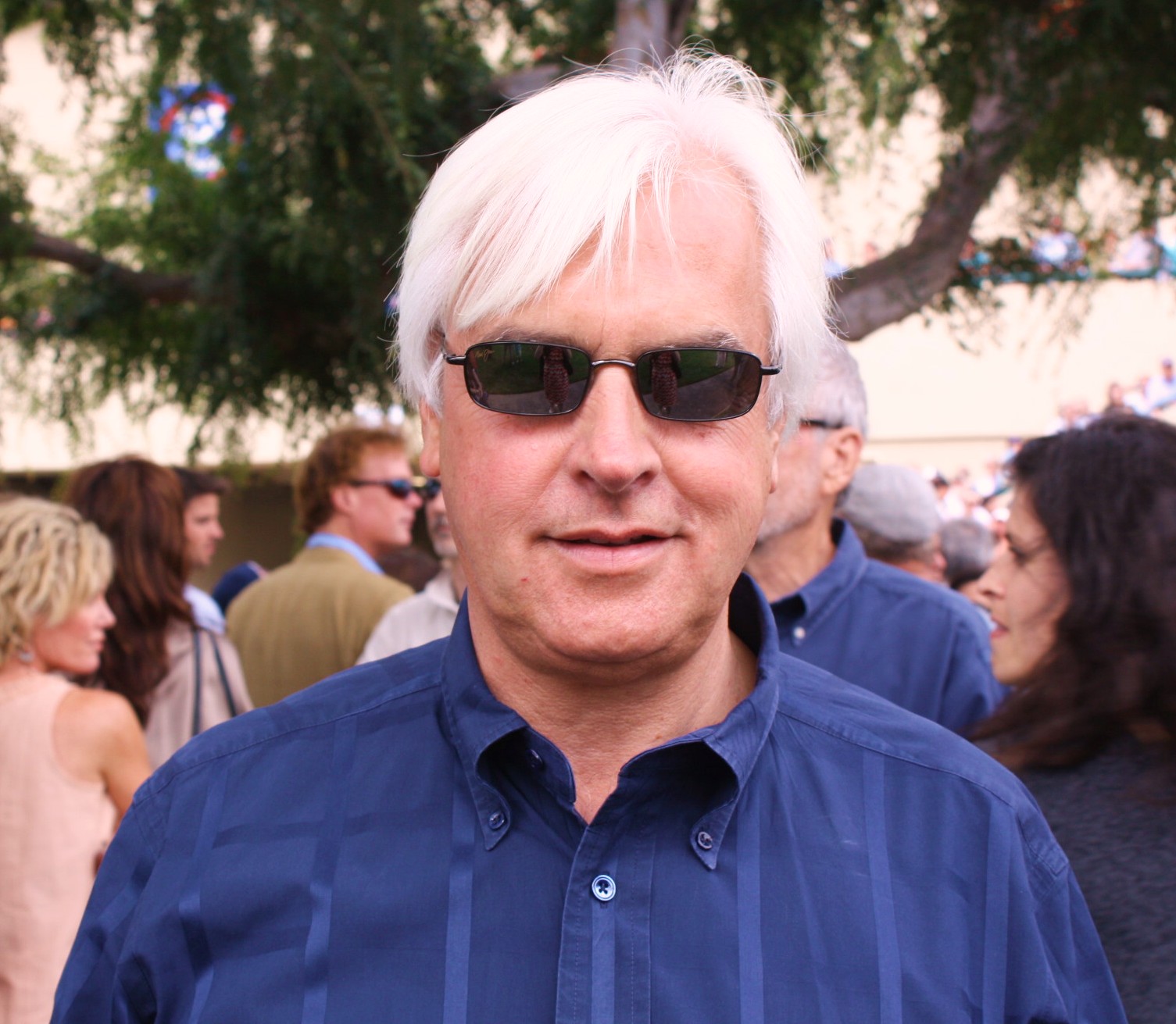
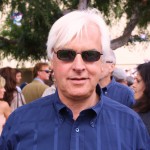 Prior to the race, Hall of Fame Trainer Bob Baffert stood in the paddock and surveyed Zenyatta before settling into his seat to watch her in the Vanity Handicap.
Later, when I thumbed through my racing program, I realized that Baffert didn’t have a single horse entered in a race at Hollywood Park that day.
Apparently, Baffert also wanted to watch Zenyatta challenge the undefeated records of Cigar and Citation.
And, as usual, Zenyatta didn’t disappoint.
In front of a crowd that appeared to be screaming for one single horse, she delivered her seventeenth consecutive victory in a heart-stopping moment at the finish line.
The entire park shook with excitement in the dizzying minutes that followed.
Zenyatta had made history again.
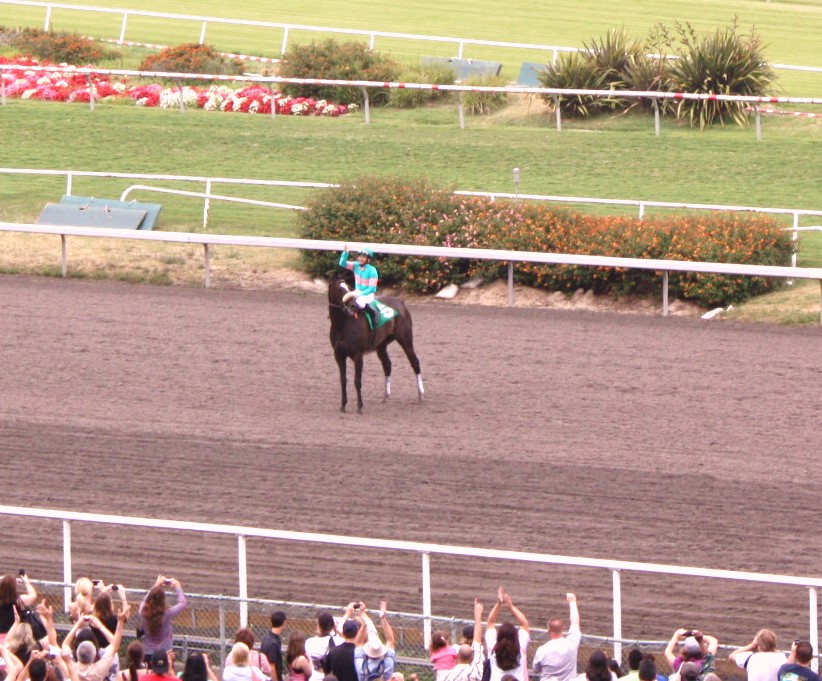
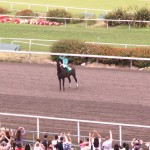 Prior to entering the winner’s circle, Zenyatta stood alone in front of the crowd and took in a long standing ovation.
It was as if she knew that she had just delivered pure magic.
And, in retrospect, I believe Zenyatta did know.
I learned a lot of lessons from my visit with Zenyatta that demonstrated the beauty surrounding a true legend.
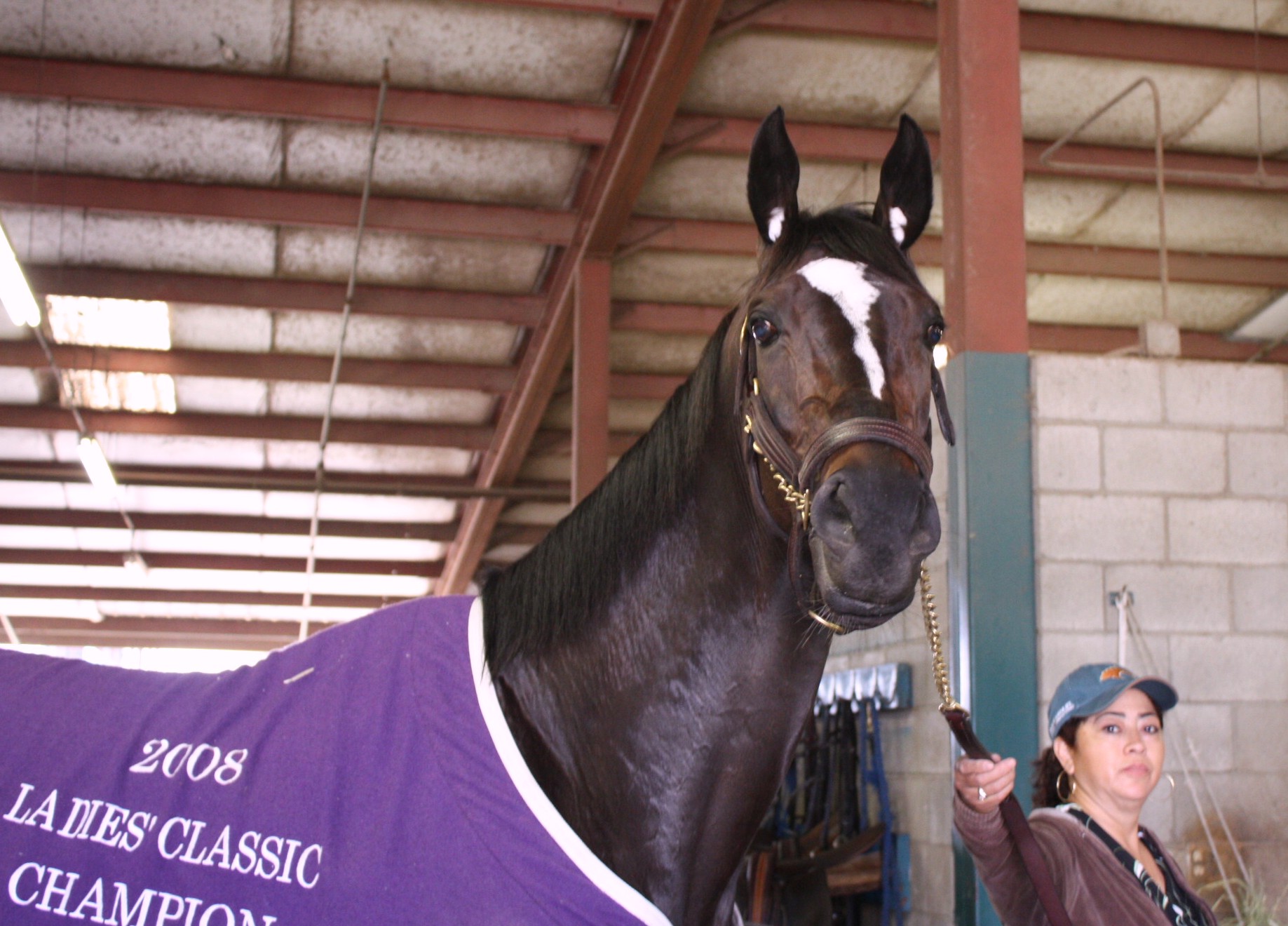
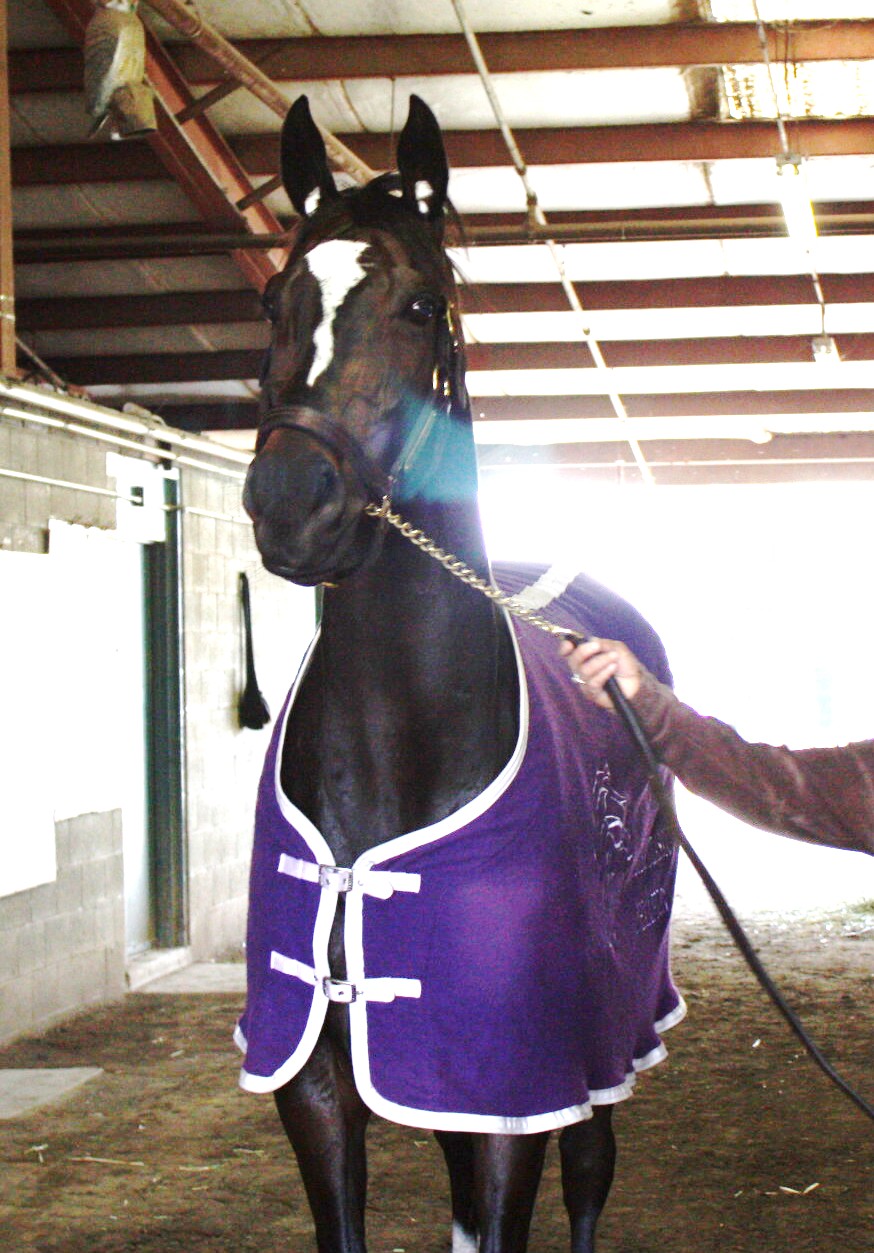
First, Zenyatta delivers quite a greeting to her guests at the stable.
When we walked into her barn, my friend asked, “Where’s Zenyatta?” as she surveyed the stalls of horses.
Zenyatta answered the question with authority.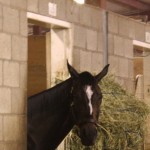
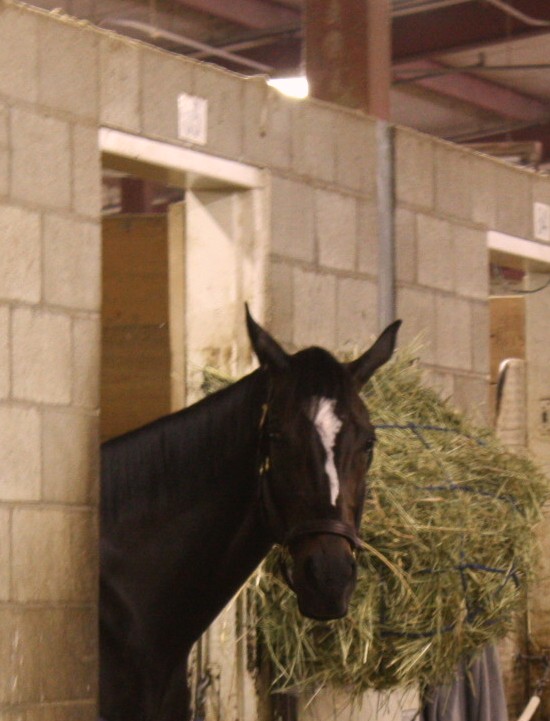
The giant mare rattled in her stall and stuck her head out. She stared right at us and never shifted her gaze as we stood watching her in awe.
It was stunning.
When her trainer John Shirreffs appeared, he matched Zenyatta’s hospitality to her guests.
After briefly greeting us, he slipped into his office.
At that moment, I envisioned that he was calling security to kick us out.
I could not have been more wrong.
Within a few seconds, Shirreffs re-emerged with a smile and a card with Zenyatta’s photo on it.
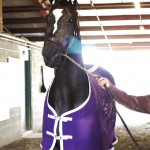 He handed me the photo as a souvenir as Zenyatta began to parade around the barn in preparation for her morning workout.
When I began to take pictures, she demonstrated her mastery of the camera eye.
As she drew close to the lens, Zenyatta paused and rose her head to demonstrate her full height.
She posed.
The next day, Zenyatta had a much larger audience to please as she prepared to challenge history in the Vanity Handicap.
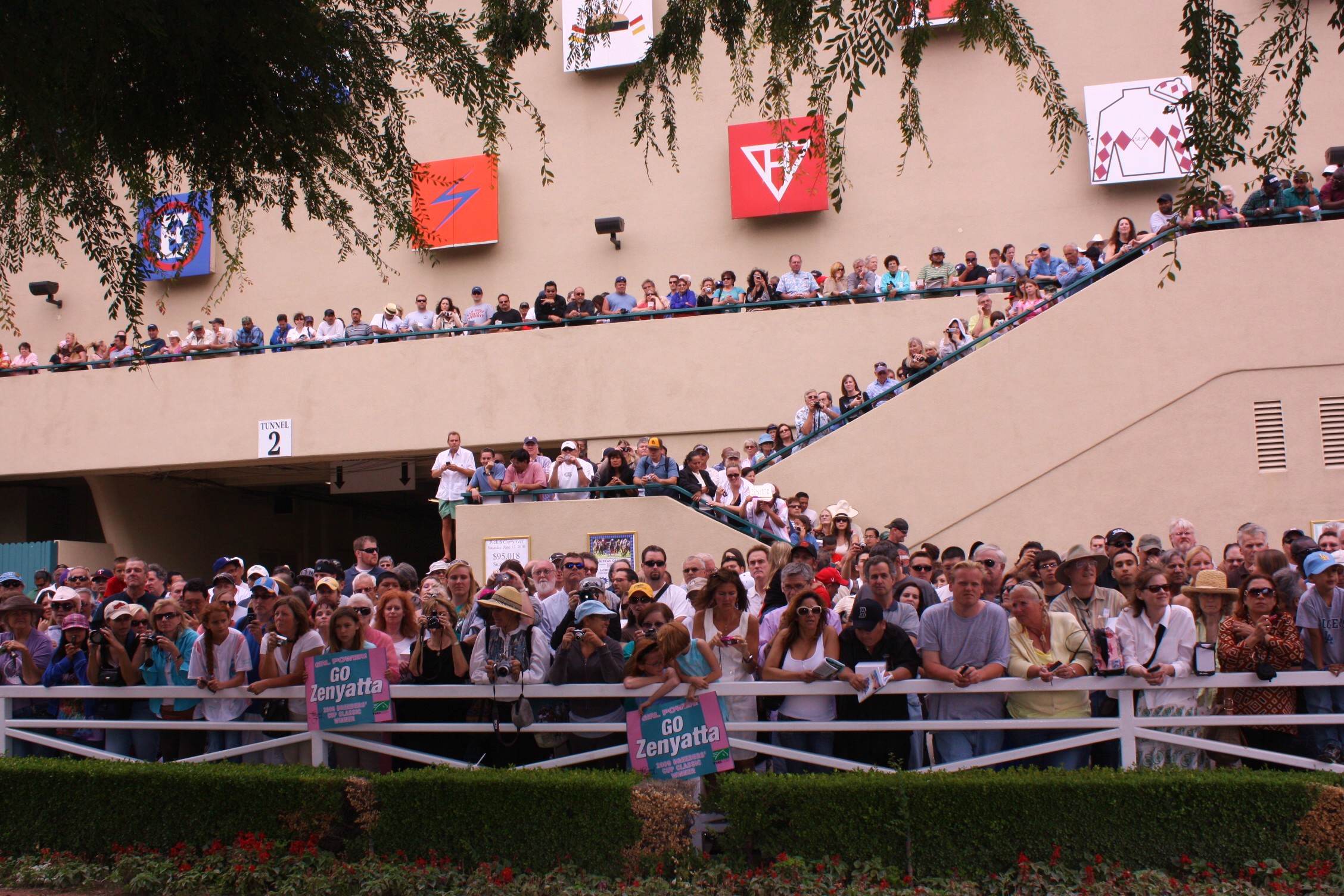
As I stood in the paddock, I looked out at the large crowd of fans that lined the rails to catch a glimpse of her in the flesh.
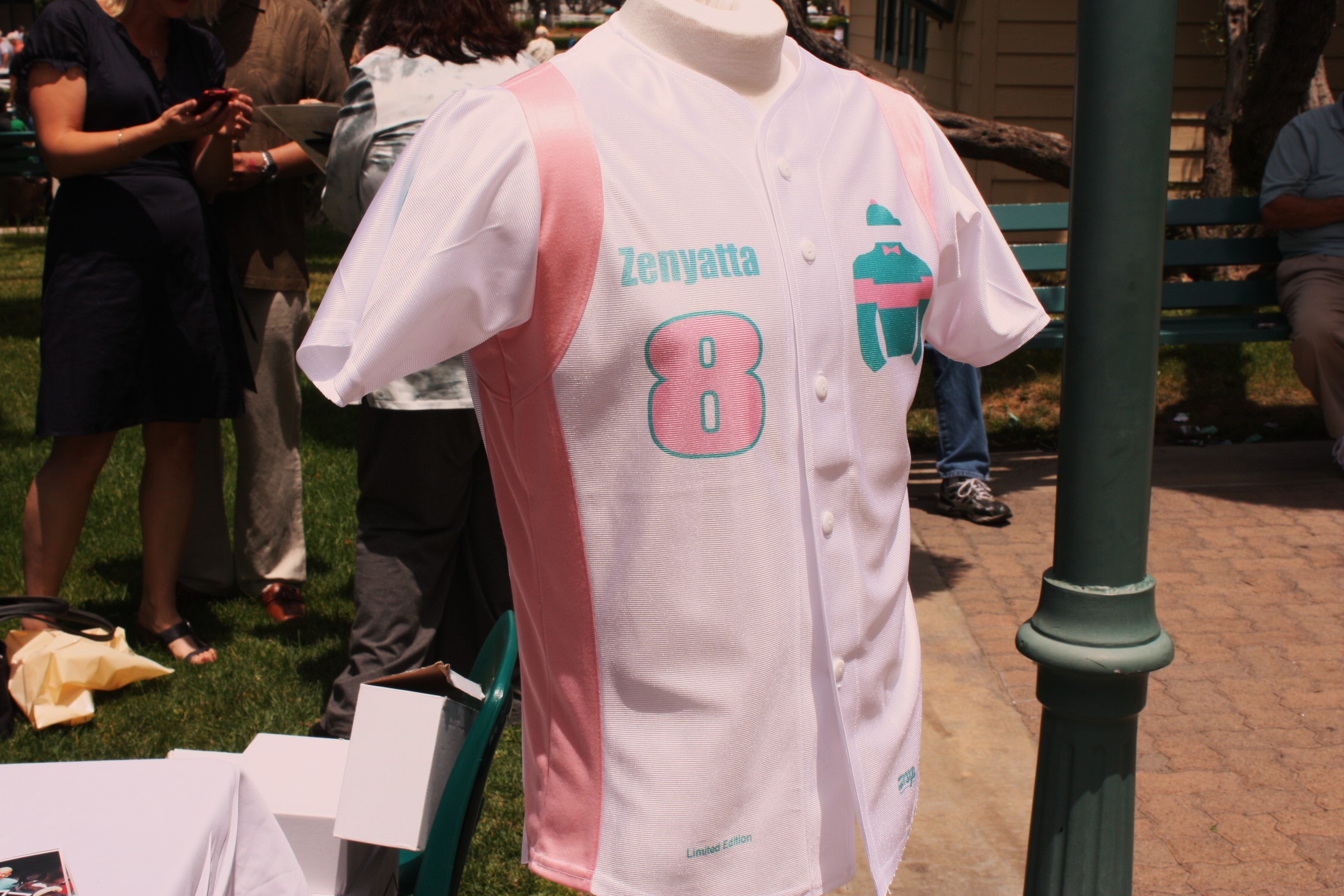
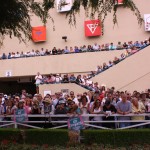 The audience was speckled with Zenyatta fan gear – ranging from hand-painted signs to Zenyatta jerseys.
I drew the second lesson from Zenyatta in that moment.
At the pinnacle of success, character is shown through being gracious and charitable to everyone.
The jerseys that bore Zenyatta’s name were being sold to benefit Thoroughbred retirement and rescue.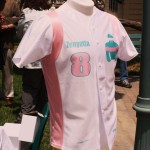
Throughout Hollywood Park, fans weaved through the crowd adorned with the jerseys that represented Zenyatta’s charitable hoofprint.
And, as Zenyatta’s connections began to emerge in the paddock, they greeted the fans with the same excitement as Zenyatta demonstrated the previous morning.
Owners Jerry and Ann Moss entered the gates and waved at the onlookers with a giant smile.
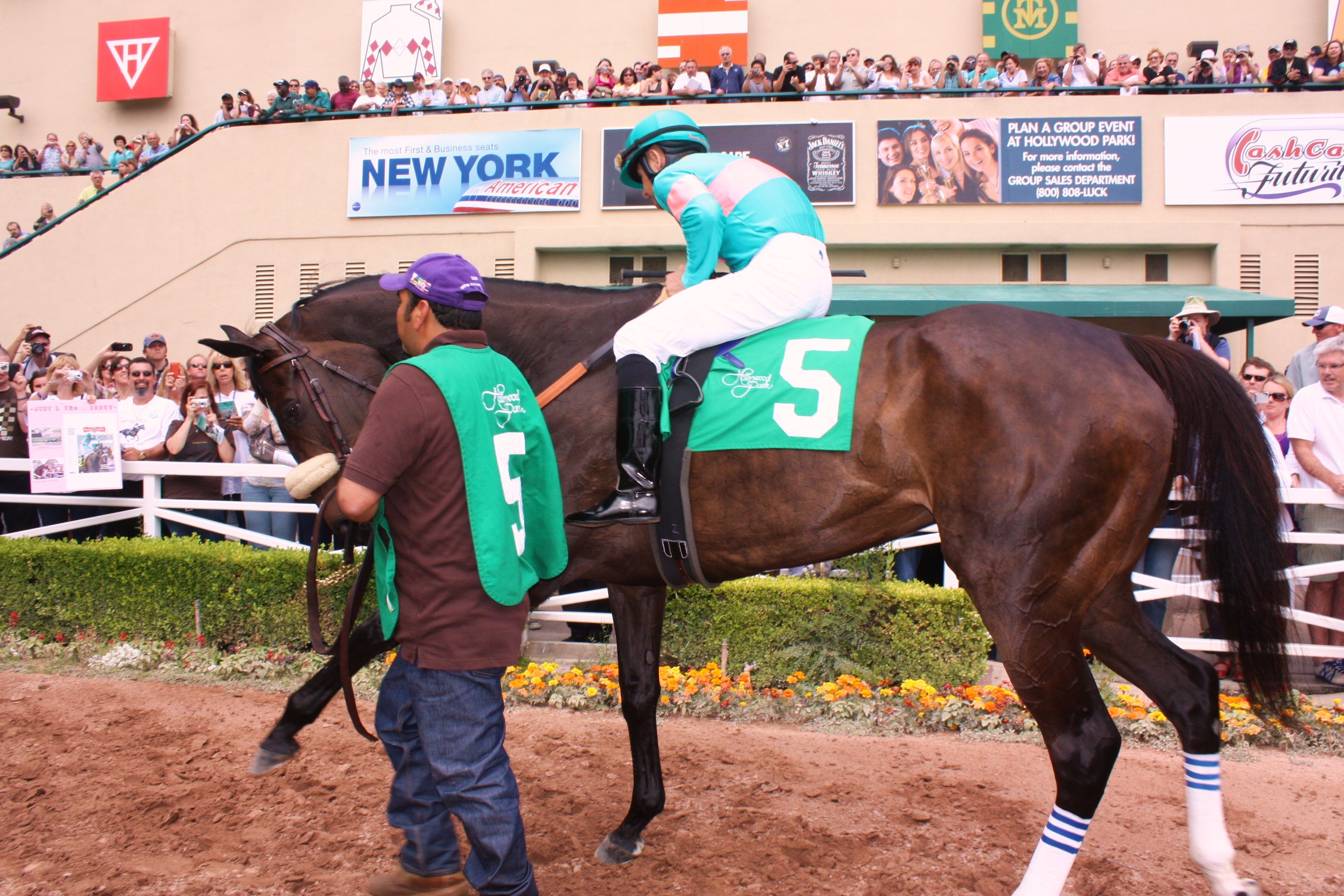
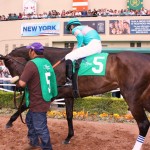 And, when the Zenyatta set foot in the paddock, she delivered her dazzling dance steps without a care in the world.
Yet, despite the whirlwind of fan fare, Zenyatta was in the unshakeable gaze of one individual – Trainer John Shirreffs.
Zenyatta never left his sight as she danced and bowed for fans.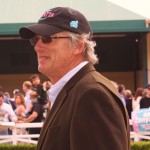
And, as I watched Shirreffs, it occurred to me that one principle stood solid in her success beyond racing or records: Put the welfare of the horse first.
In a single moment, I learned that Zenyatta isn’t only first at the finish line.
The well-being of Zenyatta comes first before she ever sets foot on a track.
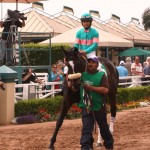 Yet, in a few minutes, the idea of finishing first in the Vanity Handicap took center stage in the public sphere as Zenyatta pranced toward the track in response to the call to post.
As she entered the gates toward history, Zenyatta delivered a lesson that resonates strongly amidst the ongoing comparisons of her record to other champion race horses.
She didn’t look at her rivals.
Her gaze was marked firmly on the track laid before her own eyes.
Zenyatta didn’t compare herself to Rachel Alexandra.
She didn’t compare herself to the legacies set forth by horses like Ruffian or Secretariat.
Zenyatta failed to see the good that comes from comparing her accomplishments to other champions.
And, as far as I can tell, Zenyatta doesn’t spend her days undermining the achievements of fellow racehorses.
She just keeps racing.
And, she just keeps winning.
And - she doesn’t sling mud in the process.
In my opinion, Zenyatta’s winning philosophy provides a valuable lesson beyond comparison.
May 15th, 2010 §
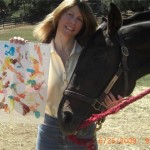
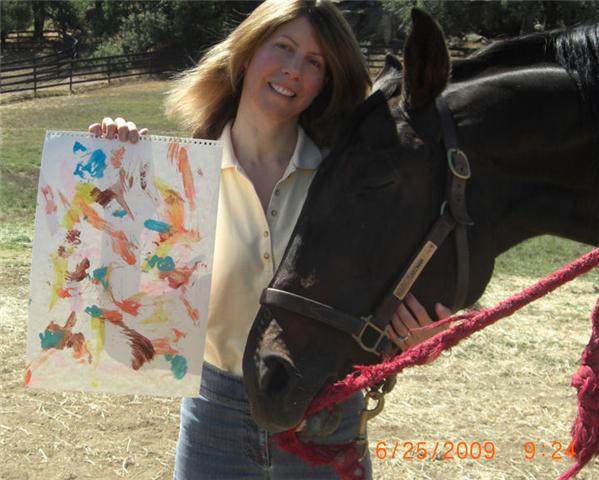
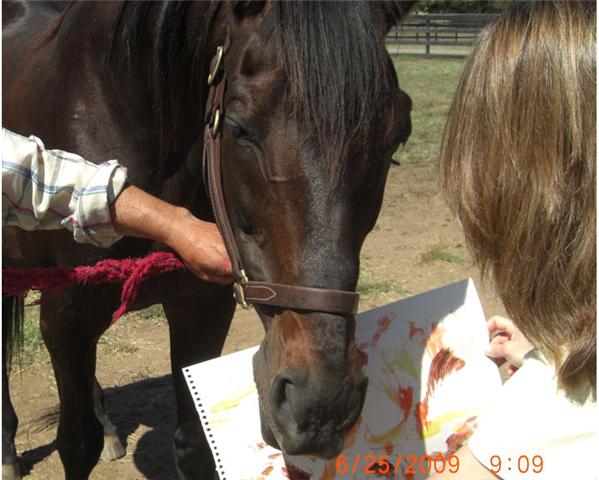
With the help of a former racehorse, Dawn Mellen helps paint a beautiful portrait of how to advance Thoroughbred rescue efforts.
The painter in this picture is named Turkoman – a Thoroughbred that won over two million dollars during his career.
In his retirement, Mellen assisted him to create a painting for an auction to fund the rescue efforts at Our Mims Retirement Haven in Kentucky.
Mellen’s creative funding endeavor with Turkoman is among the many examples of how she has helped Thoroughbred rescue efforts.
Mellen began working with Thoroughbred rescues in the mid-1990s. Through her work, she realized that a major obstacle for rescue organizations was funding.
In 2007, Mellen founded the non-profit organization, After the Finish Line (ATFL), to fund the rescue, rehabilitation, and retirement of Thoroughbred horses that can no longer race or breed.
ATFL provides yearly grants to Thoroughbred rescues to fund the expense of rescue efforts. The organization also has established an emergency fund to assist horses as needed throughout the year.
The board members of ATFL receive no salary - all donations directly benefit Thoroughbred rescue.
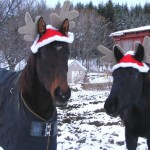 Funds provided to ATFL are used for various purposes, including saving horses at auctions, paying for medical expenses, providing hay and feed, paying boarding expenses, or transporting a Thoroughbred to safety.
Through funding basic needs of the horses, Mellen helps to assist in achieving the broader goal of transitioning ex-racehorses into second careers.
As a result of grants from ATFL, Thoroughbreds are retrained for hunting, jumping, dressage or trail riding.
If a horse cannot ride, the horses are retrained for equine therapy or as companion animals.
Mellen’s work proves that a racehorse doesn’t lose its worth at the end of their last race.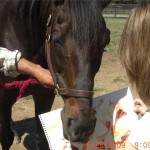
After the finish line, a Thoroughbred racehorse holds the potential to make a brand new start.
In a recent interview, Mellen discussed her organization and provided stories about Thoroughbreds who were rescued through the support of ATFL.
JW: Is your organization opposed to the sport of horse racing?
DM: ATFL is not opposed to horse racing. We are here to say that there are alternatives for these talented Thoroughbreds when their racing or breeding careers are over. They deserve the opportunity to transition into a second career.
JW: How does ATFL acquire funding for rescue efforts?
DM: ATFL received donations from individuals, corporations and foundations. Our support comes from the racing industry participants (owners, trainers, breeders, fans, etc.), people who own off the track Thoroughbreds and those who care about the welfare of these animals.
JW: How many rescues receive funding from ATFL?
DM: In 2009, 47 rescue organizations received funding from ATFL. We anticipate helping 50 - 60 rescue organizations in 2010.
JW: How are Thoroughbreds acquired by rescue organizations?
DM: Several ways. Many Thoroughbreds are purchased at auctions. Others are purchased or donated by owners, trainers, animal control or from people who can no longer take care of their horses.
JW: Can you cite a few examples of horses that your organization provided funding to facilitate their rescue, retraining, or retirement?
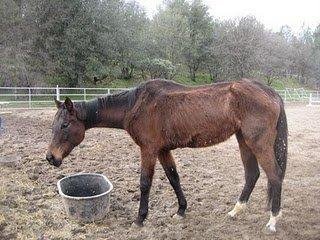
DM: Safe Haven Horse Rescue in CA rescued Excessorized, a descendant of Secretariat. However, her racing ability fell short of Secretariat’s talent. Excessorized raced nine times at Golden Gate Fields and earned $2,700.
Seven months after she left the racetrack, Animal Control found her emaciated and neglected. ATFL paid for vet, farrier and dental expenses - plus special feed that helped her gain 300 pounds.
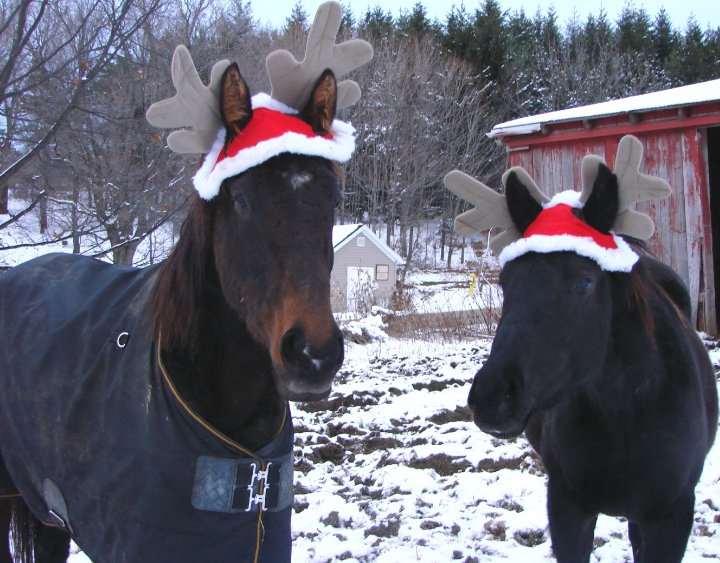
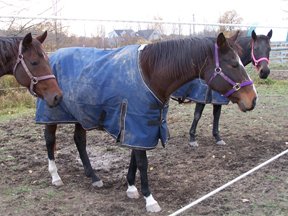
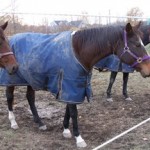 In Michigan, After the Finish Line donated funds to purchase winter blankets for thirteen Thoroughbred ex-racehorses.
Temperatures fell below zero and snow drifts rose to the Thoroughbreds bellies. With many long, cold winter months of snow and freezing temperatures these thirteen horses will appreciate their new blankets.
In another case, ATFL’s monthly emergency funds were awarded for Eyes Left who raced as a two-year-old at Sunland Park and Ruidosa Downs in New Mexico.
To save him from auction he was purchased privately and brought to Texas. He became a Western riding horse.
Eventually, Eyes Left and his owners developed health issues and he was sent to Triple MeMac rescue. Triple MeMac will receive $1,000 for exam, dental, farrier, x-ray, vaccination and rehab expenses so Eyes Left can transition into a second career.
After The Finish Line is a 501(c)(3) non-profit organization in which all donations are fully tax-deductible. Visit the ATFL website at www.afterthefinishline.org or call 858.945.1371 to learn more or make a donation. You can also visit ATFL on Facebook by clicking this link.