January 1st, 2011 §
I believe one of the many beautiful things in racing is that nearly anything can happen in this sport.
Is January to early to start dreaming of the possibilities for the 2011 racing season?
Not in my view.
As the 2011 season gets under way, a new crop of three-year-old horses are taking flight while proven champions continue to build their legacy.
Can Uncle Mo win the Triple Crown? He certainly makes Triple Crown dreams swirl around in my head.
Will Awesome Feather extend her six-race undefeated streak in the New Year? I certainly dream of seeing another filly claim victory after victory.
Can Goldikova deliver a fourth consecutive Breeders’ Cup victory as she continues to race against her own legend? I hope to witness it.
In my mind, one of the most thrilling aspects of a new year in racing is that imagination precedes any answers to those questions.
It is part of the beauty of the sport.
This is a sport of imagination. And, it is a sport where the athletes can go beyond our wildest dreams. They deliver their own dreams to our doorstep, and, in the process, force us to consider new definitions of “greatness” in the sport.
I’m celebrating the New Year in racing.
Anything can happen.
And, it’s starting now.
Click here to see our first highlight video for the 2011 season.
December 30th, 2010 §
 In November, The Saturday Post started an annual fan poll to allow racing enthusiasts to cast their picks for their favorite champions in various categories during the 2010 racing season. The votes are in. Take a look at our fan favorites!
Horse of the Year – Zenyatta.
By an overwhelming 97 percent of fan votes, Zenyatta commanded a solid victory for “Horse of the Year” in our racing poll.
During her career, the great mare commanded rock star power through claiming victory after victory in nineteen consecutive outings. She is the highest female earning racehorse of all time in North America. She won the most consecutive Grade I victories in the sport. She pulled three “three-peats” in the Clement Hirsch, Lady’s Secret and Vanity. Finally, Zenyatta made history through becoming the first female to ever beat the boys in the Breeders’ Cup Classic in 2009.
Beyond the record books, Zenyatta brought many intangibles to the sport. She delighted fans with her dizzying ‘dance routines’ in the paddock, video footage of her guzzling a Guinness in her stable and invited everyone to take a “virtual ride” on her back through a helmet camera she used during a workout.
She also brought the sport into the national limelight. Zenyatta was featured as one of the most powerful women of 2010 in Oprah’s magazine, as well as a figure in the “Society” section of W fashion magazine. She claimed ownership of Los Angeles in her billboard entitled, “This Is My Town,” as part of a marketing campaign for the L.A. Dodgers Baseball Team. Finally, Zenyatta’s segment on 60 Minutes served as the first time the show had ever filmed a piece on a racehorse.
Simply put, Zenyatta delivered a show that was unimaginable before she began her racing career. She made people wonder. She made people cry. She made people marvel at her beauty. And, in the process, she added excitement to the sport for both long-time enthusiasts and newcomers.
Best Older Male Horse – Blame. With 65 percent of votes in his favor, Blame won the fan poll for Best Older Male Horse. During his career, Blame won nine races in thirteen career starts and retired with career earnings of $4,368,214. In 2010, he won three Grade I victories, including the Breeders’ Cup Classic.
Best Older Female Horse – Zenyatta. Aside from “Horse of the Year,” 86 percent of fans also voted for Zenyatta as the “Best Older Female Horse.” Goldikova served as the second choice in the fan poll for this category.
Best Three-Year-Old Male Horse – Lookin’ at Lucky. Preakness-winner Lookin’ at Lucky won best “Three-Year-Old Male Horse,” capturing 74 percent of the votes in our racing poll.
Best Three-Year-Old Filly – Blind Luck. With five Grade I wins, Blind Luck won “Best Three-Year-Old Filly” with 85 percent of fans voting in her favor.
 Best Two-Year-Old Male Horse – Uncle Mo. With an undefeated record in three starts as a two-year-old, including his victory in the Breeders’ Cup Juvenile, Uncle Mo has won “Best Two-Year-Old Male Horse” in our fan poll with 80 percent of the votes.
Best Two-Year-Old Female Horse – Awesome Feather. With a six-race undefeated record, Awesome Feather has won the fan vote for “Best Two-Year-Old Female Horse,” with 78 percent of votes in her favor.
October 11th, 2010 §
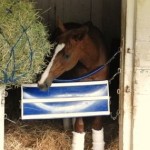 In less than a year, Blind Luck transformed her career from being an unraced $10,000 filly at auction to become the 2010 Kentucky Oaks winner.
On June 21, 2009, Blind Luck made her racing debut in a $40,000 maiden claiming race at Calder Race Course. After she blazed to a 13¼ length victory, Trainer Jerry Hollendorfer privately purchased Blind Luck. She soon began racing in graded outings.
In her next eight starts, Blind Luck captured five wins – three of which were Grade 1 victories.
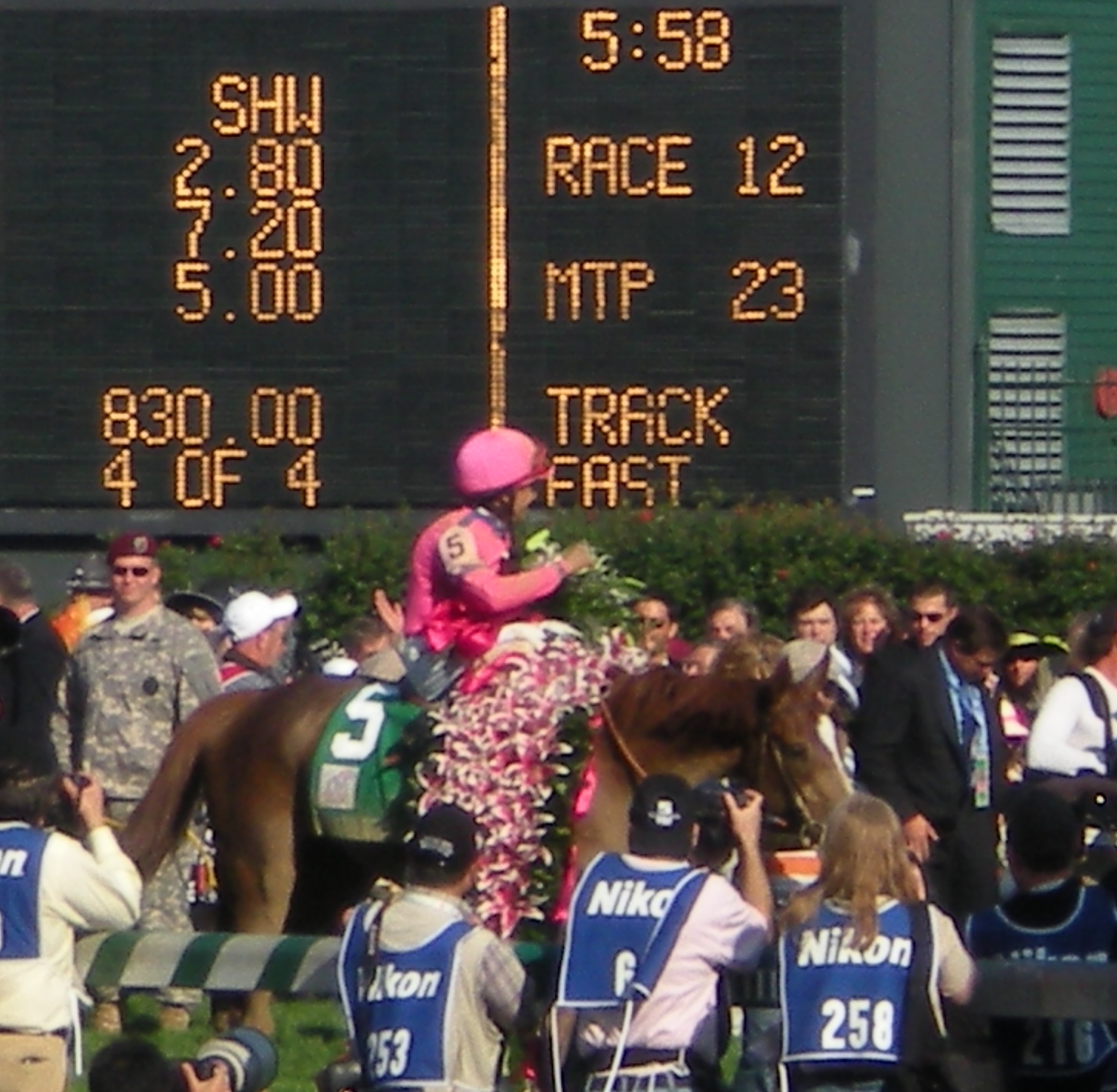
In April of 2010, Blind Luck was shipped from California to Kentucky to challenge a field of rivals in the Kentucky Oaks. In her riveting last-to-first fashion, Blind Luck bulleted in the final stretch to clinch a victory by a nose in one of the most highly-regarded filly races in the United States.
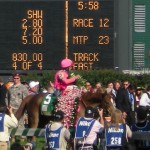 Since the Oaks, Blind Luck has won two of her last four starts and finished second in the remaining outings.
Throughout her career, Blind Luck has raced throughout the United States, hit the board in every outing, and has proven her ability on both synthetic and dirt surfaces.
As she points toward her next start in the Breeder’s Cup Ladies Classic at Churchill Downs, Daniel Ward answered our questions about Blind Luck. Ward is an Assistant Trainer for Hollendorfer and heads the Southern California Division.
JW: Blind Luck has amassed five Grade I victories, including the Kentucky Oaks in 2010. How did you feel about Blind Luck’s potential when she first joined the Hollendorfer stable?
DW: She was a good-looking filly - very tall with long legs. When we were just working her, we could tell that she was a nice filly. But, until the first time that she ran, we didn’t know.
The first time she raced for us she had a lot of trouble, but she circled the field and won pretty easily. So, we were very excited about that.
Then, we took a big step up from that starter allowance race and she ran the Grade 1 Debutante. When she ran second, we knew we had a good filly.
JW: Blind Luck has been shipped all around the country and has run on both dirt and synthetic surfaces. In your opinion, does she prefer any particular surface or track?
DW: She has won at eight different tracks. She has three Grade I victories on synthetic and two on dirt. So, I really don’t think she has a preference since she has run well on every track. I believe if she gets a chance someday, she would run well on grass - just because of her running style.
JW: Blind Luck appears to enjoy running from behind-to-first in the final seconds during her races. Do you think she knows where the wire is in any given field?
DW: I think she races the same way she acts and trains in the morning. She runs like that in the morning.
In a morning workout, it is a really big advantage when you have a horse like her because you don’t have to worry about her being too strong galloping or working too fast. She can go very slow if you want, and then, she just picks it up on her own or on the turn. We try to teach a lot of horses how to do that and she’s always been able to do that.
She doesn’t have any off-days in workouts.
It just seems like she knows what she’s doing.
JW: Do you get nervous in the final seconds of her races because of her style of running?
DW: Yes. Nobody can really say that they don’t, but it’s very exciting.
A lot of the time when I’m watching her race, I really think that when she moves around the turn and she’s running at a target, she’s going to get there. But sometimes, when she gets there, she waits on the other horse. So, that makes it closer than it should be in the end.
JW: How did you feel when Blind Luck won the Kentucky Oaks?
DW: It is very hard to start a year and pick a goal for any horse. It was satisfying just to get to the race.
When she won the race that we were pointing for all year, it was a very big accomplishment.
JW: You have regular contact with Blind Luck. What is her personality like at the stable?
DW: She is very smart. She likes to go out early. She gets very anxious when she sees other horses go out to the track. She likes to be the first one out.
She usually works at 8 o’clock. She is so smart that if she doesn’t go out early, she relaxes with the thought that she’s not going to work out that day.
I can do anything I want with her, without them tying her up or putting a halter on her, because I have a bag of carrots with me when I check all the horses in the morning. She knows me. But, when she sees my foreman coming around to give her vitamins, she won’t let anyone catch her. Especially the vet. She is just that smart.
She also like peppermints and sugar cubes. She is a little spoiled. Spoiled, but friendly.
She is a very nice horse to be around and doesn’t give anybody any trouble.
She doesn’t like to stand still, but if you catch her, she’s very relaxed.
JW: Does Blind Luck have any unique or fun personality traits?
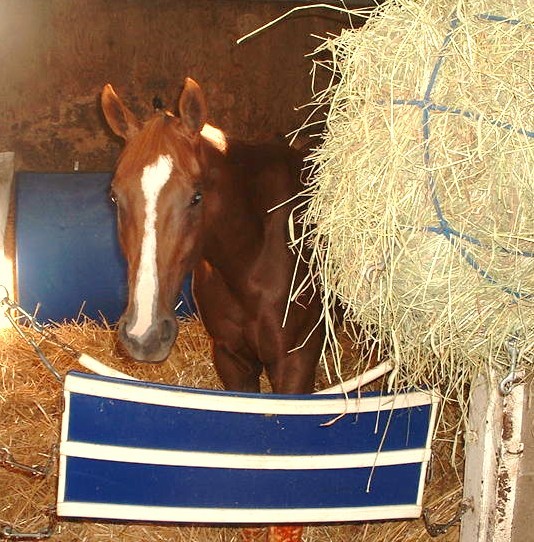
DW: She really makes a mess out of her stall because she likes to make big mountains of straw. I look in there sometimes and say, ‘What are you doing?’ But, if she wants to do that, it’s fine. It’s a mess, but overall, it’s nothing really.
She also loves to travel. If she hears the van, she’ll prick her ears up and get excited. And, when you walk her up to the van, she’ll drag you into the van. You better be ready.
JW: What makes Blind Luck so special to you?
DW: It’s her competitiveness. I’ve heard stories that when she was growing up at the farm, she was always the one that pushed all the other horses away to get to the feed.
She is very competitive when she gallops. When she sees other horses, she wants to go after them. And, when she’s working, she’ll see a horse way out front and try to catch the horse.
It’s something you just can’t teach them, they just have it.
She has a lot of desire to win.
JW: What led to the decision to point Blind Luck to the Breeder’s Cup Ladies Classic?
DW: She already has had a good race at Churchill Downs, so the Ladies Classic was an easy race to point toward. She’s already won at that track and at that distance. It has been the goal all year, especially since she proved that she liked Churchill Downs.
JW: Do you intend to run Blind Luck as a Four-Year-Old?
DW: Yes. She will get a break. But, there are a lot of races for older females all over the country and she has already won on most of those tracks. We could try the Apple Blossom since she has won at Oaklawn. We could also run in the Delaware Handicap since she’s already won the Oaks at Delaware Park. And, we could also run her at Churchill since she has already won there. She doesn’t mind shipping for races.
» Read the rest of this entry «
August 9th, 2010 §
Luck is an interesting thing.
You find it when you least expect it.
And, in some moments, luck finds you.
In the case of Blind Luck, it arrives when you’re not looking.
In April of 2007, a mare named Lucky One gave birth to a foal in Kentucky at Fairlawn Farm.
The foal’s father, Pollard’s Vision, was blind in one eye and had been named for sharing the same trait with Red Pollard, Seabiscuit’s Jockey.
After multiple graded-stakes victories during his career, Pollard’s Vision was eventually retired after his final race at Saratoga in August of 2005.
It was the same track where he had begun his career with a 12½ length maiden victory.
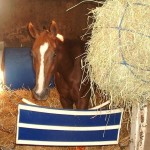 A few years after Pollard’s Vision ran his last race at Saratoga, the daughter of the half-blind horse and the one “lucky” mare was entering the sales ring.
She was initially sold as a yearling for $11,000 at the 2008 Fasig-Tipton Kentucky July sale.
Roughly a year later, the two-year-old filly was back in the ring at auction.
In April of 2009, she was entered in the Ocala Breeder’s April sale. After failing to garner serious attention from bidders, the filly was bought back for $10,000.
Roughly two months later, the filly set foot on the track for a $40,000 maiden claiming race at Calder Race Course.
It was the first time her name appeared in a program.
“Blind Luck.”
As she entered the gates, the $10,000 filly faced odds of 5 to 1 from the betting public.
But, luck doesn’t mind odds.
The sheer nature of luck is beating them.
As Blind Luck claimed a 13¼ length maiden victory, she began to mirror Pollard’s Vision in finding the Lucky One.
Blind Luck cleared her maiden race in the same runaway fashion as her father had done in his 12½ length maiden race at Saratoga.
Yet, few saw Blind Luck when she appeared in the gates – she didn’t get claimed in her debut.
The nature of luck can elude the eyes.
Yet, luck didn’t elude Pollard’s Vision.
And, after the race, Blind Luck didn’t escape the vision of Trainer Jerry Hollendorfer.
After she broke her maiden by 13¼ lengths, Hollendorfer privately purchased Blind Luck.
He saw a stakes-bound horse.
And, Blind Luck agreed.
In her next eight starts, Blind Luck captured five victories – four of which were in Grade 1 races.
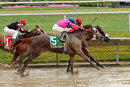 In April of 2010, Blind Luck was shipped from California to Kentucky to challenge a field of rivals in the Kentucky Oaks.
As the gates opened, Blind Luck hung at the back of the pack as the rest of the contenders bulleted around the oval.
It appeared her luck had run out.
Then, Blind Luck took hold in the race.
As the field turned for the wire, Blind Luck picked off her rivals in a heart-stopping victory.
She won by a nose.
As Blind Luck was draped in a Garland of Lilies, she proved Pollard’s Vision correct.
Blind Luck had just claimed her fourth Grade 1 victory.
And, it appears her luck isn’t running out.
In her last race, Blind Luck nipped her rivals at the wire in the Delaware Oaks to claim her eighth victory in twelve career starts.
As Blind Luck heads toward Saratoga for the Alabama Stakes, she will race around the same circle where Pollard’s Vision started and finished his career.
And, as she stamps out her own hoof print on the Saratoga track, she is a perfect vision of luck.
Blind Luck.