October 15th, 2010 §

Saying “Uncle!” used to mean you had given up in a contest.
Remember that one? “Uncle!” is a word that has resolved countless childhood conflicts throughout the ages.
Once you recognized your opponent had you licked at arm wrestling or a thumb war, “Uncle!” was the magic word that conceded the match. And, upon uttering the word, it was time to walk away in humiliation and heal your wounded ego in private.
That used to be what saying “Uncle!” meant between two-year-olds in contests.
And then, Uncle Mo showed up and changed the game for two-year-old racehorses.
Say “Uncle!” if you’re winning well beyond daylight.
Say “Uncle!” if you’re breaking your maiden by 14 ½ lengths in your first lifetime start.
Say “Uncle!” if you just won a Grade I race on your second outing at a track.
In his two career starts, Uncle Mo has proven that screaming “Uncle!” isn’t what it used to be back in the day.
It’s all about winning now.
Uncle Mo, owned by Mike Repole, may be the best two-year-old pointing toward the Breeder’s Cup Juvenile on November 6, 2010. In six years of owning horses, Repole was 0-26 in graded outings. And then, Uncle Mo showed up.

On August 28, 2010, Uncle Mo delivered a stunning 14 ½ length maiden victory at Saratoga in his first lifetime start. It wasn’t your ordinary maiden. Uncle Mo led the field through the entire race and earned a 102 Beyer figure in that outing. He is currently tied with Boys at Toscanova for the best figure of the year by a juvenile from his maiden start. (Click photo to see video footage of the race)
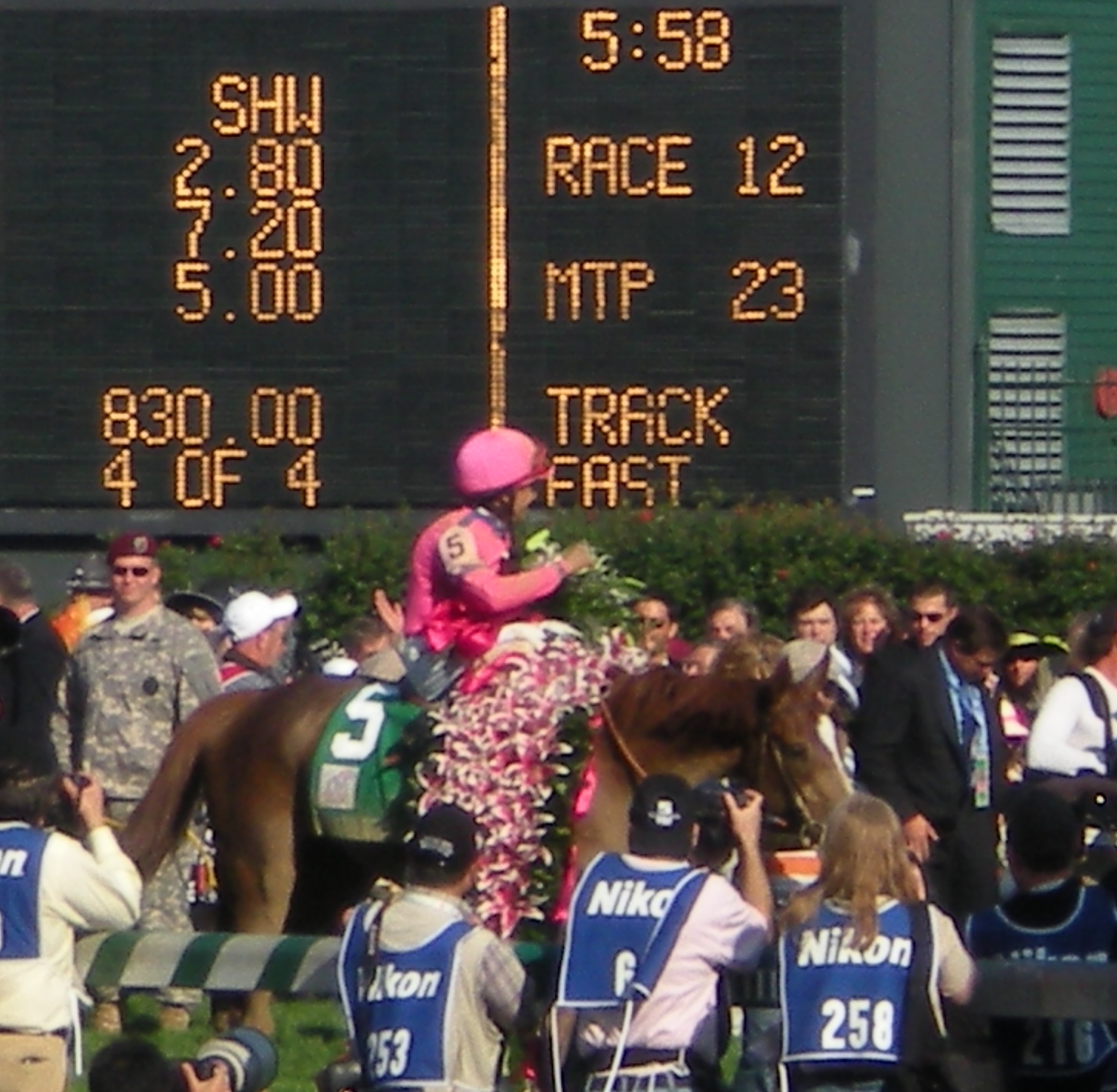
After his maiden victory, Uncle Mo jumped directly into Grade I territory. He entered the Champagne Stakes as his second career start and delivered an authoritative 4 ¾ victory. In that race, Uncle Mo also gave Repole his first Grade I win as an owner.

And, Uncle Mo won the Champagne Stakes with pure style. His finishing time was 1:36.51 in the Champagne – only a fifth of a second away from the stakes record set by Devil’s Bag in 1983. Uncle Mo beat Secretariat and matched Seattle Slew in his finishing time at the outing. (Click photo to see video footage of Champagne Stakes)
So now, Uncle Mo heads to the Breeder’s Cup Juvenile to attempt a three-peat of victories.
I’m screaming “Uncle!”
And, I’m marveling at Uncle Mo.
It’s all about winning now.
» Read the rest of this entry «
October 11th, 2010 §
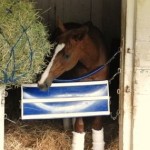 In less than a year, Blind Luck transformed her career from being an unraced $10,000 filly at auction to become the 2010 Kentucky Oaks winner.
On June 21, 2009, Blind Luck made her racing debut in a $40,000 maiden claiming race at Calder Race Course. After she blazed to a 13¼ length victory, Trainer Jerry Hollendorfer privately purchased Blind Luck. She soon began racing in graded outings.
In her next eight starts, Blind Luck captured five wins – three of which were Grade 1 victories.
In April of 2010, Blind Luck was shipped from California to Kentucky to challenge a field of rivals in the Kentucky Oaks. In her riveting last-to-first fashion, Blind Luck bulleted in the final stretch to clinch a victory by a nose in one of the most highly-regarded filly races in the United States.
 Since the Oaks, Blind Luck has won two of her last four starts and finished second in the remaining outings.
Throughout her career, Blind Luck has raced throughout the United States, hit the board in every outing, and has proven her ability on both synthetic and dirt surfaces.
As she points toward her next start in the Breeder’s Cup Ladies Classic at Churchill Downs, Daniel Ward answered our questions about Blind Luck. Ward is an Assistant Trainer for Hollendorfer and heads the Southern California Division.
JW: Blind Luck has amassed five Grade I victories, including the Kentucky Oaks in 2010. How did you feel about Blind Luck’s potential when she first joined the Hollendorfer stable?
DW: She was a good-looking filly - very tall with long legs. When we were just working her, we could tell that she was a nice filly. But, until the first time that she ran, we didn’t know.
The first time she raced for us she had a lot of trouble, but she circled the field and won pretty easily. So, we were very excited about that.
Then, we took a big step up from that starter allowance race and she ran the Grade 1 Debutante. When she ran second, we knew we had a good filly.
JW: Blind Luck has been shipped all around the country and has run on both dirt and synthetic surfaces. In your opinion, does she prefer any particular surface or track?
DW: She has won at eight different tracks. She has three Grade I victories on synthetic and two on dirt. So, I really don’t think she has a preference since she has run well on every track. I believe if she gets a chance someday, she would run well on grass - just because of her running style.
JW: Blind Luck appears to enjoy running from behind-to-first in the final seconds during her races. Do you think she knows where the wire is in any given field?
DW: I think she races the same way she acts and trains in the morning. She runs like that in the morning.
In a morning workout, it is a really big advantage when you have a horse like her because you don’t have to worry about her being too strong galloping or working too fast. She can go very slow if you want, and then, she just picks it up on her own or on the turn. We try to teach a lot of horses how to do that and she’s always been able to do that.
She doesn’t have any off-days in workouts.
It just seems like she knows what she’s doing.
JW: Do you get nervous in the final seconds of her races because of her style of running?
DW: Yes. Nobody can really say that they don’t, but it’s very exciting.
A lot of the time when I’m watching her race, I really think that when she moves around the turn and she’s running at a target, she’s going to get there. But sometimes, when she gets there, she waits on the other horse. So, that makes it closer than it should be in the end.
JW: How did you feel when Blind Luck won the Kentucky Oaks?
DW: It is very hard to start a year and pick a goal for any horse. It was satisfying just to get to the race.
When she won the race that we were pointing for all year, it was a very big accomplishment.
JW: You have regular contact with Blind Luck. What is her personality like at the stable?
DW: She is very smart. She likes to go out early. She gets very anxious when she sees other horses go out to the track. She likes to be the first one out.
She usually works at 8 o’clock. She is so smart that if she doesn’t go out early, she relaxes with the thought that she’s not going to work out that day.
I can do anything I want with her, without them tying her up or putting a halter on her, because I have a bag of carrots with me when I check all the horses in the morning. She knows me. But, when she sees my foreman coming around to give her vitamins, she won’t let anyone catch her. Especially the vet. She is just that smart.
She also like peppermints and sugar cubes. She is a little spoiled. Spoiled, but friendly.
She is a very nice horse to be around and doesn’t give anybody any trouble.
She doesn’t like to stand still, but if you catch her, she’s very relaxed.
JW: Does Blind Luck have any unique or fun personality traits?
DW: She really makes a mess out of her stall because she likes to make big mountains of straw. I look in there sometimes and say, ‘What are you doing?’ But, if she wants to do that, it’s fine. It’s a mess, but overall, it’s nothing really.
She also loves to travel. If she hears the van, she’ll prick her ears up and get excited. And, when you walk her up to the van, she’ll drag you into the van. You better be ready.
JW: What makes Blind Luck so special to you?
DW: It’s her competitiveness. I’ve heard stories that when she was growing up at the farm, she was always the one that pushed all the other horses away to get to the feed.
She is very competitive when she gallops. When she sees other horses, she wants to go after them. And, when she’s working, she’ll see a horse way out front and try to catch the horse.
It’s something you just can’t teach them, they just have it.
She has a lot of desire to win.
JW: What led to the decision to point Blind Luck to the Breeder’s Cup Ladies Classic?
DW: She already has had a good race at Churchill Downs, so the Ladies Classic was an easy race to point toward. She’s already won at that track and at that distance. It has been the goal all year, especially since she proved that she liked Churchill Downs.
JW: Do you intend to run Blind Luck as a Four-Year-Old?
DW: Yes. She will get a break. But, there are a lot of races for older females all over the country and she has already won on most of those tracks. We could try the Apple Blossom since she has won at Oaklawn. We could also run in the Delaware Handicap since she’s already won the Oaks at Delaware Park. And, we could also run her at Churchill since she has already won there. She doesn’t mind shipping for races.
» Read the rest of this entry «
September 3rd, 2010 §
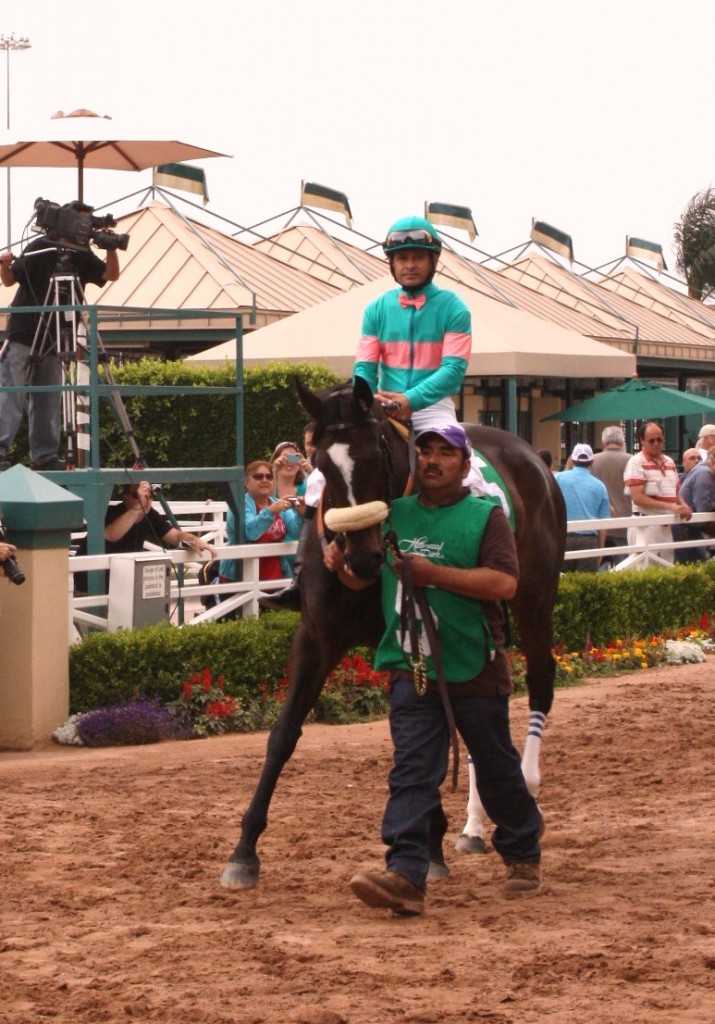 DYNAMITE! A Video Montage of Zenyatta’s Dancing and Racing Moments. Click Here to View!
January 16th, 2010 §
With the Kentucky Derby nearly four months away, the major trainers are beginning to take stock of the talent in their stables and nominate their hopefuls for the upcoming prep races leading up to the Kentucky Derby. As with any year, there will inevitably be many twists and turns of fate before the ultimate winner hits the wire at Churchill Downs on the first Saturday in May.
My early favorite this year is “Lookin at Lucky,” a horse trained by the legendary Bob Baffert. In his six starts, four of which were Grade 1 races, Lookin at Lucky has only succumbed to a single defeat – The Breeder’s Cup Juvenile.
During the Breeder’s Cup Juvenile, Lookin at Lucky lost by a head after struggling with a bad trip throughout the race. At the start of the race, Lookin at Lucky was wide early, got stuck in midpack while facing a slow pace, rallied wide, and was ultimately outfinished from the inside by Vale of York. When interviewed after the Juvenile, Baffert stood firm. “We know we have a legit horse, we just didn’t get paid.”
Since the Juvenile defeat, he captured a win in the Breeder’s Cup Cash Call Futurity in December of 2009. Under jockey Garrett Gomez, Lookin at Lucky won by three-quarters of a length, after making several different moves throughout the race, to kick clear at the wire to secure a win. “Hell of a day, huh?” Baffert remarked in a post-race interview. “He’s getting better and better.”
After the Futurity, Baffert said that Lookin at Lucky would get an extended break. He anticipates that the horse will run two prep races before the Kentucky Derby. The targeted races have not been announced, but with the early promise demonstrated by this colt, the betting public should be looking at a “Lucky.”
January 16th, 2010 §
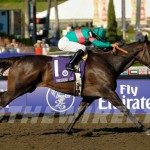
On Monday, the winner of the prestigious “Horse of the Year” Eclipse Award will be announced and two breathtaking fillies remain in a dead heat for title. Throughout most of the 2009 racing season, Rachel Alexandra dominated the sport with flashy wins against other fillies, taking down the boys in three separate races, and, ultimately, being the first filly in 85 years to capture the Preakness Trophy. Of her eight starts as a three-year-old in 2009, she remained undefeated and ended her racing year as the first filly to win the Woodward Stakes.
By September of 2009, I believed Rachel Alexandra was the clear choice for “Horse of the Year” having watched her trample the field in the Kentucky Oaks, take down the Derby Winner in the Preakness, and close her season with her historical win in the Woodward Stakes. If anyone had challenged that notion, I wouldn’t have hesitated to hold a good old-fashioned yelling match to defend Rachel’s right to the title. In my mind, it was inconceivable that any horse could out-perform this “Super Filly.”
And then, the unconceivable arrived. On November 7, 2009, an undefeated five-year old female named Zenyatta walked onto the track at Santa Anita and dared every boy standing at the gate to defeat her in the richest race in America.
It was such a bold move that I skipped a wedding to watch her try.
As the gates opened, Zenyatta trailed the field. Throughout middle of the race, I watched with heartbreak as she hung in last place. It looked as if expectations had exceeded her ability. When it appeared near hopeless, Zenyatta made the bid for her place in history. She began to pick off her opponents near the last turn and went wide on the home stretch to deliver a seemingly late charge for the finish. In the final seconds, Zenyatta drove seamlessly past her contenders at the wire to win the Breeder’s Cup Classic. In this historical moment, my allegiance for “Horse of the Year” shifted from Rachel Alexandra to the first filly to ever take the most expensive race in America – Zenyatta.
Admittedly, Zenyatta’s contention for “Horse of the Year” would not be such a threat to Rachel Alexandra without her historical win in the Breeder’s Cup Classic. However, I am not in the business of rewriting history. In fact, Zenyatta’s bid for “Horse of the Year” is perfectly in sync with the historical background and ultimate spirit of the Eclipse Awards.
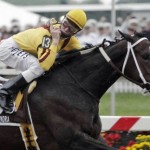 When the Eclipse Awards were founded in 1971, they were named in honor of a British racehorse and sire from the 1800s, named “Eclipse.” As a racehorse, Eclipse did not begin his career until he was a five-year-old and remained undefeated throughout the eighteen races in his career. In recognition of his legacy, Eclipse became the namesake to what are arguably considered the most prestigious achievement awards within the American horse racing industry.
By the very nature of the Eclipse Awards, the award categories provide a separation for age and overall achievement. Aside from “Horse of the Year,” which encompasses all ages and genders, the Eclipse Awards also maintain separate categories for the best “Three-Year-Old Filly” and “Three-Year-Old Male.” The scenario between Rachel Alexandra and Zenyatta appears to have been given some forethought prior to this moment.
Eclipse himself could not have won the best “Three-Year-Old Male” Award, just as Zenyatta can no longer compete for the best “Three-Year-Old Filly” award due to the age restriction. The Awards appear to follow the design that a “Three-Year-Old Filly” may become “Horse of the Year,” but that the rapture of the Triple Crown racing season cannot discount the outstanding performances of all racehorses during a given year.
Admittedly, Rachel Alexandra had an electrifying year as a three-year old horse – irrespective of her gender. If she had shown up to Santa Anita on November 7th to win the Breeder’s Cup Classic, there would be very little debate that she had earned the “Horse of the Year” Award. But, as Zenyatta trampled down the full field of skilled male horses to earn the distinction of the first filly to win the Breeder’s Cup Classic, Rachel Alexandra quietly stepped aside and placed her bets on her three-year-old season. When Zenyatta was first at the wire, Rachel lost her bet.
Zenyatta’s win in the Breeder’s Cup Classic holds more historical significance than any of Rachel Alexandra’s wins within this season. Zenyatta won the most expensive race in the United States. She is the first filly to ever accomplish this feat. The Breeder’s Cup Classic is one of the most contentious races in America – the field is full of great horses from varying backgrounds who are proven winners.
In contrast, Rachel Alexandra’s first Grade One win was in the Kentucky Oaks – among other fillies. Her next race, among males in the Preakness, is an impressive win – but not a “Game Changer.” Prior to Rachel, four fillies had already won the Preakness Stakes – the most recent win being in 1924. Further, the Preakness is the shortest distance of all three Triple Crown races, the Belmont being the longest race in the United States at a distance of 1 ½ miles. When Oaks-Winner Rags to Riches beat Curlin in the 2007 Belmont Stakes, Curlin was still awarded the distinction of “Horse of the Year” despite the fact that a Filly had not won the Belmont in over a hundred years when she crossed the finish line.
Zenyatta also holds distinction for building her undefeated record on a higher grade of races than Rachel Alexandra. In her career, Zenyatta has consistently run in only Grade 1 and Grade 2 races – remaining undefeated. In contrast, Rachel Alexander gradually worked from Grade 3 races into Grade 1 races, finishing second in both of her Grade 3 races. When viewing the overall career record of both horses, Zenyatta is the only undefeated horse who never delved below a Grade 2 race.
Finally, Zenyatta’s wins earned more money in 2009 than Rachel Alexandra. In 2009, Zenyatta was the second-highest ranking horse, boasting $3,330,000 in earnings. In comparison, Rachel Alexandra ranked fifth in 2009, bringing in a total of $2,746,914.
With the entry of more fillies in the prestigious male-dominated horse races, the industry is now squarely-faced with “The Filly Eclipse” for the Horse of the Year. Fillies are running alongside their male-counterparts and winning. When Rachel Alexandra ended her racing season in September, many believed that she had earned “Horse of the Year” over her potential male rivals for the Award. On November 7th, 2009, Zenyatta placed herself in undisputed contention with Rachel Alexandra as she moved past the finish line at the Breeder’s Cup Classic. Those watching the Breeder’s Cup Classic witnessed the first “Filly Eclipse” in history for the Horse of the Year Award.
After the Breeder’s Cup Classic, there have been arguments to hold a match race between Rachel Alexandra and Zenyatta. This would not add or subtract anything from this competition. Zenyatta and Rachel Alexandra are two distinct horses at different places in their career with their own unique character. They race in two separate fields - Rachel performs better on dirt and Zenyatta excels on synthetic track. If they ever settled where to run this race, the next question would be why the race should be run. This is a competition for the “Horse of the Year”- not “Best Filly of the Year.” It just happens to be that the two final contenders are fillies.
In the case of Rachel Alexandra, I truly believe that she has gone above and beyond to win the distinction of being the best three-year-old filly for 2009. She took on the boys, outran them, and bested the field with her astounding margins of victory in filly races.
Then, in a rare moment in November, “The Filly Eclipse” occurred and Zenyatta obscured all opposition.
When Zenyatta crossed the wire in the Breeder’s Cup Classic, she took my vote for Horse of the Year through pioneering a win in the most expensive race in America amidst a field a hard-tested males from various ages and backgrounds. It was an electrifying performance that not only earned her a place in the history books, but also, the well-earned distinction as “Horse of the Year.” I had seen my first ”filly eclipse.” It was breathtaking.