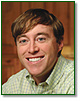
 Case Clay manages the various world-class stallions, mares, and foals housed at Three Chimneys Farm. In 1972, his father, Robert Clay, founded the farm with a dream, a plan, and 100 acres of undeveloped land.
Today, the farm incorporates approximately 2,300 acres in seven divisions – five for mares and foals, one for yearlings, and the last to 12 highly accomplished stallions.
In the mid-1980s, Three Chimneys Farm made the decision to establish itself as a boutique by limiting the farm’s stallion population - the concept being that “The Idea is Excellence.” This allowed for personalized management and promotion of each stallion.
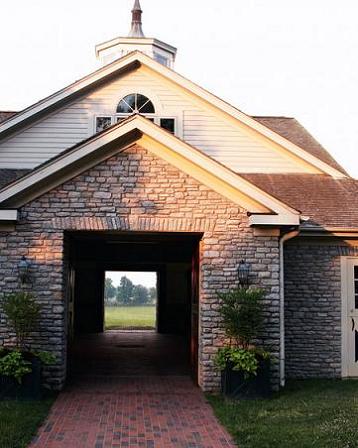 The Throughout the years, the farm has been the home to many exceptional horses – including Triple Crown winner Seattle Slew and 1997 Kentucky Derby and Preakness winner, Silver Charm.
Three Chimneys Farm is currently is the home to Kentucky Derby and Preakness Winners, Smarty Jones and Big Brown, as well as Dynaformer, the sire of 2006 Kentucky Derby winner, Barbaro.
In a recent interview, Clay discussed his experiences through the years at Three Chimneys Farm.
WIRTH: Did you grow up at Three Chimneys Farm? If so, what was it like as a child to be surrounded by such highly accomplished horses?
CLAY: I did grow up at Three Chimneys Farm. It was wonderful to be surrounded by horses. Slew O’Gold was our first stallion and I have great memories going to see him run before he retired. Since he was so dominant on the racetrack, I remember thinking, ‘this must be easy’. I was in the fourth grade then and each year since then, I realize every day how wrong I was! The following year we were fortunate enough to stand Chief’s Crown and I will always have great memories of the time I spent with the Rosens.
WIRTH: What inspired your decision to work in the equine industry?
CLAY: In 2001, I was working for the Hyatt Corporation’s in-house advertising agency for their retirement communities. At the time, I was reading about small, boutique advertising firms that were getting acquired by big advertising conglomerates for a lot of money. I thought that I would start my own boutique firm with the goal of selling it to a big firm.
Since I didn’t know anything about starting a company and my father did, I called him and asked if we could dedicate some time to discussing how to start a company. We talked at 9 a.m. each Saturday morning for a year. Just about every example he gave (whether on purpose or not!) was about Three Chimneys and the horse business. The more we discussed it, the more interested I became in the idea of becoming involved in the family business. I talked to my wife, Lorin, about it, thinking she would say, ‘no way’ at the thought of moving to Kentucky, but when I asked her, she said she would be up for it – so here we are.
WIRTH: Prior to becoming the President of Three Chimneys Farm, you had worked at farms in Ireland and Australia. Did you find any unique differences between horse racing in the United States compared to the customs in Ireland and Australia?
CLAY: Yes. As we read in the many blogs and articles, Australian Racing has a brilliant model. Going racing there is a great experience with lots of excitement and it fills about 5 or 6 pages each day in the major newspapers. In Ireland, there is a great passion for racing as well. Kudos to Monmouth Park for their new model. I hope it catches on here in America.
WIRTH: In nearly four decades, Three Chimneys Farm has grown from a 100-acre dream to a 2,300-acre top-notch breeding farm. What do you think were the key management decisions that led to the success of Three Chimneys Farm?
CLAY: Put out a good product, take care of the customers and take care of the employees.
WIRTH: What are the governing principles and beliefs that guide your operation?
CLAY: Honesty without hesitation. Never stray from integrity. Mutual respect and the value of every team member, the importance of innovation, and strengthening customer relationships.
WIRTH: How do you determine which mares and stallions should be housed at Three Chimneys Farm?
CLAY: We put a lot of emphasis on the family (pedigree). With regard to stallions, the three main factors are pedigree, conformation and race record.
WIRTH: What is your day-to-day schedule like as President of Three Chimneys Farm?
CLAY: Lately it has been managing receivables! Every day is different, but every day is enjoyable.
WIRTH: What are some of your most memorable moments at the farm?
CLAY: The most memorable have been with my five-year-old daughter and three-year-old son. We spend a lot of time in the hay loft, but occasionally they’ll look at a horse!
WIRTH: When you see a horse that was foaled at Three Chimneys Farm go on to achieve success as a racehorse, do you feel a sense of accomplishment?
CLAY: It’s more of a sense of pride with regard to our team. We have world-class horse managers in place, in Sandy Hatfield, Tony Burton, Richie Donworth and Wayne Smith. Each of them has a team who has been with them for a long time. They do all the work.
To comment on this post, click here. To join The Saturday Post Facebook Page, click here.
