September 22nd, 2011 §
 Bernard Fontenelle once said, “It takes time to ruin a world, but time is all it takes.”
Perhaps, the time of ruin arrives when a single generation forgets why certain places are important. Or possibly, the importance of the events that occurred on that ground fail to excite a culture with changing values. It may take time to ruin a world, but if time is all it takes, the way we spend our time has an ever-increasing value toward determining what the future beholds.
In the case of racetrack closures, I wish I had spent time at those lost tracks prior to the final “Call to the Post.” And, in our tracks that continue to exist today, I do. Because, if it takes time to ruin a world, there is time to prevent the fall of it in the first place.
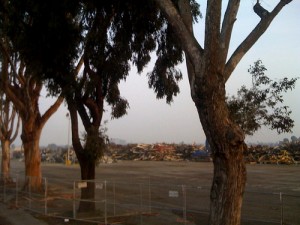
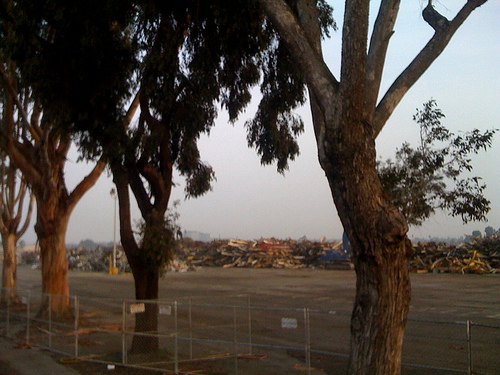
The question lies in how we can contribute to racing while we spend our time enjoying the sport. I imagine the last day at Bay Meadows race track in California, where, prior to its closure, it was the longest continually-operating track in the state. It was on this ground that Seabiscuit fought to become the two-time winner of the Bay Meadows Handicap, John Henry finished second in the same race years later, and Triple Crown Winner Citation graced the now-demolished oval near the end of his illustrious career.
In 2008, Bay Meadows was shut down after being purchased by a real estate development company. Prior the final race, “The Last Dance Stakes,” the track bugler played “Auld Lang Syne.” The crowd gave a standing ovation to the final string of horses to race that day, while the athletes broke from their post-parade to face the audience. While facing the crowd, the jockeys gave a salute to the witnesses who showed up to watch the last race ever to be run on that track. And, moments after that final salute, Bay Meadows closed for good.
When I view the six and seven figure prices paid for a single horse in a sales ring, I wonder why no one had ever thought to set up a foundation to provide funding to help save the tracks that require emergency funding, to promote the sport in general and to help fund Thoroughbred retraining and retirement.
As an owner, I would happily pay a surcharge on a sale price to ensure that the tracks can keep racing horses in the future. Further, I would pay a nominal fee when registering a foal to help provide the necessary funding to prevent such closures. And finally, I would happily give a percentage of my winning purse share toward a foundation that funds the promotion of Thoroughbred racing and retirement. Because, in the final equation, it does not serve myself, nor the industry, any good to have a racehorse without a racetrack to race upon. In the same time that leads to the closure of a track, there is time to prevent the collapse of it if funding is provided and used to promote the future of racing.
If such a foundation had existed to save Bay Meadows, the site of Seabiscuit’s two-time victory in the then-longest running race in California may not be slated to become a shopping area today. It would be a racetrack where wonder existed as to when the next Citation, Seabiscuit, or John Henry may set foot that ground.
And, if such a foundation had existed in Illinois, Washington Park would have been rebuilt in Homewood after it was destroyed by a fire in 1977. I would have enjoyed racing a horse in the same place where Triple Crown Winners Whirlaway and Citation competed on that ground. I would have felt humbled to stand where Native Dancer left that track victorious before later retiring with a record of 21 wins in 22 lifetime starts. I wish I could have watched my horses race on the same oval where Nashua and Swaps held a $100,000 match race and Jockey Eddie Arcaro became the two-time winner of the American Derby. Yet, Washington Park was sold for commercial and residential development in 1992. And, with that sale, the living monument to those moments disappeared in a dismal demolition.
If I were born a few decades earlier, I would have gone to the Wood Memorial when it was held at the former Jamaica Racetrack prior to its’ demolition in 1960. Jamaica Racetrack was where Omaha won the Wood on his road to becoming a Triple Crown Winner. Native Dancer made his debut at Jamaica. Even Seabiscuit raced there. And, before Bold Ruler retired to stud and gave the racing world Secretariat, he ended his career of 23 wins in 33 starts with his last race at the Jamaica Racetrack. Yet, I’ll never visit that park because the Rochdale Village Housing Development occupies the site now. The greatness that took flight on that soil has long been forgotten in exchange for one more residential area.
And finally, I wish I was at the former Sportsmans Park in Illinois in 2002 to watch War Emblem capture a victory in the Illinois Derby and stamp his ticket to Churchill Downs to race in the Kentucky Derby. But, it appears that Fontenelle’s proposition, “It takes time to ruin a world, but time is all it takes,” proved true for Sportsman’s far too soon. By the time War Emblem set foot in the gates to win the Kentucky Derby at odds of 20-1, Sportsman’s had already closed for good. Whatever may have been celebrated from War Emblem’s road to the roses the following year was ultimately replaced with plans to develop a shopping center on that site.
Now, Hollywood Park is facing closure with the same swan song from developers that, in time, it will become a commercial and residential development. And sadly, it seems that time may be all it takes to demolish it.
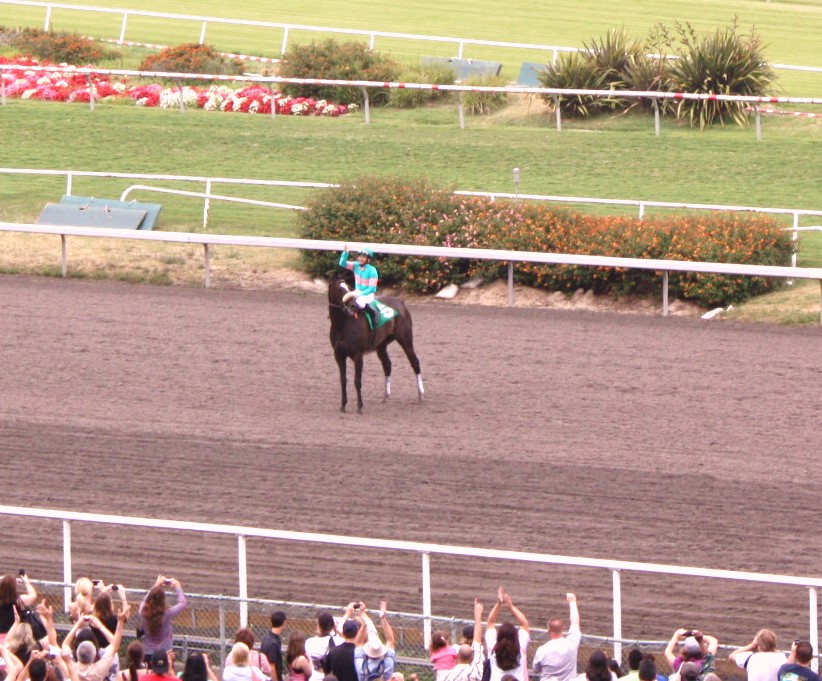
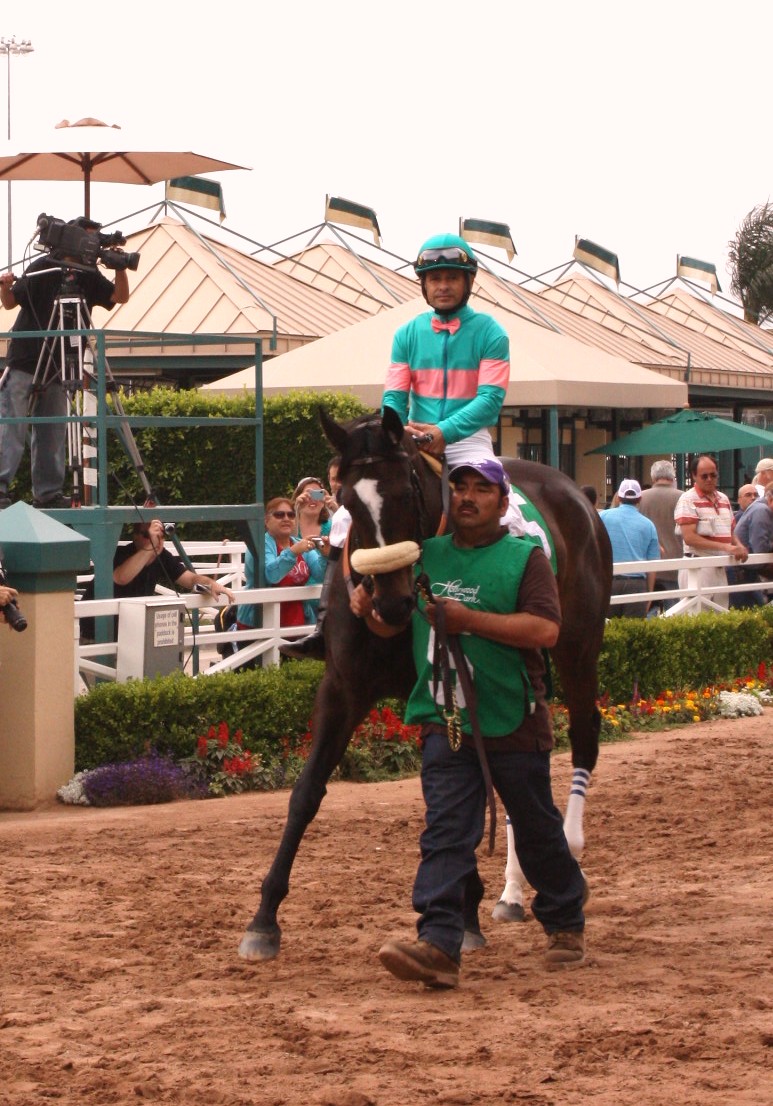
Yet, in the time it takes to close a track, there is time to try to save it. Every day spent at a track is a day that supports the continuity of its existence. I make a point to go to the track to see the races. And, because I go to the races, I stood in the crowd and saw my favorite racing moment at Hollywood Park. It was the day that Zenyatta broke the modern Thoroughbred record when she won her seventeenth consecutive start.
During the race, the crowd cheered in unison for one single mare from start to finish as if she were racing alone. And, when she claimed her seventeenth consecutive victory, Zenyatta stood on that site, a perfect Thoroughbred, and took in an ovation from a crowd that was absolutely in awe of her presence. It was not simply a horse race. It was a historical moment. And, the site of that historical event is the same site, which, if developers get their way, will be demolished and turned into a retail and residential area.
I fail to see a need for another commercial or residential development on grounds where our champions tested their limits and showed us what we had deemed impossible. Rather, there is a need to protect the monuments to those moments, and ultimately, provide a site for future racehorses to showcase their talent.
Thankfully, “It takes time to ruin a world.” Because in the time it takes, the industry can rethink how to help save our remaining tracks and fund the future of this sport. And, as participants and fans, we can use our time to think about how we spend our time enjoying this sport, contributing to this sport and protecting it.
We can take time to attend the races to show our support. We can help fund the preservation of this sport. And, in the end, we can honor the achievements of our heroes and heroines through saving the very places where they laid their hearts down and fought for a victory.
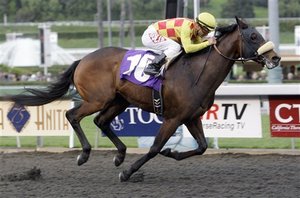
Photo Credit: Photo of Bay Meadows taken by Dylan Tweeney.
December 5th, 2010 §
Click Photo for Video
Today, Zenyatta will take her final bow before her adoring fans at Hollywood Park. In celebration of her astounding racing career, I am posting a video with quotes about this fairy-tale mare from trainers, writers and other media sources.
In my mind, Zenyatta has become virtually indescribable in words alone.
She is more than a champion race horse. She is more than a media maven. She more than a dancing diva. And, if she wins “Horse of the Year,” she is even more than that award.
Zenyatta is like falling in love. You can’t describe it to someone who has never felt it. Yet, for those who love Zenyatta, we endlessly try to sum her up through describing her personality, one-of-a-kind dance routines and exceptional racing record.
However, in the end, just like love, it really is the sum of everything that she is, along with her indescribable intangible qualities, that can’t be grasped unless you simply know it with you own eyes and heart.
For those who fell in love with this great mare, she isn’t vanishing in a simple farewell. Zenyatta is a flame that will remain in the hearts and memories of her fans for eternity and beyond.
And, she will remain a story. It may not be told in daily media articles, but instead, in homes across the world.
Somewhere in the future, there may be a moment where you tell her story to someone brand-new to racing. And, when they ask, “Did you get see her with your own eyes?” You’ll be able to say, “Yes, I did. I saw the greatest mare that ever set foot on a track in my lifetime.”
June 17th, 2010 §
 Last weekend, I traveled to Hollywood Park to watch Zenyatta make her bid to win her seventeenth undefeated career start.
At the track, someone asked me, “So, what brings you to California?”
The answer was easy. “Zenyatta.”
The person seemed surprised that I had traveled to Hollywood for a single horse.
However, in my opinion, Zenyatta isn’t just a good horse.
She is a living legend.
I wanted to be there to watch her stride into the history books in her record-breaking seventeenth career victory.
It appears that I wasn’t the only one who felt this way.
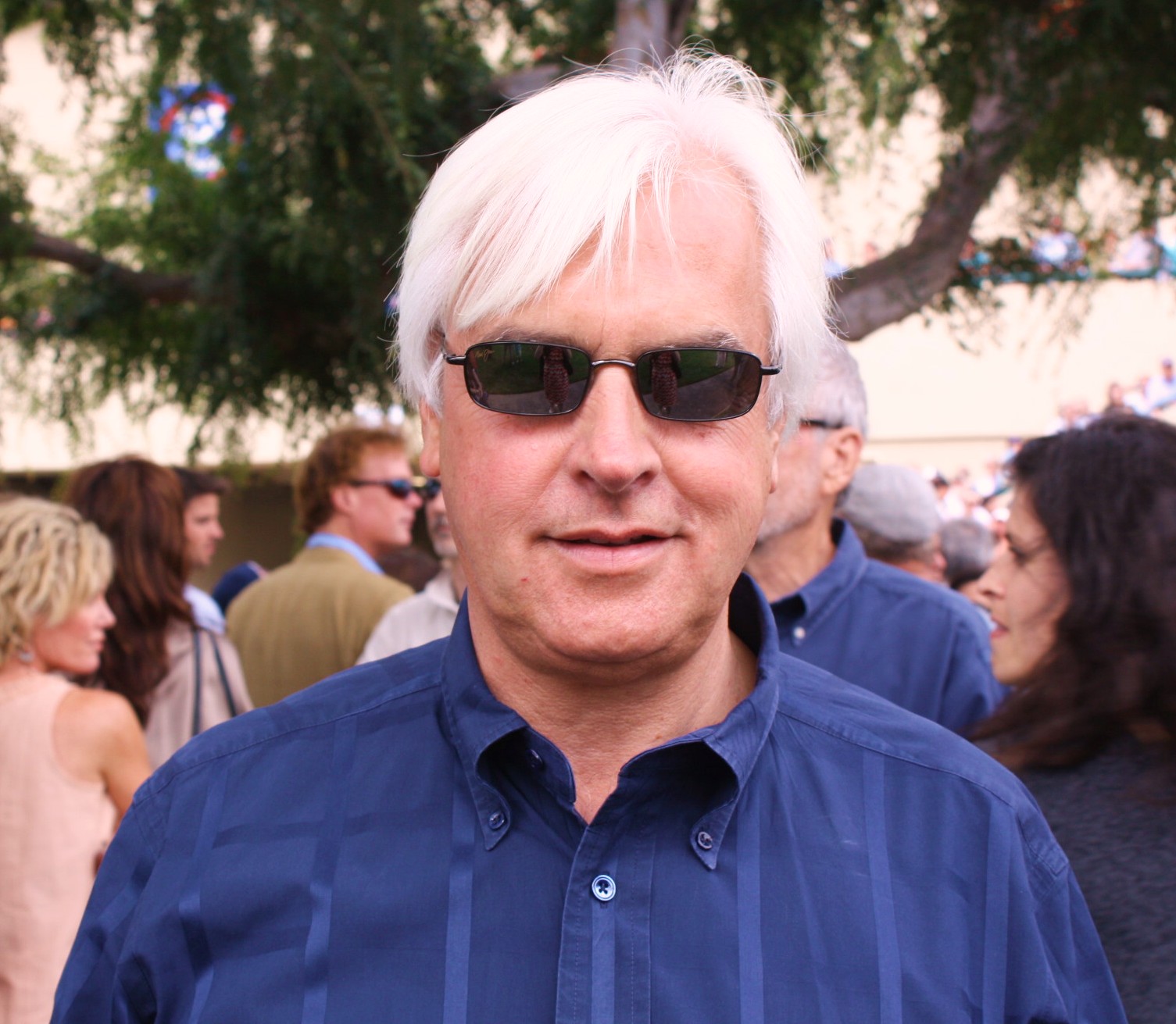
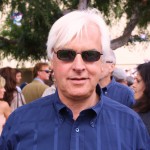 Prior to the race, Hall of Fame Trainer Bob Baffert stood in the paddock and surveyed Zenyatta before settling into his seat to watch her in the Vanity Handicap.
Later, when I thumbed through my racing program, I realized that Baffert didn’t have a single horse entered in a race at Hollywood Park that day.
Apparently, Baffert also wanted to watch Zenyatta challenge the undefeated records of Cigar and Citation.
And, as usual, Zenyatta didn’t disappoint.
In front of a crowd that appeared to be screaming for one single horse, she delivered her seventeenth consecutive victory in a heart-stopping moment at the finish line.
The entire park shook with excitement in the dizzying minutes that followed.
Zenyatta had made history again.
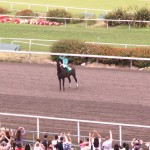 Prior to entering the winner’s circle, Zenyatta stood alone in front of the crowd and took in a long standing ovation.
It was as if she knew that she had just delivered pure magic.
And, in retrospect, I believe Zenyatta did know.
I learned a lot of lessons from my visit with Zenyatta that demonstrated the beauty surrounding a true legend.
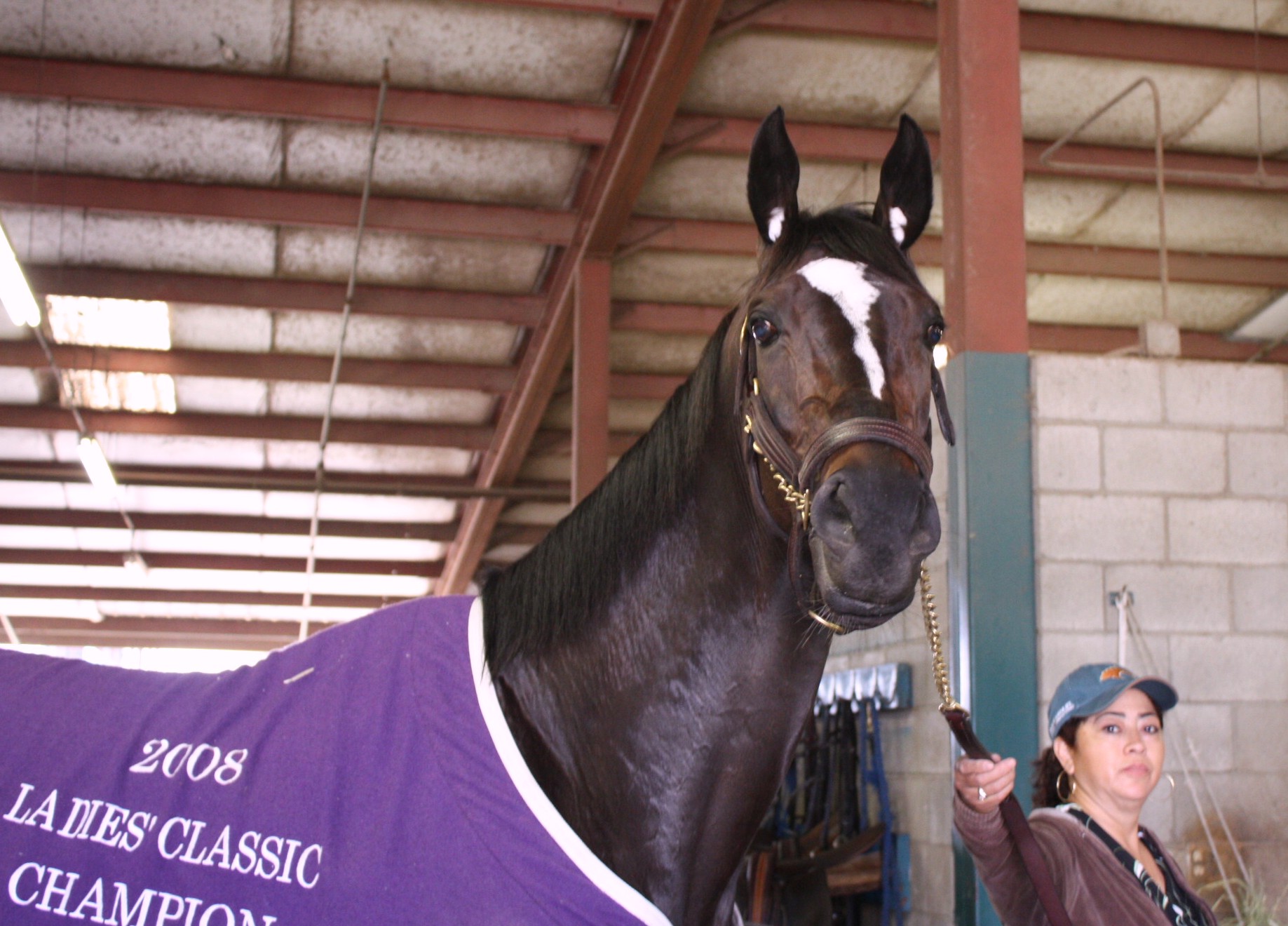
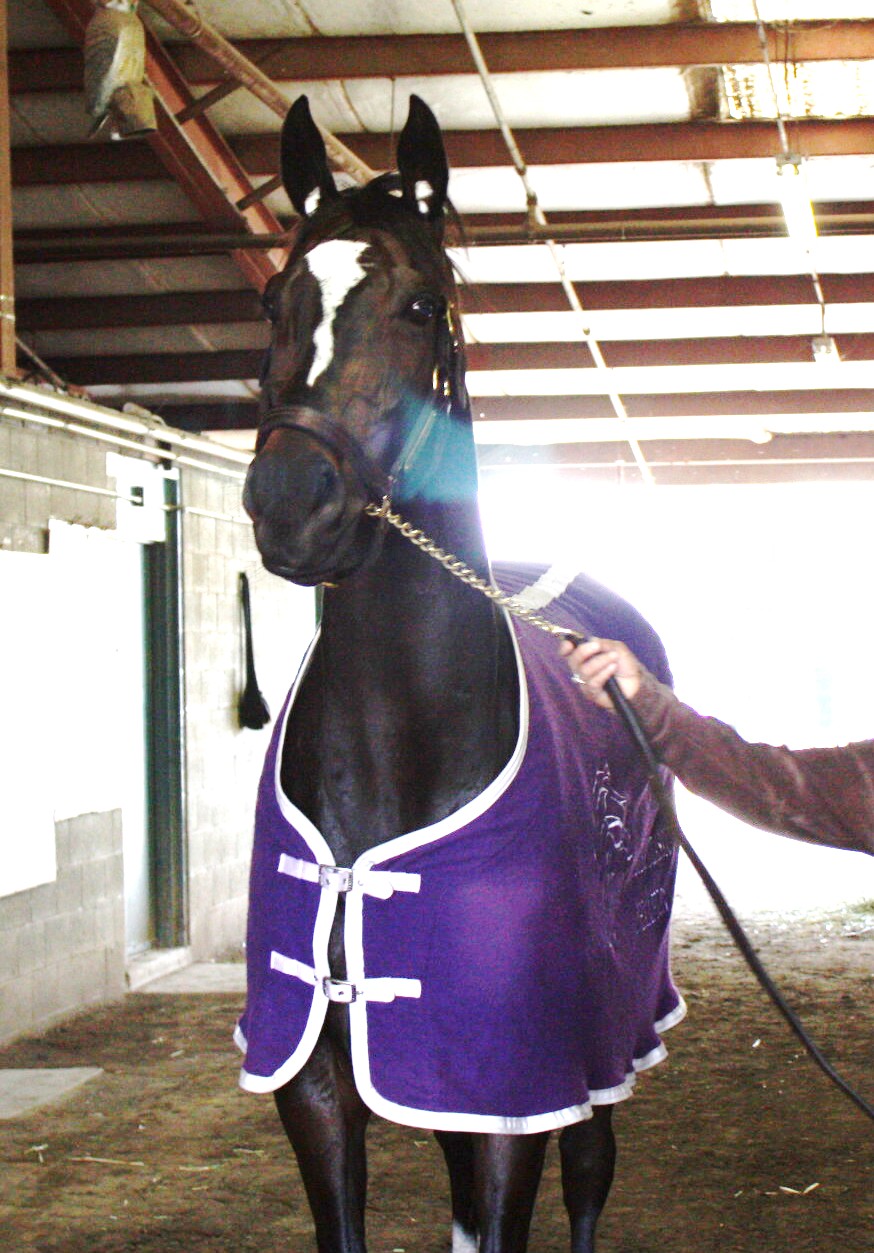
First, Zenyatta delivers quite a greeting to her guests at the stable.
When we walked into her barn, my friend asked, “Where’s Zenyatta?” as she surveyed the stalls of horses.
Zenyatta answered the question with authority.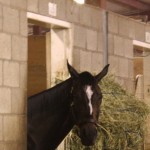
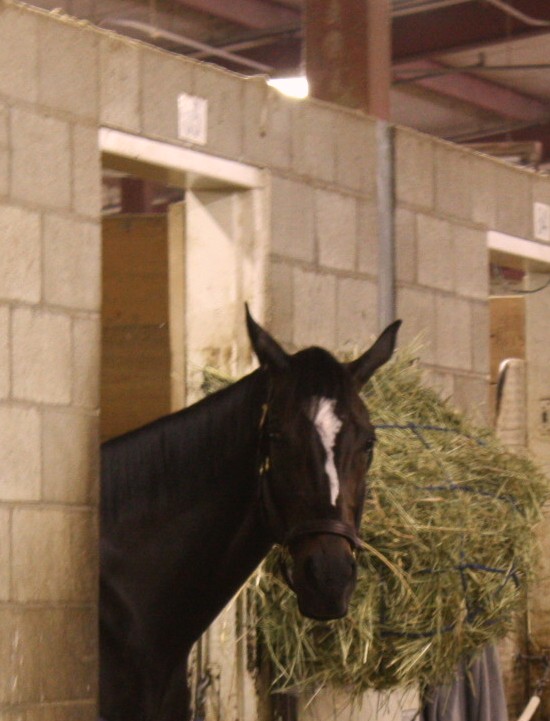
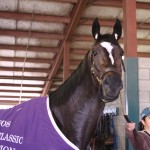
The giant mare rattled in her stall and stuck her head out. She stared right at us and never shifted her gaze as we stood watching her in awe.
It was stunning.
When her trainer John Shirreffs appeared, he matched Zenyatta’s hospitality to her guests.
After briefly greeting us, he slipped into his office.
At that moment, I envisioned that he was calling security to kick us out.
I could not have been more wrong.
Within a few seconds, Shirreffs re-emerged with a smile and a card with Zenyatta’s photo on it.
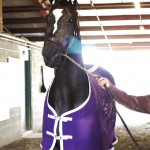 He handed me the photo as a souvenir as Zenyatta began to parade around the barn in preparation for her morning workout.
When I began to take pictures, she demonstrated her mastery of the camera eye.
As she drew close to the lens, Zenyatta paused and rose her head to demonstrate her full height.
She posed.
The next day, Zenyatta had a much larger audience to please as she prepared to challenge history in the Vanity Handicap.
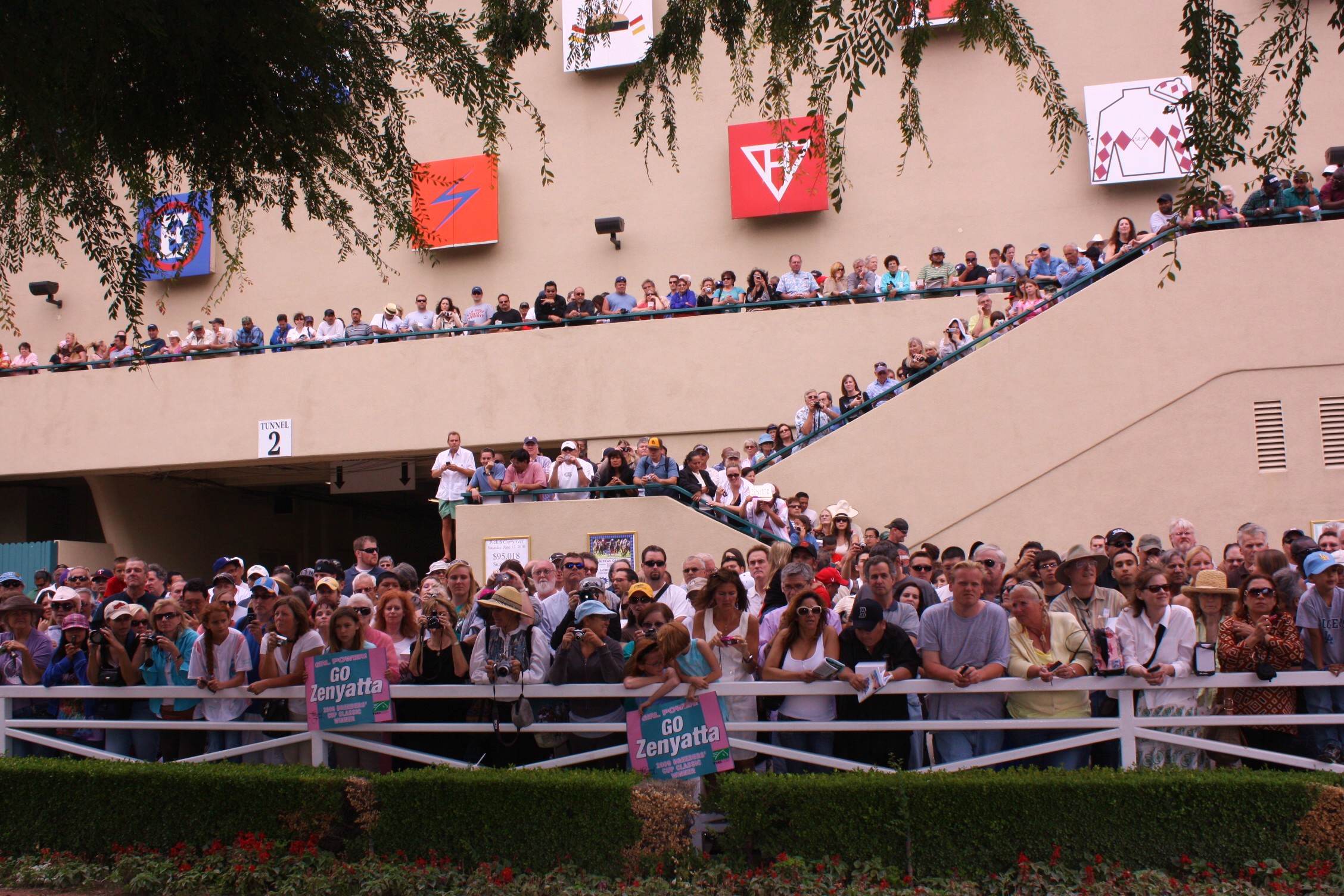
As I stood in the paddock, I looked out at the large crowd of fans that lined the rails to catch a glimpse of her in the flesh.
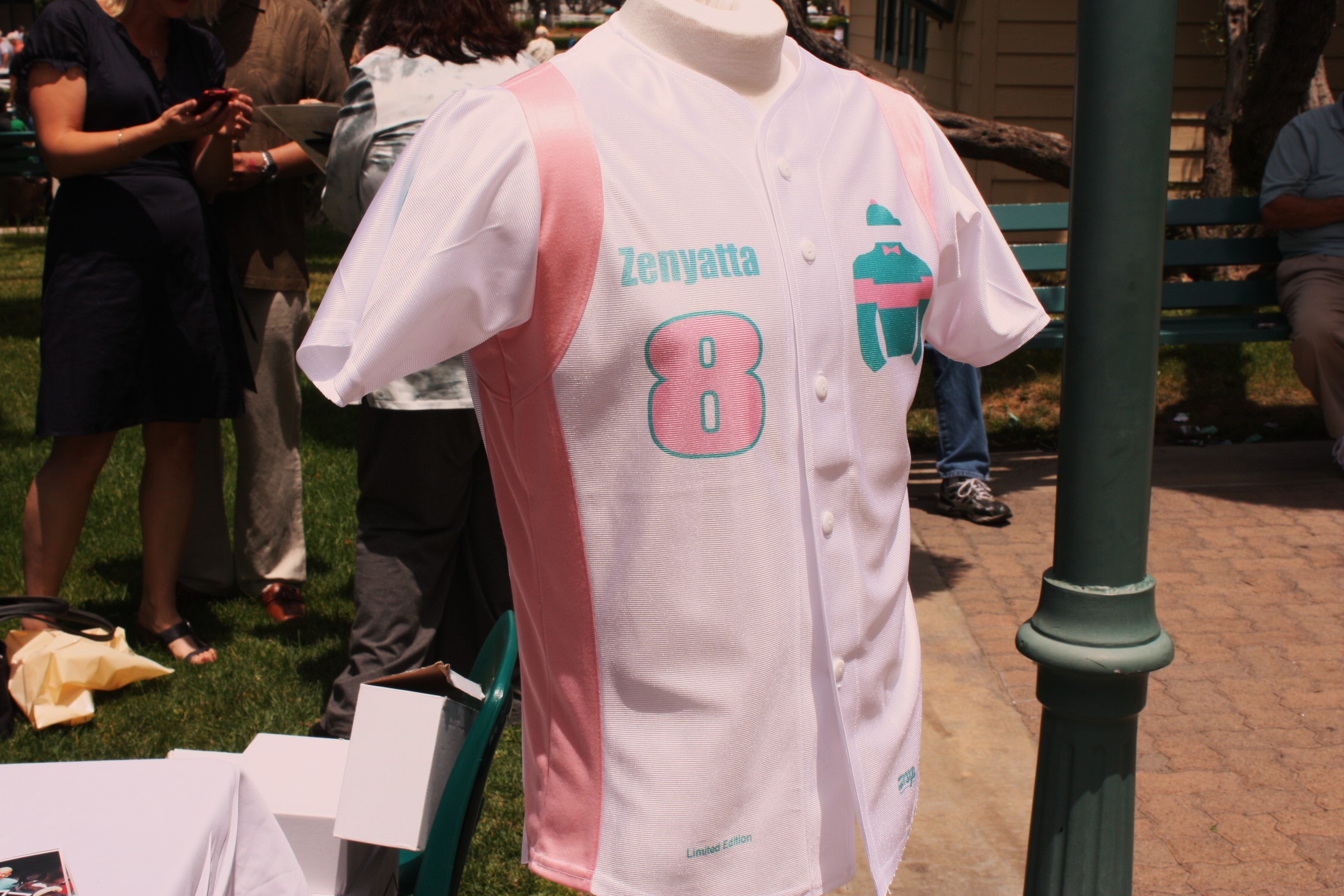
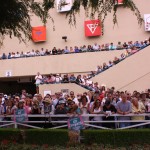 The audience was speckled with Zenyatta fan gear – ranging from hand-painted signs to Zenyatta jerseys.
I drew the second lesson from Zenyatta in that moment.
At the pinnacle of success, character is shown through being gracious and charitable to everyone.
The jerseys that bore Zenyatta’s name were being sold to benefit Thoroughbred retirement and rescue.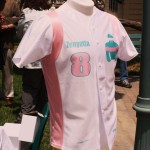
Throughout Hollywood Park, fans weaved through the crowd adorned with the jerseys that represented Zenyatta’s charitable hoofprint.
And, as Zenyatta’s connections began to emerge in the paddock, they greeted the fans with the same excitement as Zenyatta demonstrated the previous morning.
Owners Jerry and Ann Moss entered the gates and waved at the onlookers with a giant smile.
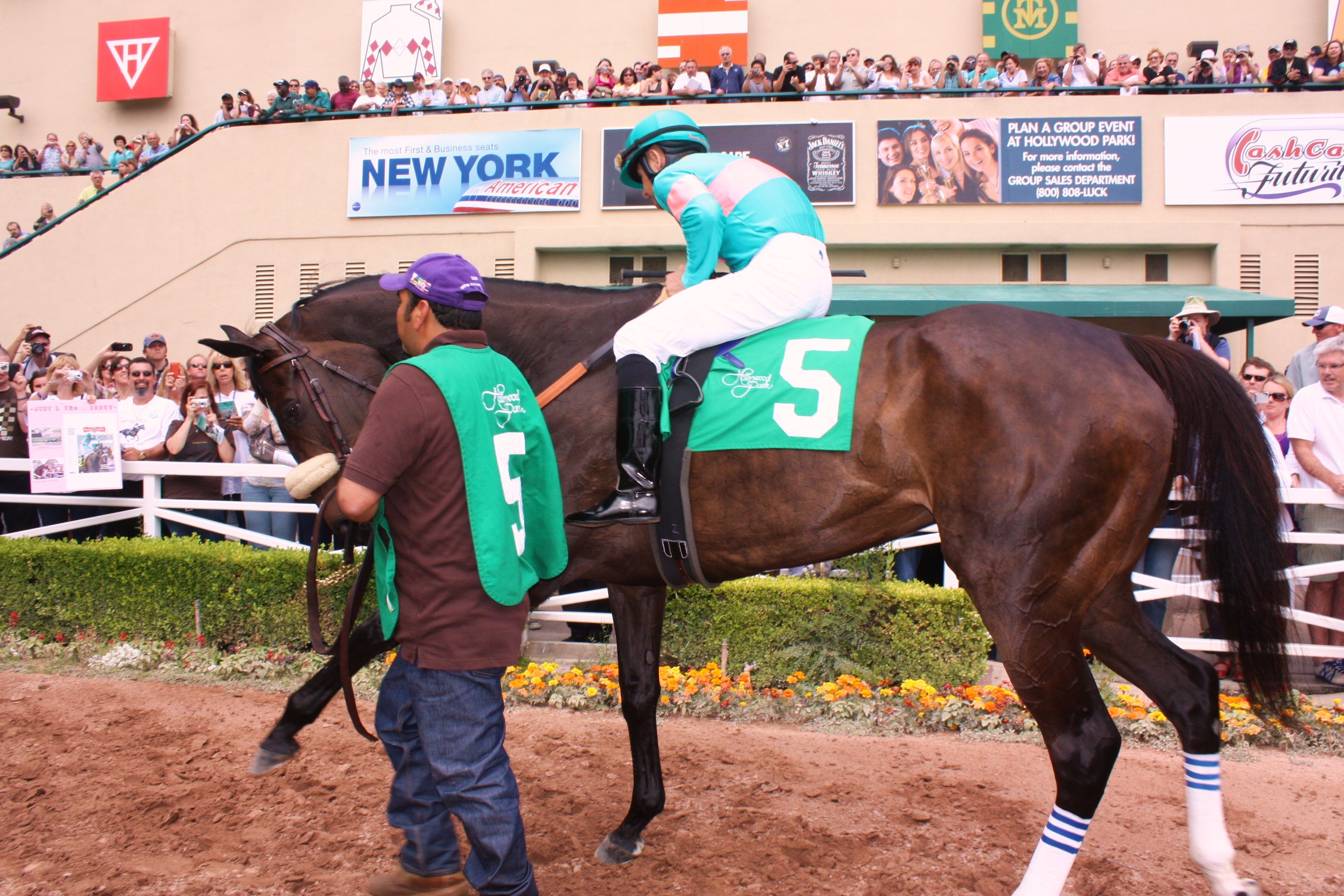
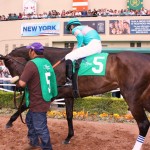 And, when the Zenyatta set foot in the paddock, she delivered her dazzling dance steps without a care in the world.
Yet, despite the whirlwind of fan fare, Zenyatta was in the unshakeable gaze of one individual – Trainer John Shirreffs.
Zenyatta never left his sight as she danced and bowed for fans.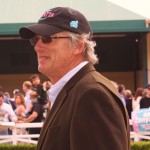
And, as I watched Shirreffs, it occurred to me that one principle stood solid in her success beyond racing or records: Put the welfare of the horse first.
In a single moment, I learned that Zenyatta isn’t only first at the finish line.
The well-being of Zenyatta comes first before she ever sets foot on a track.
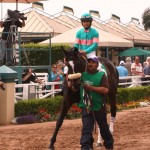 Yet, in a few minutes, the idea of finishing first in the Vanity Handicap took center stage in the public sphere as Zenyatta pranced toward the track in response to the call to post.
As she entered the gates toward history, Zenyatta delivered a lesson that resonates strongly amidst the ongoing comparisons of her record to other champion race horses.
She didn’t look at her rivals.
Her gaze was marked firmly on the track laid before her own eyes.
Zenyatta didn’t compare herself to Rachel Alexandra.
She didn’t compare herself to the legacies set forth by horses like Ruffian or Secretariat.
Zenyatta failed to see the good that comes from comparing her accomplishments to other champions.
And, as far as I can tell, Zenyatta doesn’t spend her days undermining the achievements of fellow racehorses.
She just keeps racing.
And, she just keeps winning.
And - she doesn’t sling mud in the process.
In my opinion, Zenyatta’s winning philosophy provides a valuable lesson beyond comparison.
March 17th, 2010 §
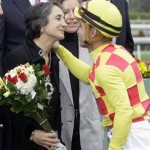
Roughly three decades ago, Alexis Barba walked onto the track at Golden Gate Fields. Having spent a lifetime around saddle and show horses, she experienced a defining moment. “I knew immediately that I could never lose interest in a racehorse.”
In the years that followed, Barba walked, galloped, and groomed thoroughbred racehorses. She worked as an assistant to the late trainer, Eddie Gregson, who won the 1982 Kentucky Derby with the horse, Gato Del Sol. When Gregson died in 2000, Barba began training on her own.
Barba currently has a six-horse barn at Hollywood Park. However, this is no small operation. Of the six horses in the barn, two of the horses are currently on the trail to the Kentucky Derby.
Make Music for Me was the first horse to qualify in Barba’s barn for the Derby. In his two-year-old career, Make Music for Me placed in three of four graded stakes races – ranking him twelfth in earnings at $215,000.
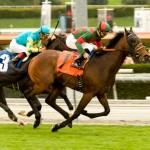 Despite the excitement of having Making Music for Me on the Derby trail, Barba remained dedicated to her remaining horses. Alphie’s Bet, the stablemate of Make Music for Me, was entering his three-year old season. At the time he made his 2010 debut, Alphie’s Bet had one second-place finish as a two-year-old to the highly-regarded Derby hopeful, Caracortado.
After Alphie’s Bet finished second in December, Rider Alex Solis reportedly told Barba, “I think he can run all day… He’s big, strong, and he’ll run any distance.”
In his 2010 debut as a three-year-old, Alphie’s Bet demonstrated his capacity to win. On January 15, he broke his maiden at Santa Anita in an electrifying performance. After running last throughout the majority of the race, he went wide on the final turn and rallied in the stretch to capture breathtaking victory.
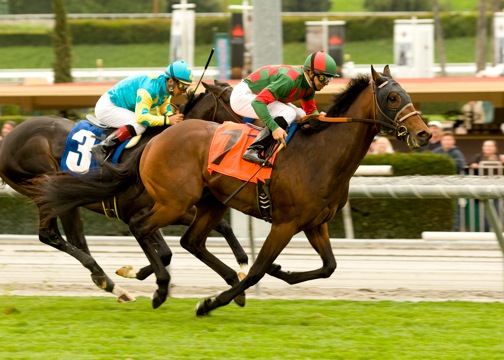
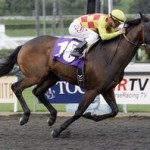 On March 6, Barba raced both horses at Santa Anita. In the sixth race, Make Music for Me clinched his first career victory in the Pasadena Stakes. Roughly forty minutes later, Alphie’s Bet won the Sham Stakes in a 2-1/4 length victory.
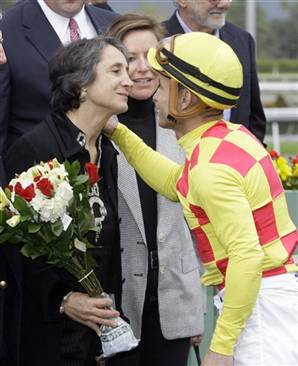
By winning the Sham Stakes, Alphie’s Bet had just captured enough graded earnings to qualify for the Kentucky Derby. As she held a bouquet of red-and-white flowers in the winner’s circle, Barba remarked, “Isn’t it amazing?”
It certainly is.
Recently, Barba graciously agreed to provide an interview about her experiences as a trainer and her Kentucky Derby prospects. I remain grateful for her kindness in taking the time to answer my questions.
JW: What initially attracted you to the sport of horse racing?
AB: I acquired a Thoroughbred Stallion that I was going to make into a show horse. I was so curious about his pedigree, I began exploring Thoroughbred lines.
As fate will have it, I acquired a Thoroughbred yearling filly shortly after that. I wanted to try to race her, but I didn’t have the means, so I thought I could work at the track. I went to Golden Gate Fields in Albany, CA, which was close to my childhood home, in the Oakland Hills.
Being anxious and curious, I now had a stallion and a filly. So guess what I did? Yes, I bred them.
The product of that mating was a filly named Lepta (Greek for Money). Since her mom didn’t make it to the track, I was going to be sure the daughter did. To make a long story short, Lepta won her first start at Caliente Race Track in Mexico. Her mother, French Dish, I believe went on to have 16 or 17 foals, three of which were winners at Santa Anita and one a stakes horse named Ondarty.
JW: How did you learn how to train racehorses?
AB: As you can see by my breeding program, I had a lot of practice with my own horses. I also had a lot of help along the way with some of the trainers, such as Tommy Doyle and Eddie Gregson, as well as anyone else who would give me information.
JW: What are some valuable lessons that you have learned about training racehorses during your career?
AB: Be patient, it all goes at a snail’s pace.
JW: What does your average weekly schedule look like as a trainer?
AB: Mostly just going to the track every morning. Then, to keep some kind of normalcy, I try to meet with friends at least once a week to gossip and tell horse stories.
JW: Has it been a dream of yours to race a horse in the Kentucky Derby?
AB: I wouldn’t say a dream, because most of the time you are just trying to get a productive horse. Of course, everyone wants stake horses, so when you are buying, you are always looking for good quality that meets that criteria.
JW: In the history of the Kentucky Derby, a female trainer has never won the race. How do you feel about your potential to make history?
AB: I’m not thinking about that. Let’s just run in the race first.
JW: What do you think are the strengths and unique qualities of Make Music for Me?
AB: He is a smallish horse with a huge stride and good appetite.
JW: What is the next race for Make Music for Me?
AB: The Toyota Blue Grass Stakes.
JW: Was it a surprise to you when Alphie’s Bet qualified for the Kentucky Derby after winning the Sham Stakes?
AB: No. I always told the owners that we had a really nice horse on our hands.
JW: What do you think are the strengths and unique qualities of Alphie’s Bet?
AB: He has a great turn of foot. To look at him, you wouldn’t think that he would have that.
JW: What is the next race for Alphie’s Bet?
AB: The Santa Anita Derby.
JW: Rider Alex Solis has been quoted as saying in the press that Alphie’s Bet reminds him of Candi’s Gold, the grandfather of Alphie’s Bet. Having worked with Candi’s Gold under your former boss, Eddie Gregson, do you see any similarities between the two horses?
AB: Yes. He looks like him and he has some of the same ‘Lookey-Loo’ quirks.
JW: What do you love about the sport of horse racing?
AB: Everything. Lots of characters around the track - Human and Equine. But at times it can be grueling. Actually, a lot of the time. You would have to live it to understand it.
When they are in the gate, anything can happen!
To comment on this article, click here. The Saturday Post also has a new Facebook page for comments. You can subscribe to the page by clicking here.
 Bernard Fontenelle once said, “It takes time to ruin a world, but time is all it takes.”