April 2nd, 2011 §
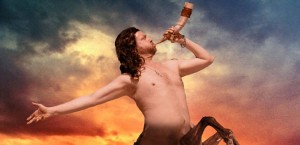
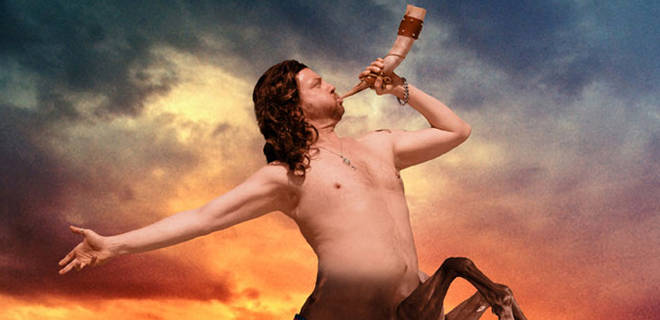
Meet “Kegasus.”
“Kegasus,” a half-man, half-horse creature, is the new mascot for the Preakness marketing campaign to draw larger crowds to the infield during the middle-jewel of the Triple Crown. With his pierced nipple and beer gut, Kegasus was recently unveiled with the goal to “promote a party” at the infield festivities on Preakness day.
Kegasus’ party is intended to reach a demographic between the ages of “21 and 35 or 40,” according to Tom Chuckas of the Maryland Jockey Club (MJC). And, in order to conjure up a “Party Pro” like Kegusas in the first place, the MJC paid Elevation, a marketing firm, $400,000 to dream up this creature for the infield crowd.
Sadly, I find myself in the age demographic that has now become “Kegasus Territory.” And, being a younger fan, I feel like “Kegasus” denigrates the sport of horse racing to a drunk fest that insults the accomplishments of all of the equine athletes that will race around the oval surrounding “Kegasus Land” on Preakness Day.
In my view, the “Kegasus Campaign,” like “Kegasus himself, is marketing mythology. The idea that these alcohol-laden infield campaigns will allure intoxicated young people to throw money down during the races, and ultimately, become lifelong fans of the sport, isn’t a long-term strategy to bring newcomers, or young people, in the sport.
Let me dispel that rumor so that we can kick “Kegasus” out of the park and ask for our $400,000 back to do something worthwhile for horse racing.
Of my friends who have been to the infield parties, I hear a common reporting of their experience. Here are a few direct quotes from my friends and acquaintances who visited the infield during their twenties:
“I didn’t see a horse that whole time I was there.”
“I saw a band play and they were really good.”
“I had so many shots of Jager that morning, that I was too drunk to hit on a girl and wound up sleeping all day on a blanket.”
It has been a few years since the above-quoted individuals have been to an infield party. And, in the meantime, they have never showed a spark of interest in horse racing. In their mind, the event was about pounding down as many drinks as possible, and, if they ever feel like revisiting that experience in the future, they can go to any local bar of their choice to get “too drunk to hit on a girl” or to listen to a band play some music they might enjoy.
In contrast, as a young person that truly loves the equine athletes in this sport, “Kegasus” is a mockery of what I find beautiful about horse racing. He distracts newcomers from the horses and the stories of their connections. They become mere landscape to a liquor-slamming contest that has nothing to do with the sport.
And, for the young people who are regularly involved in this sport, “Kegasus” is an insult. If the industry wants true fans who marvel over the athletes and bet on races, they need to target young people who aren’t there for a cheap drink promotion. They need to accommodate the young people who have jobs and enjoy horses.
As a young professional and racing enthusiast, I don’t want to drunk kids falling around me while I am trying to watch the races in a sundress and heels. And, as a woman, I don’t want slobbery drunk guys hitting on me after countless shots of Jagermeister when I am trying to see if I won my trifecta. Finally, I don’t want my equine heroes to be relegated to a mere sideshow while “Kegasus” parades around the infield for drunken enjoyment.
For me, there is a wealth of beauty in this sport that can allure young people. The power of equine athletes. The human interest stories. The pageantry of the major races. The quiet triumphs in the minor races. The glamour of women in their best dresses and beautiful hats. The raw beauty of the horses as they parade past the crowd. The idea that your fortune can be changed in a single winning ticket. And, the sacred principle that an equine athlete can deliver what you previously believed to be impossible.
“Kegasus” is the opposite of all that I find beautiful in racing. And, the crowd that he will attract won’t marvel over these things. They are will come and go as soon as the cheap alcohol promotions run their course. And, when they go, “Kegasus” will be a part of how they remember their day at the race track. A beer-gutted, nipple-pierced, shirtless guy who wore a centaur-suit and glorified the idea of becoming a drunken “legend.”
If I ran the MJC, I’d want my $400,000 back and a written apology from the marketing firm that felt “Kegasus” best defined our sport for the young demographic.
And, I would start asking young people with jobs, who may actually bet or own a horse someday, about the things they find alluring and worthwhile in their world.
At the end of that dialogue, I’d put my $400,000 toward accommodating the young people who would actually return to the track with a true interest in horse racing.
March 6th, 2011 §
 In my last article, I pledged to write non-industry newspapers to request regular coverage of horse racing.
Since the article was published on this site, a small group of various racing enthusiasts have started a “Campaign for Coverage.”
This is my first “Letter to the Editor” to support the “Campaign for Coverage.” It was sent to The Chicago Tribune, The Altanta Journal-Constitution and The Denver Post – three major non-industry publications that do not engage in regular coverage of horse racing. To join the “Campaign for Coverage,” please click here.
Dear Editor:
I am writing to ask why your publication does not provide regular coverage of horse racing. Racing is a multi-billion dollar industry with roughly 50 million fans that follow the sport. For many fans, including myself, racing holds an endless array of captivating stories that merit coverage in the media at large.
Behind nearly every horse that sets foot on the race track, there is a human interest story. The beauty of this sport does not lie in simply watching a horse win or lose a race. It is also not a sport where “victory” is defined solely by winning a bet or earning purse money.
This sport is a portrait of the human spirit in its purest form. At the heart of racing, a handful of individuals set out with a dream, a single horse and aspirations to conquer a feat that appears impossible.
For the media at large, this sport is summed up in two minutes with a winning horse on Kentucky Derby day. However, for those involved in the sport, the upcoming Kentucky Derby started with the birth of roughly 32,000 registered foals in 2008.
The dreams surrounding those foals weren’t followed in the media. However, those foals held the dreams of countless breeders, owners, trainers and many other individuals in the industry. In large part, those stories will remain untold in the media since most of those horses aren’t on the Triple Crown trail. Yet, I am certain that there were inspiring stories behind those horses that merited reporting - Thousands of stories that will never be printed.
The story that is guaranteed to be printed is the winner of the Kentucky Derby. The media reports on quantifiable numbers. And, the Kentucky Derby has numbers that quantify its’ popularity, ranking among the fifth highest-rated sports broadcast, behind events like the Super Bowl and NCAA Men’s basketball finals.
Yet, there are a few numbers that the media should focus on right now. Currently, there are 364 horses nominated to the Triple Crown series. In other words, there were 364 horses that inspired their connections to believe that they might have found “the horse” that can win some, or all, of the Triple Crown races. Imagine the dreams and sacrifices that many of those individuals endured in the past three years to arrive at this moment. There are stories that lie within those numbers.
But, the media isn’t covering those stories.
And, currently, there are many prep races being run in various parts of the nation to determine the final twenty horses that can garner enough graded earnings to qualify for a spot in the gate on Kentucky Derby day.
But, the media isn’t covering those qualifying races.
In my mind, the failure to provide media coverage for the Kentucky Derby prep-race season is like ignoring the NCAA Men’s basketball tournament until the championship game. The heart of the coverage would be lost without reporting on the teams that made the “Sweet Sixteen,” “The Elite Eight” and the “Final Four.” Likewise, the failure to write about the Derby prep-race season ignores the excitement of those races, the accomplishments of the equine athletes and the stories on their human connections until Kentucky Derby day itself.
This is an important moment for media coverage in the Triple Crown season. And, I hope that you begin covering the journey of the equine athletes, and their connections, as they compete for a spot among the final twenty horses that are privileged to enter the gates at Churchill Downs on Kentucky Derby day.
And, after the winning garland of roses is placed on the Kentucky Derby winner, it is my hope that you continue coverage of racing beyond the remaining Triple Crown season and the Breeders’ Cup races in the fall.
I believe that regular media coverage of this sport is a valuable undertaking, not simply for the beauty of the sport, but also, for your publication. There are 50 million fans that follow horse racing. There are 50 million people who want to hear about this sport. I hope that in the future, your newspaper follows this sport along with those 50 million fans of racing.
Sincerely,
Jennifer Wirth
March 1st, 2011 §
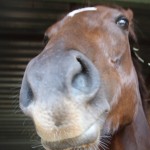 Last week, a little-known horse named Gretl raced at Oaklawn on Friday. Personally, I was thrilled to watch her race.
Gretl’s race wasn’t spectacular for the reasons you may expect. She didn’t win. And, even if she had won, she isn’t pointing toward the Kentucky Oaks or any other graded stakes race at the moment. She doesn’t have an undefeated record. Further, she can’t dance and no one is requesting her photo for a fashion magazine.
You may be wondering why I found Gretl’s race so special at this point. The reason? It was the first time that a horse that I had invested in as an owner made a start in a race.
I don’t expect the whole world to follow Gretl’s endeavors in life. But prior to the race, a few people in my world wanted to watch Gretl’s race to share the experience. They weren’t racing fans at all – they were simply family and friends who were curious about Gretl.
On the morning of Gretl’s race, several family members and friends wanted to see her race. I asked if they had TVG or HRTV. They did not subscribe to either channel. I then explained that they could open an internet account. Yet, they didn’t want to start a wagering account to view a single horse. Then, I looked on the internet to find out if there was a link that I could send them to show them the races at Oaklawn. There was no live video feed for the track. Finally, as a last resort, I told my mom and friends that they could see it at an OTB. Yet, they couldn’t leave their job at 1:30 p.m. on a Friday to go to a betting parlor.
In the end, my entire family and friendship group in Chicago missed Gretl’s race that day. Yet, here’s the issue: They didn’t miss the race because they didn’t want to see it. They missed the race because they couldn’t find a place to watch it.
 Three days later, I read an article in the Chicago Sun-Times entitled, “Horse Racing in Illinois is ‘on verge of extinction.’” It went on about many of the common issues that enter the “revival of racing” discussion – racinos, purse values, track attendance and the aging population of the sport. Yet, buried in the article, there was one particular point made by former Illinois Governor Jim Edgar that particularly hit home for Gretl and myself: Coverage of the Sport.
The former Govenor explained, “The industry made major mistakes in the ‘50s. When television came along, racing was on all the time. Then the tracks decided that they didn’t want to give it away for free.”
It made me wonder what racing would be like today if we “gave it away for free.” What if the tracks simulcast their races on their websites? Racing might romance a few new fans through showing them why this sport is beautiful, rather than telling them to set up an account to view a sport they don’t follow.
And, in the end, people may actually follow the sport in larger numbers if they are exposed to it on more regular basis. What if more newspapers actually profiled the winners of Kentucky Derby prep-races right now? Non-enthusiasts may begin to follow a few horses, and racing itself, beyond the Triple Crown season and Breeder’s Cup.
Yet, most non-industry media outlets aren’t providing regular updates on racing at the moment. And, as a whole, racing fans aren’t demanding coverage when it is due. I didn’t see one article in my local newspaper about Dialed In winning the Holy Bull. And, as far as Soldat’s performance in the Fountain of Youth, there wasn’t a word about his near wire-to-wire victory.
There should have been articles about those races. And, there should be a way for a newcomer to watch the races without setting up an internet account or subscribing to a cable network.
In my view, every track in this nation should provide free video of their races on their website. Not a few tracks – every track. Because, every track is losing potential fans if newcomers can’t view this sport.
And, fans should demand coverage of this sport from their local media outlets. Not a few stories during Triple Crown season – regular coverage. Because, in the end, writing the media outlets in your area not only shows there is a demand for racing coverage, but also, it educates the non-racing media about the sport itself.
This Triple Crown season, I will be writing my local newspapers about every horse that wins a Kentucky Derby prep-race. I wonder could be accomplished if other racing fans wrote their local papers and demanded coverage.
And, I will be writing the non-participating tracks to ask them why they don’t post race replays of all races on their websites. I wonder what the industry could accomplish by allowing fans to share the races with their friends as a means to introduce them to the sport.
Because, without coverage, this is an invisible sport to non-enthusiasts.
And, if the sport remains invisible, it truly is in danger of disappearing.
August 8th, 2010 §
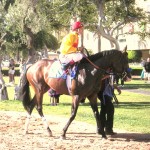
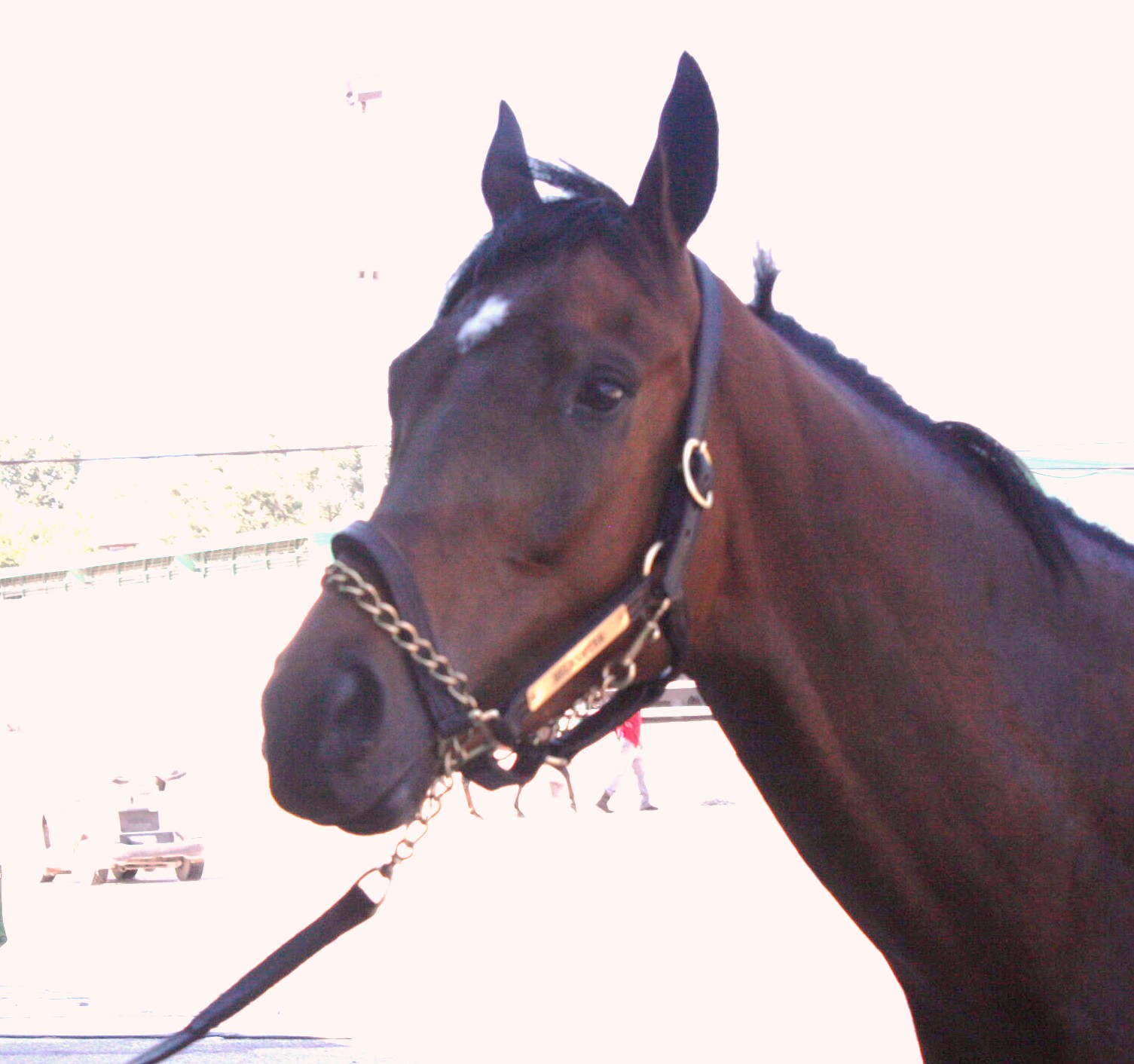
Today, turf champion Tuscan Evening unexpectedly passed away following a workout at Del Mar.
The Irish-bred mare leaves behind a legacy that includes winning 12 of her 16 starts in the United States.
In the fall of 2008, Owner William De Burgh privately purchased Tuscan Evening as three-year-old maiden and shipped her to the United States.
De Burgh sent Tuscan Evening to Jerry Hollendorfer’s stable to train for her 2009 campaign as a four-year-old.
As the time she joined the stable, Tuscan Evening had never won a race.
Her record did not stop Hollendorfer’s stable from believing in her talent.
On January 22, 2009, Tuscan Evening made her first U.S. start in a maiden race at Santa Anita Race Track. She clinched a five-length victory.
After her maiden victory, she followed her maiden with a 3 ¾ length victory in an allowance race at Santa Anita.
Throughout her 2009 season, Tuscan Evening scored six victories, including her maiden, in ten starts. Of her six victories, two came in graded races.
In 2010, Tuscan Evening remained undefeated as a five-year-old after running in six graded races, including the Grade 1 Gamely Stakes. In three of her last four starts, she led the race wire-to-wire.
The Hollendorfer team put their unflinching faith and love into Tuscan Evening.
They patiently took a winless horse and slowly developed her into a turf champion.
They gave their full heart in doing so.
And, in a sad ending, Tuscan Evening gave her heart in return.
Love is a fragile thing.
But, it goes undefeated.
August 3rd, 2010 §
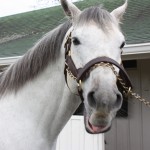
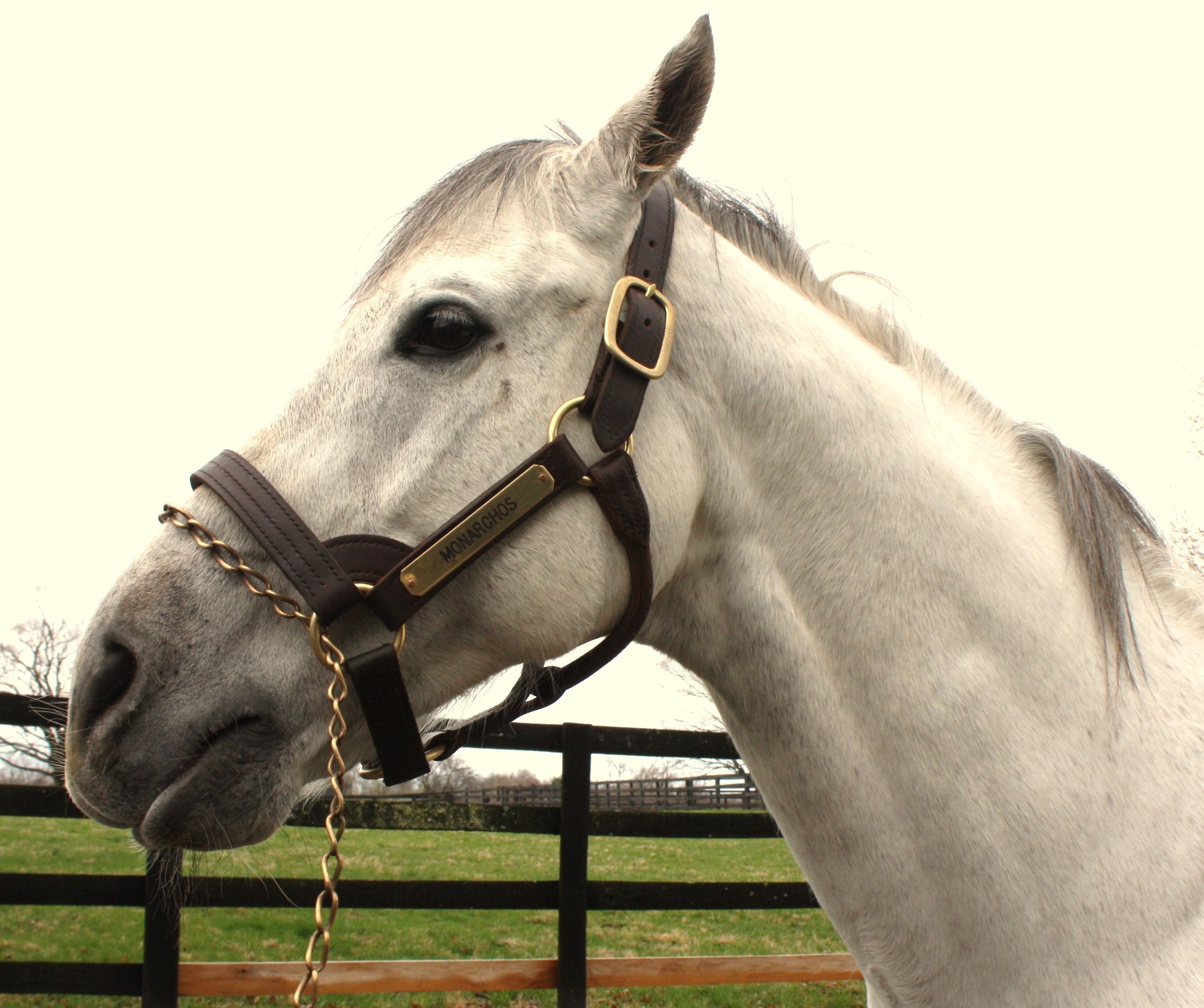
Earlier this year, I visited Kentucky to meet Monarchos.
I wanted to see the fastest living Kentucky Derby winner in the flesh.
It was just as simple as that.
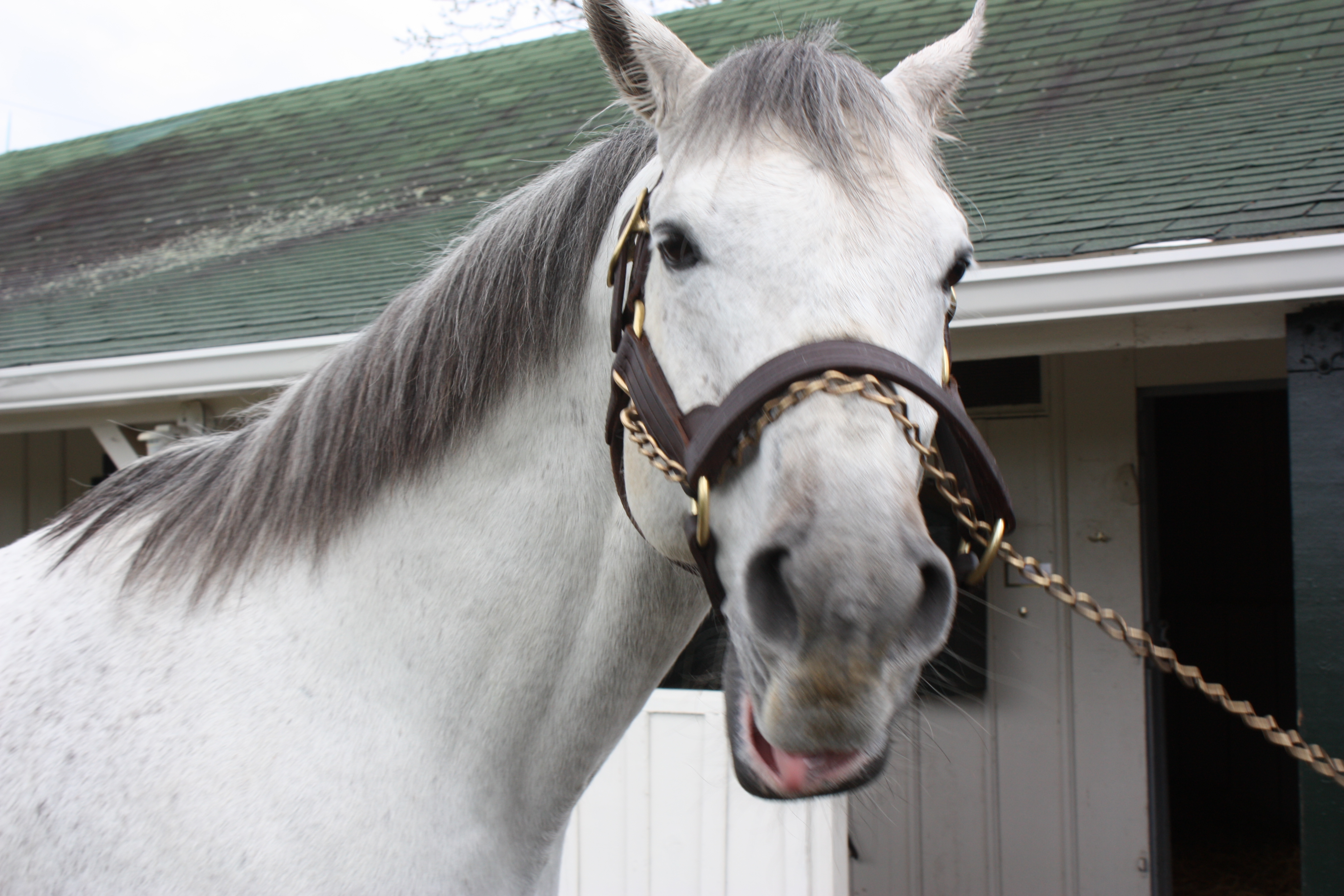
As the big gray champion emerged from his stable, Monarchos was well-mannered and kind. He allowed himself to be pet, stood patiently for photographs, and gently devoured my bag of carrots with delight.
I was thrilled about my visit with Monarchos.
He is a celebrity in my world.
And, it is always nice to find out that your celebrities are truly kind at heart.
When I returned home from Kentucky, I realized that Monarchos is just a gray horse to many of my friends outside the racing universe.
It was just as simple as that.
 “How was the Kentucky Derby?” I was asked by one friend.
I had to find a nice way to tell my friend that the Kentucky Derby hadn’t occurred yet.
When I mentioned that I visited Monarchos, another friend asked, “Is that your horse?”
I didn’t own a horse at that point. And, if I owned Monarchos, I certainly would have mentioned my Kentucky Derby winning horse in earlier conversations.
This was my first experience of trying to explain horse racing to non-enthusiasts.
Nothing was simple about it.
Shortly after these conversations, I invested in a horse. He’s a two-year-old in training and hasn’t been entered in any races.
However, my small investment created a giant misunderstanding among my non-racing enthusiast friends.
Zenyatta stood at the center of the confusion between the two worlds.
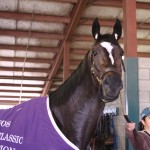 I talked about Zenyatta’s undefeated record at cocktail parties and my friends would ask how she is doing.
I kept saying, “She’s still undefeated!”
It was just as simple as that.
I thought we had arrived at a common ground.
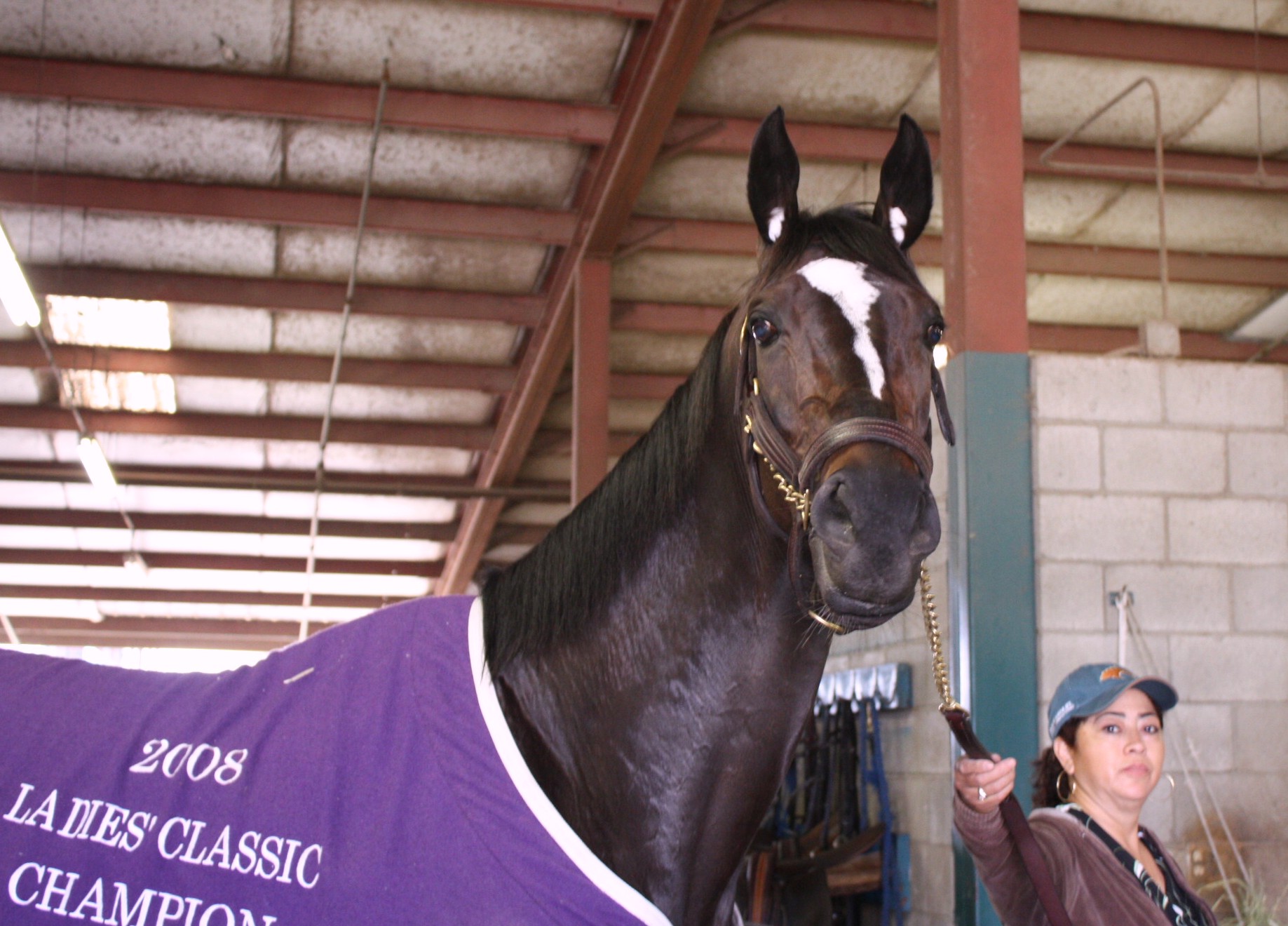
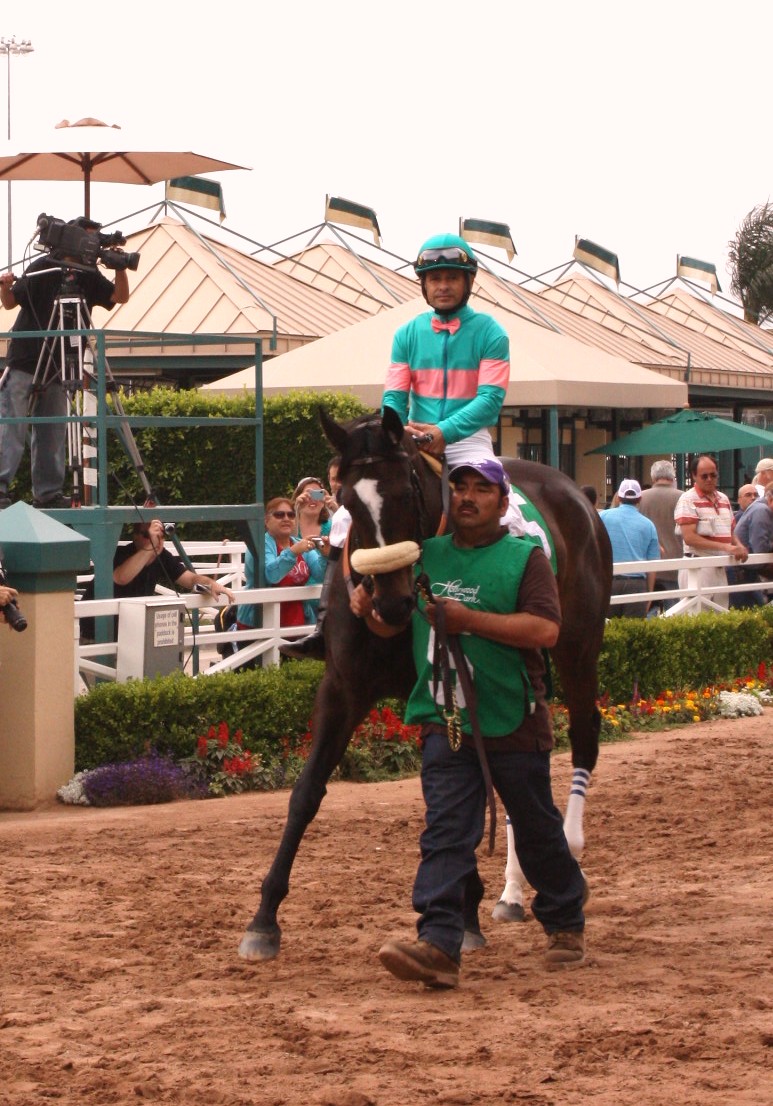
Then, I went to Hollywood Park to watch her claim her seventeenth career victory in the Vanity Handicap.
When I made a photo album of the trip, a friend asked “How did your horse do in her race?”
I replied, “I wish I owned Zenyatta.”
In my mind, it was just as simple as that.
However, when I had to explain in greater depth that I don’t own Zenyatta, the confusion on my friend’s face spoke volumes.
It was as if to say, “Why don’t you?”
I went on to explain that Zenyatta has made roughly $6 million in her career and has remained undefeated in seventeen consecutive races. She’s not for sale.
Then, I realized her earnings or record meant nothing to my friend.
In personal defeat, I explained to my friend that Jerry Moss, the co-founder of A & M records, owns Zenyatta.
When I mentioned that she was named after The Police album, “Zenyatta Mondatta,” I received immediate recognition.
“Oh, ‘Zenyatta Mondatta.’ That makes sense!”
It was just as simple as that.
But, was it? I’ve listened to that album many times and I’ve never heard Sting belt out any lyrics about Zenyatta’s racing career.
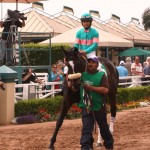 In retrospect, the words “The Police” and “Zenyatta Mondatta” were the only parts of our conversation that resonated with my friend.
Since that moment, I’ve wondered how to discuss horse racing with the non-racing world.
There seems to be nothing simple about it.
As far as I can tell, non-racing enthuasists have gathered these gems from my conversations:
“There are some gray and brown horses that run fast. One dances pretty well. The Kentucky Derby is an important day. And, ‘Zenyatta Mondatta’ is a great album.”
It is just as simple as that.
So, after growing tired of giving explanations, I decided to just quietly enjoy going to the races.
And then, the two worlds unexpectedly met for a brief second in time.
As I was heading to the track on an ordinary day, a friend asked me, “Is there an important race today?”
I joked, “Yep. Secretariat is in a match race with Seattle Slew today.”
When she laughed, I realized my friend knew I had just told her a fairy tale.
However, I also realized she knew some Triple Crown winners.
I began to dream about the next Triple Crown season.
And wish… it was just simple as that.
July 17th, 2010 §
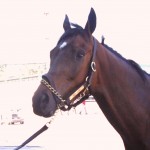
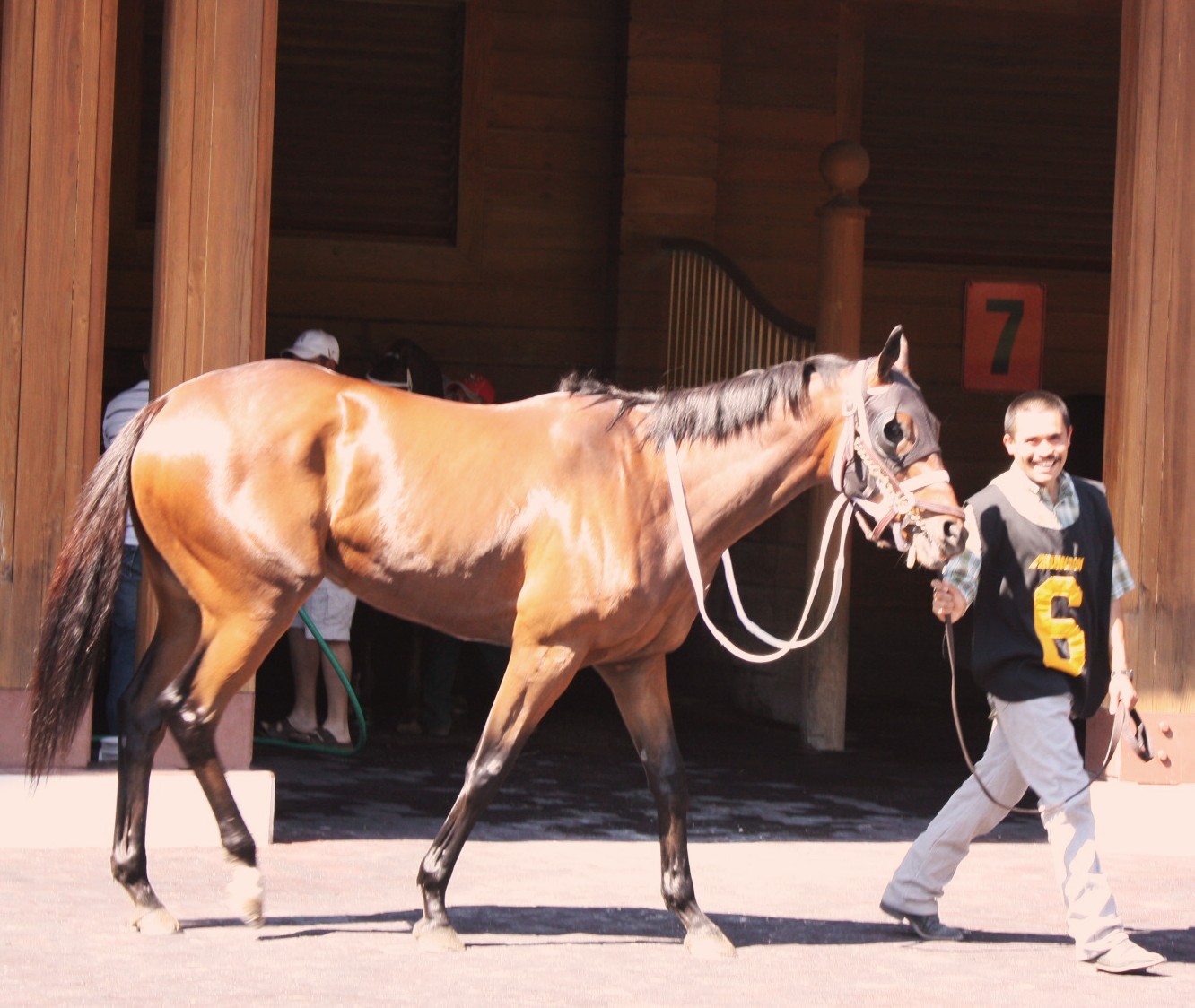
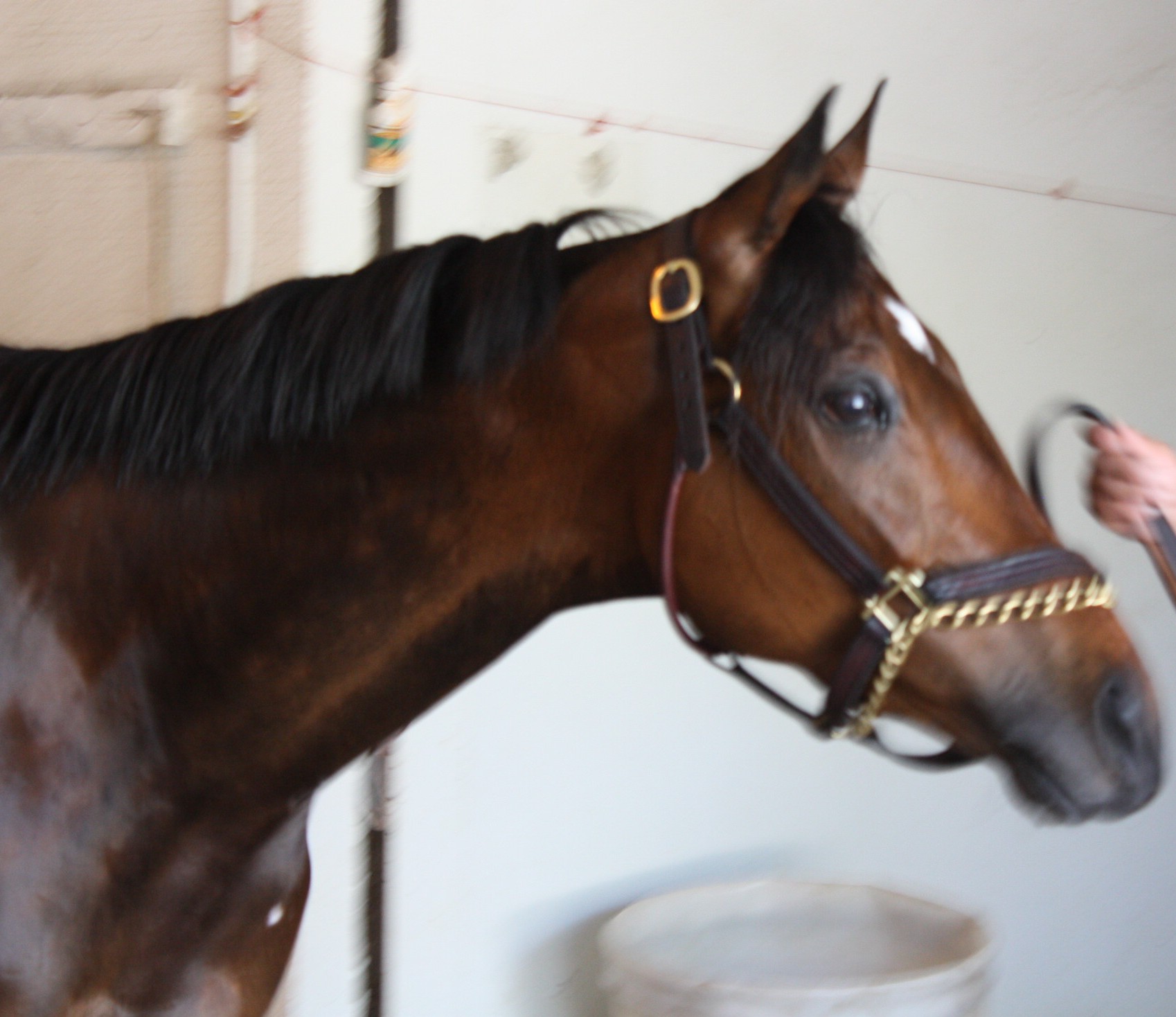
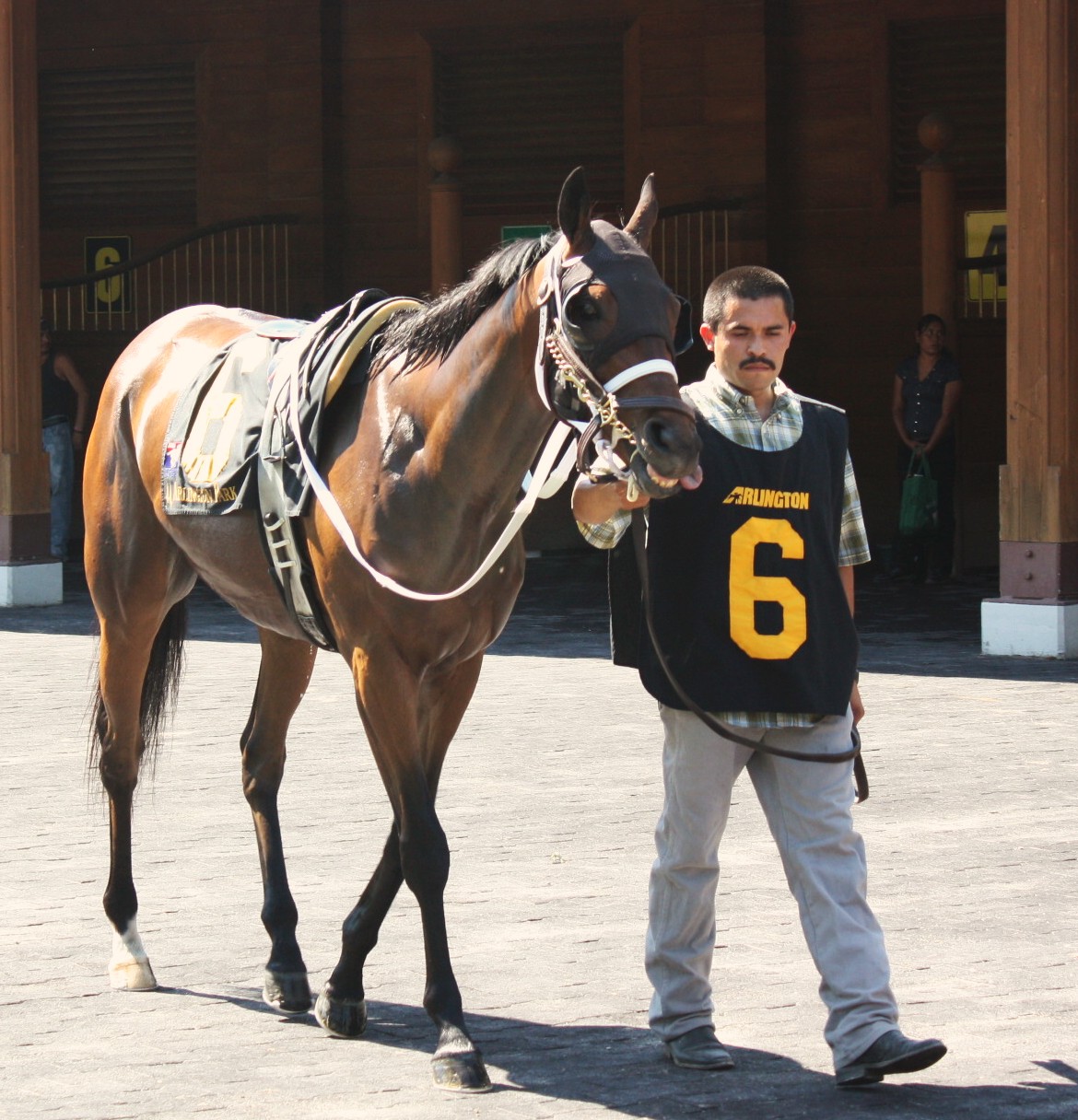
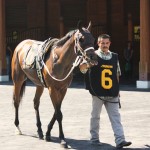
In Trainer Larry Rivelli’s barn at Arlington Park, there is a small bay racehorse named Helicopter.
Helicopter isn’t a household name for most horse racing enthusiasts.
Helicopter has never competed in a graded race and he doesn’t hold any breeding value for the sport. He is a gelding.
As a two-year-old, Helicopter raced fourteen times and stamped out a performance record for that year that held descriptors ranging from “failed to menace” to “no factor.”
When he began his three-year-old debut, Helicopter didn’t hold any promise as a Kentucky Derby hopeful. It wasn’t even a distant dream.
Helicopter was running in low-purse claiming races and losing in every outing.
It seemed Helicopter just wasn’t meant to be a racehorse.
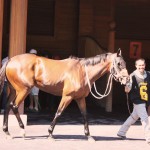 Then, in March of 2009, Helicopter set foot on the track at Hawthorne Park in an attempt to win a highly-elusive race – his maiden victory.
In his 19th career start, Helicopter delivered a surprising 2 ½ -length victory as he bulleted past his rivals in the field.
He had finally won his first race after eighteen failed outings.
When Helicopter delivered a second career victory, he was privately purchased by Trainer Larry Rivelli in May of 2009.
Rivelli explained, “Helicopter was part of a two-horse package. I think the pair cost roughly $7,500.”
In his first start with Rivelli as the trainer, he won by 8 ½ lengths in a claiming race at Arlington Park and earned $6,000 – nearly covering his purchase price during his third career victory.
After winning his next race by two lengths, Helicopter had begun to demonstrate his potential on the track. He had won three consecutive races in the claiming circuit under Jockey Brandon Meier.
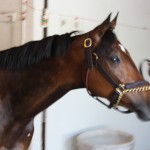 Then, roughly two months after joining Rivelli’s stable, Helicopter was claimed during a race in July of 2009.
Rivelli immediately sought to retrieve Helicopter from his new owner.
Rivelli explained, “I liked the horse. After the race, we privately purchased him back for double of what the guy had paid to claim him.”
Helicopter never ran a single race for the new ownership prior to being recovered by Rivelli.
And, Rivelli never entered Helicopter in a claiming race again.
On September 6, 2009, Helicopter set foot on the track for his next race and clinched another victory.
Then, Helicopter went on to break two track records. He set the record for 10 furlongs in 2:02.95 during a starter race at Keeneland in October of 2009.
In his next outing, Helicopter set another record during an allowance race in Canada, running 10 furlongs in 2:03.47.
Rivelli explained, “Helicopter is a small horse, kind of average and plain-looking. His asset is that he is a distance horse and he never wastes any energy before a race.”
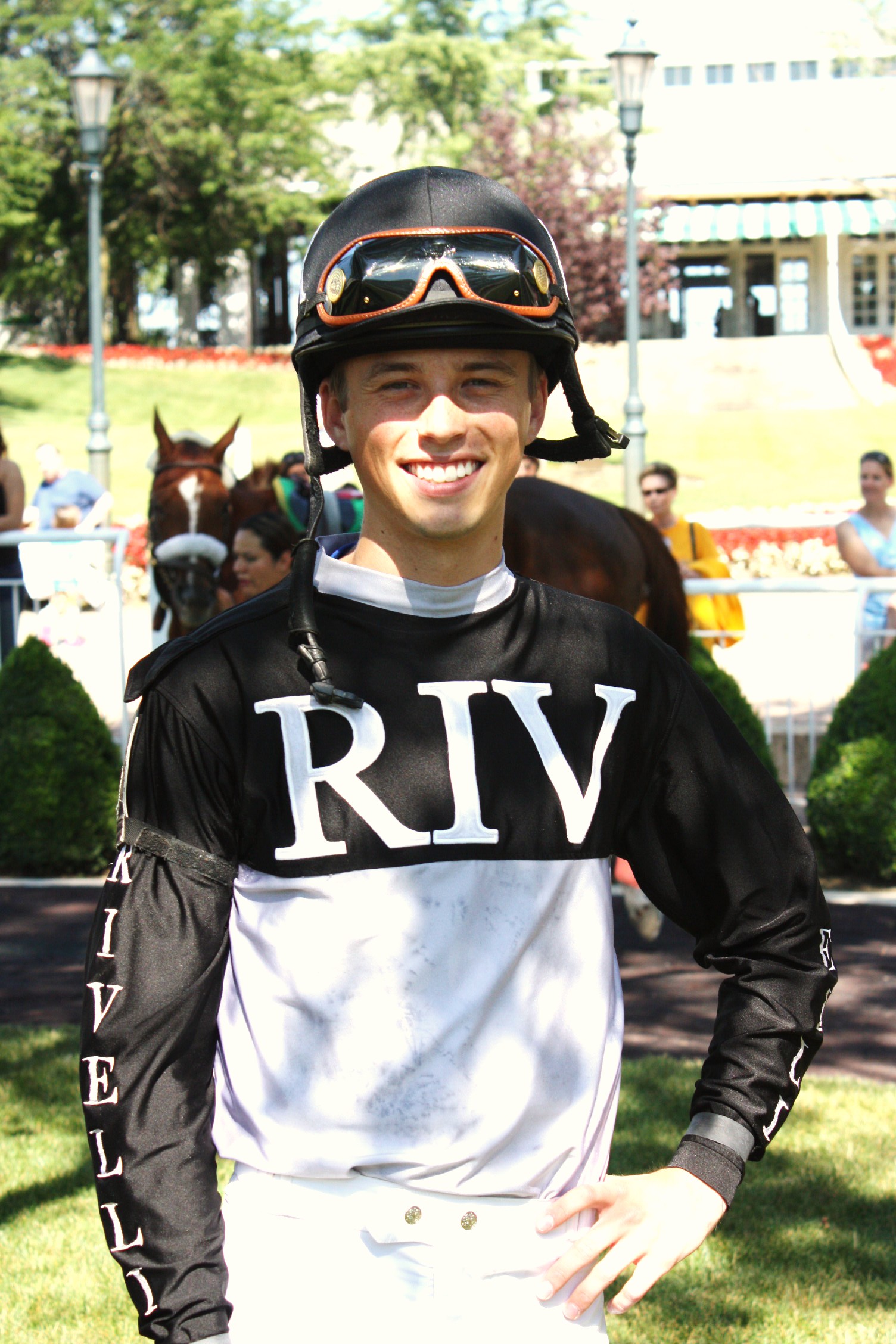
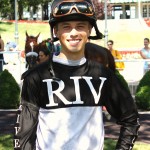 And, he has a good pilot. Rivelli remarked, “His jockey, Brandon Meier, is a perfect match.”
Since Rivelli began training the horse, Helicopter has only made one start without Meier as his rider.
And, Helicopter made it clear how he felt about racing without Meier aboard.
He lost.
Since that race, Meier has remained Helicopter’s regular jockey.
And, they have amassed quite a nice winning record together.
With Rivelli as his trainer, Helicopter has won twelve races with Meier aboard in sixteen starts.
Helicopter has won on varying surfaces – dirt, synthetic and wet dirt.
Recently, Helicopter attempted his first turf race at Arlington Park.
Prior to the race, I saw a bunch of young children standing at the rail waiting to watch Helicopter’s turf debut.
I was curious if they knew anything about horse racing.
I asked one of the girls, “Who do you think is going to win the race?”
She didn’t even pause as she shot back her answer.
 “Helicopter.”
In one word, a kindergartner had matched my handicapping pick.
Helicopter was the clear favorite, riding a six-race winning streak.
Sadly, he didn’t win his turf debut.
However, Helicopter has won some fans with his overall winning record.
Fans from all age ranges.
Fans who come to the track.
And, fans that came to the track on a weekday.
Helicopter’s fans don’t care if he is running for roses, large purses or against graded-stakes winners.
They just like to see Helicopter win a race.
And still, Helicopter isn’t a household name for most horse racing enthusiasts.
Yet, it may do some good to start talking about Helicopter in the racing world.
He helps bring fans to the track for an average race on an ordinary day.
And, the local community comes out when Helicopter is racing.
It is an exceptional victory for the sport.
March 23rd, 2010 §
 Case Clay manages the various world-class stallions, mares, and foals housed at Three Chimneys Farm. In 1972, his father, Robert Clay, founded the farm with a dream, a plan, and 100 acres of undeveloped land.
Today, the farm incorporates approximately 2,300 acres in seven divisions – five for mares and foals, one for yearlings, and the last to 12 highly accomplished stallions.
In the mid-1980s, Three Chimneys Farm made the decision to establish itself as a boutique by limiting the farm’s stallion population - the concept being that “The Idea is Excellence.” This allowed for personalized management and promotion of each stallion.
 The Throughout the years, the farm has been the home to many exceptional horses – including Triple Crown winner Seattle Slew and 1997 Kentucky Derby and Preakness winner, Silver Charm.
Three Chimneys Farm is currently is the home to Kentucky Derby and Preakness Winners, Smarty Jones and Big Brown, as well as Dynaformer, the sire of 2006 Kentucky Derby winner, Barbaro.
In a recent interview, Clay discussed his experiences through the years at Three Chimneys Farm.
WIRTH: Did you grow up at Three Chimneys Farm? If so, what was it like as a child to be surrounded by such highly accomplished horses?
CLAY: I did grow up at Three Chimneys Farm. It was wonderful to be surrounded by horses. Slew O’Gold was our first stallion and I have great memories going to see him run before he retired. Since he was so dominant on the racetrack, I remember thinking, ‘this must be easy’. I was in the fourth grade then and each year since then, I realize every day how wrong I was! The following year we were fortunate enough to stand Chief’s Crown and I will always have great memories of the time I spent with the Rosens.
WIRTH: What inspired your decision to work in the equine industry?
CLAY: In 2001, I was working for the Hyatt Corporation’s in-house advertising agency for their retirement communities. At the time, I was reading about small, boutique advertising firms that were getting acquired by big advertising conglomerates for a lot of money. I thought that I would start my own boutique firm with the goal of selling it to a big firm.
Since I didn’t know anything about starting a company and my father did, I called him and asked if we could dedicate some time to discussing how to start a company. We talked at 9 a.m. each Saturday morning for a year. Just about every example he gave (whether on purpose or not!) was about Three Chimneys and the horse business. The more we discussed it, the more interested I became in the idea of becoming involved in the family business. I talked to my wife, Lorin, about it, thinking she would say, ‘no way’ at the thought of moving to Kentucky, but when I asked her, she said she would be up for it – so here we are.
WIRTH: Prior to becoming the President of Three Chimneys Farm, you had worked at farms in Ireland and Australia. Did you find any unique differences between horse racing in the United States compared to the customs in Ireland and Australia?
CLAY: Yes. As we read in the many blogs and articles, Australian Racing has a brilliant model. Going racing there is a great experience with lots of excitement and it fills about 5 or 6 pages each day in the major newspapers. In Ireland, there is a great passion for racing as well. Kudos to Monmouth Park for their new model. I hope it catches on here in America.
WIRTH: In nearly four decades, Three Chimneys Farm has grown from a 100-acre dream to a 2,300-acre top-notch breeding farm. What do you think were the key management decisions that led to the success of Three Chimneys Farm?
CLAY: Put out a good product, take care of the customers and take care of the employees.
WIRTH: What are the governing principles and beliefs that guide your operation?
CLAY: Honesty without hesitation. Never stray from integrity. Mutual respect and the value of every team member, the importance of innovation, and strengthening customer relationships.
WIRTH: How do you determine which mares and stallions should be housed at Three Chimneys Farm?
CLAY: We put a lot of emphasis on the family (pedigree). With regard to stallions, the three main factors are pedigree, conformation and race record.
WIRTH: What is your day-to-day schedule like as President of Three Chimneys Farm?
CLAY: Lately it has been managing receivables! Every day is different, but every day is enjoyable.
WIRTH: What are some of your most memorable moments at the farm?
CLAY: The most memorable have been with my five-year-old daughter and three-year-old son. We spend a lot of time in the hay loft, but occasionally they’ll look at a horse!
WIRTH: When you see a horse that was foaled at Three Chimneys Farm go on to achieve success as a racehorse, do you feel a sense of accomplishment?
CLAY: It’s more of a sense of pride with regard to our team. We have world-class horse managers in place, in Sandy Hatfield, Tony Burton, Richie Donworth and Wayne Smith. Each of them has a team who has been with them for a long time. They do all the work.
To comment on this post, click here. To join The Saturday Post Facebook Page, click here.
March 17th, 2010 §
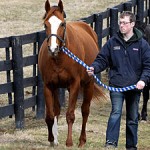 Champion, Rags to Riches, gave birth to her first colt today, March 17. Dermot Ryan, Manager at Coolmore America, confirmed via telephone that the colt was born at Coolmore Ireland and was sired by Henry the Navigator.
Rags to Riches is best known for her breathtaking win in the 2007 Belmont Stakes. After fighting Curlin in the stretch, she became the first filly to win the race in over a century. Overall, she had five wins from six starts in 2007 and $1,340,028 in career earnings.
On March 9, 2009, Rags to Riches gave birth at Ashford Stud in Kentucky to her first foal – a filly by Giant’s Causeaway. She was then booked to Ashford stallion, Henry the Navigator.
Rags to Riches remains at Coolmore Ireland. She is scheduled to be bred to Coolmore stallion, Galileo.
To comment on this post, click here. We have also launched a Facebook page. Click here to follow our blog on The Saturday Post Facebook page.
January 16th, 2010 §
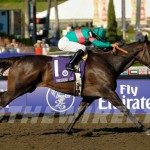
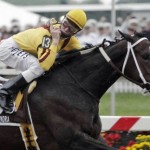
On Monday, the winner of the prestigious “Horse of the Year” Eclipse Award will be announced and two breathtaking fillies remain in a dead heat for title. Throughout most of the 2009 racing season, Rachel Alexandra dominated the sport with flashy wins against other fillies, taking down the boys in three separate races, and, ultimately, being the first filly in 85 years to capture the Preakness Trophy. Of her eight starts as a three-year-old in 2009, she remained undefeated and ended her racing year as the first filly to win the Woodward Stakes.
By September of 2009, I believed Rachel Alexandra was the clear choice for “Horse of the Year” having watched her trample the field in the Kentucky Oaks, take down the Derby Winner in the Preakness, and close her season with her historical win in the Woodward Stakes. If anyone had challenged that notion, I wouldn’t have hesitated to hold a good old-fashioned yelling match to defend Rachel’s right to the title. In my mind, it was inconceivable that any horse could out-perform this “Super Filly.”
And then, the unconceivable arrived. On November 7, 2009, an undefeated five-year old female named Zenyatta walked onto the track at Santa Anita and dared every boy standing at the gate to defeat her in the richest race in America.
It was such a bold move that I skipped a wedding to watch her try.
As the gates opened, Zenyatta trailed the field. Throughout middle of the race, I watched with heartbreak as she hung in last place. It looked as if expectations had exceeded her ability. When it appeared near hopeless, Zenyatta made the bid for her place in history. She began to pick off her opponents near the last turn and went wide on the home stretch to deliver a seemingly late charge for the finish. In the final seconds, Zenyatta drove seamlessly past her contenders at the wire to win the Breeder’s Cup Classic. In this historical moment, my allegiance for “Horse of the Year” shifted from Rachel Alexandra to the first filly to ever take the most expensive race in America – Zenyatta.
Admittedly, Zenyatta’s contention for “Horse of the Year” would not be such a threat to Rachel Alexandra without her historical win in the Breeder’s Cup Classic. However, I am not in the business of rewriting history. In fact, Zenyatta’s bid for “Horse of the Year” is perfectly in sync with the historical background and ultimate spirit of the Eclipse Awards.
 When the Eclipse Awards were founded in 1971, they were named in honor of a British racehorse and sire from the 1800s, named “Eclipse.” As a racehorse, Eclipse did not begin his career until he was a five-year-old and remained undefeated throughout the eighteen races in his career. In recognition of his legacy, Eclipse became the namesake to what are arguably considered the most prestigious achievement awards within the American horse racing industry.
By the very nature of the Eclipse Awards, the award categories provide a separation for age and overall achievement. Aside from “Horse of the Year,” which encompasses all ages and genders, the Eclipse Awards also maintain separate categories for the best “Three-Year-Old Filly” and “Three-Year-Old Male.” The scenario between Rachel Alexandra and Zenyatta appears to have been given some forethought prior to this moment.
Eclipse himself could not have won the best “Three-Year-Old Male” Award, just as Zenyatta can no longer compete for the best “Three-Year-Old Filly” award due to the age restriction. The Awards appear to follow the design that a “Three-Year-Old Filly” may become “Horse of the Year,” but that the rapture of the Triple Crown racing season cannot discount the outstanding performances of all racehorses during a given year.
Admittedly, Rachel Alexandra had an electrifying year as a three-year old horse – irrespective of her gender. If she had shown up to Santa Anita on November 7th to win the Breeder’s Cup Classic, there would be very little debate that she had earned the “Horse of the Year” Award. But, as Zenyatta trampled down the full field of skilled male horses to earn the distinction of the first filly to win the Breeder’s Cup Classic, Rachel Alexandra quietly stepped aside and placed her bets on her three-year-old season. When Zenyatta was first at the wire, Rachel lost her bet.
Zenyatta’s win in the Breeder’s Cup Classic holds more historical significance than any of Rachel Alexandra’s wins within this season. Zenyatta won the most expensive race in the United States. She is the first filly to ever accomplish this feat. The Breeder’s Cup Classic is one of the most contentious races in America – the field is full of great horses from varying backgrounds who are proven winners.
In contrast, Rachel Alexandra’s first Grade One win was in the Kentucky Oaks – among other fillies. Her next race, among males in the Preakness, is an impressive win – but not a “Game Changer.” Prior to Rachel, four fillies had already won the Preakness Stakes – the most recent win being in 1924. Further, the Preakness is the shortest distance of all three Triple Crown races, the Belmont being the longest race in the United States at a distance of 1 ½ miles. When Oaks-Winner Rags to Riches beat Curlin in the 2007 Belmont Stakes, Curlin was still awarded the distinction of “Horse of the Year” despite the fact that a Filly had not won the Belmont in over a hundred years when she crossed the finish line.
Zenyatta also holds distinction for building her undefeated record on a higher grade of races than Rachel Alexandra. In her career, Zenyatta has consistently run in only Grade 1 and Grade 2 races – remaining undefeated. In contrast, Rachel Alexander gradually worked from Grade 3 races into Grade 1 races, finishing second in both of her Grade 3 races. When viewing the overall career record of both horses, Zenyatta is the only undefeated horse who never delved below a Grade 2 race.
Finally, Zenyatta’s wins earned more money in 2009 than Rachel Alexandra. In 2009, Zenyatta was the second-highest ranking horse, boasting $3,330,000 in earnings. In comparison, Rachel Alexandra ranked fifth in 2009, bringing in a total of $2,746,914.
With the entry of more fillies in the prestigious male-dominated horse races, the industry is now squarely-faced with “The Filly Eclipse” for the Horse of the Year. Fillies are running alongside their male-counterparts and winning. When Rachel Alexandra ended her racing season in September, many believed that she had earned “Horse of the Year” over her potential male rivals for the Award. On November 7th, 2009, Zenyatta placed herself in undisputed contention with Rachel Alexandra as she moved past the finish line at the Breeder’s Cup Classic. Those watching the Breeder’s Cup Classic witnessed the first “Filly Eclipse” in history for the Horse of the Year Award.
After the Breeder’s Cup Classic, there have been arguments to hold a match race between Rachel Alexandra and Zenyatta. This would not add or subtract anything from this competition. Zenyatta and Rachel Alexandra are two distinct horses at different places in their career with their own unique character. They race in two separate fields - Rachel performs better on dirt and Zenyatta excels on synthetic track. If they ever settled where to run this race, the next question would be why the race should be run. This is a competition for the “Horse of the Year”- not “Best Filly of the Year.” It just happens to be that the two final contenders are fillies.
In the case of Rachel Alexandra, I truly believe that she has gone above and beyond to win the distinction of being the best three-year-old filly for 2009. She took on the boys, outran them, and bested the field with her astounding margins of victory in filly races.
Then, in a rare moment in November, “The Filly Eclipse” occurred and Zenyatta obscured all opposition.
When Zenyatta crossed the wire in the Breeder’s Cup Classic, she took my vote for Horse of the Year through pioneering a win in the most expensive race in America amidst a field a hard-tested males from various ages and backgrounds. It was an electrifying performance that not only earned her a place in the history books, but also, the well-earned distinction as “Horse of the Year.” I had seen my first ”filly eclipse.” It was breathtaking.
January 14th, 2010 §
 On January 1st, 2010, the next group of Derby hopefuls all turned the three as the nation celebrated the new year. As the days begin to roll by, many trainers and owners will begin to set their gaze on one of the most prized accomplishments in sports - the winning of the Triple Crown in horseracing.
Although the first leg of the Triple Crown doesn’t arrive until May 1, 2010, when all eyes turn to Churchill Downs for the 136th Running of the Kentucky Derby, the prep races to qualify for the highly-coveted positions in the Derby are shifting into gear. As with every year, I begin to watch the Saturday prep races, with a hope that this year will bring the next Triple Crown Winner.
This year is no different - with the exception of this Blog. You might ask - Why are you starting a Blog about horseracing? The answer is simple. I love the sport. I love the players. I love to talk about horseracing. It makes me scream with excitement, cry with heartbreak, and leaves me endlessly studying the details of races to try to master the mysteries of the sport.
During this month, I will begin considering the new horses positioning themselves for the Kentucky Derby, making travel plans to go to Churchill Downs for the first Saturday in May, and reminiscing about my past “loves” who thrilled me (or left me heartbroken) at the wire. I study the video footage of all the prep races, read the handicapper’s picks, look for the standout performances, until finally, I fall in love with a new horse for the year. And, once I fall in love with a horse, I am unshakeable in my devotion.
After seeing Barbaro win the Derby, I actually bought a farm with the dream of owning a racehorse. When he died, my racehorse dreams hit reality. A friend called my office the day of his death to tell me the sad news. The first sentence out of his mouth was, “What is the worst thing you can imagine in this world right now?” My immediate response was “If Barbaro died.” Unfortunately, I had picked the right horse that day. I sent a dozen roses to his hospital and had my first major lesson in horseracing - These great atheletes are not infallable.
After Barbaro, I maintained my enthusiasm for horseracing despite the peaks and valleys that are inherent to great love. Prior to the historic Belmont when Rags to Riches beat Curlin, I had a hair-trigger temper for anyone who told me a filly couldn’t win the Belmont. When she stomped across the wire, it felt like I won that race with her. She taught me the next lesson - Fillies are a force to be reckoned with and should never be discounted on the basis of gender alone.
When Big Brown showed up on the scene, it was love at first sight. By then, I had sold my farm, having learned that you can’t “grow” racehorses without lots of money. I sat in my Chicago apartment and watched his races for the pure joy of witnessing such raw talent. At the Derby, I watched him thunder to the finish line first from the twentieth post. When he won the Preakness, I booked my first trip to New York City in life. I was convinced that I was going there to witness the coronation of the next Triple Crown Winner. When he finished dead last, my heart was broken and I learned the most important lesson to date - Any horse can win or lose a race. Even Big Brown.
This past year, I saw the fillies take center stage and slam the door on the gender divide in horseracing. Rachel Alexandra’s stunning wins made me stand in awe of her ability. I thought she was the easy pick for “Horse of the Year.” And then came Zenyatta - who closed the Breeder’s Cup with a historical victory that changed the landscape of horseracing for fillies forever. As I write this story, the 2009 “Horse of the Year” will be picked in less than a week. My mind spins in circles between the two of them and wishes that they both could hold the title.
However, in horseracing, there is only one winner. And, the answer only arrives when the race is won. It could be a filly. Or a longshot. It could be the favorite of the betting public. The horse could be a former claiming horse or have cost a fortune. One thing is certain - There are extensive amounts of money and lifelong dreams on the line. Everyone from the owners to the betting public pays to watch the performance. So, who will be the next Triple Crown Winner? It is among the most expensive questions in the world.
Do you have a comment, question, or idea? You can contact Jennifer at blog@thesaturdaypost.org.