On a sunny Friday afternoon, I arrived at the gates of Churchill Downs to interview John Asher about the history of the Kentucky Derby. Asher, Vice President of Racing Communications at Churchill Downs, has been working in the thoroughbred industry for over two decades – serving on boards, acting as a publicist, and providing award-winning media coverage of the sport. He joined Churchill Downs in 1997.
In his coverage of horse racing, he has achieved celebrity status in his own right. On Kentucky Derby day, it would be near-impossible to watch any major televised report about the race without seeing John Asher appear on the screen. Amidst the crowd of racing enthusiasts, he is the man to follow on Kentucky Derby day.
When first I met Asher at Churchill Downs, it came as no surprise that it would be in a grand fashion. To me, the Kentucky Derby is all about excitement, tradition, pageantry, and witnessing history in motion. Churchill Downs is the cathedral for this one-of-a-kind event. After my entry to through magic gates, everything that followed was spun like a fairy tale adventure.
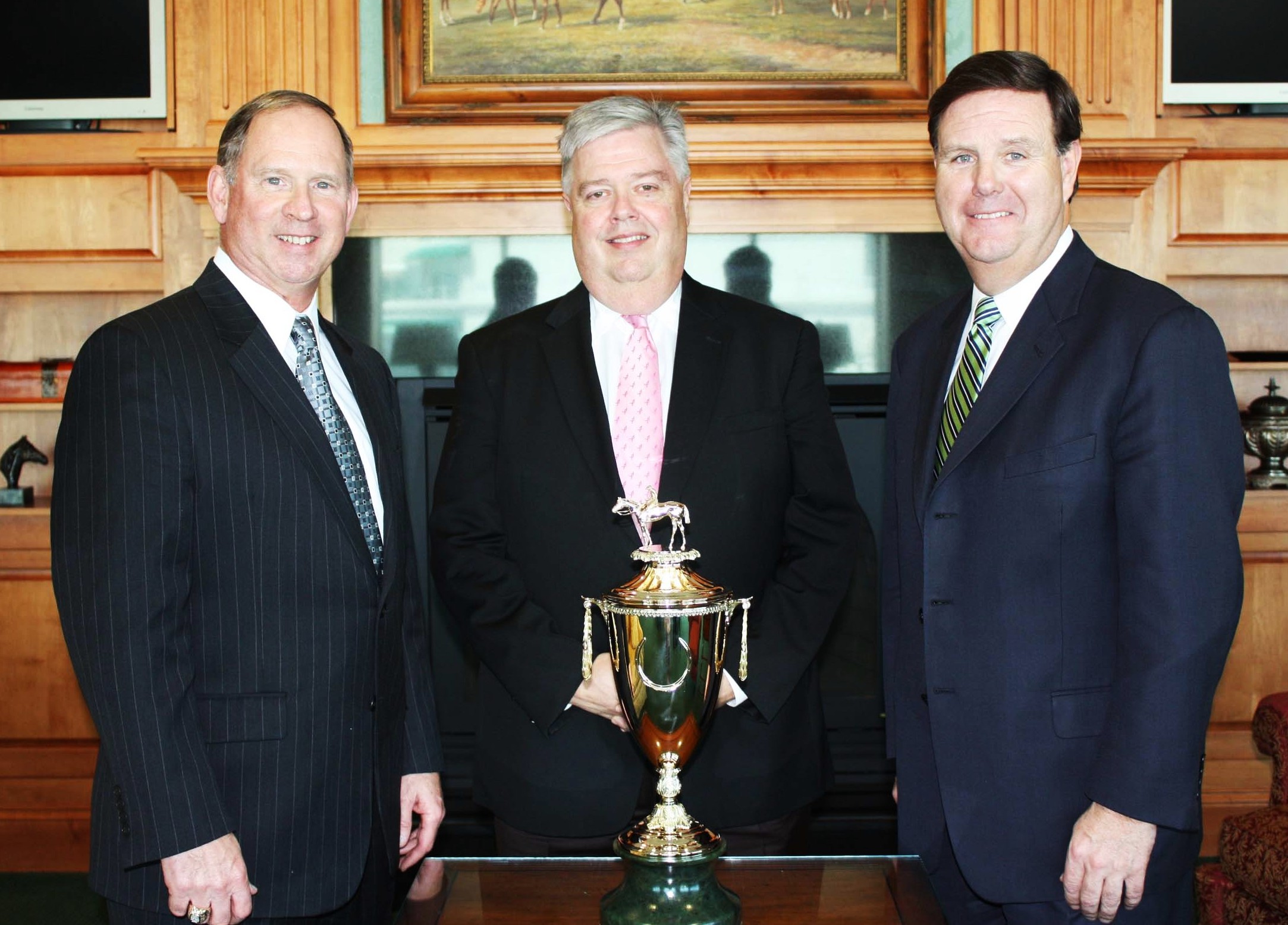 Asher appeared for the interview in the Director’s Room at Churchill Downs. This sacred ground is the site upon which the Kentucky Derby winners celebrate their win with a champagne toast following their victory.
In the center of the room, the press was gathered around a small table to view one of the most largely-coveted items in horse racing - the winner’s trophies for the 2010 Kentucky Derby.
The Winner’s Trophies for the Kentucky Derby.
Carefully handling each trophy with white gloves, the CEO of New England Sterling, Marc Forbes, informed me that the first person to personally touch each trophy would be the respective winner on Kentucky Derby day.
Forbes explained that the largest trophy, awarded to the owner of the winning horse, is comprised of sixty ounces of 14-karat gold and has remained largely unchanged from its’ original design, dating back to 1924. In the three major milestone races – the 75th, 100th, and 125th anniversaries the Derby, the trophy was modified to include diamonds, emeralds, and rubies.
Among the historical variations on the trophy, the major alteration came in 1999 – when the horse shoe in the center of the trophy was reversed to point upward. Forbes explained, “Racing lore has it, that [when] a horse shoe is facing downward, the luck runs out of the horse shoe. So, in 1999, the horse shoe was changed and facing upward.”
Forbes stated that fifty employees are involved in the 1,600-hour process of handcrafting the owner’s trophy- comprised of 25 different components. The company also creates three smaller sterling silver replicas of the gold trophy, which are awarded to the trainer, breeder, and jockey of the winning horse.
As I marveled at the beautiful trophies that we set before me, I envisioned the past Derby winners who have stood in this room, clutching their trophies, in a champagne toast to beating the mind-bending odds to win the Kentucky Derby.
The historical wonders of Churchill Downs would soon be illuminated through my interview with Asher. After the trophies were carefully placed back in their cases, Asher led me outside to begin the journey through the history of the Kentucky Derby at Churchill Downs.
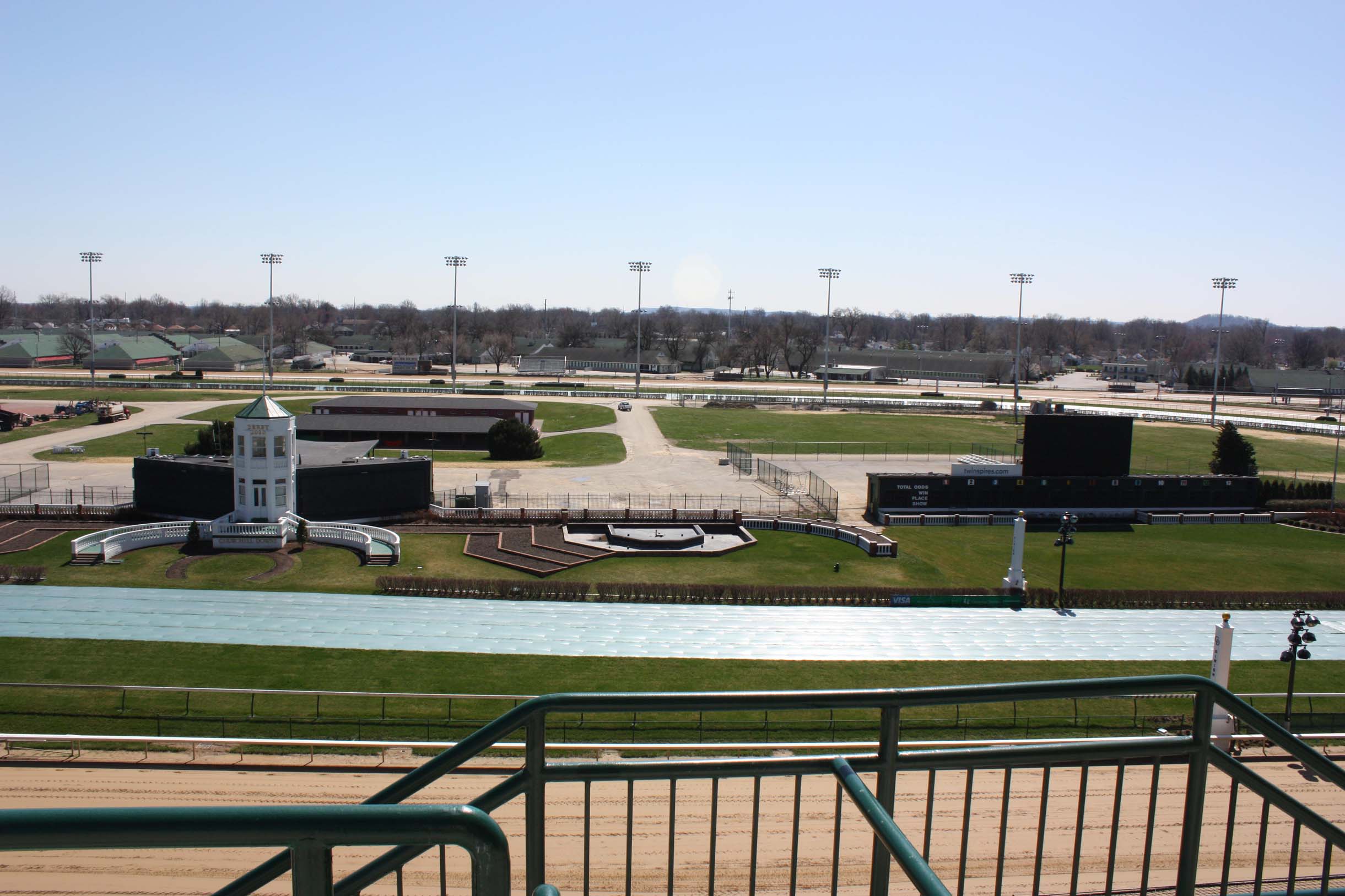 The Kentucky Derby is America’s Oldest, Continuously Held, Sporting Event.
From our Eagle-eye view of the legendary Churchill Downs dirt track, Asher explained, “The track dates back to 1875, when the first Derby was held. We have run the Derby every year, without interruption, since 1875. This year, May 1st, will be 136 consecutive years.”
Asher then elaborated, “We are America’s oldest, continuously held, sports event. We have survived two world wars, The Great Depression, [and] the flood of 1937, which had us underwater.”
In a few sentences, I learned my first lesson. The Kentucky Derby is a testament to perseverance. Not only for the lucky handful who arrive in the winner’s circle – but to those who ensure that the race is run in the first place. And, as Asher would soon explain, Matt Winn embodied the spirit of perseverance.
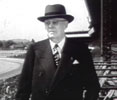 Matt Winn: The Architect of the Revival.
Although the Kentucky Derby had been running for 27 years, the track had never turned a profit at the time Matt Winn began managing Churchill Downs in 1902. When Winn arrived at Churchill Downs, he had a powerful vision for the track. Asher explained:
He really led the revitalization of the track. He had three goals… he wanted the Derby to be a major league sports event – a prominent sports event. …He wanted the race to be much more than a horse race – he wanted the fashion aspect, … the celebrity, all that. He wanted it to be just a huge celebration. Not just of the sport, not just of racing. And, also, he wanted Churchill Downs to be an important part of life in the community year-round, not just when we were racing.
Winn’s vision paid off the following year when Churchill Downs turned its’ first profit in 1903. However, Winn didn’t slow his efforts to revive the track in the wake of his initial success. In furtherance of his vision, Winn would eventually host state fairs on the grounds, locomotive collisions in the infield, bring pari-mutuel machines to the racetrack, and begin radio broadcasts of the Derby.
Asher explained that the community outreach initiatives of Churchill Downs even extended to the Catholic Church. “From the mid-1940s to the mid-1970s, there was a Roman Catholic archdiocese that held a religious celebration here every year – the feast of Corpus Christi. Thousands of people would come out. There was a procession on the track… it was a huge religious celebration.”
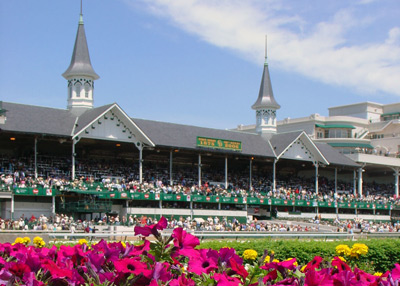
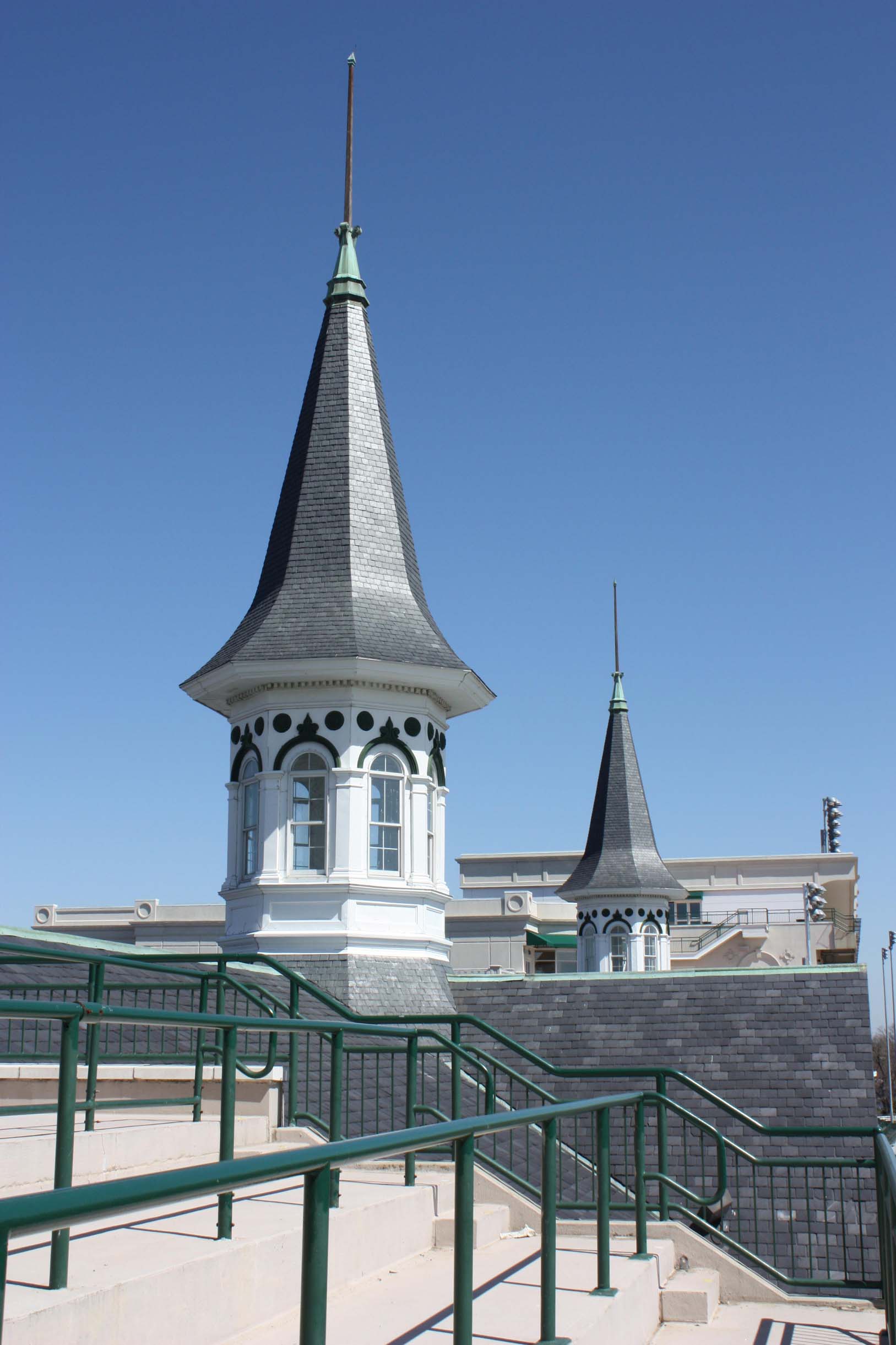 Through hosting community events, the track went beyond horse racing for many guests. In reference to “The Feast of Corpus Christi” celebration, Asher noted, “When you think of the people who came out here, the thousands that came out here, a big chunk of those people would never come to Churchill Downs for a horse race, or to bet a nickel on the nose of a horse. They came out here because Churchill Downs was special to them. Those Twin Spires were special, because of the experience they had here. That’s part of the emotional investment people have in this place.”
In the eyes of Asher, Winn’s vision has become a reality at Churchill Downs today. “Most of the times in a year, you can come up and find something going on. This year, we have Derby and Oaks, which will draw 250,000 people here.” Churchill Downs also hosts weddings, music festivals, and various other events – ranging from the previously hosting a Rolling Stones concert to the upcoming Breeder’s Cup Championship races in 2010.
The Artist’s Muse: Artwork at Churchill Downs.
In a painted collage at Churchill Downs, stands a quote by Irvin S. Cobb, Kentucky native and writer.
“Until you go to the Kentucky Derby with your own eyes, behold the Derby, you ain’t never been nowhere and you ain’t never seen nothing.”
As you walk through the halls of Churchill Downs, the work of many artists is on display in their effort to add their own definition, tribute, or voice to the Derby. Considering the collected pieces of art throughout Churchill Downs, one thing is clear – the Derby has been the muse for several artists.
During our interview, Asher showed me a piece of work by artist, Craig Colquhoun, that defies description in ordinary language. In an endeavor to follow his dream of creating something great, Colquhoun constructed a glass replica of Churchill Downs. As we studied the thousands of pieces, Asher explained:
When we were getting finished with the renovation, we got a call from an artist named ‘Craig Colquhoun.’ He says, ‘I’ve got this glass sculpture of Churchill Downs, would you be interested in looking at it?’ We said, ‘Sure.’
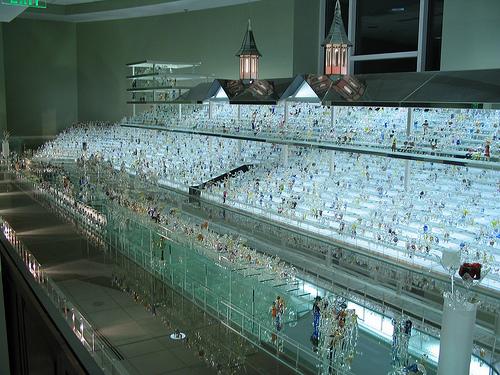 Pointing to the masterpiece standing before us, Asher remarked, “This was it. It is thirty feet long, ten feet wide, ten feet high, and 4,000 individual pieces he made – which represents every part of the Derby experience. [There are] fans in the infield, TV cameras and media, hats, the marching band, roses, ushers, and the horses.”
It was breathtaking.
While viewing the piece, Asher told the tale of the “Leading Horse,” in which the glass horse on the lead mysteriously changes position in the race. “[It’s] one of two things. Right now, it’s in the normal spot. We either have a spirit at work or an employee with a sense of humor. Every now and then, you will come up here and the horse on the lead will be about halfway up. I’ve never heard it explained or seen it explained. I just know the horse moves sometimes.”
While Colquhoun’s piece tries to capture the “spirit” of the Derby experience, there are also two murals in the clubhouse, painted by Pierre “Peb” Bellocq, that depict the winning jockeys and trainers in the Kentucky Derby.
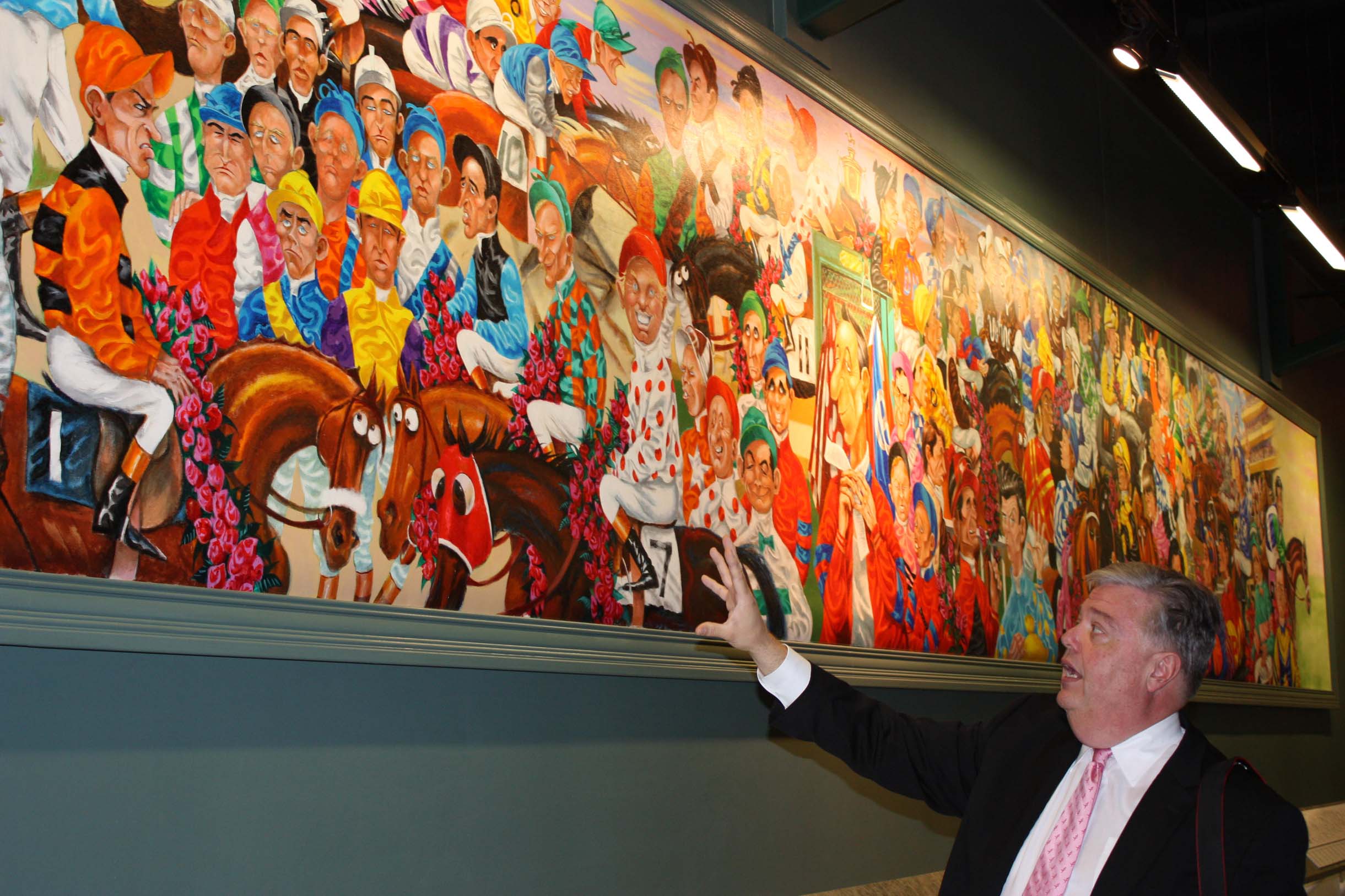 In Bellocq’s mural of the winning Jockeys, the artist has painted every jockey to ever win the Kentucky Derby. Asher explained that the mural is a timeline. The end of the mural used to depict a woman looking forward with a horse in the background that wore “figure eight” silks to symbolize infinity. Later on, the silks on the horse were modified to reflect the silks of Smarty Jones.
In recent years, Calvin Borel’s victories have led to the modification of the jockey’s mural. In 2007, Calvin Borel was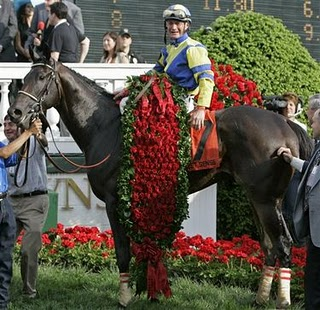 painted into the mural for his winning ride on Street Sense. After Calvin Borel won his second Derby on “Mine that Bird,” the mural was again modified to show Borel holding up two fingers – signifying his two wins in the Kentucky Derby.
After viewing numerous works of art inspired by the Kentucky Derby, it was clear that the race has the power to serve as an artistic muse. When I asked Asher about his opinion on why the Kentucky Derby has the power to inspire artists. He responded:
It’s a dream. I think it’s amazing. The whole thing about the race is a dream. Our purse is two million dollars. …It think we’d have thirty horses fighting to get into the race if we just gave them roses…
It’s the reason we get up in the business every day. If you breed a horse, own a horse, [or] you train a horse. If you’re thinking, ‘Is this horse the one?’ … I think it’s the dream aspect of it.
Building upon the concept of “the dream,” Asher shared his own story about how the Kentucky Derby led to his interest in horse racing. “[It’s] why I’m here. I watched the Derby with my family. We grew up in Kentucky, but we weren’t horse people. I was on a farm. It was my grandmother’s farm and it had nothing to do with horse racing. We were horse racing fans one day a year. We gathered around the TV and one day it just bit me. It’s amazing that I’m here, coming where I came from.”
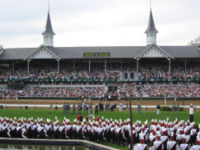 The Kentucky Derby: The Allure of the Greatest Two Minutes in Racing.
On the first Saturday in May, eyes from all across the world spin around the oval track at Churchill Downs to watch the Kentucky Derby. Guests have included royalty, presidents, and celebrities. In recent years, Queen Elizabeth attended the race.
During our interview, Asher elaborated on why the race itself has such an alluring aspect. “You get one chance. It’s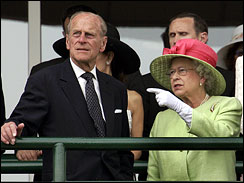 three-year-olds only. One Saturday. Two minutes in the afternoon. … In this year’s crops of three-year-olds, we have a maximum of twenty horses in the gate. And this year’s foal crop is about 37,000 – just in the United States. So, your odds are 37,000 to 1 to start. And that doesn’t include European-breds. …And even if you get here, … there are so many ways to lose a race.”
Despite the odds, the dream of ‘getting to the Kentucky Derby’ continues to captivate many individuals – whether owners, trainers, jockeys, breeders, or fans. Aside from the race, many people arrive at Churchill Downs for the pageantry and celebration surrounding the Kentucky Derby.
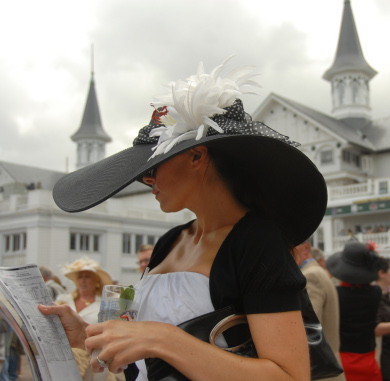
The glamour and tradition intertwined with race is nearly an event in and of itself. With women wearing wide-brimmed hats, celebrities weaving throughout the crowd, and the beloved traditions interwoven with the Kentucky Derby, individuals from all walks of life attend the race.
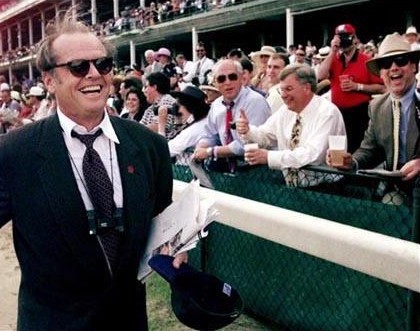 In light of the fan fare surrounding the Derby, I asked Asher which celebrity has drawn the most attention in his experience. He responded, “Jack Nicholson. He’s the biggest celebrity I’ve ever seen at the Derby. He stopped the show everywhere he went. Presidents… Queens… Nobody compared to Jack.”
Aside from the celebration in the stands, the horses on the track rule the day. In response to my question about his most memorable moments at the Kentucky Derby, Asher explained, “My absolute favorite moment is when they walk around the first turn to be saddled before the Derby. They are all coming over and everybody is accompanying the horse. The grooms are there. In a lot of cases, the owners and trainers are there.”
It is a heart-stopping moment. Fans who have labored over choosing their horses finally get to view them in the flesh. As for the connections to each horse, they are moving through the rapture of a dream.
Amidst the electric atmosphere surrounding the race, many individuals point to the moment that the crowd sings, “My Old Kentucky Home,” as an experience that defies description. As the marching band plays the music, it is hard to find a dry eye in Churchill Downs.
During our talk, I asked Asher, “What is it about ‘My Old Kentucky Home’ that makes grown men cry?” He responded, “It is everything about the Derby. It is the dream of everybody in the business. The Derby has got a romance. It just does. You look at the horses that win it, the people who had spent their whole lives in the business… Whatever it is, it touches people in a myriad of ways.”
However, for the hardened bettors, Asher gave a tip. “If you’re not a sentimentalist, it’s the best time to bet because there is nobody at the windows. They’re all outside crying. …Every window is wide-open.”
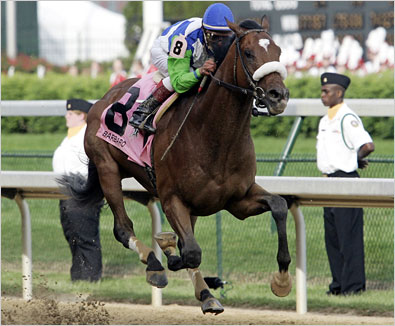 Barbaro: His Memorial at Churchill Downs.
The story of Barbaro struck a chord with many individuals throughout the world. After his death, the decision was made to commission a statue of Barbaro and make Churchill Downs his final resting place.
The inscription under the statue quotes Olympic Gold Medal winner Eric Liddell: “I believe God made me for a purpose, but he also made me fast. And when I run, I feel his pleasure.”
Asher noted that the statue was constructed with a purpose. “The Jacksons wanted all four feet off the ground. That’s the perfect photo of a 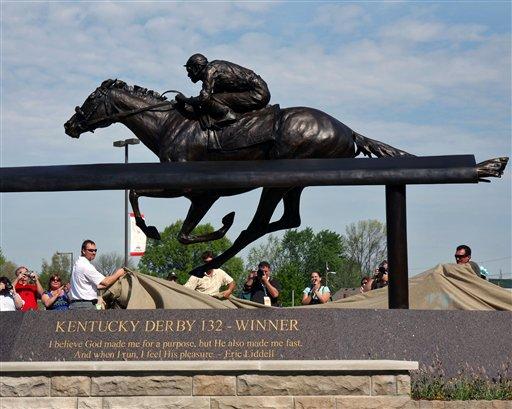 thoroughbred. They are in flight.”
During our interview, I asked Asher about the decision to lay Barbaro to rest at Churchill Downs. He explained, “The Jacksons made the decision [on] where they wanted him to be. They looked at a farm up in Pennsylvania, they looked at Maryland, and they looked at our place. They ultimately decided that this was the greatest moment of his career and they wanted him to be here. We obviously welcomed him.”
In response to my follow-up question regarding his continued fans, Asher explained, “The letters that came following Barbaro were countless. They came from everywhere. We still get them now.”
 Secretariat: The Kentucky Derby Track Record.
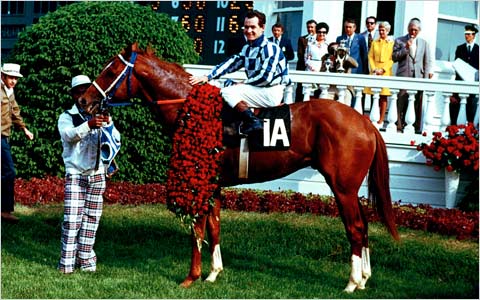
Throughout Churchill Downs, several photos of Secretariat line the walls throughout the track.
In 1973, Secretariat not only won the Triple Crown, but broke the official track record at the Kentucky Derby and the Belmont.
Regarding the Preakness, the official track clock was broken when he won and the time did not reflect a new track record. However, the Daily Racing Form publicly disagreed with the official time at Pimlico. According to their watch, Secretariat broke the official track record in the Preakness.
If the Daily Racing Form time was correct, Secretariat is the record holder in all three Triple Crown races.
During our interview, I asked Asher about his personal opinion as to whether Secretariat holds the record for all Triple Crown races. He responded, “Yes. For me, it’s no question.”
Asher elaborated, “The official time, I think everybody agrees, was wrong. Everybody who had a hand-held watch got it faster.”
In an interesting follow-up, Asher noted that the Preakness was his favorite performance during Secretariat’s Triple Crown bid.
My favorite race of Secretariat’s Triple Crown is probably the least known. He did something I’ve never seen a horse do in that race. He was dead last going into the first turn and then took off. It looked like jets were firing.
He goes into the first turn dead last [and] he came out of the first turn in front. So, he just passed everyone on the first turn – not the second turn. You just don’t see that happen.
As for Secretariat, Asher is not alone in his reverence for this champion. With the many articles and books written about this Secretariat, it is hard to find any new words to encapsulate his talent. In Asher’s description:
Secretariat is the most amazing thoroughbred ever created as far as I’m concerned. He’s the perfect physical specimen. I don’t know who to compare him to. He’s like Schwarzenegger in his prime. In terms of physical, it’s just a perfect build. He had a heart… bigger than anybody else. That’s the big guy. That’s the one that defines our sport.
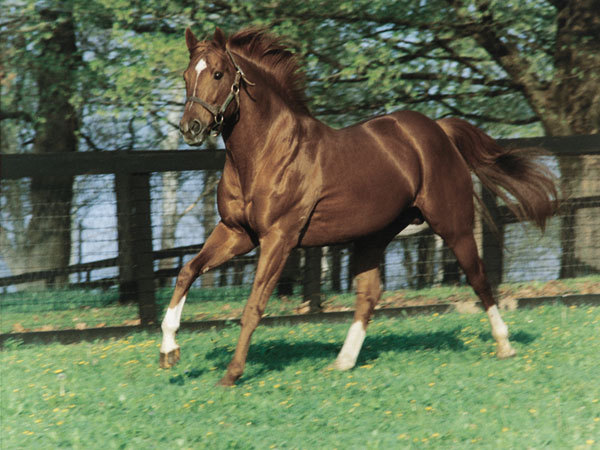 Asher then recapped his visit to meet Secretariat while he stood at Claiborne Farms. When he arrived at the farm, Secretariat was in his hillside paddock. Asher stated:
I was walking through with one of the farm hands. We had heard all these things throughout the years about what a ham he was and how he posed for pictures.
He was at the top of the hill. The groom I was with didn’t speak loudly. He just said, ‘Hey, Red.’
Boom! Here he comes. Flying down the hill. Absolutely flying down the hill. [He] gets to the fence at the end of the paddock where we were standing. He gets there. Stops. And poses.
In his final comments about Secretariat, Asher highlighted that the champion still gets roses and flowers at Claiborne Farm on the anniversary of his birth and death.
 The Last Word: Asher on the Art of Handicapping
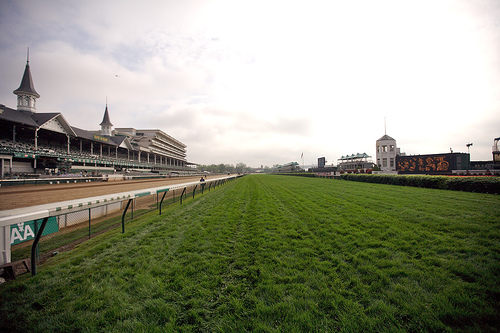
Among his many talents, Asher is widely-known for his handicapping picks relating to the Kentucky Derby. He explained that he changes his choices every Sunday during the prep race season for the Derby.
Handicapping a horse race is no easy feat.
In response to my question as to whether he ever wishes that he could change his picks on Derby day, Asher responded with a recap of the upset delivered by Mine that Bird in the 2009 Kentucky Derby:
Yes. I wanted to change it last year. … I was sitting there watching the race with my daughter on Derby day. I’m looking up. …I said, ‘Aww, Eight is the winner.’ And, I go, ‘Who is Eight?’ And I looked at my program and realized it’s Mine that Bird with Calvin at 50 to 1. And for the next quarter mile, I couldn’t believe it. As soon as he crossed the finish line, I looked at my daughter and said, ‘You know, I’m not sure, but I think I picked him dead last.’ When I looked, sure enough. Dead last.
However, Asher has a good sense of humor. He appears perfectly at ease with being proven wrong in a race. “It’s very complex. It’s one of those businesses where, if you don’t learn something every day, you’re not paying attention.”