Truman Capote once said, “More tears are cried over answered prayers than unanswered ones.”
I would like imagine Capote was a horse racing fan when he conjured up those words.
When a legendary horse shows up, it is an answered prayer. They aren’t beholden to the result of a single race. Instead, the great ones take fans on a journey. They aren’t defined in minutes, but rather, through moments. And, as a result, it seems as if the clocks simply stop ticking. A timeless horse doesn’t answer to seconds on a stopwatch. They answer to their own legacy.
When a great horse concludes their racing journey, they leave a deep void among their fans. It can make you wonder if you’ve already seen everything that is possible in racing. And, when the clocks start ticking again, it can seem as if there is no reason to keep watching. It is moment where your prayer was answered, but you are left without the rapture of a dream.
 Zenyatta was the horse that took me on a journey that traveled in moments, rather than minutes on a race track. And, when she retired, I wondered if I would ever see a horse that could follow in her dizzying footsteps. I had just seen my once-in-a-lifetime racehorse. The possibility of her coming around twice didn’t seem plausible.
And, in all reality, there won’t be another 19-1 dancing race horse that can charm the birds from the trees with her friendly disposition while parading across the national media circuit. I know better than that. Zenyatta is one-of-a-kind, which is the true mark of legend.
Yet, I’m not done with horse racing because Zenyatta has entered retirement. In fact, I’m watching even more closely now.
You see, the great ones simply appear from time to time, without notice of their impending arrival. And, if you’re not watching, you’ll miss it.
I wouldn’t have missed Zenyatta’s career for the world. Yet, the world couldn’t have convinced me that a dancing mare was going to show up and rocket through a nineteen-race winning streak. I had to see her with my own eyes to believe it. And thankfully, I was watching when my once-in-a-lifetime horse showed up.
Zenyatta will not be the last “great one” in this sport. Racing has had plenty of legends. And, although we love to compare them, you will never take the same journey twice in the racing world.
When Man ‘O War retired, turf writer Joe Palmer wrote that he “was as near a living flame as horses get… he smashed his opposition, sometimes by a hundred lengths, …he set world records… You felt that there had never been, nor could ever be again, a horse like this.”
He was right. There will never be another Man ‘O War.
But, there is always the impending arrival of the next “great one.”
When Secretariat ended his career, turf writer Charles Hatton stated, “He’s the greatest horse that anyone has ever seen. Don’t let anyone kid you. He could do anything, and he could do it better than any horse I ever saw. No question about it in my mind.”
He was right. There will never be another Secretariat.
But, there is always the impending arrival of the next “great one.”
When Seattle Slew left racing, his groom, John Polston, walked away from the sport. He explained, “After a horse like Slew, there was nothing. I didn’t want to be around horses anymore, because I knew it wouldn’t be the same.”
He was right. There will never be another Seattle Slew.
But, while Seattle Slew was capturing the Triple Crown, the next “great one” was already grazing in the fields. One year later, that horse would come to be known as “Affirmed.” And, since Affirmed, we haven’t seen a Triple Crown winner again.
But, there is always the impending arrival of the next “great one.”
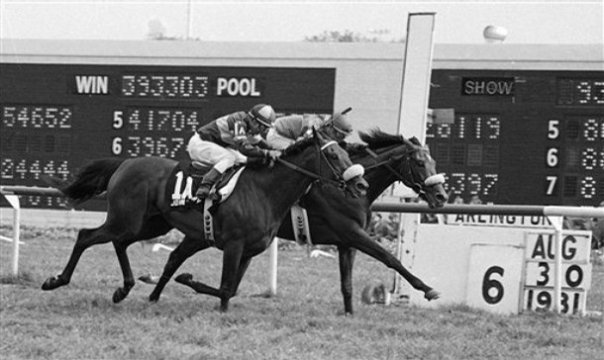
Within a few years, John Henry reminded the sport that anything is possible when he won the Arlington Million in a seemingly-impossible, come-from-behind victory in 1981. And, he reminded us again when he won the Million a second time as a nine-year-old.
When John Henry was gone, Chris McCarron reflected, “…He did so much for racing, even after he retired. He will be impossible to replace.”
He was right. There will never be another John Henry.
But, there is always the impending arrival of the next “great one.”
And, in recent years, we’ve seen greatness in ways that weren’t imaginable until it simply showed up.
 You saw it in Rachel Alexandra.
When she retired, Jess Jackson marveled, “…She set standards and records that no filly before her had ever achieved. And I suspect that it will be quite a while before a three-year-old filly ever equals or surpasses her achievements.”
He was right. There will not be another Rachel Alexandra.
She was one-of-a-kind.
But, there is always another “great one.”
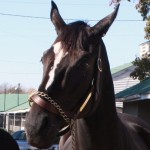 You saw it in Zenyatta.
After her final race, Peter Ellis remarked, “I don’t think people are going to realize just how special she is until she is gone because there will never be another one like her.”
He was right. There won’t be another Zenyatta.
But, there is always the impending arrival of the next “great one.” And, like Affirmed, “the one” could be grazing in the fields at the moment. Or maybe, “the one” is already racing right now.
I’m watching closely.
Because, if history teaches us anything, it is that the “great one” arrives unexpectedly.
In a flash, they show you something unimaginable.
And, the journey begins again.
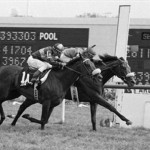 In 1981, John Henry became the inaugural winner of the Arlington Million, the world’s first million-dollar purse, after overtaking The Bart in a photo finish.
The inaugural race is commemorated at Arlington Park with the statute, “Against All Odds,” showing John Henry’s seemingly impossible victory.
John Henry simply refused to let himself get beat when the odds were stacked against him.
And, the odds were stacked against him.
John Henry began as a horse that was supposed to get beaten in races.
He was dismissed as small and mean.
He didn’t have a great pedigree.
His ownership changed hands for pennies on the dollar in his early years.
No one wanted the poor guy.
And, no one expected him to be a good race horse.
Except, John Henry himself.
One day, John Henry decided that he was done being beaten in races.
He packed up his no-name pedigree and low expectations.
He went to the track set out to prove he could win.
And, John Henry prospered in the end.
John Henry won millions in his career and set milestones that defied the odds.
Sixteen years after John Henry claimed his second Arlington Million victory in 1984, Gio Ponti set out to match John Henry’s two-time winning record in the Arlington Millions last Saturday.
Gio Ponti entered the race as the favorite.
He had already won the Arlington Million in 2009.
It seemed a foregone conclusion that Gio Ponti had the race licked from the start.
Yet, Gio Ponti was racing on John Henry’s record-holding ground.
And, John Henry had already proved that anything can happen on that ground.
In the backdrop of Gio Ponti’s bid to match John Henry’s two-time winning record, two horses quietly arrived in the stables at Arlington Park.
The horses had never raced in the United States.
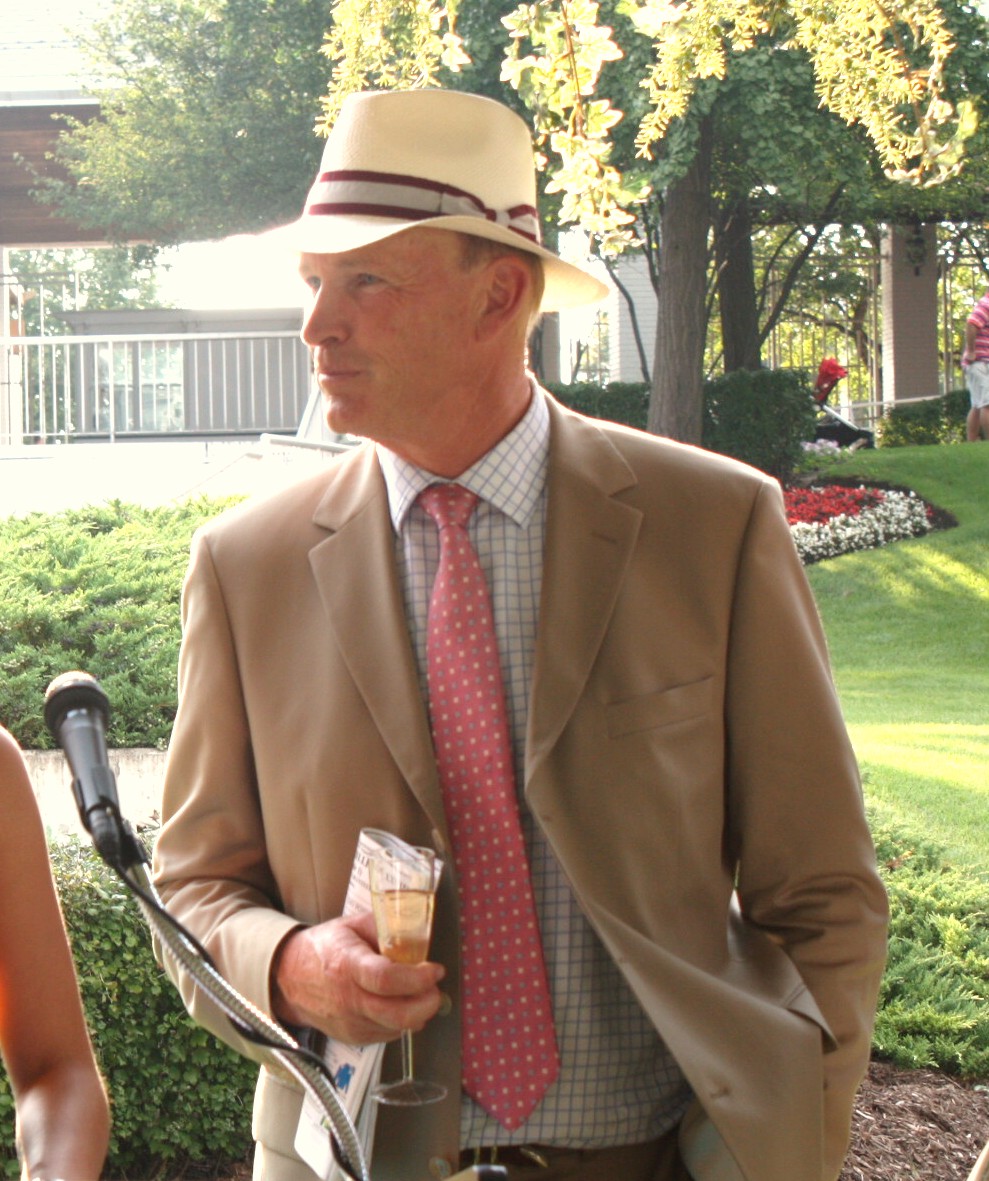
 The trainer of both horses, John Gosden, had sought to win the Arlington Million for 28 years.
Gosden had run his first horse in the race in 1982.
In the years that followed, he raced a total of seven horses in the Arlington Million and victory had eluded him at every outing.
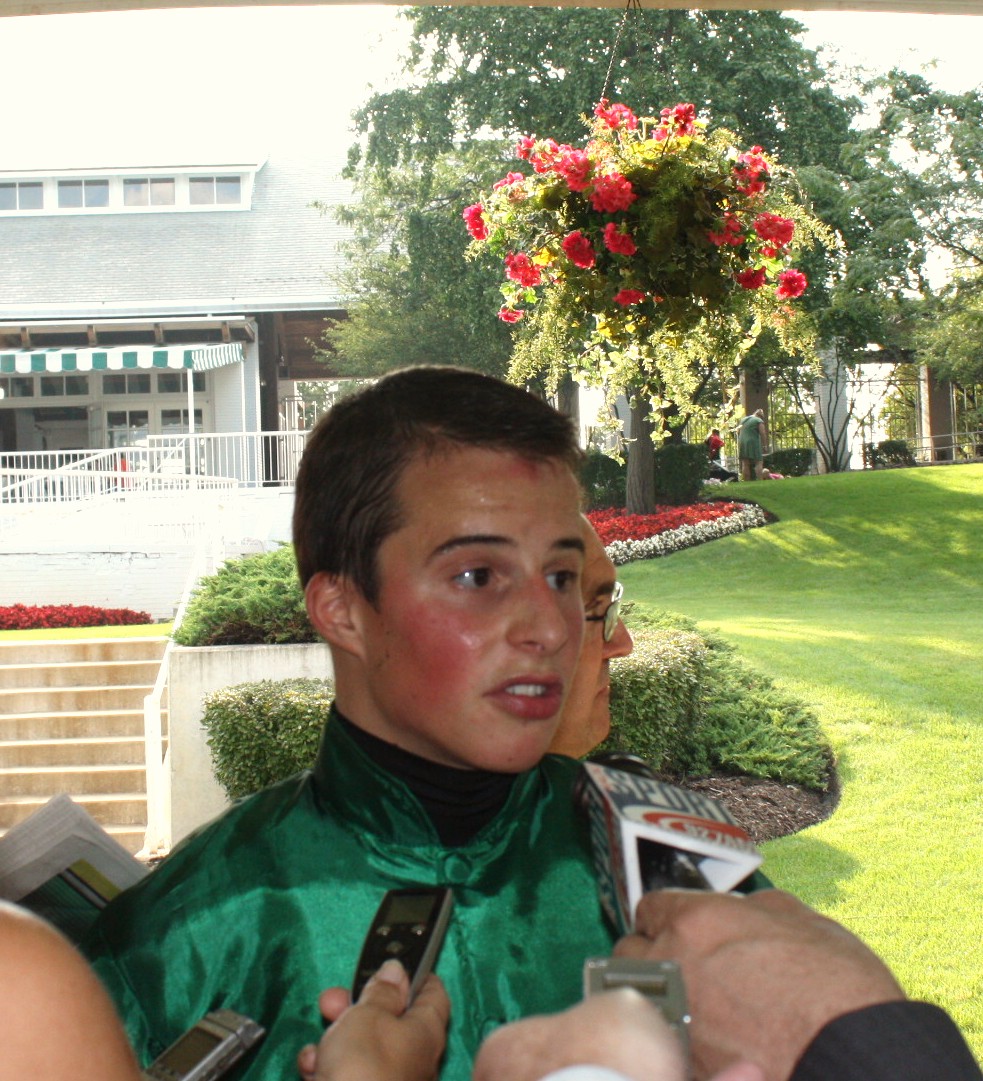
In January, Gosden signed a 22-year-old Jockey to his overseas stable – William Buick.
Despite being an up-and-coming jockey in England, Buick had never won a race in the United States.
And, it was Buick’s first time racing in the Arlington Million.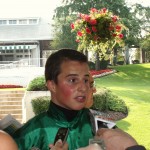
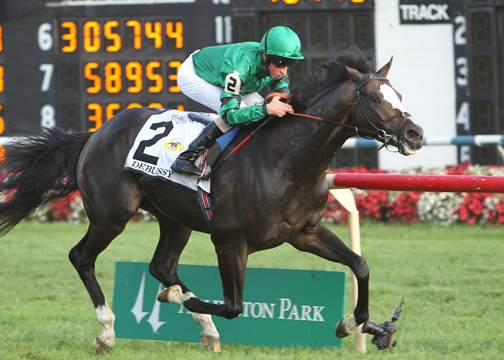
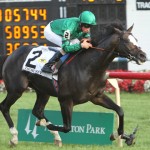
Buick was set to ride Debussy, who entered the gates with final odds of 11-1.
Debussy was competing in the Arlington Million alongside his stable mate, Tazeez.
Tazeez had all the pizzazz of a serious contender.
His betting odds were roughly half of those pegged against Debussy.
In his four starts in 2010, Tazeez hit the board on all occasions.
In contrast, Debussy had only won one race in five starts as a four-year-old.
He never hit the board in the surrounding races.
 At Gosden’s training stable, Debussy and Tazeez raced each other in workouts.
Tazeez regularly beat Debussy.
It seemed Debussy was almost brought along for the ride, rather than with the idea that he could actually win the Arlington Million.
Yet, like John Henry, Debussy had other plans that day.
He was willing to fight against all odds.
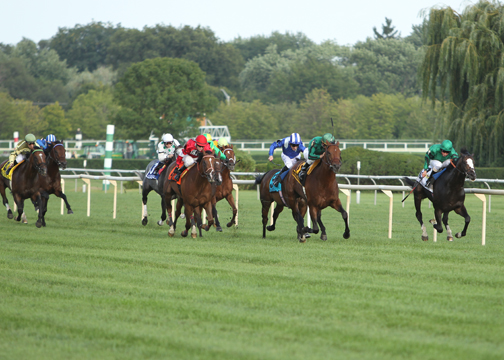
When the gates opened, Tazeez reared while leaving the gate and lost a few lengths at the start.
He eventually caught the pace alongside long shot, Quite a Handful.
And, by the time Tazeez hit the final stretch, he had easily recovered from his rocky start to run 2½ lengths in front of the rest of the field.
It appeared Tazeez had it licked.
Then, Gio Ponti strode past Tazeez like a Rolls Royce and took the lead.
It seemed as if it truly was a foregone conclusion that John Henry’s two-time winning record in the Million was going to be matched by Gio Ponti.
Yet, John Henry doesn’t stand among the ranks of those who are supposed to be good.
He stands with those who have the desire to succeed where failure is seemingly a foregone conclusion.
While Gio Ponti was soaking in the spotlight, he started “idling a little bit, maybe looking at the stands or something,” said his jockey, Ramon Dominguez.
Meanwhile, Debussy struggled in the back of the pack.
He was blocked behind horses.
But, Debussy didn’t see failure as a foregone conclusion.
 Buick explained, “I kept riding the rail, riding the rail. On the last bend, I had no room, but so much horse. Then, a hole opened. I kind of shut my eyes and then I saw he was through.”
Just like John Henry, Debussy made a decision that day.
He was done getting beaten on the track.
Debussy packed up his defeated record, bad trip and poor odds.
He set out to win the Arlington Million.
Debussy hugged the rail and drove past his rivals that blocked his path.
And, in his victory, Debussy showed a stunning display of determination to stomp out the odds against him.
It was his first Grade I victory.
It was his first time racing in the United States.
It was William Buick’s first win in North America.
And, it was the culmination of Gosden’s twenty-eight year dream of winning the race.
Debussy delivered it against all odds.
And, he did it without setting out to match John Henry.
Instead, Debussy’s victory paid a tribute to John Henry.
It was a tribute to John Henry’s hard-fought principle that anything can happen in a race where the drive to succeed outweighs the odds against the horse.
Debussy took that lesson to heart.
While racing on the ground where John Henry delivered one of the greatest testaments to the principle, Debussy decided he was done with defeat.
He won against the odds.
He won against his stable mate.
He won against the favorite.
He won one for John Henry.
Thank you to Horsephotos.com for the use of the photos of Debussy in the Arlington Millions. To comment on this article, click here.
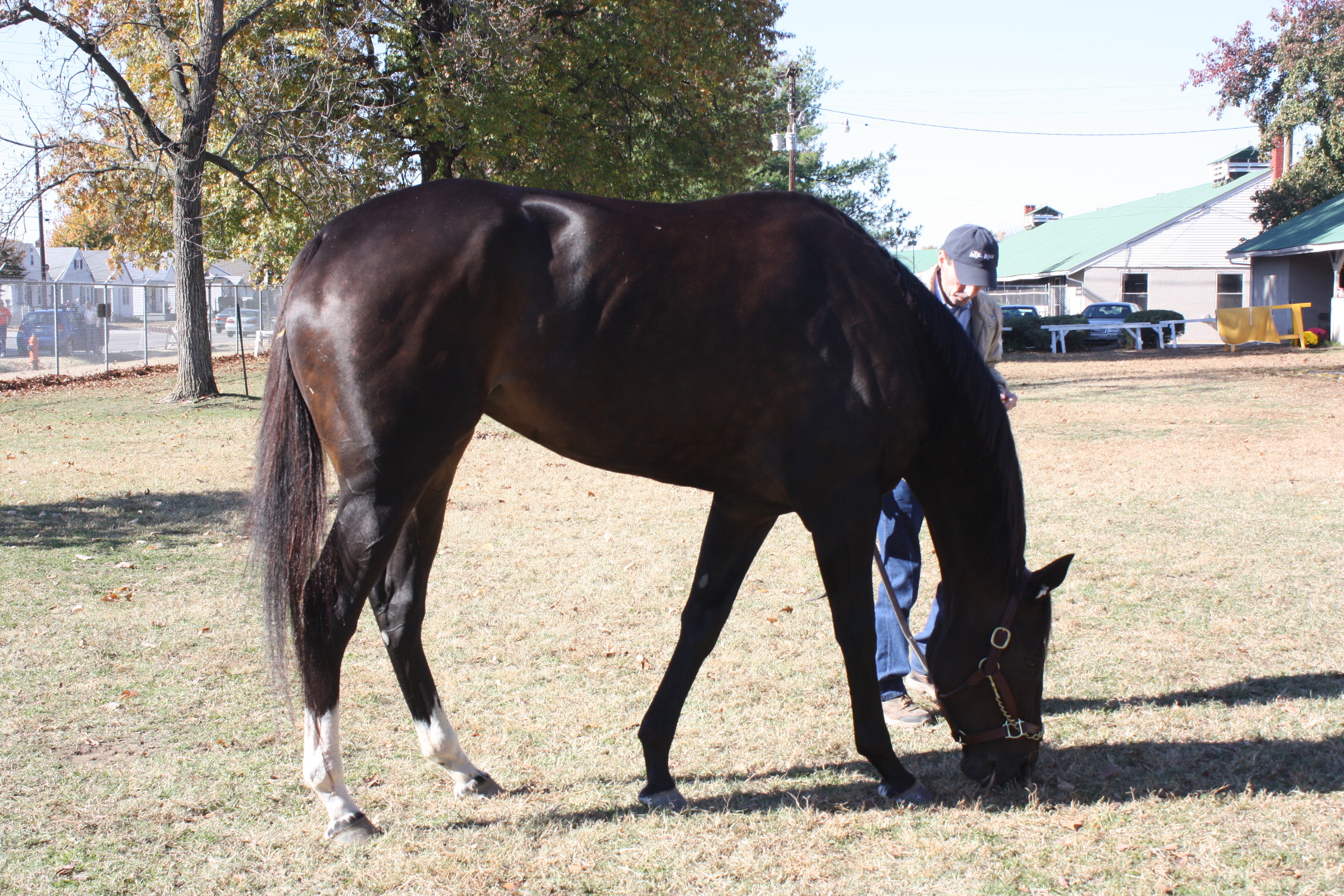
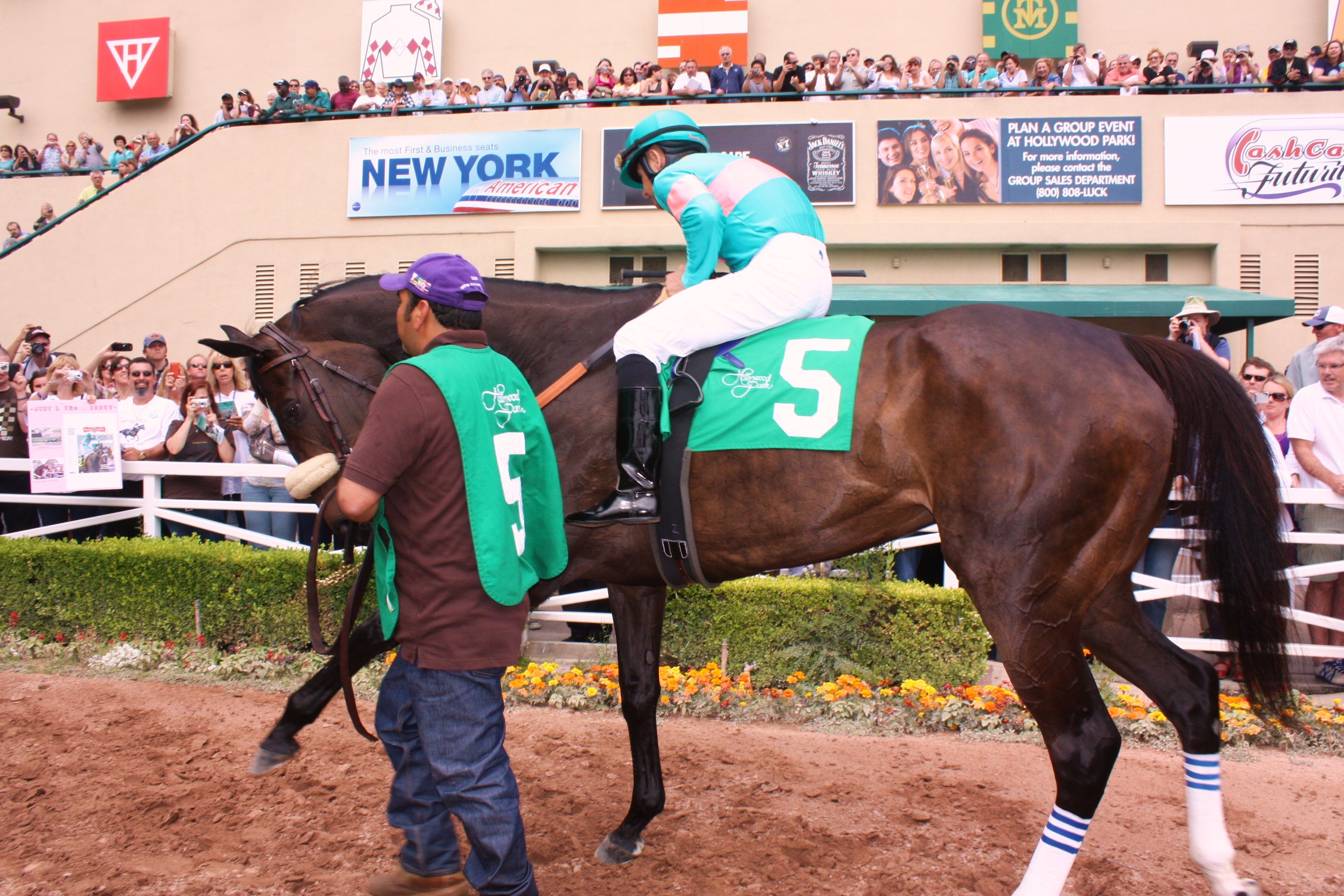 Zenyatta was the horse that took me on a journey that traveled in moments, rather than minutes on a race track. And, when she retired, I wondered if I would ever see a horse that could follow in her dizzying footsteps. I had just seen my once-in-a-lifetime racehorse. The possibility of her coming around twice didn’t seem plausible.
 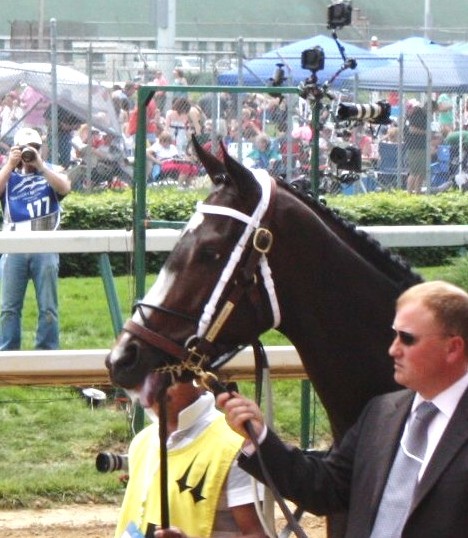 You saw it in Rachel Alexandra.
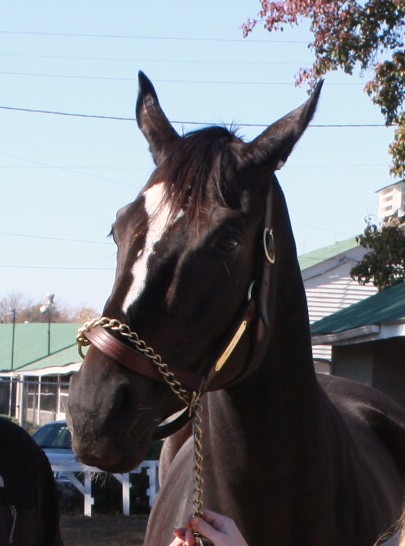 You saw it in Zenyatta.