September 14th, 2010 §
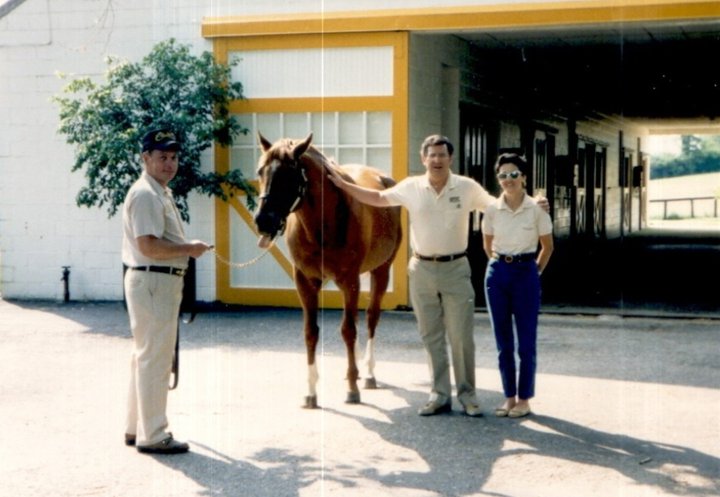
In 1969, an ordinary coin was tossed into the air that held three sides – winning, losing, and everything beyond the two polar outcomes.
The outcome of the coin toss was a testament to the principle that an extraordinary life doesn’t lend itself to pre-existing realities or expectations.
It is a life that surveys common notions and ideas, and ultimately, carves out a new definition for the world.
Secretariat did just that.
Before Secretariat ever set a hoof on this earth, he twirled a simple coin flip into a monumental loss to the seemingly straightforward winner.
Ogden Phipps had technically won the coin-toss that governed the existing Phipps-Chenery breeding arrangement when Secretariat was among the three foals to be picked between the parties. However, the win only allowed Phipps to receive first choice between two foals born in 1969. In losing the coin flip, Penny Chenery automatically received the second foal born in 1969, as well as the only Bold Ruler foal that would be born in 1970 – Secretariat.
Through a two-sided coin, Secretariat had already redefined “winning” before he even entered the world.
Yes, Secretariat did just that.
On January 20, 1972, Secretariat left his home and set out on an extraordinary journey in his life. He arrived at Hialeah Park in Florida and began training to be a race horse. It was no small endeavor.
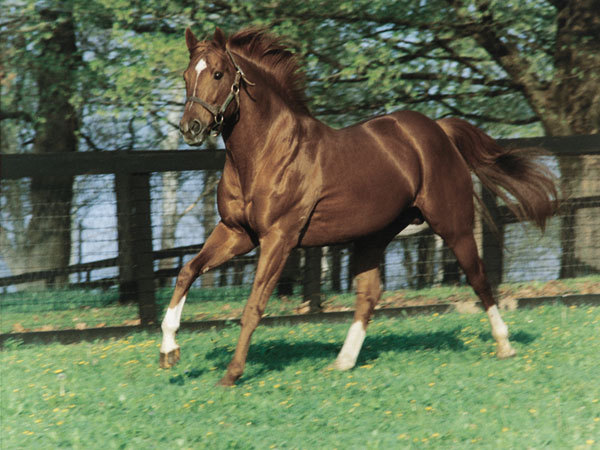
You see, before Secretariat became a “Superhorse,” he was just a red horse that garnered little respect. His groom, Eddie Sweat, stated “I didn’t think much of him when we first got him. I thought he was just a big clown. He was real clumsy and a bit on the wild side, you know.”
And, his trainer, Lucien Lauren, didn’t mince words when reporting to Chenery on Secretariat’s progress at the track. Lauren’s updates to Chenery were reportedly filled with remarks like, “I have to teach him how to run. He’s big, awkward, and doesn’t know what to do with himself.”
Yes, Secretariat seemed just like that.
Awkward.
As a two-year-old, Secretariat experienced the feeling of defeat. Lauren would report to Chenery, “He hasn’t shown me much.” And, in his first maiden race, Secretariat didn’t.
He lost.
Yes, Secretariat started out just like that.
He was defeated in his first race.
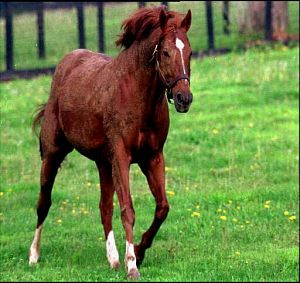 And then, Secretariat felt the feeling of victory.
In July of 1972, Secretariat won his first maiden race while finishing six-lengths in front of the rest of the field. Writer William Nack, reported, “Secretariat had raced the fastest six furlongs of his life,” at the time of his maiden victory.
Nack went on to comment, “Secretariat raced as if he had a future.”
Yes, Secretariat did it just like that.
He saw the future laid before his eyes.
In his third race, Secretariat had his first brush with fame.
While he was being saddled for an allowance race, a circle of people had collected at the paddock to view him. Among the crowd, was veteran turf writer, Charles Hatton.
When Hatton first laid eyes on Secretariat, he would later report, “You carry an ideal around in your head, and boy, I thought, ‘This is it.’ I never saw perfection before. I absolutely could not fault him in any way. And neither could the rest of them and that was the amazing thing about it. They body and the head and the eye and the general attitude. It was just incredible. I couldn’t believe my eyes, frankly.”
Yes, Secretariat was just like that.
A vision of perfection.
And, by the end of his two-year-old season, Secretariat was infamous.
Between July and November of 1972, Secretariat had officially won 7 of his 9 races and became the first two-year-old in history to be named “Horse of the Year.” His breeding rights were syndicated for a world-record total of 6,080,000 before he even began his three-year-old career.
Yes, Secretariat did all of that.
He broke records before he ever began his bid for the Triple Crown.
And then, Secretariat set out to become unstoppable in his three-year-old career.
When he entered the post parade for his first race as a three-year-old in the Bay Shore Stakes, Trainer Syd Walters reportedly told Lauren, “Good luck… You get one of those in a lifetime.”
And, when he won his three-year-old debut by 4 ½ lengths, Roger Lauren was said to exclaim from his box seats, “He’s too much horse! They can’t stop him! They can’t even stop him with a wall of horses!”
Yes, Secretariat was all of that.
He appeared to be unstoppable.
And then, Secretariat experienced doubt.
As Secretariat headed toward the Derby, the rumor mill swirled about Secretariat’s soundness after losing the Wood Memorial. Jimmy Snyder, an odds maker, reportedly told an Associated Press reporter that he had heard Lucien Lauren was icing one of Secretariat’s knees. Lauren was incensed when he heard the remark.
In response, Lauren offered to fly Snyder to Kentucky, allow Snyder to pick his own veterinarian, and personally view an examination of Secretariat’s knees to prove the soundness of the horse.
When Snyder didn’t accept the offer, Lauren reportedly went on to publicly bet Snyder a thousand dollars that Secretariat was sound. Snyder refused the bet.
Yes, Secretariat saw all that.
He bet on his own ability.
And, Secretariat experienced friendship.
During his racing years, Secretariat would reportedly wait for Eddie Sweat, his groom, every morning in his stall.
When Sweat approached, Ron Turcotte reported, “He’d grab the tip of Secretariat’s tongue to wish him ‘Good Morning.’ Before you knew it, every time Eddie passed his stall, the horse stuck out his tongue.”
You see, Sweat had a philosophy about being a friend to a racehorse that Secretariat seemed to admire in his groom. He reportedly told writer William Nack, “Only way horses win is to sit there and spend time with ’em. Love ’em. Talk to ’em. Get to know ’em. Now, that’s what you gotta do. You love ’em and they’ll love you too. People may call me crazy, but that’s the way it is.”
Secretariat didn’t find it crazy.
People noticed the beautiful bond that Sweat had formed with Secretariat. Ted McClain, Barn Foreman for Lucien Lauren, provided a testament on their relationship to writer Lawrence Scanlan, in saying “Eddie and that horse were like brothers. Eddie lived with him; traveled with him. They were joined at the hip.”
Yes, Secretariat treasured all of that.
He appreciated the value of a good friend.
 And then, Secretariat won the Kentucky Derby.
He had awoken at 4 o’clock in the morning and spent most of the day hanging around the back of his stall. According to Sweat, this was a good sign. He reportedly didn’t want to be bothered on race days.
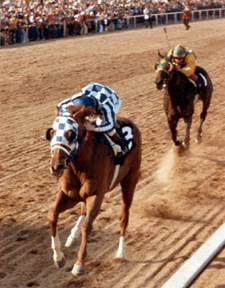
When the gates opened, Secretariat delivered a beautiful response to his critics. He ran every quarter mile faster than the preceding quarter. And, in the home stretch, he passed his final rival – Sham – to claim a 2 ½ length victory.
Secretariat set a new winning track record of 1:59 2/5 for the Kentucky Derby.
Yes, Secretariat did just that.
He holds the Kentucky Derby track record to this day.
And then, Secretariat set his gaze on the second jewel of the Triple Crown – The Preakness.
Once he broke from the gate, Secretariat did something astounding. As he headed into the first turn, Secretariat was dead last. Within seconds, Secretariat passed the entire field by the end of the first turn and drove through the rest of the race like a big red Bentley. Secretariat ultimately captured a 2 ½ length victory in the Preakness.
Ron Turcotte never used his whip during the race. Turcotte would later comment, “The pace was slow and he wanted to run… He was determined to run. I figured, if this is the way he wants to do it, I’ll let him have his way.”
Those who watched the race were in awe of Secretariat’s performance in the Preakness. Baltimore Handicapper, Clem Florio, reportedly shook his head in amazement and said, “Horses just don’t do what he did here today… They just don’t do that and win.”
Yes, Secretariat could do all that.
He could make a person marvel over his ability to accomplish a seemingly impossible feat.
And then, Secretariat performed pure magic in the Belmont.
Prior to the race, Secretariat had a fun secret that he wasn’t sharing. He was going to change the very definition of “Winning the Belmont.”
Penny Chenery noticed his mood. Prior to the race, she reportedly stated that Secretariat had come back from a workout wanting to play, “as if he thinks racing is a game we thought up for his amusement.”
And, Lauren also saw that Secretariat had something up his sleeve. The night before the Belmont, the trainer reportedly stated, “I think he’ll win by more than he’s ever won in his life.”
As Ron Turcotte talked with Lauren before the race, Lawrence Scanlan wrote that the trainer reportedly told the jockey, “Neither send the horse nor hold him back. Just let him roll. Use ton proper jugement. Use your own judgment and let your horse use his.”
And Secretariat had made a judgment call.
When he broke from the gates, Secretariat set out to deliver what is arguably one of the finest performances in horse racing. Secretariat and Sham stood alone from the first turn through the middle of the second turn in an apparent match race. When Sham faded, Secretariat stood all alone in an otherworldly moment.
Turcotte hadn’t used a whip and the rest of the field was nowhere to be found.
The jockey would later explain the moment in saying, “I heard Sham’s hooves disappear behind me… And then, there was nothing. All I could hear was Secretariat’s breathing and his hooves hitting the ground. It was very quiet.”
Turcotte hand-rode Secretariat to a 31-length victory. The horse had not only broken the Belmont track record, but also, he set the world dirt track record for running a mile and a half in 2:24 flat.
He was coronated the first Triple Crown Winner in 25 years.
And, Secretariat did it just like that.
He raced in the Belmont in a way no one had imagined to be possible.
Later that year, Secretariat retired from racing.
After a farewell ceremony at Aqueduct, Secretariat was flown to Lexington, Kentucky to begin his stud career at Claiborne Farm.
As Secretariat’s plane headed for the Bluegrass Airport, the airport tower reportedly called to the pilot, Dan Neff, “There’s more people out here to meet Secretariat than there was to greet the governor.” The pilot allegedly responded, “Well, he’s won more races than the governor.”
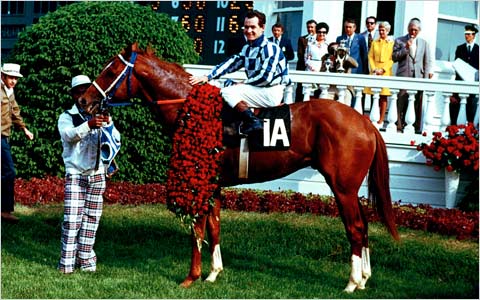
Secretariat was led down the ramp and a police escort followed his van to Claiborne Farm. He was placed in the stall of Bold Ruler, his father, to begin his own legacy as a sire.
 Eddie Sweat, his longtime groom, reportedly stared at Secretariat in his new stall and mourned the end of his racing career in saying, “Well, it’s all over now. They’ll never forget you, big fella. Never.”
And, Secretariat would later show that he didn’t forget Sweat’s friendship that existed throughout his racing days.
A year later, Sweat returned to Claiborne to pick up a foal for Lucien Lauren. Sweat told a reporter that he was in awe that Secretariat remembered him. “Secretariat, he came over and pulled on my shirt, just like he always did.”
Secretariat missed his racing friend.
And, Secretariat showed all that.
He walked right up to him and greeted him as if they were at a reunion.
And through the years, Secretariat would entertain many guests who came to visit him at Claiborne Farm.
In 1974, an Ohio-based reporter wrote that Secretariat played “pickup sticks” during their visit. Secretariat would hold a stick in his mouth and wait for the reporter to take it from him and give it back.
Secretariat also loved the camera eye. Retired Farm Manager John Sosby explained, “With a camera, he’d pose. He was showman, but he was kind. You could walk right up and get your picture taken with him.”
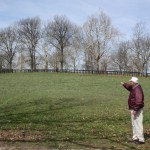 John Asher later told of how Secretariat posed for him when he went with a groom to see the horse in his paddock. “He was at the top of the hill. The groom I was with didn’t speak loudly. He just said, ‘Hey, Red.’” In a flash, Asher recalled Secretariat charging toward them, “BOOM! Here he comes. Flying down the hill. Absolutely flying down the hill. He gets to the fence at the end of the paddock where we were standing… Stops. And poses.”
Vickie Byrd told the story of how she visited Secretariat during a business trip. She reflected, “The big star in the barn was Secretariat. We were allowed to pet him and pose for pictures. It was like getting our picture taken with a movie star.” And, Secretariat left quite an impression on film. Byrd stated, “The funniest thing was after we got our pictures developed, we looked at one and saw that Secretariat had his tongue sticking out… Like a little kid!”
Secretariat also entertained children who came to visit the farm. Michele Valenta recalls that she visited Secretariat as a five-year-old girl, “I got to pet his nose and we turned around and walked away, looking at the other horses in the barn.” Valenta continued, “Shortly after, we heard clip-clop-clip-clop-clip-clop. We turned around to see Secretariat in all his red glory.” Valenta stated, “He was obviously perturbed when he was escorted back to this stall. Ears back, very annoyed.” She reflected, “He stole my heart then. He was so full of personality and I could see it, even at a young age.”
When Robin Porcelain visited Secretariat with her husband, Warren, he proved himself a showman. She stated, “Secretariat obviously knew how special he was and majestically pranced and strutted for us.”
Dorothy Henderson, wife of Secretariat’s final groom at Claiborne, Bobby Henderson, remembers him for his kind nature. “I’ve never seen a horse like him. He was just like a big pet. He had a big heart, it was almost as big as two hearts, and you could almost see that.”
And finally, John Sosby reminisces about Secretariat’s sharp intellect during his time at Claiborne Farm. Sosby joked, “He never learned to play checkers because we didn’t know how to teach him.”
Through racing and retirement, Secretariat proved himself to be everything.
And, his legacy remains intact.
Years after Secretariat left racing, Charles Hatton marveled at his perfection, “He’s the greatest horse that anyone has ever seen. Don’t let anyone kid you. He could do anything, and he could do it better than any horse I ever saw. No question about it in my mind.”
And it seems, Secretariat knew that.
Through his entire life, he demonstrated the beauty of being everything.
He was called awkward before he was deemed perfect.
He was defeated before he knew victory.
He was a celebrity and an icon.
He was a Triple Crown Winner.
He was a friend.
He was a father.
He was Secretariat.
And, Secretariat was everything.
» Read the rest of this entry «
August 3rd, 2010 §
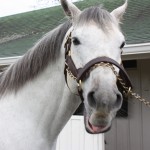
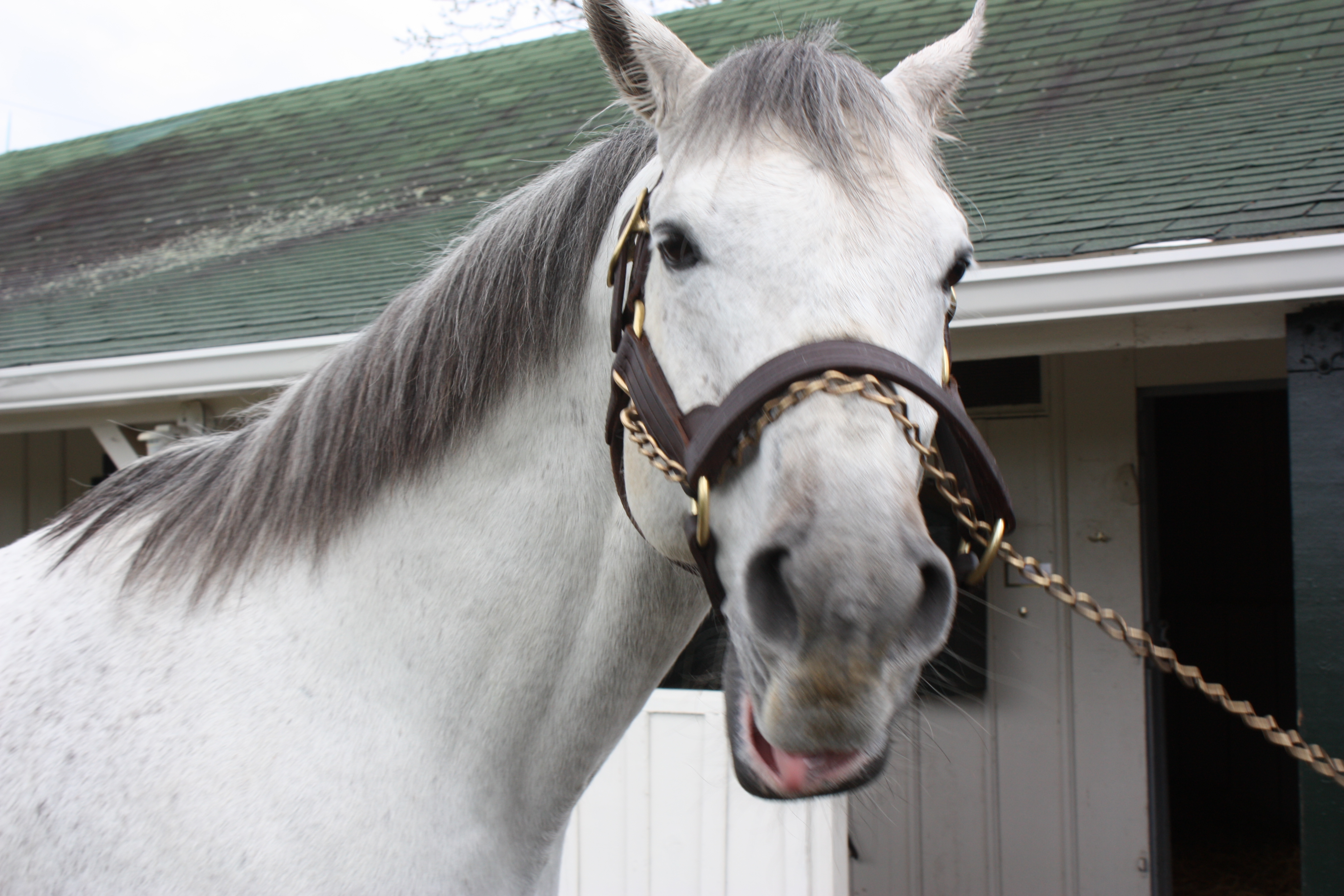
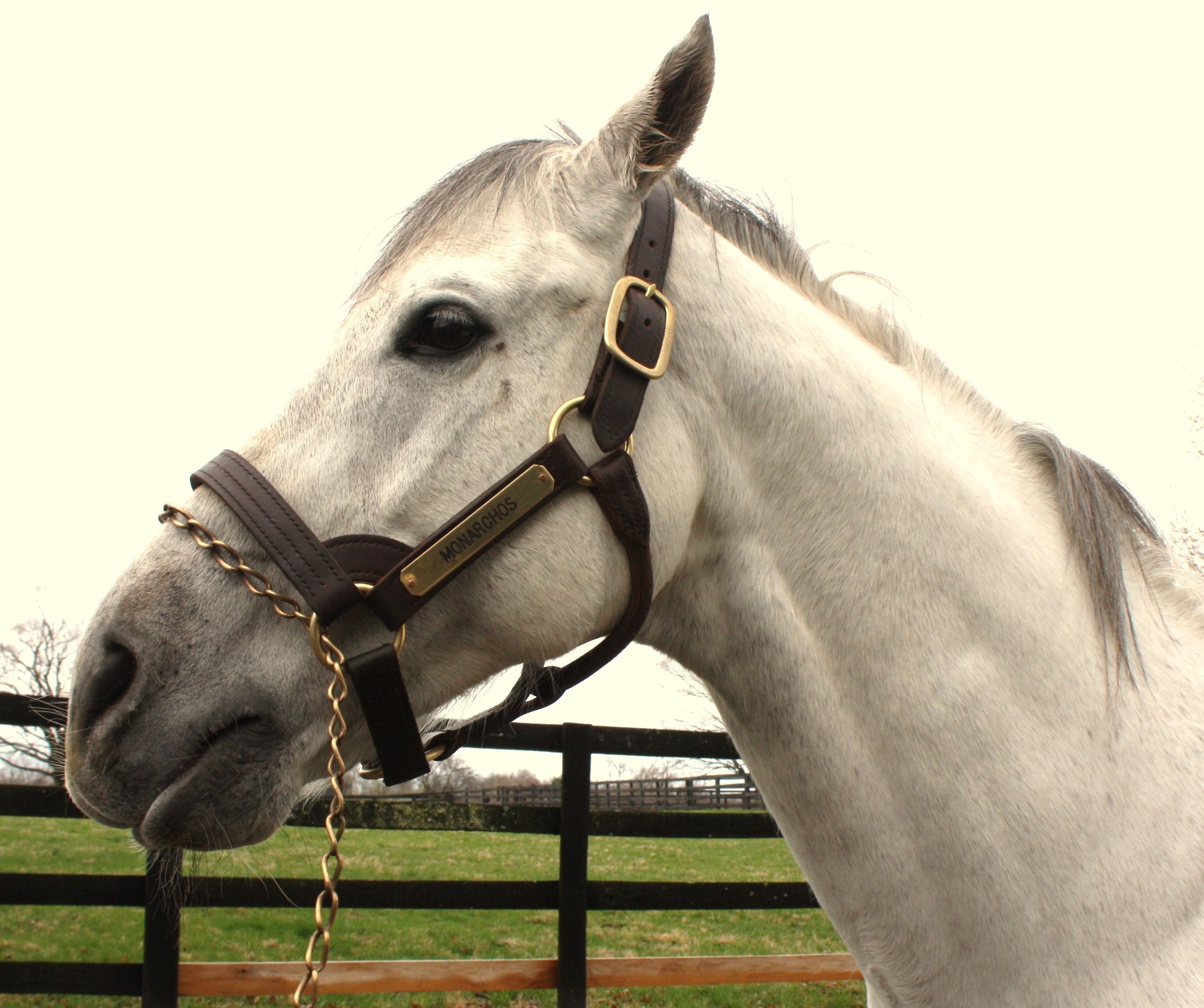
Earlier this year, I visited Kentucky to meet Monarchos.
I wanted to see the fastest living Kentucky Derby winner in the flesh.
It was just as simple as that.
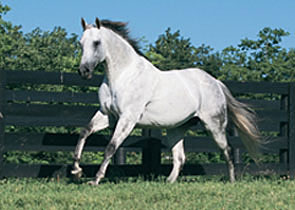
As the big gray champion emerged from his stable, Monarchos was well-mannered and kind. He allowed himself to be pet, stood patiently for photographs, and gently devoured my bag of carrots with delight.
I was thrilled about my visit with Monarchos.
He is a celebrity in my world.
And, it is always nice to find out that your celebrities are truly kind at heart.
When I returned home from Kentucky, I realized that Monarchos is just a gray horse to many of my friends outside the racing universe.
It was just as simple as that.
 “How was the Kentucky Derby?” I was asked by one friend.
I had to find a nice way to tell my friend that the Kentucky Derby hadn’t occurred yet.
When I mentioned that I visited Monarchos, another friend asked, “Is that your horse?”
I didn’t own a horse at that point. And, if I owned Monarchos, I certainly would have mentioned my Kentucky Derby winning horse in earlier conversations.
This was my first experience of trying to explain horse racing to non-enthusiasts.
Nothing was simple about it.
Shortly after these conversations, I invested in a horse. He’s a two-year-old in training and hasn’t been entered in any races.
However, my small investment created a giant misunderstanding among my non-racing enthusiast friends.
Zenyatta stood at the center of the confusion between the two worlds.
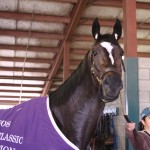 I talked about Zenyatta’s undefeated record at cocktail parties and my friends would ask how she is doing.
I kept saying, “She’s still undefeated!”
It was just as simple as that.
I thought we had arrived at a common ground.
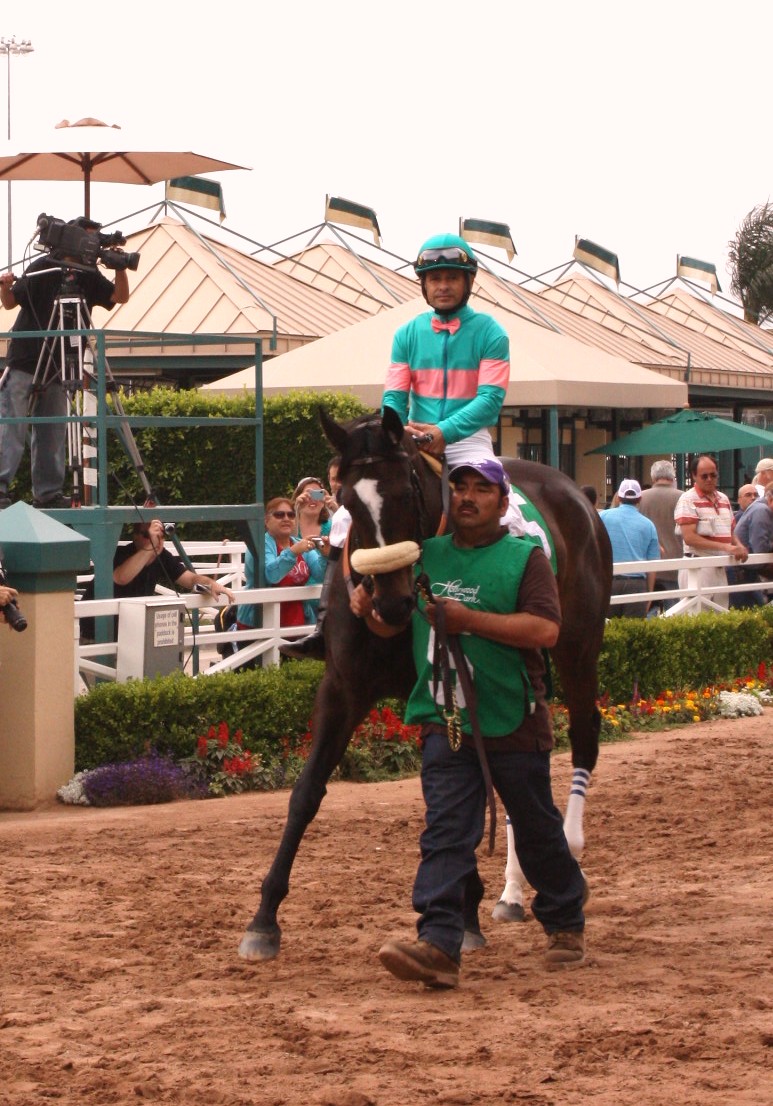
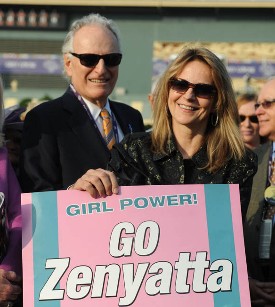
Then, I went to Hollywood Park to watch her claim her seventeenth career victory in the Vanity Handicap.
When I made a photo album of the trip, a friend asked “How did your horse do in her race?”
I replied, “I wish I owned Zenyatta.”
In my mind, it was just as simple as that.
However, when I had to explain in greater depth that I don’t own Zenyatta, the confusion on my friend’s face spoke volumes.
It was as if to say, “Why don’t you?”
I went on to explain that Zenyatta has made roughly $6 million in her career and has remained undefeated in seventeen consecutive races. She’s not for sale.
Then, I realized her earnings or record meant nothing to my friend.
In personal defeat, I explained to my friend that Jerry Moss, the co-founder of A & M records, owns Zenyatta.
When I mentioned that she was named after The Police album, “Zenyatta Mondatta,” I received immediate recognition.
“Oh, ‘Zenyatta Mondatta.’ That makes sense!”
It was just as simple as that.
But, was it? I’ve listened to that album many times and I’ve never heard Sting belt out any lyrics about Zenyatta’s racing career.
 In retrospect, the words “The Police” and “Zenyatta Mondatta” were the only parts of our conversation that resonated with my friend.
Since that moment, I’ve wondered how to discuss horse racing with the non-racing world.
There seems to be nothing simple about it.
As far as I can tell, non-racing enthuasists have gathered these gems from my conversations:
“There are some gray and brown horses that run fast. One dances pretty well. The Kentucky Derby is an important day. And, ‘Zenyatta Mondatta’ is a great album.”
It is just as simple as that.
So, after growing tired of giving explanations, I decided to just quietly enjoy going to the races.
And then, the two worlds unexpectedly met for a brief second in time.
As I was heading to the track on an ordinary day, a friend asked me, “Is there an important race today?”
I joked, “Yep. Secretariat is in a match race with Seattle Slew today.”
When she laughed, I realized my friend knew I had just told her a fairy tale.
However, I also realized she knew some Triple Crown winners.
I began to dream about the next Triple Crown season.
And wish… it was just simple as that.
June 1st, 2010 §
In her famous poem, One Art, Elizabeth Bishop begins by pondering “The Art of Losing” with the idea that some things are fated to be lost.
In the moment of loss, Bishop starts the poem with the notion that losing should not be viewed as a heartbreaking event.
In fact, she goes on to write that it should be practiced.
In my view, it is hard to point to many horses that practiced “The Art of Losing” with the same grace of Sham.
And, decades after Sham raced, there is a certain lingering sadness over Sham’s fate of being born at the wrong time – the year Secretariat was making his bid for the Triple Crown.
As Secretariat shattered records in his Triple Crown season, Sham stood in the shadows waging a beautiful racing performance.
He was a great horse in his own right.
And, in a sport where winning is nearly everything, Sham demonstrated that there is an “art” to losing.
As Sham entered the 1973 Kentucky Derby, the colt banged his head on the side of the starting gate, knocking out two of his teeth.
As he bled throughout the race, Sham never stopped chasing after Secretariat with his determination to win.
At the wire, Secretariat beat Sham by 2 ½ lengths – capturing the record time of 1:59 2/5 in the Kentucky Derby.
However, Sham also broke the Kentucky Derby record during his loss – finishing at a time of 1:59 4/5.
As Secretariat was draped in roses, Sham was guided toward his barn to cauterize the wounds to his two teeth.
Although Sham received no records or roses for his efforts, he stood a victor in ”The Art of Losing.”
Two weeks later, Sham set foot on the track in the Preakness.
As Secretariat began his graceful stride from last to first, Sham banged the rail on the clubhouse turn.
However, despite being rattled, Sham kept his eyes on his rival.
He raced onward to chase Secretariat to the finish line.
In the end, Secretariat beat Sham by 2 ½ lengths in the Preakness – the champion arguably breaking the record time for the race in his victory.
However, Sham didn’t stop in the face of an impossible rival.
As a master of “The Art of Losing,” Sham went back to his barn and prepared to challenge Secretariat in the longest race in North America.
And, when the day of the Belmont arrived, Sham demonstrated a powerful lesson in “The Art of Losing.”
When he entered the gates, Sham was soaking wet and nervous.
But, he didn’t back down.
Instead, Sham broke from the gates and challenged Secretariat to a virtual match race in the backstretch.
In the golden seconds that followed, Sham gave everything he had to challenge fate and beat his rival.
But, having been practiced at “The Art of Losing,” Sham found that fate isn’t subject to argument.
As Secretariat blasted forward to win by 31 lengths, Sham tired and fell back to finish dead last.
While Secretariat received a Triple Crown coronation, Sham was led back to the barn in defeat.
However, Sham proved himself a champion though his losses.
He poured his entire heart into trying to win.
And, quite possibly, Sham may have won the Triple Crown in a different field.
But, he was racing a giant that could not be matched.
After the Belmont, Sham never raced again. He retired to Spendthift Farm in July of 1973 and eventually moved to Walmac International.
On April 3, 1993, the nightwatchman discovered that Sham had passed away from an apparent heart attack in the early morning.
Upon examination, it was discovered that Sham had a heart that weighed eighteen pounds – roughly double the size of the average Thoroughbred.
There was only one known Thoroughbred heart larger than his on record in North America.
The heart of his lifelong rival – Secretariat.
In three single races, two amazing horses met their fate in 1973.
Thorough his victories, Secretariat set new records for the racing world to marvel over for countless decades.
And, through defeat, Sham delivered some of the most poetic moments in racing by practicing “The Art of Losing.”
May 8th, 2010 §
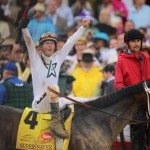
Jim Tyrrell www.horsephotos.com
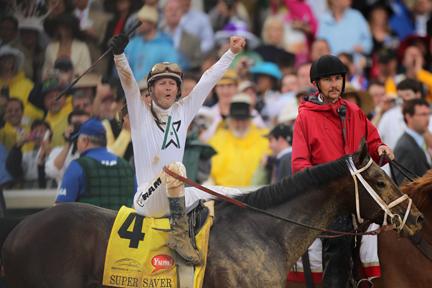
On Saturday, a mud-soaked colt trampled past the finish line at Churchill Downs into a Kentucky Derby victory.
In that golden second, Super Saver delivered the first Kentucky Derby victory to his ownership - WinStar Farm.
Todd Pletcher received the first Kentucky Derby victory in his training career.
Calvin Borel became the first jockey to win the Kentucky Derby three times in a four-year period.
As Borel headed to the winner’s circle, he shot out a bold statement that set fire to the wonder of racing enthuasists.
“We’re going to win the Triple Crown this year.”
In the magic dust of the moment, Borel spoke the words with such cool confidence that it seemed as if he had already made a reservation in the Belmont winner’s circle.
As the Preakness approaches, Borel’s prediction peaks the curiosity and arouses the hopes of many racing enthusiasts.

Doug Cauthen CEO of WinStar Farm
Racing fans have been dreaming of the next Triple Crown winner since Steve Cauthen rode into the history books with Affirmed in 1978.
Three decades later, Steve Cauthen’s younger brother holds the potential as President and CEO of WinStar Farm to deliver the twelfth Triple Crown winner in history with Super Saver.
Recently, I spoke with Doug Cauthen about Super Saver’s Kentucky Derby victory and the quest for the Triple Crown.
JW: Super Saver was the first horse owned and bred by WinStar Farm to win the Kentucky Derby. How does it feel to win your first Derby?
DC: It is truly hard to describe.
There was overwhelming joy, pride and thankfulness that Super Saver was able to do it.
To see so many people – from the owners, managers, grooms, maintenance crew, basically everybody – to get so much happiness and pride out of it is a real positive and satisfying thing.
I felt like we all should thank God for the victory.
JW: Your older brother, Hall of Fame Jockey Steve Cauthen, rode Affirmed to win the last Triple Crown in 1978. Do you think Super Saver could win the Triple Crown for your farm?
DC: I hope he can – I like Calvin’s prediction.
It was his Steve’s 50th Birthday on Derby day, so I felt like we had a little bit of good ‘mojo’ going there - that maybe something could happen. When the clouds parted and the sun came out right before the race, I had a calm and peaceful feeling.
I’m not quite as aggressive as Calvin with my predictions, but I’m on his side.
JW: Super Saver is by Maria’s Mon – sire of the fastest living Kentucky Derby Winner, Monarchos. Was this a factor in your breeding decision?
DC: We were very fortunate. We got Super Saver as part of a deal.
We bought Super Saver’s mother, Supercharger, when she was carrying Super Saver at the 2006 Keeneland November Sale. We were very blessed to have Super Saver as part of the purchasing package.
Supercharger’s got a beautiful pedigree – it’s one of the best pedigrees in the Stud Book. Supercharger is a full sister to a mare that we already had, called “She’s a Winner,” who is the dam of Bluegrass Cat. He is a multiple Grade I winner that we own and was second in the Kentucky Derby.
I hope that Super Saver can continue forward. He’s a beautiful horse – a balanced horse – with a great pedigree.
His pedigree is from one of the royal pedigrees in the Stud Book. With all the horses that are popping out of it that are so good - currently and in the last thirty years – it’s just been a magnificent family.
Being by Maria’s Mon, he’s going to offer a lot of outcross for breeders as well. It is a real positive for the breed.
JW: What do you see at the strengths in Super Saver as a racehorse?
DC: He’s got tactical speed and is very agile.
He can make his own race. He can be on the lead or sit back behind.
He’s got a tremendous amount of determination – he’s a very gutsy horse.
You can see that in his earlier races this year and during his races last year as a two-year-old.
It’s a combination that’s not only good for a racehorse, but for future stallions, so we are really excited about that.
JW: What is the general temperament of Super Saver?
DC: When he was on the farm being raised, he was a popular horse with everybody. He always had a forward attitude and a positive temperament.
JW: How did your farm make the determination to have Super Saver trained by Todd Pletcher and chose Calvin Borel as a rider?
DC: I think Elliott Walden (Racing Manager at WinStar Farm) deserves a lot of credit on that choice.
Todd is one of our primary trainers and gets a lot of horses that we think have potential. The fact that he trained Super Saver’s cousin, Bluegrass Cat, may have factored into it a little also. But, it clearly was a good choice!
We thought Super Saver was one of our early potential runners. Elliott said that we should give him to Todd. That’s what we did.
With Calvin, he was the best available rider when he came to the Kentucky Jockey Club race. Elliott sought him out – or encouraged Todd to seek him out – and the rest is history.
Super Saver won the Jockey Club last year as a two-year-old real impressively. He broke the stakes record, which was over a hundred-year-old record.
Calvin just gets along with Super Saver well. It is great to have him on board.
JW: Did Calvin Borel hold any special allure to your farm as a jockey in light of his recent Kentucky Derby victories?
DC: There is no doubt that he is an exceptional rider anywhere.
At Churchill Downs, he has that extra “Calvin Factor,” as I like to call it.
He really has a high level of confidence and horses run for him. He deserves credit at any race track.
He’s certainly got some good current form and it would be crazy not to take advantage of that if you can get him on your horse.
JW: How do you feel about owning the horse that delivered Todd Pletcher his first Kentucky Derby victory?
DC: For the farm, I think it was a really big feeling of satisfaction and pride in Todd. He was one of the first guys that we gave horses to when we divided the horses up between trainers.
He’s one of the best trainers in the country and will go down as one of the best trainers in history.
It seems like the press was focusing on his [Kentucky Derby] record unduly. It was great to see him win it and even greater to see his humility in taking the win.
He is a class act.
It is always fun to see people like that succeed.
JW: How did your farm celebrate your first Kentucky Derby victory?
DC: We’ve had quite a few celebrations.
We try to do something before the Derby because you obviously can’t expect to win – and we don’t. We just go there with the best horses we can and do the best we can.
On Thursday, we had a farm picnic for all of the staff. We had games, piñatas and plenty of food.
On Friday, we had another pre-Derby gathering with all the managers with the owners. It was a very nice event.
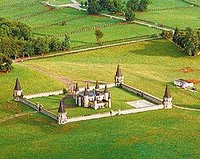
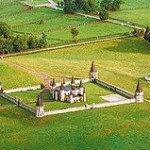
After the victory, some neighbors at Castle Post kindly invited us to celebrate with a hundred of our favorite friends. They hosted a wonderful gathering. It was really kind of Mr. Post.
It was also a great pleasure to see the inside of the Castle. We use it as a landmark to tell people how to get to WinStar quite often. It was great to see it and it was quite a nice spot.
JW: Where is the Rose Garland?
DC: It is currently getting preserved.
Hopefully, it will reside in the office sometime soon.
The Saturday Post would like to thank Doug Cauthen for his interview. We also appreciate the image of Super Saver provided by www.horsephotos.com. To view the photos from the Kentucky Derby at horsephotos.com, please click here.
April 26th, 2010 §
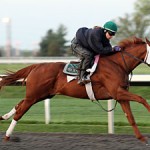
Throughout history, no female trainer has ever won the Kentucky Derby.
Only a handful of female trainers have ever tried their luck in the race.
Shannon Ritter is setting out to challenge those odds in her first start as a trainer in the upcoming Kentucky Derby.
Prior to becoming a trainer, Ritter worked as an exercise rider and jockey. Five years ago, she began training horses on her own after learning from Elliott Walden, racing manager at WinStar Farm.
In February, Ritter raced Endorsement in a maiden race at Oaklawn Park. The race was on the undercard of the Grade III $250,000 Southwest Stakes – which Conveyance won.
In an impressive 2 ½ length victory, Endorsement broke his maiden on his third career start.
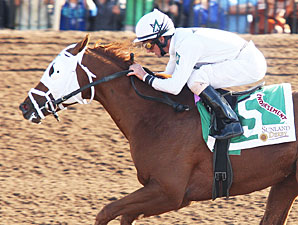
After his maiden win, Ritter entered Endorsement in the $800,000 Grade III Sunland Derby. In that race, Conveyance was the favorite at odds of 3-5.
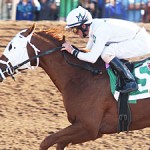 In an authoritative three-length victory, Endorsement won the Sunland Derby.
The win secured Endorsement a spot in the upcoming Kentucky Derby.
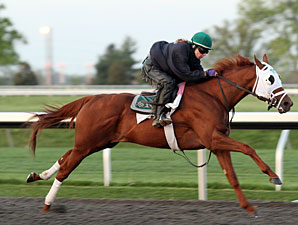
As Ritter prepares the horse for the race, she remains actively involved in his training. On April 17, Endorsement worked five furlongs at Keeneland in 1:01.60.
During the workout, Ritter rode the horse herself.
When asked who would work him leading into the Kentucky Derby, Ritter explained, “I haven’t decided yet who will work him, but it will probably be me.”
Clearly, Ritter isn’t afraid of hard work and tough odds.
She takes them with stride.
In a recent interview, Ritter talked about her career in the racing industry and her first start as a trainer in the Kentucky Derby with Endorsement.
JW: What first inspired you to work with horses in life?
SR: I think I was just born with it in my blood. I grew up in Minnesota, where there weren’t any race horses. I had just seen them on TV.
I always loved horses as a little girl. It was just something inside me.
When I graduated high school, I decided to leave Minnesota and pursue my dream of being with race horses.
JW: How does it feel for you to go to the Kentucky Derby for your first time in your training career?
SR: It’s every trainers dream. It’s such a prestigious race in the racing industry. Every trainer has the dream of having a horse in the Derby, as well as winning it.
It’s been real exciting. We’re looking forward to Saturday and all the excitement of Derby day.
JW: If you were to win the Kentucky Derby, you would be the first female trainer in history to win the race. How do you feel about having the opportunity to make history?
SR: I feel really good. It would be amazing to make that kind of history as a female in the racing world. Not only for me - but for all females.
JW: You have worked as an exercise rider and jockey. What inspired you to become a trainer?
SR: After I quit riding, I became an assistant trainer for Elliot Wallace. I’m the type of person who is always challenging myself to move forward and try different things.
As an assistant trainer, you’re basically a trainer without having the complete responsibility and making all of your own decisions. So, I just wanted to go ahead and try it and see how it went.
JW: You just rode Endorsement in a workout on April 17. Do gain any special understanding of your horse by being the rider during workouts?
SR: No doubt about it. I have experience riding from being a jockey.
Sometimes as a rider, you can feel things that you might not see in the eye while watching a horse.
For me, the breeze is important, but the gallop out is just as important. The way a horse gallops out can give you an indication of how well he is doing.
[As the rider,] I have the opportunity to make that decision – to let the horse ease up on his own or let him gallop out if they are doing extremely well. If they don’t need to gallop out, I can make that choice as well.
JW: What strengths do you see in Endorsement?
SR: One of his strengths is that he’s a pretty cool customer. He handles everything well and he doesn’t let things upset him too much.
He knows how to rest when he needs to rest. He eats well. He’s been traveling well. It didn’t seem to upset him traveling when we went to Sunland Park.
I think that’s going to be his biggest asset. I think he’ll handle all the hoopla well on Derby day.
JW: Does Endorsement have any favorite items or things?
SR: He likes both peppermints and apples. He likes anything – he’s a pretty good eater.
He’s been devouring peppermints lately.
JW: What is the general temperament of Endorsement?
SR: He’s pretty professional and nice to be around.
He likes to have friends. He’ll nicker a little bit at some of the other horses. It’s not bad – he just wants to be friends.
JW: What makes the Kentucky Derby a special race for you?
SR: For me, my dream was to ride in the Kentucky Derby since I was a rider. I loved to ride. I still love to ride.
After not being able to do that, this has been pretty special to train a horse for the Derby. To train a horse for Winstar Farm and go to the Kentucky Derby for them just makes it really special.
April 23rd, 2010 §
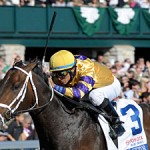
In two weeks, Trainer Mike Maker is going to the Kentucky Derby for the first time in his career with two contenders - Stately Victor and Dean’s Kitten.
As the horses approach the starting gate, Maker has demonstrated the ability to upset the odds and draw hidden talent from a horse.
Although Maker is a new face at the Kentucky Derby, he has maintained his own racing stable since 2003 and spent his life around race horses.
Growing up in Michigan, Maker’s father was a trainer and the family raced horses at Hazel Park and Detroit Race Course.
At age thirteen, he purchased his first horse with money he had saved from delivering newspapers and hot walking horses at the track. When the horse won its’ first start, Maker found his fate in life.
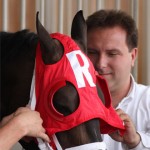 From his first horse at age thirteen, Maker has maintained his dream of winning the Kentucky Derby. With two contenders in the gate, he might beat the hardest odds in history.
However, if his history indicates anything, it shows that Maker isn’t afraid to put his faith in a long shot.
They have rewarded him plenty.
Stately Victor: The Longest Odds in the Bluegrass.
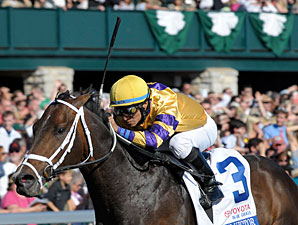
When Stately Victor set foot on the track at Keeneland to run the Bluegrass Stakes, many bettors had written him off as being outclassed after glancing at his past performance record.
In seven career starts, his sole win came in his maiden victory. The racing program descriptors for his remaining races fell along the lines of “tired” and “no threat.”
He certainly didn’t garner much fan fare at the gate.
His co-owners, Jack and Tom Conway, barely held a poker face for Stately Victor. When Jack learned that his father, Tom, had entered the horse in the race, he reportedly responded, “Really?”
His racing record didn’t exactly harvest enthusiasm.
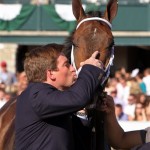 To the surprise of many, Stately Victor had his own agenda that day.
As he blazed down the stretch in an authoritative 4 ¼ length victory, the horse became the biggest long shot to win the Bluegrass in its’ 86-year history.
In the same moment, Stately Victor claimed his spot in the Kentucky Derby.
After the Bluegrass, Maker responded to the upset with a testament to his faith in Stately Victor. “After a while, when a horse underachieves, you kinda forget about him. But I never quit believing in this horse.”
Dean’s Kitten: The Other Side of the Gate.
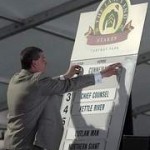 On March 27, Dean’s Kitten stepped onto the track at Turfway Park with odds of 6-1 in the Lane’s End Stakes. As he paraded toward the gates, the betting public focused much of its’ attention on Connemara, the 8-5 favorite, and Northern Giant, the second choice in the race.
Like Stately Victor, Dean’s Kitten didn’t arouse strong enthusiasm as he marched past the stands.
The owners, Ken and Sarah Ramsey, were across the world for the Dubai World Cup when Dean’s Kitten entered the gates. In Dubai, the Ramseys were watching their horse, Furthest Land, compete in the 14-horse field.
The horse ultimately finished dead last.
In their place, the Ramseys sent their son and daughter-in-law, Jeff and Patricia Ramsey, to watch Dean’s Kitten ride in the Lane End Stakes.
Prior to the Lane’s End Stakes, Dean’s Kitten had made ten career starts and produced only two wins – including his maiden victory.
Similar to Stately Victor, Dean’s Kitten’s racing record was checkered with such descriptors as “no menace” and “no factor.”
When the gates sprung open in the Lane’s End, Dean’s Kitten covered the 1 1/8 mile distance in 1:50:59. With Northern Giant and Connemara trailing respectively in second and third place, Dean’s Kitten won the race in an impressive 2 ½ length victory.
As Dean’s Kitten headed toward the winner’s circle, Ken and Sarah Ramsey had just learned that their home-bred horse had secured a position in the Kentucky Derby.
This was no small moment.
Despite winning more races than any other owners at Churchill Downs, Ken Ramsey has never had a horse win the Kentucky Derby. Ramsey has been said to joke that he wants to “get into that other winner’s circle,” referring to the sacred ground at Churchill Downs that is reserved solely for the Derby winner.
Standing in the winner’s circle at Turfway Park with Dean’s Kitten, Jeff and Sarah Ramsey received a cell phone call from Ken Ramsey in Dubai.
When Sarah picked up, she responded, “We’re busy taking a photo!”
As the trophy was presented, two couples – in two different continents - smiled with excitement.
In a post-race interview, Maker explained, “We pointed to this race in it paid off for us.”
It sure did.
With two horses starting in the Kentucky Derby, Maker’s faith in the talent of his horses has paid him much success.
In a recent interview, Maker answered my questions about the two Kentucky Derby contenders as they head toward the starting gates.
JW: How does it feel to go the Kentucky Derby for the first time in your training career?
MM: I feel very blessed to make it to the Kentucky Derby. It’s also a feeling of accomplishment because each horse earned their way. It has been a lifelong dream to win the Kentucky Derby.
JW: You currently have two horses expected to start in the Kentucky Derby. Did you ever imagine you would have two starters in your first trip to the Kentucky Derby?
MM: I have imagined having more starters, actually. As a child, I kinda dreamt of having the whole field.
JW: In regard to Dean’s Kitten, what do you see as the strengths in this horse?
MM: Dean’s Kitten’s greatest strength will be his ability to handle a 1 ¼ mile race. He has no distance limitations.
JW: How would you describe the general temperament of Dean’s Kitten?
MM: Dean’s Kitten is a very laid back horse. He’d make a lazy work horse.
JW: In regard to Stately Victor, what do you see as the strengths in this horse?
MM: Stately Victor is just like a pretty girl - when he goes by, you can’t help but look. He always trains impressively and has a great big stride.
JW: How would you describe the general temperament of Stately Victor?
MM: He can be a bit of a show off when he’s playing - jumping on his hind legs. But, when it comes down to race time, he is a complete gentleman.
JW: From a young age, you dreamed of winning the Kentucky Derby. What makes the Kentucky Derby so special for you?
MM: The Derby is a special race for me because of all the history.
No matter where I go, if someone asks what I do, they ask if I have won the Kentucky Derby or ran in it. It’s their way of relating to what I do.
It is also special because I grew up watching it and was a horseracing fan as a child.
April 18th, 2010 §
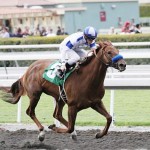
Every now and then, you find a story in this sport that rivals the greatest of fairy tales.
To me, the journey of Sidney’s Candy going to the Kentucky Derby is among those stories.
The story began several decades ago, when a married couple set out to win the Kentucky Derby. After purchasing several horses and failing in their Derby efforts, the couple decided to breed their own Thoroughbreds. Before their first home-bred colt entered the gates on Derby day, the husband tragically died of cancer. He left behind one wish in life – winning the Kentucky Derby.
In the same race, a 19-year-old jockey was scheduled to ride the morning line favorite in his first outing at the event. Before he was given a chance to enter the gates, the horse was scratched that morning due to injury. He left Churchill Downs with one dream – to ride in the Kentucky Derby.
On the same day, the couple raced their first home-bred colt in the Kentucky Derby. After placing eleventh in the race, the horse left behind one hope – a two-year-old colt that held a chance to win the Kentucky Derby.
Roughly nine months later, the same two-year-old colt set foot on the track at Santa Anita to make his three-year-old debut.
The colt’s owner was the Sid and Jenny Craig Trust.
The colt’s jockey was twenty-year-old Joe Talamo.
The colt was Sidney’s Candy – the namesake to the man who died with the dream of winning the Kentucky Derby.
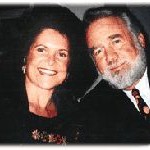 “Once Upon a Time:” Racehorse Owners Sidney and Jenny Craig Chase the Dream.
The name, “Jenny Craig,” is usually associated with the empire surrounding the weight-loss maven.
However, “Jenny Craig” is more than a brand. She is a woman with humble beginnings, a hard-work ethic, and a history of owning champion racehorses.
During her youth, Jenny Craig’s confidence and drive took her on a journey that would not only lead to her ultimate career success, but also, to meeting her husband – Sid Craig.
In 1970, Sid Craig ran an ad in the New Orleans newspapers to staff his Body Contour Figure Salons. Jenny answered the ad and worked for Sid Craig for a number of years – opening and supervising three centers, as well as traveling to various salon locations throughout the United States.
After forming a friendship through their business relationship, the pair eventually married in Las Vegas in 1979.
In regard to their relationship, Jenny Craig wrote in her 2004 autobiography:
I’ve learned everyone has a soul mate somewhere, and if we’re lucky enough to find them to share our life with, then we are more fortunate than most. I thank God every day for allowing me to find mine. Sid has enriched my life in more ways than I can count.
Throughout nearly three decades of marriage, Sid and Jenny Craig maintained a mutual passion and devotion for racing, which led to their ownership of several horses.
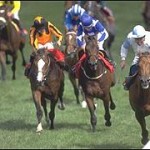 One of the most infamous purchases was Dr. Devious. Jenny Craig had purchased the horse as a $2.5 million birthday gift to her husband when he turned 60 in 1992. Although Dr. Devious ran in the 1992 Kentucky Derby, he failed to produce a victory for the Craigs.
As part of the same gift, Jenny Craig purchased a filly named Crownette for $190,000. Although Crownette did not achieve the same success as Dr. Devious had on the track, she proved her value many years later in a union with Candy Ride.
Candy Ride, who was unbeaten in six career starts, was purchased by the Craigs after he won his first three races in Argentina. He was 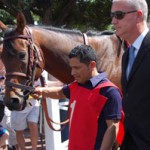 ultimately bred to Crownette and produced 2009 Kentucky Derby contender, Chocolate Candy. Despite Chocolate Candy’s failure to capture a Derby victory, the race demonstrated Candy Ride’s ability as a sire to produce a colt that could garner a highly-coveted spot in the Derby field.
In a sad twist, Sid Craig would not live to see Chocolate Candy enter the gates in the Kentucky Derby.
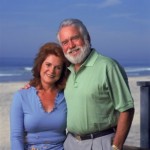 After a fairy tale life, he died with one regret: He never had a horse win the Kentucky Derby. Jenny Craig explained, “Near the end of Sid’s illness…, I asked him if there was anything he wished that he had achieved, and he said, ‘Yes. Winning the Kentucky Derby.’ It really was the ultimate dream for him.” She went on to explain, “We thought as one – and I shared all his dreams.”
Through the work of Jenny Craig, her husband’s dream of winning the Kentucky Derby has been carried on past his lifetime.
Prior to his death, the Craigs bred Candy Ride with a broodmare named Fair Exchange.
The union produced a colt. In honor of the late Sid Craig, the colt was named “Sidney’s Candy.”
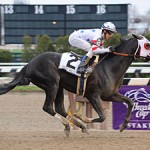 The Horseless Rider: The Empty Gate in the 2009 Kentucky Derby.
In 2009, Jockey Joe Talamo, had his own dream – to ride his first horse in the Kentucky Derby.
At age 19, Talamo was set to ride morning line favorite, I Want Revenge in the Kentucky Derby. After starting his career as a jockey at Louisiana Downs in 2006, I Want Revenge was his first Derby mount. He was among a handful of riders who had reached the Kentucky Derby at such an early point in their career.
On the morning of the Kentucky Derby, I Want Revenge was scratched. The decision was made when a soft tissue injury was discovered in the left front ankle of the horse on the day of the race. The trainer for I Want Revenge, Jeff Mullins, stated, “Your biggest dream is to get here. Your biggest nightmare is to get here and scratch.”
As a result of the scratch, Talamo’s dreams of getting to ride a horse in the Kentucky Derby disappeared in a moment.
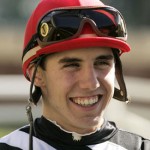 The Second Shot: Sidney’s Candy Bullets Toward the Roses.
Roughly three months after his horse scratched at the Kentucky Derby, Joe Talamo began riding Sidney’s Candy.
At the time, the horse was trying to break his maiden.
After a relatively average two-year-old season, Sidney’s Candy pointed to Santa Anita for his three-year-old debut.
On February 15, Joe Talamo entered the gates at the San Vincente Stakes aboard Sidney’s Candy as the colt made his debut. In a breathtaking finish, Sidney’s Candy won the San Vincente Stakes with a 4 ¼ length victory.
In the wake of his impressive three-year-old debut, Sidney’s Candy was entered in the San Felipe Stakes on March 13. When Talamo shot out of the gates aboard the horse, the colt ran in front throughout the entire race. As he claimed a second consecutive victory, Sidney’s Candy cemented himself as a legitimate contender for the Kentucky Derby.
On April 3, Sidney’s Candy entered the Santa Anita Derby with a field of top-notch rivals in the race. With Talamo again as his rider, Sidney’s Candy ran ahead of the pack - delivering an impressive 4 ½ length victory.
With Talamo aboard, Sidney’s Candy heads into the Kentucky Derby. In an interview following the Santa Anita Derby, Talamo stated:
To have a horse in the Kentucky Derby, any kind of horse, is a tremendous feat. I feel very honored and blessed just to make it back this year, after what happened last year.
We’ll see how good he is in the Derby. But, the way he handled himself today was unbelievable. He relaxes so well and he does things three-year-olds don’t do.
But he does it.
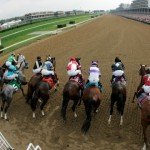 Post Time: The Kentucky Derby.
As twenty of the greatest three-year-old horses in our nation approach the gates for the Kentucky Derby, the actions of the athletes and their connections are perhaps the strongest testament to the beauty of this sport.
One horse can deliver a dream to so many people.
One person can spend a lifetime inside the dream.
One race can make a dream come true.
April 13th, 2010 §
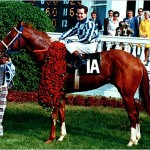
“Secretariat” is a name often spoken as a sacred word.
After spending years marveling over Secretariat’s spectacular racing achievements, I became curious about his lifestyle once he retired from racing.
Upon making several calls to find someone with first-hand experience with the legendary horse, everyone pointed to one man: John Sosby.
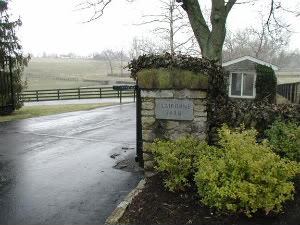
A few weeks later, I entered the gates of Claiborne Farm to meet John Sosby. Sosby was General Manager of Claiborne Farm from 1975 until he retired in 2006. 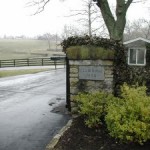
As we walked along the paths of Claiborne Farm, Sosby, whose father was a groom for broodmares and foals, explained that he lived at Claiborne since he was a three-year-old child.
Through observing his father’s work, Sosby learned to be gentle with horses, while exercising patience and control.
The lessons from his childhood eventually led to his own career at Claiborne Farm. In 1964, Sosby became supervisor of the yearlings at the farm.
In regard to Secretariat’s initial arrival at Claiborne, Sosby remarked, “I was still in charge of breaking yearlings, which I thought was the best job here.”
However, Sosby soon earned a promotion to General Manager in 1975. In the years to follow, his daily life became interwoven with the legendary presence of Secretariat.
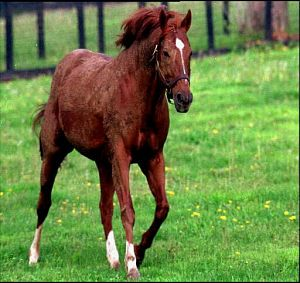 The Grand Entrance: Big Red Arrives at Claiborne Farm.
As with his career, Secretariat’s arrival to Claiborne Farm was no small event.
When he retired from racing, Secretariat made a farewell appearance for roughly 30,000 fans at Aqueduct race track. At the time, the date had been set for him to be shipped to Kentucky, but it remained a secret to the public. Sosby explained:
After the parade for the general public, a plane flew him and Riva Ridge to Bluegrass Field, across from Keeneland. Two vans were waiting, along with an escort from the Paris and Lexington Police.
It was one of those situations where you knew he was coming to Claiborne, but the general public didn’t know exactly what time, so that we could keep the crowd down.
[At Claiborne,] we had security. When they backed down into the loading chute here, we were waiting. Seth [Hancock] did not want a bunch of fan fare. He just put the guard at the gate. If you weren’t on the list of whomever Seth had invited in, you weren’t coming in.
Sosby then recalled the moment that Secretariat first set foot on the grounds of Claiborne Farm.
When they unloaded him, they turned him around. As they led him out, I can remember him looking at the barn and his new surroundings.
He was a beautiful animal. He walked with pride. He had something about him. And, somehow or another, he knew it.
Sosby reflected, “He was The Man.”
Perhaps, they both knew it.
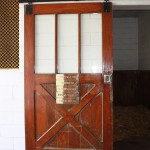 The Camera Eye: Secretariat’s Presence at Claiborne Farm.
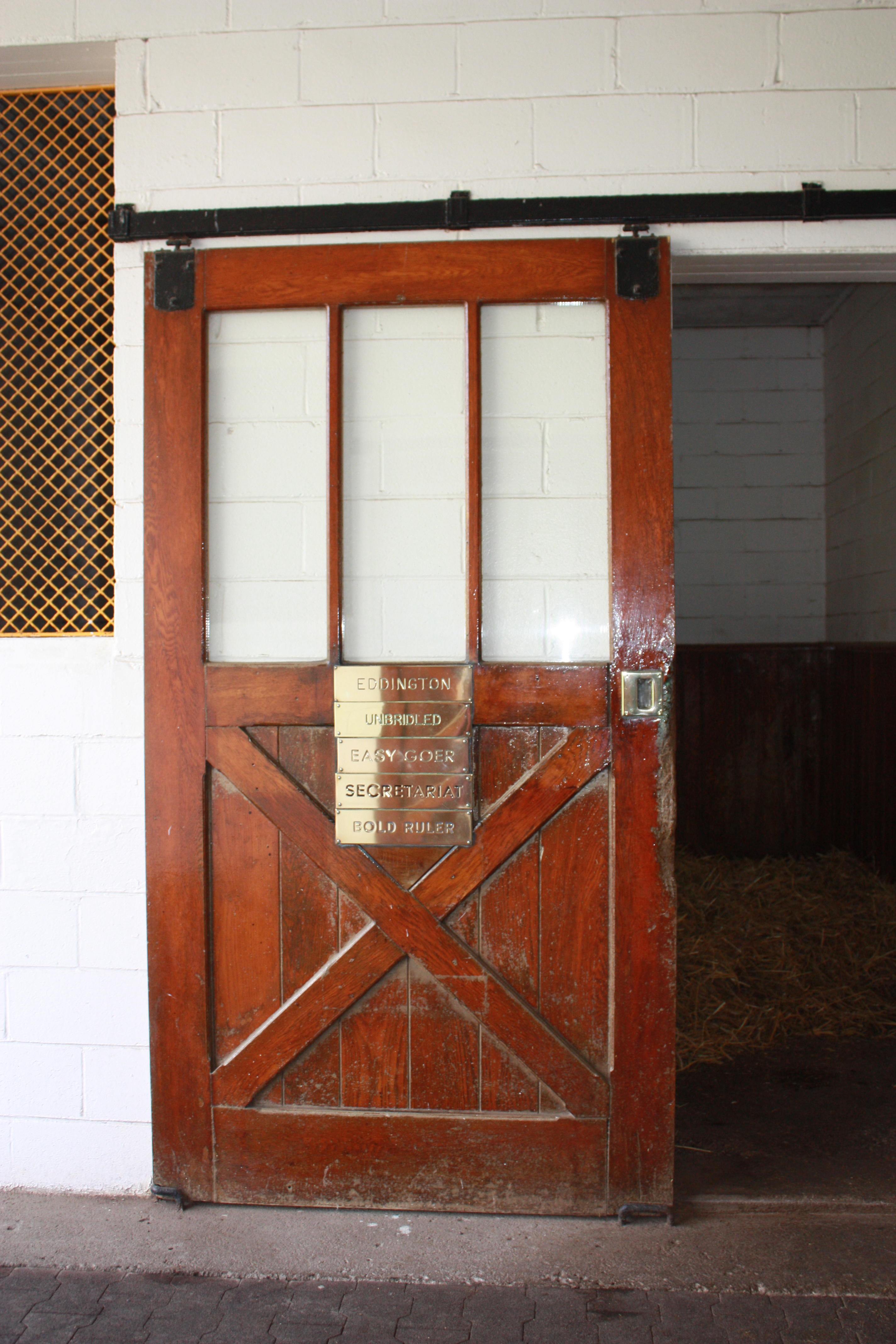
As we walked down the trail to the stables at Claiborne Farm, Sosby directed me to Secretariat’s former stall. As he stood beside Secretariat’s golden name plate, Sosby talked about the fans that visited Claiborne to meet the legendary horse.
Between 8,500 and 10,000 people a year came to Bourbon County to visit Secretariat.
Some of them would go in the stall and lay in the hay. They would say, ‘If it’s good enough for Secretariat, it’s good enough for me.’
Every now and then, fans would bring Secretariat an apple or peppermint candy during their visit. His groom was in charge of giving those gifts to Secretariat.
In an interesting note, Sosby recalled that the horse particularly enjoyed two items – cameras and shiny objects.
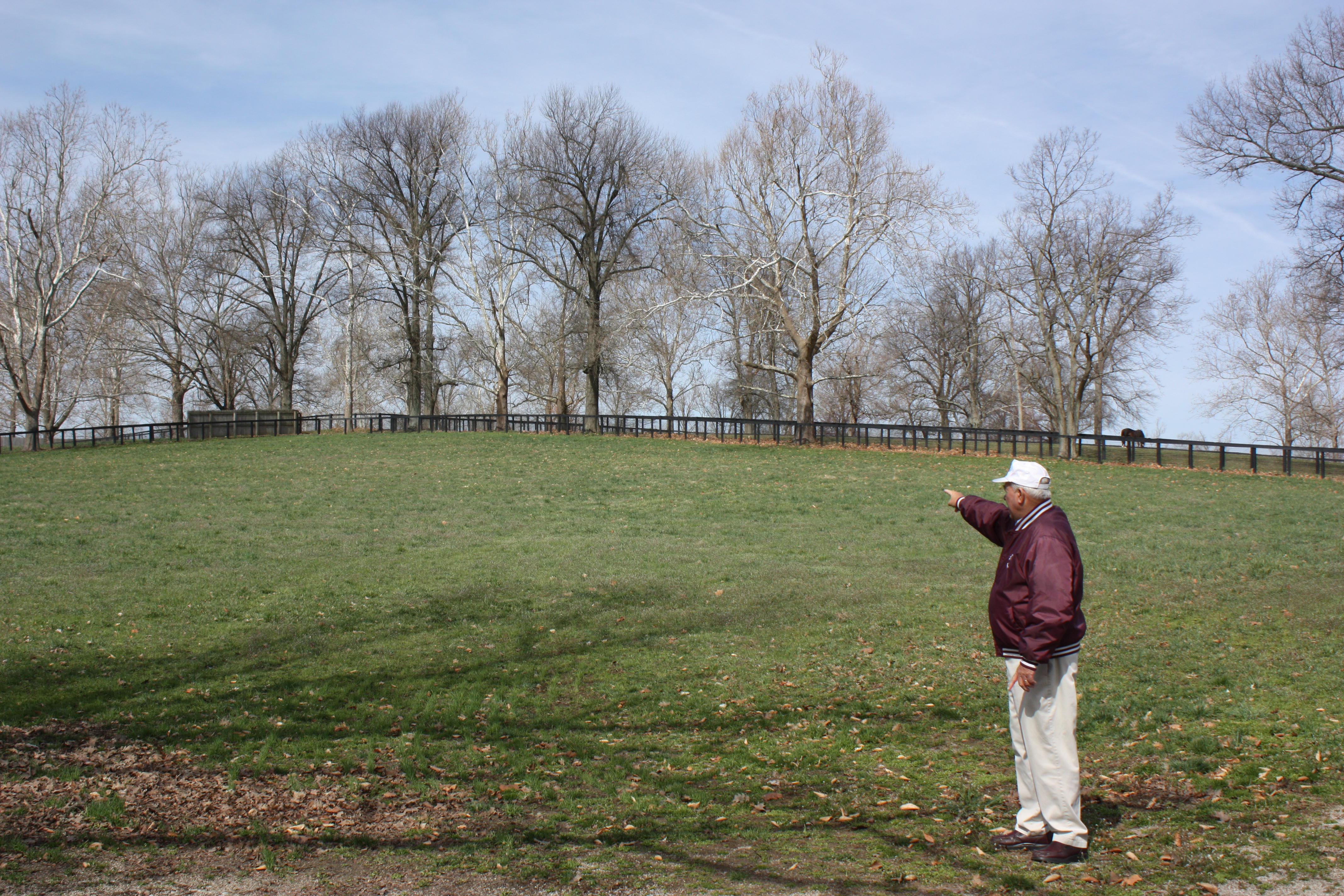
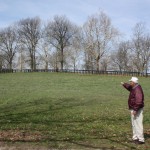 As we arrived at Secretariat’s paddock, Sosby recounted Secretariat’s “Trademark Greeting” to his visitors. Pointing to the top of the hill, he explained that when a person walked up to Secretariat’s paddock, the horse would run up to the gate and stop.
Sosby then elaborated, “With a camera, he’d pose. He was a showman, but he was kind. You could walk right up and get your picture taken with him.”
I began to wonder about Sosby’s earlier comment about how Secretariat enjoyed “shiny things.” Was it a simple flash on a camera or did it go beyond that?
It was then that Sosby recounted the tale of “Secretariat and The Golden Earring.” He explained:
One day, I had gone to lunch in town. I got a call from the farm saying ‘You need to come out here. Secretariat just bit a woman.’
I was a mile and a half away from the farm. My first thought was a million-dollar lawsuit.
Well, I get there and they called a doctor out to try to stop the bleeding on her earlobe.
She had taken a picture and turned away. He reached to get her earring and just pulled it through her ear.
Sosby laughed when I asked if the woman was upset.
No. She was happy. She’d been bit by Secretariat!
As he smiled, he clarified, “He was not mean. It wasn’t his character. The earring was there - and it was shiny. He just reached and grabbed it.”
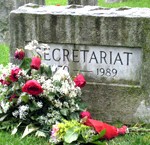 The King of Roses: Secretariat’s Legacy.
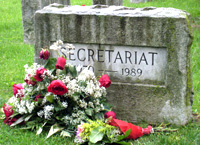
In 1989, Secretariat lost his battle with lamanitis and was buried at Claiborne Farm. As Sosby stood next to Secretariat’s grave, he briefly discussed the private service that was held.
He was put in the ground late in the afternoon. It was Claiborne family [present]. Nobody in the gate.
We didn’t want a circus or festival atmostphere.
We had just laid a good one to rest.
Sosby recounted that after Secretariat’s burial, “Over a hundred flower arrangements were on his grave by the next morning.”
In over two decades since his death, Secretariat still leaves his mark at Claiborne Farm. Sosby explained, “On his birthday, there will be twelve red roses on his grave [from an] unknown source. It’s been [going on for] twenty-one years.”
In his closing remarks, Sosby marveled, “I don’t know who his critics would be. He was perfect.”
April 7th, 2010 §
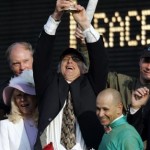
Trainer John Shirreffs has established himself in the racing world as the man who can deliver some of the most magical moments in the sport. From beating some of the toughest odds at the Kentucky Derby to racing Zenyatta into the history books, he has drawn his own path down the winning stretch.
Five years ago, Shirreffs arrived at Churchill Downs for the Kentucky Derby with a gray colt who entered the gates with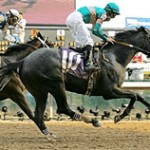 odds of 50 to 1. Roughly two minutes later, that gray colt smashed those odds as he won the race by half a length to the surprise of the nation. At the time, Shirreffs’ colt, Giacomo, had delivered the second biggest upset in the history of the Kentucky Derby.
After the race, Shirreffs’ win at the Kentucky Derby with Giacomo could have been dismissed as mere luck by critics in the sport. However, luck is a fleeting thing. A few years later, Shirreffs would prove in a big way that his training talent falls far beyond luck as he crossed into the realm of magic with his superstar mare, Zenyatta.
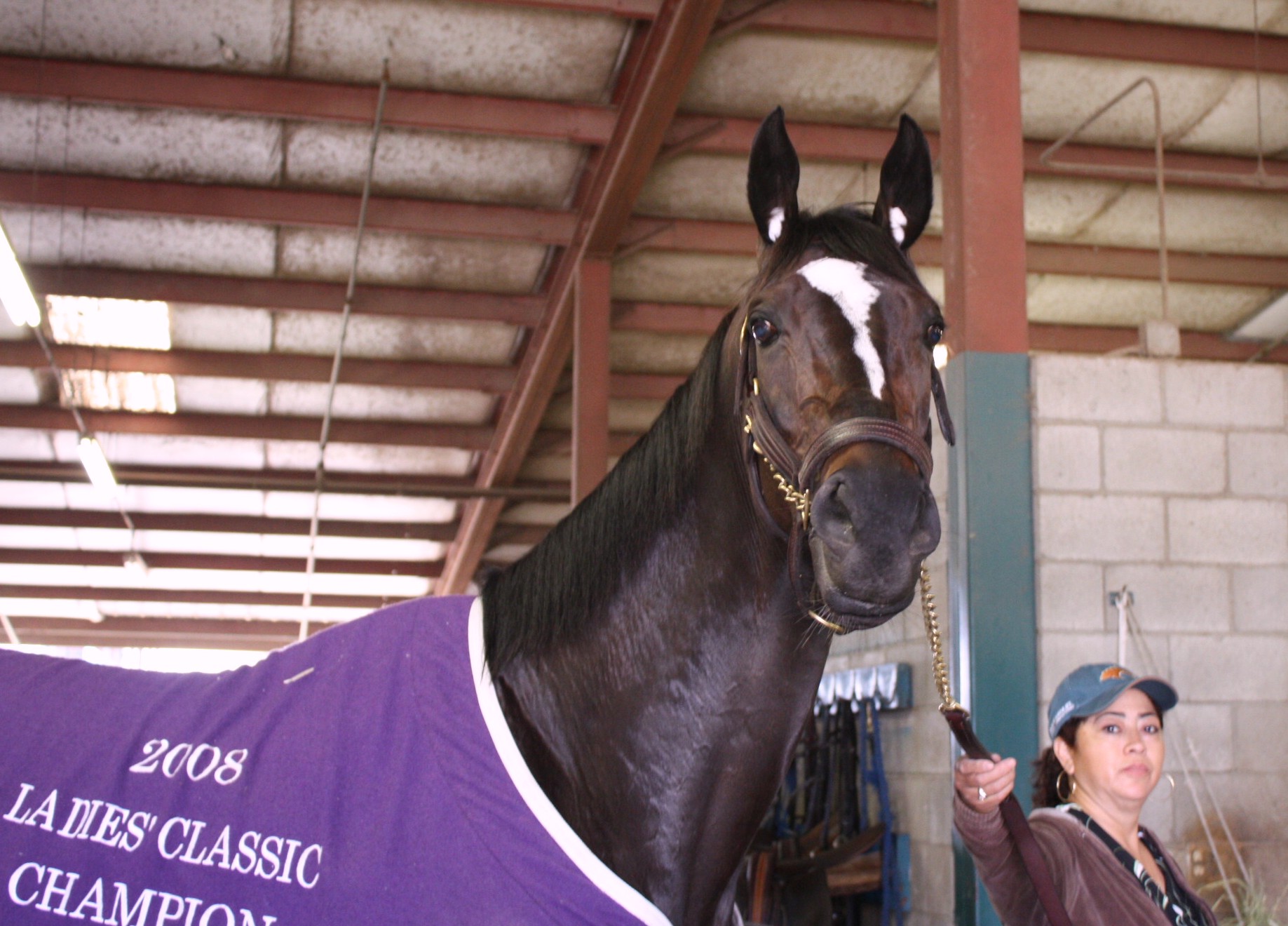
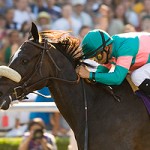 On November 7, 2009, Zenyatta stepped into the gates as the lone female in the Breeder’s Cup Classic. She was not only challenging the gender divide in racing, but also history. The Breeder’s Cup had never been won by a female horse.
As she stood alongside 2009 Kentucky Derby Winner, Mine that Bird, and 2009 Belmont Stakes Winner, Summer Bird, she set her sights toward the finish line. In the span of two minutes, she delivered one of the greatest racing moments in the sport. 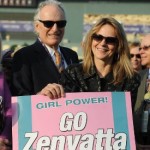 Zenyatta cut down all of her male rivals and stomped into the pages of the history books through her victory in the Breeder’s Cup Classic.
Following the Classic, the debate ensued as to whether Zenyatta should be crowned “Horse of the Year.” Despite Rachel Alexandra winning the debate in the ballot box, Zenyatta has remained undefeated on the track.
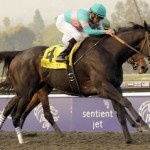 With fifteen career starts, Zenyatta enters the Apple Blossom this Friday to defend her perfect winning record. In the days leading up to the race, I sought to obtain an interview with John Shirreffs about the magic of Zenyatta. I was told by friends that it would be impossible since the Apple Blossom was this Friday.
Yesterday, Shirreffs delivered the impossible again by graciously providing me with an interview. I extend my deepest thanks to him.
JW: Prior to Zenyatta’s victory in the 2009 Breeder’s Cup Classic, no female horse in history had ever won the race. Facing such odds, what led to the decision to run her in the Classic?
SHIRREFFS: [The decision was based on] giving her an opportunity to show everyone how great and historical she is.
JW: Zenyatta’s history-making win in the Breeder’s Cup Classic earned the 2009 Eclipse Award for “Moment of the Year.” How did you feel at the moment Zenyatta won the Breeder’s Cup Classic?
SHIRREFFS: I felt proud to be her trainer and blessed to be her caretaker.
JW: In fifteen career starts, Zenyatta has maintained an undefeated record. Going into the Apple Blossom this Friday, do you get nervous about maintaining her winning streak?
SHIRREFFS: Racing is about controlling nerves, believing in your horse and accepting the results.
JW: The “Horse of the Year” debate between Zenyatta and Rachel Alexandra captivated the public and the media. How did you feel about a “match race” between these two horses and do you regret that they did not get a chance to race each other in the Apple Blossom?
SHIRREFFS: Everyone was looking forward to the Apple Blossom race. It would have been exciting. A scheduled race where the attention is spread between several horses is a more relaxed atmosphere, and, for me, better.
JW: Zenyatta already has made history with her victory in the Breeder’s Cup Classic and stands in rare company with her undefeated record in fifteen starts. In the simplest terms, what else do you think Zenyatta can accomplish as a race horse that she has not already proven in her racing career?
SHIRREFFS: We wanted to share her with as many of her fans as possible. [Through continuing to race,] maybe someone who couldn’t get to Santa Anita would have a chance to see her.
JW: As a trainer, you have accomplished some unique milestones. Going back to your 2005 Kentucky Derby win as the trainer of Giacomo, what did you see in Giacomo that led you to believe he could win the Kentucky Derby?
SHIRREFFS: Giacomo had a great mind, a very smooth stride and never ever quit no matter what. And then, there was all that talent.
JW: How did it feel for you when Giacomo won the Kentucky Derby?
SHIRREFFS: [I felt like I was] on a magic carpet - flowing among 100,000 spectators who looked excited - but I couldn’t hear anything.
JW: As an accomplished trainer, what do you believe are some important principles to follow when training a race horse?
SHIRREFFS: [Put the] horse first.
JW: Throughout your experience in training Zenyatta, has she demonstrated any unique traits or capabilities? If so, what makes her different?
SHIRREFFS: She [has] never stopped developing. In the morning, she is waiting for more.
JW: What is the general temperament of Zenyatta?
SHIRREFFS: She is a sweet lady. It is hard to describe. Today, a young girl - about age eleven - was petting Zenyatta. Zenyatta turned around the other way. The girl didn’t back [up], but just kept her hand on Zenny and pet her. Can you imagine how most fit, sharp racehorses would react? I really wasn’t worried. Zenyatta is that kind.
JW: What are some of Zenyatta’s favorite things?
SHIRREFFS: Carrots, of course! And, [she likes] having her neck scratched.
To comment on this article, click here. The Saturday Post is now on Facebook. To join our Facebook Page, click here.
April 3rd, 2010 §
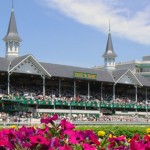
On a sunny Friday afternoon, I arrived at the gates of Churchill Downs to interview John Asher about the history of the Kentucky Derby. Asher, Vice President of Racing Communications at Churchill Downs, has been working in the thoroughbred industry for over two decades – serving on boards, acting as a publicist, and providing award-winning media coverage of the sport. He joined Churchill Downs in 1997.
In his coverage of horse racing, he has achieved celebrity status in his own right. On Kentucky Derby day, it would be near-impossible to watch any major televised report about the race without seeing John Asher appear on the screen. Amidst the crowd of racing enthusiasts, he is the man to follow on Kentucky Derby day.
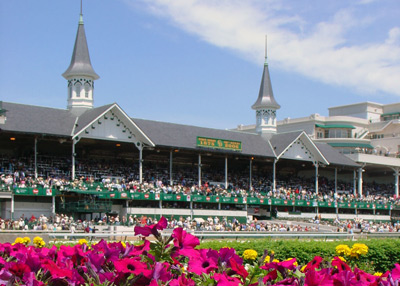
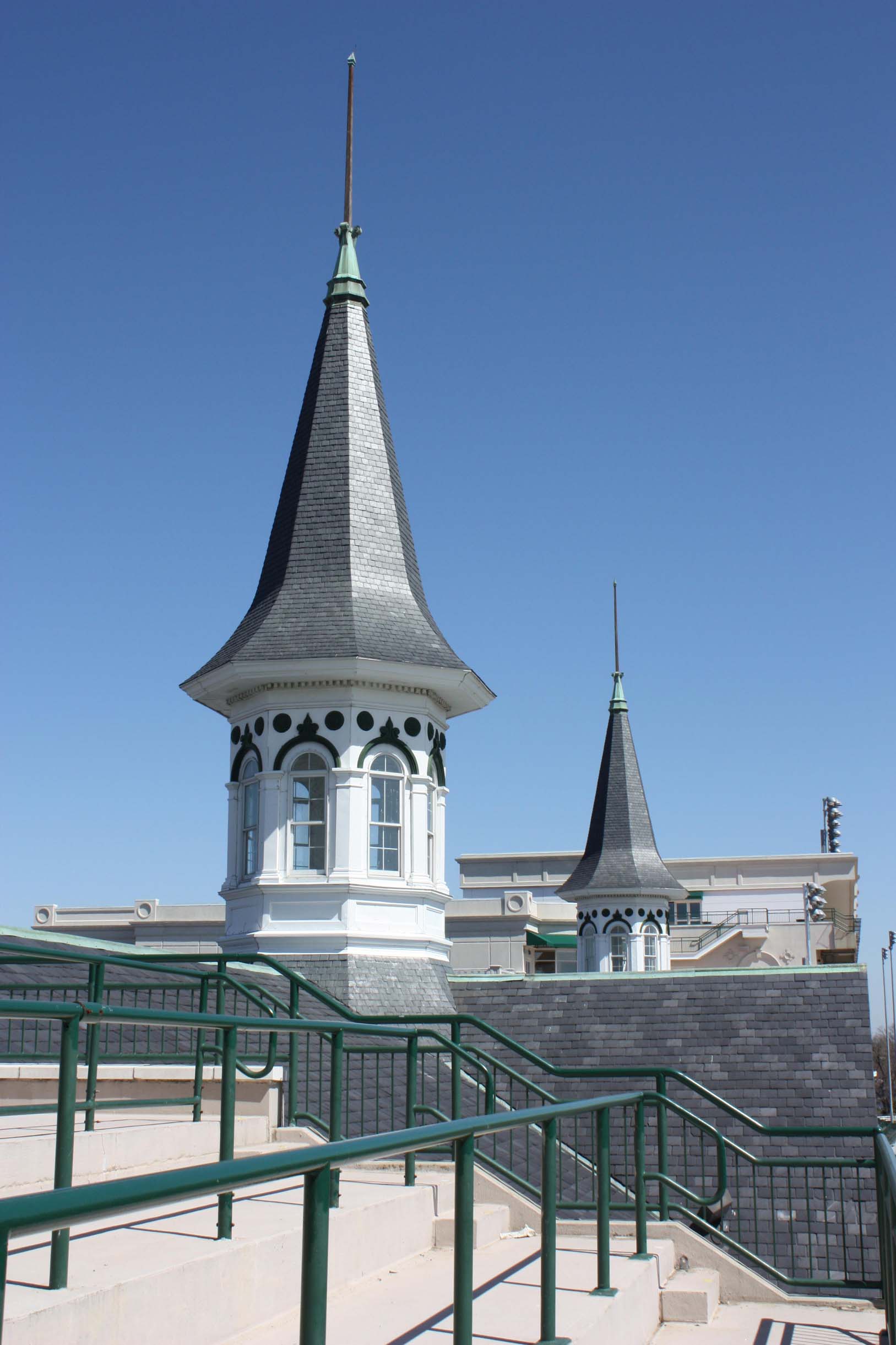
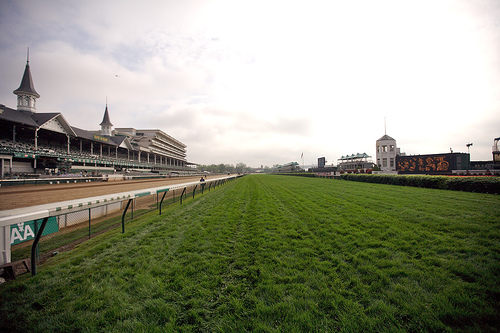
When first I met Asher at Churchill Downs, it came as no surprise that it would be in a grand fashion. To me, the Kentucky Derby is all about excitement, tradition, pageantry, and witnessing history in motion. Churchill Downs is the cathedral for this one-of-a-kind event. After my entry to through magic gates, everything that followed was spun like a fairy tale adventure.
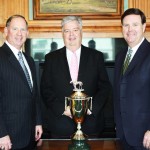 Asher appeared for the interview in the Director’s Room at Churchill Downs. This sacred ground is the site upon which the Kentucky Derby winners celebrate their win with a champagne toast following their victory.
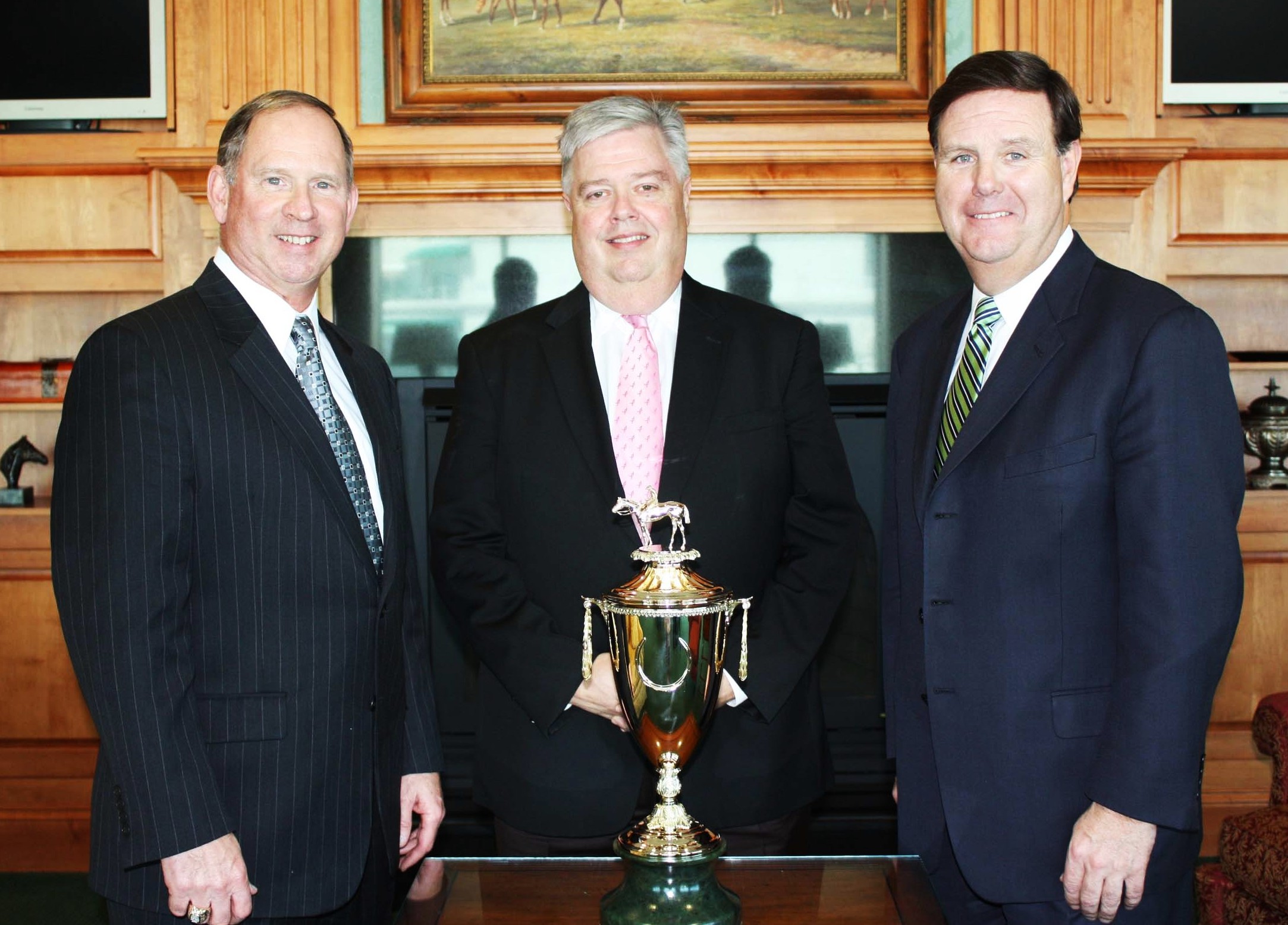
In the center of the room, the press was gathered around a small table to view one of the most largely-coveted items in horse racing - the winner’s trophies for the 2010 Kentucky Derby.
The Winner’s Trophies for the Kentucky Derby.
Carefully handling each trophy with white gloves, the CEO of New England Sterling, Marc Forbes, informed me that the first person to personally touch each trophy would be the respective winner on Kentucky Derby day.
Forbes explained that the largest trophy, awarded to the owner of the winning horse, is comprised of sixty ounces of 14-karat gold and has remained largely unchanged from its’ original design, dating back to 1924. In the three major milestone races – the 75th, 100th, and 125th anniversaries the Derby, the trophy was modified to include diamonds, emeralds, and rubies.
Among the historical variations on the trophy, the major alteration came in 1999 – when the horse shoe in the center of the trophy was reversed to point upward. Forbes explained, “Racing lore has it, that [when] a horse shoe is facing downward, the luck runs out of the horse shoe. So, in 1999, the horse shoe was changed and facing upward.”
Forbes stated that fifty employees are involved in the 1,600-hour process of handcrafting the owner’s trophy- comprised of 25 different components. The company also creates three smaller sterling silver replicas of the gold trophy, which are awarded to the trainer, breeder, and jockey of the winning horse.
As I marveled at the beautiful trophies that we set before me, I envisioned the past Derby winners who have stood in this room, clutching their trophies, in a champagne toast to beating the mind-bending odds to win the Kentucky Derby.
The historical wonders of Churchill Downs would soon be illuminated through my interview with Asher. After the trophies were carefully placed back in their cases, Asher led me outside to begin the journey through the history of the Kentucky Derby at Churchill Downs.
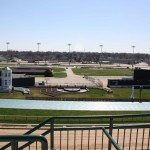 The Kentucky Derby is America’s Oldest, Continuously Held, Sporting Event.
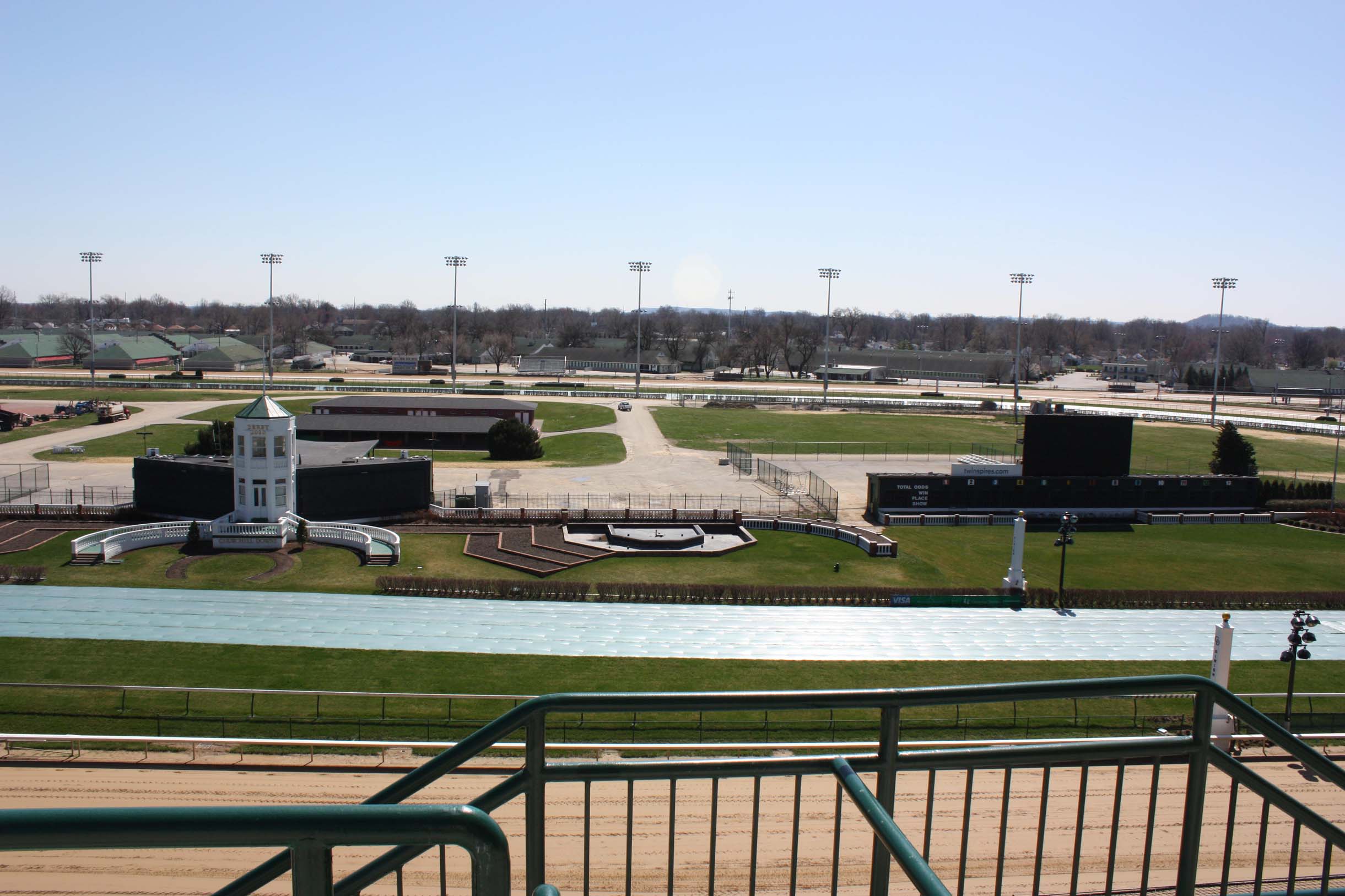
From our Eagle-eye view of the legendary Churchill Downs dirt track, Asher explained, “The track dates back to 1875, when the first Derby was held. We have run the Derby every year, without interruption, since 1875. This year, May 1st, will be 136 consecutive years.”
Asher then elaborated, “We are America’s oldest, continuously held, sports event. We have survived two world wars, The Great Depression, [and] the flood of 1937, which had us underwater.”
In a few sentences, I learned my first lesson. The Kentucky Derby is a testament to perseverance. Not only for the lucky handful who arrive in the winner’s circle – but to those who ensure that the race is run in the first place. And, as Asher would soon explain, Matt Winn embodied the spirit of perseverance.
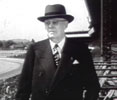 Matt Winn: The Architect of the Revival.
Although the Kentucky Derby had been running for 27 years, the track had never turned a profit at the time Matt Winn began managing Churchill Downs in 1902. When Winn arrived at Churchill Downs, he had a powerful vision for the track. Asher explained:
He really led the revitalization of the track. He had three goals… he wanted the Derby to be a major league sports event – a prominent sports event. …He wanted the race to be much more than a horse race – he wanted the fashion aspect, … the celebrity, all that. He wanted it to be just a huge celebration. Not just of the sport, not just of racing. And, also, he wanted Churchill Downs to be an important part of life in the community year-round, not just when we were racing.
Winn’s vision paid off the following year when Churchill Downs turned its’ first profit in 1903. However, Winn didn’t slow his efforts to revive the track in the wake of his initial success. In furtherance of his vision, Winn would eventually host state fairs on the grounds, locomotive collisions in the infield, bring pari-mutuel machines to the racetrack, and begin radio broadcasts of the Derby.
Asher explained that the community outreach initiatives of Churchill Downs even extended to the Catholic Church. “From the mid-1940s to the mid-1970s, there was a Roman Catholic archdiocese that held a religious celebration here every year – the feast of Corpus Christi. Thousands of people would come out. There was a procession on the track… it was a huge religious celebration.”
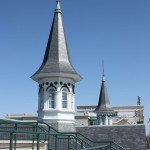 Through hosting community events, the track went beyond horse racing for many guests. In reference to “The Feast of Corpus Christi” celebration, Asher noted, “When you think of the people who came out here, the thousands that came out here, a big chunk of those people would never come to Churchill Downs for a horse race, or to bet a nickel on the nose of a horse. They came out here because Churchill Downs was special to them. Those Twin Spires were special, because of the experience they had here. That’s part of the emotional investment people have in this place.”
In the eyes of Asher, Winn’s vision has become a reality at Churchill Downs today. “Most of the times in a year, you can come up and find something going on. This year, we have Derby and Oaks, which will draw 250,000 people here.” Churchill Downs also hosts weddings, music festivals, and various other events – ranging from the previously hosting a Rolling Stones concert to the upcoming Breeder’s Cup Championship races in 2010.
The Artist’s Muse: Artwork at Churchill Downs.
In a painted collage at Churchill Downs, stands a quote by Irvin S. Cobb, Kentucky native and writer.
“Until you go to the Kentucky Derby with your own eyes, behold the Derby, you ain’t never been nowhere and you ain’t never seen nothing.”
As you walk through the halls of Churchill Downs, the work of many artists is on display in their effort to add their own definition, tribute, or voice to the Derby. Considering the collected pieces of art throughout Churchill Downs, one thing is clear – the Derby has been the muse for several artists.
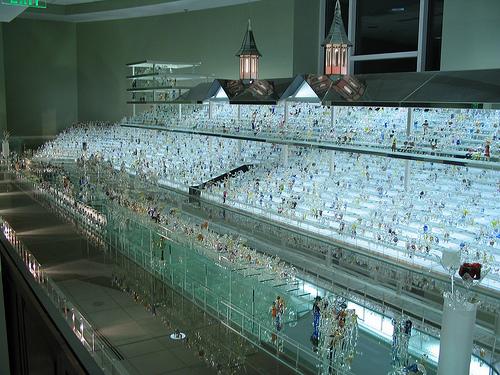
During our interview, Asher showed me a piece of work by artist, Craig Colquhoun, that defies description in ordinary language. In an endeavor to follow his dream of creating something great, Colquhoun constructed a glass replica of Churchill Downs. As we studied the thousands of pieces, Asher explained:
When we were getting finished with the renovation, we got a call from an artist named ‘Craig Colquhoun.’ He says, ‘I’ve got this glass sculpture of Churchill Downs, would you be interested in looking at it?’ We said, ‘Sure.’
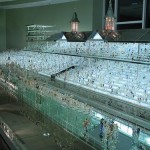 Pointing to the masterpiece standing before us, Asher remarked, “This was it. It is thirty feet long, ten feet wide, ten feet high, and 4,000 individual pieces he made – which represents every part of the Derby experience. [There are] fans in the infield, TV cameras and media, hats, the marching band, roses, ushers, and the horses.”
It was breathtaking.
While viewing the piece, Asher told the tale of the “Leading Horse,” in which the glass horse on the lead mysteriously changes position in the race. “[It’s] one of two things. Right now, it’s in the normal spot. We either have a spirit at work or an employee with a sense of humor. Every now and then, you will come up here and the horse on the lead will be about halfway up. I’ve never heard it explained or seen it explained. I just know the horse moves sometimes.”
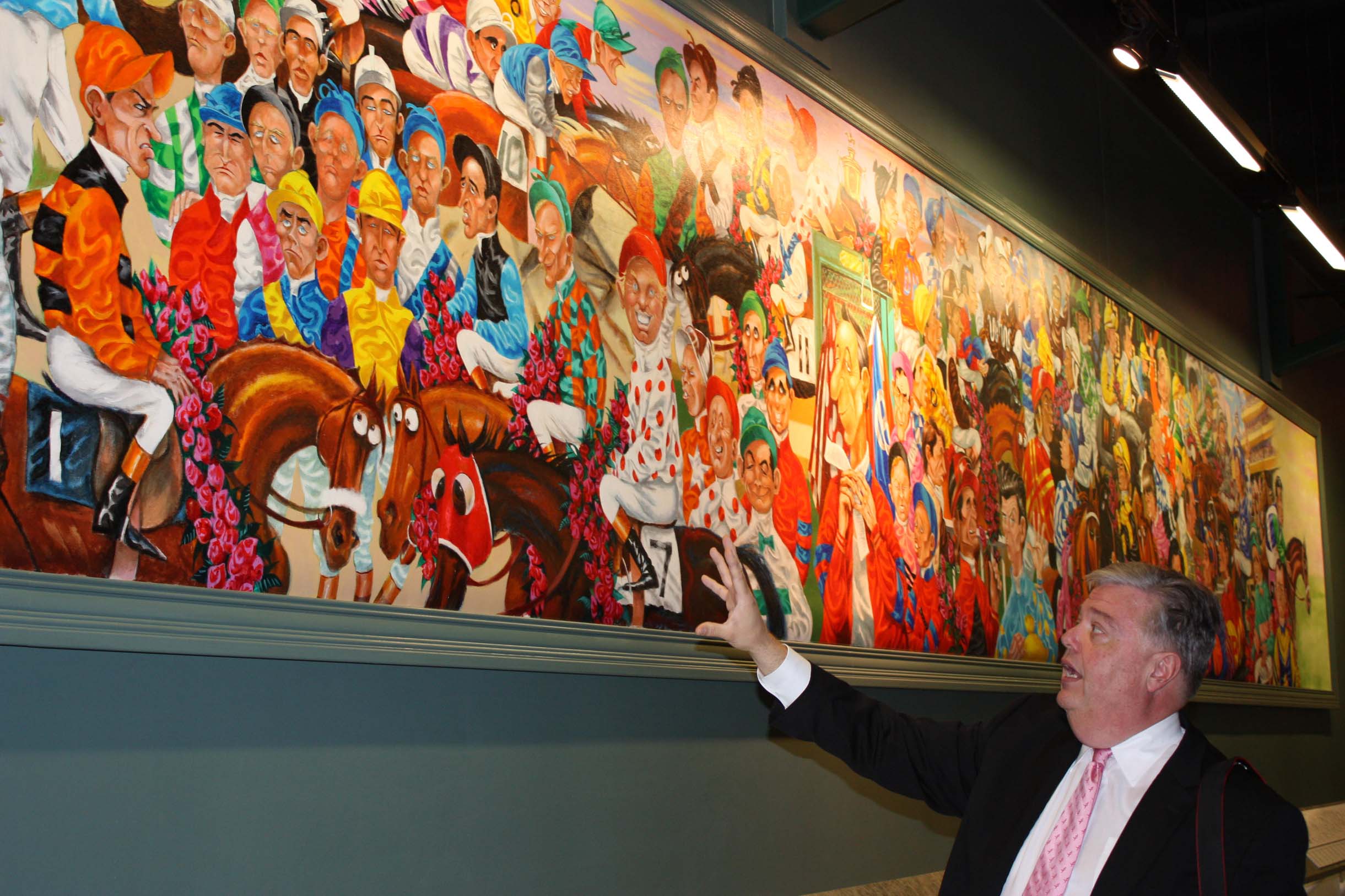
While Colquhoun’s piece tries to capture the “spirit” of the Derby experience, there are also two murals in the clubhouse, painted by Pierre “Peb” Bellocq, that depict the winning jockeys and trainers in the Kentucky Derby.
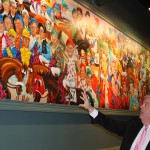 In Bellocq’s mural of the winning Jockeys, the artist has painted every jockey to ever win the Kentucky Derby. Asher explained that the mural is a timeline. The end of the mural used to depict a woman looking forward with a horse in the background that wore “figure eight” silks to symbolize infinity. Later on, the silks on the horse were modified to reflect the silks of Smarty Jones.
In recent years, Calvin Borel’s victories have led to the modification of the jockey’s mural. In 2007, Calvin Borel was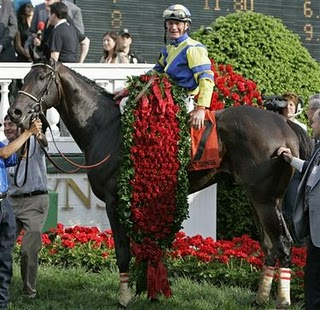 painted into the mural for his winning ride on Street Sense. After Calvin Borel won his second Derby on “Mine that Bird,” the mural was again modified to show Borel holding up two fingers – signifying his two wins in the Kentucky Derby.
After viewing numerous works of art inspired by the Kentucky Derby, it was clear that the race has the power to serve as an artistic muse. When I asked Asher about his opinion on why the Kentucky Derby has the power to inspire artists. He responded:
It’s a dream. I think it’s amazing. The whole thing about the race is a dream. Our purse is two million dollars. …It think we’d have thirty horses fighting to get into the race if we just gave them roses…
It’s the reason we get up in the business every day. If you breed a horse, own a horse, [or] you train a horse. If you’re thinking, ‘Is this horse the one?’ … I think it’s the dream aspect of it.
Building upon the concept of “the dream,” Asher shared his own story about how the Kentucky Derby led to his interest in horse racing. “[It’s] why I’m here. I watched the Derby with my family. We grew up in Kentucky, but we weren’t horse people. I was on a farm. It was my grandmother’s farm and it had nothing to do with horse racing. We were horse racing fans one day a year. We gathered around the TV and one day it just bit me. It’s amazing that I’m here, coming where I came from.”
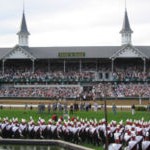 The Kentucky Derby: The Allure of the Greatest Two Minutes in Racing.
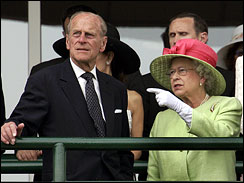
On the first Saturday in May, eyes from all across the world spin around the oval track at Churchill Downs to watch the Kentucky Derby. Guests have included royalty, presidents, and celebrities. In recent years, Queen Elizabeth attended the race.
During our interview, Asher elaborated on why the race itself has such an alluring aspect. “You get one chance. It’s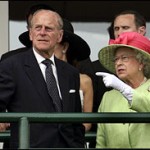 three-year-olds only. One Saturday. Two minutes in the afternoon. … In this year’s crops of three-year-olds, we have a maximum of twenty horses in the gate. And this year’s foal crop is about 37,000 – just in the United States. So, your odds are 37,000 to 1 to start. And that doesn’t include European-breds. …And even if you get here, … there are so many ways to lose a race.”
Despite the odds, the dream of ‘getting to the Kentucky Derby’ continues to captivate many individuals – whether owners, trainers, jockeys, breeders, or fans. Aside from the race, many people arrive at Churchill Downs for the pageantry and celebration surrounding the Kentucky Derby.
The glamour and tradition intertwined with race is nearly an event in and of itself. With women wearing wide-brimmed hats, celebrities weaving throughout the crowd, and the beloved traditions interwoven with the Kentucky Derby, individuals from all walks of life attend the race.
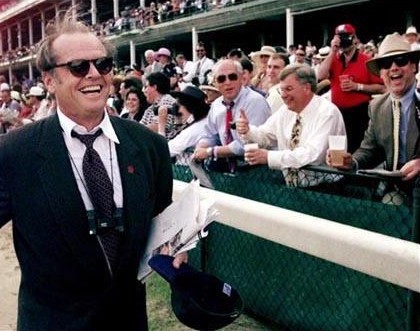
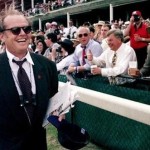 In light of the fan fare surrounding the Derby, I asked Asher which celebrity has drawn the most attention in his experience. He responded, “Jack Nicholson. He’s the biggest celebrity I’ve ever seen at the Derby. He stopped the show everywhere he went. Presidents… Queens… Nobody compared to Jack.”
Aside from the celebration in the stands, the horses on the track rule the day. In response to my question about his most memorable moments at the Kentucky Derby, Asher explained, “My absolute favorite moment is when they walk around the first turn to be saddled before the Derby. They are all coming over and everybody is accompanying the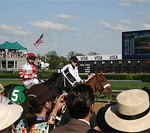 horse. The grooms are there. In a lot of cases, the owners and trainers are there.”
It is a heart-stopping moment. Fans who have labored over choosing their horses finally get to view them in the flesh. As for the connections to each horse, they are moving through the rapture of a dream.
Amidst the electric atmosphere surrounding the race, many individuals point to the moment that the crowd sings, “My Old Kentucky Home,” as an experience that defies description. As the marching band plays the music, it is hard to find a dry eye in Churchill Downs.
During our talk, I asked Asher, “What is it about ‘My Old Kentucky Home’ that makes grown men cry?” He responded, “It is everything about the Derby. It is the dream of everybody in the business. The Derby has got a romance. It just does. You look at the horses that win it, the people who had spent their whole lives in the business… Whatever it is, it touches people in a myriad of ways.”
However, for the hardened bettors, Asher gave a tip. “If you’re not a sentimentalist, it’s the best time to bet because there is nobody at the windows. They’re all outside crying. …Every window is wide-open.”
 Barbaro: His Memorial at Churchill Downs.
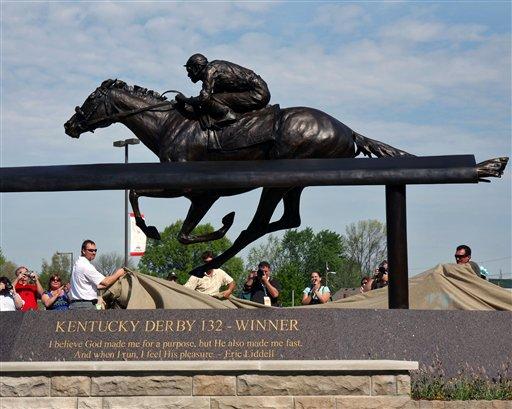
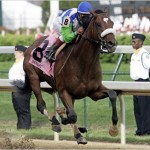
The story of Barbaro struck a chord with many individuals throughout the world. After his death, the decision was made to commission a statue of Barbaro and make Churchill Downs his final resting place.
The inscription under the statue quotes Olympic Gold Medal winner Eric Liddell: “I believe God made me for a purpose, but he also made me fast. And when I run, I feel his pleasure.”
Asher noted that the statue was constructed with a purpose. “The Jacksons wanted all four feet off the ground. That’s the perfect photo of a 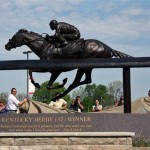 thoroughbred. They are in flight.”
During our interview, I asked Asher about the decision to lay Barbaro to rest at Churchill Downs. He explained, “The Jacksons made the decision [on] where they wanted him to be. They looked at a farm up in Pennsylvania, they looked at Maryland, and they looked at our place. They ultimately decided that this was the greatest moment of his career and they wanted him to be here. We obviously welcomed him.”
In response to my follow-up question regarding his continued fans, Asher explained, “The letters that came following Barbaro were countless. They came from everywhere. We still get them now.”
Secretariat: The Kentucky Derby Track Record.
Throughout Churchill Downs, several photos of Secretariat line the walls throughout the track.
In 1973, Secretariat not only won the Triple Crown, but broke the official track record at the Kentucky Derby and the Belmont.
Regarding the Preakness, the official track clock was broken when he won and the time did not reflect a new track record. However, the Daily Racing Form publicly disagreed with the official time at Pimlico. According to their watch, Secretariat broke the official track record in the Preakness.
If the Daily Racing Form time was correct, Secretariat is the record holder in all three Triple Crown races.
During our interview, I asked Asher about his personal opinion as to whether Secretariat holds the record for all Triple Crown races. He responded, “Yes. For me, it’s no question.”
Asher elaborated, “The official time, I think everybody agrees, was wrong. Everybody who had a hand-held watch got it faster.”
In an interesting follow-up, Asher noted that the Preakness was his favorite performance during Secretariat’s Triple Crown bid.
My favorite race of Secretariat’s Triple Crown is probably the least known. He did something I’ve never seen a horse do in that race. He was dead last going into the first turn and then took off. It looked like jets were firing.
He goes into the first turn dead last [and] he came out of the first turn in front. So, he just passed everyone on the first turn – not the second turn. You just don’t see that happen.
As for Secretariat, Asher is not alone in his reverence for this champion. With the many articles and books written about this Secretariat, it is hard to find any new words to encapsulate his talent. In Asher’s description:
Secretariat is the most amazing thoroughbred ever created as far as I’m concerned. He’s the perfect physical specimen. I don’t know who to compare him to. He’s like Schwarzenegger in his prime. In terms of physical, it’s just a perfect build. He had a heart… bigger than anybody else. That’s the big guy. That’s the one that defines our sport.
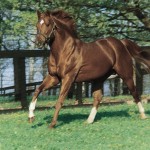 Asher then recapped his visit to meet Secretariat while he stood at Claiborne Farms. When he arrived at the farm, Secretariat was in his hillside paddock. Asher stated:
I was walking through with one of the farm hands. We had heard all these things throughout the years about what a ham he was and how he posed for pictures.
He was at the top of the hill. The groom I was with didn’t speak loudly. He just said, ‘Hey, Red.’
Boom! Here he comes. Flying down the hill. Absolutely flying down the hill. [He] gets to the fence at the end of the paddock where we were standing. He gets there. Stops. And poses.
In his final comments about Secretariat, Asher highlighted that the champion still gets roses and flowers at Claiborne Farm on the anniversary of his birth and death.
 The Last Word: Asher on the Art of Handicapping
Among his many talents, Asher is widely-known for his handicapping picks relating to the Kentucky Derby. He explained that he changes his choices every Sunday during the prep race season for the Derby.
Handicapping a horse race is no easy feat.
In response to my question as to whether he ever wishes that he could change his picks on Derby day, Asher responded with a recap of the upset delivered by Mine that Bird in the 2009 Kentucky Derby:
Yes. I wanted to change it last year. … I was sitting there watching the race with my daughter on Derby day. I’m looking up. …I said, ‘Aww, Eight is the winner.’ And, I go, ‘Who is Eight?’ And I looked at my program and realized it’s Mine that Bird with Calvin at 50 to 1. And for the next quarter mile, I couldn’t believe it. As soon as he crossed the finish line, I looked at my daughter and said, ‘You know, I’m not sure, but I think I picked him dead last.’ When I looked, sure enough. Dead last.
However, Asher has a good sense of humor. He appears perfectly at ease with being proven wrong in a race. “It’s very complex. It’s one of those businesses where, if you don’t learn something every day, you’re not paying attention.”
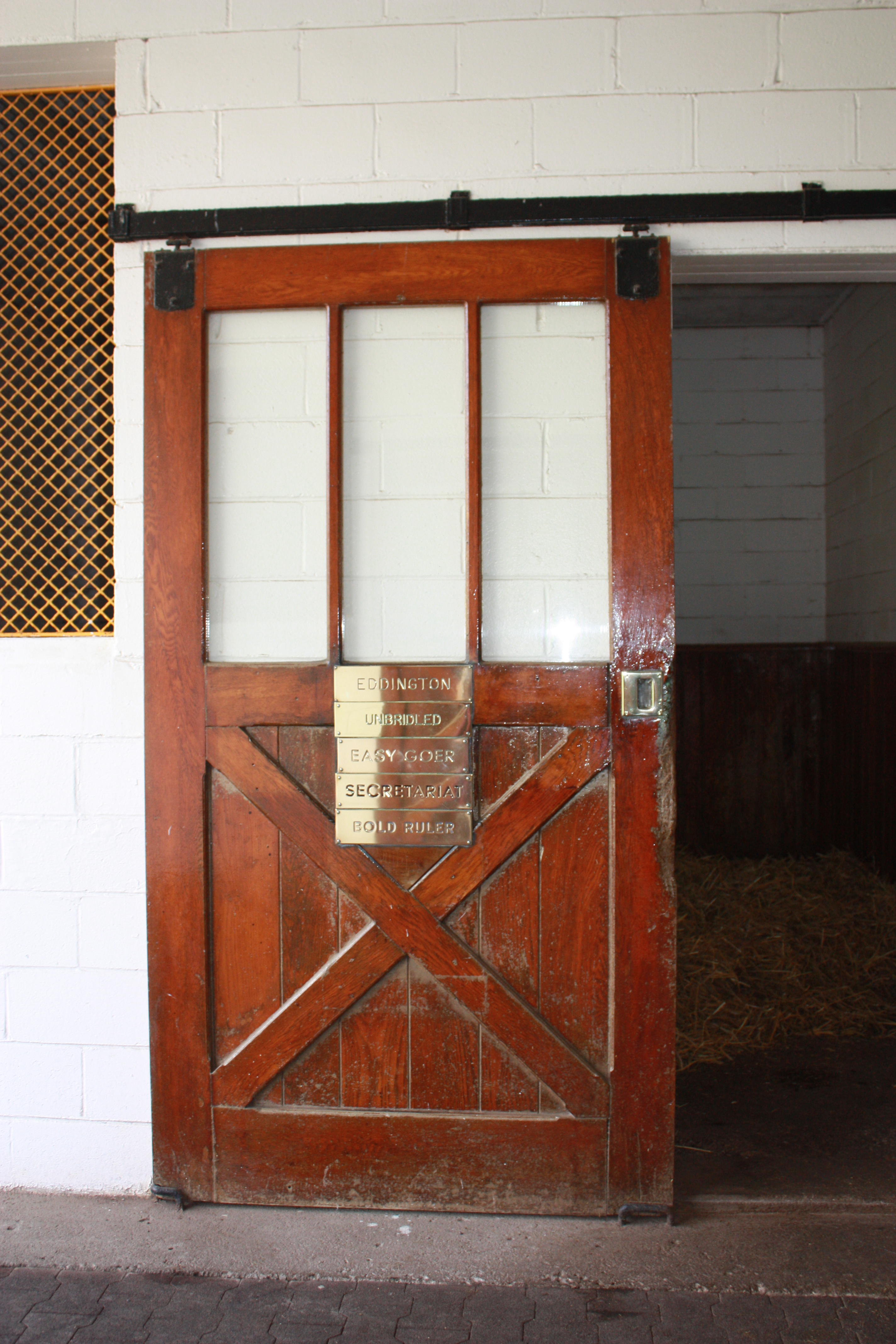 Eddie Sweat, his longtime groom, reportedly stared at Secretariat in his new stall and mourned the end of his racing career in saying, “Well, it’s all over now. They’ll never forget you, big fella. Never.”
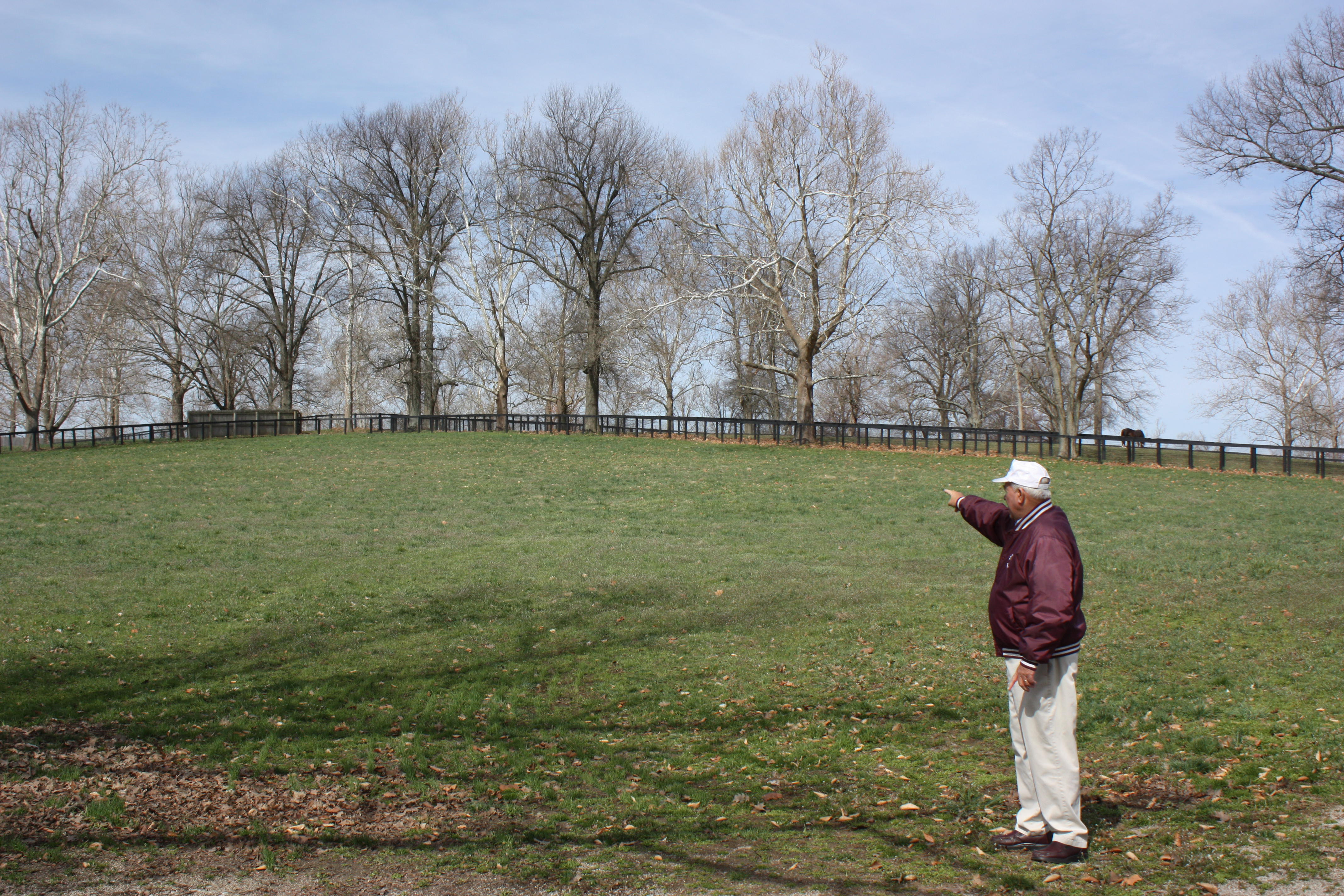 John Asher later told of how Secretariat posed for him when he went with a groom to see the horse in his paddock. “He was at the top of the hill. The groom I was with didn’t speak loudly. He just said, ‘Hey, Red.’” In a flash, Asher recalled Secretariat charging toward them, “BOOM! Here he comes. Flying down the hill. Absolutely flying down the hill. He gets to the fence at the end of the paddock where we were standing… Stops. And poses.”