April 1st, 2010 §
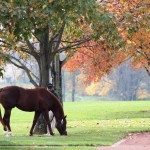
Smarty Jones captivated the nation in his bid for the Triple Crown in 2004. When he won the Kentucky Derby, the track announcer called out more than his victory. “Here is the first undefeated winner of the Kentucky Derby since Seattle Slew in 1977.” The public and industry began to marvel at the Triple Crown potential of Smarty Jones.
Following the Derby, Smarty Jones maintained his undefeated record by delivering an electrifying 11-1/2 length victory in the Preakness Stakes. As he pointed toward the Belmont, Smarty Jones had captured more than another win in his career – he had enlivened the imagination of spectators and won the hearts of fans across the nation.
As he entered the gates in the Belmont, Triple Crown dreams weighed heavily on Smarty Jones. Throughout most of the race, he ran at the top of the field. At the wire, Birdstone defeated Smarty Jones in a one-length victory. As the jockeys of both horses galloped from the finish line, Edgar Prado, rider of Birdstone, leaned toward Smarty Jones’ jockey, Stewart Elliott, and apologized.
 Smarty Jones retired in 2004 with a career record of winning eight of his nine races. He was sent to Three Chimneys Farm and housed in the former stall of Seattle Slew, the only undefeated Triple Crown winner in history.
In 2005, Smarty Jones reportedly had visitors every day at the farm, except for Christmas. Three Chimneys Farms graciously allowed me to join the many individuals who have come to visit Smarty Jones and provided me with an interview about this exceptional horse.
JW: What were the primary factors that led to the decision to retire Smarty Jones to Three Chimneys Farm?
TCF: The Chapmans had never before had a horse of this caliber and were very thorough when choosing a farm at which to stand Smarty at stud. They obviously wanted a farm that was well-versed in successfully marketing and developing young stallions, but they were also keenly concerned about finding a farm that would allow the public to maintain their relationship with Smarty once he was retired to stud.
With Three Chimneys having managed the careers of such popular fan favorites as Seattle Slew, Silver Charm and others, we knew how to accommodate the public’s desire to have access to the horses without jeopardizing the horses’ stallion careers and the focus on presenting them in the best possible light to potential breeders.
‘Three Chimneys was such a great fit. They are used to having the public visit their horses like Seattle Slew, Silver Charm and Point Given,’ said Pat Chapman, who raced Smarty Jones with her late husband, Roy, and still maintains significant ownership in the horse as a stallion. ‘They believe in limiting a stallion’s book of mares, and they are experienced in standing an important horse and making him a success as a sire. It’s just a really great fit.’
At the time of the announcement that Smarty Jones would stand at Three Chimneys upon retirement, Three Chimneys owner Robert Clay was quoted as saying the following:
‘We are grateful for this awesome responsibility. This is a very special horse in so many ways. The Chapmans and the Servises have earned the gratitude of the entire racing world by the way they have served the needs of the press, and the public, and of Smarty Jones all at the same time. We hope, and plan, to do just as good a job as they have done. We have always welcomed fans to Three Chimneys Farm and look forward to sharing Smarty Jones with his public.’
JW: Was the decision to retire Smarty Jones to Three Chimneys Farm made prior to the Belmont race or afterward?
TC: The decision to retire Smarty was made after the Belmont Stakes, but not in any way due to that race being his first and only loss. When the Chapmans chose Three Chimneys as the farm to stand Smarty at upon his retirement, it was with the intention that he would get a nice rest after a demanding Triple Crown bid, then go on to race in the late summer and fall of his three-year-old year and possibly as a four-year-old.
Soon after the Belmont Stakes, it was found that Smarty had significant bone bruising on the bottom of all four cannon bones. While it is a fairly common injury for racehorses to sustain and many come back after some time off to race successfully, the Chapmans were not willing to risk putting Smarty Jones in harm’s way.
‘After all he’s done, I couldn’t live with myself if I thought we were putting him in harm’s way,’ said Pat Chapman. ‘He doesn’t owe us anything, and we owe him A LOT.’
JW: Was the decision to house Smarty Jones in the former stall of Seattle Slew a tribute to Smarty Jones’ near-miss in his Triple Crown bid?
TC: In a way, yes. Smarty was one of few horses that has truly captured the attention and interest of the general public. Whether someone was a horseracing fan, a general horse enthusiast, or simply an ‘average Joe,’ they knew about Smarty Jones and his ‘Rags to Riches’ story. Seattle Slew was another horse who carried with him that ‘celebrity status.’
When Smarty retired to Three Chimneys, we wanted to pay homage to all that he had accomplished on the track as a runner, but also for the sport in general. He brought so many new fans into the racing industry. Even in his retirement here at Three Chimneys, he gets tens of thousands of fan visits each year.
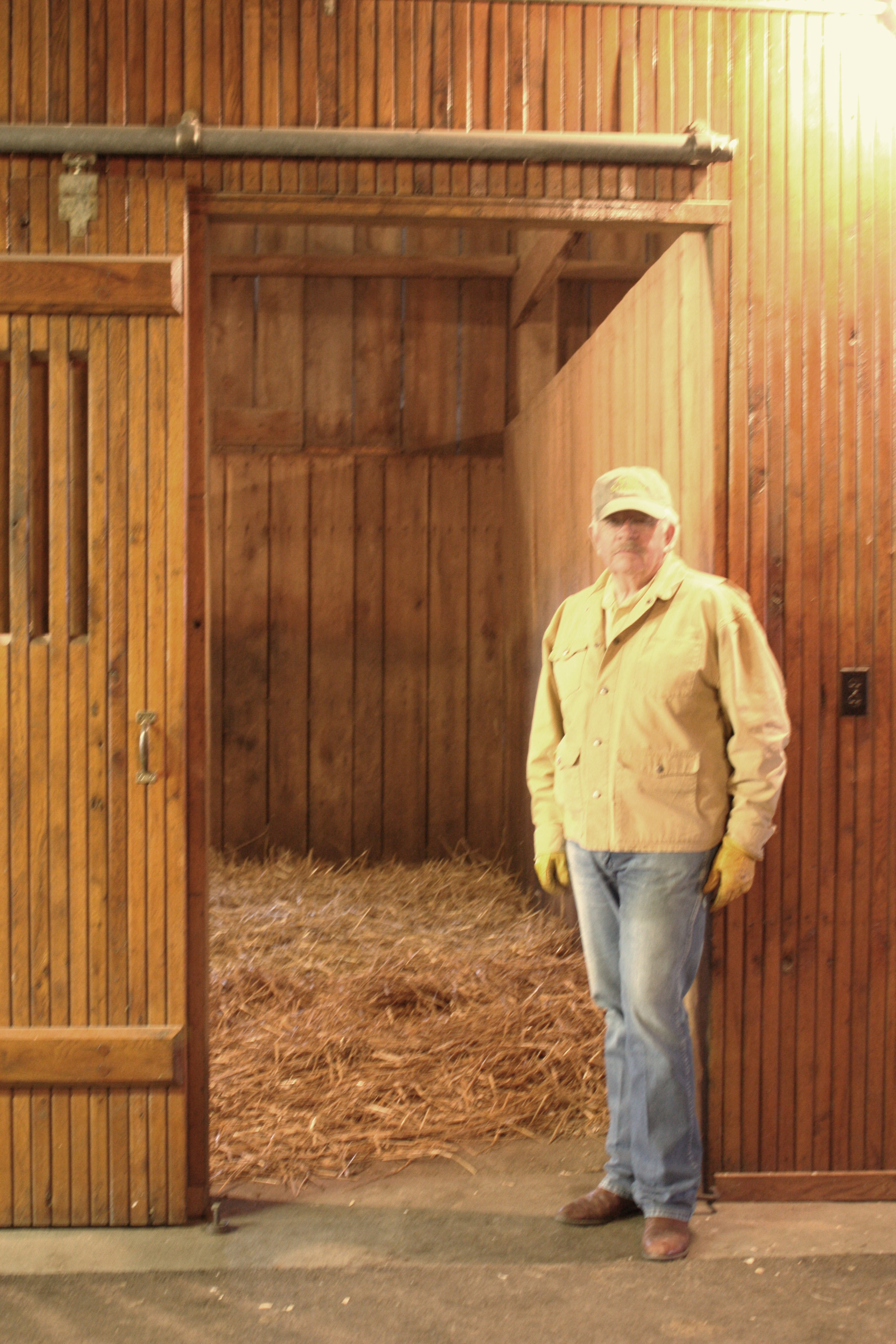
When visitors walk up to his stall, they see his nameplate on the door and, as with every stall in our stallion barn, if they look up to the right corner above his stall, they will see the nameplate of the previous occupant. Above Smarty’s stall is the nameplate of Seattle Slew.
JW: Why do you think the public experienced such a strong connection to Smarty Jones?
TC: Smarty was kind of a blue collar horse. He was modestly bred, hailing from, at the time, a $10,000 stallion and was born and raised in Pennsylvania, which was also where his home track of Philadelphia Park was located.
He overcame adversity as a youngster when he had a serious, potentially career and even life-threatening, accident while schooling in the starting gate. Then, when it came time to show what he was made of, he just kept on winning and winning.
Every bar that was set for Smarty, he exceeded, which is how he got to the Kentucky Derby as one of only a handful of horses to ever win the Derby to remain undefeated.
Another very compelling side to the story was the connections of smarty Jones. His owners/breeders Roy and Patricia Chapman were living a fairytale. Smarty Jones was the best horse they had ever raced and they were kind and gracious with both the media and his many fans.
Their trainer, John Servis, was also living the dream, as Smarty was his first Kentucky Derby starter and propelled his career to new heights. The public was able to connect with the Chapman’s and John Servis because they were appreciative of Smarty’s many fans and willing to give them access to their lives.
 JW: How would you describe the character and temperament of Smarty Jones?
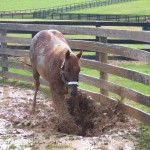
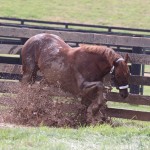
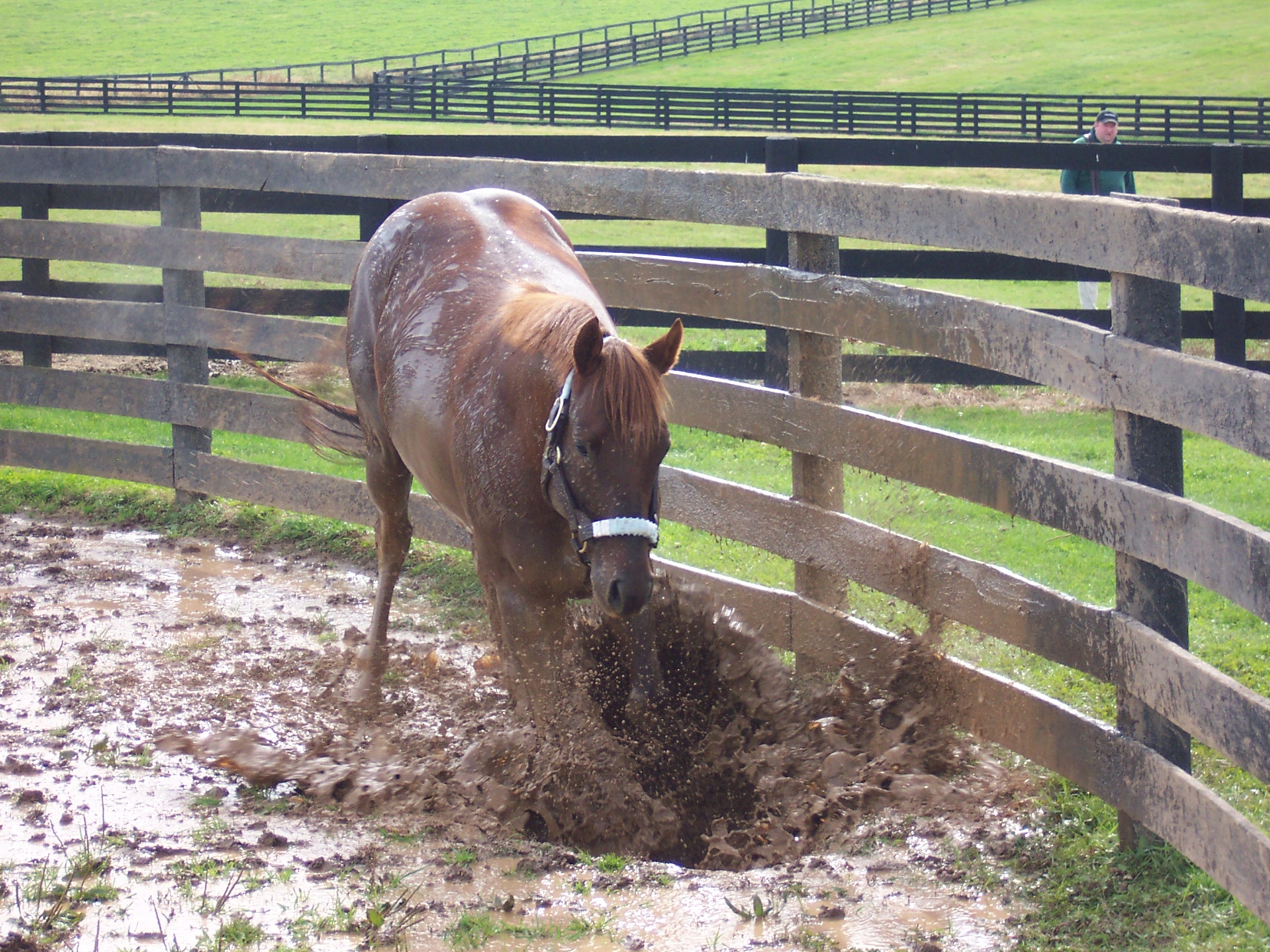
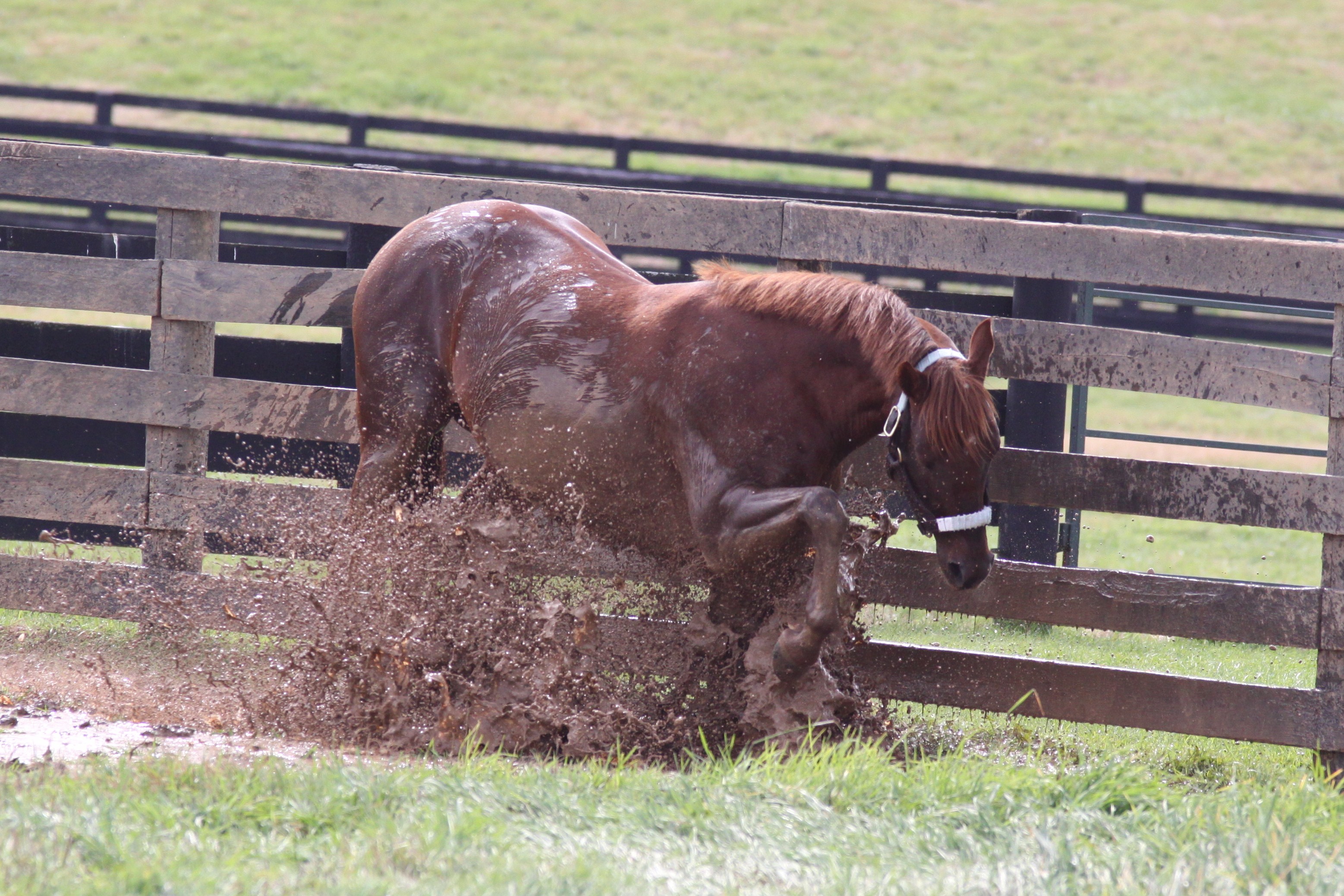
TC: Smarty sure isn’t a dummy! He enjoys his daily routine, which includes coming in from his paddock in the morning and being walked, bathed, and fed (he’s especially a fan of the feeding portion of that routine). He’s actually not one to crave a lot of human interaction. If it was his choice, he’d probably opt out of his daily grooming and would prefer to say dirty.
He’s a huge fan of mud, which seems to fit right in with his disdain for grooming. After a good rain, the lower corner of his paddock can get especially soggy and, as soon as he’s turned out on a day like that, he goes straight for that corner and starts working on his ‘mud masque.’
He loves peppermints and, while we can’t give him all of the treats his fans send him throughout the year, we do make sure that there is a never-ending supply of mints in the tack room that the grooms pamper him with.
JW: Smarty Jones has produced several foals in the past few years. Can you discuss some of the notable racehorses among his progeny?
TC: Admittedly, Smarty’s offspring didn’t give his career at stud the launch we had anticipated initially, however, he has had high caliber runners each year since his first crop hit the track and recently he’s had several of the best few months of his career. Some of his current budding stars include:
Backtalk is going to the Illinois Derby and, if all goes well, to the Triple Crown
Brilliant Sunshine was so impressive with her last two wins (broke maiden by 4-1/4 under wraps, then won an allowance by 7 being geared down) that she’s being pointed for her first stakes start next time out; she was profiled in the TDN’s “Sharper Focus” section last week as a horse to watch.
Follow the Leader is 4-3-1-0 (all in Msw and Alw company) and is likely headed for stakes competition – owned by the President of Oaklawn.
Keiai Gerbera won an allowance in January and came back to score a 5 length win in a stakes race in Japan over a field of 15 males – she was the only female in the race.
No Equipment won first time out by 8 lengths at Philly Park
Gracie Jones won second time out so impressively that she’s being pointed toward the Oaks Trial S. with the goal of starting in the South African Oaks later this year. Creating a LOT of buzz in South Africa – Smarty’s only runner in that country.
Sommelier Smarty is unbeaten in 2010 and is riding a 3 race winning streak.
JW: In terms of breeding, what are traits that make Smarty Jones desirable at a stud?
TC: Smarty Jones has a unique and obviously very favorable combination of good looks, balance and athleticism. He is a 16-hand powerhouse and his offspring resemble him, with that distinctive head, big hind-end, and cocky attitude.
Some of his best foals have been out of mares from the Seattle Slew and Deputy Minister lines and is working well with mares carrying Northern Dancer blood, especially Danzig and Storm Cat daughters.
JW: In your estimation, how many fans have visited Smarty Jones since he retired to Three Chimneys Farm?
TC: Smarty Jones and the rest of our stallions are greeted by at least 25,000 a year. Due to the high demand from fans to see our stallions, starting way back with Seattle Slew, we had to build a visitors’ center separate from our main office and an auxiliary parking lot due to all of the additional traffic.
We expect to FAR exceed that 25,000 visitor estimate this year. Due to the World Equestrian Games being in Lexington this fall, we have had numerous requests (we’re talking about hundreds upon hundreds) to see Smarty and the rest of the stallions and the farm. Due to the vastly increased demand during this event, we are modifying our tour schedule to be able to accommodate as many requests as possible.
To comment on this post, click here. The Saturday Post has recently launced a Facebook Page. To follow us on Facebook, click here.
March 30th, 2010 §
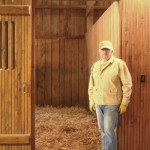
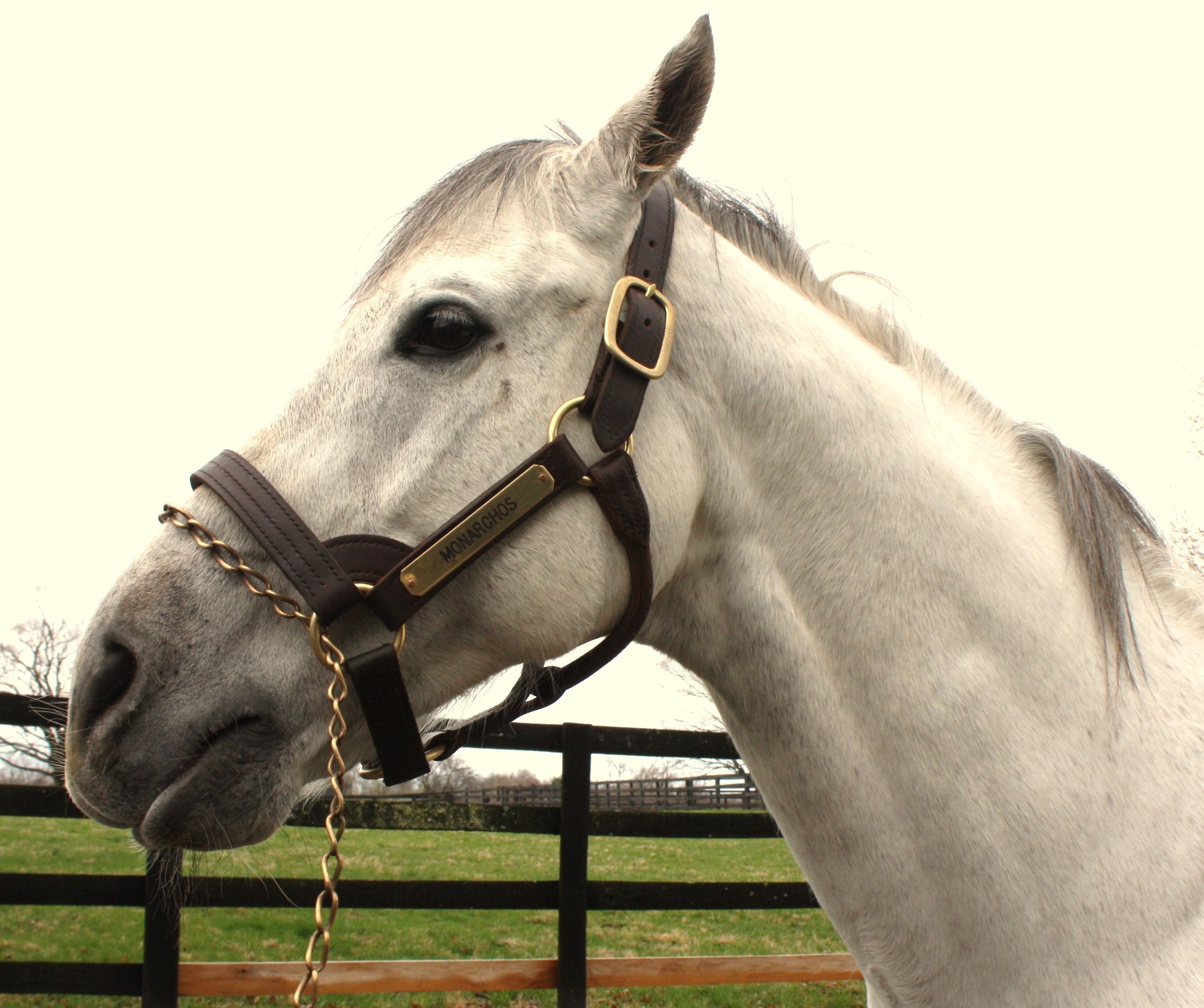
In the 2001 Kentucky Derby, Monarchos blazed toward the wire to win with a time of 1:59 4/5 – just two tenths off the record time of Secretariat. In less than a second, Monarchos had become the fastest living Kentucky Derby winner.
The man behind Monarchos, breeder Jim Squires, stood in the crowd in disbelief. Having retired from his profession as a journalist, Squires had just witnessed a steel gray colt blur the ordinary lines between fact and fiction.
Squires was now cast as a subject in one of the most fantastical stories in horse racing.
Born in Tennessee as the son of a textile-mill worker, Squires was fascinated by horses as a child. He would draw horses when he was in first grade rather than concentrating on arithmetic and save his money to ride “Tony,” a carnival pony, for a nickel.
As we stood watching a two-year-old colt breeze across a track, Squires quipped about how “Tony” would bite him on his legs when he rode him. He laughed as he remembered his mother making him wear pants in the summer since his legs had bite marks from riding “Tony” during carnival season.
As an adult, Squires worked as a journalist. When he moved to Illinois to become editor of the Chicago Tribune newspaper, he brought two cutting horses with him from Florida.
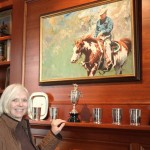 While searching for a home for his horses, he met his wife, Mary Anne, a Chicago native and Northwestern graduate. She had been working as a real estate agent and was selling farms in the Barrington Hills area. Squires married Mary Anne six months after their meeting and they lived on the farm he had purchased.
In 1988, the couple moved to Kentucky and formed their current farm, “Two Bucks.” They bred Paint horses, cutting horses, and Quarter horses. Jim Squires began to write books in his retirement.
After serving on the Kentucky Racing Commission, Squires developed a growing interest in thoroughbreds, which led him to purchase a few mares. As his mare population increased, Squires found Regal Band, Monarchos’ dam, at a Keeneland sale in 1995. When she failed to meet her reserve price, Squires later purchased Regal Band for $14,000.
Squires eventually made the life-changing decision to breed Regal Band with Maria’s Mon. In his book, Horse of a Different Color, Squires explains how both horses “had fallen a good ways from the thoroughbred aristocracy” at that point. He recounts, “…Only the offspring would determine the worth of the parents and the wisdom of their union.”
In a few golden fractions, Monarchos validated Squires’ belief in the value of these two horses. Their union had proven genius.
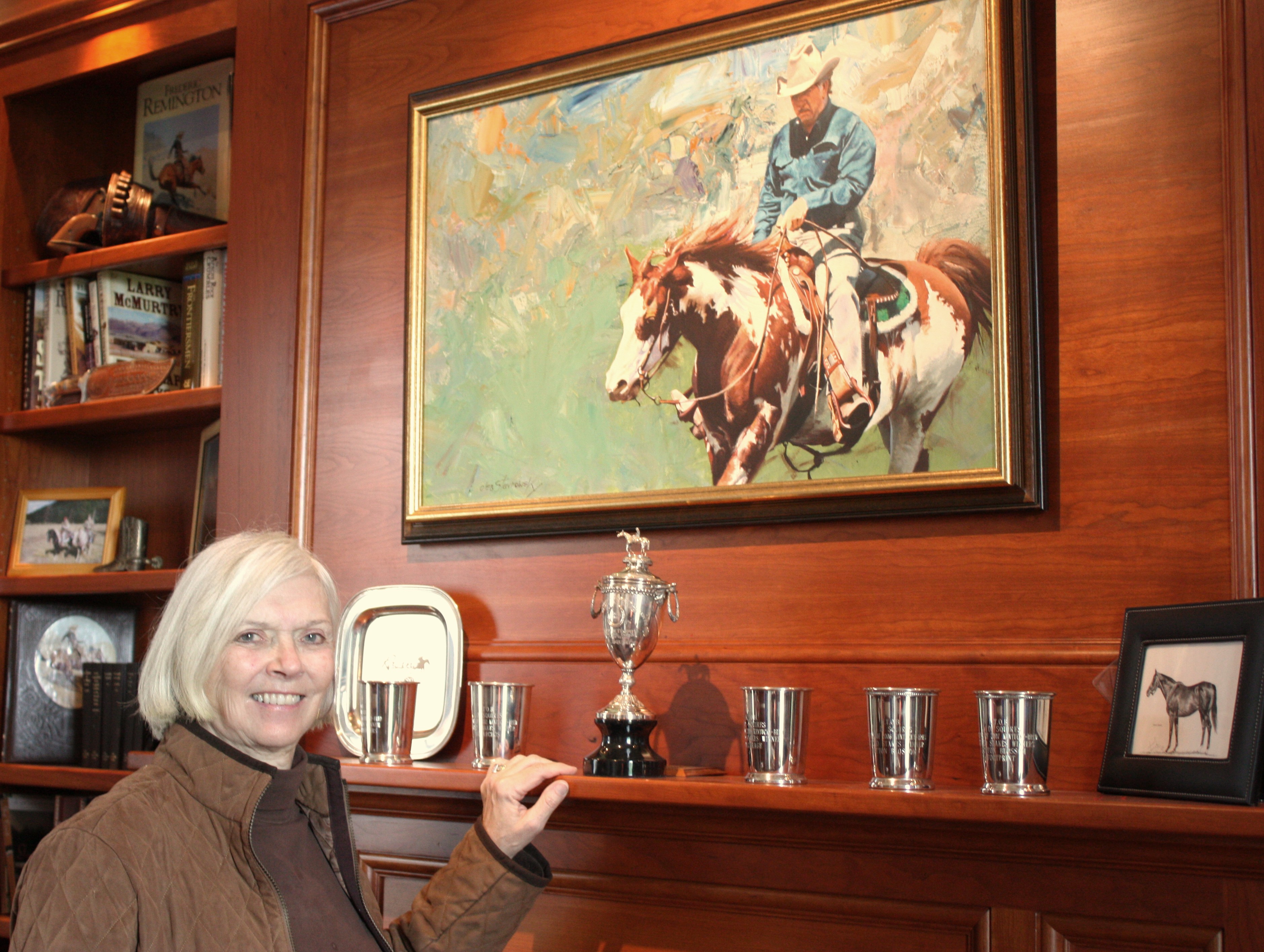
During my recent visit with the Squires, I not only learned about Monarchos, but also, the amazing character of these two people. Their kindness and generosity is as astonishing as Monarchos’ near record-breaking victory. I would like to extend the warmest thanks for the following interview.
JW: When did you gain your appreciation for horses in life?
JS: Two of my earliest memories are of being hoisted upon the back of a red pony named Peaches by a grandparent (I couldn’t have been more than three or four years old at the time), and not long after that standing at a fence flirting with a group of Palomino ponies at eye level on the other side.
I suspect these are what ignited a horse gene passed down from Cherokee Indian ancestors on my mother’s side. I remember drawing horses on my tablet in the first grade when I should have been learning arithmetic and dreaming about them at night.
JW: Prior to starting your farm, “Two Bucks Thoroughbreds,” you were Editor-in-Chief of the Chicago Tribune newspaper. What led to your decision to move to Kentucky and begin breeding thoroughbreds?
JS: When I became editor of the Tribune, I already owned some riding horses, so I purchased a small farm in outlying Barrington Hills, an equine community where and Mary Anne and I soon became active in the breeding and showing of American Paint Horses.
Ten years later when I left the Tribune, we owned two stallions and 20 mares and Kentucky seemed like the ideal place to move them. We had no intention of raising Thoroughbreds but it is difficult for a horse person to live in the Bluegrass without falling in love with them.
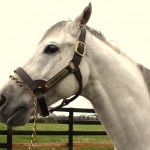 JW: Monarchos was a product of sire, Maria’s Mon and broodmare, Regal Band. What did you see in these two particular horses that led you to determine they would be a good breeding match?
JS: My quarter and paint horse experience of the previous 15 years had given me a basic understanding of equine conformation and breeding patterns, particularly a belief in the importance of female families as the conduit of good genes.
Regal Band was from one of the best families in the Jockey Club book that already produced a great mare Andover Way and a great stallion Dynaformer. Equally important was the fact that physically she resembled the dam of Doc Bar, an immensely influential sire of performance quarter horses.
I had watched Maria’s Mon win a 2-year-old race in New York and believed him to be the toughest, soundest and best-looking of all the freshman sires in my price range—and he fit my breeding theory in that he had descended from two good broodmare sires—Caro and Wavering Monarch.
JW: You were in the stable when Monarchos was born and watched his early development. Did he stand out from the other foals?
JS: By the time Monarchos was born, I had probably foaled 150 babies. Of those none came into the world brighter eyed and more ready to go. He was small, black as coal with a very big, bright eye, a lovely sloping shoulder and his mother’s star. Within a very few minutes—15 or 20 at the most—when startled by a cat in the rafters he got to his feet with ease and never once fell backwards.
Within a few hours, he was a whirling dervish doing circles around his mother and later as a weanling running, running, running long after his mates were winded, which is exactly what happened at Churchill Downs.
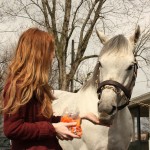 JW: When I met Monarchos during our visit, I found him to be a very gentle and kind horse. What factors do you believe contribute to good temperament in a horse – breeding, training, or both?
JS: Both I suspect. I never saw any mean temperament in any of Regal Band’s foals. But I give more weight to the latter. How a horse comes to relate to humans and other horses is probably behavior learned directly from the mother and the people who handle them. I believe the success of Two Bucks horses at the racetrack has a great deal to do with how we raised them on the farm.
JW: Can you describe how you felt when Monarchos won the 2001 Kentucky Derby?
JS: It took me an entire book - Horse of a Different Color - to describe it. And even then I failed to do it justice. I was up on the roof of Churchill Downs with the press photographers, most of whom I did not know. And they did know me.
Disbelief might have been the first emotion, realization of the extraordinary luck in involved the second. I did, however, lose my hearing for five or ten minutes afterward. I could see clearly, but heard nothing until I found Mary Anne in the crowd on the floor below. From that point on, it was a blur for a couple of days.
JW: Monarchos has the second fastest winning time in the Kentucky Derby. Do you think that Monarchos had the capacity to beat Secretariat’s track record in the 2001 Kentucky Derby?
JS: Jorge Chavez wrapped up Monarchos after he passed Congaree so easily and later said he could have gone a fraction or two faster had he known he was close to the record.
JW: Would you have enjoyed it if Monarchos had set the new track record for the Kentucky Derby?
JS: All of us connected with Monarchos were pleased to hear what Chavez said. Monarchos was indeed a very fast horse and had already proven that in the Florida Derby. But the Churchill Downs track surface was faster that day than normal.
A couple of records had been broken earlier in the day and the pacesetter in the Derby—Songandaprayer—had taken the field faster than it had ever gone before, setting records for the first few fractions. So a new Derby record would have always been suspect and an asterisk in the minds of many.
Secretariat is such an icon his record should last forever.
JW: You have been called a “Breeding Genius.” What do you think are the key elements that are present in a well-bred racehorse?
JS: The Breeding Genius moniker is a joke stemming from the point of view from which Horse of a Different Color was written. A friend of mine, the novelist Jane Smiley, once told me that after you reach the age of 50, a writer best writes with his tongue in his cheek. I did that in that Horse, writing from the third person as if the Breeding Genius (myself), and the Dominant Female (my wife Mary Anne) were characters in a piece of fiction.
Any success I have had as a breeder of horses - quarters, paints and thoroughbreds - can be contributed to an enormous amount of luck, great Kentucky ground, a well-constructed feeding program; faith in the power of female genes; and a wonderful way of dealing with horses that I learned from the experiences and teachings of two old cowboys—Tom and Bill Dorrance. What I learned from them and their followers cannot be overestimated as a factor.
JW: Do you believe that you could breed a future Kentucky Derby winner?
JS: The odds are not good. But once you do it, you never stopped trying until you run out of money or energy. I am growing shorter on both.
JW: What have been some of your most memorable moments in your years of breeding thoroughbreds?
JS: Nothing can compare with winning the Derby as a positive emotional experience.
Unfortunately, not all memorable experiences are positive. Both Regal Band and For Dixie, another great broodmare who produced several great horses including one that sold for $2.3 million long after we no longer owned her, both died at my feet.
So did my favorite riding horse and my favorite quarter horse champion mare.
But as long I keep raising horses, the memorable moments both positive and negative will keep on coming. That is the beauty of spending time with these magnificent creatures.
Jim Squires authored “Horse of a Different Color,” which is an exciting and informative book about his breeding farm and his experience with Monarchos. To view this book on Amazon.com, click here.
To comment on this post, click here.
The Saturday Post has recently started a Facebook Page. To join our group, click here.
March 17th, 2010 §

Roughly three decades ago, Alexis Barba walked onto the track at Golden Gate Fields. Having spent a lifetime around saddle and show horses, she experienced a defining moment. “I knew immediately that I could never lose interest in a racehorse.”
In the years that followed, Barba walked, galloped, and groomed thoroughbred racehorses. She worked as an assistant to the late trainer, Eddie Gregson, who won the 1982 Kentucky Derby with the horse, Gato Del Sol. When Gregson died in 2000, Barba began training on her own.
Barba currently has a six-horse barn at Hollywood Park. However, this is no small operation. Of the six horses in the barn, two of the horses are currently on the trail to the Kentucky Derby.
Make Music for Me was the first horse to qualify in Barba’s barn for the Derby. In his two-year-old career, Make Music for Me placed in three of four graded stakes races – ranking him twelfth in earnings at $215,000.
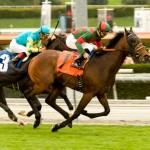 Despite the excitement of having Making Music for Me on the Derby trail, Barba remained dedicated to her remaining horses. Alphie’s Bet, the stablemate of Make Music for Me, was entering his three-year old season. At the time he made his 2010 debut, Alphie’s Bet had one second-place finish as a two-year-old to the highly-regarded Derby hopeful, Caracortado.
After Alphie’s Bet finished second in December, Rider Alex Solis reportedly told Barba, “I think he can run all day… He’s big, strong, and he’ll run any distance.”
In his 2010 debut as a three-year-old, Alphie’s Bet demonstrated his capacity to win. On January 15, he broke his maiden at Santa Anita in an electrifying performance. After running last throughout the majority of the race, he went wide on the final turn and rallied in the stretch to capture breathtaking victory.
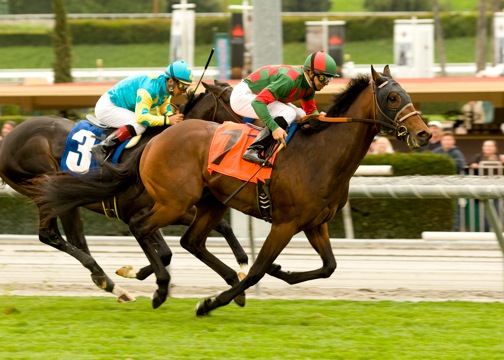
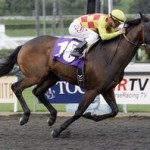 On March 6, Barba raced both horses at Santa Anita. In the sixth race, Make Music for Me clinched his first career victory in the Pasadena Stakes. Roughly forty minutes later, Alphie’s Bet won the Sham Stakes in a 2-1/4 length victory.
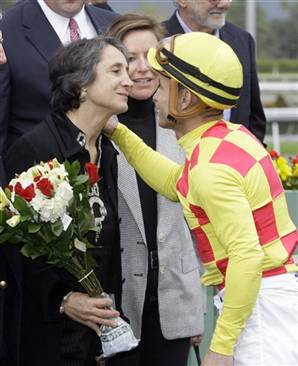
By winning the Sham Stakes, Alphie’s Bet had just captured enough graded earnings to qualify for the Kentucky Derby. As she held a bouquet of red-and-white flowers in the winner’s circle, Barba remarked, “Isn’t it amazing?”
It certainly is.
Recently, Barba graciously agreed to provide an interview about her experiences as a trainer and her Kentucky Derby prospects. I remain grateful for her kindness in taking the time to answer my questions.
JW: What initially attracted you to the sport of horse racing?
AB: I acquired a Thoroughbred Stallion that I was going to make into a show horse. I was so curious about his pedigree, I began exploring Thoroughbred lines.
As fate will have it, I acquired a Thoroughbred yearling filly shortly after that. I wanted to try to race her, but I didn’t have the means, so I thought I could work at the track. I went to Golden Gate Fields in Albany, CA, which was close to my childhood home, in the Oakland Hills.
Being anxious and curious, I now had a stallion and a filly. So guess what I did? Yes, I bred them.
The product of that mating was a filly named Lepta (Greek for Money). Since her mom didn’t make it to the track, I was going to be sure the daughter did. To make a long story short, Lepta won her first start at Caliente Race Track in Mexico. Her mother, French Dish, I believe went on to have 16 or 17 foals, three of which were winners at Santa Anita and one a stakes horse named Ondarty.
JW: How did you learn how to train racehorses?
AB: As you can see by my breeding program, I had a lot of practice with my own horses. I also had a lot of help along the way with some of the trainers, such as Tommy Doyle and Eddie Gregson, as well as anyone else who would give me information.
JW: What are some valuable lessons that you have learned about training racehorses during your career?
AB: Be patient, it all goes at a snail’s pace.
JW: What does your average weekly schedule look like as a trainer?
AB: Mostly just going to the track every morning. Then, to keep some kind of normalcy, I try to meet with friends at least once a week to gossip and tell horse stories.
JW: Has it been a dream of yours to race a horse in the Kentucky Derby?
AB: I wouldn’t say a dream, because most of the time you are just trying to get a productive horse. Of course, everyone wants stake horses, so when you are buying, you are always looking for good quality that meets that criteria.
JW: In the history of the Kentucky Derby, a female trainer has never won the race. How do you feel about your potential to make history?
AB: I’m not thinking about that. Let’s just run in the race first.
JW: What do you think are the strengths and unique qualities of Make Music for Me?
AB: He is a smallish horse with a huge stride and good appetite.
JW: What is the next race for Make Music for Me?
AB: The Toyota Blue Grass Stakes.
JW: Was it a surprise to you when Alphie’s Bet qualified for the Kentucky Derby after winning the Sham Stakes?
AB: No. I always told the owners that we had a really nice horse on our hands.
JW: What do you think are the strengths and unique qualities of Alphie’s Bet?
AB: He has a great turn of foot. To look at him, you wouldn’t think that he would have that.
JW: What is the next race for Alphie’s Bet?
AB: The Santa Anita Derby.
JW: Rider Alex Solis has been quoted as saying in the press that Alphie’s Bet reminds him of Candi’s Gold, the grandfather of Alphie’s Bet. Having worked with Candi’s Gold under your former boss, Eddie Gregson, do you see any similarities between the two horses?
AB: Yes. He looks like him and he has some of the same ‘Lookey-Loo’ quirks.
JW: What do you love about the sport of horse racing?
AB: Everything. Lots of characters around the track - Human and Equine. But at times it can be grueling. Actually, a lot of the time. You would have to live it to understand it.
When they are in the gate, anything can happen!
To comment on this article, click here. The Saturday Post also has a new Facebook page for comments. You can subscribe to the page by clicking here.
March 15th, 2010 §
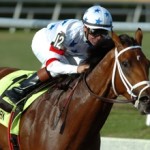
In 2008, Big Brown captivated the American public with his flashy wins and charismatic bid to win the Triple Crown. With a career record of seven wins in eight starts, he defied the odds in several races and produced mind-bending accomplishments on the track.
As a two-year-old, Big Brown broke his maiden at Saratoga in a dazzling 11-1/4 length victory. When he entered his three-year-old season, Big Brown won four consecutive races between March 5 and May 17, including the Kentucky Derby and Preakness.
In the Kentucky Derby, Big Brown won by a thrilling 4-3/4 length victory after having had only three prior career starts. He became the only horse in history to win from the 20th gate post.
Entering the Preakness, Americans fixed their attention on Big Brown after his dominating win at the Derby. Big Brown delivered an astonishing 5-1/4 length win in the Preakness. When all eyes turned toward Big Brown in the Belmont, he experienced the sole heartbreaking loss in his career. However, his tremendous presence and star quality drew new fans into the sport of horse racing – the fourth largest crowd in history showed up at the Belmont Stakes to watch Big Brown make his bid for the Triple Crown.
Prior to retiring, he won his last two career starts – the $1,000,000 Haskell Invitational (Grade 1) and the $500,000 Monmouth Stakes. Jockey, Angel Cordero, encapsulated the exceptional talent of Big Brown: “He’s like a car – he comes with everything. Just step on it, and you’re there.”
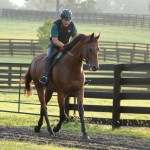 Since his retirement, Big Brown has bred over 100 mares at Three Chimneys Farm. As the first foals by Big Brown are emerging at various stables, he continues to make his mark on the sport of horse racing. This year, Big Brown will travel to Australia to stand at Hunter Valley farm.
Prior to his anticipated departure for Australia, Three Chimneys Farm graciously provided me with an interview. After chasing him from the Derby to the Belmont, I was elated to finally catch up on Big Brown.
JW: After winning the Kentucky Derby and Preakness in 2008, Three Chimneys Farm struck a deal to stand Big Brown prior to the Belmont race. At the time the decision was made, did the farm believe that Big Brown was going to win the Triple Crown?
TCF: We thought he had a better chance than just about any horse in recent decades. From his first start to his runaway win in the Preakness, he really hadn’t been tested. His rivals couldn’t even get close to him and in the Preakness, running against some of the best of his generation, he won under wraps by 5 ¼ lengths.
JW: What are the overall qualities about Big Brown that led to the decision of Three Chimneys Farm to acquire him for breeding?
TCF: Obviously the brilliance he showed in his first three races was a major factor. He achieved a series of “firsts” and “bests” that rank him with the all-time greats, such as being the first horse to win from the 12 and 20 posts in the Florida Derby (G1) and Kentucky Derby (G1) respectively. On top of that, he ran the best Ragozin number in Kentucky Derby history. He’d come to the Derby virtually untested, and on racing’s biggest day, left the rest of the field eating his dust.
Combined with that is his physical appearance. He is beautifully conformed and well-balanced. He’s not too big or small; not too heavy or light. The way he’s built makes for an effortless stride, allowing him to float across the track with minimal exertion.
From a pedigree standpoint, he’s inbred 3 x 3 to Northern Dancer, making him a likely candidate for crossing well with Mr. Prospector-line mares, not to mention Halo, Roberto, Seattle Slew, and Blushing Groom strains as well.
Also factored into the mix is his temperament, which couldn’t be better. We saw time and time again during his racing career that he took everything in stride. He’s level-headed, intelligent and kind. He doesn’t fight his rider in the morning or in a race and, as a result, is not hard on himself whatsoever.
JW: Big Brown has bred with over 100 mares in his first season. How is it determined which mares are bred with Big Brown?
TCF: We have an expert pedigree consultant on staff at Three Chimneys by the name of Anne Peters. She looks at the pedigree of each mare submitted to Big Brown and also considers the physical qualities the mare possesses, any soundness issues on either the sire or dam’s side, and other factors.
Based on what similar breedings have resulted in the past and what the mare has produced or accomplished herself on the racetrack, Anne makes a judgment as to whether the mare would be a suitable mate for Big Brown (this is done with mares submitted to all of our stallions).
If, for example, she feels the mare would not pair up well with Big Brown, she then suggest other mating options (either stallions at our farm or at other farms) that might pair up more favorably.
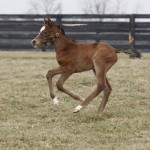 JW: The first reported foal by Big Brown was born on January 12, 2010. How many foals by Big Brown do you anticipate being born this year?
TCF: We limit all of our stallion’s books so as not to saturate the market with their offspring and so the horse is not over-used, so we expect Big Brown to have a crop of around 100 foals. 71 of the mares he was bred to are either stakes performers or stakes performing producers, so it is definitely a quality book.
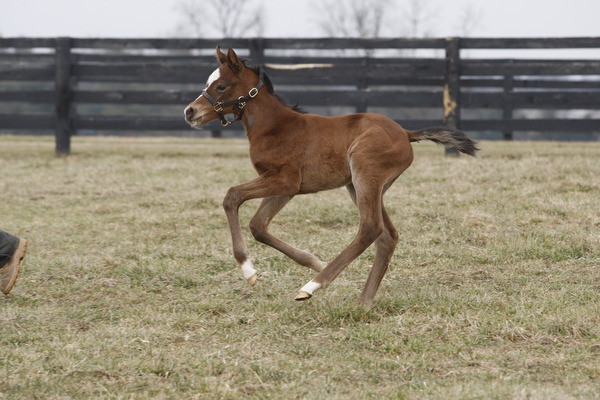
So far, the feedback we’ve received has been extremely positive regarding his foals. He’s really stamping them with his build, athleticism and balance and they seem to have his temperament as well. Obviously mares come in all shapes and sizes, but his foals are surprisingly similarly built.
JW: On the track, Big Brown produced flashy wins and had an intimidating build. Having had the opportunity to establish a more intimate understanding of this horse, how would you describe Big Brown’s personality?
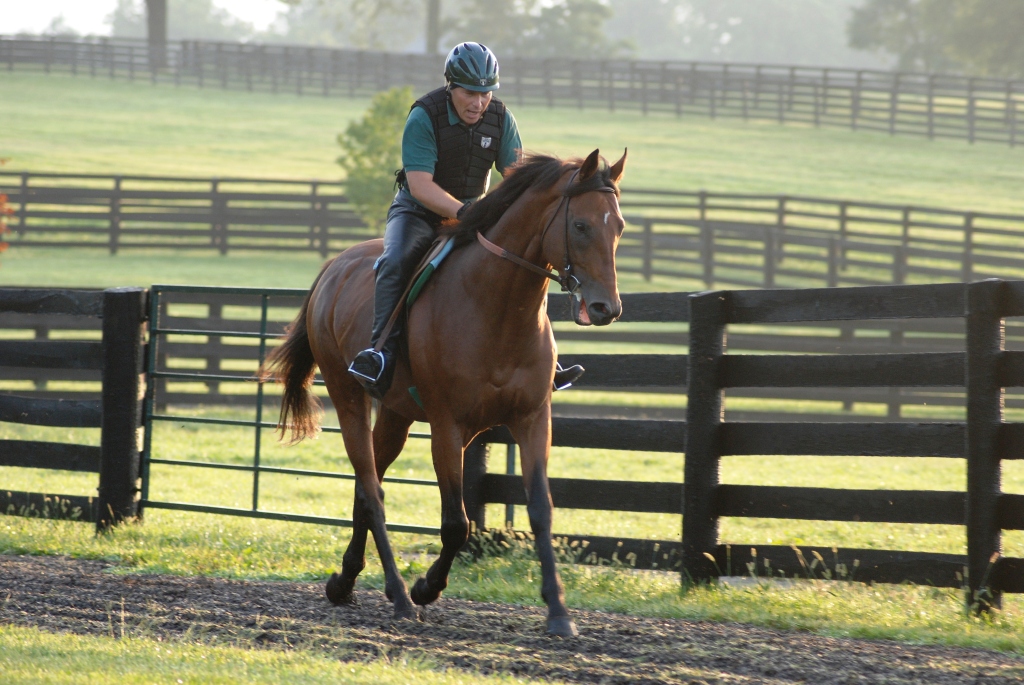
TCF: Big Brown is the epitome of a healthy, happy horse. He has an outstanding temperament in that he is not easily rattled and is quite personable. We ride our stallions 6 days a week (they gallop a mile and a quarter) and Big Brown just floats around the track with his ears pricked – if horses could smile, they would look like Big Brown under saddle.
That’s not to say he doesn’t have a bit of a wild side. Some days he puts on quite a show in his paddock for visitors who come to the farm for our daily tours. He loves to kick up his heels and tear around his paddock, throwing in a playful rear here and there just for fun.
 JW: In his retirement, does Big Brown continue to receive attention from fans and visitors?
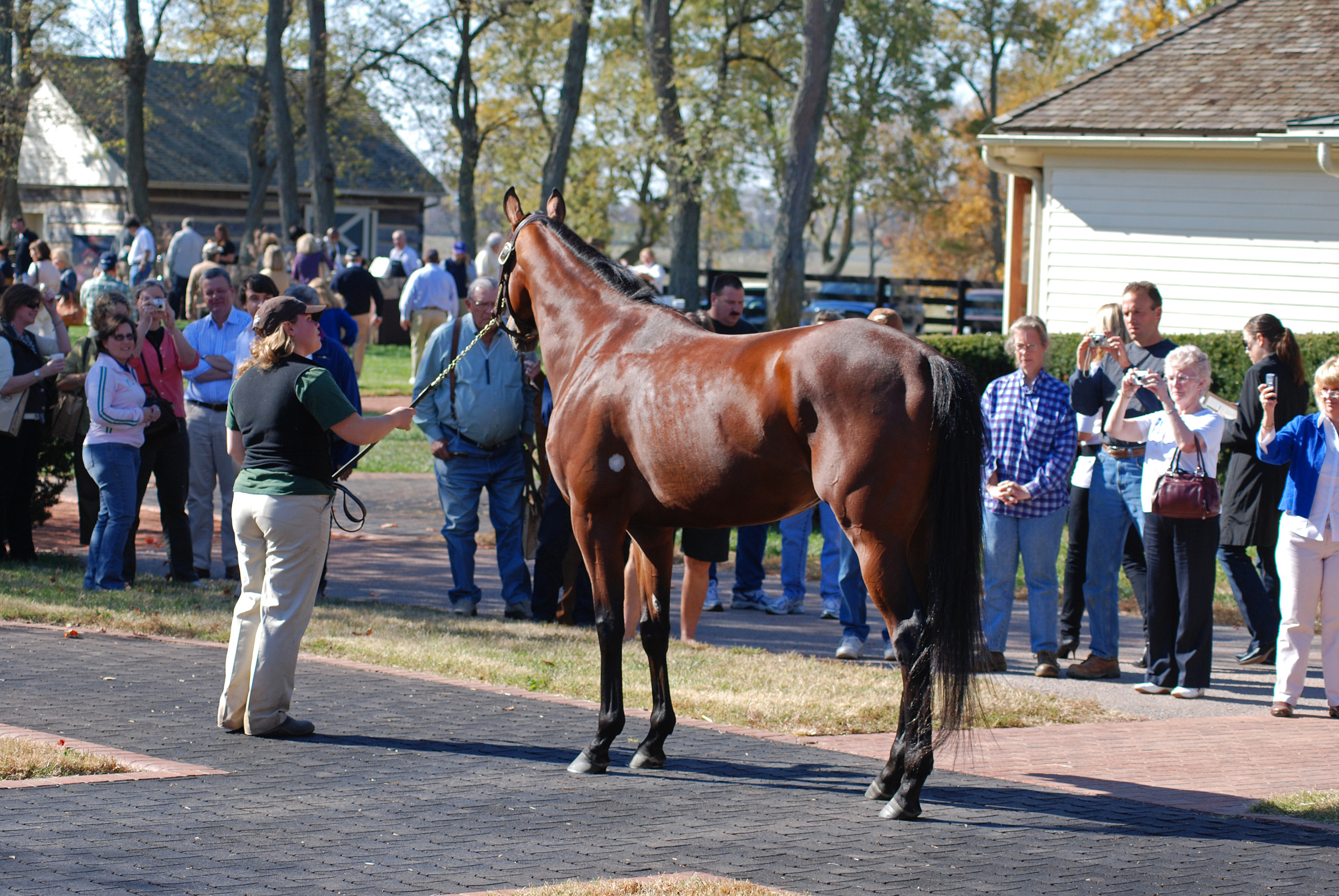
TCF: Three Chimneys began offering daily public tours when Seattle Slew stood here and still conducts them five days a week. We estimate that our stallions receive more than 25,000 visitors a year from the tours alone and the horses that we receive the most requests to see are Big Brown and Smarty Jones.
We also have a visitors’ center near our main office, where tourists gather before and after the stallion division tour to see photos of the stallions, purchase hats with a stallion’s name and silks on them, and look through farm literature and all of the fan mail our stallions, especially Big Brown and Smarty Jones, receive (and they do receive A LOT of fan mail).
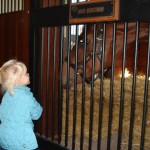 JW: Does Big Brown have any unique personality traits or favorite items?
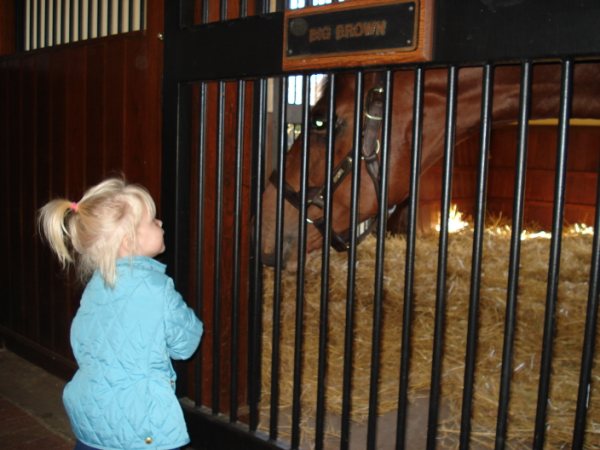
TCF: Big Brown loves peppermints and butterscotch candy. He also seems to be fascinated with children. Anytime a child comes to the front of his stall, Big Brown lowers his head to greet them.
This past fall we also saw Big Brown’s uncanny ability to adapt to any situation. Make A Wish brought a child out to meet Big Brown. The child had severe disabilities, so petting Big Brown was a very slow process (and wouldn’t have been possible without that wonderful temperament he possesses). Big Brown stood like a statue while the child pet his mane and shoulder and even pressed the “go button” birthmark on his side. The child’s eyes were wide and bright and he let out numerous giggles, bringing tears to the eyes of his parents and just about everyone else in attendance.
JW: Recently, it was announced that Big Brown will be shipped to Australia to stand at Hunter Valley Farm. What led to this arrangement and do you anticipate that Big Brown will return to Three Chimneys Farm in the future?
TCF: Big Brown’s pedigree is highly desirable in the Australian market, as it matches up favorably with many of the mares in that part of the world. Big Brown will shuttle, meaning that he will ship to Australia (accompanied by his groom) and stand the Southern Hemisphere breeding season, which is during the opposite time of year as our Northern Hemisphere breeding season.
Once the Southern Hemisphere breeding season has concluded, he will travel back to the United States to Three Chimneys. This will be an ongoing arrangement, so long as Big Brown handles the physical and mental demands of shuttling (which we expect him to have no problem doing).
Click here to comment on this article or email Jennifer Wirth at blog@thesaturdaypost.org.
For more information on Three Chimney’s Farm, please visit their website.
Three Chimneys Farm also has a fan club, “Club Three Chimneys.” For a $35 annual membership fee, members receive trial subscriptions to the Blood-Horse and Thoroughbred Times (8 week subscriptions to each, with the option to subscribe on an annual basis at a heavily discounted rate) a hat, weekly emails about stallions, progeny and farm updates, free farm tours, quarterly newsletters, contests, and more. You can find more information about the club at on their membership page for Club Three Chimneys.
January 14th, 2010 §
 On January 1st, 2010, the next group of Derby hopefuls all turned the three as the nation celebrated the new year. As the days begin to roll by, many trainers and owners will begin to set their gaze on one of the most prized accomplishments in sports - the winning of the Triple Crown in horseracing.
Although the first leg of the Triple Crown doesn’t arrive until May 1, 2010, when all eyes turn to Churchill Downs for the 136th Running of the Kentucky Derby, the prep races to qualify for the highly-coveted positions in the Derby are shifting into gear. As with every year, I begin to watch the Saturday prep races, with a hope that this year will bring the next Triple Crown Winner.
This year is no different - with the exception of this Blog. You might ask - Why are you starting a Blog about horseracing? The answer is simple. I love the sport. I love the players. I love to talk about horseracing. It makes me scream with excitement, cry with heartbreak, and leaves me endlessly studying the details of races to try to master the mysteries of the sport.
During this month, I will begin considering the new horses positioning themselves for the Kentucky Derby, making travel plans to go to Churchill Downs for the first Saturday in May, and reminiscing about my past “loves” who thrilled me (or left me heartbroken) at the wire. I study the video footage of all the prep races, read the handicapper’s picks, look for the standout performances, until finally, I fall in love with a new horse for the year. And, once I fall in love with a horse, I am unshakeable in my devotion.
After seeing Barbaro win the Derby, I actually bought a farm with the dream of owning a racehorse. When he died, my racehorse dreams hit reality. A friend called my office the day of his death to tell me the sad news. The first sentence out of his mouth was, “What is the worst thing you can imagine in this world right now?” My immediate response was “If Barbaro died.” Unfortunately, I had picked the right horse that day. I sent a dozen roses to his hospital and had my first major lesson in horseracing - These great atheletes are not infallable.
After Barbaro, I maintained my enthusiasm for horseracing despite the peaks and valleys that are inherent to great love. Prior to the historic Belmont when Rags to Riches beat Curlin, I had a hair-trigger temper for anyone who told me a filly couldn’t win the Belmont. When she stomped across the wire, it felt like I won that race with her. She taught me the next lesson - Fillies are a force to be reckoned with and should never be discounted on the basis of gender alone.
When Big Brown showed up on the scene, it was love at first sight. By then, I had sold my farm, having learned that you can’t “grow” racehorses without lots of money. I sat in my Chicago apartment and watched his races for the pure joy of witnessing such raw talent. At the Derby, I watched him thunder to the finish line first from the twentieth post. When he won the Preakness, I booked my first trip to New York City in life. I was convinced that I was going there to witness the coronation of the next Triple Crown Winner. When he finished dead last, my heart was broken and I learned the most important lesson to date - Any horse can win or lose a race. Even Big Brown.
This past year, I saw the fillies take center stage and slam the door on the gender divide in horseracing. Rachel Alexandra’s stunning wins made me stand in awe of her ability. I thought she was the easy pick for “Horse of the Year.” And then came Zenyatta - who closed the Breeder’s Cup with a historical victory that changed the landscape of horseracing for fillies forever. As I write this story, the 2009 “Horse of the Year” will be picked in less than a week. My mind spins in circles between the two of them and wishes that they both could hold the title.
However, in horseracing, there is only one winner. And, the answer only arrives when the race is won. It could be a filly. Or a longshot. It could be the favorite of the betting public. The horse could be a former claiming horse or have cost a fortune. One thing is certain - There are extensive amounts of money and lifelong dreams on the line. Everyone from the owners to the betting public pays to watch the performance. So, who will be the next Triple Crown Winner? It is among the most expensive questions in the world.
Do you have a comment, question, or idea? You can contact Jennifer at blog@thesaturdaypost.org.
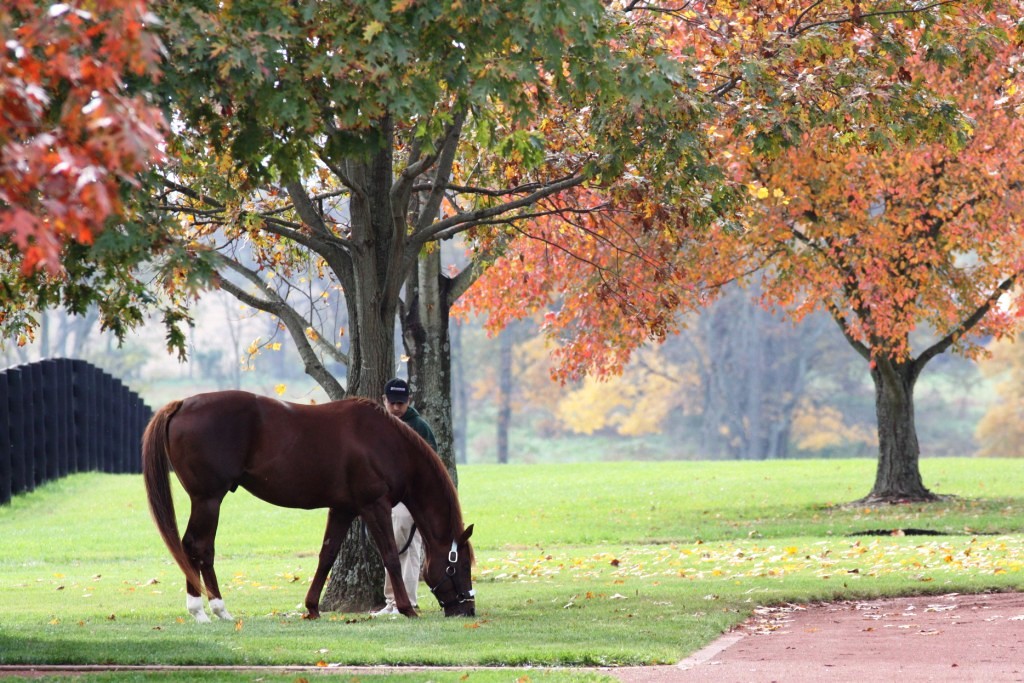
 Smarty Jones retired in 2004 with a career record of winning eight of his nine races. He was sent to Three Chimneys Farm and housed in the former stall of Seattle Slew, the only undefeated Triple Crown winner in history.
  JW: How would you describe the character and temperament of Smarty Jones?