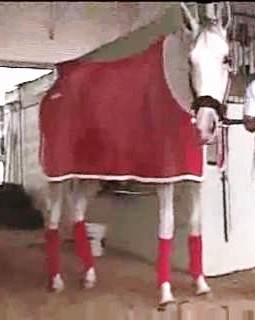
May 3rd, 2011 §
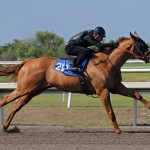 When I was a twenty-year-old college student, I paid a visit home to my mother one weekend.
It wasn’t your typical visit home from college.
The reason I had come home that weekend was because my mother had just undergone one of her many chemotherapy treatments in her fight to survive breast cancer.
When I arrived at her hospital bed, she had lost the fiery red hair that made her easy to spot whenever I looked for her as a kid. She was bald and pale as a ghost now.
She had also lost the joyful presence that she carries into any room. She was tired now. You could see the pain that she was suffering in her eyes and it was absolutely heartbreaking.
In my mind, she was dying of breast cancer. I remember being a young student walking up to the nurse station and saying to them, “Do Something.” Just do anything. But sadly, as many other families know, there is only so much that medicine can do in these moments.
Yet, thirteen years later, my wish for someone to “Do Something” has been answered in a beautiful turnaround of events.
As for my mother, she is among the lucky women that have been fortunate to survive breast cancer. I am happy to report that her joyful presence has returned and she has regrown her red hair that makes her easy to find in any crowd. And, my favorite place to find her today is in survivor walks to help find a cure for breast cancer.
However, she isn’t the only redhead who is doing something in the future for breast cancer.
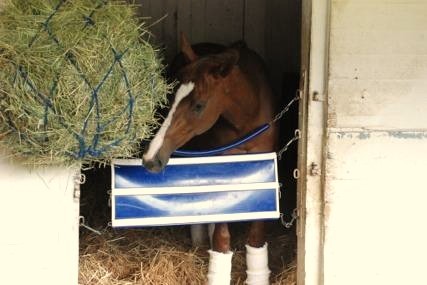
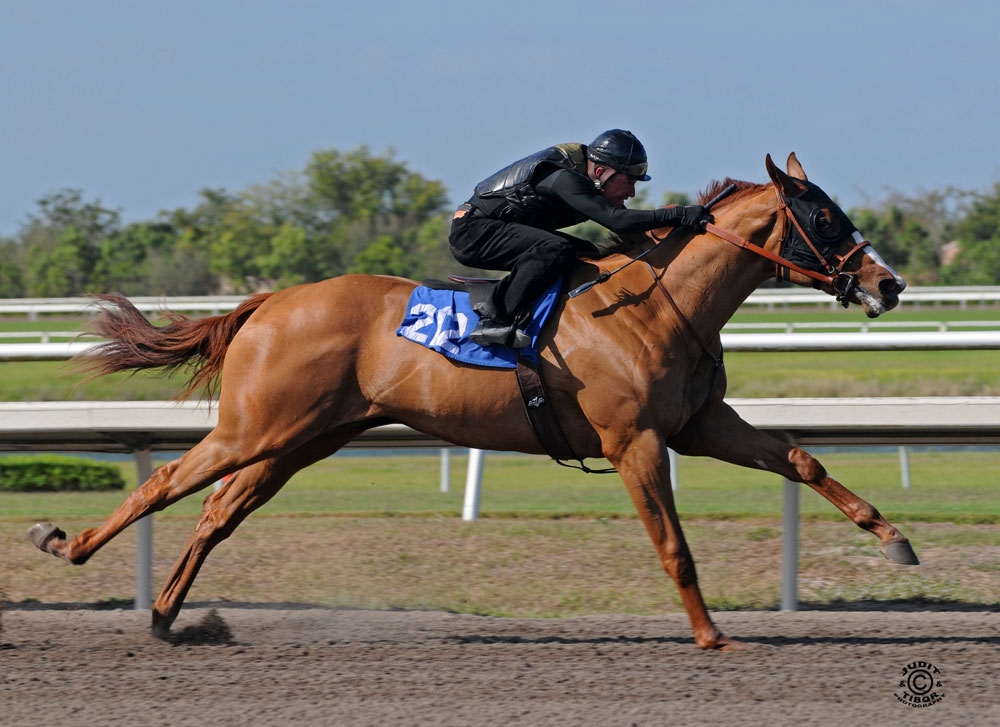
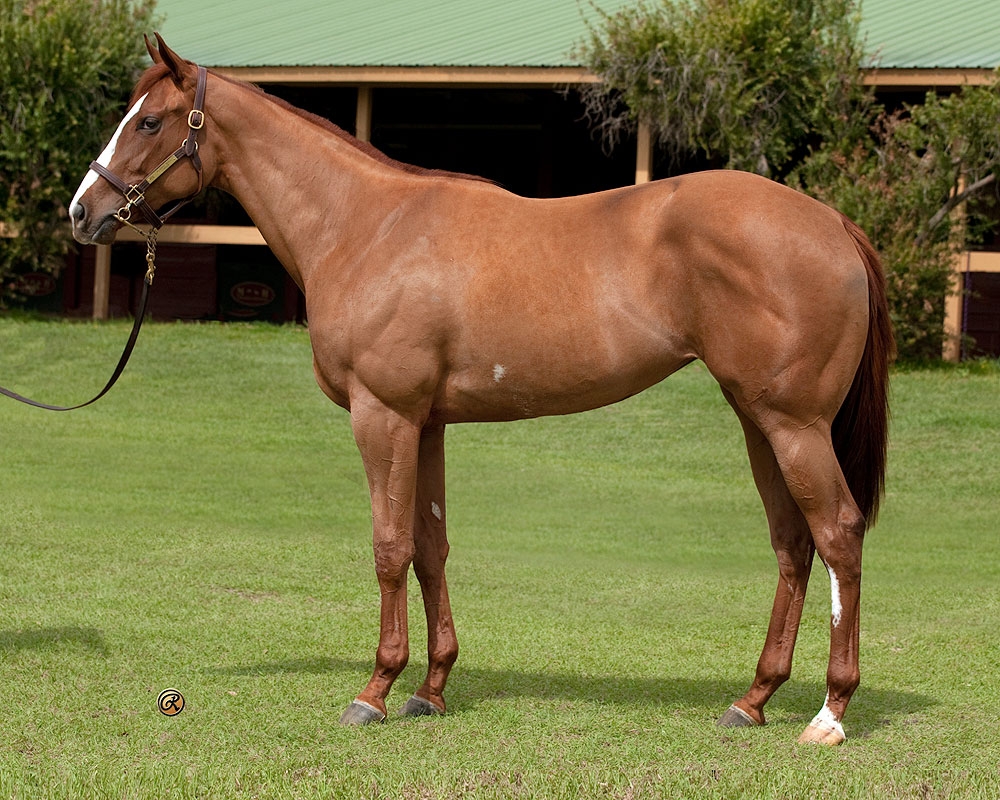
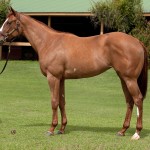 Thirteen years after my mother became a “survivor,” a redheaded filly showed up. And, this filly is also hoping to “Do Something” that contributes to a cure for breast cancer in her own domain – the race track.
West Point Thoroughbreds currently plans to race a two-year-old chestnut filly that will be donating a share of her winnings to support finding a cure for breast cancer. When the filly begins racing, 2.5 percent of any of her winnings will be donated to a breast cancer charity. West Point will also provide a 2.5 percent matching donation whenever the filly wins a race.
So, you may wonder, what inspired West Point Thoroughbreds to race a filly for breast cancer? Simple.
It hit home at the company.
As Shannon Castagnola of West Point Thoroughbreds explained, “We are a small company. There are eleven full-time employees, but seven are women.” She continued, “Breast cancer awareness is something we must all confront at some point or another. It could be your mother, aunt, your sister, or your wife.”
Castagnola noted, “My mother was diagnosed 5 ½ years ago, in October of 2005.” After seeing the “Think Pink” Breast Cancer initiative on Oaks Day, Castagnola recognized that breast cancer awareness was a cause that racing could benefit. She explained, “I remember clearly looking out at the Oaks crowd last year, seeing an absolute sea of pink, and thinking ‘They get it, they want to embrace this cause.’”
And, in the end, West Point Thoroughbreds has embraced breast cancer awareness with the one beautiful filly. When I asked Castagnola about the filly’s demeanor, she said “She’s a big, strong filly and she has a great mind.”
In my view, there couldn’t be a more perfect way for a racehorse to start out a campaign to raise awareness for breast cancer.
The filly is currently nameless - just like many of the women in the statistics that we see about breast cancer. But, when she hits the home stretch in her first race, many racegoers will hopefully know her name and her reason for racing. She will be adorned with pink silks, according to Castagnola.
So, in the end, just like my mother in the survivor parade, there is one more redhead that I can spot in a crowd that answered my call to “Do Something.”
And, with her pink silks and strong build, I hope to spot the redheaded filly in the same place where a find my mother today.
I hope to see her in the winner’s circle.
To learn more about the breast cancer filly through West Point Thoroughbreds, please visit http://www.westpointtb.com or contact Shannon Castagnola at shannon@westpointtb.com.
February 14th, 2011 §
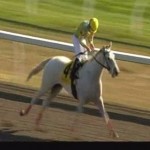 In 1979, Trainer John T. Ward, Jr. and Owner John Oxley teamed up in the racing world and set out on a journey that would ultimately deliver a Kentucky Oaks victory in 1995 with Gal in a Ruckus and the second-fastest Kentucky Derby winner in history with Monarchos in 2001.
It seemed they had already realized the dreams that many trainers and owners chase throughout their lifetime.
Yet, the beauty of racing is that a horse can simply show up and defy whatever was previously imagined to be possible in a lifetime. And, it is part of the glory of the sport that one can spend a lifetime living inside the wonder of what dreams may lay ahead.
For the Ward/Oxley team, a new dream appears to be taking flight with the arrival of Dancinginherdreams, a three-year-old filly that juxtaposes grace and grit in a fashion that is simply otherworldly in description.
In her three career starts, Dancinginherdreams has claimed two dazzling come-from-behind victories and placed after delivering a breathtaking finishing charge in the Forward Gal Stakes. As she points to her next outing, Ward graciously agreed to answer my questions about Dancinginherdreams as she continues to move forward on the trail toward the Kentucky Oaks.
WIRTH: You have trained some very special horses in your career, including Beautiful Pleasure, Kentucky Oaks Winner Gal In A Ruckus, and Kentucky Derby Winner Monarchos. Do you believe that Dancinginherdreams is a special filly?
WARD: Yes. I believe that Dancinginherdreams is a special filly. My wife trained Beautiful Pleasure and she was a superior athlete. This young filly could fill those shoes.
As far as Gal In a Ruckus and Monarchos, Dancinginherdreams is better than Gal In A Ruckus. Hopefully, Dancinginherdreams has the endurance and the closing style of Monarchos. His style is more indicative of my training.
WIRTH: Was Dancinginherdreams trained to deliver a “Come-From-Behind” finish in her races or is that her own personal style?
WARD: I am trying to develop that trait in Dancinginherdreams.
When she ran in the Forward Gal and came in second, she was sharp enough to go immediately to the lead and had the speed to do it. But, I don’t want to teach her to leave the gate in a sprint fashion because she is capable of endurance and has the physical structure to go two-turns in a race.
I had to sacrifice the early part of the race in the Forward Gal the other day because I didn’t want to ruin her chances of being a horse that comes from behind.
WIRTH: In the Forward Gal, were you impressed with the late charge from Dancinginherdreams?
WARD: Yes. It was gratifying. I don’t mind getting beat if I see the horse displaying other dimensions in a race.
Dancinginherdreams showed other dimensions in the Forward Gal. She got down on her belly and showed as much grit as she could get. She raced up to the filly that won and got her past the wire. In her mind, she chased her down.
When she is in a race, Julien Leparoux, her rider, says she just melts in his hands and looks for the holes to go through. When she finally did get clear in the Forward Gal, Dancinginherdreams showed that she has an amazing closing kick.
WIRTH: In her three career starts, which race did you personally find the most impressive?
WARD: I thought that the Forward Gal was her most impressive race so far. She ran against a very good group of fillies and she was still able to close against experienced racehorses that had multiple wins.
Her stakes win at Churchill last fall was a good stakes win for a two-year-old, but the Forward Gal showed that she could somewhat dominate in a group of experienced horses when put to the task.
I am looking forward to seeing her race a mile in the Davona Dale at Gulfstream on February 26. The Davona Dale should be right up her alley.
WIRTH: How would you describe the personality of Dancinginherdreams?
WARD: When she is racing, Dancinginherdreams has the mind of a five-year-old or six-year-old racemare. She is very tactical in her races and will do anything you want her to do. Older horses look for holes in races and sometimes they can even see them before the rider. She already has that instinct.
Dancinginherdreams also doesn’t mind going into tight places in her training in the morning. I think she showed that in her second win.
Finally, she just has a different dimension because she can explode in the last quarter in a race. It is a factor that will make her a very dangerous filly in the Kentucky Oaks.
WIRTH: What are some of her favorite items or unique traits?
WARD: Dancinginherdreams is a young, tall, spoiled girl. When we come into work in the morning, she gets anxious. So, she immediately gets to come out and walk for 25-30 minutes the first thing in the morning. Once she comes back in, she gets ready to train. When she trains, she has a favorite pony that accompanies her to the racetrack.
She also has a shed foreman, an elderly gentleman, and she just loves him. Whenever she thinks anything is wrong, she just jumps over next to him. He’s her human.
She does have an explosive temperament, but she manages it very well. I call her a ‘professional woman’ when she is racing and a ‘teenage girl’ when she is around the barn. She will constantly have you on your toes to keep her happy. She loves eating peppermints and carrots.
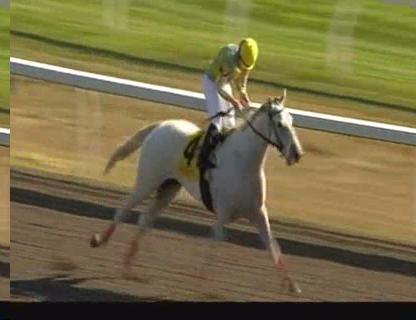
Her nickname is ‘Pinky’ because she is so white. When you give her a bath, her skin is pink. Her skin is pink and freckled underneath her coat.
WIRTH: What would it mean to you if Dancinginherdreams raced in the Kentucky Oaks?
WARD: Being a person from Kentucky, to me, it is the most elevated race for a filly. I think it is a great accomplishment. My wife and I would just be thrilled to have two Kentucky Oaks winners.
A win in the Oaks would emphasize our style of training. A slow, patient, classical style of training pays off in the end with horses. It might get you beat sometimes. But in the end, our whole theory is, ‘Raise them like champions. Race them like champions. And, make them disappoint you.’
WIRTH: What is your favorite moment with Dancinginherdreams at this point in her career?
WARD: I think the greatest experience that I have had with her was in the past few days.
Lately, she wants to get aggressive when she is training in the morning and she wants to take charge. It’s the bubbly teenage girl inside of her that says, ‘Well, I’m going to go out there and do it however I want to. You can’t tell me what to do.’
In the past few days, she has been working on a long, ¾ of a mile training path outside of the regular track. She has been going back there without the pony for a couple of days.
You can see the confidence exude out of her and she is in the zone where training is the most important thing to her now in the morning. You could fall down right in front of her and she’d just walk right over you and continue her training. She is not wild. She is just being very controlled.
I believe she is at the point where she is done being a teenage girl and starting to be a young lady. And, she’s becoming a very athletic young lady.
Want to stay posted on Dancinginherdreams? You can follow her on Facebook through clicking here.
» Read the rest of this entry «
October 11th, 2010 §
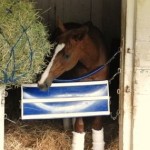 In less than a year, Blind Luck transformed her career from being an unraced $10,000 filly at auction to become the 2010 Kentucky Oaks winner.
On June 21, 2009, Blind Luck made her racing debut in a $40,000 maiden claiming race at Calder Race Course. After she blazed to a 13¼ length victory, Trainer Jerry Hollendorfer privately purchased Blind Luck. She soon began racing in graded outings.
In her next eight starts, Blind Luck captured five wins – three of which were Grade 1 victories.
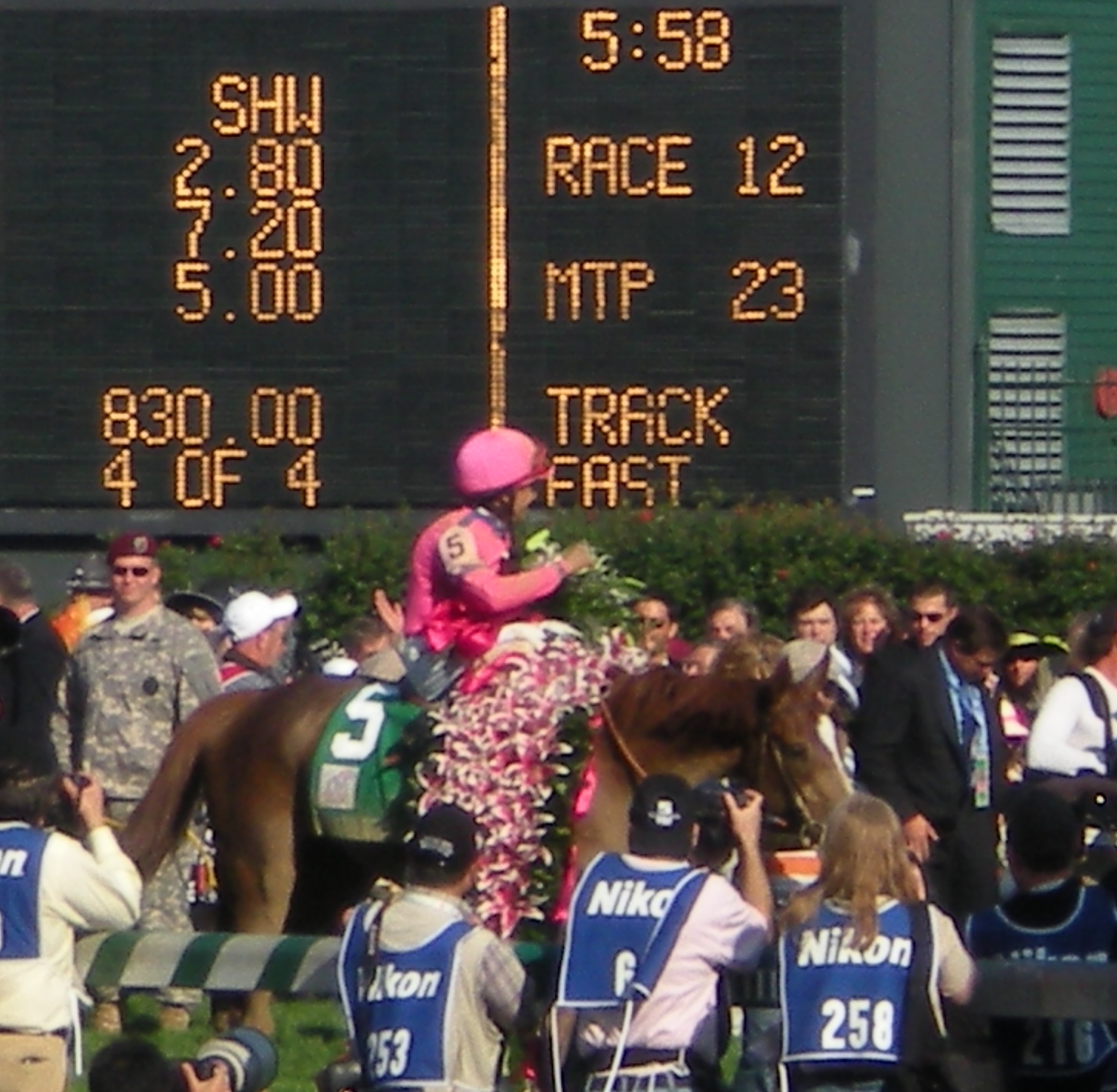
In April of 2010, Blind Luck was shipped from California to Kentucky to challenge a field of rivals in the Kentucky Oaks. In her riveting last-to-first fashion, Blind Luck bulleted in the final stretch to clinch a victory by a nose in one of the most highly-regarded filly races in the United States.
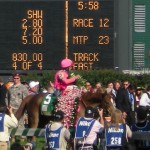 Since the Oaks, Blind Luck has won two of her last four starts and finished second in the remaining outings.
Throughout her career, Blind Luck has raced throughout the United States, hit the board in every outing, and has proven her ability on both synthetic and dirt surfaces.
As she points toward her next start in the Breeder’s Cup Ladies Classic at Churchill Downs, Daniel Ward answered our questions about Blind Luck. Ward is an Assistant Trainer for Hollendorfer and heads the Southern California Division.
JW: Blind Luck has amassed five Grade I victories, including the Kentucky Oaks in 2010. How did you feel about Blind Luck’s potential when she first joined the Hollendorfer stable?
DW: She was a good-looking filly - very tall with long legs. When we were just working her, we could tell that she was a nice filly. But, until the first time that she ran, we didn’t know.
The first time she raced for us she had a lot of trouble, but she circled the field and won pretty easily. So, we were very excited about that.
Then, we took a big step up from that starter allowance race and she ran the Grade 1 Debutante. When she ran second, we knew we had a good filly.
JW: Blind Luck has been shipped all around the country and has run on both dirt and synthetic surfaces. In your opinion, does she prefer any particular surface or track?
DW: She has won at eight different tracks. She has three Grade I victories on synthetic and two on dirt. So, I really don’t think she has a preference since she has run well on every track. I believe if she gets a chance someday, she would run well on grass - just because of her running style.
JW: Blind Luck appears to enjoy running from behind-to-first in the final seconds during her races. Do you think she knows where the wire is in any given field?
DW: I think she races the same way she acts and trains in the morning. She runs like that in the morning.
In a morning workout, it is a really big advantage when you have a horse like her because you don’t have to worry about her being too strong galloping or working too fast. She can go very slow if you want, and then, she just picks it up on her own or on the turn. We try to teach a lot of horses how to do that and she’s always been able to do that.
She doesn’t have any off-days in workouts.
It just seems like she knows what she’s doing.
JW: Do you get nervous in the final seconds of her races because of her style of running?
DW: Yes. Nobody can really say that they don’t, but it’s very exciting.
A lot of the time when I’m watching her race, I really think that when she moves around the turn and she’s running at a target, she’s going to get there. But sometimes, when she gets there, she waits on the other horse. So, that makes it closer than it should be in the end.
JW: How did you feel when Blind Luck won the Kentucky Oaks?
DW: It is very hard to start a year and pick a goal for any horse. It was satisfying just to get to the race.
When she won the race that we were pointing for all year, it was a very big accomplishment.
JW: You have regular contact with Blind Luck. What is her personality like at the stable?
DW: She is very smart. She likes to go out early. She gets very anxious when she sees other horses go out to the track. She likes to be the first one out.
She usually works at 8 o’clock. She is so smart that if she doesn’t go out early, she relaxes with the thought that she’s not going to work out that day.
I can do anything I want with her, without them tying her up or putting a halter on her, because I have a bag of carrots with me when I check all the horses in the morning. She knows me. But, when she sees my foreman coming around to give her vitamins, she won’t let anyone catch her. Especially the vet. She is just that smart.
She also like peppermints and sugar cubes. She is a little spoiled. Spoiled, but friendly.
She is a very nice horse to be around and doesn’t give anybody any trouble.
She doesn’t like to stand still, but if you catch her, she’s very relaxed.
JW: Does Blind Luck have any unique or fun personality traits?
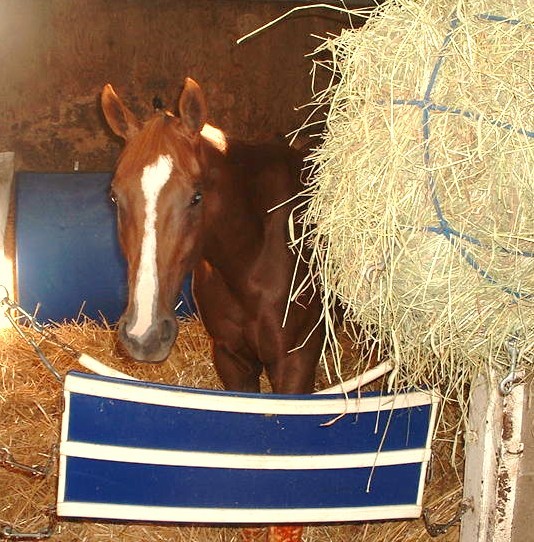
DW: She really makes a mess out of her stall because she likes to make big mountains of straw. I look in there sometimes and say, ‘What are you doing?’ But, if she wants to do that, it’s fine. It’s a mess, but overall, it’s nothing really.
She also loves to travel. If she hears the van, she’ll prick her ears up and get excited. And, when you walk her up to the van, she’ll drag you into the van. You better be ready.
JW: What makes Blind Luck so special to you?
DW: It’s her competitiveness. I’ve heard stories that when she was growing up at the farm, she was always the one that pushed all the other horses away to get to the feed.
She is very competitive when she gallops. When she sees other horses, she wants to go after them. And, when she’s working, she’ll see a horse way out front and try to catch the horse.
It’s something you just can’t teach them, they just have it.
She has a lot of desire to win.
JW: What led to the decision to point Blind Luck to the Breeder’s Cup Ladies Classic?
DW: She already has had a good race at Churchill Downs, so the Ladies Classic was an easy race to point toward. She’s already won at that track and at that distance. It has been the goal all year, especially since she proved that she liked Churchill Downs.
JW: Do you intend to run Blind Luck as a Four-Year-Old?
DW: Yes. She will get a break. But, there are a lot of races for older females all over the country and she has already won on most of those tracks. We could try the Apple Blossom since she has won at Oaklawn. We could also run in the Delaware Handicap since she’s already won the Oaks at Delaware Park. And, we could also run her at Churchill since she has already won there. She doesn’t mind shipping for races.
» Read the rest of this entry «
August 9th, 2010 §
Luck is an interesting thing.
You find it when you least expect it.
And, in some moments, luck finds you.
In the case of Blind Luck, it arrives when you’re not looking.
In April of 2007, a mare named Lucky One gave birth to a foal in Kentucky at Fairlawn Farm.
The foal’s father, Pollard’s Vision, was blind in one eye and had been named for sharing the same trait with Red Pollard, Seabiscuit’s Jockey.
After multiple graded-stakes victories during his career, Pollard’s Vision was eventually retired after his final race at Saratoga in August of 2005.
It was the same track where he had begun his career with a 12½ length maiden victory.
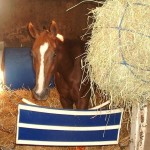 A few years after Pollard’s Vision ran his last race at Saratoga, the daughter of the half-blind horse and the one “lucky” mare was entering the sales ring.
She was initially sold as a yearling for $11,000 at the 2008 Fasig-Tipton Kentucky July sale.
Roughly a year later, the two-year-old filly was back in the ring at auction.
In April of 2009, she was entered in the Ocala Breeder’s April sale. After failing to garner serious attention from bidders, the filly was bought back for $10,000.
Roughly two months later, the filly set foot on the track for a $40,000 maiden claiming race at Calder Race Course.
It was the first time her name appeared in a program.
“Blind Luck.”
As she entered the gates, the $10,000 filly faced odds of 5 to 1 from the betting public.
But, luck doesn’t mind odds.
The sheer nature of luck is beating them.
As Blind Luck claimed a 13¼ length maiden victory, she began to mirror Pollard’s Vision in finding the Lucky One.
Blind Luck cleared her maiden race in the same runaway fashion as her father had done in his 12½ length maiden race at Saratoga.
Yet, few saw Blind Luck when she appeared in the gates – she didn’t get claimed in her debut.
The nature of luck can elude the eyes.
Yet, luck didn’t elude Pollard’s Vision.
And, after the race, Blind Luck didn’t escape the vision of Trainer Jerry Hollendorfer.
After she broke her maiden by 13¼ lengths, Hollendorfer privately purchased Blind Luck.
He saw a stakes-bound horse.
And, Blind Luck agreed.
In her next eight starts, Blind Luck captured five victories – four of which were in Grade 1 races.
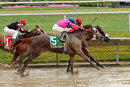 In April of 2010, Blind Luck was shipped from California to Kentucky to challenge a field of rivals in the Kentucky Oaks.
As the gates opened, Blind Luck hung at the back of the pack as the rest of the contenders bulleted around the oval.
It appeared her luck had run out.
Then, Blind Luck took hold in the race.
As the field turned for the wire, Blind Luck picked off her rivals in a heart-stopping victory.
She won by a nose.
As Blind Luck was draped in a Garland of Lilies, she proved Pollard’s Vision correct.
Blind Luck had just claimed her fourth Grade 1 victory.
And, it appears her luck isn’t running out.
In her last race, Blind Luck nipped her rivals at the wire in the Delaware Oaks to claim her eighth victory in twelve career starts.
As Blind Luck heads toward Saratoga for the Alabama Stakes, she will race around the same circle where Pollard’s Vision started and finished his career.
And, as she stamps out her own hoof print on the Saratoga track, she is a perfect vision of luck.
Blind Luck.
 When I was a twenty-year-old college student, I paid a visit home to my mother one weekend.
  Thirteen years after my mother became a “survivor,” a redheaded filly showed up. And, this filly is also hoping to “Do Something” that contributes to a cure for breast cancer in her own domain – the race track.