 Fairy tales often begin when a seemingly ordinary life takes a magical twist and ventures toward a fabled outcome.
Cinderella would have never met a prince without a fairy godmother to guide her toward the royal ball. In the case of Snow White, it took a magic mirror and seven dwarfs to transform an ordinary maid into the princess of a kingdom. And, before Peter Pan realized he could fly, he had to take his first step into the gates of Neverland. Yet, once he entered the gates, “The Boy Who Never Grew Old” found immortality.
C.S. Lewis once said, “Someday you will be old enough to start reading fairy tales again.”
He was right.
On April 1, 2004, a female foal was born at Winter Quarter Farm in Kentucky. The farm owner, Don Robinson, cared for the mother and raised the little foal. When she grew older, the girl journeyed from the stable and took flight in the royal world of racing. She passed the princes that laid in wait and fixed her eyes on the kingdom itself. And, in the end, the girl found herself standing alone in the royal court. She proclaimed herself queen.
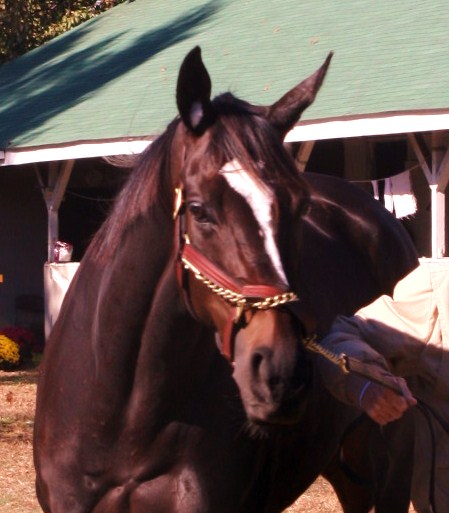
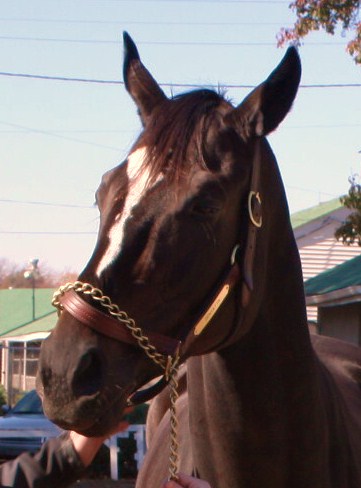
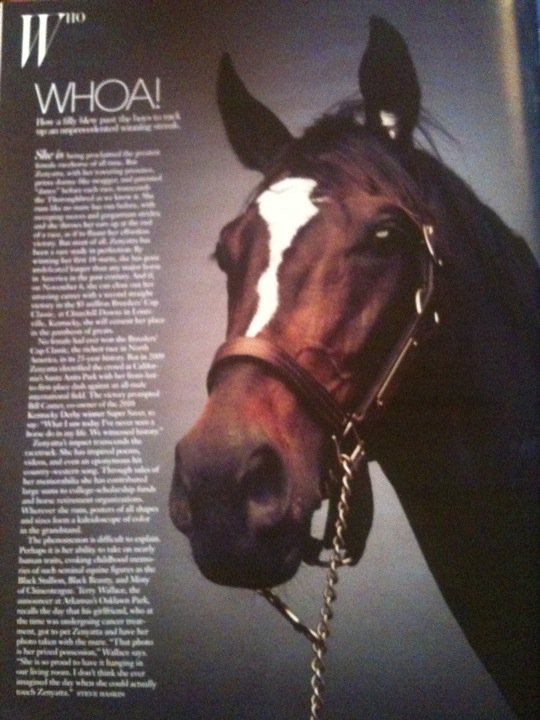
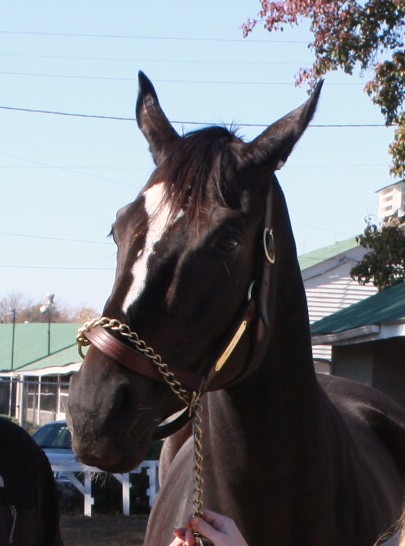
The queen was named “Zenyatta.”
And, like Peter Pan, she never seems to grow old.
Yet, in many fairy tales, there is a force in the beginning that guides the heroin toward her magical journey. Cinderella had a fairy godmother. Snow White had seven dwarfs. And, as a little girl, Zenyatta had a man that cared for her before she began her racing career.
At Winter Quarter Farm, Don Robinson was present in Zenyatta’s life from conception to the moment she stood auction at Keeneland. During a recent interview, Robinson answered my questions about his first-hand experience with Zenyatta.
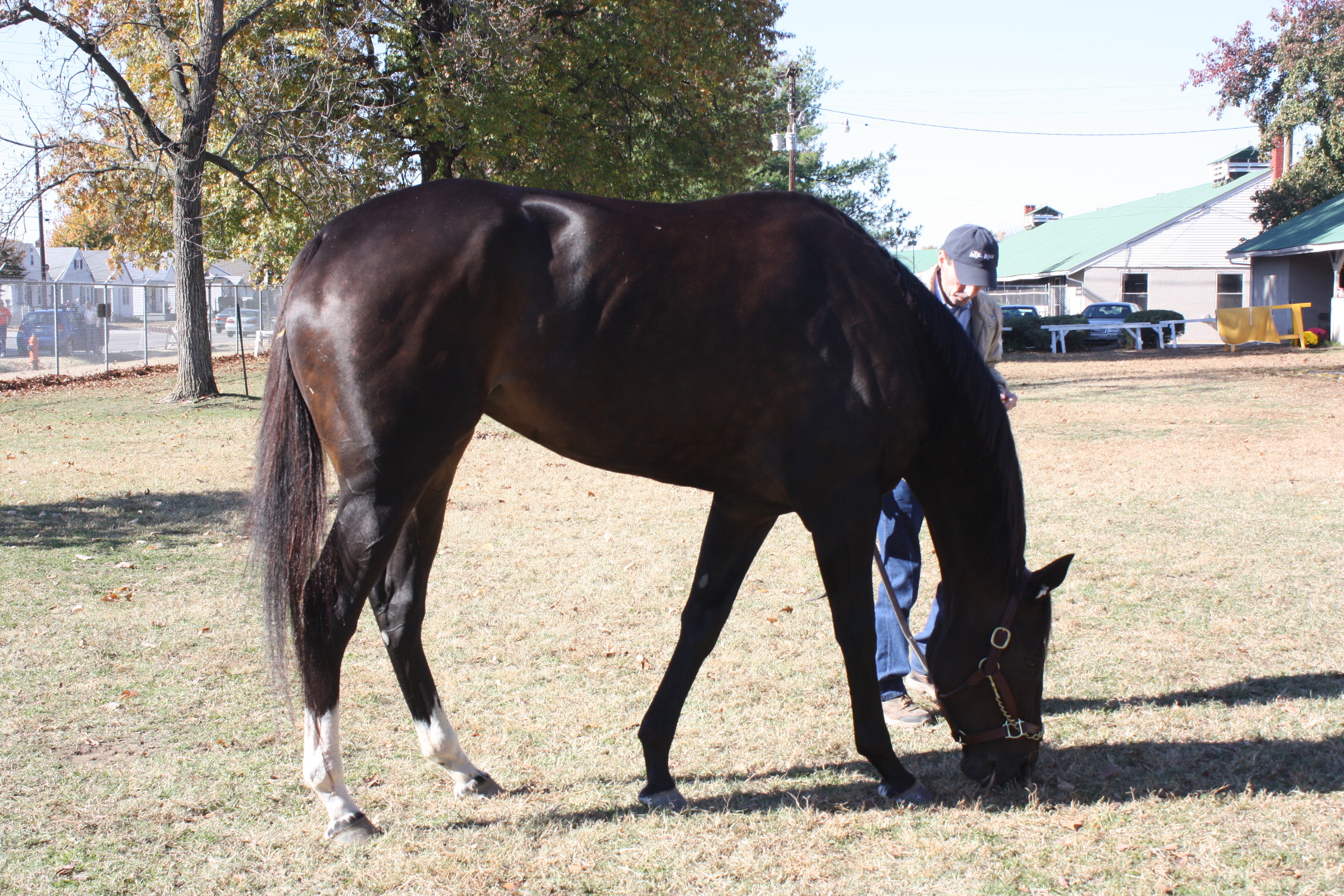 JW: What is the historical connection of Zenyatta’s family to your farm?
DR: Zenyatta’s grandmother is buried at Winter Quarter Farm. It is particularly rewarding because I’ve worked with this family for a long time and I know them very well.
It’s not like Zenyatta just showed up. We have raised and developed more than Zenyatta in this particular family. It’s extremely rewarding. It’s like talking about one of my kids when I talk about Zenyatta and her family.
The mother was sold privately a couple of years ago. Winter Quarter Farm still has a female out of that family. We have a yearling sister of Zenyatta – she is a half-sister by a different sire.
JW: Can you share a personal account of Zenyatta’s birth at your farm?
DR: Zenyatta was foaled on April Fool’s Day – April 1, 2004. People ask me, “What did you think?” when she was born. The only the mild concern that I had when she was born was that Vertigineux, her mother, gives birth to very big foals. I was worried about a big, difficult foaling.
When Vertigineux delivered fine, with just minor assistance, my whole feeling was just relief that I had a big, leggy live foal on the ground. She got up and nursed very quickly. It is the biggest thrill that a farm manager can have when a foal is born.
Believe me, you’re not looking past those things at that moment. You look at the plain stuff. It’s just like when parents are having a baby. You’re looking to see if the baby has all its’ fingers and toes. That is what a farm manager is looking at during a birth.
I was delighted to see her when she was born. And, she was a big, leggy foal. Everything came out just right.
JW: Did you have a nickname for Zenyatta while she lived on your farm?
DR: We had nicknamed Veritigeneux, Zenyatta’s mother, “Tige.” Zenyatta was sometimes referred to as “Little Tige” when she was a foal.
JW: Can you describe what Zenyatta looked like as a young horse?
DR: As a young horse, she was big and gangly. She looked like a pre-adolescent girl that stood six-feet tall.
She was well-made, but ‘unmade’ at the moment. She hadn’t filled out yet. Only certain people could appreciate what she was as a young horse. She was very big and didn’t instantly appear athletic.
JW: How would you describe Zenyatta’s personality as a young girl?
DR: As a young girl, Zenyatta was very personable.
Zenyatta was full of spirit, but she was reasonable. She had a sister before her, a really good filly, named Balance. Balance was very flighty. She was a great race horse, not as good as Zenyatta of course, but Balance was hard to handle. You always had to be thinking ahead of her.
Zenyatta had that sort of energy, but was much more reasonable. You could sort of talk to her and she understood you. Thoroughbreds can be very spirited and fiery, but the good ones tend to have a good mind.
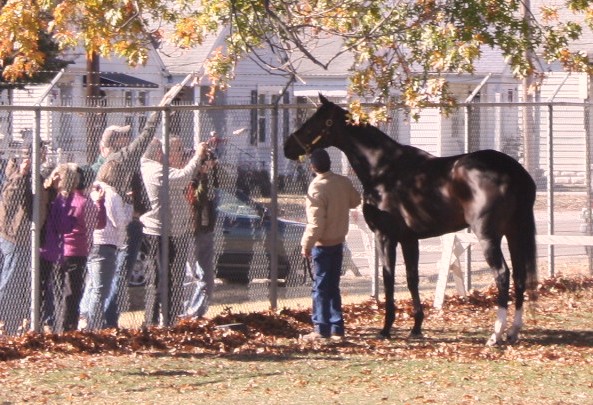 JW: Has Zenyatta’s personality developed since she left your farm?
DR: Zenyatta has developed in training. I have never seen a horse relish in training as much as Zenyatta. Most horses, to some degree, get tired of it. Zenyatta loves it.
She has wonderful handlers and loving care, which makes her friendly. She likes where she is and has great people looking after her. It is a relationship that has mutually developed. When you see her being friendly, it’s a product of a great relationship between her handlers and Zenyatta. It is just gorgeous to see that in their relationship.
I’d like to say that we gave her a start at our farm. I think kindness and caring are the most important things that you can give to a horse. I hope we got her off to a good start.
Yet, the wonderful personality that you see in Zenyatta today has been developed over time. She’s always been very happy in training. Zenyatta is loved and appreciated by the people who look after her at her stable. And, she loves them back. It really is extraordinary.
Some horses get high-strung or nasty in training. When they are fit and ‘racing-ready,’ the horses aren’t always very friendly. It is not for lack of attention. When they get competitive, they’re really not thinking about eating sugar cubes and being gentle.
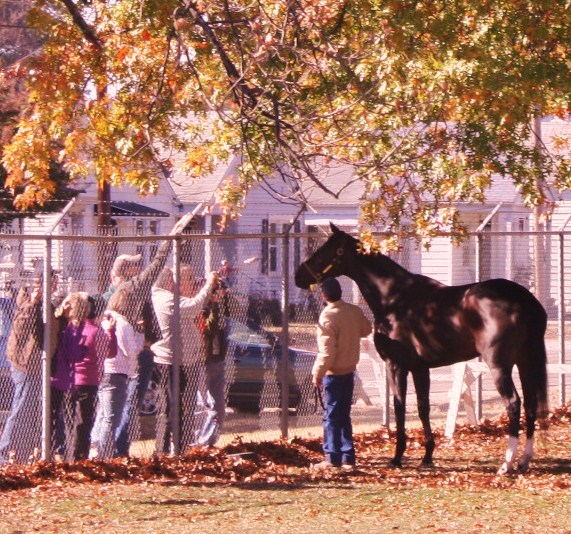
But, Zenyatta is the most remarkable horse in that sense that I have ever seen. She is just so kind. You can see it. John Shirreffs can bring mothers and babies to have a picture with Zenyatta. She just puts her head near them. It is truly remarkable.
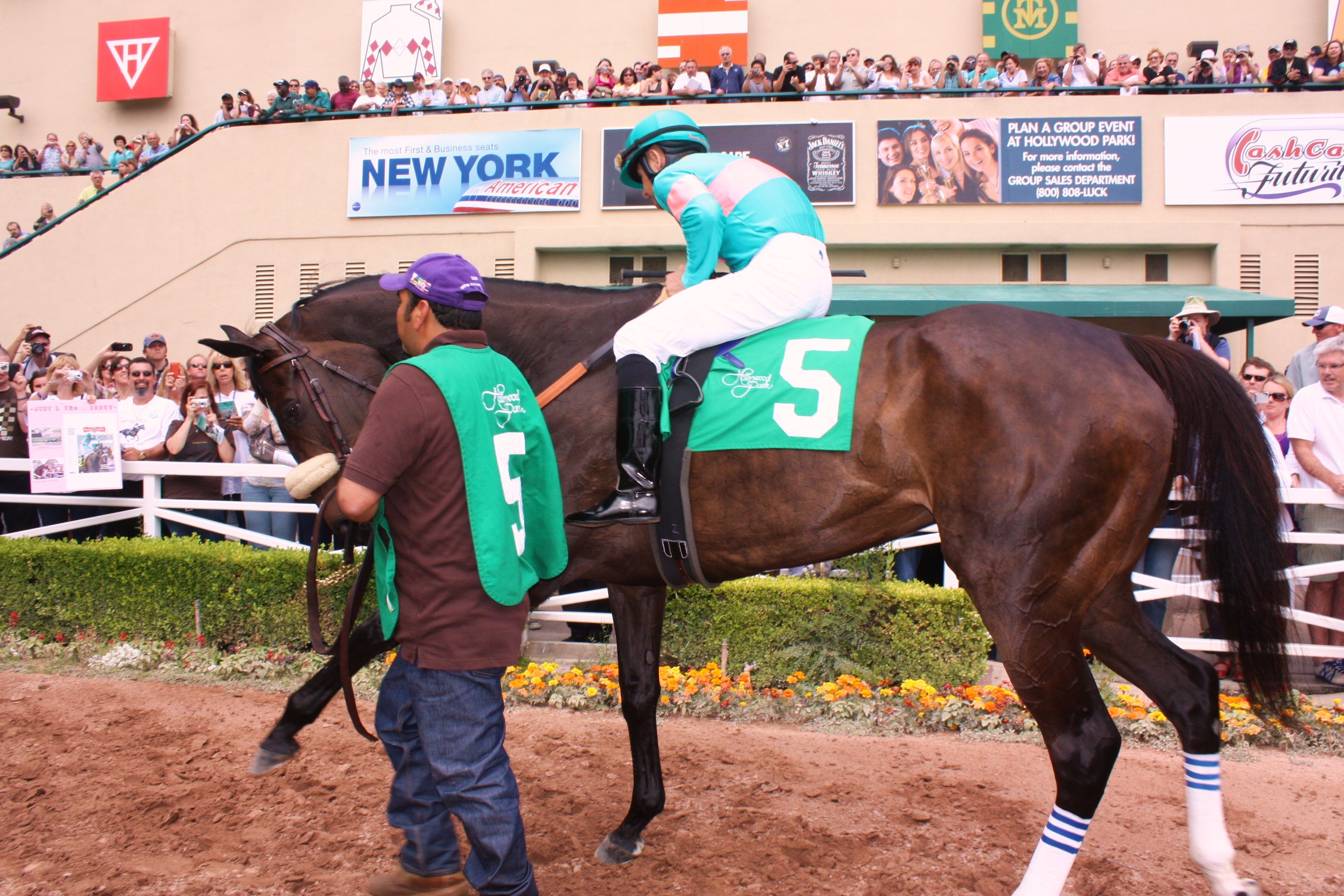 JW: A lot of people enjoy watching Zenyatta perform her “dance routine.” Did she “dance” as a young horse on your farm?
DR: You know, I always say, ‘She didn’t learn that dancing out here in the country in Fayette, Kentucky. She picked that up in Hollywood.’
I can tell you what I think about her dancing. This mare is really smart. The dancing is a way of channeling her tension before a race.
You know how people do yoga or basketball players do mind exercises to prepare themselves for competition? I am convinced that Zenyatta’s dance has that aspect. It is not taught. Dancing is how she’s learned to deal with her pre-race tension.
But, she didn’t dance on the farm. She picked that up in Hollywood.
JW: Do you think that luck comes into play when breeding a horse or can we “Breed More Zenyattas?”
DR: Zenyatta is simply one-of-a-kind. I don’t think we can replicate Zenyatta.
I call her the ‘One-in-Four Lifetimes’ kind of horse. Given the generations of my grandmother, father, myself and my son on this farm, Zenyatta is like hitting the lucky number. I hope my Grandmother and Father know about Zenyatta. She is that unique.
My family had good horses and I was raised around them. My grandmother had a great horse in the 1933 Kentucky Derby called “Head Play.” My family goes way back in horse racing and we’ve never seen anything like Zenyatta.
JW: How did it make you feel to watch Zenyatta during her races after raising her as a young horse?
DR: It makes me feel very proud.
It is unimaginable to me that I was associated with this mare and was able to have a little part in her life.
I am absolutely humbled.
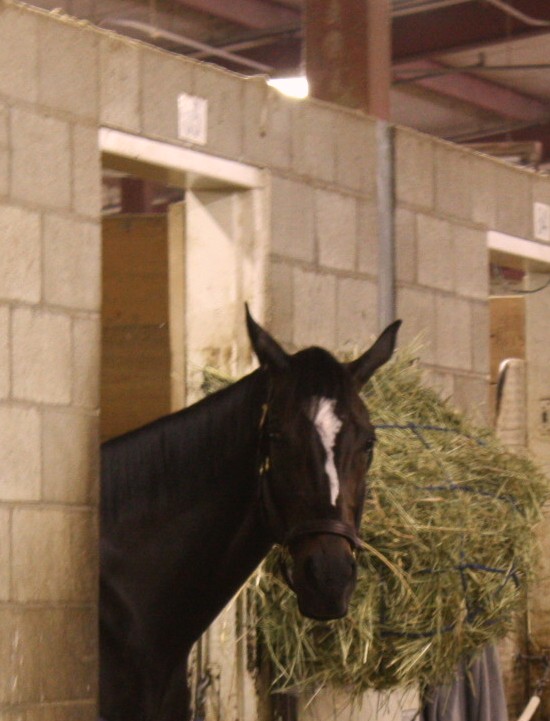 JW: What is the most memorable moment that you have had in your experience with Zenyatta?
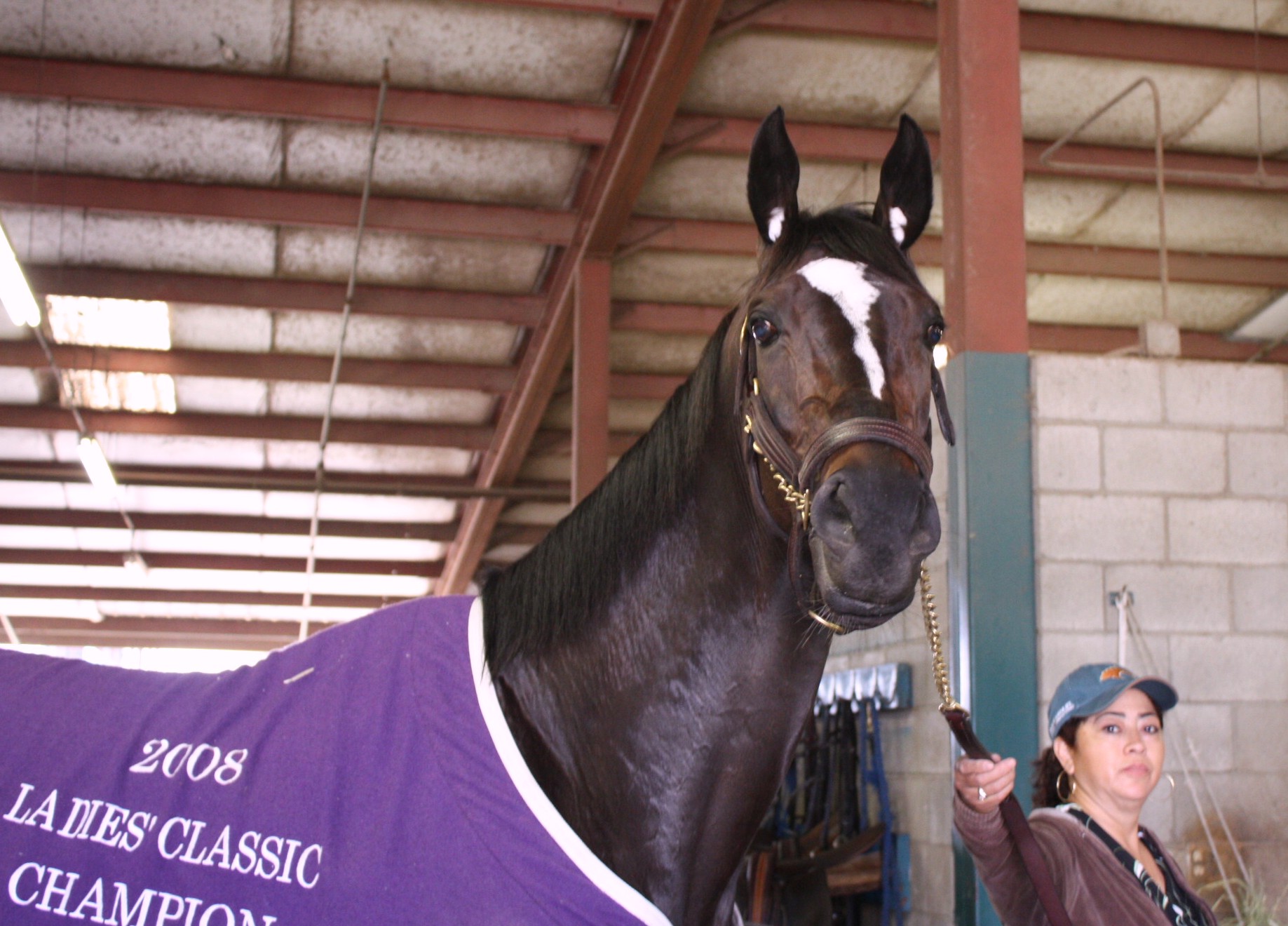
DR: The most moving experience that I have ever had with Zenyatta was before she raced in the Breeders’ Cup Ladies Classic in 2008. I went down to the track really early because I hadn’t seen Zenyatta since she had left the farm. I was just so excited that day. I couldn’t believe it.
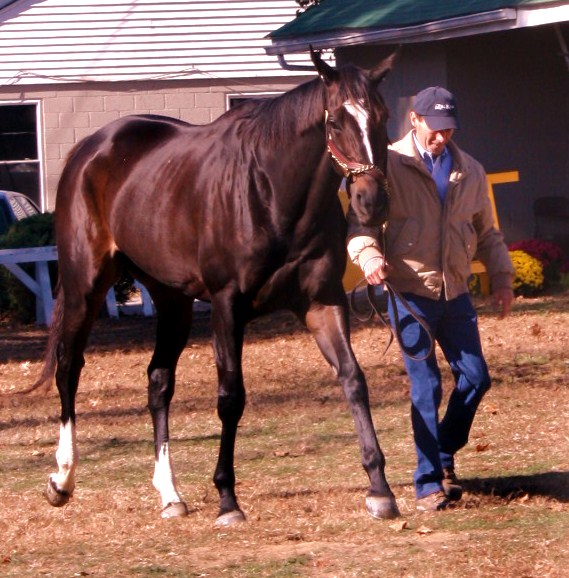
I was able to get into the paddock very early before she raced the Ladies’ Classic. Nobody else was around. Zenyatta was in the inner-walking ring and her groom was walking her around. I was amazed by her size and magnificence.
I stood in the middle and the groom brought her near me as she was walking in a circle. She walked past me. Then, she stopped.
When she is walking, she has a way of standing and stopping. She likes to take a look, and, does it at random on the track. They just let her stand and do what she wants to do.
Zenyatta turned her head 180 degrees around and looked right at me for 20 or 30 seconds. I was just shaking. I knew that she recognized me and I couldn’t believe it. It was one of the most moving experiences I’ve had with a horse.
It almost made me cry to receive that kind of recognition. And then, she went out there and won the Ladies Classic a few moments later. It was incredible.
I was really struck. There was no question that she recognized me.
JW: What do you think Zenyatta has brought to the sport of racing?
DR: First of all, she’s a female. It is extraordinary in any era for a female horse to compete with male horses in North America.
She’s also brought stardom. Most of the horses retire quickly and go to stud for the breeding value. With Zenyatta, her owners just love her and love the sport of racing. The decision to race her as a six-year-old was the best thing that could’ve happened to the whole Thoroughbred racing world. It allowed Zenyatta to showcase her elegance.
Finally, they have shared Zenyatta with people. They really provide access. It is very special.
JW: Do you think Zenyatta found the perfect match at auction when she was ultimately teamed with the Moss family, John and Dottie Shirreffs, and Mike Smith?
DR: I think it is the grandest and greatest thing that ever happened.
They are the most perfect team that I have even seen. Between Mike Smith, John and Dottie Shirreffs, and Ann and Jerry Moss, it is a very special association. It is the most superb, kind, and careful management of a racehorse that I have seen in my life. Ever. I think most horse people would agree with that.
They were a gift to one another.
JW: How do you think Zenyatta will be remembered in the coming years?
DR: I think she will be one of the greatest filly/mares of all time. She has won 19 out of 20 races, 19 straight races and 13 Grade I races. You will not see that ever again.
I think it is amazing. Absolutely amazing. That record speaks for itself. You will not see that again. You will not. She is a historical horse without question.
» Read the rest of this entry «