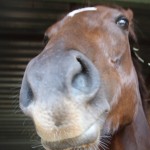
 Last week, a little-known horse named Gretl raced at Oaklawn on Friday. Personally, I was thrilled to watch her race.
Gretl’s race wasn’t spectacular for the reasons you may expect. She didn’t win. And, even if she had won, she isn’t pointing toward the Kentucky Oaks or any other graded stakes race at the moment. She doesn’t have an undefeated record. Further, she can’t dance and no one is requesting her photo for a fashion magazine.
You may be wondering why I found Gretl’s race so special at this point. The reason? It was the first time that a horse that I had invested in as an owner made a start in a race.
I don’t expect the whole world to follow Gretl’s endeavors in life. But prior to the race, a few people in my world wanted to watch Gretl’s race to share the experience. They weren’t racing fans at all – they were simply family and friends who were curious about Gretl.
On the morning of Gretl’s race, several family members and friends wanted to see her race. I asked if they had TVG or HRTV. They did not subscribe to either channel. I then explained that they could open an internet account. Yet, they didn’t want to start a wagering account to view a single horse. Then, I looked on the internet to find out if there was a link that I could send them to show them the races at Oaklawn. There was no live video feed for the track. Finally, as a last resort, I told my mom and friends that they could see it at an OTB. Yet, they couldn’t leave their job at 1:30 p.m. on a Friday to go to a betting parlor.
In the end, my entire family and friendship group in Chicago missed Gretl’s race that day. Yet, here’s the issue: They didn’t miss the race because they didn’t want to see it. They missed the race because they couldn’t find a place to watch it.
 Three days later, I read an article in the Chicago Sun-Times entitled, “Horse Racing in Illinois is ‘on verge of extinction.’” It went on about many of the common issues that enter the “revival of racing” discussion – racinos, purse values, track attendance and the aging population of the sport. Yet, buried in the article, there was one particular point made by former Illinois Governor Jim Edgar that particularly hit home for Gretl and myself: Coverage of the Sport.
The former Govenor explained, “The industry made major mistakes in the ‘50s. When television came along, racing was on all the time. Then the tracks decided that they didn’t want to give it away for free.”
It made me wonder what racing would be like today if we “gave it away for free.” What if the tracks simulcast their races on their websites? Racing might romance a few new fans through showing them why this sport is beautiful, rather than telling them to set up an account to view a sport they don’t follow.
And, in the end, people may actually follow the sport in larger numbers if they are exposed to it on more regular basis. What if more newspapers actually profiled the winners of Kentucky Derby prep-races right now? Non-enthusiasts may begin to follow a few horses, and racing itself, beyond the Triple Crown season and Breeder’s Cup.
Yet, most non-industry media outlets aren’t providing regular updates on racing at the moment. And, as a whole, racing fans aren’t demanding coverage when it is due. I didn’t see one article in my local newspaper about Dialed In winning the Holy Bull. And, as far as Soldat’s performance in the Fountain of Youth, there wasn’t a word about his near wire-to-wire victory.
There should have been articles about those races. And, there should be a way for a newcomer to watch the races without setting up an internet account or subscribing to a cable network.
In my view, every track in this nation should provide free video of their races on their website. Not a few tracks – every track. Because, every track is losing potential fans if newcomers can’t view this sport.
And, fans should demand coverage of this sport from their local media outlets. Not a few stories during Triple Crown season – regular coverage. Because, in the end, writing the media outlets in your area not only shows there is a demand for racing coverage, but also, it educates the non-racing media about the sport itself.
This Triple Crown season, I will be writing my local newspapers about every horse that wins a Kentucky Derby prep-race. I wonder could be accomplished if other racing fans wrote their local papers and demanded coverage.
And, I will be writing the non-participating tracks to ask them why they don’t post race replays of all races on their websites. I wonder what the industry could accomplish by allowing fans to share the races with their friends as a means to introduce them to the sport.
Because, without coverage, this is an invisible sport to non-enthusiasts.
And, if the sport remains invisible, it truly is in danger of disappearing.
