May 14th, 2011 §
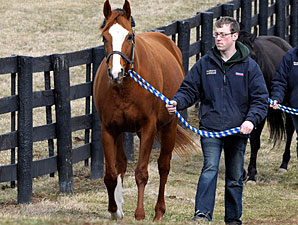
 They call her the “Black Flash.”
An imposing mare holding an undefeated record of 13-0 that has been grinding out victory after victory at top-level outings against every male challenger that sets foot in her domain.
They call her “The Horse that Stops a Nation.”
At least, The Australian newspaper coined that descriptor of the four-year-old racemare as the international racing community held their breath to see if she could maintain her undefeated record in her recent outing in the Group 1 BTC Cup at Brisbane’s Doomben racecourse.
And, the “Black Flash” did it with ease. As daylight stood between herself and her rivals as she approached the wire, Black Caviar clinched her thirteenth victory in a style that embodied all of the markings of being a wonder horse.
Today, Black Caviar has many racing enthusiasts in the international community wondering whether she may be one of the greatest racehorses of all time. And perhaps, she already has claimed her place in that rare territory among a few that have been struck by her majestic talent.
Yet, prior to the rise of Black Caviar on the international stage, there was the wonder of whether Zenyatta was one of the best racehorses of all time.
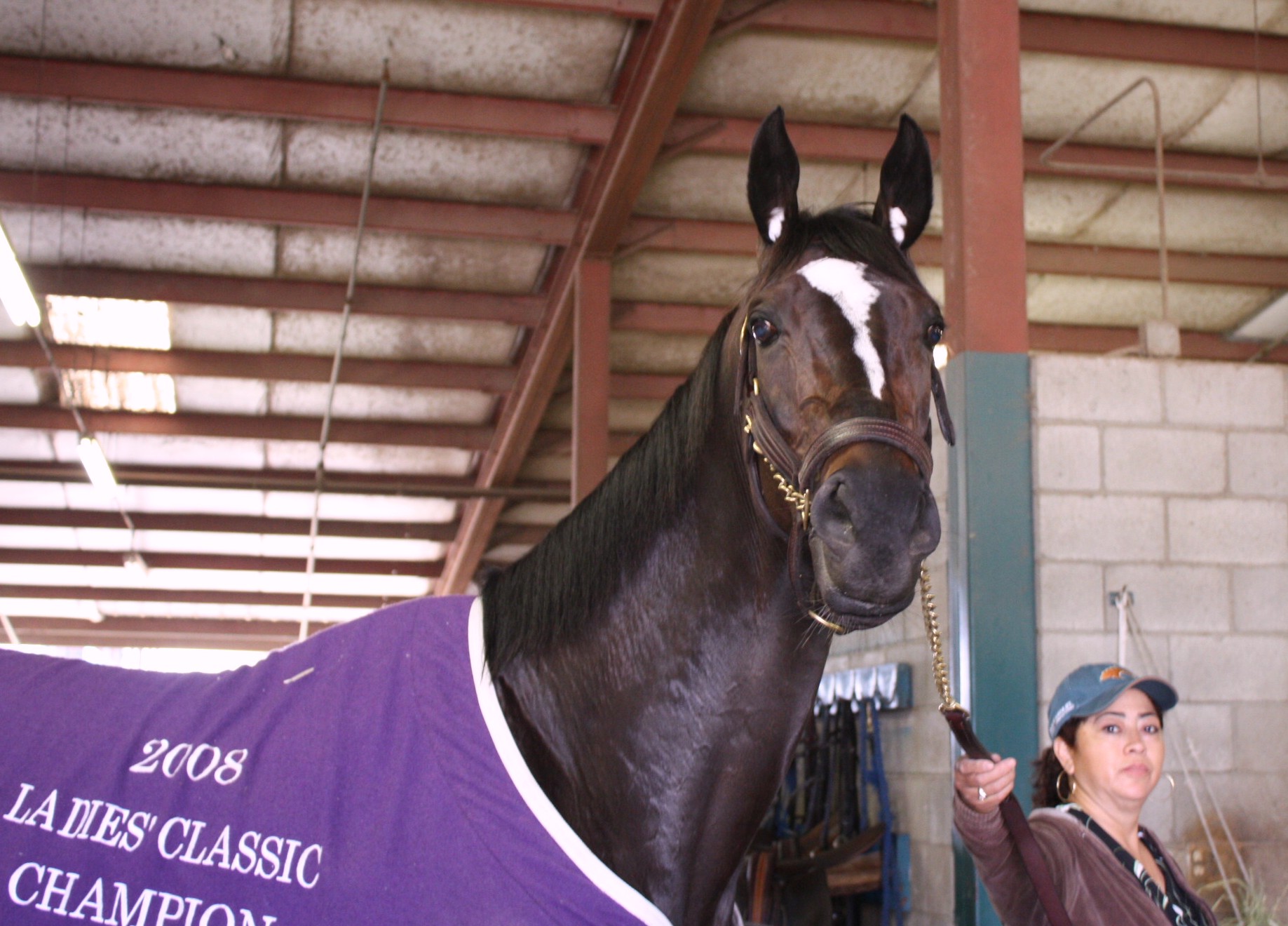
 In a 60 Minutes segment, the crew visited her stable, where her rider Mike Smith stated, “I think she could arguably go down as one of the greatest, if not the greatest, racehorse of all time.” And in the eyes of many, Zenyatta does hold a firm place in the canon of the greatest Thoroughbreds to ever grace a race track with her presence.
Similar to Black Caviar, Zenyatta had many spectators holding their breath as she claimed victory after victory. And, in her final outing, Zenyatta concluded her consecutive nineteen-race winning streak with a heartbreaking defeat that demonstrated that immortality doesn’t necessarily mean invincibility.
Yet, with true class, Zenyatta stood before the crowd at Churchill Downs after her lone defeat and received an honor that is arguably greater than a victory could award – a standing ovation from the 72,000 spectators in the crowd as they paid homage to her racing career during its saddest moment.
And, despite her sole defeat, Zenyatta remains one of the greatest racehorses of all time in my view.
However, there is also a majestic quality to the racemares that have been defeated and strike back without missing a step in their race for immortality. Goldikova, the European record holder for the most Group 1/Grade I victories, doesn’t boast an undefeated record. However, defeat doesn’t detract from her immortal quality.
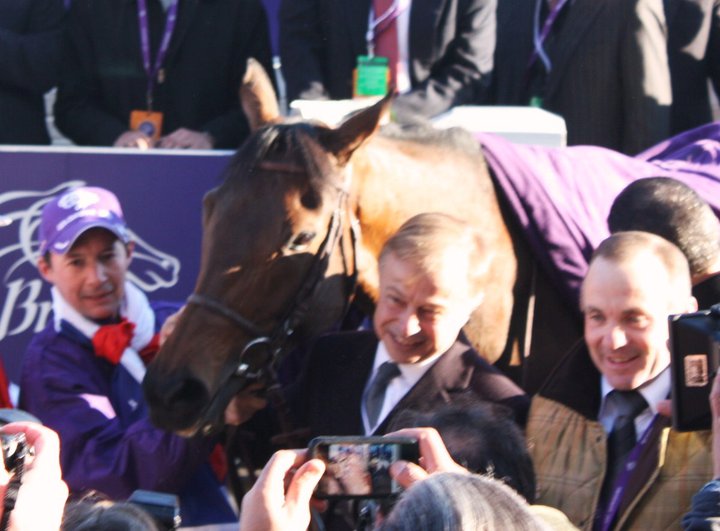
 Since becoming the only racehorse to win three consecutive Breeder’s Cup outings, Goldikova is pointing toward a dramatic finish to an exceptional career – a fourth consecutive victory in the Breeder’s Cup this fall. And, like Black Caviar and Zenyatta, Goldikova is credited by many racing enthusiasts as being one of the greatest racehorses of all time.
In the past few years, the tracks have been graced with three racemares that arguably will be held in the canon of immortal Thoroughbreds. And, the qualities that make these racemares “immortal” are being drafted before our eyes through the endeavors of racemares like Black Caviar, Zenyatta and Goldikova.
Roughly four years ago, when Rags to Riches became the first filly to win the Belmont in over a hundred years, I thought I had just watched a historical moment in racing.
I was wrong.
It wasn’t a historical moment.
It was an important moment in racing. It was long-awaited moment in which a single filly took on the boys in the Belmont and beat them in their home court, a feat that had not been accomplished since 1905.
And, since that moment, the modern quest to hold a place among the canon of greats seems to be a “mare’s world” in racing.
March 17th, 2010 §
 Champion, Rags to Riches, gave birth to her first colt today, March 17. Dermot Ryan, Manager at Coolmore America, confirmed via telephone that the colt was born at Coolmore Ireland and was sired by Henry the Navigator.
Rags to Riches is best known for her breathtaking win in the 2007 Belmont Stakes. After fighting Curlin in the stretch, she became the first filly to win the race in over a century. Overall, she had five wins from six starts in 2007 and $1,340,028 in career earnings.
On March 9, 2009, Rags to Riches gave birth at Ashford Stud in Kentucky to her first foal – a filly by Giant’s Causeaway. She was then booked to Ashford stallion, Henry the Navigator.
Rags to Riches remains at Coolmore Ireland. She is scheduled to be bred to Coolmore stallion, Galileo.
To comment on this post, click here. We have also launched a Facebook page. Click here to follow our blog on The Saturday Post Facebook page.
January 16th, 2010 §

On Monday, the winner of the prestigious “Horse of the Year” Eclipse Award will be announced and two breathtaking fillies remain in a dead heat for title. Throughout most of the 2009 racing season, Rachel Alexandra dominated the sport with flashy wins against other fillies, taking down the boys in three separate races, and, ultimately, being the first filly in 85 years to capture the Preakness Trophy. Of her eight starts as a three-year-old in 2009, she remained undefeated and ended her racing year as the first filly to win the Woodward Stakes.
By September of 2009, I believed Rachel Alexandra was the clear choice for “Horse of the Year” having watched her trample the field in the Kentucky Oaks, take down the Derby Winner in the Preakness, and close her season with her historical win in the Woodward Stakes. If anyone had challenged that notion, I wouldn’t have hesitated to hold a good old-fashioned yelling match to defend Rachel’s right to the title. In my mind, it was inconceivable that any horse could out-perform this “Super Filly.”
And then, the unconceivable arrived. On November 7, 2009, an undefeated five-year old female named Zenyatta walked onto the track at Santa Anita and dared every boy standing at the gate to defeat her in the richest race in America.
It was such a bold move that I skipped a wedding to watch her try.
As the gates opened, Zenyatta trailed the field. Throughout middle of the race, I watched with heartbreak as she hung in last place. It looked as if expectations had exceeded her ability. When it appeared near hopeless, Zenyatta made the bid for her place in history. She began to pick off her opponents near the last turn and went wide on the home stretch to deliver a seemingly late charge for the finish. In the final seconds, Zenyatta drove seamlessly past her contenders at the wire to win the Breeder’s Cup Classic. In this historical moment, my allegiance for “Horse of the Year” shifted from Rachel Alexandra to the first filly to ever take the most expensive race in America – Zenyatta.
Admittedly, Zenyatta’s contention for “Horse of the Year” would not be such a threat to Rachel Alexandra without her historical win in the Breeder’s Cup Classic. However, I am not in the business of rewriting history. In fact, Zenyatta’s bid for “Horse of the Year” is perfectly in sync with the historical background and ultimate spirit of the Eclipse Awards.
 When the Eclipse Awards were founded in 1971, they were named in honor of a British racehorse and sire from the 1800s, named “Eclipse.” As a racehorse, Eclipse did not begin his career until he was a five-year-old and remained undefeated throughout the eighteen races in his career. In recognition of his legacy, Eclipse became the namesake to what are arguably considered the most prestigious achievement awards within the American horse racing industry.
By the very nature of the Eclipse Awards, the award categories provide a separation for age and overall achievement. Aside from “Horse of the Year,” which encompasses all ages and genders, the Eclipse Awards also maintain separate categories for the best “Three-Year-Old Filly” and “Three-Year-Old Male.” The scenario between Rachel Alexandra and Zenyatta appears to have been given some forethought prior to this moment.
Eclipse himself could not have won the best “Three-Year-Old Male” Award, just as Zenyatta can no longer compete for the best “Three-Year-Old Filly” award due to the age restriction. The Awards appear to follow the design that a “Three-Year-Old Filly” may become “Horse of the Year,” but that the rapture of the Triple Crown racing season cannot discount the outstanding performances of all racehorses during a given year.
Admittedly, Rachel Alexandra had an electrifying year as a three-year old horse – irrespective of her gender. If she had shown up to Santa Anita on November 7th to win the Breeder’s Cup Classic, there would be very little debate that she had earned the “Horse of the Year” Award. But, as Zenyatta trampled down the full field of skilled male horses to earn the distinction of the first filly to win the Breeder’s Cup Classic, Rachel Alexandra quietly stepped aside and placed her bets on her three-year-old season. When Zenyatta was first at the wire, Rachel lost her bet.
Zenyatta’s win in the Breeder’s Cup Classic holds more historical significance than any of Rachel Alexandra’s wins within this season. Zenyatta won the most expensive race in the United States. She is the first filly to ever accomplish this feat. The Breeder’s Cup Classic is one of the most contentious races in America – the field is full of great horses from varying backgrounds who are proven winners.
In contrast, Rachel Alexandra’s first Grade One win was in the Kentucky Oaks – among other fillies. Her next race, among males in the Preakness, is an impressive win – but not a “Game Changer.” Prior to Rachel, four fillies had already won the Preakness Stakes – the most recent win being in 1924. Further, the Preakness is the shortest distance of all three Triple Crown races, the Belmont being the longest race in the United States at a distance of 1 ½ miles. When Oaks-Winner Rags to Riches beat Curlin in the 2007 Belmont Stakes, Curlin was still awarded the distinction of “Horse of the Year” despite the fact that a Filly had not won the Belmont in over a hundred years when she crossed the finish line.
Zenyatta also holds distinction for building her undefeated record on a higher grade of races than Rachel Alexandra. In her career, Zenyatta has consistently run in only Grade 1 and Grade 2 races – remaining undefeated. In contrast, Rachel Alexander gradually worked from Grade 3 races into Grade 1 races, finishing second in both of her Grade 3 races. When viewing the overall career record of both horses, Zenyatta is the only undefeated horse who never delved below a Grade 2 race.
Finally, Zenyatta’s wins earned more money in 2009 than Rachel Alexandra. In 2009, Zenyatta was the second-highest ranking horse, boasting $3,330,000 in earnings. In comparison, Rachel Alexandra ranked fifth in 2009, bringing in a total of $2,746,914.
With the entry of more fillies in the prestigious male-dominated horse races, the industry is now squarely-faced with “The Filly Eclipse” for the Horse of the Year. Fillies are running alongside their male-counterparts and winning. When Rachel Alexandra ended her racing season in September, many believed that she had earned “Horse of the Year” over her potential male rivals for the Award. On November 7th, 2009, Zenyatta placed herself in undisputed contention with Rachel Alexandra as she moved past the finish line at the Breeder’s Cup Classic. Those watching the Breeder’s Cup Classic witnessed the first “Filly Eclipse” in history for the Horse of the Year Award.
After the Breeder’s Cup Classic, there have been arguments to hold a match race between Rachel Alexandra and Zenyatta. This would not add or subtract anything from this competition. Zenyatta and Rachel Alexandra are two distinct horses at different places in their career with their own unique character. They race in two separate fields - Rachel performs better on dirt and Zenyatta excels on synthetic track. If they ever settled where to run this race, the next question would be why the race should be run. This is a competition for the “Horse of the Year”- not “Best Filly of the Year.” It just happens to be that the two final contenders are fillies.
In the case of Rachel Alexandra, I truly believe that she has gone above and beyond to win the distinction of being the best three-year-old filly for 2009. She took on the boys, outran them, and bested the field with her astounding margins of victory in filly races.
Then, in a rare moment in November, “The Filly Eclipse” occurred and Zenyatta obscured all opposition.
When Zenyatta crossed the wire in the Breeder’s Cup Classic, she took my vote for Horse of the Year through pioneering a win in the most expensive race in America amidst a field a hard-tested males from various ages and backgrounds. It was an electrifying performance that not only earned her a place in the history books, but also, the well-earned distinction as “Horse of the Year.” I had seen my first ”filly eclipse.” It was breathtaking.
January 14th, 2010 §
 On January 1st, 2010, the next group of Derby hopefuls all turned the three as the nation celebrated the new year. As the days begin to roll by, many trainers and owners will begin to set their gaze on one of the most prized accomplishments in sports - the winning of the Triple Crown in horseracing.
Although the first leg of the Triple Crown doesn’t arrive until May 1, 2010, when all eyes turn to Churchill Downs for the 136th Running of the Kentucky Derby, the prep races to qualify for the highly-coveted positions in the Derby are shifting into gear. As with every year, I begin to watch the Saturday prep races, with a hope that this year will bring the next Triple Crown Winner.
This year is no different - with the exception of this Blog. You might ask - Why are you starting a Blog about horseracing? The answer is simple. I love the sport. I love the players. I love to talk about horseracing. It makes me scream with excitement, cry with heartbreak, and leaves me endlessly studying the details of races to try to master the mysteries of the sport.
During this month, I will begin considering the new horses positioning themselves for the Kentucky Derby, making travel plans to go to Churchill Downs for the first Saturday in May, and reminiscing about my past “loves” who thrilled me (or left me heartbroken) at the wire. I study the video footage of all the prep races, read the handicapper’s picks, look for the standout performances, until finally, I fall in love with a new horse for the year. And, once I fall in love with a horse, I am unshakeable in my devotion.
After seeing Barbaro win the Derby, I actually bought a farm with the dream of owning a racehorse. When he died, my racehorse dreams hit reality. A friend called my office the day of his death to tell me the sad news. The first sentence out of his mouth was, “What is the worst thing you can imagine in this world right now?” My immediate response was “If Barbaro died.” Unfortunately, I had picked the right horse that day. I sent a dozen roses to his hospital and had my first major lesson in horseracing - These great atheletes are not infallable.
After Barbaro, I maintained my enthusiasm for horseracing despite the peaks and valleys that are inherent to great love. Prior to the historic Belmont when Rags to Riches beat Curlin, I had a hair-trigger temper for anyone who told me a filly couldn’t win the Belmont. When she stomped across the wire, it felt like I won that race with her. She taught me the next lesson - Fillies are a force to be reckoned with and should never be discounted on the basis of gender alone.
When Big Brown showed up on the scene, it was love at first sight. By then, I had sold my farm, having learned that you can’t “grow” racehorses without lots of money. I sat in my Chicago apartment and watched his races for the pure joy of witnessing such raw talent. At the Derby, I watched him thunder to the finish line first from the twentieth post. When he won the Preakness, I booked my first trip to New York City in life. I was convinced that I was going there to witness the coronation of the next Triple Crown Winner. When he finished dead last, my heart was broken and I learned the most important lesson to date - Any horse can win or lose a race. Even Big Brown.
This past year, I saw the fillies take center stage and slam the door on the gender divide in horseracing. Rachel Alexandra’s stunning wins made me stand in awe of her ability. I thought she was the easy pick for “Horse of the Year.” And then came Zenyatta - who closed the Breeder’s Cup with a historical victory that changed the landscape of horseracing for fillies forever. As I write this story, the 2009 “Horse of the Year” will be picked in less than a week. My mind spins in circles between the two of them and wishes that they both could hold the title.
However, in horseracing, there is only one winner. And, the answer only arrives when the race is won. It could be a filly. Or a longshot. It could be the favorite of the betting public. The horse could be a former claiming horse or have cost a fortune. One thing is certain - There are extensive amounts of money and lifelong dreams on the line. Everyone from the owners to the betting public pays to watch the performance. So, who will be the next Triple Crown Winner? It is among the most expensive questions in the world.
Do you have a comment, question, or idea? You can contact Jennifer at blog@thesaturdaypost.org.
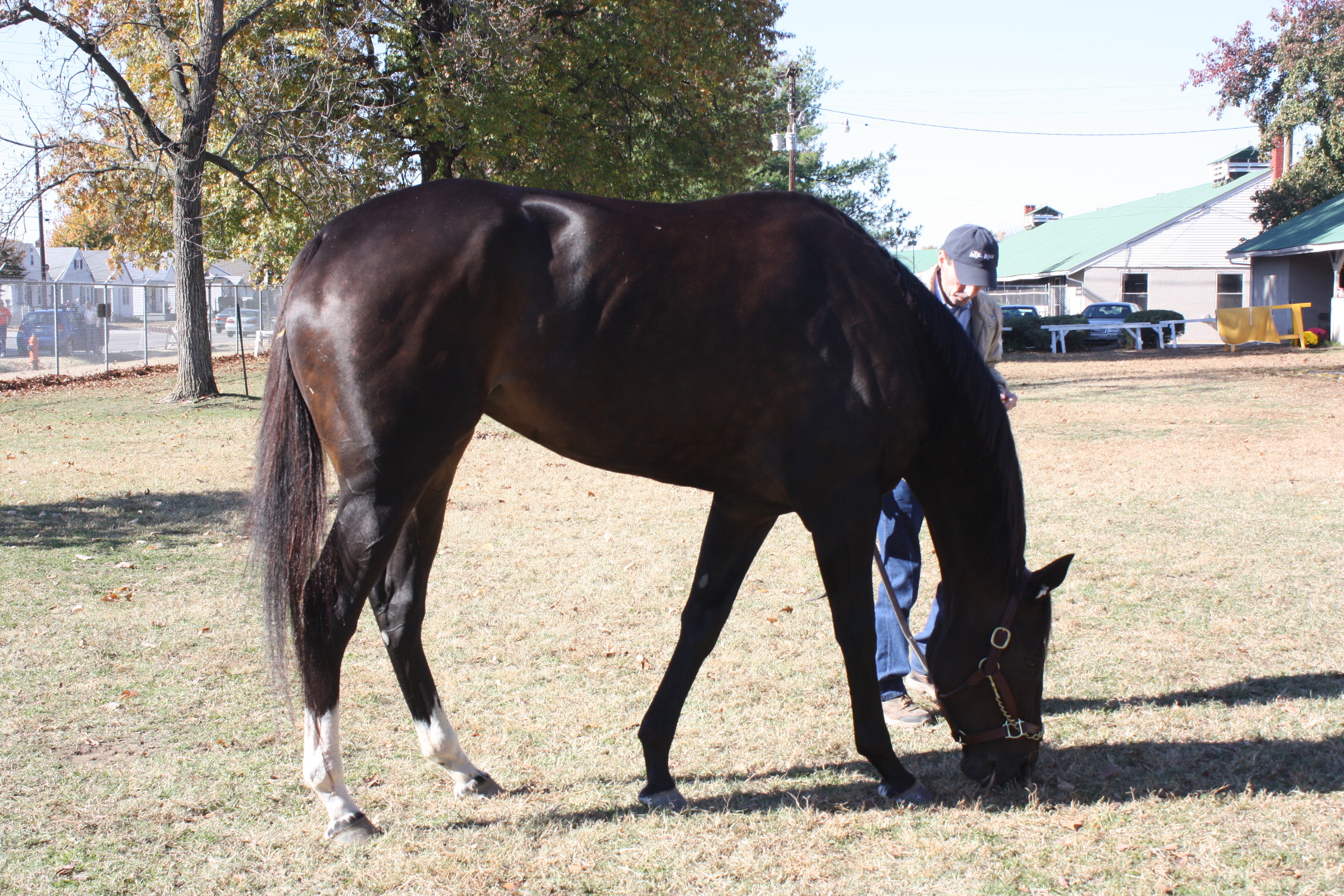 They call her the “Black Flash.”
  In a 60 Minutes segment, the crew visited her stable, where her rider Mike Smith stated, “I think she could arguably go down as one of the greatest, if not the greatest, racehorse of all time.” And in the eyes of many, Zenyatta does hold a firm place in the canon of the greatest Thoroughbreds to ever grace a race track with her presence.
 Since becoming the only racehorse to win three consecutive Breeder’s Cup outings, Goldikova is pointing toward a dramatic finish to an exceptional career – a fourth consecutive victory in the Breeder’s Cup this fall. And, like Black Caviar and Zenyatta, Goldikova is credited by many racing enthusiasts as being one of the greatest racehorses of all time.