April 1st, 2010 §
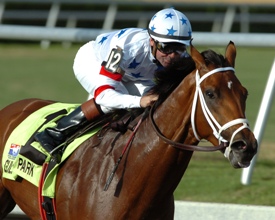
Smarty Jones captivated the nation in his bid for the Triple Crown in 2004. When he won the Kentucky Derby, the track announcer called out more than his victory. “Here is the first undefeated winner of the Kentucky Derby since Seattle Slew in 1977.” The public and industry began to marvel at the Triple Crown potential of Smarty Jones.
Following the Derby, Smarty Jones maintained his undefeated record by delivering an electrifying 11-1/2 length victory in the Preakness Stakes. As he pointed toward the Belmont, Smarty Jones had captured more than another win in his career – he had enlivened the imagination of spectators and won the hearts of fans across the nation.
As he entered the gates in the Belmont, Triple Crown dreams weighed heavily on Smarty Jones. Throughout most of the race, he ran at the top of the field. At the wire, Birdstone defeated Smarty Jones in a one-length victory. As the jockeys of both horses galloped from the finish line, Edgar Prado, rider of Birdstone, leaned toward Smarty Jones’ jockey, Stewart Elliott, and apologized.
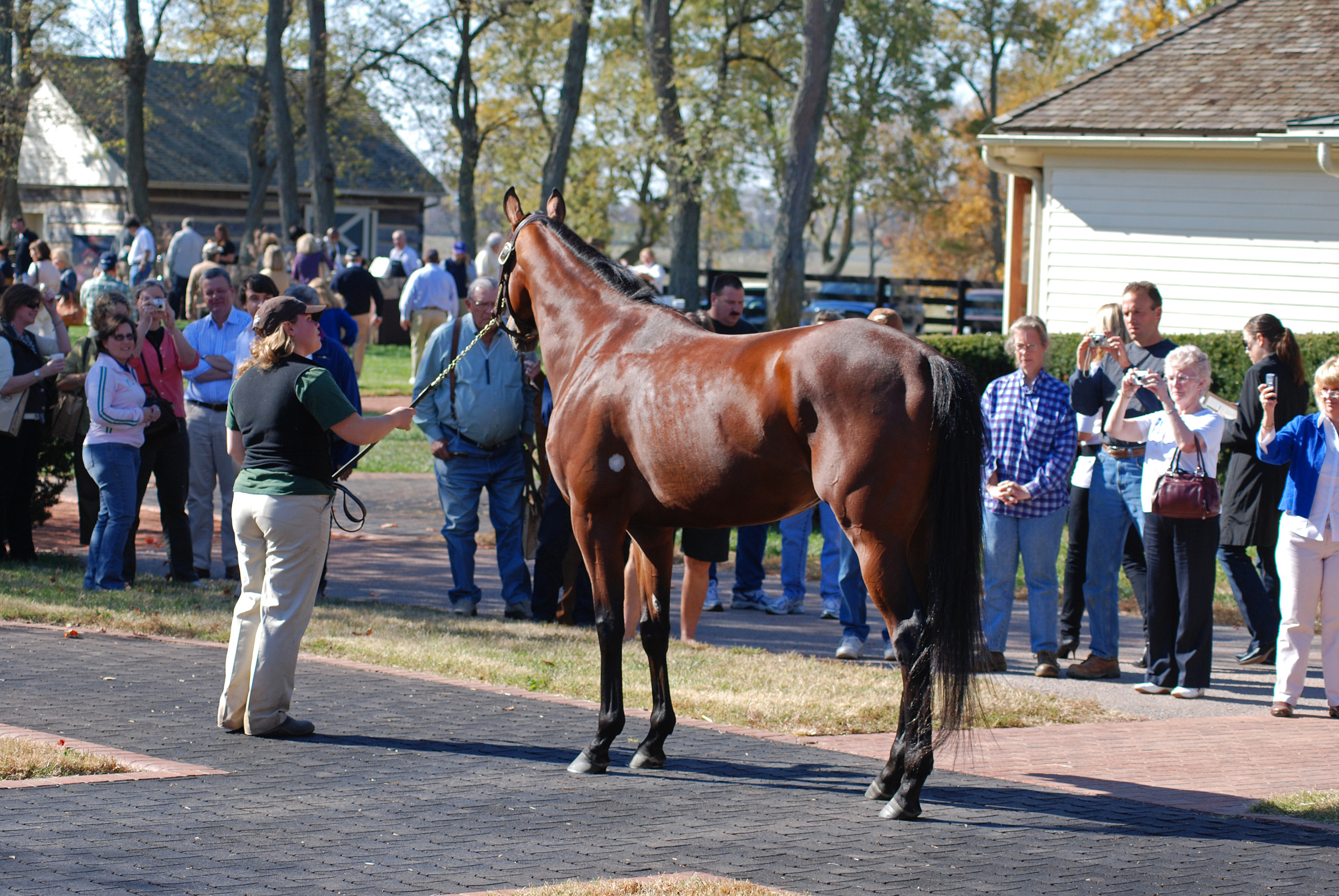
 Smarty Jones retired in 2004 with a career record of winning eight of his nine races. He was sent to Three Chimneys Farm and housed in the former stall of Seattle Slew, the only undefeated Triple Crown winner in history.
In 2005, Smarty Jones reportedly had visitors every day at the farm, except for Christmas. Three Chimneys Farms graciously allowed me to join the many individuals who have come to visit Smarty Jones and provided me with an interview about this exceptional horse.
JW: What were the primary factors that led to the decision to retire Smarty Jones to Three Chimneys Farm?
TCF: The Chapmans had never before had a horse of this caliber and were very thorough when choosing a farm at which to stand Smarty at stud. They obviously wanted a farm that was well-versed in successfully marketing and developing young stallions, but they were also keenly concerned about finding a farm that would allow the public to maintain their relationship with Smarty once he was retired to stud.
With Three Chimneys having managed the careers of such popular fan favorites as Seattle Slew, Silver Charm and others, we knew how to accommodate the public’s desire to have access to the horses without jeopardizing the horses’ stallion careers and the focus on presenting them in the best possible light to potential breeders.
‘Three Chimneys was such a great fit. They are used to having the public visit their horses like Seattle Slew, Silver Charm and Point Given,’ said Pat Chapman, who raced Smarty Jones with her late husband, Roy, and still maintains significant ownership in the horse as a stallion. ‘They believe in limiting a stallion’s book of mares, and they are experienced in standing an important horse and making him a success as a sire. It’s just a really great fit.’
At the time of the announcement that Smarty Jones would stand at Three Chimneys upon retirement, Three Chimneys owner Robert Clay was quoted as saying the following:
‘We are grateful for this awesome responsibility. This is a very special horse in so many ways. The Chapmans and the Servises have earned the gratitude of the entire racing world by the way they have served the needs of the press, and the public, and of Smarty Jones all at the same time. We hope, and plan, to do just as good a job as they have done. We have always welcomed fans to Three Chimneys Farm and look forward to sharing Smarty Jones with his public.’
JW: Was the decision to retire Smarty Jones to Three Chimneys Farm made prior to the Belmont race or afterward?
TC: The decision to retire Smarty was made after the Belmont Stakes, but not in any way due to that race being his first and only loss. When the Chapmans chose Three Chimneys as the farm to stand Smarty at upon his retirement, it was with the intention that he would get a nice rest after a demanding Triple Crown bid, then go on to race in the late summer and fall of his three-year-old year and possibly as a four-year-old.
Soon after the Belmont Stakes, it was found that Smarty had significant bone bruising on the bottom of all four cannon bones. While it is a fairly common injury for racehorses to sustain and many come back after some time off to race successfully, the Chapmans were not willing to risk putting Smarty Jones in harm’s way.
‘After all he’s done, I couldn’t live with myself if I thought we were putting him in harm’s way,’ said Pat Chapman. ‘He doesn’t owe us anything, and we owe him A LOT.’
JW: Was the decision to house Smarty Jones in the former stall of Seattle Slew a tribute to Smarty Jones’ near-miss in his Triple Crown bid?
TC: In a way, yes. Smarty was one of few horses that has truly captured the attention and interest of the general public. Whether someone was a horseracing fan, a general horse enthusiast, or simply an ‘average Joe,’ they knew about Smarty Jones and his ‘Rags to Riches’ story. Seattle Slew was another horse who carried with him that ‘celebrity status.’
When Smarty retired to Three Chimneys, we wanted to pay homage to all that he had accomplished on the track as a runner, but also for the sport in general. He brought so many new fans into the racing industry. Even in his retirement here at Three Chimneys, he gets tens of thousands of fan visits each year.
When visitors walk up to his stall, they see his nameplate on the door and, as with every stall in our stallion barn, if they look up to the right corner above his stall, they will see the nameplate of the previous occupant. Above Smarty’s stall is the nameplate of Seattle Slew.
JW: Why do you think the public experienced such a strong connection to Smarty Jones?
TC: Smarty was kind of a blue collar horse. He was modestly bred, hailing from, at the time, a $10,000 stallion and was born and raised in Pennsylvania, which was also where his home track of Philadelphia Park was located.
He overcame adversity as a youngster when he had a serious, potentially career and even life-threatening, accident while schooling in the starting gate. Then, when it came time to show what he was made of, he just kept on winning and winning.
Every bar that was set for Smarty, he exceeded, which is how he got to the Kentucky Derby as one of only a handful of horses to ever win the Derby to remain undefeated.
Another very compelling side to the story was the connections of smarty Jones. His owners/breeders Roy and Patricia Chapman were living a fairytale. Smarty Jones was the best horse they had ever raced and they were kind and gracious with both the media and his many fans.
Their trainer, John Servis, was also living the dream, as Smarty was his first Kentucky Derby starter and propelled his career to new heights. The public was able to connect with the Chapman’s and John Servis because they were appreciative of Smarty’s many fans and willing to give them access to their lives.
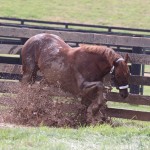 JW: How would you describe the character and temperament of Smarty Jones?
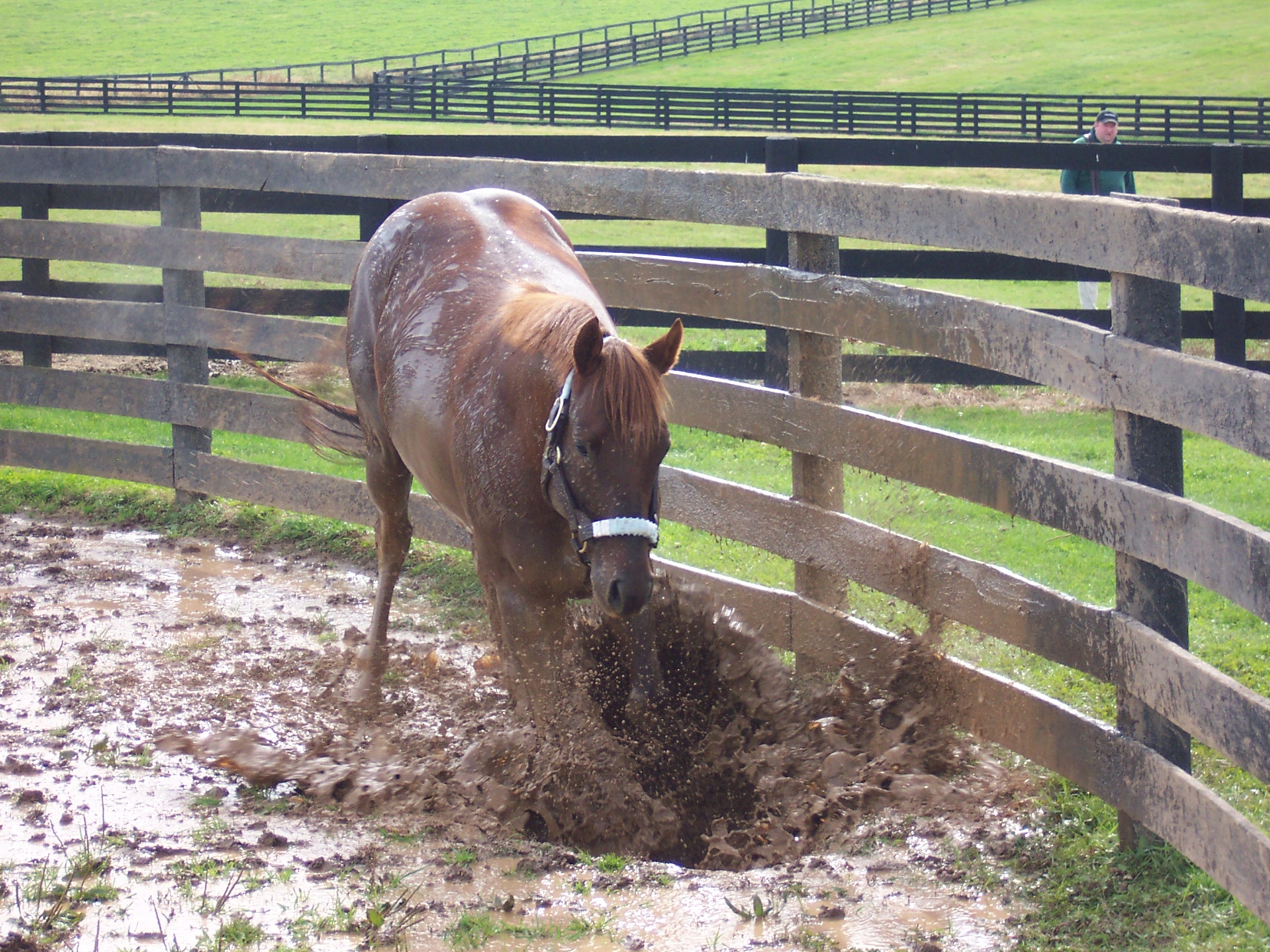
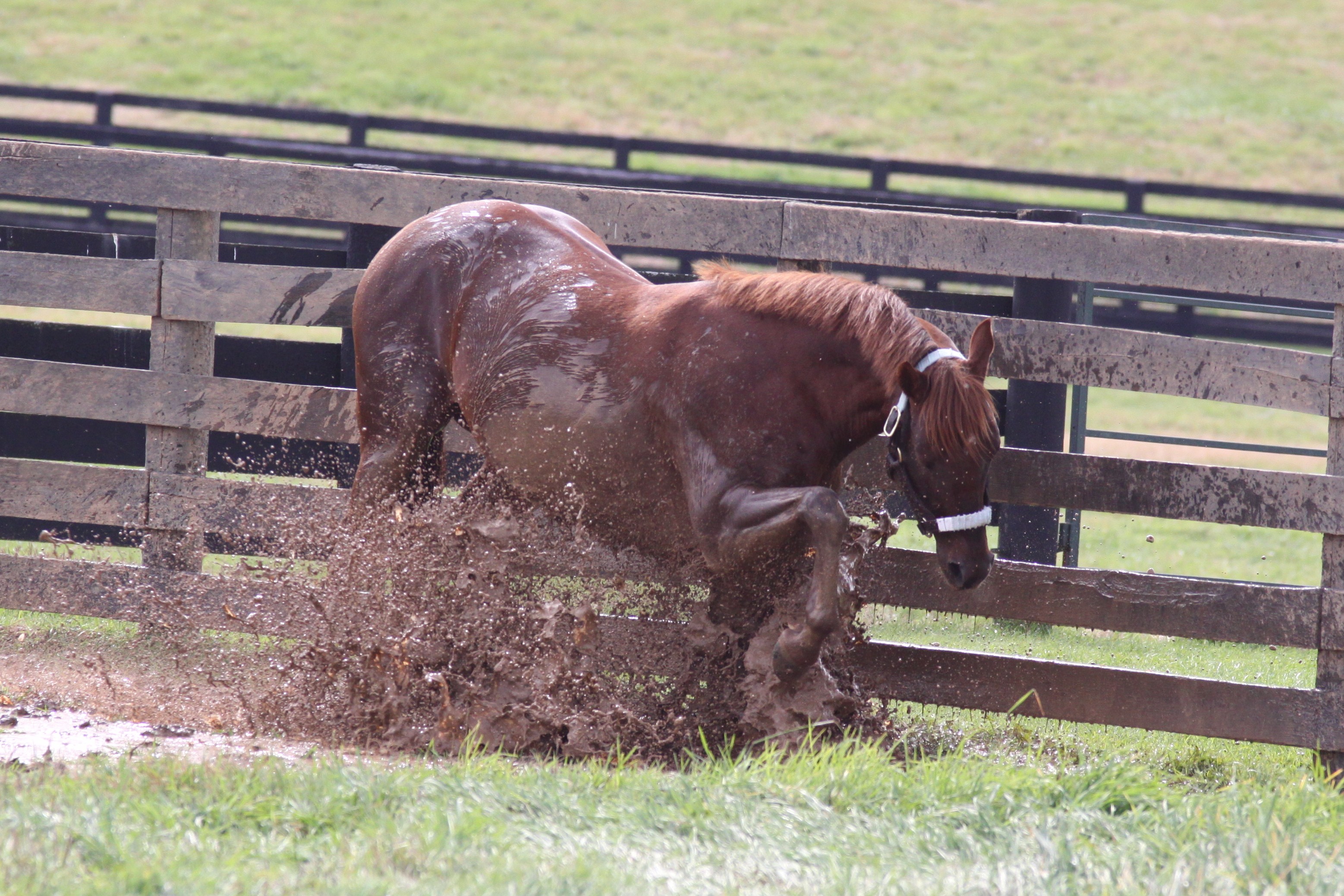
TC: Smarty sure isn’t a dummy! He enjoys his daily routine, which includes coming in from his paddock in the morning and being walked, bathed, and fed (he’s especially a fan of the feeding portion of that routine). He’s actually not one to crave a lot of human interaction. If it was his choice, he’d probably opt out of his daily grooming and would prefer to say dirty.
He’s a huge fan of mud, which seems to fit right in with his disdain for grooming. After a good rain, the lower corner of his paddock can get especially soggy and, as soon as he’s turned out on a day like that, he goes straight for that corner and starts working on his ‘mud masque.’
He loves peppermints and, while we can’t give him all of the treats his fans send him throughout the year, we do make sure that there is a never-ending supply of mints in the tack room that the grooms pamper him with.
JW: Smarty Jones has produced several foals in the past few years. Can you discuss some of the notable racehorses among his progeny?
TC: Admittedly, Smarty’s offspring didn’t give his career at stud the launch we had anticipated initially, however, he has had high caliber runners each year since his first crop hit the track and recently he’s had several of the best few months of his career. Some of his current budding stars include:
Backtalk is going to the Illinois Derby and, if all goes well, to the Triple Crown
Brilliant Sunshine was so impressive with her last two wins (broke maiden by 4-1/4 under wraps, then won an allowance by 7 being geared down) that she’s being pointed for her first stakes start next time out; she was profiled in the TDN’s “Sharper Focus” section last week as a horse to watch.
Follow the Leader is 4-3-1-0 (all in Msw and Alw company) and is likely headed for stakes competition – owned by the President of Oaklawn.
Keiai Gerbera won an allowance in January and came back to score a 5 length win in a stakes race in Japan over a field of 15 males – she was the only female in the race.
No Equipment won first time out by 8 lengths at Philly Park
Gracie Jones won second time out so impressively that she’s being pointed toward the Oaks Trial S. with the goal of starting in the South African Oaks later this year. Creating a LOT of buzz in South Africa – Smarty’s only runner in that country.
Sommelier Smarty is unbeaten in 2010 and is riding a 3 race winning streak.
JW: In terms of breeding, what are traits that make Smarty Jones desirable at a stud?
TC: Smarty Jones has a unique and obviously very favorable combination of good looks, balance and athleticism. He is a 16-hand powerhouse and his offspring resemble him, with that distinctive head, big hind-end, and cocky attitude.
Some of his best foals have been out of mares from the Seattle Slew and Deputy Minister lines and is working well with mares carrying Northern Dancer blood, especially Danzig and Storm Cat daughters.
JW: In your estimation, how many fans have visited Smarty Jones since he retired to Three Chimneys Farm?
TC: Smarty Jones and the rest of our stallions are greeted by at least 25,000 a year. Due to the high demand from fans to see our stallions, starting way back with Seattle Slew, we had to build a visitors’ center separate from our main office and an auxiliary parking lot due to all of the additional traffic.
We expect to FAR exceed that 25,000 visitor estimate this year. Due to the World Equestrian Games being in Lexington this fall, we have had numerous requests (we’re talking about hundreds upon hundreds) to see Smarty and the rest of the stallions and the farm. Due to the vastly increased demand during this event, we are modifying our tour schedule to be able to accommodate as many requests as possible.
To comment on this post, click here. The Saturday Post has recently launced a Facebook Page. To follow us on Facebook, click here.
March 23rd, 2010 §
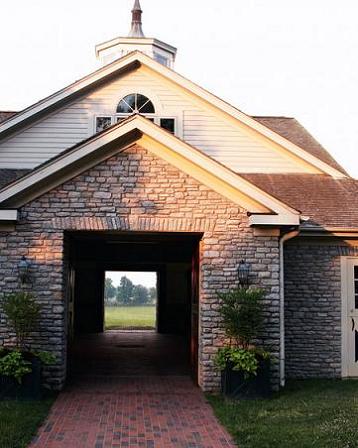
 Case Clay manages the various world-class stallions, mares, and foals housed at Three Chimneys Farm. In 1972, his father, Robert Clay, founded the farm with a dream, a plan, and 100 acres of undeveloped land.
Today, the farm incorporates approximately 2,300 acres in seven divisions – five for mares and foals, one for yearlings, and the last to 12 highly accomplished stallions.
In the mid-1980s, Three Chimneys Farm made the decision to establish itself as a boutique by limiting the farm’s stallion population - the concept being that “The Idea is Excellence.” This allowed for personalized management and promotion of each stallion.
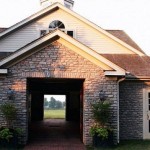 The Throughout the years, the farm has been the home to many exceptional horses – including Triple Crown winner Seattle Slew and 1997 Kentucky Derby and Preakness winner, Silver Charm.
Three Chimneys Farm is currently is the home to Kentucky Derby and Preakness Winners, Smarty Jones and Big Brown, as well as Dynaformer, the sire of 2006 Kentucky Derby winner, Barbaro.
In a recent interview, Clay discussed his experiences through the years at Three Chimneys Farm.
WIRTH: Did you grow up at Three Chimneys Farm? If so, what was it like as a child to be surrounded by such highly accomplished horses?
CLAY: I did grow up at Three Chimneys Farm. It was wonderful to be surrounded by horses. Slew O’Gold was our first stallion and I have great memories going to see him run before he retired. Since he was so dominant on the racetrack, I remember thinking, ‘this must be easy’. I was in the fourth grade then and each year since then, I realize every day how wrong I was! The following year we were fortunate enough to stand Chief’s Crown and I will always have great memories of the time I spent with the Rosens.
WIRTH: What inspired your decision to work in the equine industry?
CLAY: In 2001, I was working for the Hyatt Corporation’s in-house advertising agency for their retirement communities. At the time, I was reading about small, boutique advertising firms that were getting acquired by big advertising conglomerates for a lot of money. I thought that I would start my own boutique firm with the goal of selling it to a big firm.
Since I didn’t know anything about starting a company and my father did, I called him and asked if we could dedicate some time to discussing how to start a company. We talked at 9 a.m. each Saturday morning for a year. Just about every example he gave (whether on purpose or not!) was about Three Chimneys and the horse business. The more we discussed it, the more interested I became in the idea of becoming involved in the family business. I talked to my wife, Lorin, about it, thinking she would say, ‘no way’ at the thought of moving to Kentucky, but when I asked her, she said she would be up for it – so here we are.
WIRTH: Prior to becoming the President of Three Chimneys Farm, you had worked at farms in Ireland and Australia. Did you find any unique differences between horse racing in the United States compared to the customs in Ireland and Australia?
CLAY: Yes. As we read in the many blogs and articles, Australian Racing has a brilliant model. Going racing there is a great experience with lots of excitement and it fills about 5 or 6 pages each day in the major newspapers. In Ireland, there is a great passion for racing as well. Kudos to Monmouth Park for their new model. I hope it catches on here in America.
WIRTH: In nearly four decades, Three Chimneys Farm has grown from a 100-acre dream to a 2,300-acre top-notch breeding farm. What do you think were the key management decisions that led to the success of Three Chimneys Farm?
CLAY: Put out a good product, take care of the customers and take care of the employees.
WIRTH: What are the governing principles and beliefs that guide your operation?
CLAY: Honesty without hesitation. Never stray from integrity. Mutual respect and the value of every team member, the importance of innovation, and strengthening customer relationships.
WIRTH: How do you determine which mares and stallions should be housed at Three Chimneys Farm?
CLAY: We put a lot of emphasis on the family (pedigree). With regard to stallions, the three main factors are pedigree, conformation and race record.
WIRTH: What is your day-to-day schedule like as President of Three Chimneys Farm?
CLAY: Lately it has been managing receivables! Every day is different, but every day is enjoyable.
WIRTH: What are some of your most memorable moments at the farm?
CLAY: The most memorable have been with my five-year-old daughter and three-year-old son. We spend a lot of time in the hay loft, but occasionally they’ll look at a horse!
WIRTH: When you see a horse that was foaled at Three Chimneys Farm go on to achieve success as a racehorse, do you feel a sense of accomplishment?
CLAY: It’s more of a sense of pride with regard to our team. We have world-class horse managers in place, in Sandy Hatfield, Tony Burton, Richie Donworth and Wayne Smith. Each of them has a team who has been with them for a long time. They do all the work.
To comment on this post, click here. To join The Saturday Post Facebook Page, click here.
March 15th, 2010 §
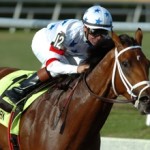
In 2008, Big Brown captivated the American public with his flashy wins and charismatic bid to win the Triple Crown. With a career record of seven wins in eight starts, he defied the odds in several races and produced mind-bending accomplishments on the track.
As a two-year-old, Big Brown broke his maiden at Saratoga in a dazzling 11-1/4 length victory. When he entered his three-year-old season, Big Brown won four consecutive races between March 5 and May 17, including the Kentucky Derby and Preakness.
In the Kentucky Derby, Big Brown won by a thrilling 4-3/4 length victory after having had only three prior career starts. He became the only horse in history to win from the 20th gate post.
Entering the Preakness, Americans fixed their attention on Big Brown after his dominating win at the Derby. Big Brown delivered an astonishing 5-1/4 length win in the Preakness. When all eyes turned toward Big Brown in the Belmont, he experienced the sole heartbreaking loss in his career. However, his tremendous presence and star quality drew new fans into the sport of horse racing – the fourth largest crowd in history showed up at the Belmont Stakes to watch Big Brown make his bid for the Triple Crown.
Prior to retiring, he won his last two career starts – the $1,000,000 Haskell Invitational (Grade 1) and the $500,000 Monmouth Stakes. Jockey, Angel Cordero, encapsulated the exceptional talent of Big Brown: “He’s like a car – he comes with everything. Just step on it, and you’re there.”
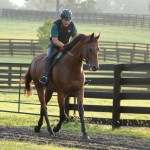 Since his retirement, Big Brown has bred over 100 mares at Three Chimneys Farm. As the first foals by Big Brown are emerging at various stables, he continues to make his mark on the sport of horse racing. This year, Big Brown will travel to Australia to stand at Hunter Valley farm.
Prior to his anticipated departure for Australia, Three Chimneys Farm graciously provided me with an interview. After chasing him from the Derby to the Belmont, I was elated to finally catch up on Big Brown.
JW: After winning the Kentucky Derby and Preakness in 2008, Three Chimneys Farm struck a deal to stand Big Brown prior to the Belmont race. At the time the decision was made, did the farm believe that Big Brown was going to win the Triple Crown?
TCF: We thought he had a better chance than just about any horse in recent decades. From his first start to his runaway win in the Preakness, he really hadn’t been tested. His rivals couldn’t even get close to him and in the Preakness, running against some of the best of his generation, he won under wraps by 5 ¼ lengths.
JW: What are the overall qualities about Big Brown that led to the decision of Three Chimneys Farm to acquire him for breeding?
TCF: Obviously the brilliance he showed in his first three races was a major factor. He achieved a series of “firsts” and “bests” that rank him with the all-time greats, such as being the first horse to win from the 12 and 20 posts in the Florida Derby (G1) and Kentucky Derby (G1) respectively. On top of that, he ran the best Ragozin number in Kentucky Derby history. He’d come to the Derby virtually untested, and on racing’s biggest day, left the rest of the field eating his dust.
Combined with that is his physical appearance. He is beautifully conformed and well-balanced. He’s not too big or small; not too heavy or light. The way he’s built makes for an effortless stride, allowing him to float across the track with minimal exertion.
From a pedigree standpoint, he’s inbred 3 x 3 to Northern Dancer, making him a likely candidate for crossing well with Mr. Prospector-line mares, not to mention Halo, Roberto, Seattle Slew, and Blushing Groom strains as well.
Also factored into the mix is his temperament, which couldn’t be better. We saw time and time again during his racing career that he took everything in stride. He’s level-headed, intelligent and kind. He doesn’t fight his rider in the morning or in a race and, as a result, is not hard on himself whatsoever.
JW: Big Brown has bred with over 100 mares in his first season. How is it determined which mares are bred with Big Brown?
TCF: We have an expert pedigree consultant on staff at Three Chimneys by the name of Anne Peters. She looks at the pedigree of each mare submitted to Big Brown and also considers the physical qualities the mare possesses, any soundness issues on either the sire or dam’s side, and other factors.
Based on what similar breedings have resulted in the past and what the mare has produced or accomplished herself on the racetrack, Anne makes a judgment as to whether the mare would be a suitable mate for Big Brown (this is done with mares submitted to all of our stallions).
If, for example, she feels the mare would not pair up well with Big Brown, she then suggest other mating options (either stallions at our farm or at other farms) that might pair up more favorably.
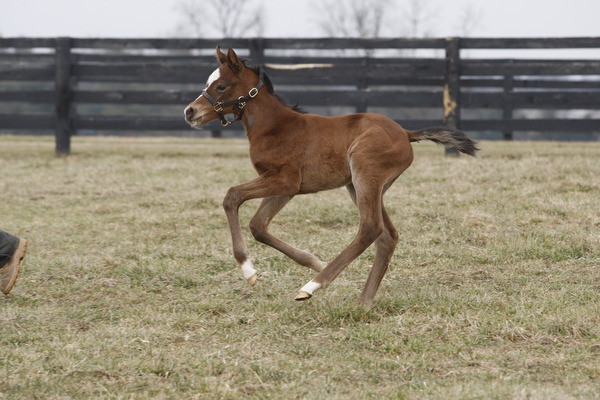
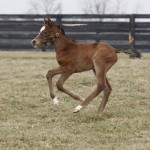 JW: The first reported foal by Big Brown was born on January 12, 2010. How many foals by Big Brown do you anticipate being born this year?
TCF: We limit all of our stallion’s books so as not to saturate the market with their offspring and so the horse is not over-used, so we expect Big Brown to have a crop of around 100 foals. 71 of the mares he was bred to are either stakes performers or stakes performing producers, so it is definitely a quality book.
So far, the feedback we’ve received has been extremely positive regarding his foals. He’s really stamping them with his build, athleticism and balance and they seem to have his temperament as well. Obviously mares come in all shapes and sizes, but his foals are surprisingly similarly built.
JW: On the track, Big Brown produced flashy wins and had an intimidating build. Having had the opportunity to establish a more intimate understanding of this horse, how would you describe Big Brown’s personality?
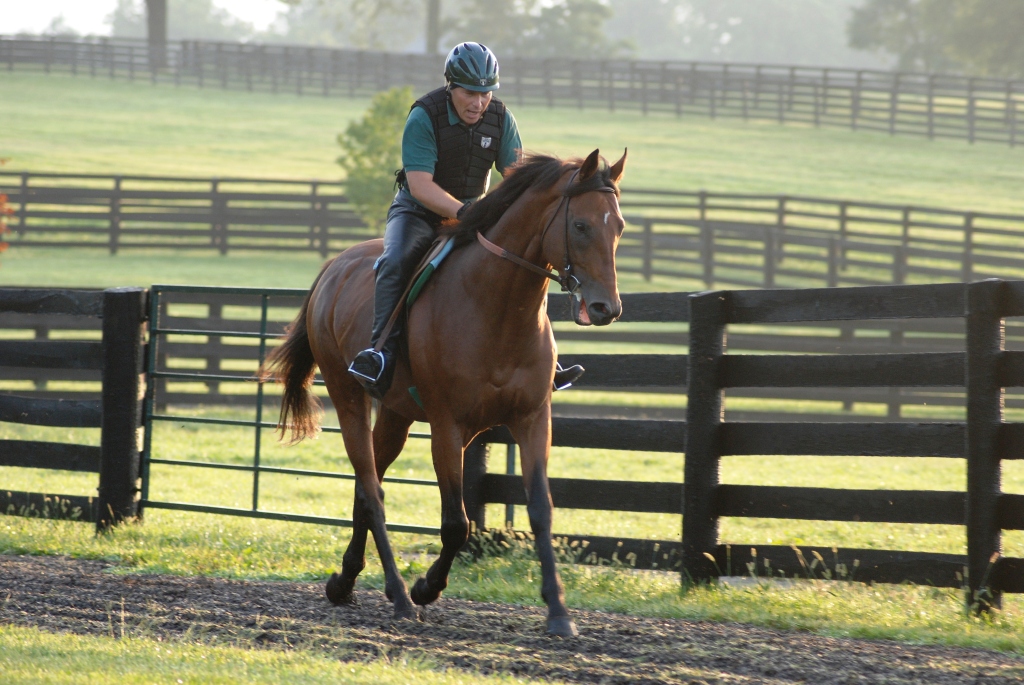
TCF: Big Brown is the epitome of a healthy, happy horse. He has an outstanding temperament in that he is not easily rattled and is quite personable. We ride our stallions 6 days a week (they gallop a mile and a quarter) and Big Brown just floats around the track with his ears pricked – if horses could smile, they would look like Big Brown under saddle.
That’s not to say he doesn’t have a bit of a wild side. Some days he puts on quite a show in his paddock for visitors who come to the farm for our daily tours. He loves to kick up his heels and tear around his paddock, throwing in a playful rear here and there just for fun.
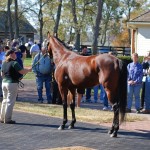 JW: In his retirement, does Big Brown continue to receive attention from fans and visitors?
TCF: Three Chimneys began offering daily public tours when Seattle Slew stood here and still conducts them five days a week. We estimate that our stallions receive more than 25,000 visitors a year from the tours alone and the horses that we receive the most requests to see are Big Brown and Smarty Jones.
We also have a visitors’ center near our main office, where tourists gather before and after the stallion division tour to see photos of the stallions, purchase hats with a stallion’s name and silks on them, and look through farm literature and all of the fan mail our stallions, especially Big Brown and Smarty Jones, receive (and they do receive A LOT of fan mail).
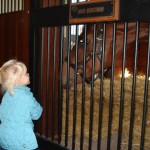 JW: Does Big Brown have any unique personality traits or favorite items?
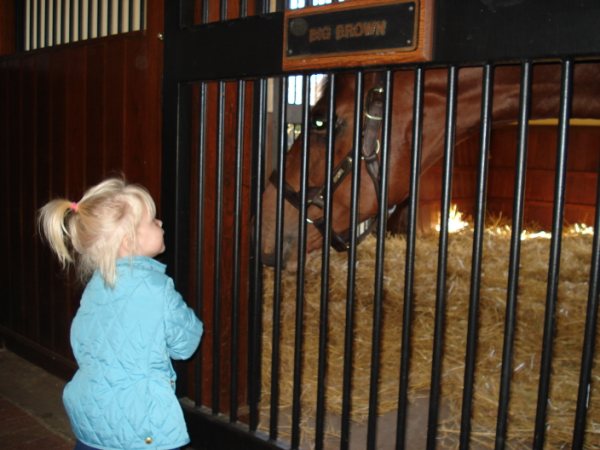
TCF: Big Brown loves peppermints and butterscotch candy. He also seems to be fascinated with children. Anytime a child comes to the front of his stall, Big Brown lowers his head to greet them.
This past fall we also saw Big Brown’s uncanny ability to adapt to any situation. Make A Wish brought a child out to meet Big Brown. The child had severe disabilities, so petting Big Brown was a very slow process (and wouldn’t have been possible without that wonderful temperament he possesses). Big Brown stood like a statue while the child pet his mane and shoulder and even pressed the “go button” birthmark on his side. The child’s eyes were wide and bright and he let out numerous giggles, bringing tears to the eyes of his parents and just about everyone else in attendance.
JW: Recently, it was announced that Big Brown will be shipped to Australia to stand at Hunter Valley Farm. What led to this arrangement and do you anticipate that Big Brown will return to Three Chimneys Farm in the future?
TCF: Big Brown’s pedigree is highly desirable in the Australian market, as it matches up favorably with many of the mares in that part of the world. Big Brown will shuttle, meaning that he will ship to Australia (accompanied by his groom) and stand the Southern Hemisphere breeding season, which is during the opposite time of year as our Northern Hemisphere breeding season.
Once the Southern Hemisphere breeding season has concluded, he will travel back to the United States to Three Chimneys. This will be an ongoing arrangement, so long as Big Brown handles the physical and mental demands of shuttling (which we expect him to have no problem doing).
Click here to comment on this article or email Jennifer Wirth at blog@thesaturdaypost.org.
For more information on Three Chimney’s Farm, please visit their website.
Three Chimneys Farm also has a fan club, “Club Three Chimneys.” For a $35 annual membership fee, members receive trial subscriptions to the Blood-Horse and Thoroughbred Times (8 week subscriptions to each, with the option to subscribe on an annual basis at a heavily discounted rate) a hat, weekly emails about stallions, progeny and farm updates, free farm tours, quarterly newsletters, contests, and more. You can find more information about the club at on their membership page for Club Three Chimneys.
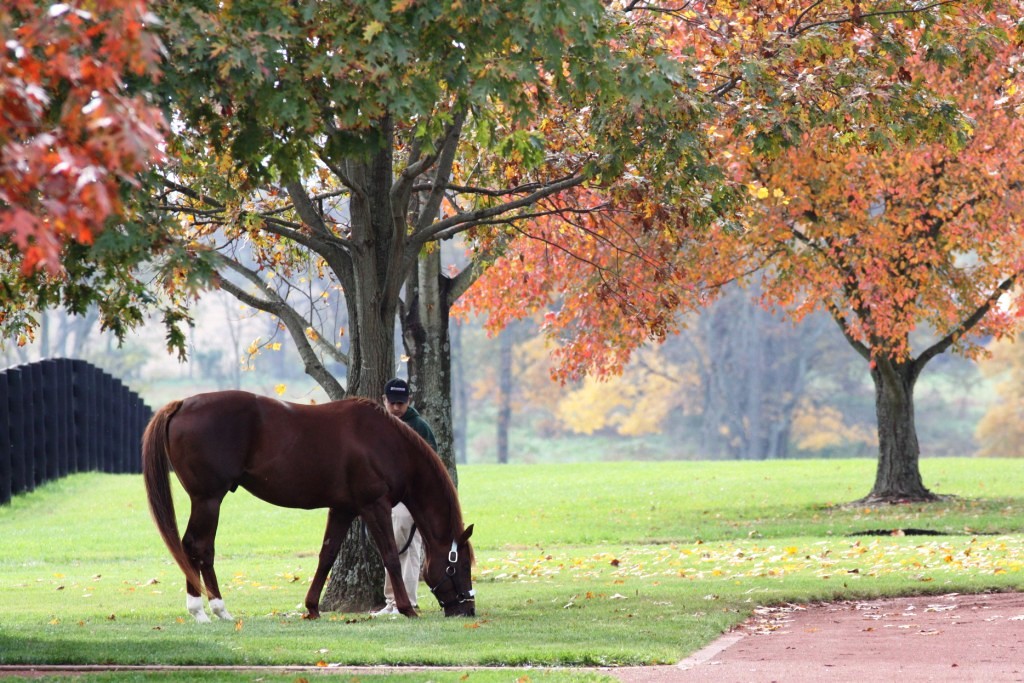
 Smarty Jones retired in 2004 with a career record of winning eight of his nine races. He was sent to Three Chimneys Farm and housed in the former stall of Seattle Slew, the only undefeated Triple Crown winner in history.
  JW: How would you describe the character and temperament of Smarty Jones?