 A few decades ago, a thirteen-year-old boy in a working-class neighborhood in New York would take the bus to the racetrack with twenty dollars and the Daily Racing Form as a guide.
He was simply a fan of racing.
As a fan, the horses would cascade past him in the post-parade, deliver a fleeting glimpse of themselves in the home stretch and pause for quick photo in the winner’s circle. At the time, the experience was enough for Mike Repole to get on the bus with a few bets and a dream of owning a fast racehorse someday.
He was simply a fan of racing.
In the following decades, Repole would become known for being the co-founder of Glaceau, the company that introduced Vitaminwater, as well as the Chairman of the Board for Pirate’s Booty snacks and the health-conscious Energy Kitchen fast food restaurant chain. Yet, in six years of owning racehorses, Repole wouldn’t be known in the racing world for a graded stakes victory. He was winless in all of his graded starts as an owner.
However, Repole remained an owner and fan of racing.
As he maintained his stable, Repole continued to search for the “fast racehorse” that he had envisioned in his youth. And finally, a two-year-old bay colt showed up and silenced any doubt that Repole had found “the one.”
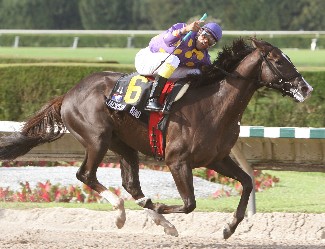
 In his debut, Uncle Mo delivered a 14 ½ length maiden victory for Repole at Saratoga. Shortly thereafter, the colt proved to be blessed with speed as he won the Champagne Stakes in an authoritative 4 ¾ length victory that gave Repole his first graded win as an owner. In his last outing, Uncle Mo showcased his talent during a captivating victory in the Breeders’ Cup Juvenile.
All eyes turned to Uncle Mo. It appeared that a new dream was beginning in the racing world.
It is a dream for all fans of racing.
With an undefeated record and astonishing speed figures, Uncle Mo is currently poised as the horse that can deliver the dream of winning the Triple Crown. He is beyond the “fast racehorse” that Repole wished for as a boy. Uncle Mo is the kind of horse that racing enthusiasts have wished for since 1978.
And, Repole wants to share Uncle Mo with every fan of racing.
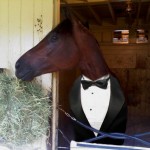 Uncle Mo has a page on Facebook and Twitter. Fans could see a photo of Uncle Mo posing in a tuxedo for the Eclipse Award ceremony, where he ultimately received the Best Two-Year-Old Male Award in a fan-focused acceptance speech from Repole.
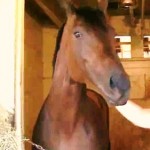
Uncle Mo also posts videos and photos about his activities, including a picture of Repole feeding the horse his favorite treat, Pirate’s Booty “Smart Puffs.” Recently, Uncle Mo posted a video of him galloping at Palm Meadows to show his progress in training. In the past few days, hundreds of people have viewed the clip.
Finally, fans are encouraged to talk to Uncle Mo through his Facebook wall. Uncle Mo is hoping to receive a few valentines from his admirers on February 14 and is looking forward to hosting a virtual “birthday celebration” on his foaling date of March 10 via Facebook. If you want to join the festivities, you can follow Uncle Mo through clicking here.
And, after decades in the sport, Repole doesn’t lose sight of simply being a thirteen-year-old fan of racing. As fate would have it, Uncle Mo started out on Facebook through a thirteen-year-old girl named Rebecca Case who created a page for the horse.
She is simply a fan of racing.
When Repole learned that Rebecca Case had made a page for Uncle Mo, he asked his connections to contact the thirteen-year-old racing fan with a small request: He wanted to help the girl with her Uncle Mo page and keep her updated on the horse.
Today, Case and Uncle Mo’s connections work together to make the horse accessible to fans. And as a team, they prove that some dreams never grow old.
Uncle Mo is the dream of a thirteen-year-old racing fan, both today and decades ago.
And, Uncle Mo could deliver a dream to many racing enthusiasts who marvel over whether he can win the Triple Crown.
Yet, whatever Uncle Mo accomplishes in his career, one thing is certain. Uncle Mo isn’t just a “fast racehorse” or a “Triple Crown prospect” in the eyes of Repole. He is part of an experience that should be shared with anyone, young or old, that is simply a fan of racing.
As Uncle Mo points toward his three-year-old debut, Mr. Repole has graciously agreed to answer my questions about the horse. The interview appears below.
JW: Prior to his first victory, did you believe that Uncle Mo had the potential to be a special horse?
MR: I was always excited about Uncle Mo. He was always the best on the farm in Florida where I break 25 of my yearlings. We knew he was the best on the farm, but you’re never sure when your horse is still at the farm.
Then, we went to Todd Pletcher’s barn around May. Todd trains the best two-year-olds in the country and usually has three or four horses in the Derby. When Todd Pletcher tells you that he’s training eighty horses and Uncle Mo is the best horse, you get excited.
But, being the best in the morning, doesn’t always translate to being the best in the afternoon. ‘Show Time’ is a lot different than practice.
Until Uncle Mo raced in his maiden at Saratoga, I didn’t know what to expect. Then, I was awed by his performance, as were many people. And, after that, I started to think and dream. He’s lived up to every expectation since his first race.
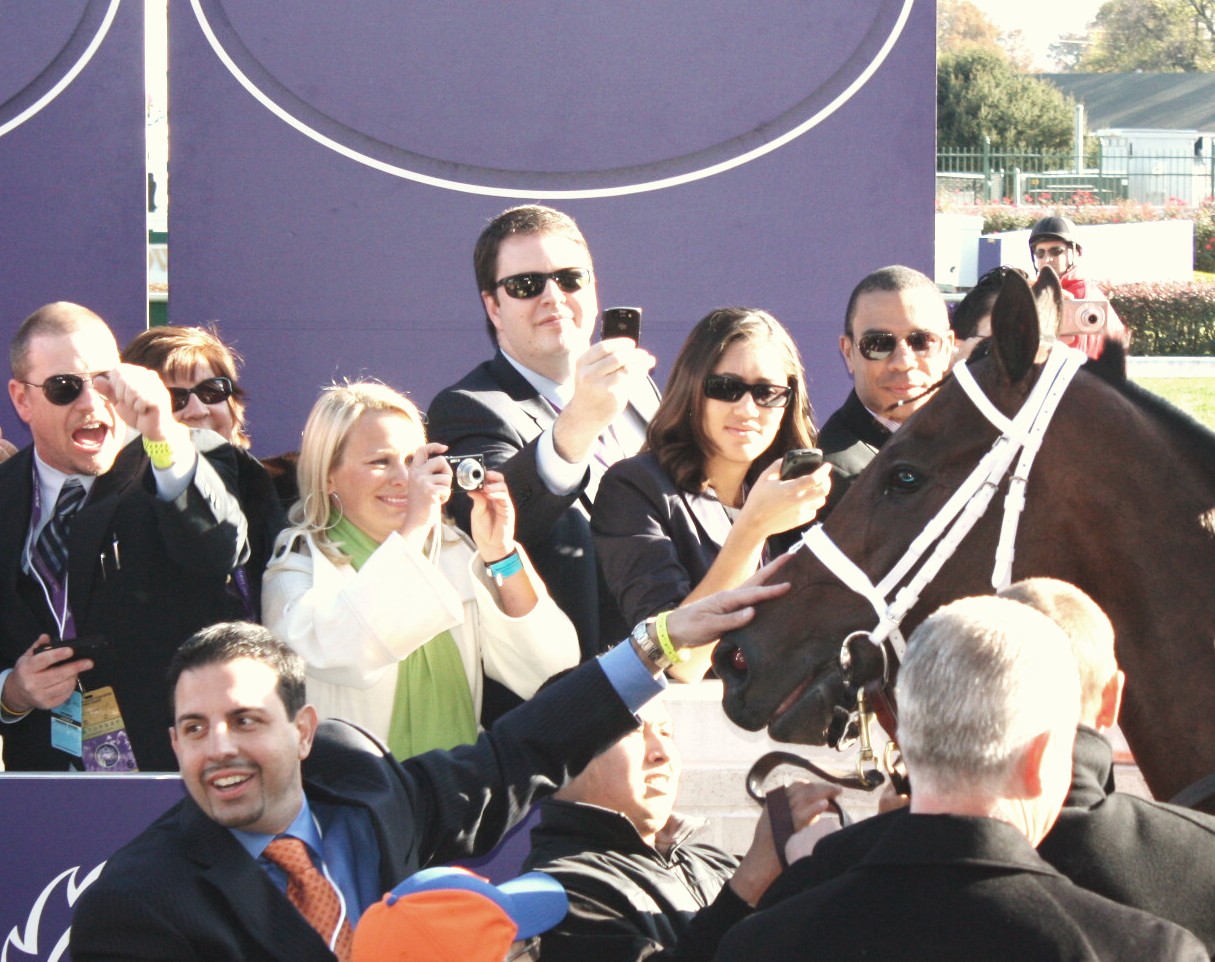
JW: At the Breeders’ Cup, you personally led Uncle Mo into the winner’s circle after he won the Juvenile race. How did you feel as you approached the winner’s circle with him?
 MR: I just felt like a thirteen-year-old kid at the track, cashing a two-dollar bet. It was just such a great and genuinely happy moment. It was something that you dream about and you think about. And then, you shoot your dreams and goals as high as they can go.
It was an amazing accomplishment to watch a horse race in the Breeders’ Cup that you can call your own. It is an accomplishment for any owner.
But then, to actually win, it was a great racing moment. Just in that moment right there, I felt like a thirteen-year-old at the track for the first time and getting spoiled.
I am a racing fan before I am a racing owner. I just happen to be a racing fan that owns horses. There was no bigger ‘racing high’ at that moment. It was one of the greatest days of my life.
JW: Do you think Uncle Mo has the potential to win the Triple Crown?
MR: I would say, ‘Think Big, Dream Bigger.’
Whether Uncle Mo has the potential or not, we’ll know the answer on June 11 at the Belmont, or we may even find out at the Kentucky Derby.
But, I can’t tell you that I’m not dreaming of winning the Kentucky Derby or that I’m not dreaming of winning the Triple Crown. I’ve been dreaming of this for almost thirty years. The only difference now is that I have a horse that has the potential to actually do it.
As for his potential, I have no doubt. But, a lot has to happen in the meantime. It takes a lot of luck. A lot of great horses have not won the Kentucky Derby or the Triple Crown. A lot of great horses have won one or two of those races, but didn’t win the Triple Crown.
Yet, I think for racing and racing fans, whether it is Uncle Mo or some other horse, it would be great for the sport and great for racing fans.
JW: Could you describe some of Uncle Mo’s personality traits and favorite items?
MR: Every time I go to the barn, I give Uncle Mo an extra carrot or two. He gets a few extra peppermints. He gets Pirate’s Booty Cheddar Puffs. Todd doesn’t give him the Cheddar Puffs, but he knows I bring them to Uncle Mo.
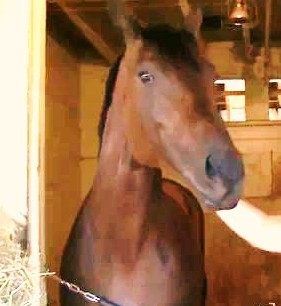
Uncle Mo doesn’t act like a young three-year-old. When he is laying down or he is at the back of the stall, I will call him by saying, “Hey Mo.” He will come right over and put his head on my shoulder.
He is like a monster on the racetrack, but he has a totally different personality in the stall. He is just happy-go-lucky and has a great personality. You don’t need a treat for him to come over to you. He is just a great horse.
Uncle Mo is also a very smart horse. Todd has always told me that not only is Uncle Mo one of the most talented horses he’s ever had, but he has the brains to go with it. He just does everything right. He is the model student. He doesn’t have any bad habits.
And finally, he does everything right the first time, no matter what he has been asked. Even Todd is amazed. It’s scary to be honest with you.
JW: You have made a strong effort to give Uncle Mo’s fans access to him. What makes this principle so important to you?
MR: It goes back to me being a racing fan for thirty years. The only access that I had as a fan was looking at the workouts and those types of details about each horse.
Now with social media, Uncle Mo has a Facebook page with a following of almost 2,000 fans. It is growing every day and every week. The way I see it, people want to know more about this horse. His site visits are going up on a regular basis. He has a Twitter account and he tweets things that are coming up and things that he has planned.
When Mo speaks, he might get fifty comments behind it. And, even when he doesn’t speak, people are constantly commenting on his wall. I see it. They say things like, ‘I wish you the best of luck,’ ‘Happy Birthday, Mo,’ or ‘You look great, Mo.’
The sport has to put something out there for the fans. It just can’t be about fractions, workouts, entries and the ultimate race day. It has to be more than that. Before the Superbowl, there is going to be a lot of hype and players talking about what they are doing. I think that racing fans need to be more involved as well and know what the horses are doing.
To me, even if I didn’t own Uncle Mo, I would want to know things like when he planned to workout, which race he was being pointed toward and what he was doing. For example, we put up a video of Uncle Mo the other day just galloping. It was only nine seconds long, but it received tremendous amounts of views. It is just something that many other people aren’t doing, but I wish they would do it, because I am a racing fan first. I am just fortunate enough to own horses.
I think it is important to involve the racing fans a lot more than they are being involved. Racing has so many passionate fans. I’ve always said, ‘If I get a special horse, I want to accommodate the fans.’ The most important thing that the industry needs to do is be accessible and accommodating to the fans. It’s very simple. We just need to take care of the horses and the fans.
JW: When you began going to racetrack, did you ever imagine you would own a horse like Uncle Mo?
MR: I’m sure it was because I was naïve, but I did. I wish I could tell you that I am shocked that this is happening. But, I had dreams about having a horse like Uncle Mo.
After Uncle Mo won the Breeder’s Cup Juvenile, someone asked me if I was thinking about the Kentucky Derby. I said, ‘I’ve been thinking about it for the last thirty years. Why would tomorrow be any different?’
JW: It was reported that you donated $50,000 of Uncle Mo’s winnings from the Breeders’ Cup Juvenile to five different organizations that care for rescued racehorses. What led to this decision?
MR: Before being an owner, I never understood where horses went after they stopped racing. I didn’t know if the owner had a farm and if they just lived on a farm afterward.
When I became involved in racehorse ownership, I realized that owners have a responsibility when a horse is done racing. There is a responsibility to make sure that your horse finds the best possible home in the future.
Under the radar, I have been donating for years. I have been donating to many horse rescues and always making sure that my horses found a home. I have people that send me letters about horses that I used to own and were claimed from me when they were racing. They want me to try to help them get their horse at the end of their racing career and I have helped people get back their horse. To me, it is a great thing.
I also have received letters from previous owners of horses that I owned as they approached the end of their racing career. When the horse was done racing, they wanted the horse to come back to them. Some of those people raised that horse on their farm and they wanted them to come home at the end of their career.
So, once a horse gets to a certain level where they would just be running for small claiming races, I just stop running the horses and give them back to the person who asked for their horse to come home. And, they are appreciative. They often send me a letter and it confirms to me that I’ve done the right thing.
I think I had an opportunity with Uncle Mo when I made a donation to those rescues after winning a big race. I wanted to say, ‘This is what I am doing and maybe others should follow suit.’ A person owns a horse from the time they begin racing until the moment the horse is given a good home. Every horse that I am connected with gets a home.
My donation was not only part of supporting horse rescue, but also, a way to thank the people who devote themselves to taking care of retired racehorses. I have the utmost respect for them.
JW: What is your favorite story from your experiences with Uncle Mo?
MR: I actually have two stories about Uncle Mo.
The first story was on the race track. To me, it was bigger to win the Champagne Stakes than the Breeders’ Cup Juvenile. I was the New York Racing Association’s leading owner in 2009, and, at that point, also in 2010, when Uncle Mo was pointing toward the Champagne Stakes. But, there was one thing I had never done before – I had never won a graded stakes race.
As we entered the Champagne, I felt a lot of pressure. Uncle Mo was going from a maiden to a Grade I race. During the race, I kept thinking that he couldn’t keep going that fast and keep it up for a mile in his second start.
When he pulled away by almost five lengths and nearly broke the track record, it was just an amazing moment to see one horse come along and take away the pressure of wanting to win a graded race. And, my whole family was there for that moment. My wife, my parents, my brothers, my grandmother… everyone.
The Breeders’ Cup was a great victory. But, that Champagne win, it was such a special moment in my life. When I raced horses in graded stakes in the past, I used to always watch the other owners go down to the winner’s circle after winning a graded stakes as they were surrounded by reporters and I would wonder, ‘Is that ever going to be me?’ When Uncle Mo gave me my first graded stakes win, it was a very rewarding moment.
The second thing I enjoy about Uncle Mo is visiting with him. There is a lot of stress owning a horse like him. I am nervous for the horse.
After the Breeders’ Cup, I spent an hour and half with him. He has a calming effect. Uncle Mo has this attitude and confidence that says, ‘Why are you nervous? I’m not nervous.’ Whenever I get nervous, I just go and visit him. He just has a way of saying, ‘Don’t be nervous. I’ll take it from here.’
Jim Tyrrell www.horsephotos.com
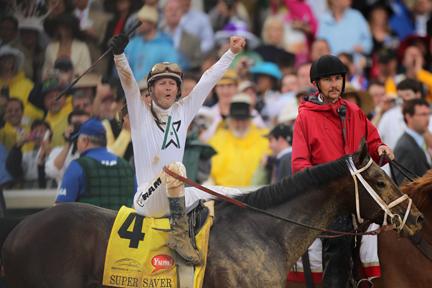
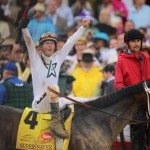
On Saturday, a mud-soaked colt trampled past the finish line at Churchill Downs into a Kentucky Derby victory.
In that golden second, Super Saver delivered the first Kentucky Derby victory to his ownership - WinStar Farm.
Todd Pletcher received the first Kentucky Derby victory in his training career.
Calvin Borel became the first jockey to win the Kentucky Derby three times in a four-year period.
As Borel headed to the winner’s circle, he shot out a bold statement that set fire to the wonder of racing enthuasists.
“We’re going to win the Triple Crown this year.”
In the magic dust of the moment, Borel spoke the words with such cool confidence that it seemed as if he had already made a reservation in the Belmont winner’s circle.
As the Preakness approaches, Borel’s prediction peaks the curiosity and arouses the hopes of many racing enthusiasts.

Doug Cauthen CEO of WinStar Farm
Racing fans have been dreaming of the next Triple Crown winner since Steve Cauthen rode into the history books with Affirmed in 1978.
Three decades later, Steve Cauthen’s younger brother holds the potential as President and CEO of WinStar Farm to deliver the twelfth Triple Crown winner in history with Super Saver.
Recently, I spoke with Doug Cauthen about Super Saver’s Kentucky Derby victory and the quest for the Triple Crown.
JW: Super Saver was the first horse owned and bred by WinStar Farm to win the Kentucky Derby. How does it feel to win your first Derby?
DC: It is truly hard to describe.
There was overwhelming joy, pride and thankfulness that Super Saver was able to do it.
To see so many people – from the owners, managers, grooms, maintenance crew, basically everybody – to get so much happiness and pride out of it is a real positive and satisfying thing.
I felt like we all should thank God for the victory.
JW: Your older brother, Hall of Fame Jockey Steve Cauthen, rode Affirmed to win the last Triple Crown in 1978. Do you think Super Saver could win the Triple Crown for your farm?
DC: I hope he can – I like Calvin’s prediction.
It was his Steve’s 50th Birthday on Derby day, so I felt like we had a little bit of good ‘mojo’ going there - that maybe something could happen. When the clouds parted and the sun came out right before the race, I had a calm and peaceful feeling.
I’m not quite as aggressive as Calvin with my predictions, but I’m on his side.
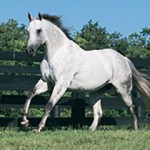
JW: Super Saver is by Maria’s Mon – sire of the fastest living Kentucky Derby Winner, Monarchos. Was this a factor in your breeding decision?
DC: We were very fortunate. We got Super Saver as part of a deal.
We bought Super Saver’s mother, Supercharger, when she was carrying Super Saver at the 2006 Keeneland November Sale. We were very blessed to have Super Saver as part of the purchasing package.
Supercharger’s got a beautiful pedigree – it’s one of the best pedigrees in the Stud Book. Supercharger is a full sister to a mare that we already had, called “She’s a Winner,” who is the dam of Bluegrass Cat. He is a multiple Grade I winner that we own and was second in the Kentucky Derby.
I hope that Super Saver can continue forward. He’s a beautiful horse – a balanced horse – with a great pedigree.
His pedigree is from one of the royal pedigrees in the Stud Book. With all the horses that are popping out of it that are so good - currently and in the last thirty years – it’s just been a magnificent family.
Being by Maria’s Mon, he’s going to offer a lot of outcross for breeders as well. It is a real positive for the breed.
JW: What do you see at the strengths in Super Saver as a racehorse?
DC: He’s got tactical speed and is very agile.
He can make his own race. He can be on the lead or sit back behind.
He’s got a tremendous amount of determination – he’s a very gutsy horse.
You can see that in his earlier races this year and during his races last year as a two-year-old.
It’s a combination that’s not only good for a racehorse, but for future stallions, so we are really excited about that.
JW: What is the general temperament of Super Saver?
DC: When he was on the farm being raised, he was a popular horse with everybody. He always had a forward attitude and a positive temperament.
JW: How did your farm make the determination to have Super Saver trained by Todd Pletcher and chose Calvin Borel as a rider?
DC: I think Elliott Walden (Racing Manager at WinStar Farm) deserves a lot of credit on that choice.
Todd is one of our primary trainers and gets a lot of horses that we think have potential. The fact that he trained Super Saver’s cousin, Bluegrass Cat, may have factored into it a little also. But, it clearly was a good choice!
We thought Super Saver was one of our early potential runners. Elliott said that we should give him to Todd. That’s what we did.
With Calvin, he was the best available rider when he came to the Kentucky Jockey Club race. Elliott sought him out – or encouraged Todd to seek him out – and the rest is history.
Super Saver won the Jockey Club last year as a two-year-old real impressively. He broke the stakes record, which was over a hundred-year-old record.
Calvin just gets along with Super Saver well. It is great to have him on board.
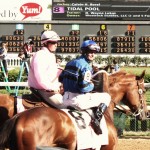
JW: Did Calvin Borel hold any special allure to your farm as a jockey in light of his recent Kentucky Derby victories?
DC: There is no doubt that he is an exceptional rider anywhere.
At Churchill Downs, he has that extra “Calvin Factor,” as I like to call it.
He really has a high level of confidence and horses run for him. He deserves credit at any race track.
He’s certainly got some good current form and it would be crazy not to take advantage of that if you can get him on your horse.
JW: How do you feel about owning the horse that delivered Todd Pletcher his first Kentucky Derby victory?
DC: For the farm, I think it was a really big feeling of satisfaction and pride in Todd. He was one of the first guys that we gave horses to when we divided the horses up between trainers.
He’s one of the best trainers in the country and will go down as one of the best trainers in history.
It seems like the press was focusing on his [Kentucky Derby] record unduly. It was great to see him win it and even greater to see his humility in taking the win.
He is a class act.
It is always fun to see people like that succeed.

JW: How did your farm celebrate your first Kentucky Derby victory?
DC: We’ve had quite a few celebrations.
We try to do something before the Derby because you obviously can’t expect to win – and we don’t. We just go there with the best horses we can and do the best we can.
On Thursday, we had a farm picnic for all of the staff. We had games, piñatas and plenty of food.
On Friday, we had another pre-Derby gathering with all the managers with the owners. It was a very nice event.
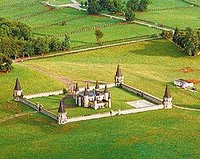
After the victory, some neighbors at Castle Post kindly invited us to celebrate with a hundred of our favorite friends. They hosted a wonderful gathering. It was really kind of Mr. Post.
It was also a great pleasure to see the inside of the Castle. We use it as a landmark to tell people how to get to WinStar quite often. It was great to see it and it was quite a nice spot.
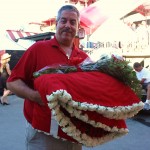
JW: Where is the Rose Garland?
DC: It is currently getting preserved.
Hopefully, it will reside in the office sometime soon.
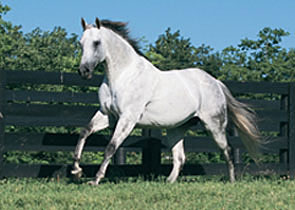
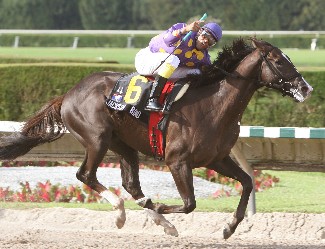
The Saturday Post would like to thank Doug Cauthen for his interview. We also appreciate the image of Super Saver provided by www.horsephotos.com. To view the photos from the Kentucky Derby at horsephotos.com, please click here.
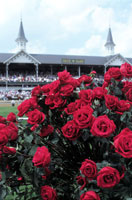
Although the final Kentucky Derby starters won’t enter the gates at Churchill Downs for over two months, several horses have begun to emerge in the prep races as early hopefuls for the first Saturday in May.
I’ll admit it. It is premature to cement any horse in Derby contention as anything other than a hopeful at this stage. The field for the Derby will transform itself many times in the upcoming months with unexpected turns and challenges as it does every season. However, at this early stage, here is a rundown of the major prospects.
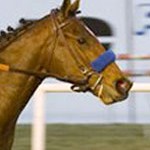
Lookin at Lucky
Lookin at Lucky. It would be impossible to start any discussion of Derby hopefuls without mentioning the generally-regarded favorite, Lookin at Lucky. Hall of Fame Trainer Bob Baffert has maintained the quiet supremacy afforded to this horse without even having run Lookin at Lucky in one start this season. Further, he has stated that Lookin at Lucky will only run in two prep races in hopes of clinching a slot in the gate at the Kentucky Derby.
So, what is so spectacular about the mysterious Looking at Lucky? In his six starts, four of which were Grade 1 races, Lookin at Lucky has only succumbed to a single defeat – The Breeder’s Cup Juvenile.
During the Breeder’s Cup Juvenile, Lookin at Lucky lost by a head after struggling with a bad trip throughout the race. At the start of the race, Lookin at Lucky was wide early, got stuck in midpack while facing a slow pace, rallied wide, and was ultimately outfinished from the inside by Vale of York. When interviewed after the Juvenile, Baffert stood firm. “We know we have a legit horse, we just didn’t get paid.”
Since the Juvenile defeat, he captured a win in the Breeder’s Cup Cash Call Futurity in December of 2009. Under jockey Garrett Gomez, Lookin at Lucky won by three-quarters of a length, after making several different moves throughout the race, to kick clear at the wire to secure a win. “Hell of a day, huh?” Baffert remarked in a post-race interview. “He’s getting better and better.”
Select videos of Lookin at Lucky’s past performances are available here for the Cash Call Futurity (1st), Breeder’s Cup Juvenile (2nd) , Norfolk Stakes (1st), and Del Mar Futurity (1st).
Buddy’s Saint. Buddy’s Saint is another strong candidate at this early stage in Derby prep races. Of his three starts in 2009, Buddy’s Saint captured two wins in Grade 2 races. In his most recent race, the $200,000 Remsen Stakes, Buddy’s Saint tracked the leader throughout the race to clinch a 4 ¾-length victory in the final stretch.
Prior to the Remsen, Buddy’s Saint dominated the $150,000 Grade 2 Nashua Stakes, winning by twelve lengths at the wire. He is expected to run in the Fountain of Youth Stakes on February 20, 2010 – competing against two other major hopefuls - Jackson Bend and Eskendereya.
Super Saver. It would be impossible to ignore this horse with the powerhouse team that catapulted Super Saver into his flashy first-place finish at the Grade 2 Kentucky Jockey Club Stakes. Super Saver, owned by WinStar Farm and trained by Todd Pletcher, made an amazing romp toward a victory under rider Calvin Borel in the Jockey Club Stakes. In the upcoming prep races, it will be interesting to see if this horse has the ability to give a repeat performance and capture a Grade 1 win.
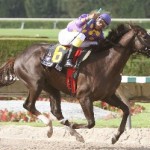
Jackson Bend
Jackson Bend. In seven starts, Jackson Bend has proven himself a legitimate Derby hopeful by capturing five victories and harboring earnings of $477,820. He was beaten by Winslow Homer in the Holy Bull Stakes, but still delivered an honorable second place finish. Prior to the Holy Bull, he was unbeaten in five consecutive starts and remains a strong hopeful – especially considering the depth of his experience in comparison to his other rivals at this stage. He is expected to race in the Fountain of Youth Stakes on February 20, 2010 in his next endeavor to remain on the Derby trail.
Rule. Rule has emerged as a serious contender among Derby hopefuls – having closed out his two-year-old campaign with three consecutive victories and, more recently, capturing a win in the Grade 3 $225,000 Sam. F. Davis Stakes.
In the Sam F. Davis Stakes, Rule drove toward the finish and won by three-lengths over a field of well-respected rivals. It remains to be seen if he can match his Sam F. Davis performance in a Grade 1 race. After the Sam F. Davis, trainer Todd Pletcher did not point toward the next prep race for Rule – but mentioned the Florida Derby, Blue Grass, or Wood Memorial among the options being considered.
Dryfly. With a record of three wins in four races, Dryfly is gaining respect as a Derby hopeful after his impressive win at the Smarty Jones Stakes in his three-year-old debut. Among a large field of contenders, Dryfly, ridden by Calvin Borel, managed to clinch a 2 1/4-length victory in a stylish performance. As with many other early hopefuls, it remains to be seen how he will handle a Grade 1 race. However, judging by his current record, he remains a strong early contender.
Eskendereya. This hopeful, trained by Todd Pletcher, has delivered two wins in four career starts. Although Eskendereya closed his 2009 season with a disappointing ninth place finish in the Breeder’s Cup Juvenile, this hopeful has re-emerged as an interesting contender in the 2010 season.
This past January, Eskendereya clinched a first-place finish during an ungraded race in a relatively large field. After the win, Pletcher showed confidence in his horse, stating that “The Fountain of Youth is a possibility, although I don’t know if he needs to wait that long to come back… The one thing I am sure of is that getting a mile and one-eighth will be no problem.” It remains to be determined whether this horse is capable of matching Pletcher’s confidence with ability to conquer a Grade 1 race.
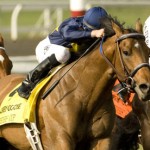
Noble's Promise
Noble’s Promise. Noble’s Promise has established himself as a legitimate Derby hopeful through showing the capacity to deliver a respectable performance in repeated Grade 1 races. Of his six starts, Noble’s Promise has clinched three wins – including a victory in the Grade 1 Dixiana Breeder’s Futurity. With the demonstrated capacity to consistently win or place while taking on serious rivals in the Juvenile Breeder’s Cup (third) and the Cash Call Futurity (second), Noble’s Promise is one of the few hopefuls who has proven his capacity to manage the difficulty of a Grade 1 race
Conveyance. In his three starts, this Bob Baffert-trained horse has remained undefeated and is emerging as a respectable Derby hopeful. Conveyance recently made his three-year-old debut in the Grade 3 San Rafael Stakes – clinching a 1 3/4-length victory over his rivals. Conveyance is expected to race again in the Southwest Stakes on February 15.
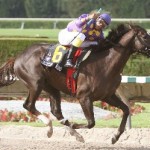 On Saturday, a field of nine Derby hopefuls will square off in the one-mile Holy Bull Stakes (gr. III) at Gulfstream Park in Southern Florida. With varying degrees of experience throughout the lineup, the likely favorite in the race will be Jackson Bend, a Florida-bred horse trained by Nick Zito.
Jackson Bend has won his last five consecutive stakes races and is the top money-earner in the field, with winnings totaling $477,820. In his last race, he clinched a 2 ¾ length win over his current rival, Thank U Philippe, at the In Reality Stakes in October 2009. Jackson Bend has been working steadily at Palm Meadows, with his most recent five-furlong workout on January 16th timing above a perfect 12-clip at :59.30. The only question is whether the depth of his prior competition will equal the field set before him in the Holy Bull Stakes this Saturday.
Among his main rivals in the Holy Bull, are Aikenite, a Florida-bred horse trained by Todd Pletcher, and Homeboykris, the winner of the Champagne Stakes (gr. I) on October 10, 2009. Aikenite, a multiple graded-stakes-placed horse, has not raced in nearly three months after his fifth-place finish in the Breeder’s Cup Juvenile in November 2009. However, Aikenite remains a significant rival, building his record on Grade One races in his two-year-old season.
Homeboykris, a Maryland-bred racehorse, won two of his four starts in 2009. His most impressive race was undoubtedly the Champagne Stakes (gr. I), where he captured a win and beat Super Saver, who finished fourth in the race. Homeboykris is trained by Juan Rodriguez with Edgar Prado as his current jockey. In his most recent workout, he ran six-furlongs in 1:14:69.
The other horses in the race include Winslow Homer, Piscitelli, Litigation Risk, Thank U Philippe, William’s Kitten and Wild Lime. Piscitelli and William’s Kitten make interesting picks for a long shot. Both horses raced in the Breeder’s Cup Juvenile (Gr. I), with Piscitelli finishing fourth – one length from the winner – and William’s Kitten finishing eighth. The drop in grade may improve their chances at placing in this race. The least talked-about horse, Wild Lime, has demonstrated some early potential – winning two of his three lifetime races.
Wild Lime made an impressive debut at Delaware Park in July of 2009, winning his maiden by 3 ½ lengths. More recent, he earned a top speed rating in an Allowance race at Meadowlands in December of 2009. It remains to be answered whether he can stand out among a stronger grade of contenders in the Holy Bull Stakes.
Here are my bets for the Holy Bull:
$2 Win – Jackson Bend
$2 Exacta Box – Jackson Bend and Aikenite
$1 Trifecta Box – Jackson Bend, Aikenite, and Homeboykris
$1 Superfecta Box – Jackson Bend, Aikenite, Homeboykris, and Wild Lime.
 A few decades ago, a thirteen-year-old boy in a working-class neighborhood in New York would take the bus to the racetrack with twenty dollars and the Daily Racing Form as a guide.
  In his debut, Uncle Mo delivered a 14 ½ length maiden victory for Repole at Saratoga. Shortly thereafter, the colt proved to be blessed with speed as he won the Champagne Stakes in an authoritative 4 ¾ length victory that gave Repole his first graded win as an owner. In his last outing, Uncle Mo showcased his talent during a captivating victory in the Breeders’ Cup Juvenile.
 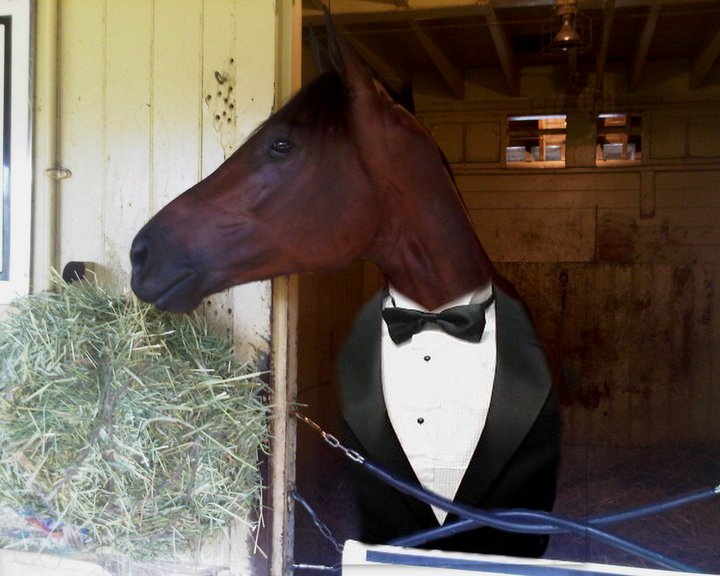 Uncle Mo has a page on Facebook and Twitter. Fans could see a photo of Uncle Mo posing in a tuxedo for the Eclipse Award ceremony, where he ultimately received the Best Two-Year-Old Male Award in a fan-focused acceptance speech from Repole.
 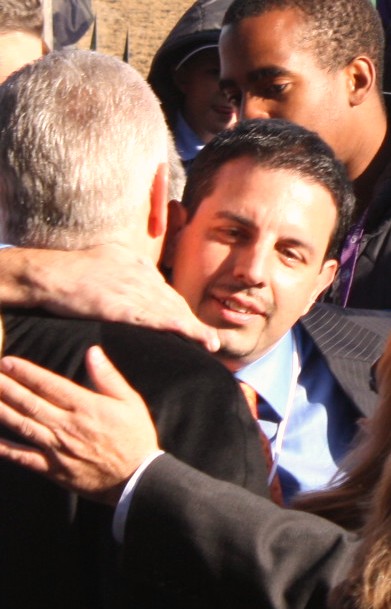 MR: I just felt like a thirteen-year-old kid at the track, cashing a two-dollar bet. It was just such a great and genuinely happy moment. It was something that you dream about and you think about. And then, you shoot your dreams and goals as high as they can go.