March 1st, 2011 §
 Last week, a little-known horse named Gretl raced at Oaklawn on Friday. Personally, I was thrilled to watch her race.
Gretl’s race wasn’t spectacular for the reasons you may expect. She didn’t win. And, even if she had won, she isn’t pointing toward the Kentucky Oaks or any other graded stakes race at the moment. She doesn’t have an undefeated record. Further, she can’t dance and no one is requesting her photo for a fashion magazine.
You may be wondering why I found Gretl’s race so special at this point. The reason? It was the first time that a horse that I had invested in as an owner made a start in a race.
I don’t expect the whole world to follow Gretl’s endeavors in life. But prior to the race, a few people in my world wanted to watch Gretl’s race to share the experience. They weren’t racing fans at all – they were simply family and friends who were curious about Gretl.
On the morning of Gretl’s race, several family members and friends wanted to see her race. I asked if they had TVG or HRTV. They did not subscribe to either channel. I then explained that they could open an internet account. Yet, they didn’t want to start a wagering account to view a single horse. Then, I looked on the internet to find out if there was a link that I could send them to show them the races at Oaklawn. There was no live video feed for the track. Finally, as a last resort, I told my mom and friends that they could see it at an OTB. Yet, they couldn’t leave their job at 1:30 p.m. on a Friday to go to a betting parlor.
In the end, my entire family and friendship group in Chicago missed Gretl’s race that day. Yet, here’s the issue: They didn’t miss the race because they didn’t want to see it. They missed the race because they couldn’t find a place to watch it.
 Three days later, I read an article in the Chicago Sun-Times entitled, “Horse Racing in Illinois is ‘on verge of extinction.’” It went on about many of the common issues that enter the “revival of racing” discussion – racinos, purse values, track attendance and the aging population of the sport. Yet, buried in the article, there was one particular point made by former Illinois Governor Jim Edgar that particularly hit home for Gretl and myself: Coverage of the Sport.
The former Govenor explained, “The industry made major mistakes in the ‘50s. When television came along, racing was on all the time. Then the tracks decided that they didn’t want to give it away for free.”
It made me wonder what racing would be like today if we “gave it away for free.” What if the tracks simulcast their races on their websites? Racing might romance a few new fans through showing them why this sport is beautiful, rather than telling them to set up an account to view a sport they don’t follow.
And, in the end, people may actually follow the sport in larger numbers if they are exposed to it on more regular basis. What if more newspapers actually profiled the winners of Kentucky Derby prep-races right now? Non-enthusiasts may begin to follow a few horses, and racing itself, beyond the Triple Crown season and Breeder’s Cup.
Yet, most non-industry media outlets aren’t providing regular updates on racing at the moment. And, as a whole, racing fans aren’t demanding coverage when it is due. I didn’t see one article in my local newspaper about Dialed In winning the Holy Bull. And, as far as Soldat’s performance in the Fountain of Youth, there wasn’t a word about his near wire-to-wire victory.
There should have been articles about those races. And, there should be a way for a newcomer to watch the races without setting up an internet account or subscribing to a cable network.
In my view, every track in this nation should provide free video of their races on their website. Not a few tracks – every track. Because, every track is losing potential fans if newcomers can’t view this sport.
And, fans should demand coverage of this sport from their local media outlets. Not a few stories during Triple Crown season – regular coverage. Because, in the end, writing the media outlets in your area not only shows there is a demand for racing coverage, but also, it educates the non-racing media about the sport itself.
This Triple Crown season, I will be writing my local newspapers about every horse that wins a Kentucky Derby prep-race. I wonder could be accomplished if other racing fans wrote their local papers and demanded coverage.
And, I will be writing the non-participating tracks to ask them why they don’t post race replays of all races on their websites. I wonder what the industry could accomplish by allowing fans to share the races with their friends as a means to introduce them to the sport.
Because, without coverage, this is an invisible sport to non-enthusiasts.
And, if the sport remains invisible, it truly is in danger of disappearing.
August 3rd, 2010 §
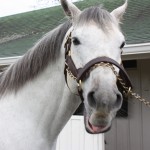
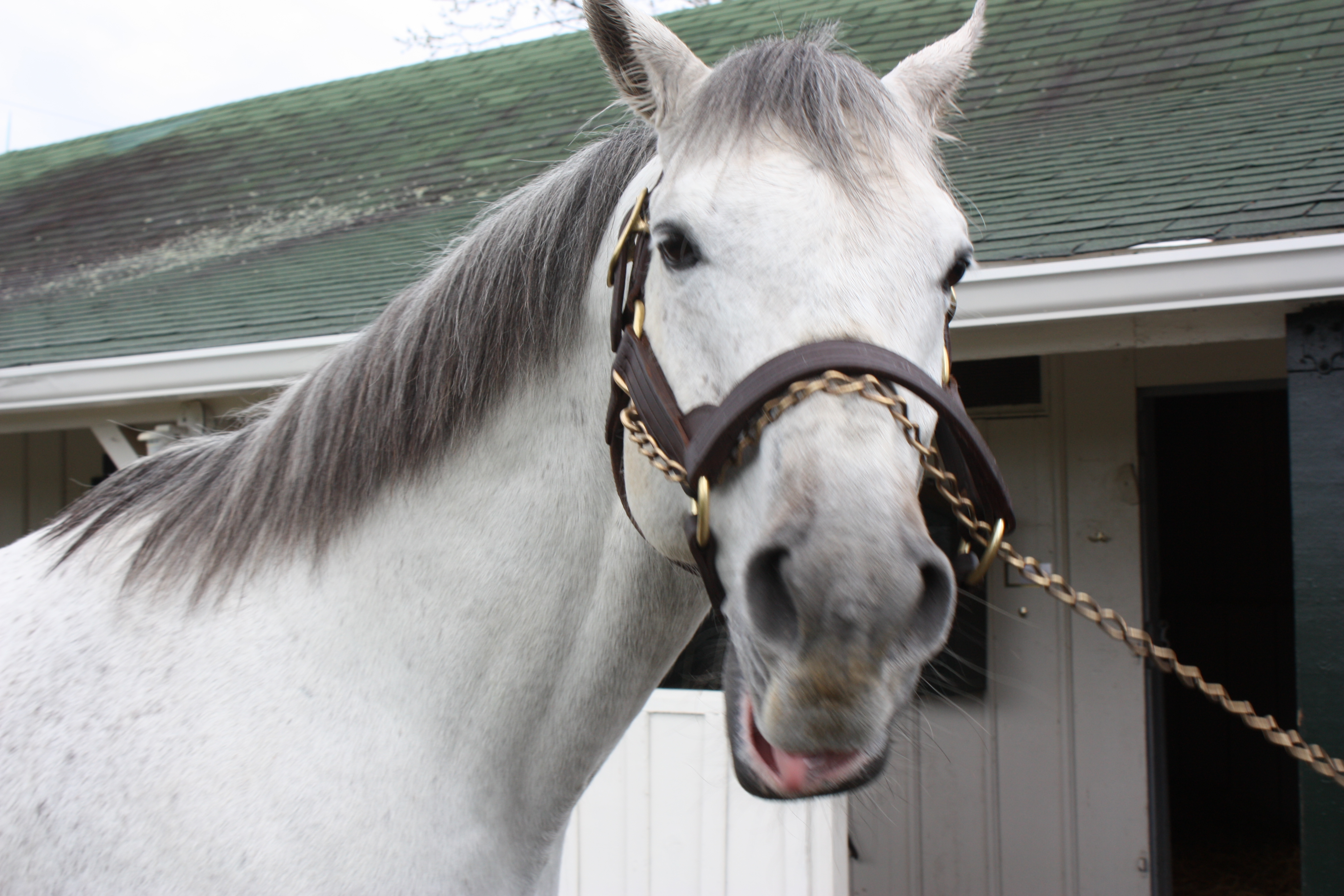
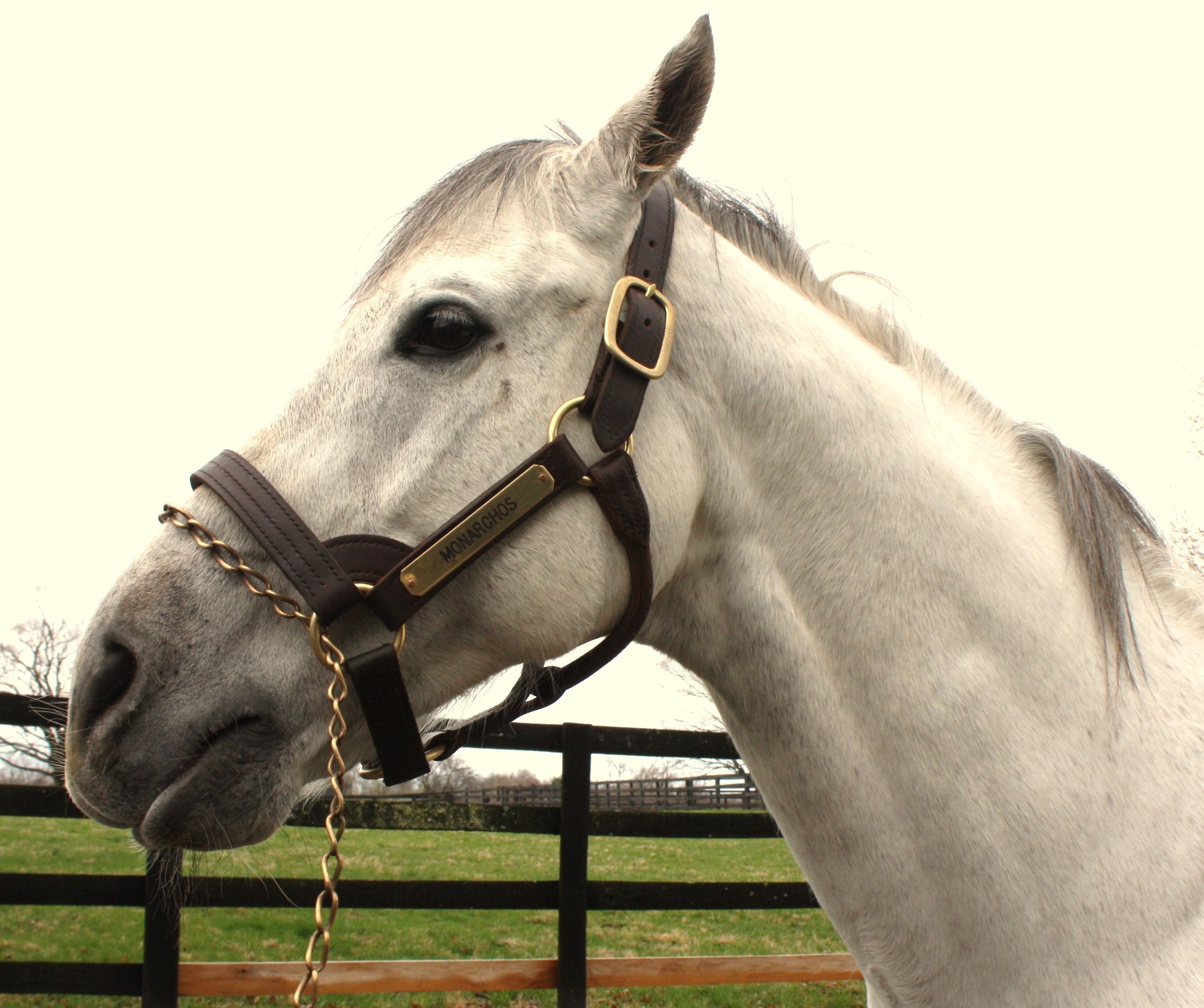
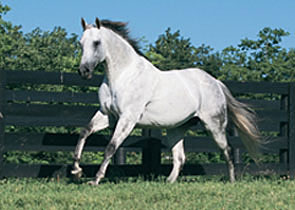
Earlier this year, I visited Kentucky to meet Monarchos.
I wanted to see the fastest living Kentucky Derby winner in the flesh.
It was just as simple as that.
As the big gray champion emerged from his stable, Monarchos was well-mannered and kind. He allowed himself to be pet, stood patiently for photographs, and gently devoured my bag of carrots with delight.
I was thrilled about my visit with Monarchos.
He is a celebrity in my world.
And, it is always nice to find out that your celebrities are truly kind at heart.
When I returned home from Kentucky, I realized that Monarchos is just a gray horse to many of my friends outside the racing universe.
It was just as simple as that.
 “How was the Kentucky Derby?” I was asked by one friend.
I had to find a nice way to tell my friend that the Kentucky Derby hadn’t occurred yet.
When I mentioned that I visited Monarchos, another friend asked, “Is that your horse?”
I didn’t own a horse at that point. And, if I owned Monarchos, I certainly would have mentioned my Kentucky Derby winning horse in earlier conversations.
This was my first experience of trying to explain horse racing to non-enthusiasts.
Nothing was simple about it.
Shortly after these conversations, I invested in a horse. He’s a two-year-old in training and hasn’t been entered in any races.
However, my small investment created a giant misunderstanding among my non-racing enthusiast friends.
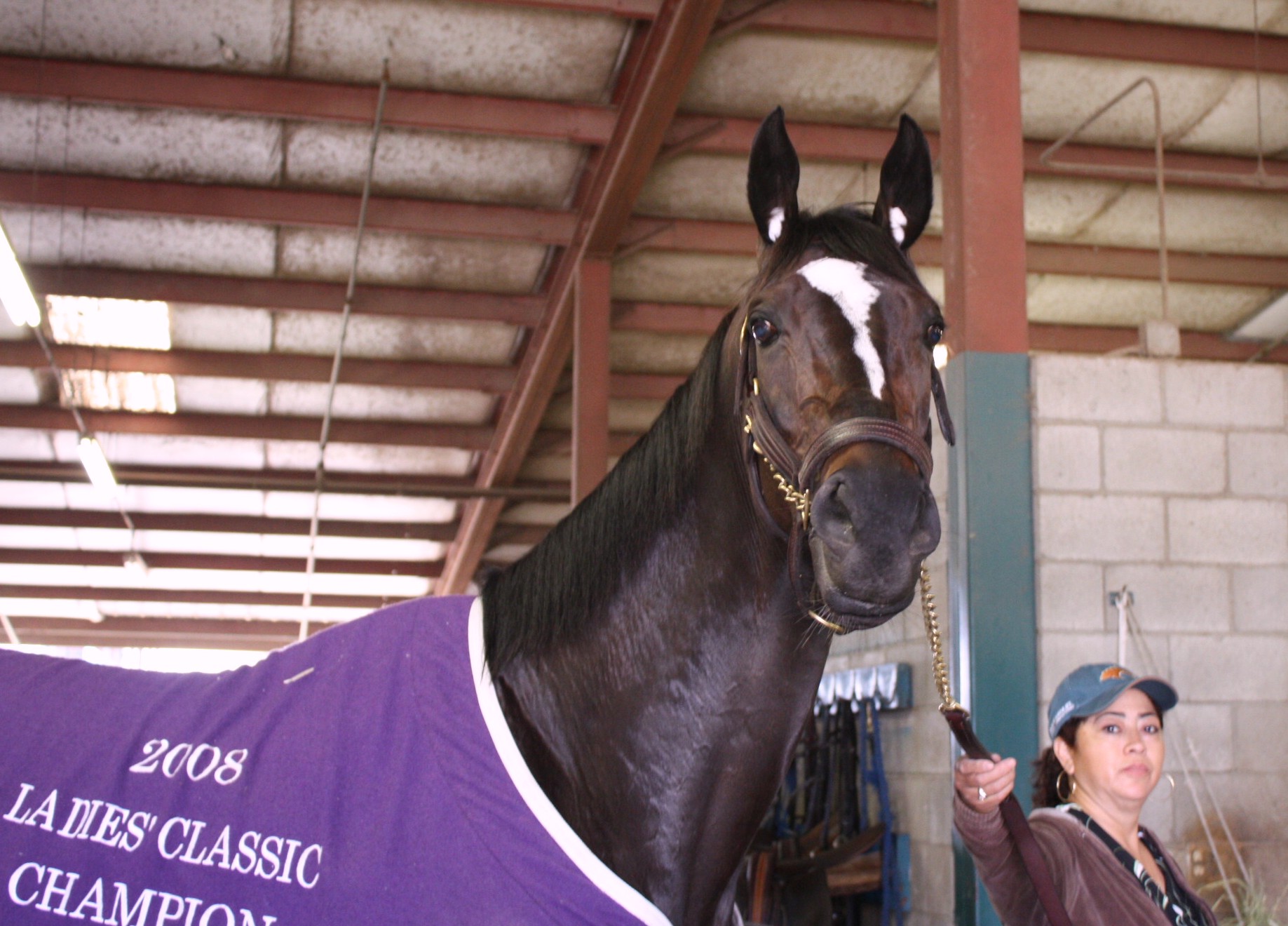
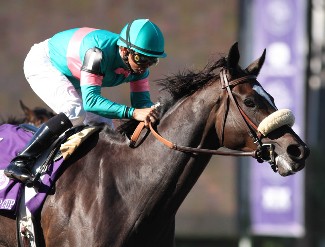
Zenyatta stood at the center of the confusion between the two worlds.
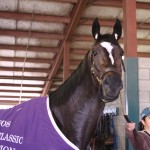 I talked about Zenyatta’s undefeated record at cocktail parties and my friends would ask how she is doing.
I kept saying, “She’s still undefeated!”
It was just as simple as that.
I thought we had arrived at a common ground.
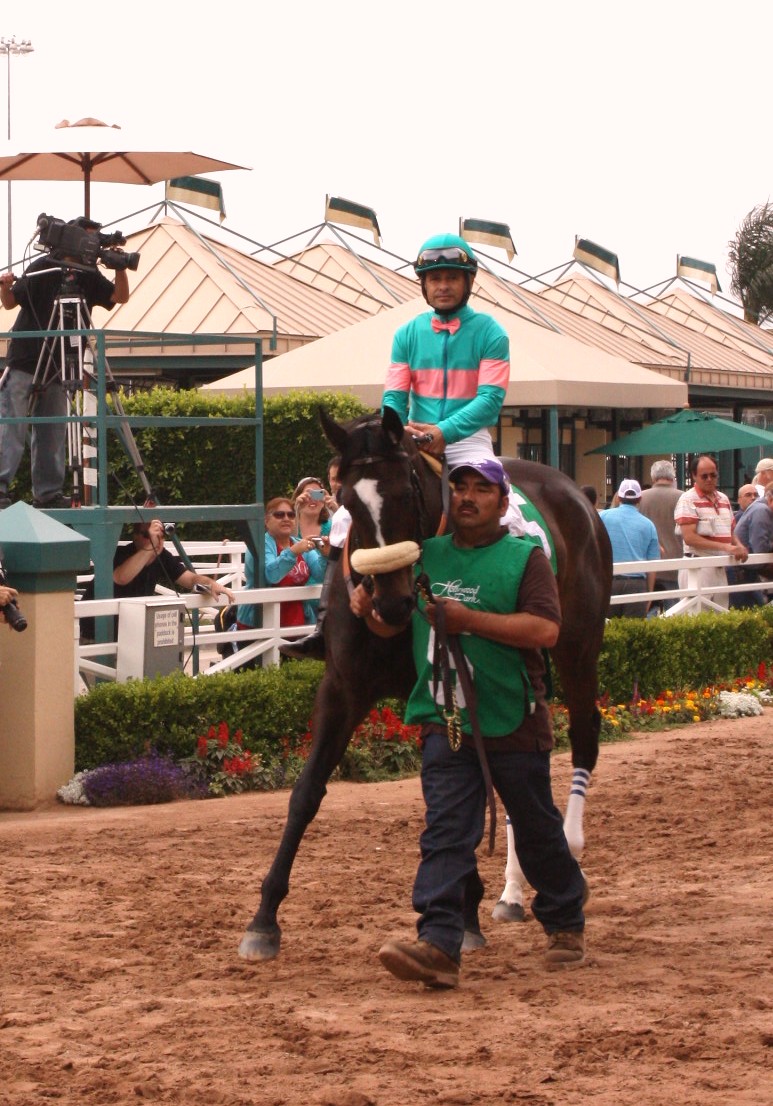
Then, I went to Hollywood Park to watch her claim her seventeenth career victory in the Vanity Handicap.
When I made a photo album of the trip, a friend asked “How did your horse do in her race?”
I replied, “I wish I owned Zenyatta.”
In my mind, it was just as simple as that.
However, when I had to explain in greater depth that I don’t own Zenyatta, the confusion on my friend’s face spoke volumes.
It was as if to say, “Why don’t you?”
I went on to explain that Zenyatta has made roughly $6 million in her career and has remained undefeated in seventeen consecutive races. She’s not for sale.
Then, I realized her earnings or record meant nothing to my friend.
In personal defeat, I explained to my friend that Jerry Moss, the co-founder of A & M records, owns Zenyatta.
When I mentioned that she was named after The Police album, “Zenyatta Mondatta,” I received immediate recognition.
“Oh, ‘Zenyatta Mondatta.’ That makes sense!”
It was just as simple as that.
But, was it? I’ve listened to that album many times and I’ve never heard Sting belt out any lyrics about Zenyatta’s racing career.
 In retrospect, the words “The Police” and “Zenyatta Mondatta” were the only parts of our conversation that resonated with my friend.
Since that moment, I’ve wondered how to discuss horse racing with the non-racing world.
There seems to be nothing simple about it.
As far as I can tell, non-racing enthuasists have gathered these gems from my conversations:
“There are some gray and brown horses that run fast. One dances pretty well. The Kentucky Derby is an important day. And, ‘Zenyatta Mondatta’ is a great album.”
It is just as simple as that.
So, after growing tired of giving explanations, I decided to just quietly enjoy going to the races.
And then, the two worlds unexpectedly met for a brief second in time.
As I was heading to the track on an ordinary day, a friend asked me, “Is there an important race today?”
I joked, “Yep. Secretariat is in a match race with Seattle Slew today.”
When she laughed, I realized my friend knew I had just told her a fairy tale.
However, I also realized she knew some Triple Crown winners.
I began to dream about the next Triple Crown season.
And wish… it was just simple as that.
May 8th, 2010 §
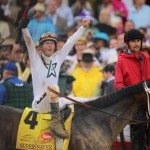
Jim Tyrrell www.horsephotos.com
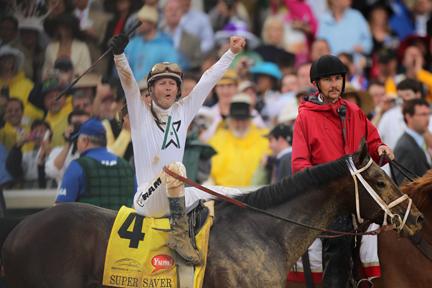
On Saturday, a mud-soaked colt trampled past the finish line at Churchill Downs into a Kentucky Derby victory.
In that golden second, Super Saver delivered the first Kentucky Derby victory to his ownership - WinStar Farm.
Todd Pletcher received the first Kentucky Derby victory in his training career.
Calvin Borel became the first jockey to win the Kentucky Derby three times in a four-year period.
As Borel headed to the winner’s circle, he shot out a bold statement that set fire to the wonder of racing enthuasists.
“We’re going to win the Triple Crown this year.”
In the magic dust of the moment, Borel spoke the words with such cool confidence that it seemed as if he had already made a reservation in the Belmont winner’s circle.
As the Preakness approaches, Borel’s prediction peaks the curiosity and arouses the hopes of many racing enthusiasts.

Doug Cauthen CEO of WinStar Farm
Racing fans have been dreaming of the next Triple Crown winner since Steve Cauthen rode into the history books with Affirmed in 1978.
Three decades later, Steve Cauthen’s younger brother holds the potential as President and CEO of WinStar Farm to deliver the twelfth Triple Crown winner in history with Super Saver.
Recently, I spoke with Doug Cauthen about Super Saver’s Kentucky Derby victory and the quest for the Triple Crown.
JW: Super Saver was the first horse owned and bred by WinStar Farm to win the Kentucky Derby. How does it feel to win your first Derby?
DC: It is truly hard to describe.
There was overwhelming joy, pride and thankfulness that Super Saver was able to do it.
To see so many people – from the owners, managers, grooms, maintenance crew, basically everybody – to get so much happiness and pride out of it is a real positive and satisfying thing.
I felt like we all should thank God for the victory.
JW: Your older brother, Hall of Fame Jockey Steve Cauthen, rode Affirmed to win the last Triple Crown in 1978. Do you think Super Saver could win the Triple Crown for your farm?
DC: I hope he can – I like Calvin’s prediction.
It was his Steve’s 50th Birthday on Derby day, so I felt like we had a little bit of good ‘mojo’ going there - that maybe something could happen. When the clouds parted and the sun came out right before the race, I had a calm and peaceful feeling.
I’m not quite as aggressive as Calvin with my predictions, but I’m on his side.
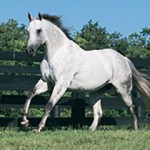
JW: Super Saver is by Maria’s Mon – sire of the fastest living Kentucky Derby Winner, Monarchos. Was this a factor in your breeding decision?
DC: We were very fortunate. We got Super Saver as part of a deal.
We bought Super Saver’s mother, Supercharger, when she was carrying Super Saver at the 2006 Keeneland November Sale. We were very blessed to have Super Saver as part of the purchasing package.
Supercharger’s got a beautiful pedigree – it’s one of the best pedigrees in the Stud Book. Supercharger is a full sister to a mare that we already had, called “She’s a Winner,” who is the dam of Bluegrass Cat. He is a multiple Grade I winner that we own and was second in the Kentucky Derby.
I hope that Super Saver can continue forward. He’s a beautiful horse – a balanced horse – with a great pedigree.
His pedigree is from one of the royal pedigrees in the Stud Book. With all the horses that are popping out of it that are so good - currently and in the last thirty years – it’s just been a magnificent family.
Being by Maria’s Mon, he’s going to offer a lot of outcross for breeders as well. It is a real positive for the breed.
JW: What do you see at the strengths in Super Saver as a racehorse?
DC: He’s got tactical speed and is very agile.
He can make his own race. He can be on the lead or sit back behind.
He’s got a tremendous amount of determination – he’s a very gutsy horse.
You can see that in his earlier races this year and during his races last year as a two-year-old.
It’s a combination that’s not only good for a racehorse, but for future stallions, so we are really excited about that.
JW: What is the general temperament of Super Saver?
DC: When he was on the farm being raised, he was a popular horse with everybody. He always had a forward attitude and a positive temperament.
JW: How did your farm make the determination to have Super Saver trained by Todd Pletcher and chose Calvin Borel as a rider?
DC: I think Elliott Walden (Racing Manager at WinStar Farm) deserves a lot of credit on that choice.
Todd is one of our primary trainers and gets a lot of horses that we think have potential. The fact that he trained Super Saver’s cousin, Bluegrass Cat, may have factored into it a little also. But, it clearly was a good choice!
We thought Super Saver was one of our early potential runners. Elliott said that we should give him to Todd. That’s what we did.
With Calvin, he was the best available rider when he came to the Kentucky Jockey Club race. Elliott sought him out – or encouraged Todd to seek him out – and the rest is history.
Super Saver won the Jockey Club last year as a two-year-old real impressively. He broke the stakes record, which was over a hundred-year-old record.
Calvin just gets along with Super Saver well. It is great to have him on board.
JW: Did Calvin Borel hold any special allure to your farm as a jockey in light of his recent Kentucky Derby victories?
DC: There is no doubt that he is an exceptional rider anywhere.
At Churchill Downs, he has that extra “Calvin Factor,” as I like to call it.
He really has a high level of confidence and horses run for him. He deserves credit at any race track.
He’s certainly got some good current form and it would be crazy not to take advantage of that if you can get him on your horse.
JW: How do you feel about owning the horse that delivered Todd Pletcher his first Kentucky Derby victory?
DC: For the farm, I think it was a really big feeling of satisfaction and pride in Todd. He was one of the first guys that we gave horses to when we divided the horses up between trainers.
He’s one of the best trainers in the country and will go down as one of the best trainers in history.
It seems like the press was focusing on his [Kentucky Derby] record unduly. It was great to see him win it and even greater to see his humility in taking the win.
He is a class act.
It is always fun to see people like that succeed.
JW: How did your farm celebrate your first Kentucky Derby victory?
DC: We’ve had quite a few celebrations.
We try to do something before the Derby because you obviously can’t expect to win – and we don’t. We just go there with the best horses we can and do the best we can.
On Thursday, we had a farm picnic for all of the staff. We had games, piñatas and plenty of food.
On Friday, we had another pre-Derby gathering with all the managers with the owners. It was a very nice event.
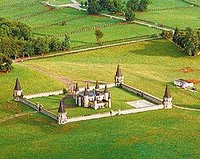
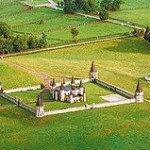
After the victory, some neighbors at Castle Post kindly invited us to celebrate with a hundred of our favorite friends. They hosted a wonderful gathering. It was really kind of Mr. Post.
It was also a great pleasure to see the inside of the Castle. We use it as a landmark to tell people how to get to WinStar quite often. It was great to see it and it was quite a nice spot.
JW: Where is the Rose Garland?
DC: It is currently getting preserved.
Hopefully, it will reside in the office sometime soon.
The Saturday Post would like to thank Doug Cauthen for his interview. We also appreciate the image of Super Saver provided by www.horsephotos.com. To view the photos from the Kentucky Derby at horsephotos.com, please click here.
April 1st, 2010 §
Smarty Jones captivated the nation in his bid for the Triple Crown in 2004. When he won the Kentucky Derby, the track announcer called out more than his victory. “Here is the first undefeated winner of the Kentucky Derby since Seattle Slew in 1977.” The public and industry began to marvel at the Triple Crown potential of Smarty Jones.
Following the Derby, Smarty Jones maintained his undefeated record by delivering an electrifying 11-1/2 length victory in the Preakness Stakes. As he pointed toward the Belmont, Smarty Jones had captured more than another win in his career – he had enlivened the imagination of spectators and won the hearts of fans across the nation.
As he entered the gates in the Belmont, Triple Crown dreams weighed heavily on Smarty Jones. Throughout most of the race, he ran at the top of the field. At the wire, Birdstone defeated Smarty Jones in a one-length victory. As the jockeys of both horses galloped from the finish line, Edgar Prado, rider of Birdstone, leaned toward Smarty Jones’ jockey, Stewart Elliott, and apologized.
 Smarty Jones retired in 2004 with a career record of winning eight of his nine races. He was sent to Three Chimneys Farm and housed in the former stall of Seattle Slew, the only undefeated Triple Crown winner in history.
In 2005, Smarty Jones reportedly had visitors every day at the farm, except for Christmas. Three Chimneys Farms graciously allowed me to join the many individuals who have come to visit Smarty Jones and provided me with an interview about this exceptional horse.
JW: What were the primary factors that led to the decision to retire Smarty Jones to Three Chimneys Farm?
TCF: The Chapmans had never before had a horse of this caliber and were very thorough when choosing a farm at which to stand Smarty at stud. They obviously wanted a farm that was well-versed in successfully marketing and developing young stallions, but they were also keenly concerned about finding a farm that would allow the public to maintain their relationship with Smarty once he was retired to stud.
With Three Chimneys having managed the careers of such popular fan favorites as Seattle Slew, Silver Charm and others, we knew how to accommodate the public’s desire to have access to the horses without jeopardizing the horses’ stallion careers and the focus on presenting them in the best possible light to potential breeders.
‘Three Chimneys was such a great fit. They are used to having the public visit their horses like Seattle Slew, Silver Charm and Point Given,’ said Pat Chapman, who raced Smarty Jones with her late husband, Roy, and still maintains significant ownership in the horse as a stallion. ‘They believe in limiting a stallion’s book of mares, and they are experienced in standing an important horse and making him a success as a sire. It’s just a really great fit.’
At the time of the announcement that Smarty Jones would stand at Three Chimneys upon retirement, Three Chimneys owner Robert Clay was quoted as saying the following:
‘We are grateful for this awesome responsibility. This is a very special horse in so many ways. The Chapmans and the Servises have earned the gratitude of the entire racing world by the way they have served the needs of the press, and the public, and of Smarty Jones all at the same time. We hope, and plan, to do just as good a job as they have done. We have always welcomed fans to Three Chimneys Farm and look forward to sharing Smarty Jones with his public.’
JW: Was the decision to retire Smarty Jones to Three Chimneys Farm made prior to the Belmont race or afterward?
TC: The decision to retire Smarty was made after the Belmont Stakes, but not in any way due to that race being his first and only loss. When the Chapmans chose Three Chimneys as the farm to stand Smarty at upon his retirement, it was with the intention that he would get a nice rest after a demanding Triple Crown bid, then go on to race in the late summer and fall of his three-year-old year and possibly as a four-year-old.
Soon after the Belmont Stakes, it was found that Smarty had significant bone bruising on the bottom of all four cannon bones. While it is a fairly common injury for racehorses to sustain and many come back after some time off to race successfully, the Chapmans were not willing to risk putting Smarty Jones in harm’s way.
‘After all he’s done, I couldn’t live with myself if I thought we were putting him in harm’s way,’ said Pat Chapman. ‘He doesn’t owe us anything, and we owe him A LOT.’
JW: Was the decision to house Smarty Jones in the former stall of Seattle Slew a tribute to Smarty Jones’ near-miss in his Triple Crown bid?
TC: In a way, yes. Smarty was one of few horses that has truly captured the attention and interest of the general public. Whether someone was a horseracing fan, a general horse enthusiast, or simply an ‘average Joe,’ they knew about Smarty Jones and his ‘Rags to Riches’ story. Seattle Slew was another horse who carried with him that ‘celebrity status.’
When Smarty retired to Three Chimneys, we wanted to pay homage to all that he had accomplished on the track as a runner, but also for the sport in general. He brought so many new fans into the racing industry. Even in his retirement here at Three Chimneys, he gets tens of thousands of fan visits each year.
When visitors walk up to his stall, they see his nameplate on the door and, as with every stall in our stallion barn, if they look up to the right corner above his stall, they will see the nameplate of the previous occupant. Above Smarty’s stall is the nameplate of Seattle Slew.
JW: Why do you think the public experienced such a strong connection to Smarty Jones?
TC: Smarty was kind of a blue collar horse. He was modestly bred, hailing from, at the time, a $10,000 stallion and was born and raised in Pennsylvania, which was also where his home track of Philadelphia Park was located.
He overcame adversity as a youngster when he had a serious, potentially career and even life-threatening, accident while schooling in the starting gate. Then, when it came time to show what he was made of, he just kept on winning and winning.
Every bar that was set for Smarty, he exceeded, which is how he got to the Kentucky Derby as one of only a handful of horses to ever win the Derby to remain undefeated.
Another very compelling side to the story was the connections of smarty Jones. His owners/breeders Roy and Patricia Chapman were living a fairytale. Smarty Jones was the best horse they had ever raced and they were kind and gracious with both the media and his many fans.
Their trainer, John Servis, was also living the dream, as Smarty was his first Kentucky Derby starter and propelled his career to new heights. The public was able to connect with the Chapman’s and John Servis because they were appreciative of Smarty’s many fans and willing to give them access to their lives.
 JW: How would you describe the character and temperament of Smarty Jones?
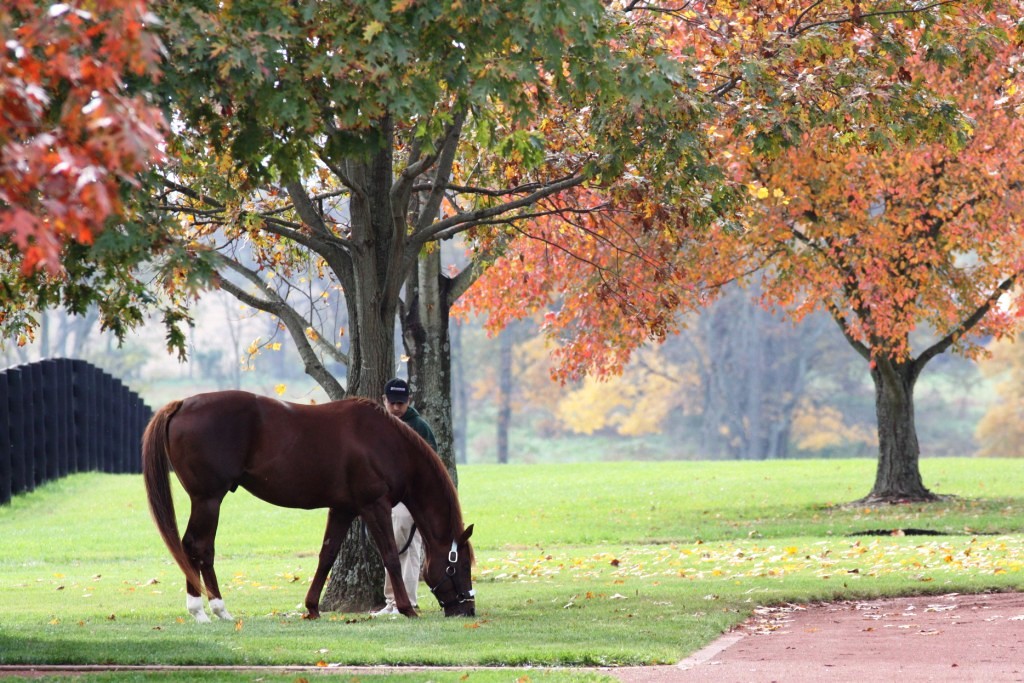
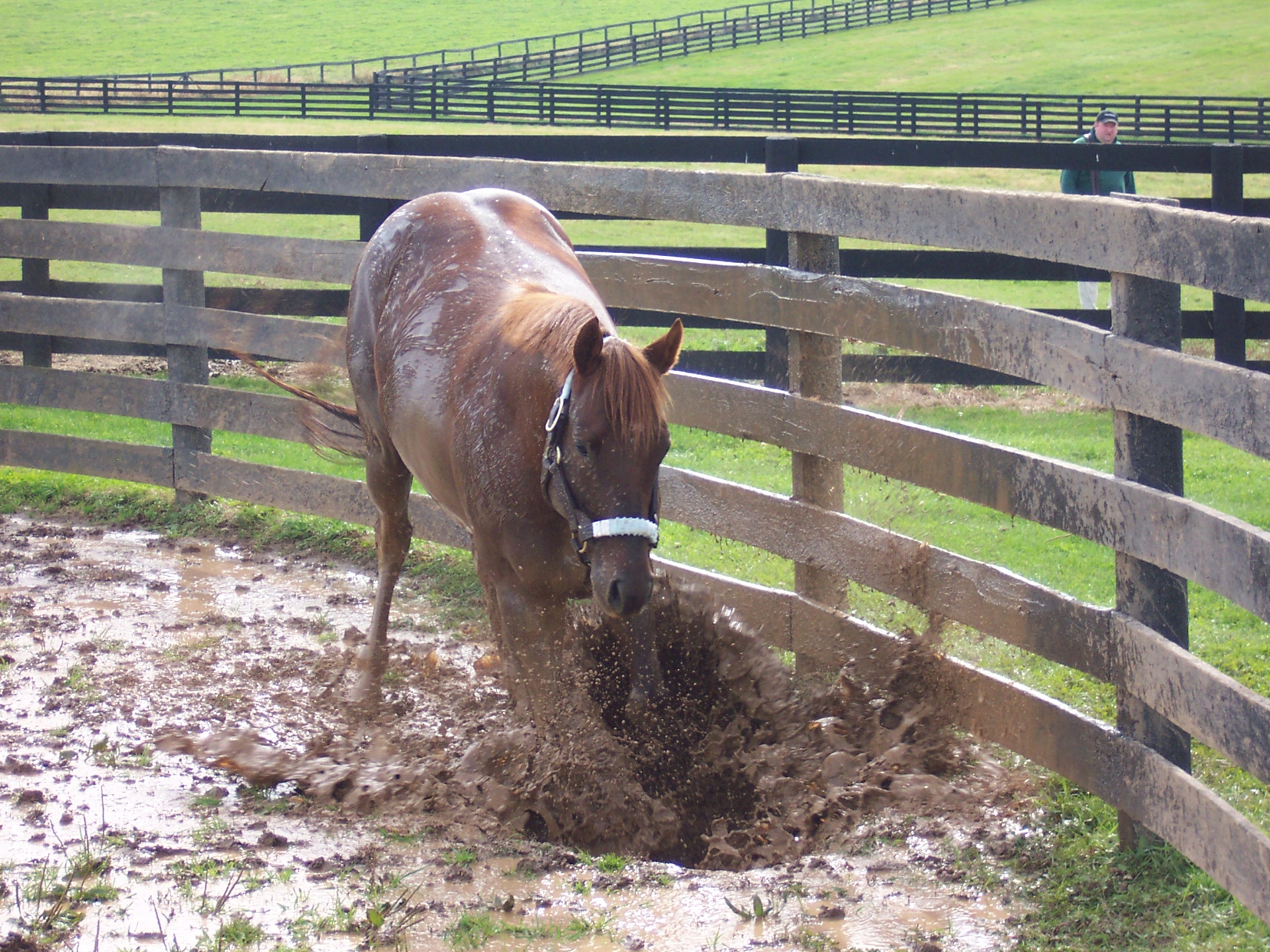
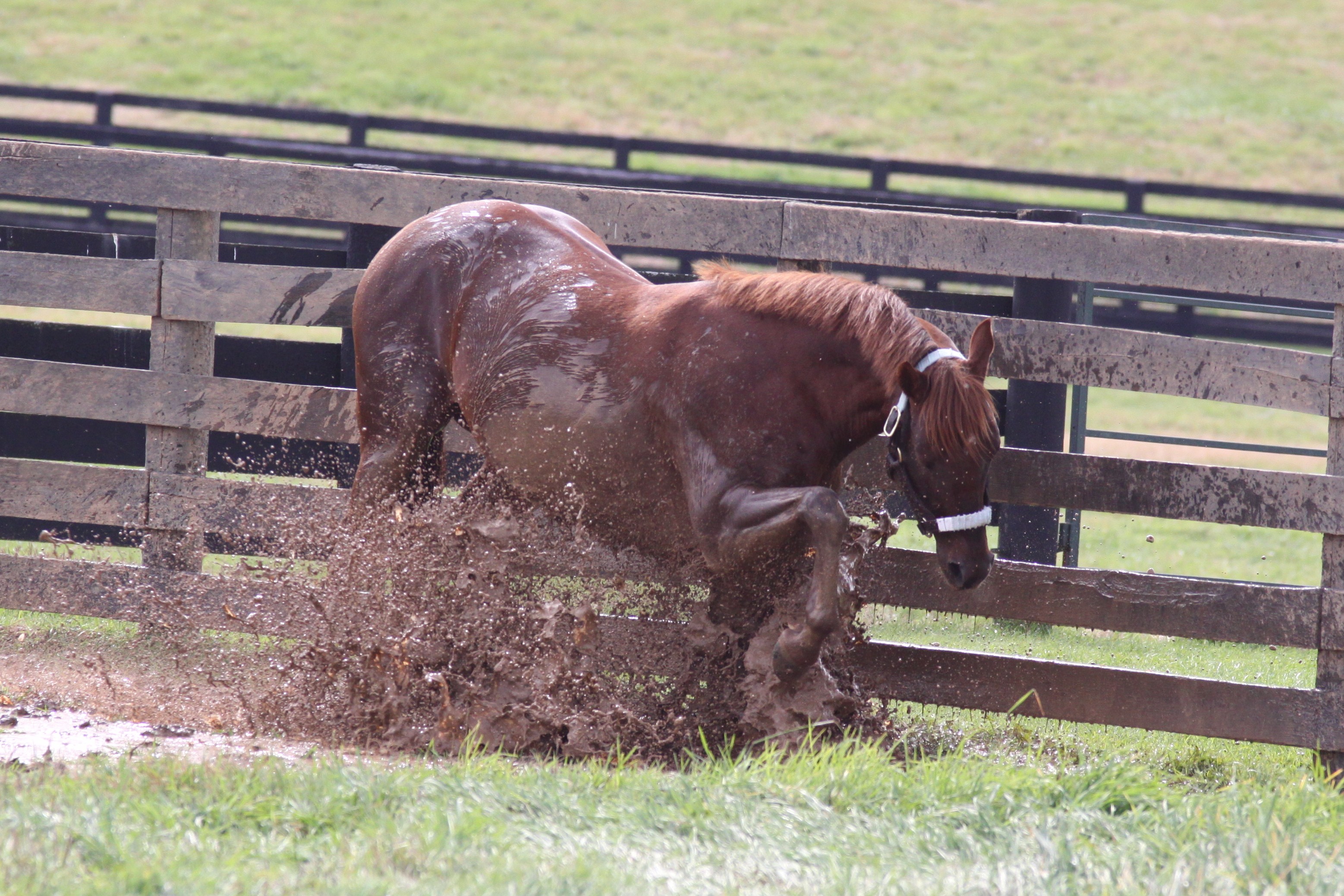
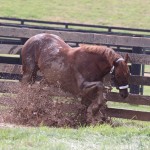
TC: Smarty sure isn’t a dummy! He enjoys his daily routine, which includes coming in from his paddock in the morning and being walked, bathed, and fed (he’s especially a fan of the feeding portion of that routine). He’s actually not one to crave a lot of human interaction. If it was his choice, he’d probably opt out of his daily grooming and would prefer to say dirty.
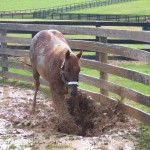
He’s a huge fan of mud, which seems to fit right in with his disdain for grooming. After a good rain, the lower corner of his paddock can get especially soggy and, as soon as he’s turned out on a day like that, he goes straight for that corner and starts working on his ‘mud masque.’
He loves peppermints and, while we can’t give him all of the treats his fans send him throughout the year, we do make sure that there is a never-ending supply of mints in the tack room that the grooms pamper him with.
JW: Smarty Jones has produced several foals in the past few years. Can you discuss some of the notable racehorses among his progeny?
TC: Admittedly, Smarty’s offspring didn’t give his career at stud the launch we had anticipated initially, however, he has had high caliber runners each year since his first crop hit the track and recently he’s had several of the best few months of his career. Some of his current budding stars include:
Backtalk is going to the Illinois Derby and, if all goes well, to the Triple Crown
Brilliant Sunshine was so impressive with her last two wins (broke maiden by 4-1/4 under wraps, then won an allowance by 7 being geared down) that she’s being pointed for her first stakes start next time out; she was profiled in the TDN’s “Sharper Focus” section last week as a horse to watch.
Follow the Leader is 4-3-1-0 (all in Msw and Alw company) and is likely headed for stakes competition – owned by the President of Oaklawn.
Keiai Gerbera won an allowance in January and came back to score a 5 length win in a stakes race in Japan over a field of 15 males – she was the only female in the race.
No Equipment won first time out by 8 lengths at Philly Park
Gracie Jones won second time out so impressively that she’s being pointed toward the Oaks Trial S. with the goal of starting in the South African Oaks later this year. Creating a LOT of buzz in South Africa – Smarty’s only runner in that country.
Sommelier Smarty is unbeaten in 2010 and is riding a 3 race winning streak.
JW: In terms of breeding, what are traits that make Smarty Jones desirable at a stud?
TC: Smarty Jones has a unique and obviously very favorable combination of good looks, balance and athleticism. He is a 16-hand powerhouse and his offspring resemble him, with that distinctive head, big hind-end, and cocky attitude.
Some of his best foals have been out of mares from the Seattle Slew and Deputy Minister lines and is working well with mares carrying Northern Dancer blood, especially Danzig and Storm Cat daughters.
JW: In your estimation, how many fans have visited Smarty Jones since he retired to Three Chimneys Farm?
TC: Smarty Jones and the rest of our stallions are greeted by at least 25,000 a year. Due to the high demand from fans to see our stallions, starting way back with Seattle Slew, we had to build a visitors’ center separate from our main office and an auxiliary parking lot due to all of the additional traffic.
We expect to FAR exceed that 25,000 visitor estimate this year. Due to the World Equestrian Games being in Lexington this fall, we have had numerous requests (we’re talking about hundreds upon hundreds) to see Smarty and the rest of the stallions and the farm. Due to the vastly increased demand during this event, we are modifying our tour schedule to be able to accommodate as many requests as possible.
To comment on this post, click here. The Saturday Post has recently launced a Facebook Page. To follow us on Facebook, click here.
February 1st, 2010 §
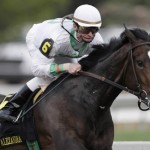
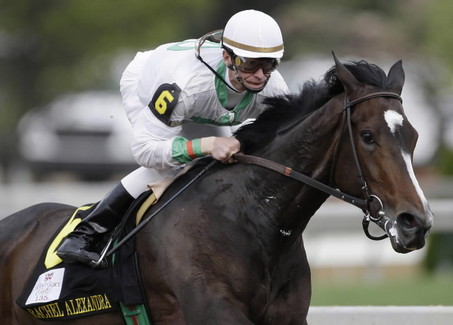
After a contentious debate over the 2009 “Horse of the Year” Eclipse Award, Rachel Alexandra prevailed over Zenyatta when the winner was finally announced on January 19, 2010. Prior to the announcement, the owners of both champion fillies had committed to race their horses in the 2010 season. With the final ballots cast, the industry has moved from the “Horse of the Year” debate toward speculation regarding a match race between these two female rivals in 2010.
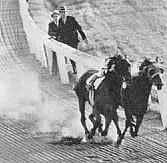
Since 1975, there have not been any major thoroughbred match races involving champions in America after Ruffian sustained a terminal injury while competing against Kentucky Derby winner, Foolish Pleasure. In that race, the undefeated filly Ruffian met Foolish Pleasure at Belmont Park in New York. A national television audience watched as Ruffian broke down shortly after the start and had to be euthanized the following day.
Before the sad ending to match racing with Ruffian’s injury, there were several other major match races throughout the century. In 1955, Kentucky Derby winner, Swaps, met Nashua, the Preakness and Belmont Stakes winner of that year. Nashua won the race, but speculation did not cease after the match. Swaps had been nursing a sore foot in days prior to the race. Eddie Arcaro, rider of Nashua, admitted many years later that he doubted Nashua could ever have beaten a healthy Swaps.
In 1947, Triple-Crown winner and 1946 Horse of the Year, Assault, held a $100,000 match race against Calumet Farm’s horse, Armed. Armed beat Assault by eight lengths and went on to win the 1947 title of Horse of the Year.
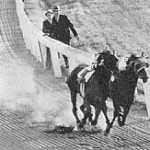 One of the arguably most talked-about match races of the century occurred in 1938, between the rags-to-riches underdog, Seabiscuit, and the Triple-Crown winner and reigning horse of the year, War Admiral. Seabiscuit tracked War Admiral across the country and quickly became the “People’s Horse” during the depression era. After he defeated War Admiral in the 1939 showdown, Seabiscuit went on to win Horse of the Year.
However, match racing existed before the popular match race between Seabiscuit and War Admiral. In 1923, the Kentucky Derby winner, Zev, took on the English Derby winner, Papyrus. The race was dubbed the first “international” race and exorbitant prices were charged for tickets. Zeb won the match race against Papyrus, but doubts lingered about the victory due to track conditions and a mistake in shoeing Papyrus prior to the race.
Finally, in 1920, Horse of the Century, Man O’ War, met Sir Barton, the first horse to win what would later be dubbed the “Triple Crown,” in a match race in Canada. Man O’ War won the race by seven lengths, but the importance of the race was questioned because it was widely-regarded that Sir Barton was not at his peak performance.
With a new century, the industry is faced with the prospect of a major match race between two champion fillies – Rachel Alexandra and Zenyatta. From a brief look at the history of match racing, the unasked question is “What purpose would a match race serve?”
The most obvious answer is financial gain to the industry and owners, as well as reinvigorating public interest in the sport of horseracing. But, aside from these interests, does a match race serve either filly in cementing their championship status over the other filly?
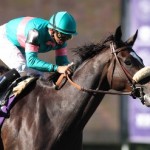 From the historical view, Zenyatta appears to have more to gain while Rachel Alexandra more to lose if the two are pegged against each other in a match race. In the races in which a reigning Horse of the Year accepted and lost a match race, the prevailing horse went on to win “Horse of the Year” in the following season. Therefore, Zenyatta’s most important targeted race for 2010 should be a match against Rachel Alexandra if she wants to attempt to clinch the much sought-after title of “Horse of the Year.”
In the same vein, if Rachel Alexandra were to lose a match to Zenyatta, Rachel Alexandra’s “Horse of the Year” victory over Zenyatta may be called into question all over again. Rachel would be forced into a rivalry with Zenyatta that could last over several races in an attempt to gain the lead over her rival in the court of public opinion.
Further, the historical record shows that match races rarely seem to settle the score between two rival champion horses. In the case between Ruffian and Foolish Pleasure, there was no true winner since Ruffian was injured during the race. Between Swaps and Nashua, Nashua’s own jockey, Arcaro, felt that Swaps would have won if he had been in better health. The race between Zev and Papyrus only clouded the debate since Papyrus encountered track difficulties and there was a mistake in shoeing the horse. Finally, Man O’ War’s victory over Sir Barton was also questioned since Sir Barton was not at his peak-performance level at the time of the match.
If a match race were to be held between Rachel Alexandra and Zenyatta, it would seemingly do little to settle the debate regarding who is the greater horse between the two champions. However, it would make for an electrifying spectacle to watch these two fillies face off on the track.
Rather than aiming to have a match race settle the ongoing debate of who is the greater horse between Zenyatta and Rachel, a match race, if held, should serve only to showcase the two great fillies of our decade. Their championship status has already been proven in different races, on different tracks.
 Three days later, I read an article in the Chicago Sun-Times entitled, “Horse Racing in Illinois is ‘on verge of extinction.’” It went on about many of the common issues that enter the “revival of racing” discussion – racinos, purse values, track attendance and the aging population of the sport. Yet, buried in the article, there was one particular point made by former Illinois Governor Jim Edgar that particularly hit home for Gretl and myself: Coverage of the Sport.