November 1st, 2011 §
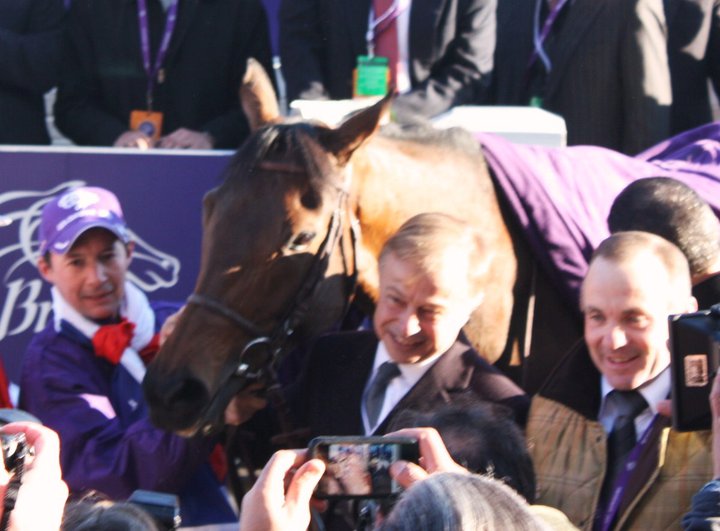
 This Breeder’s Cup season, the racing world will turn its focus toward the victories of the equine athletes in the series of prestigious races. A stunning victory showcases the glory of a race horse and can serve as the catalyst to transform a good horse into a great one. Victory is how this sport counts its champions, and, for those who go defeated, they typically stand in the shadows of the winner’s circle as the victor carries the moment.
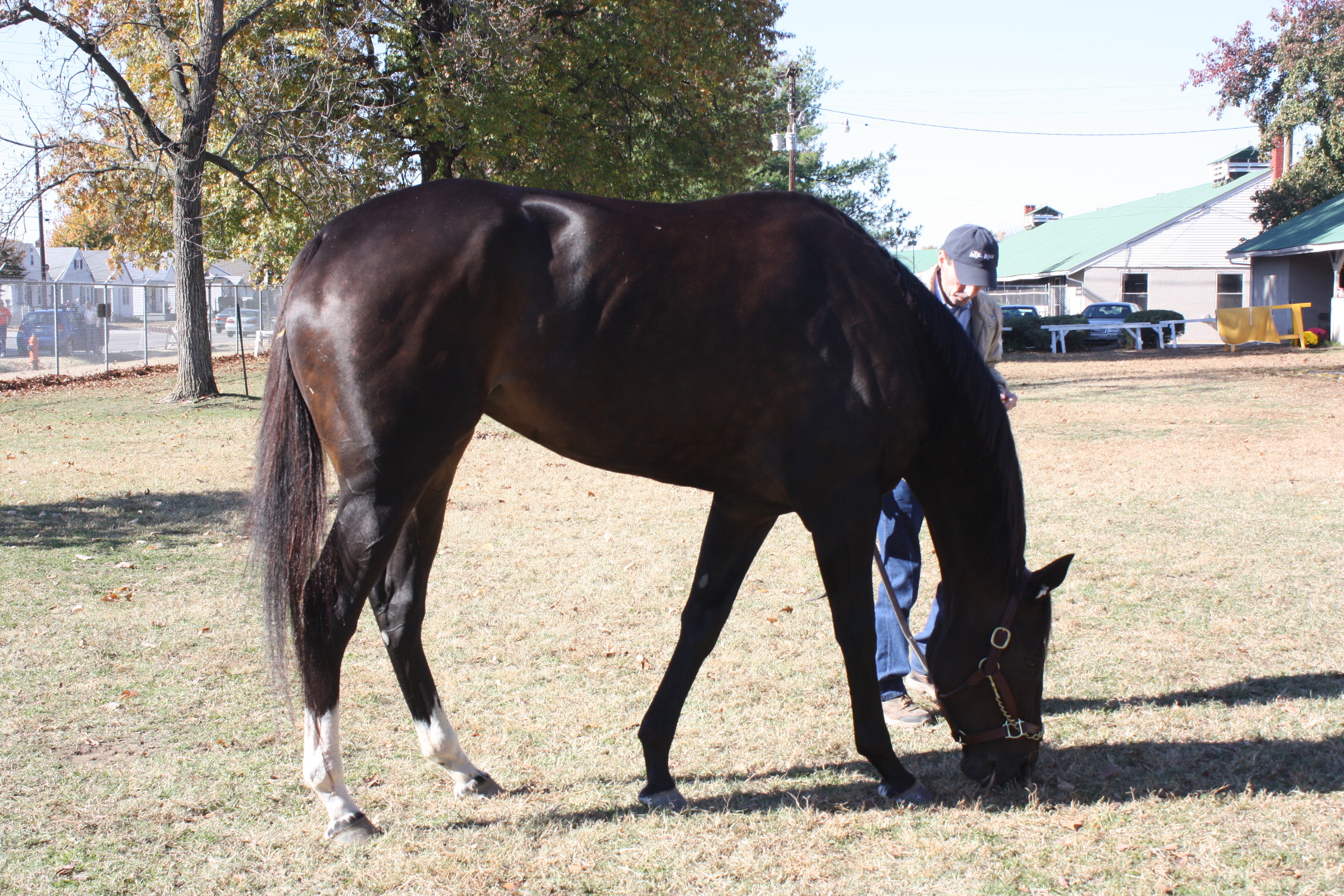
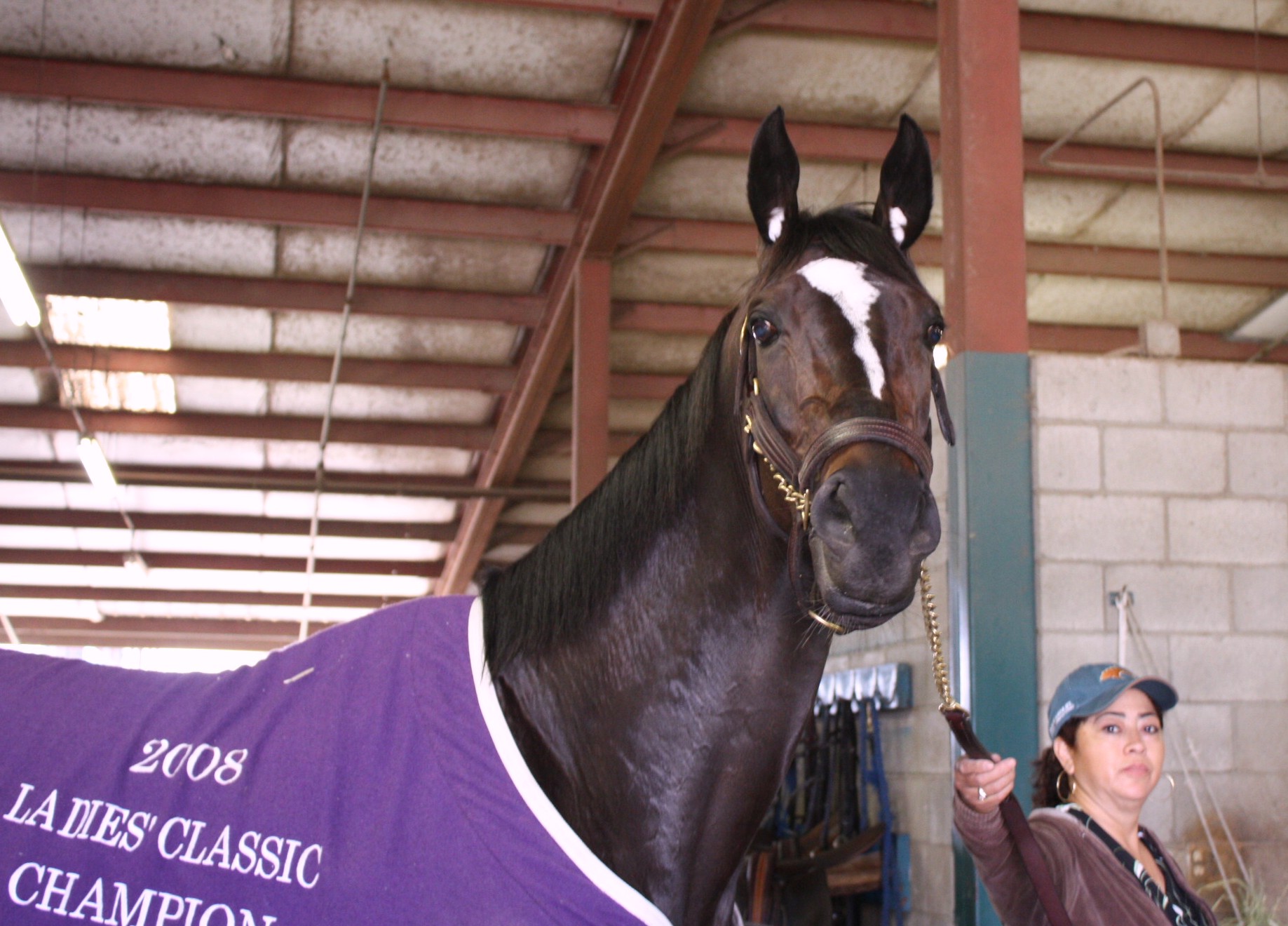
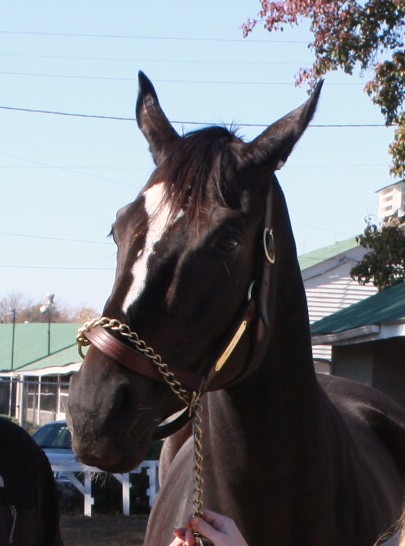
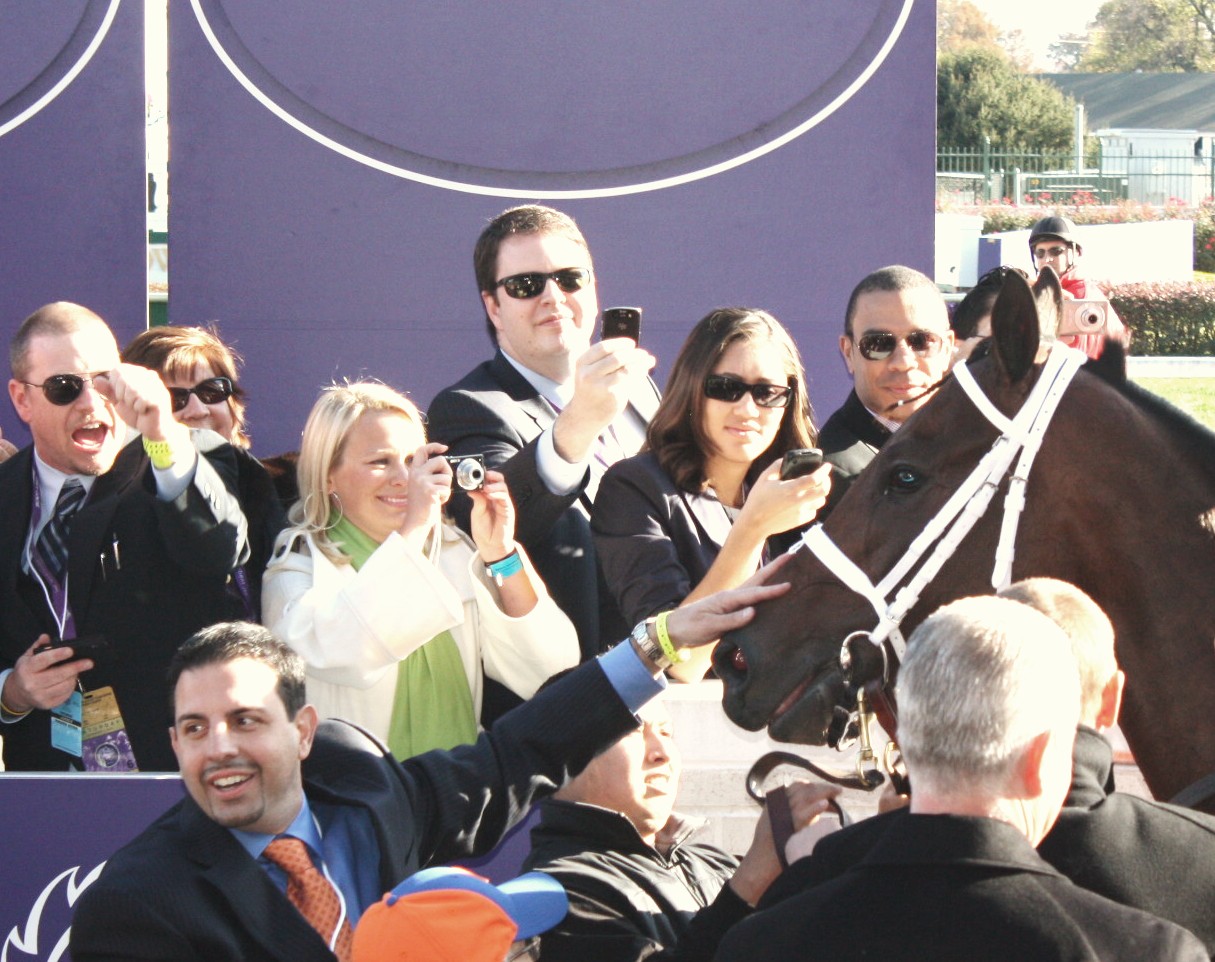
Yet, at the close of the Breeders’ Cup last year, victory was simply more than the domain of the winner in the Classic. A certain kind of “victory” was also bestowed upon Zenyatta, standing in the cold night, as a freshly defeated mare transforming her heartbreaking loss into a moment of glory. And so, as this Breeders’ Cup season begins, I marvel over the Zenyatta’s quest for victory and wonder if winning is more than standing in the winner’s circle.
Perhaps, there is a little victory that occurs in the smaller moments in racing. The victories don’t count for career records or fancy trophies, but they are possibly part of what makes a champion. And, when I think of many champion racehorses, most of them have experienced both victory and defeat on their road to immortality.
In the case of Zenyatta, it seems that the big mare earned a few unsung victories during last year’s Classic despite her official defeat in the race itself.
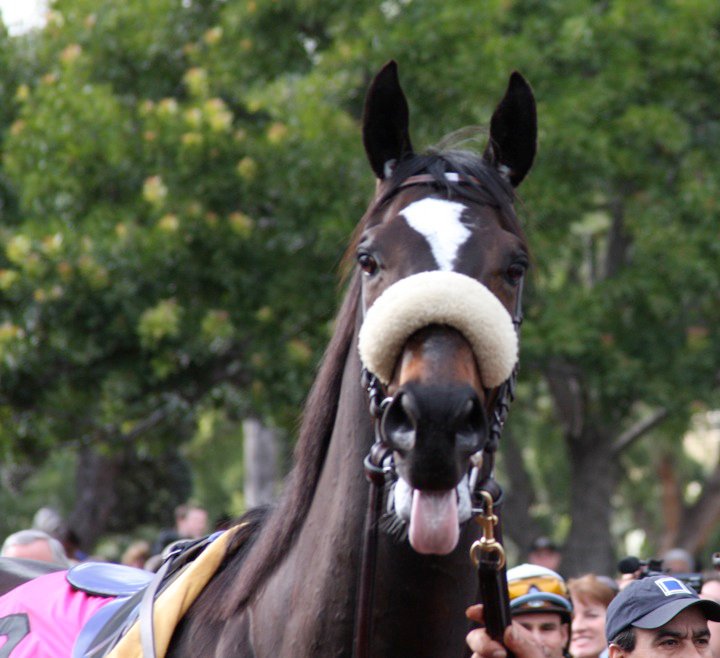
It seems that there is a small victory through striking awe in the crowd before the gates ever open in a race. In the minutes leading up to the last Classic, Zenyatta held court in the post-parade like no other contender. The mare looked like a true prize fighter, daring anyone to challenge her on that oval. In that moment, it was her show, and, for those who came to see it, it seemed that defeat was simply out of the question.
And then, there appears to be a glimmer of victory in how a race is run before the wire is crossed. When Zenyatta set flight under the waning autumn sky in the Classic, her dazzling charge in the dusk epitomized something otherworldly. As she rushed past in blur, the sheer speed of her closing kick set in for the first time as I stood in the crowd.
In the end, whether she made it to the wire first or not, there was a small victory present. The mare had captured the victory of sending the crowd soaring at the sight of her final charge. Spectators began to murmur, “She’s going to win it!” in the last dizzying seconds of the Classic. The voices went from whispers to shouts in synchronicity with her movement. And, in that moment, it seems the crowd was racing along with the great mare.
And finally, it seems there was a victory present in the least likely moment - The moment the mare lost the race. Zenyatta, mired with fresh markings of defeat, faced the crowd and stood proudly for an ovation. And, as the crowd rose to pay homage to the great mare, tears streamed down the faces of many people as they stood to pay her a final tribute. Whatever sentiment those tears held, the glory of that mare was simply not in dispute. She held the victory of honor in defeat.
Yes, there and then, a perfect juxtaposition of victory and defeat occurred in the Breeders’ Cup Classic. Two champions were on display - one in the winner’s circle and the other receiving a standing ovation in defeat. And, in her defeat, Zenyatta won the prize that had repeatedly eluded the mare in perfection - Horse of the Year.
Retrospectively, it appears there may be more than one winner in last year’s Classic. The true winner, Blame, who conquered the perfect mare in the Classic. And the other winner, Zenyatta, the great mare who was crowned Horse of the Year only after she conquered defeat.
September 22nd, 2011 §
 Bernard Fontenelle once said, “It takes time to ruin a world, but time is all it takes.”
Perhaps, the time of ruin arrives when a single generation forgets why certain places are important. Or possibly, the importance of the events that occurred on that ground fail to excite a culture with changing values. It may take time to ruin a world, but if time is all it takes, the way we spend our time has an ever-increasing value toward determining what the future beholds.
In the case of racetrack closures, I wish I had spent time at those lost tracks prior to the final “Call to the Post.” And, in our tracks that continue to exist today, I do. Because, if it takes time to ruin a world, there is time to prevent the fall of it in the first place.
The question lies in how we can contribute to racing while we spend our time enjoying the sport. I imagine the last day at Bay Meadows race track in California, where, prior to its closure, it was the longest continually-operating track in the state. It was on this ground that Seabiscuit fought to become the two-time winner of the Bay Meadows Handicap, John Henry finished second in the same race years later, and Triple Crown Winner Citation graced the now-demolished oval near the end of his illustrious career.
In 2008, Bay Meadows was shut down after being purchased by a real estate development company. Prior the final race, “The Last Dance Stakes,” the track bugler played “Auld Lang Syne.” The crowd gave a standing ovation to the final string of horses to race that day, while the athletes broke from their post-parade to face the audience. While facing the crowd, the jockeys gave a salute to the witnesses who showed up to watch the last race ever to be run on that track. And, moments after that final salute, Bay Meadows closed for good.
When I view the six and seven figure prices paid for a single horse in a sales ring, I wonder why no one had ever thought to set up a foundation to provide funding to help save the tracks that require emergency funding, to promote the sport in general and to help fund Thoroughbred retraining and retirement.
As an owner, I would happily pay a surcharge on a sale price to ensure that the tracks can keep racing horses in the future. Further, I would pay a nominal fee when registering a foal to help provide the necessary funding to prevent such closures. And finally, I would happily give a percentage of my winning purse share toward a foundation that funds the promotion of Thoroughbred racing and retirement. Because, in the final equation, it does not serve myself, nor the industry, any good to have a racehorse without a racetrack to race upon. In the same time that leads to the closure of a track, there is time to prevent the collapse of it if funding is provided and used to promote the future of racing.
If such a foundation had existed to save Bay Meadows, the site of Seabiscuit’s two-time victory in the then-longest running race in California may not be slated to become a shopping area today. It would be a racetrack where wonder existed as to when the next Citation, Seabiscuit, or John Henry may set foot that ground.
And, if such a foundation had existed in Illinois, Washington Park would have been rebuilt in Homewood after it was destroyed by a fire in 1977. I would have enjoyed racing a horse in the same place where Triple Crown Winners Whirlaway and Citation competed on that ground. I would have felt humbled to stand where Native Dancer left that track victorious before later retiring with a record of 21 wins in 22 lifetime starts. I wish I could have watched my horses race on the same oval where Nashua and Swaps held a $100,000 match race and Jockey Eddie Arcaro became the two-time winner of the American Derby. Yet, Washington Park was sold for commercial and residential development in 1992. And, with that sale, the living monument to those moments disappeared in a dismal demolition.
If I were born a few decades earlier, I would have gone to the Wood Memorial when it was held at the former Jamaica Racetrack prior to its’ demolition in 1960. Jamaica Racetrack was where Omaha won the Wood on his road to becoming a Triple Crown Winner. Native Dancer made his debut at Jamaica. Even Seabiscuit raced there. And, before Bold Ruler retired to stud and gave the racing world Secretariat, he ended his career of 23 wins in 33 starts with his last race at the Jamaica Racetrack. Yet, I’ll never visit that park because the Rochdale Village Housing Development occupies the site now. The greatness that took flight on that soil has long been forgotten in exchange for one more residential area.
And finally, I wish I was at the former Sportsmans Park in Illinois in 2002 to watch War Emblem capture a victory in the Illinois Derby and stamp his ticket to Churchill Downs to race in the Kentucky Derby. But, it appears that Fontenelle’s proposition, “It takes time to ruin a world, but time is all it takes,” proved true for Sportsman’s far too soon. By the time War Emblem set foot in the gates to win the Kentucky Derby at odds of 20-1, Sportsman’s had already closed for good. Whatever may have been celebrated from War Emblem’s road to the roses the following year was ultimately replaced with plans to develop a shopping center on that site.
Now, Hollywood Park is facing closure with the same swan song from developers that, in time, it will become a commercial and residential development. And sadly, it seems that time may be all it takes to demolish it.
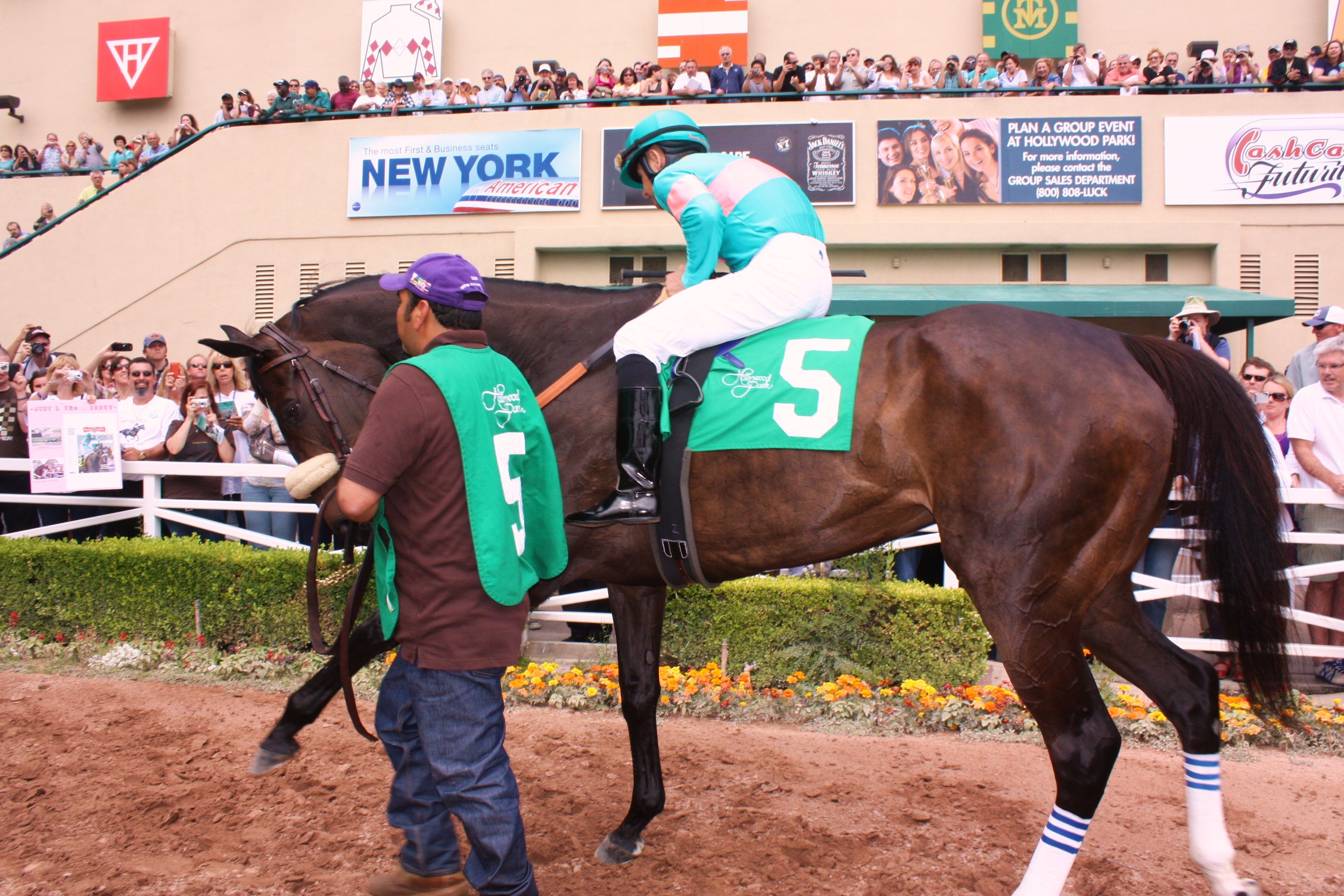
Yet, in the time it takes to close a track, there is time to try to save it. Every day spent at a track is a day that supports the continuity of its existence. I make a point to go to the track to see the races. And, because I go to the races, I stood in the crowd and saw my favorite racing moment at Hollywood Park. It was the day that Zenyatta broke the modern Thoroughbred record when she won her seventeenth consecutive start.
During the race, the crowd cheered in unison for one single mare from start to finish as if she were racing alone. And, when she claimed her seventeenth consecutive victory, Zenyatta stood on that site, a perfect Thoroughbred, and took in an ovation from a crowd that was absolutely in awe of her presence. It was not simply a horse race. It was a historical moment. And, the site of that historical event is the same site, which, if developers get their way, will be demolished and turned into a retail and residential area.
I fail to see a need for another commercial or residential development on grounds where our champions tested their limits and showed us what we had deemed impossible. Rather, there is a need to protect the monuments to those moments, and ultimately, provide a site for future racehorses to showcase their talent.
Thankfully, “It takes time to ruin a world.” Because in the time it takes, the industry can rethink how to help save our remaining tracks and fund the future of this sport. And, as participants and fans, we can use our time to think about how we spend our time enjoying this sport, contributing to this sport and protecting it.
We can take time to attend the races to show our support. We can help fund the preservation of this sport. And, in the end, we can honor the achievements of our heroes and heroines through saving the very places where they laid their hearts down and fought for a victory.
Photo Credit: Photo of Bay Meadows taken by Dylan Tweeney.
May 14th, 2011 §
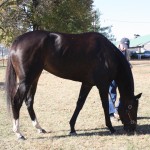 They call her the “Black Flash.”
An imposing mare holding an undefeated record of 13-0 that has been grinding out victory after victory at top-level outings against every male challenger that sets foot in her domain.
They call her “The Horse that Stops a Nation.”
At least, The Australian newspaper coined that descriptor of the four-year-old racemare as the international racing community held their breath to see if she could maintain her undefeated record in her recent outing in the Group 1 BTC Cup at Brisbane’s Doomben racecourse.
And, the “Black Flash” did it with ease. As daylight stood between herself and her rivals as she approached the wire, Black Caviar clinched her thirteenth victory in a style that embodied all of the markings of being a wonder horse.
Today, Black Caviar has many racing enthusiasts in the international community wondering whether she may be one of the greatest racehorses of all time. And perhaps, she already has claimed her place in that rare territory among a few that have been struck by her majestic talent.
Yet, prior to the rise of Black Caviar on the international stage, there was the wonder of whether Zenyatta was one of the best racehorses of all time.
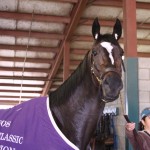 In a 60 Minutes segment, the crew visited her stable, where her rider Mike Smith stated, “I think she could arguably go down as one of the greatest, if not the greatest, racehorse of all time.” And in the eyes of many, Zenyatta does hold a firm place in the canon of the greatest Thoroughbreds to ever grace a race track with her presence.
Similar to Black Caviar, Zenyatta had many spectators holding their breath as she claimed victory after victory. And, in her final outing, Zenyatta concluded her consecutive nineteen-race winning streak with a heartbreaking defeat that demonstrated that immortality doesn’t necessarily mean invincibility.
Yet, with true class, Zenyatta stood before the crowd at Churchill Downs after her lone defeat and received an honor that is arguably greater than a victory could award – a standing ovation from the 72,000 spectators in the crowd as they paid homage to her racing career during its saddest moment.
And, despite her sole defeat, Zenyatta remains one of the greatest racehorses of all time in my view.
However, there is also a majestic quality to the racemares that have been defeated and strike back without missing a step in their race for immortality. Goldikova, the European record holder for the most Group 1/Grade I victories, doesn’t boast an undefeated record. However, defeat doesn’t detract from her immortal quality.
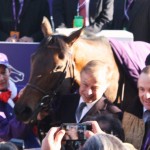 Since becoming the only racehorse to win three consecutive Breeder’s Cup outings, Goldikova is pointing toward a dramatic finish to an exceptional career – a fourth consecutive victory in the Breeder’s Cup this fall. And, like Black Caviar and Zenyatta, Goldikova is credited by many racing enthusiasts as being one of the greatest racehorses of all time.
In the past few years, the tracks have been graced with three racemares that arguably will be held in the canon of immortal Thoroughbreds. And, the qualities that make these racemares “immortal” are being drafted before our eyes through the endeavors of racemares like Black Caviar, Zenyatta and Goldikova.
Roughly four years ago, when Rags to Riches became the first filly to win the Belmont in over a hundred years, I thought I had just watched a historical moment in racing.
I was wrong.
It wasn’t a historical moment.
It was an important moment in racing. It was long-awaited moment in which a single filly took on the boys in the Belmont and beat them in their home court, a feat that had not been accomplished since 1905.
And, since that moment, the modern quest to hold a place among the canon of greats seems to be a “mare’s world” in racing.
February 5th, 2011 §
 In the past few weeks, a celebrity couple emerged with the announcement that Zenyatta, reigning Horse of the Year, would be bred with Bernardini, the freshman sire that produced the most graded stakes winners with his first crop of runners in 2010.
With the announcement of the mating, a frenzy of potential “baby names” swirled throughout the media and social networking sites. The Thoroughbred Times held a contest to “Name the Zenyatta-Bernardini Foal.”
I read through a flurry the names proposed by readers in the comment section for the naming contest. Zendini. Bernyatta. Berzen. Attadini. There was even a spin-off from the popular song on the “Zenyatta Mondatta” album, “Don’t Stand so Close to Me.”
The proposed name: “Don’t stand so close to Z.”
Personally, I find it absolutely delightful to ponder ideas for naming Zenyatta’s first foal. Yet, in the spirit of romance, I believe that Zenyatta deserves a little courtship before she dives into motherhood. After all, she is quite possibly the best mare of all time.
As such, I would like to propose a few tips for Bernardini on courting the great mare and future mother of his foal.
Speechless? Being Quiet Isn’t Always a Bad Thing. In a dream world, Bernardini, you might have been able to grab Zenyatta’s attention through saying something like, “I really enjoyed seeing you win nineteen races in a row,” or “I wonder what it would have been like if we met at the track first.”
But, you seem to be the silent type.
It’s not a bad thing to be a quiet guy, Bernardini. Zenyatta seems to enjoy a little silence with her famous cotton ball-stuffed ears. Instead of trying to win her heart with your personality, take the time to learn about her favorite things.
How do you figure out what pleases a Grade I girl? Not to worry, Bernardini. Zenyatta keeps a diary that says a lot about what she loves and what people have done to show their love for the great mare.
 It might do some good to rifle though her diary and find the perfect way to show your affection for the beautiful mare. It may be as simple as handing her a Guinness or helping her paint a picture for Thoroughbred charity. A basket of apples or a few carrots also seem to capture her fancy.
Yet, ultimately, Zenyatta seems to simply enjoy kindness and attention above all else. And thankfully, it doesn’t take a word to convey those sentiments. It just takes a little extra thought and effort. Make the effort, Bernardini. She’s worth every minute of it.
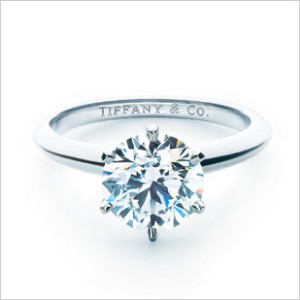
Rings and Things? Money Doesn’t Win Hearts. Are you having trouble finding a hoof-sized diamond ring to show how much you care? Don’t worry about it, Bernardini.
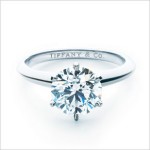 In a fairy tale world, it sure would have been a pleasure to see you get down on bended knee and ask for Zenyatta’s approval in mating. You could have surprised her in the middle of one of her standing ovations in front of an adoring crowd. I can’t even imagine how many fans would have viewed your proposal on YouTube.
Yet, Zenyatta doesn’t seem to mind being non-traditional, Bernardini. Forget about rings and fancy things. This great mare has enough career earnings to buy her own bling for any occasion.
Rather than material things, love wins a good woman’s heart. If you’re trying to court this Grade I girl, spend some time just adoring her unique personality. Watch her dance around the paddock. Take a few minutes to consider the accomplishments in her racing career. She may have beat a few of your guy friends in the past. Not bad for bragging rights, is it?
And, in the end, gaze at the big girl and wonder, “Will I ever see another one like her again?” You probably won’t. Enjoy her company while she is in your presence. Her fans certainly did.
 Passing out Cigars? It May Take a Few Tons of Them to Celebrate your Future Foal. I don’t mean to add any pressure here, Bernardini. Yet, if you plan on passing out cigars to celebrate the delivery of your baby, you may need a couple extra boxes for her fans. I’d recommend a few hundred thousand extra boxes at a minimum.
What is a guy to do when faced with such a dilemma? Forget about the cigars and just send out a picture of the baby. I imagine that simple photo will be shared on social media sites faster than Zenyatta’s closing charge in the home stretch. You see, many folks are just as excited as you about the arrival of your future foal with Zenyatta.
Yet, after the foal is born, please remember that anything is possible for their future career. A lot of chatter may focus on whether the foal can follow in the footsteps, or “dance steps,” of their parents. Nevermind these debates or hopes in the racing community.
Yes, it is fun to marvel at the possibilities for your future foal with Zenyatta. And, don’t get me wrong, Bernardini. I would be thrilled if you two had a foal that was equally competitive in dance contests and Grade I outings.
However, in the end, it would be a prize just to have a healthy foal.
And, it is a victory just to be the guy that wins a Grade I girl.
Whatever lies beyond those moments, the story will be told when your foal takes their first step onto a racetrack.
January 20th, 2011 §
On Monday, Zenyatta’s battle to earn “Horse of the Year” ended when she was finally crowned with the honor during the final moments of the Eclipse Awards.
The math was pretty simple on the face of the ballot. Zenyatta had five Grade I victories while Blame won three Grade I races. Blame won the Breeders’ Cup Classic and defeated more Grade I winners in 2010.
At times, Zenyatta was cast as the “emotional” or “popular” favorite in the pre-vote debates for the Award, in part, due to her passionate fan base and discussion of her overall career record. Yes, Zenyatta won 19 of 20 races in her career, with a 5-1 Grade I record in 2010. But, as the argument was made by many, “Horse of the Year” is not a lifetime achievement award or a “popularity” vote.
At the end of the voting, 238 eligible voters cast a ballot for “Horse of the Year.” Zenyatta won the Award with 128 votes while Blame received 102 ballots in his favor. Goldikova garnered five supporters, two individuals did not vote and one abstained.
Those are the basic numbers that amounted to Zenyatta being awarded “Horse of the Year” in a purely mathematical world.
However, as many commentators pointed our prior to the final decision, Zenyatta is also an “emotional” horse.” And, in being an “emotional horse,” she doesn’t live in a purely mathematical world of racing forms and figures.
She lives in both worlds. And, although I believe Zenyatta earned “Horse of Year” on her racing record alone, the intangible qualities that make Zenyatta an “emotional horse” hold a rare and sacred value beyond her racing record.
The “emotional” nature of Zenyatta is her glory just as much as her achievements in racing itself. And, in my view, there is nothing wrong with being “emotional” about horse racing, its’ athletes, and particularly, Zenyatta.
It is wonderful to be emotional about racing.
Through being an “emotional horse,” Zenyatta racked up some numbers that go beyond 128 votes for “Horse of the Year.” Zenyatta’s “math,” just as the mare herself, is focused on a few different equations.
She is the “Horse of a Lifetime” for many fans that witnessed her career. And, at the end of our lifetimes, Zenyatta will still reign immortal in the sport.
Infinity is an “emotional number” for Zenyatta.
 Zenyatta also calculated the value of people when doing her math. She welcomed droves of fans that visited her barn throughout her career. Her guests were from all walks of life, including children, celebrities and general fans.
It appears that every fan, whether it is one person or thousands at a race, are “emotional numbers” for Zenyatta.
For those who could not show up at the track, Zenyatta started a Facebook page and website with a “diary” of her activities. She put a video on You Tube that allowed fans to take a “virtual ride” on her back. And, in the process, 60,000 people have followed her activities on Facebook, while 186,000 fans have taken a “virtual ride” on Zenyatta.
It seems like 100,000+ is also an “emotional number” for Zenyatta.
In her final race, Zenyatta saw many individuals at the racetrack. A crowd of 72,000 people stood on their feet to see if Zenyatta could win the Breeders’ Cup this year. And, even in the wake of her loss, the crowd remained standing to give the great mare an ovation in her lone defeat.
I imagine that 72,000 is an “emotional number” for Zenyatta.
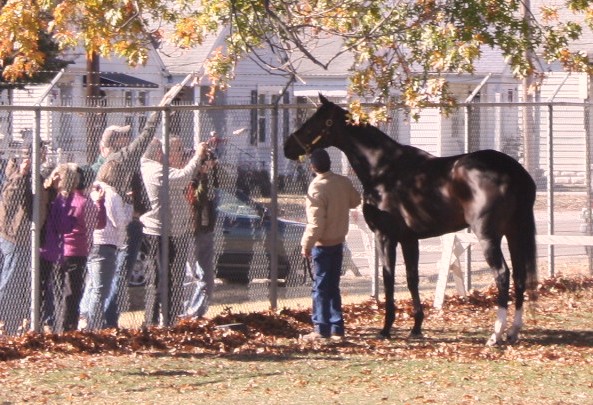
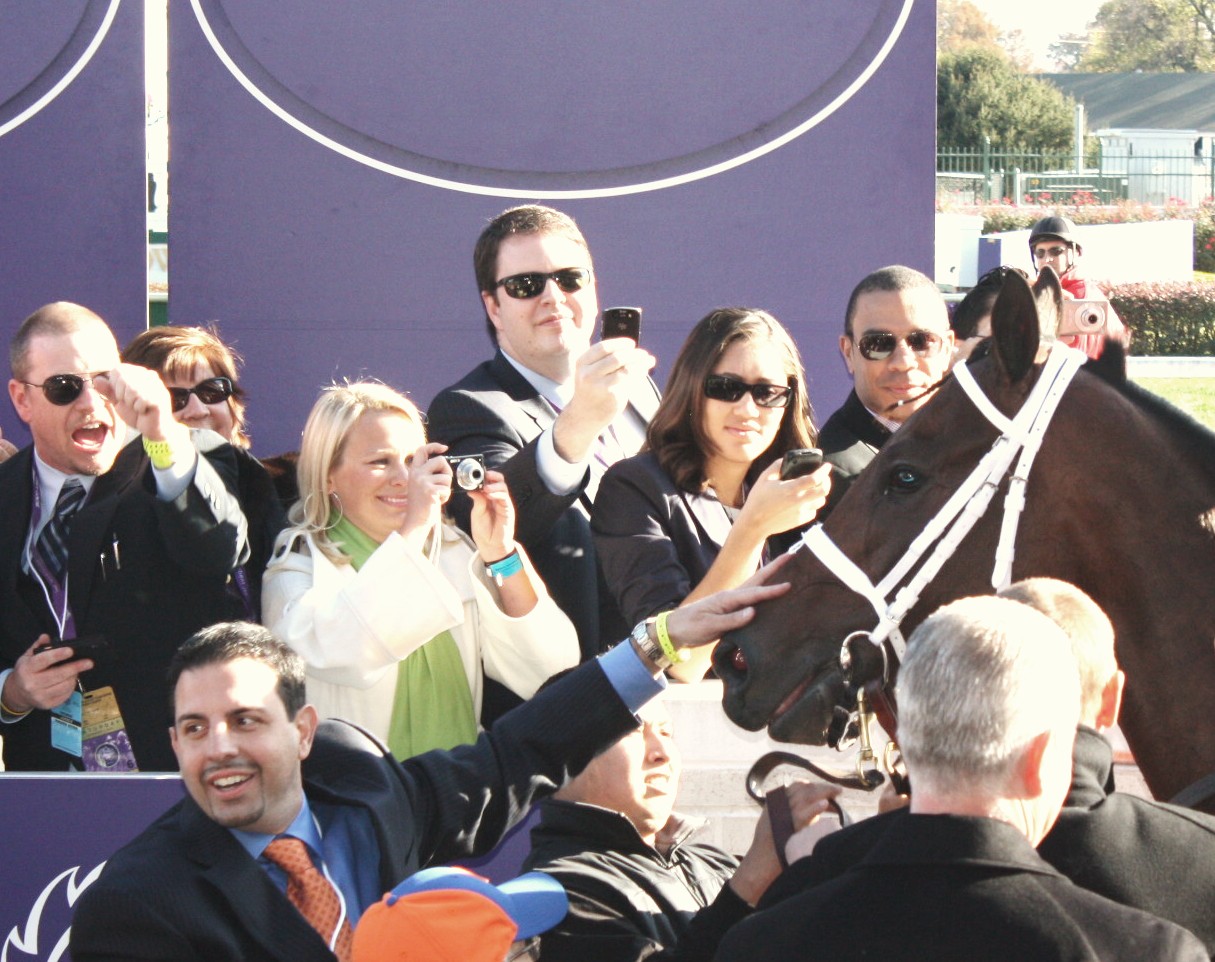
When she was retired, Zenyatta had a number of friends that came out to see her even when she wasn’t racing. As she was paraded during her farewell at Hollywood Park, 11,216 fans shouted her name and took photos of the mare. And, when her plane landed the next day at Keeneland, over a thousand fans stood in the cold night to see her in the flesh.
It appears that 11,000+ is also an “emotional number” for Zenyatta.
But, in the end, 238 eligible voters decided whether Zenyatta’s 2010 campaign merited the “Horse of the Year” award. And, 128 voters deemed that she was “The Horse of the Year” in 2010.
I imagine that 128 is an “emotional number” for Zenyatta after her three-year campaign to win the Award.
Yet, there was another vote that shows the glory of being an “emotional horse.” In a Petition sent to the National Thoroughbred Racing Association, 5,807 individuals cast their signature to show their support for Zenyatta to be crowned “Horse of the Year.”
It seems like 5,807 is also very “emotional number” for Zenyatta.
It is the reward for winning the hearts of thousands of people and a show of appreciation for her achievements in racing. The fan vote was not only built on her racing record, but also in the emotional connection that Zenyatta has fostered with her fans.
So, yes. There was plenty of emotion involved in crowning Zenyatta the “Horse of the Year.”
Yet, there is nothing wrong with connecting fans to this sport on an emotional level.
Zenyatta, along with her connections, gave the industry a beautiful blueprint for the future. She involved fans in her endeavors. And, through involving fans, it seemed as if every Zenyatta fan won when she claimed a victory.
On Monday night, Zenyatta claimed her final victory.
And, for many who supported her campaign, they claimed a quiet victory as well.
It was emotional victory for Zenyatta and her fan base.
It was the perfect model for a “Horse of the Year.”
January 17th, 2011 §
“It is not the critic who counts: not the man who points out how the strong man stumbles or where the doer of deeds could have done better. The credit belongs to the man who is actually in the arena, whose face is marred by dust and sweat and blood, who strives valiantly, who errs and comes up short again and again, because there is no effort without error or shortcoming, but who knows the great enthusiasms, the great devotions, who spends himself for a worthy cause; who, at the best, knows, in the end, the triumph of high achievement, and who, at the worst, if he fails, at least he fails while daring greatly, so that his place shall never be with those cold and timid souls who knew neither victory nor defeat.”
- Theodore Roosevelt
The Saturday Post congratulates Zenyatta on her exceptional achievements throughout her career.
December 30th, 2010 §
In November, The Saturday Post started an annual fan poll to allow racing enthusiasts to cast their picks for their favorite champions in various categories during the 2010 racing season. The votes are in. Take a look at our fan favorites!
Horse of the Year – Zenyatta.
By an overwhelming 97 percent of fan votes, Zenyatta commanded a solid victory for “Horse of the Year” in our racing poll.
During her career, the great mare commanded rock star power through claiming victory after victory in nineteen consecutive outings. She is the highest female earning racehorse of all time in North America. She won the most consecutive Grade I victories in the sport. She pulled three “three-peats” in the Clement Hirsch, Lady’s Secret and Vanity. Finally, Zenyatta made history through becoming the first female to ever beat the boys in the Breeders’ Cup Classic in 2009.
Beyond the record books, Zenyatta brought many intangibles to the sport. She delighted fans with her dizzying ‘dance routines’ in the paddock, video footage of her guzzling a Guinness in her stable and invited everyone to take a “virtual ride” on her back through a helmet camera she used during a workout.
She also brought the sport into the national limelight. Zenyatta was featured as one of the most powerful women of 2010 in Oprah’s magazine, as well as a figure in the “Society” section of W fashion magazine. She claimed ownership of Los Angeles in her billboard entitled, “This Is My Town,” as part of a marketing campaign for the L.A. Dodgers Baseball Team. Finally, Zenyatta’s segment on 60 Minutes served as the first time the show had ever filmed a piece on a racehorse.
Simply put, Zenyatta delivered a show that was unimaginable before she began her racing career. She made people wonder. She made people cry. She made people marvel at her beauty. And, in the process, she added excitement to the sport for both long-time enthusiasts and newcomers.
Best Older Male Horse – Blame. With 65 percent of votes in his favor, Blame won the fan poll for Best Older Male Horse. During his career, Blame won nine races in thirteen career starts and retired with career earnings of $4,368,214. In 2010, he won three Grade I victories, including the Breeders’ Cup Classic.
Best Older Female Horse – Zenyatta. Aside from “Horse of the Year,” 86 percent of fans also voted for Zenyatta as the “Best Older Female Horse.” Goldikova served as the second choice in the fan poll for this category.
Best Three-Year-Old Male Horse – Lookin’ at Lucky. Preakness-winner Lookin’ at Lucky won best “Three-Year-Old Male Horse,” capturing 74 percent of the votes in our racing poll.
Best Three-Year-Old Filly – Blind Luck. With five Grade I wins, Blind Luck won “Best Three-Year-Old Filly” with 85 percent of fans voting in her favor.
 Best Two-Year-Old Male Horse – Uncle Mo. With an undefeated record in three starts as a two-year-old, including his victory in the Breeders’ Cup Juvenile, Uncle Mo has won “Best Two-Year-Old Male Horse” in our fan poll with 80 percent of the votes.
Best Two-Year-Old Female Horse – Awesome Feather. With a six-race undefeated record, Awesome Feather has won the fan vote for “Best Two-Year-Old Female Horse,” with 78 percent of votes in her favor.
December 12th, 2010 §
After tearful goodbyes and long last gazes, racing has bid its’ final farewell to one great mare. Zenyatta touched the very soul of her fans in a way that few believe they have seen in their lifetime.
And, for those who love Zenyatta, they may wish that she could have raced forever if such a dream were possible in reality. I certainly wish it was.
So, should we just close our racing programs now and stand outside her stall?
Not in my view.
You see, this isn’t the first saddening goodbye ever spoken or written about in the world. And, when I think of one of the most beautiful farewells in literature, The Grapes of Wrath comes to mind in the moment where Tom Joad has to leave his mother. In the famous passage, he conquers the finality of a farewell.
It is the moment where he marvels at the idea that human beings may not simply hold one solitary soul, but rather, they are all part of a larger soul that includes everyone. He realizes that if this is true, there really is no finality in a farewell. She would see him again. Although it may not be in the flesh, his “ghost” would appear in nearly every human act that embodied a part of his spirit.
I view racing in the same way.
The soul of racing isn’t defined in one single horse, although it may seem like it when you are in the presence of a great one. In my mind, every horse is part of the soul of this sport. The ones that get beaten in a race are as necessary as the ones that deliver the dream. There is no victory without a defeat.
And, if every racehorse embodies the soul of the sport, you’ll see a flash of Zenyatta in plenty of races in the future. There is no finality in her farewell.
You can see a flash of Zenyatta in Awesome Feather, an undefeated two-year-old filly with six career starts, including a win in the Breeders’ Cup Juvenile Fillies.
And, the spirit of Zenyatta appears when you see Turbulent Descent being hand-ridden toward her third victory at Hollywood Park in her perfect two-year-old season.
You can see a glimpse of Zenyatta when two-year-old Cathy’s Crunches wins three consecutive stakes races in a row, including an outing against male horses.
 And, you can see Zenyatta in Uncle Mo, who is stirring attention across the racing world as we wonder exactly what dreams he may behold.
Finally, you’ll see Zenyatta in stories throughout the ages. It would be nearly impossible to talk about the Belmont at length without reminiscing about Secretariat’s otherworldly performance. I don’t think you could talk about finding a fairy tale at auction without mentioning Seattle Slew. And similarly, you’ll see the spirit of Zenyatta when the next filly steps into the gates at the Breeders’ Cup Classic.
There is no finality in her farewell so long as fans look to the future of racing. She is part of the soul of this sport. And, a “Flash of Zenyatta” could appear in any race.
In my view, the greatest honor to give Zenyatta is to watch for those fleeting moments. Because, in the heart of those moments, you’re seeing part of her spirit as well.
I can’t wait to see her again, even if it is in the flash of a moment.
And, I’m looking toward the future to find that moment.
Note: As a new year approaches in racing, The Saturday Post will begin a regular segment. The site will feature compilation videos of standout horses that are making their journey on the trail toward the 2011 Kentucky Derby.
I would personally like to invite the friends and readers of The Saturday Post to email me directly with any of your picks for Triple Crown hopefuls that you feel should be featured in the coming months. You can email me at jenniferjwirth@yahoo.com.
I would also like to extend my gratitude to everyone who has read this site, shared a link, provided an interview or posted a comment throughout the year. In a single year of writing this blog, I have met some of the kindest people in the world and had some of the most memorable experiences of my life.
Thank you to everyone. I look forward to hearing from you in 2011! - Jennifer Wirth
» Read the rest of this entry «
December 5th, 2010 §
Click Photo for Video
Today, Zenyatta will take her final bow before her adoring fans at Hollywood Park. In celebration of her astounding racing career, I am posting a video with quotes about this fairy-tale mare from trainers, writers and other media sources.
In my mind, Zenyatta has become virtually indescribable in words alone.
She is more than a champion race horse. She is more than a media maven. She more than a dancing diva. And, if she wins “Horse of the Year,” she is even more than that award.
Zenyatta is like falling in love. You can’t describe it to someone who has never felt it. Yet, for those who love Zenyatta, we endlessly try to sum her up through describing her personality, one-of-a-kind dance routines and exceptional racing record.
However, in the end, just like love, it really is the sum of everything that she is, along with her indescribable intangible qualities, that can’t be grasped unless you simply know it with you own eyes and heart.
For those who fell in love with this great mare, she isn’t vanishing in a simple farewell. Zenyatta is a flame that will remain in the hearts and memories of her fans for eternity and beyond.
And, she will remain a story. It may not be told in daily media articles, but instead, in homes across the world.
Somewhere in the future, there may be a moment where you tell her story to someone brand-new to racing. And, when they ask, “Did you get see her with your own eyes?” You’ll be able to say, “Yes, I did. I saw the greatest mare that ever set foot on a track in my lifetime.”
November 21st, 2010 §
Truman Capote once said, “More tears are cried over answered prayers than unanswered ones.”
I would like imagine Capote was a horse racing fan when he conjured up those words.
When a legendary horse shows up, it is an answered prayer. They aren’t beholden to the result of a single race. Instead, the great ones take fans on a journey. They aren’t defined in minutes, but rather, through moments. And, as a result, it seems as if the clocks simply stop ticking. A timeless horse doesn’t answer to seconds on a stopwatch. They answer to their own legacy.
When a great horse concludes their racing journey, they leave a deep void among their fans. It can make you wonder if you’ve already seen everything that is possible in racing. And, when the clocks start ticking again, it can seem as if there is no reason to keep watching. It is moment where your prayer was answered, but you are left without the rapture of a dream.
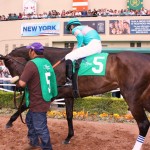 Zenyatta was the horse that took me on a journey that traveled in moments, rather than minutes on a race track. And, when she retired, I wondered if I would ever see a horse that could follow in her dizzying footsteps. I had just seen my once-in-a-lifetime racehorse. The possibility of her coming around twice didn’t seem plausible.
And, in all reality, there won’t be another 19-1 dancing race horse that can charm the birds from the trees with her friendly disposition while parading across the national media circuit. I know better than that. Zenyatta is one-of-a-kind, which is the true mark of legend.
Yet, I’m not done with horse racing because Zenyatta has entered retirement. In fact, I’m watching even more closely now.
You see, the great ones simply appear from time to time, without notice of their impending arrival. And, if you’re not watching, you’ll miss it.
I wouldn’t have missed Zenyatta’s career for the world. Yet, the world couldn’t have convinced me that a dancing mare was going to show up and rocket through a nineteen-race winning streak. I had to see her with my own eyes to believe it. And thankfully, I was watching when my once-in-a-lifetime horse showed up.
Zenyatta will not be the last “great one” in this sport. Racing has had plenty of legends. And, although we love to compare them, you will never take the same journey twice in the racing world.
When Man ‘O War retired, turf writer Joe Palmer wrote that he “was as near a living flame as horses get… he smashed his opposition, sometimes by a hundred lengths, …he set world records… You felt that there had never been, nor could ever be again, a horse like this.”
He was right. There will never be another Man ‘O War.
But, there is always the impending arrival of the next “great one.”
When Secretariat ended his career, turf writer Charles Hatton stated, “He’s the greatest horse that anyone has ever seen. Don’t let anyone kid you. He could do anything, and he could do it better than any horse I ever saw. No question about it in my mind.”
He was right. There will never be another Secretariat.
But, there is always the impending arrival of the next “great one.”
When Seattle Slew left racing, his groom, John Polston, walked away from the sport. He explained, “After a horse like Slew, there was nothing. I didn’t want to be around horses anymore, because I knew it wouldn’t be the same.”
He was right. There will never be another Seattle Slew.
But, while Seattle Slew was capturing the Triple Crown, the next “great one” was already grazing in the fields. One year later, that horse would come to be known as “Affirmed.” And, since Affirmed, we haven’t seen a Triple Crown winner again.
But, there is always the impending arrival of the next “great one.”
Within a few years, John Henry reminded the sport that anything is possible when he won the Arlington Million in a seemingly-impossible, come-from-behind victory in 1981. And, he reminded us again when he won the Million a second time as a nine-year-old.
When John Henry was gone, Chris McCarron reflected, “…He did so much for racing, even after he retired. He will be impossible to replace.”
He was right. There will never be another John Henry.
But, there is always the impending arrival of the next “great one.”
And, in recent years, we’ve seen greatness in ways that weren’t imaginable until it simply showed up.
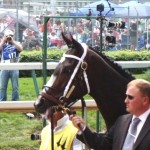 You saw it in Rachel Alexandra.
When she retired, Jess Jackson marveled, “…She set standards and records that no filly before her had ever achieved. And I suspect that it will be quite a while before a three-year-old filly ever equals or surpasses her achievements.”
He was right. There will not be another Rachel Alexandra.
She was one-of-a-kind.
But, there is always another “great one.”
You saw it in Zenyatta.
After her final race, Peter Ellis remarked, “I don’t think people are going to realize just how special she is until she is gone because there will never be another one like her.”
He was right. There won’t be another Zenyatta.
But, there is always the impending arrival of the next “great one.” And, like Affirmed, “the one” could be grazing in the fields at the moment. Or maybe, “the one” is already racing right now.
I’m watching closely.
Because, if history teaches us anything, it is that the “great one” arrives unexpectedly.
In a flash, they show you something unimaginable.
And, the journey begins again.